Straps, armbands and sensors
Best heart rate monitors for running
Running is the condition that breaks a wrist sensor: arm swing, cadence vibration and a tendon moving under the optical window. The published evidence says move the sensor, and it says which positions win.
We earn a commission when you buy through our Amazon links, at no extra cost to you. It never decides a ranking — the rubric that does is published in full, so you can check us rather than take our word for it. How this works.
Top pick
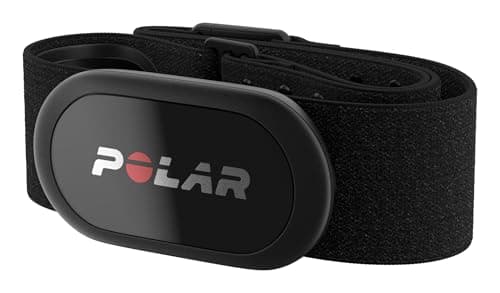
Anyone who trains by heart ratePolar H10
The device other people's validation studies use as the reference. That is the strongest recommendation a sensor can have.
$104.9517% off
Price as of November 23, 2026. Prices move; Amazon's is the one that counts.
#ad · we may earn a commission from this link to Polar H10
The short answer
The Polar H10 is the pick, and the reason is unusual: it is the instrument other sensors get measured against. A 2025 peer-reviewed study used it as the reference while comparing wrist, forearm and upper-arm optical sensors, and found position beat brand at every intensity. If a chest strap will not stay on you, the Polar Verity Sense moves the sensor to the forearm, which was the next best measured position. The budget pick is the Polar H9.
Ranked
Quick picks
| # | Device | Best for | Evidence | Score | Price |
|---|---|---|---|---|---|
| 01 | Polar H10 The device other people's validation studies use as the reference. That is the strongest recommendation a sensor can have. | Anyone who trains by heart rate | Peer-reviewed validation | 8.9/10 | $87.21Amazon |
| 02 | 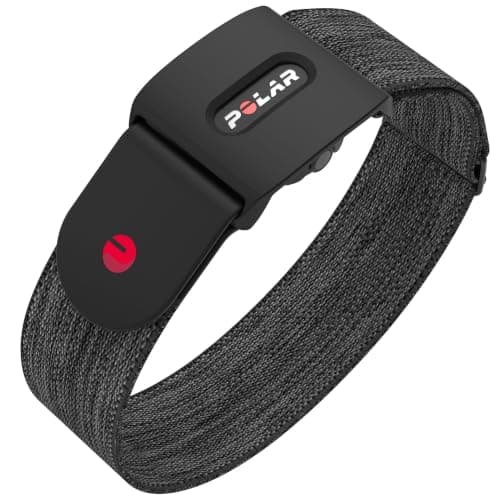 Polar Verity Sense The optical armband that measured a bias under 0.1 bpm against a chest strap on a graded treadmill test. The comfortable answer. | Strap-quality data without the strap | Peer-reviewed validation | 8.4/10 | $89.21Amazon |
| 03 | 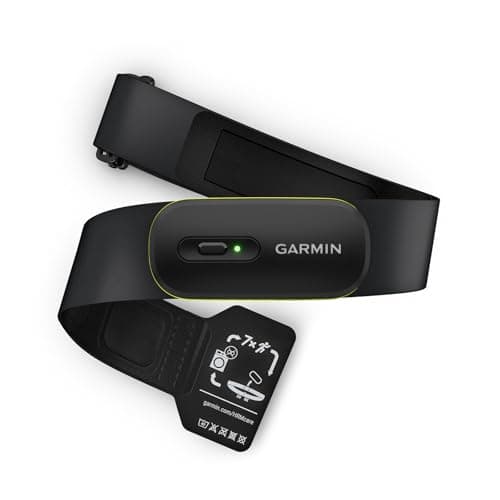 Garmin HRM 600 The strap to buy if you are already inside Garmin's ecosystem and want running dynamics with it. | Garmin owners wanting running dynamics | Manufacturer specification | 7.4/10 | $154.95Amazon |
| 04 | 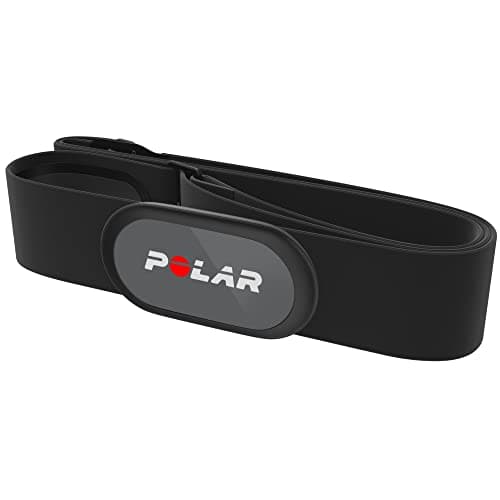 Polar H9 The H10 with the recording memory removed. If you always ride with a head unit, that is a feature you were never going to use. | Riders who always have a head unit running | Manufacturer specification | 7.3/10 | $69.90Amazon |
| 05 | 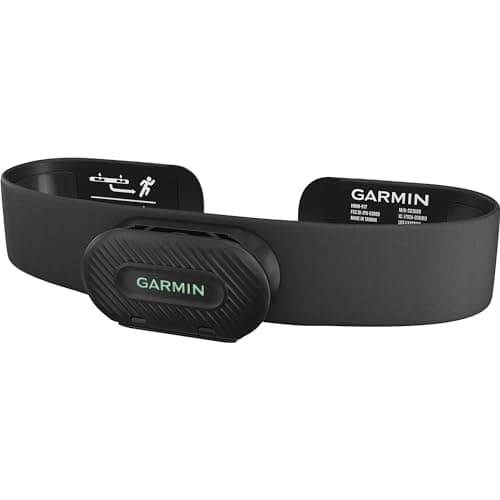 Garmin HRM-Fit Garmin's electrical sensor with the chest strap taken away — it clips to a sports bra band instead, and keeps the running dynamics. | Running dynamics without a strap | Manufacturer specification | 7.2/10 | $109.50Amazon |
#ad· Live prices from the Amazon Product API, as of November 23, 2026. Where we have no verified live price we show none. Scores come from the published rubric at How we rank — the Evidence column shows what each ranking actually rests on, including where the answer is nothing.
Why running is the hard case for a heart rate sensor
Every other activity on this site is easier on a sensor than running is. A steady indoor effort is the most favorable measurement case in the whole category; cycling keeps the arm relatively still on the bars; swimming is hard for a different reason entirely. Running combines three things that attack an optical reading at once: a swinging arm that changes the pressure of the device against the skin stride by stride, vibration at cadence frequency that an accelerometer-assisted algorithm can mistake for a pulse, and a wrist whose tendons move directly under the optical window every time the hand flexes.
That is not a theory we invented, and the measurement exists. A 2025 study in Sensors put 28 people (14 male, 14 female) through rest, a cycling warm-up, burpees and a modified Bruce treadmill protocol wearing several sensors simultaneously — a Polar Verity Sense on the forearm, a Garmin Forerunner 55 on the wrist and three identical Whoop 4.0 units at wrist, forearm and upper arm — all against a Polar H10 chest strap as the reference instrument. Position beat device. The proximal placements won at every intensity tested, the wrist unit showed limits of agreement of roughly plus or minus 10 to 19 bpm at warm-up, and during the burpee protocol every optical device fell below 0.50 concordance while the wrist-worn Garmin showed a bias of around 33 bpm.
Set that next to the category-wide figure. The 2024 living umbrella review — 24 systematic reviews, 249 primary validation studies, 430,465 participants — reports heart rate at approximately plus or minus 3% with a mean bias of −3.39 bpm. That sounds fine, and it is, on average. The average is dominated by resting and steady-state data. The placement study is what happens at the intensities a runner actually cares about, and the gap between those two pictures is the entire reason this hub exists. The fuller argument is at wrist vs chest strap accuracy.
The criteria, in the order we applied them
We own none of these sensors and we have not run in any of them. So the ranking is built from things that are published and checkable, in this order, and the order is the argument:
- 1. Measured sensor position. The one published study that isolated position from brand is the top of our evidence hierarchy here, and it carries 30% of the rubric weight. Chest electrodes first, forearm and upper arm second, wrist last.
- 2. Measurement method, from the maker's own specification.Two picks here are electrical — Polar states "electrical (ECG) measurement" for both — and three are optical. That is a hardware fact, not a marketing one.
- 3. Running dynamics, where the manual publishes them.This is the running-specific row, and it is where Garmin's straps earn their place: cadence, vertical oscillation, ground contact time, ground contact time balance, stride length and vertical ratio are metrics a watch cannot compute on its own.
- 4. Whether it can record without a watch. One of these keeps a session in its own memory if the radio link drops. One explicitly cannot, and that is the whole specification difference between two otherwise similar straps.
- 5. Price, from the live layer. Every bracket and gap on this page is computed at render time from a verified price rather than typed in.
One thing we are not ranking on: a claimed accuracy percentage. None of the five manufacturers publishes a measured error figure for its own sensor with a method attached, so there is nothing there to compare.
The pick: Polar H10
The Polar H10 scores 8.9, the highest of any device on this site, and the reason is the strongest form of evidence available in this category: researchers chose it as the instrument they measured everything else against. In the 2025 placement study it was the criterion reference; in Dial et al. (2025) a Polar H10 supplied the single-lead ECG reference, sampled at 1000 Hz, against which five consumer wearables were judged across 536 nights. When a sensor is good enough to be the yardstick, that is a different class of claim from a marketing number.
The specification backs it up. Polar states electrical (ECG) measurement, Bluetooth LE and ANT+ so it talks to a Garmin watch and a phone app, internal memory holding one session of up to 30 hours, up to 400 hours on a user-replaceable CR2025 coin cell, and a WR30 water rating. That internal memory is the row runners should care about most: if the radio link to your watch drops mid-interval, the strap still has the trace. And Polar publishes a strap size chart — XS-S fitting a 62-82 cm chest, M-XXL fitting 71-118 cm — which is the specification that decides whether a chest strap fits at all, and exactly one of the brands we cover publishes it.
Honest cons. It publishes no running dynamics at all: no cadence, no ground contact time, no stride length, so if those metrics are why you are buying a strap this is the wrong pick and the next two are the right ones. It is a chest strap, which means a damp band against your sternum and a thing to remember before every run. Polar rates it WR30, so it is splash- and shower-safe rather than a swim sensor. And the electrode band is a consumable — a strap that has gone stiff or salty is the single most common cause of the spiky early-run trace people blame on the sensor. Our full write-up is at the Polar H10 reviewed.
If a chest strap is out: Polar Verity Sense
The Polar Verity Senseat 8.4 is the pick for anyone who will not wear a chest strap, and it is not a consolation prize — it is the device that actually appeared in the placement study on the forearm, which is the position that came second to the chest reference and comfortably ahead of the wrist.
Polar states optical heart rate worn on the forearm or upper arm, dual Bluetooth plus ANT+, on-board recording so it can run without a watch at all, a swim mode, and WR50. For a runner the practical case is simple: it goes on in two seconds, it is dry, nothing touches your chest, and the published measurement evidence for its position is the second-best available.
The cons are real and specific. It is optical, not electrical, so it is subject to the same physics as a wrist sensor — just at a better site with far less tendon movement and a tighter, more stable band. In the burpee protocol of the placement study every optical device, including this one, fell below 0.50 concordance; forearm placement helps a great deal and does not make the problem disappear. It publishes no running dynamics. And the armband is a consumable like any elastic band. The direct comparison of the two forms is at chest strap vs armband, and the device write-up is at the Polar Verity Sense reviewed.
For running dynamics: Garmin HRM 600
The Garmin HRM 600 is the pick if the metrics you want are the ones only a chest-mounted accelerometer can produce. Garmin's manual states a rechargeable lithium-ion battery rated up to two months at one hour per day, a 5 ATM water rating, an operating range of 0 to 40 °C and a 2.4 GHz radio at 9.9 dBm maximum, and describes the strap as providing real-time heart rate and HRV data, running dynamics and stand-alone activity recording. Garmin's own buying guide for its straps attributes step speed loss, stride length, vertical oscillation and ground contact time balance specifically to this model.
That is the running-specific argument for a strap and it is a good one: those numbers do not exist without hardware on your torso, and no watch computes them from the wrist. The stand-alone recording is the same insurance the H10's session memory provides.
The cons. No independent validation of this strap exists that we could find, so everything above is manufacturer-stated and nothing is measured — and the running-dynamics numbers in particular have never been checked by anyone outside Garmin. Garmin's own line-up document is marketing copy, which is why we tier it as a manufacturer claim and use it only for what Garmin says its own products do. It is arechargeablestrap, so there is a cable to remember where the Polars take a coin cell that lasts up to 400 hours. The running-dynamics features need a compatible Garmin watch, so this is the wrong pick on a Polar, COROS or Suunto. And it is the most expensive pick on this page — the gap to the Polar H10 is $68. Full write-up at the Garmin HRM 600 reviewed, and the brand-fit question is at best heart rate monitors for Garmin.
The budget pick: Polar H9
The Polar H9 is the cheapest electrical sensor on this page and the right answer for most new runners. Polar states electrical (ECG) measurement, Bluetooth LE plus ANT+ 2.1 plus a 5 kHz analog channel, up to 400 hours on a replaceable 160 mAh coin cell, and WR30. It is under $80 today, and the price gap to the H10 is $17.
The measurement method is the same category as the H10's — electrodes on the chest, which is the position the published evidence favors — and the analog channel is a genuine extra: it is what lets a strap talk to old gym equipment that speaks neither Bluetooth nor ANT+.
The one con that matters, and it is a specification rather than an opinion: the H9 has no internal memory. Polar says so plainly, and it is the specification difference between the two straps. If the link to your watch drops, the data for that stretch is gone — there is no fallback trace. It also has no running dynamics and, like every strap here, no independent validation of its own. The two Polars laid side by side are at Polar H10 vs H9, and the wider cheap field is at best budget heart rate monitors.
For runners who will not wear a band: Garmin HRM-Fit
The Garmin HRM-Fit ranks last here and is on the page because it answers a problem none of the others do: it clips to the underband of a sports bra instead of wrapping the chest. Garmin's manual documents six running metrics — cadence, vertical oscillation, ground contact time, ground contact time balance, stride length and vertical ratio — plus running pace and distance when GPS is unavailable, heart-rate storage for timed activities out of watch range, and a fitting specification: medium or high support, a flat band roughly 19 to 50 mm wide, no front zipper. The specifications page states a user-replaceable CR2032 cell at up to one year at one hour per day.
Three honest cons, all read off Garmin's own documents. The first is a hard requirement: Garmin's note says that to use the running dynamics features the HRM-Fit must be paired using ANT+ — so a Bluetooth-only pairing gets you heart rate and none of the running metrics. The second is water resistance: it is rated 3 ATM, where Garmin rates its own chest straps at 5 ATM, which is the one specification on which the clip-on sits below them. The third is fitment — the fitting specification above is narrow enough that it rules out a lot of garments, so check yours before ordering. And as with the HRM 600, no independent validation of this sensor exists that we could find. The women-specific field is at best heart rate monitors for women.
What is deliberately not on this page
No watch is a pick here, including the watches this site rates highly. A running watch's own optical sensor sits at the weakest measured position, under the most motion, which is the finding the whole page is built on — and every watch worth buying will read one of the sensors above instead. If what you want is the watch, the ranked field is at best running watches and the watches with the best wrist sensors are at best heart rate monitor watches.
Two cheaper straps are on this roster and are not picked here. The Wahoo TRACKR is rated IPX7, which is a splash-and-immersion rating rather than a 5 ATM swim rating, and its headline advantage is radio capacity for indoor apps rather than anything running-specific. The COOSPO H808S is the cheapest sensor we rank and it is Bluetooth-only in the configuration we read, which rules out the ANT+ link several watches want. Both are ranked in the budget field linked above.
No pick here measures running power. Running power on a wearable is a modeled estimate rather than a measurement, and the published record for it is thin enough that we gave it its own page: see running power accuracy by device.
And no ring is a pick here. A finger is a better optical site than a wrist and the published sleep evidence favors it, but no ring on this roster transmits live heart rate to a watch mid-run, which is the whole job on this page. If overnight recovery data is what you are shopping for instead, the two fields are at alternatives to the Oura Ring and best smart rings.
The honest summary, if you only read one paragraph
Buy the cheapest strap whose measurement method is electrical and whose radio your watch speaks, and you have captured almost all of the available improvement. The step from a wrist sensor to chest electrodes is the one upgrade in this entire category with a peer-reviewed reason behind it; the step from the H9 to the H10 buys session memory, and the step to a Garmin strap buys running dynamics. Those are real, but they are small next to the first step. The upgrade path we would actually recommend is laid out at better heart rate accuracy, and it is the same advice we give readers thinking about changing watch brand entirely at alternatives to Garmin.
In full
Every pick, and why
Polar H10
The device other people's validation studies use as the reference. That is the strongest recommendation a sensor can have.
- Sensor
- Electrical (ECG), chest strap
- Connectivity
- Bluetooth LE + ANT+
- Memory
- One session, up to 30 hours
- Battery (stated)
- Up to 400 h, CR2025 coin cell
- Water rating
- WR30
What's good
- Used as the criterion measure in published research — including the 2025 Sensors placement study on this site
- Simultaneous Bluetooth and ANT+, so it pairs to a watch and a bike computer at once
- 400 stated hours on a coin cell you replace rather than recharge
What isn't
- It is a chest strap, and a chest strap is less comfortable than a watch
- The strap wears out well before the sensor does
Skip this if
Skip this if you know yourself well enough to know you will not wear it. An unworn ECG strap measures nothing, and a wrist sensor you actually wear beats it every time.
What the evidence says
Peer-reviewed validationUsed as the reference standard in Sensors (2025), the anatomical-placement study of 28 participants. Being chosen as the criterion is an implicit validation by the researchers, though it means the study cannot measure the H10's own error.
Show how this 8.9 was calculated
| Factor | Weight | Score |
|---|---|---|
| EvidenceResearchers use it as the criterion measure. Nothing else in this category has a stronger evidentiary position. | 30% | 10.0 |
| HardwareElectrical ECG measurement rather than optical — a different and better physical principle for this job. | 20% | 9.5 |
| Metric coverageHeart rate and R-R intervals only; it does not pretend to do anything else. | 20% | 6.5 |
| Endurance400 stated hours on a replaceable coin cell. | 15% | 9.5 |
| Cost per capabilityInexpensive next to any watch, and it outlasts several of them. | 15% | 8.5 |
$104.9517% off
Price as of November 23, 2026. Prices move; Amazon's is the one that counts.
#ad · we may earn a commission from this link to Polar H10
Polar Verity Sense
The optical armband that measured a bias under 0.1 bpm against a chest strap on a graded treadmill test. The comfortable answer.
- Sensor
- Optical, forearm or upper-arm band
- Connectivity
- Bluetooth (dual) + ANT+
- Modes
- Live streaming, on-board recording, swim mode
What's good
- Sensors (2025) recorded the smallest bias of any device tested on the graded treadmill protocol — under 0.1 bpm, CCC = 0.997
- Lowest resting error in the same study, at roughly 1.6% MAPE
- Far more comfortable than a chest strap, and it works under a wetsuit
What isn't
- Still an extra device to charge and remember
- Like every optical sensor, it struggled in the same study's burpee protocol — nothing optical handles that well
Skip this if
Skip this if your training is mostly explosive, stop-start work. In the burpee protocol every optical device tested fell below 0.50 concordance, this one included. Buy the H10 for that.
What the evidence says
Peer-reviewed validationDirectly measured in Sensors (2025), n = 28, against a Polar H10 reference: lowest resting MAPE at ~1.6 ± 0.8%, and the smallest bias on the modified Bruce treadmill protocol at under 0.1 bpm (CCC = 0.997).
Show how this 8.4 was calculated
| Factor | Weight | Score |
|---|---|---|
| EvidenceDirectly measured in a peer-reviewed study, with the best result of any optical device tested. | 30% | 9.5 |
| HardwareOptical, but worn on the forearm — the placement the same study found outperforms the wrist. | 20% | 8.5 |
| Metric coverageHeart rate plus on-board recording and a swim mode. | 20% | 7.0 |
| EnduranceRechargeable, with stated endurance comfortably covering long sessions. | 15% | 8.0 |
| Cost per capabilityPriced against a good chest strap, not against a watch. | 15% | 8.5 |
$104.9515% off
Price as of November 23, 2026. Prices move; Amazon's is the one that counts.
#ad · we may earn a commission from this link to Polar Verity Sense
Garmin HRM 600
The strap to buy if you are already inside Garmin's ecosystem and want running dynamics with it.
- Sensor
- Electrical (ECG), chest strap
- Extras
- Running dynamics, HRV data, on-board storage
What's good
- Adds running dynamics that a watch alone cannot compute
- Stores data when out of watch range and syncs later
What isn't
- Costs meaningfully more than the Polar H10 without a published validation advantage
- Its extra metrics only fully surface inside Garmin's own platform
Skip this if
Skip this if you just want accurate heart rate. You would be paying a premium over the H10 for running-dynamics metrics most runners look at twice and never again.
What the evidence says
Manufacturer specificationGarmin publishes specifications but no validation study we could find. It is an electrical chest strap, which is the right physical principle — but 'right principle' is not the same as 'measured accuracy'.
Show how this 7.4 was calculated
| Factor | Weight | Score |
|---|---|---|
| EvidenceCorrect sensor principle, detailed published specs, no independent validation we could find. | 30% | 6.0 |
| HardwareElectrical ECG measurement with on-board storage. | 20% | 9.0 |
| Metric coverageHeart rate, HRV and the full running-dynamics set. | 20% | 8.5 |
| EnduranceGood stated endurance; rechargeable. | 15% | 8.0 |
| Cost per capabilityA clear premium over the H10 without a matching evidence advantage. | 15% | 6.0 |
$169.999% off
Price as of November 23, 2026. Prices move; Amazon's is the one that counts.
#ad · we may earn a commission from this link to Garmin HRM 600
Polar H9
The H10 with the recording memory removed. If you always ride with a head unit, that is a feature you were never going to use.
- Sensor
- Electrical (ECG), chest strap
- Connectivity
- Bluetooth LE + ANT+ 2.1 + 5 kHz analog
- Memory
- None — it cannot record on its own
- Battery (stated)
- Up to 400 h, replaceable 160 mAh coin cell
- Water rating
- WR30
What's good
- Electrical measurement — the same physical principle as the strap researchers use as their reference
- 5 kHz analog on top of Bluetooth and ANT+, which is what old gym cardio equipment actually listens for
- 400 stated hours on a coin cell you replace rather than recharge
What isn't
- No internal memory, so it cannot record a session without a paired device — this is the specification difference from the H10
- No independent validation of the H9 itself that we could find; the studies use the H10
Skip this if
Skip this if you ever want heart rate from a session you rode without your watch or head unit. The H10 stores 30 hours on its own; this stores nothing, and no firmware adds memory that is not there.
What the evidence says
Manufacturer specificationNo validation study of the H9 specifically that we could find. It shares the electrode and sensing principle of the H10 that researchers use as their criterion measure, which is a good reason to expect it to be accurate and not a measurement of it. We score the principle, not the assumption.
Show how this 7.3 was calculated
| Factor | Weight | Score |
|---|---|---|
| EvidenceCorrect sensing principle from the brand researchers pick as their reference — but no measurement of this device, and we do not let a sibling's record transfer. | 30% | 5.5 |
| HardwareElectrical ECG measurement with three radios, including the 5 kHz analog that gym equipment uses. | 20% | 8.5 |
| Metric coverageHeart rate only, and unlike the H10 it cannot record without a paired device. | 20% | 5.5 |
| Endurance400 stated hours on a replaceable coin cell. | 15% | 9.5 |
| Cost per capabilityMeaningfully cheaper than the H10 for the same measurement principle. | 15% | 9.5 |
Price as of November 23, 2026. Prices move; Amazon's is the one that counts.
#ad · we may earn a commission from this link to Polar H9
Garmin HRM-Fit
Garmin's electrical sensor with the chest strap taken away — it clips to a sports bra band instead, and keeps the running dynamics.
- Sensor
- Electrical (ECG), clips to a sports bra band
- Connectivity
- ANT+ and Bluetooth
- Battery (stated)
- Up to 1 yr at 1 h/day, user-replaceable CR2032
- Water rating
- 3 ATM
- Extras
- Six running dynamics metrics, pace and distance without GPS, stored heart rate for timed activities
What's good
- Electrical measurement without a chest strap — it clips to the band of a medium- or high-support sports bra
- The same six running dynamics metrics Garmin's chest straps produce, plus pace and distance when GPS is not available
- Garmin states up to a year at an hour a day, on a coin cell you replace rather than recharge
What isn't
- Rated 3 ATM, where Garmin's own chest straps are rated 5 ATM
- No published validation of this device — and none of the clip placement it depends on either
- Only fits a sports bra that meets Garmin's own band specification, so it is not a universal purchase
Skip this if
Skip this if you do not train in a medium- or high-support sports bra, or if yours has a front zipper. Garmin's own fitting guide rules both out, and a sensor that will not sit flat against skin will not read.
What the evidence says
Manufacturer specificationGarmin publishes a full specification sheet and a detailed manual; no validation study of the HRM-Fit exists that we could find. There is a second gap behind the first — the anatomical-placement study we cite across this site measured the wrist, forearm and upper arm, and nobody has published a measurement of a sensor clipped under a sports bra band. Two unmeasured variables, not one.
Show how this 7.2 was calculated
| Factor | Weight | Score |
|---|---|---|
| EvidenceCorrect electrical sensing principle and a full published spec sheet, but no measurement of this device and none of the clip placement it uses. | 30% | 5.5 |
| HardwareElectrical ECG measurement with an accelerometer for running dynamics — held back by a 3 ATM rating where Garmin's own chest straps are 5 ATM. | 20% | 8.0 |
| Metric coverageHeart rate, six running dynamics metrics, pace and distance without GPS, stored heart rate for timed activities, and stand-alone step, calorie, intensity-minute and all-day heart rate tracking. | 20% | 8.0 |
| EnduranceUp to a stated year at an hour a day on a user-replaceable CR2032 — the coin-cell pattern, not the rechargeable one. | 15% | 9.5 |
| Cost per capabilityBelow Garmin's flagship strap and well above the Polar H10, for a sensor that only fits part of the people reading this. | 15% | 6.5 |
$149.9927% off
Price as of November 23, 2026. Prices move; Amazon's is the one that counts.
#ad · we may earn a commission from this link to Garmin HRM-Fit
How to choose a running heart rate monitor without overpaying
- Move the sensor before you upgrade the brand. The published evidence is about position, not logos. Chest electrodes first, forearm or upper arm second. A more expensive wrist sensor is still a wrist sensor.
- Check which radio your watch wants.Garmin's running dynamics require ANT+ by Garmin's own instruction. All three Polars on this page publish both Bluetooth and ANT+, which is why they are the safest cross-brand choice.
- Decide whether you need session memory. The H10 states internal memory for one session up to 30 hours; Polar states the H9 has none. If you run with a phone in a pocket or a watch that occasionally drops the link, that row is worth the difference.
- Only pay for running dynamics if your watch will show them. Cadence, ground contact time and vertical oscillation come from a Garmin strap paired over ANT+ to a compatible Garmin watch. On any other watch you are paying for metrics you will not see.
- Measure your chest before buying a strap. Polar publishes a size chart with two sizes and real centimeter ranges. A strap that is too loose is the main source of early-run noise, and no sensor fixes it.
- Read the water rating as a number, not a word.WR30 is splash and shower. 5 ATM is Garmin's chest-strap rating. The HRM-Fit is 3 ATM. If your run ends in a lake, none of these is a swim sensor — that field is separate.
- Budget for the consumables. A replacement belt, a tube of electrode gel and a pack of coin cells together cost less than the gap between two of the picks above, and they do more for your data than that gap does.
- Expect no independent measurement of the strap itself. None of the five has a published validation of its own accuracy. What the H10 has instead is better: it is the instrument the studies trust enough to measure other devices against.
Under $40
The parts that decide what your strap records on a run
None of this replaces a pick above. It is what keeps the sensor you own reading the way it did when it was new - and a stiff, salty electrode band is the most common cause of the spiky first-mile trace people blame on the strap.
These are not ranked and they are not scored on the rubric — none of them has a validation study and none ever will. They are here because a manufacturer's own instructions say they change what your sensor records, and each one links the page that says it. How the actual ranking works.
Replacement chest-strap belt
A strap that has stretched, or whose electrodes have washed out.
Polar says it plainly on its own troubleshooting page: the chest strap "doesn't last forever; it wears out like any other garment you regularly wear and wash". The transmitter pod outlives the belt, and the belt is the cheap half. Polar support: unusual heart rate readings.
A third-party belt listed as fitting the Polar H7, H9 and H10 pods. Check the listing against your own sensor first — stud spacing differs between brands.
$12.99Check price on AmazonPrice as of November 23, 2026. Prices move; Amazon's is the one that counts.
#ad · we may earn a commission from this link to Replacement chest-strap belt
Conductive electrode gel
The spiky, nonsense heart rate over the first ten minutes of a run.
Polar's instruction is to "moisten the electrode area of the strap thoroughly under tap water before training". Gel is the same fix that does not evaporate in the first mile — which is precisely when the dropouts happen, because the strap has not warmed up and you have not started sweating yet. Polar support: unusual heart rate readings.
The linked tube is axion's 8.5 oz electrode gel, sold for TENS and EMS pads rather than for chest straps — the listing describes it as hypoallergenic, odorless and suitable for all types of self-adhesive electrodes. Nothing in this category is sold specifically for heart-rate straps, so check the ingredients if your skin reacts to anything.
$9.99Check price on AmazonPrice as of November 23, 2026. Prices move; Amazon's is the one that counts.
#ad · we may earn a commission from this link to Conductive electrode gel
Panasonic CR2025 coin cells
Dropouts and lost range from a sensor battery nobody has changed.
A weak cell does not fail cleanly. Polar states that "if the battery is running low, the transmission range decreases which may cause errors in heart rate readings" — so it degrades into bad data rather than into no data, which is the harder failure to notice. The H10 manual specifies a CR2025 and names Panasonic and Maxell as the brands it has found reliable. Polar H10 manual: batteries.
CR2025 is the cell for the Polar H10 and H9. Garmin's straps and other brands differ — check your own manual before ordering.
$5.70Check price on AmazonPrice as of November 23, 2026. Prices move; Amazon's is the one that counts.
#ad · we may earn a commission from this link to Panasonic CR2025 coin cells
How this ranking was built
Every score on this page comes from one published rubric, applied identically to every device on the site, with the weights written down and the inputs shown. We have not worn any of these devices and we never say we have. Read the method and check us.
Questions
Frequently asked
What is the best heart rate monitor for running?
The Polar H10, for a reason that is unusual in consumer tech: peer-reviewed studies use it as the reference instrument they measure other sensors against, including the 2025 placement study and a 2025 nocturnal HRV validation that sampled it at 1000 Hz. Polar states electrical ECG measurement, Bluetooth plus ANT+, internal memory for one session up to 30 hours and up to 400 hours on a coin cell.
Is a chest strap really more accurate than a running watch for heart rate?
On the published evidence, position beats device. A 2025 study in Sensors (n = 28) wore several sensors simultaneously against a Polar H10 reference and found proximal placements won at every intensity, with the wrist unit showing limits of agreement of roughly plus or minus 10 to 19 bpm at warm-up and a wrist-worn Garmin showing a bias of around 33 bpm during burpees. Across the whole category the umbrella review puts heart rate at about plus or minus 3% — an average dominated by resting and steady-state data, not by intervals.
Which running heart rate monitor gives cadence and ground contact time?
The Garmin straps. Garmin's HRM-Fit manual documents six running metrics — cadence, vertical oscillation, ground contact time, ground contact time balance, stride length and vertical ratio — and Garmin's own line-up guide attributes step speed loss, stride length, vertical oscillation and ground contact time balance to the HRM 600. Garmin's instruction is that the running dynamics features need an ANT+ pairing to a compatible Garmin watch, so they do not transfer to a Polar, COROS or Suunto.
What is the cheapest good heart rate monitor for running?
The Polar H9. It uses the same electrical ECG measurement method as the H10 at a much lower live price, publishes Bluetooth, ANT+ and a 5 kHz analog channel, and runs up to 400 hours on a replaceable coin cell. The one specification you give up is internal memory: Polar states the H9 has none, so a dropped link means lost data for that stretch.
Will a heart rate strap work with any watch?
Check the radio rather than the brand. All three Polar sensors on this page publish both Bluetooth LE and ANT+, which covers essentially every current watch. Garmin's straps pair widely for heart rate but gate the running dynamics behind ANT+ specifically. The full matrix is in our chest strap compatibility guide.
Show your working
Sources
Every one of these was read in full before it was cited. Where we could not access a paper, we do not quote its numbers.
- [1]Peer-reviewed validation2025“Impact of Anatomical Placement on the Accuracy of Wearable Heart Rate Monitors During Rest and Various Exercise Intensities”, Sensors (Basel)
n = 28 (14 male, 14 female). Polar H10 chest strap as the reference. Compared Polar Verity Sense (forearm), Garmin Forerunner 55 (wrist) and three simultaneous Whoop 4.0 units at wrist, forearm and upper arm, across rest, cycling warm-up, burpees and a modified Bruce treadmill protocol.
- [2]Peer-reviewed validation2025Dial, Hollander, Vatne, Emerson, Edwards & Hagen, “Validation of nocturnal resting heart rate and heart rate variability in consumer wearables”, Physiological Reports 13(16):e70527
DOI 10.14814/phy2.70527. n = 13 healthy adults (7 male, 6 female, 33.2 ± 8.6 years) across 536 nights, each wearing an Oura Gen 3, Oura Gen 4, Polar Grit X Pro, Garmin fēnix 6 and Whoop 4.0 simultaneously against a Polar H10 single-lead ECG reference sampled at 1000 Hz. Authors’ stated limits: healthy adults only, no atrial-fibrillation population, proprietary and periodically-updated algorithms, and unequal night counts per device. The Garmin was dropped from the resting-heart-rate comparison because the 30-minute window it uses is not timestamped.
- [3]Peer-reviewed validation2024Doherty, Baldwin, Keogh, Caulfield & Argent, “Keeping Pace with Wearables: A Living Umbrella Review of Systematic Reviews Evaluating the Accuracy of Consumer Wearable Technologies in Health Measurement”, Sports Medicine
DOI 10.1007/s40279-024-02077-2. An umbrella review: 24 systematic reviews covering 249 unique primary validation studies and 430,465 participants (43% female), across 11 biometric outcomes, with roughly 34 of 310 identified consumer wearables ever validated. Reported accuracy by metric: heart rate approximately ±3% (mean bias −3.39 bpm); step count mean absolute percentage error from −9% to 12%; energy expenditure mean bias −3 kcal per minute with error ranging from −21.27% to 14.76%. Authors’ stated limits: a temporal lag between device release and published research, the intrinsic bias of a tertiary synthesis, and heterogeneity of protocols, devices, criterion measures and statistics severe enough that the authors did not pool a meta-analysis.
- [4]Manufacturer specification2026Polar — H10 heart rate sensor published specifications
Manufacturer-stated: electrical (ECG) measurement, Bluetooth LE + ANT+, internal memory for one session up to 30 hours, up to 400 h on a CR2025 coin cell, WR30.
- [5]Manufacturer specification2026Polar — H10 strap size chart
Manufacturer-stated, read 2026-09-18 from the size chart on Polar's own H10 page. The Pro Strap ships in two sizes: XS-S, a 60-68 cm strap fitting a 62-82 cm chest, and M-XXL, a 68-87 cm strap fitting a 71-118 cm chest. The older Soft Strap is listed in M-XXL only, at 65-96 cm fitting a 70-128 cm chest. This is the specification that decides whether a chest strap fits at all, and it is published by exactly one of the brands we cover.
- [6]Manufacturer specification2026Polar — Verity Sense published specifications
Manufacturer-stated: optical heart rate worn on the forearm or upper arm, dual Bluetooth plus ANT+, on-board recording, swim mode, WR50.
- [7]Manufacturer specification2026Garmin — HRM 600 owner’s manual, specifications
Manufacturer-stated, read 2026-08-18: rechargeable lithium-ion battery rated up to 2 months at 1 hour per day, 5 ATM water rating, operating range 0 to 40 °C, charging range 15 to 42 °C, 2.4 GHz radio at 9.9 dBm maximum. Garmin describes the strap as providing real-time heart rate and HRV data, running dynamics and stand-alone activity recording.
- [8]Manufacturer claim only2025Garmin — “Which Garmin heart rate monitor is right for you?”
Garmin’s own buying guide, dated 9 September 2025 and read 2026-08-26. It presents three straps — HRM 200, HRM-Fit and HRM 600 — and attributes step speed loss, stride length, vertical oscillation and ground contact time balance to the HRM 600. The HRM-Pro Plus does not appear in it. Tiered as a manufacturer claim rather than a specification: it is marketing copy, and we use it only for what Garmin says its own current line-up is.
- [9]Manufacturer specification2026Polar — H9 heart rate sensor published specifications
Manufacturer-stated: electrical (ECG) measurement, Bluetooth LE + ANT+ 2.1 + 5 kHz analog, up to 400 hours on a replaceable 160 mAh coin cell, WR30. No internal memory — the H9 cannot record a session on its own, which is the specification difference from the H10.
- [10]Manufacturer specification2026Garmin — HRM-Fit owner’s manual, specifications
Manufacturer-stated, read 2026-08-26: user-replaceable CR2032 3 V cell, battery life “Up to 1 yr. at 1 hr./day”, 3 ATM water resistance (“the device withstands pressure equivalent to a depth of 30 m”), operating range 0 to 40 °C, 2.4 GHz radio at 8 dBm maximum. The 3 ATM figure matters: Garmin rates its own chest straps at 5 ATM, so this is the one specification on which the clip-on sits below them.
- [11]Manufacturer specification2026Garmin — HRM-Fit owner’s manual, running dynamics and fitting
Manufacturer-stated, read 2026-08-26. Garmin’s own note is why this page is organized around ANT+: “To use the running dynamics features, the HRM-Fit heart rate monitor must be paired to your compatible Garmin device using ANT+ technology.” The same manual documents six running metrics (cadence, vertical oscillation, ground contact time, ground contact time balance, stride length, vertical ratio), running pace and distance when GPS is unavailable, heart-rate storage for timed activities out of watch range, and a sports-bra fitting specification: medium or high support, a flat band roughly 19 to 50 mm wide, no front zipper.
Read next
Related
- Most accurate heart rate monitors
The same roster ranked on accuracy alone, without the running-specific criteria.
- Wrist vs chest strap accuracy
The placement study in full, including what happened during burpees.
- Best heart rate monitors for the treadmill
The indoor version of this question, where the constraints change.
- Upgrade: better heart rate accuracy
The cheapest step that actually changes the number, whatever watch you own.