Straps, armbands and sensors
The most accurate heart rate monitors, by what has been measured
This is the one part of the category where the evidence is strong, the physics is intuitive, and the right answer costs about a hundred dollars.
We earn a commission when you buy through our Amazon links, at no extra cost to you. It never decides a ranking — the rubric that does is published in full, so you can check us rather than take our word for it. How this works.
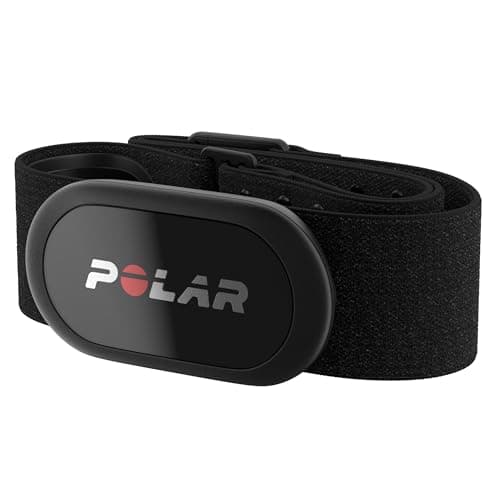
Top pick
Anyone who trains by heart ratePolar H10
The device other people's validation studies use as the reference. That is the strongest recommendation a sensor can have.
Price as of October 22, 2026. Prices move; Amazon's is the one that counts.
#ad · we may earn a commission from this link to Polar H10
The short answer
The Polar H10 ranks first because published studies use it as the reference standard — the strongest evidentiary position a sensor can hold. If you will not wear a chest strap, the Polar Verity Sense armband recorded a bias under 0.1 bpm against that reference on a graded treadmill test, which is as close as an optical sensor has been measured to get.
Ranked
Quick picks
| # | Device | Best for | Evidence | Score | Price |
|---|---|---|---|---|---|
| 01 | Polar H10 The device other people's validation studies use as the reference. That is the strongest recommendation a sensor can have. | Anyone who trains by heart rate | Peer-reviewed validation | 8.9/10 | $104.45Amazon |
| 02 | 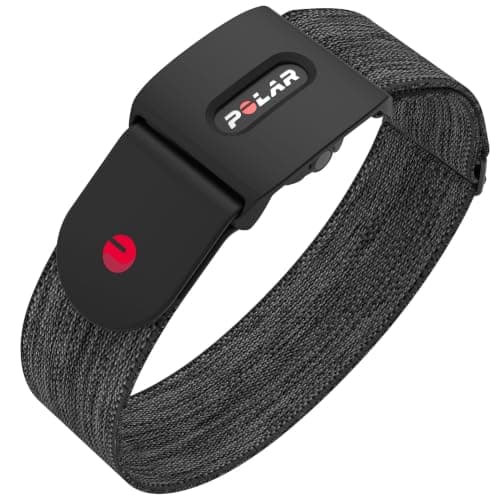 Polar Verity Sense The optical armband that measured a bias under 0.1 bpm against a chest strap on a graded treadmill test. The comfortable answer. | Strap-quality data without the strap | Peer-reviewed validation | 8.4/10 | $104.95Amazon |
| 03 | 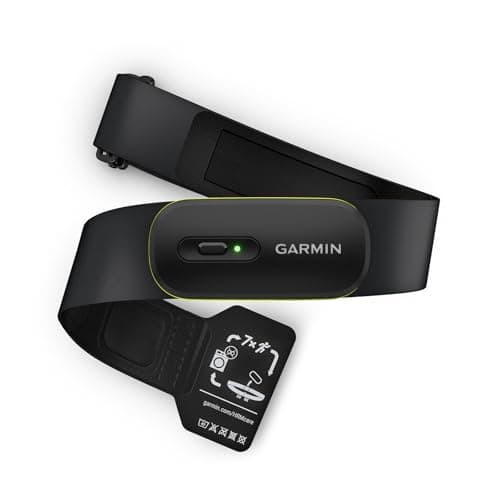 Garmin HRM 600 The strap to buy if you are already inside Garmin's ecosystem and want running dynamics with it. | Garmin owners wanting running dynamics | Manufacturer specification | 7.4/10 | $157.70Amazon |
| 04 | 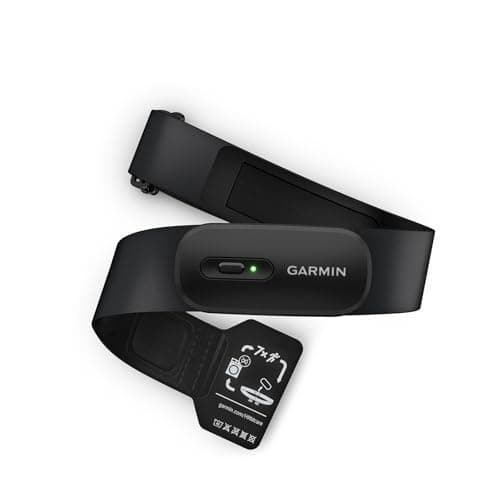 Garmin HRM 200 Garmin's plain electrical strap. Does the one job, costs the least of the three name-brand options. | Cheapest name-brand ECG strap | Manufacturer specification | 7.2/10 | $74.95Amazon |
| 05 | 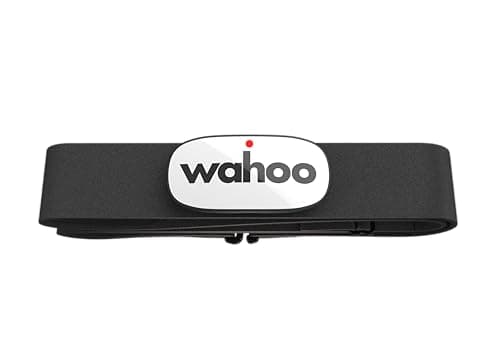 Wahoo TRACKR Heart Rate Monitor A rechargeable electrical strap for people who resent coin cells. | Wahoo and Zwift setups | Manufacturer specification | 6.6/10 | $98.50Amazon |
| 06 | 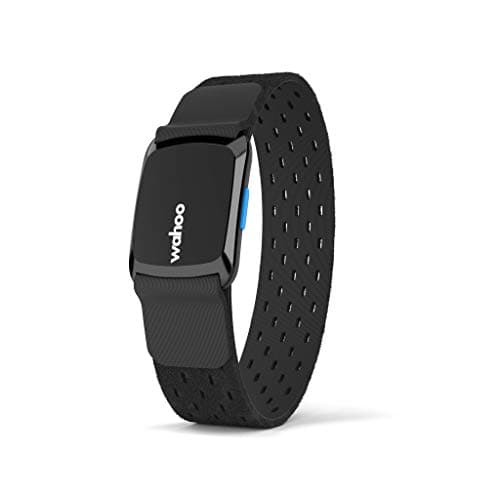 Wahoo TICKR FIT Armband The cheap way to move the sensor off your wrist and onto your forearm, where the physics is better. | Budget armband placement | Manufacturer specification | 6.5/10 | $89.99Amazon |
| 07 | 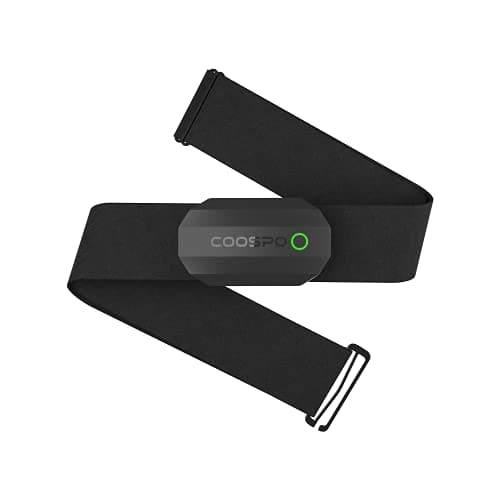 COOSPO H808S An electrical chest strap for roughly a quarter of the H10's price. The physics is right; the evidence is absent. | The cheapest correct sensor principle | No validation study exists | 6.1/10 | $29.99Amazon |
#ad· Live prices from the Amazon Product API, as of October 22, 2026. Where we have no verified live price we show none. Scores come from the published rubric at How we rank — the Evidence column shows what each ranking actually rests on, including where the answer is nothing.
Two physical principles, not seven brands
Before the ranking, the distinction that decides almost everything here.
Electrical sensors — chest straps — detect the electrical activity of the heart muscle directly. It is the same signal an ECG reads. There is no inference step.
Optical sensors — wrists, armbands, rings — shine light into the skin and infer pulse from how much comes back off moving blood. Skin tone, tattoos, ambient temperature, how tight the band is and how much the limb is moving all affect the measurement, because all of them affect the light.
One of those is a measurement and the other is an inference. That is why electrical straps win, and why researchers use them as the yardstick rather than as a subject.
The study that should decide your purchase
The 2025 Sensors anatomical-placement study (n = 28, 14 male and 14 female) did something unusually clever: it put three identical Whoop 4.0 unitson the same participants' wrist, forearm and upper arm simultaneously, alongside a Polar Verity Sense on the forearm and a Garmin Forerunner 55 on the wrist, all measured against a Polar H10.
Running the same sensor at three placements at once removes the brand variable entirely. Whatever differences appear are down to where the sensor sits, nothing else.
What it found, by intensity
At rest (5 minutes). Everything worked. Concordance above 0.99 for all devices, bias under 1 bpm, and the Verity Sense lowest at roughly 1.6 ± 0.8% MAPE. If you only ever look at resting heart rate, your existing watch is fine and you should close this page and keep your money.
Cycling warm-up (5 minutes). Separation begins. Whoop on the upper arm had the lowest error; the Verity Sense came in around 3.87 ± 1.92% MAPE. The wrist-worn Whoop and the Garmin showed limits of agreement spanning roughly ±10-19 bpm.
Burpees. Everything optical failed. Every device dropped below 0.50 concordance, and the wrist-worn Garmin showed a bias of approximately 33 bpm. Thirty-three beats is not a rounding error; it is the difference between an easy effort and a maximal one. If your training is explosive and stop-start, no optical device currently measured will serve you and you need a strap.
Modified Bruce treadmill protocol.The most running-relevant test, and the Verity Sense's best result: bias under 0.1 bpm, concordance 0.997. Whoop on the upper arm reached 0.992. Wrist devices sat at 0.85 or below.
The conclusion the authors drew
Proximal placements — upper arm and forearm — consistently outperformed the wrist, at every intensity. Not sometimes, not for one brand: consistently.
Which means the sentence most people need to read is this one: the upgrade is not a better watch, it is moving the sensor up your arm, and it costs about a hundred dollars and works with the watch you already own.
Why the H10 ranks first when the study cannot measure it
There is a genuine subtlety here worth naming. The H10 was the reference. So the study cannot tell you the H10's own error — everything else was measured against it, which mathematically fixes its error at zero within the study.
Being repeatedly chosen as the criterion by independent researchers is a strong signal, and we score it a 10 for that. But it is a different kind of evidence from a measured error bar, and we would rather explain the distinction than quietly let a 10 imply something it does not.
What we could not verify
Most of this roundup, honestly. Only the H10 and the Verity Sense appear in a peer-reviewed study. The Garmin HRM 600 and HRM 200, the Wahoo TRACKR and TICKR FIT, and the COOSPO H808S have no published validation we could find. They are all electrical straps or armbands using the same physical principles as the validated devices, which is a reasonable basis for expecting them to work — but expectation is not measurement, and we score them accordingly rather than assuming.
If price rather than evidence is your constraint, the same field ranked below the flagship tier is at best budget heart rate monitors, which sets out exactly what the discount removes — and it is the studies, not the electrode.
If your training is stop-start circuit work, the burpee result in that study is not an edge case but the whole session - the field for it is ranked in best heart rate monitors for CrossFit.
If you would rather not add a second device at all, the watch-only version of this question is at best heart rate monitor watches. It ranks the four best watches for heart rate on platform, strap support and battery - and states plainly that none of their wrist sensors has a favorable independent result.
In full
Every pick, and why
Polar H10
The device other people's validation studies use as the reference. That is the strongest recommendation a sensor can have.
- Sensor
- Electrical (ECG), chest strap
- Connectivity
- Bluetooth LE + ANT+
- Memory
- One session, up to 30 hours
- Battery (stated)
- Up to 400 h, CR2025 coin cell
- Water rating
- WR30
What's good
- Used as the criterion measure in published research — including the 2025 Sensors placement study on this site
- Simultaneous Bluetooth and ANT+, so it pairs to a watch and a bike computer at once
- 400 stated hours on a coin cell you replace rather than recharge
What isn't
- It is a chest strap, and a chest strap is less comfortable than a watch
- The strap wears out well before the sensor does
Skip this if
Skip this if you know yourself well enough to know you will not wear it. An unworn ECG strap measures nothing, and a wrist sensor you actually wear beats it every time.
What the evidence says
Peer-reviewed validationUsed as the reference standard in Sensors (2025), the anatomical-placement study of 28 participants. Being chosen as the criterion is an implicit validation by the researchers, though it means the study cannot measure the H10's own error.
Show how this 8.9 was calculated
| Factor | Weight | Score |
|---|---|---|
| EvidenceResearchers use it as the criterion measure. Nothing else in this category has a stronger evidentiary position. | 30% | 10.0 |
| HardwareElectrical ECG measurement rather than optical — a different and better physical principle for this job. | 20% | 9.5 |
| Metric coverageHeart rate and R-R intervals only; it does not pretend to do anything else. | 20% | 6.5 |
| Endurance400 stated hours on a replaceable coin cell. | 15% | 9.5 |
| Cost per capabilityInexpensive next to any watch, and it outlasts several of them. | 15% | 8.5 |
Price as of October 22, 2026. Prices move; Amazon's is the one that counts.
#ad · we may earn a commission from this link to Polar H10
Polar Verity Sense
The optical armband that measured a bias under 0.1 bpm against a chest strap on a graded treadmill test. The comfortable answer.
- Sensor
- Optical, forearm or upper-arm band
- Connectivity
- Bluetooth (dual) + ANT+
- Modes
- Live streaming, on-board recording, swim mode
What's good
- Sensors (2025) recorded the smallest bias of any device tested on the graded treadmill protocol — under 0.1 bpm, CCC = 0.997
- Lowest resting error in the same study, at roughly 1.6% MAPE
- Far more comfortable than a chest strap, and it works under a wetsuit
What isn't
- Still an extra device to charge and remember
- Like every optical sensor, it struggled in the same study's burpee protocol — nothing optical handles that well
Skip this if
Skip this if your training is mostly explosive, stop-start work. In the burpee protocol every optical device tested fell below 0.50 concordance, this one included. Buy the H10 for that.
What the evidence says
Peer-reviewed validationDirectly measured in Sensors (2025), n = 28, against a Polar H10 reference: lowest resting MAPE at ~1.6 ± 0.8%, and the smallest bias on the modified Bruce treadmill protocol at under 0.1 bpm (CCC = 0.997).
Show how this 8.4 was calculated
| Factor | Weight | Score |
|---|---|---|
| EvidenceDirectly measured in a peer-reviewed study, with the best result of any optical device tested. | 30% | 9.5 |
| HardwareOptical, but worn on the forearm — the placement the same study found outperforms the wrist. | 20% | 8.5 |
| Metric coverageHeart rate plus on-board recording and a swim mode. | 20% | 7.0 |
| EnduranceRechargeable, with stated endurance comfortably covering long sessions. | 15% | 8.0 |
| Cost per capabilityPriced against a good chest strap, not against a watch. | 15% | 8.5 |
Price as of October 22, 2026. Prices move; Amazon's is the one that counts.
#ad · we may earn a commission from this link to Polar Verity Sense
Garmin HRM 600
The strap to buy if you are already inside Garmin's ecosystem and want running dynamics with it.
- Sensor
- Electrical (ECG), chest strap
- Extras
- Running dynamics, HRV data, on-board storage
What's good
- Adds running dynamics that a watch alone cannot compute
- Stores data when out of watch range and syncs later
What isn't
- Costs meaningfully more than the Polar H10 without a published validation advantage
- Its extra metrics only fully surface inside Garmin's own platform
Skip this if
Skip this if you just want accurate heart rate. You would be paying a premium over the H10 for running-dynamics metrics most runners look at twice and never again.
What the evidence says
Manufacturer specificationGarmin publishes specifications but no validation study we could find. It is an electrical chest strap, which is the right physical principle — but 'right principle' is not the same as 'measured accuracy'.
Show how this 7.4 was calculated
| Factor | Weight | Score |
|---|---|---|
| EvidenceCorrect sensor principle, detailed published specs, no independent validation we could find. | 30% | 6.0 |
| HardwareElectrical ECG measurement with on-board storage. | 20% | 9.0 |
| Metric coverageHeart rate, HRV and the full running-dynamics set. | 20% | 8.5 |
| EnduranceGood stated endurance; rechargeable. | 15% | 8.0 |
| Cost per capabilityA clear premium over the H10 without a matching evidence advantage. | 15% | 6.0 |
$169.997% off
Price as of October 22, 2026. Prices move; Amazon's is the one that counts.
#ad · we may earn a commission from this link to Garmin HRM 600
Garmin HRM 200
Garmin's plain electrical strap. Does the one job, costs the least of the three name-brand options.
- Sensor
- Electrical (ECG), chest strap
- Extras
- Heart rate and HRV data, machine-washable strap
What's good
- Electrical measurement at the lowest name-brand price
- Machine-washable strap
What isn't
- No running dynamics
- No published validation we could find
Skip this if
Skip this if you own a Polar watch or bike computer. The H10 pairs more predictably across platforms and has the stronger evidentiary record.
What the evidence says
Manufacturer specificationPublished specifications only; no independent validation we could find.
Show how this 7.2 was calculated
| Factor | Weight | Score |
|---|---|---|
| EvidenceRight sensor principle, no measured validation we could find. | 30% | 5.5 |
| HardwareElectrical ECG chest strap. | 20% | 8.5 |
| Metric coverageHeart rate and HRV; nothing further. | 20% | 6.0 |
| EnduranceCoin-cell endurance in the usual chest-strap range. | 15% | 8.5 |
| Cost per capabilityThe cheapest electrical strap from a major brand. | 15% | 9.0 |
$79.996% off
Price as of October 22, 2026. Prices move; Amazon's is the one that counts.
#ad · we may earn a commission from this link to Garmin HRM 200
Wahoo TRACKR Heart Rate Monitor
A rechargeable electrical strap for people who resent coin cells.
- Sensor
- Electrical (ECG), chest strap
- Connectivity
- Bluetooth + ANT+
- Power
- Rechargeable
What's good
- Rechargeable rather than coin-cell
- Pairs cleanly with Wahoo head units and indoor platforms
What isn't
- No published validation we could find
- A rechargeable strap is one more thing to remember to charge — the H10's coin cell lasts 400 stated hours
Skip this if
Skip this if you train outdoors on long days. A flat rechargeable strap mid-ride is a problem a coin cell simply does not have.
What the evidence says
Manufacturer specificationPublished specifications only; no independent validation we could find.
Show how this 6.6 was calculated
| Factor | Weight | Score |
|---|---|---|
| EvidenceCorrect sensor principle, no measured validation we could find. | 30% | 5.5 |
| HardwareElectrical ECG chest strap with dual connectivity. | 20% | 8.5 |
| Metric coverageHeart rate; no additional metrics. | 20% | 6.0 |
| EnduranceRechargeable — convenient, but shorter between charges than a coin cell. | 15% | 6.5 |
| Cost per capabilityPriced near the H10 without its evidentiary record. | 15% | 7.0 |
Price as of October 22, 2026. Prices move; Amazon's is the one that counts.
#ad · we may earn a commission from this link to Wahoo TRACKR Heart Rate Monitor
Wahoo TICKR FIT Armband
The cheap way to move the sensor off your wrist and onto your forearm, where the physics is better.
- Sensor
- Optical, forearm band
- Connectivity
- Bluetooth + ANT+
What's good
- Gets the sensor onto the forearm, the placement the 2025 Sensors study found beats the wrist
- Cheaper than the Verity Sense
What isn't
- No published validation of this specific device
- Fewer modes than the Verity Sense — no on-board recording
Skip this if
Skip this if you want the measured result rather than the principle. The Verity Sense is the armband that was actually in the study.
What the evidence says
Manufacturer specificationNo validation of this device that we could find. The placement principle it exploits is peer-reviewed (Sensors 2025); the device itself is not.
Show how this 6.5 was calculated
| Factor | Weight | Score |
|---|---|---|
| EvidenceThe placement is validated; this device is not. | 30% | 5.0 |
| HardwareOptical sensor in the better anatomical position. | 20% | 7.5 |
| Metric coverageHeart rate only, no on-board recording. | 20% | 5.5 |
| EnduranceRechargeable, adequate for long sessions. | 15% | 7.5 |
| Cost per capabilityNotably cheaper than the validated alternative. | 15% | 8.5 |
Price as of October 22, 2026. Prices move; Amazon's is the one that counts.
#ad · we may earn a commission from this link to Wahoo TICKR FIT Armband
COOSPO H808S
An electrical chest strap for roughly a quarter of the H10's price. The physics is right; the evidence is absent.
- Sensor
- Electrical, chest strap
- Connectivity
- Bluetooth + ANT+
What's good
- Electrical measurement — the same physical principle as the straps costing four times as much
- Dual connectivity at the bottom of the market
What isn't
- No published validation of any kind
- Build quality and long-term strap durability are the usual budget compromise
Skip this if
Skip this if the number has to be right rather than merely plausible. There is no evidence behind this device, and we will not imply otherwise because it is cheap.
What the evidence says
No validation study existsNo validation study exists for this device that we could find. It is included because the sensor principle is correct and the price is genuinely low, not because we can show it is accurate.
Show how this 6.1 was calculated
| Factor | Weight | Score |
|---|---|---|
| EvidenceNo validation of any kind. Capped by the evidence hierarchy no matter how good the price is. | 30% | 2.5 |
| HardwareElectrical chest strap with dual connectivity. | 20% | 7.5 |
| Metric coverageHeart rate only. | 20% | 5.5 |
| EnduranceCoin-cell endurance. | 15% | 8.5 |
| Cost per capabilityBy a distance the cheapest electrical strap here. | 15% | 10.0 |
Price as of October 22, 2026. Prices move; Amazon's is the one that counts.
#ad · we may earn a commission from this link to COOSPO H808S
How to choose
If accuracy is the only thing that matters
The Polar H10. It is what the researchers use, it does the one job, and it costs a fraction of any watch here.
If you will not wear a chest strap
The Polar Verity Sense, and this is not a consolation prize — it is the device that measured a bias under 0.1 bpm on the treadmill protocol. Be honest with yourself about this: an unworn ECG strap measures nothing at all, and the best sensor is the one you actually put on.
If you do explosive or stop-start training
A chest strap, and only a chest strap. Every optical device measured fell below 0.50 concordance during burpees. There is no optical product that solves this, at any price.
If you want the cheapest thing that works on the right principle
The COOSPO H808S is an electrical strap with dual connectivity at roughly a quarter of the H10's price. The principle is right and the price is genuinely low. There is also no evidence behind it whatsoever, and we are not going to imply otherwise because it is cheap.
Connectivity, which is where people get caught out
ANT+ broadcasts to unlimited devices at once and is what most bike computers and gym equipment use. Bluetooth generally pairs one device at a time and is what phones and watches use. A strap with both pairs to your watch and your bike computer simultaneously; a Bluetooth-only strap makes you choose. The compatibility guide has the platform-by-platform detail.
Under $40
The cheap parts that decide what your strap records
A sensor is only as good as the belt, the contact and the cell behind it. None of this replaces a pick above — it is what keeps the one you already own reading the way it did when it was new.
These are not ranked and they are not scored on the rubric — none of them has a validation study and none ever will. They are here because a manufacturer's own instructions say they change what your sensor records, and each one links the page that says it. How the actual ranking works.
Replacement chest-strap belt
A strap that has stretched, or whose electrodes have washed out.
Polar says it plainly on its own troubleshooting page: the chest strap "doesn't last forever; it wears out like any other garment you regularly wear and wash". The transmitter pod outlives the belt, and the belt is the cheap half. Polar support: unusual heart rate readings.
A third-party belt listed as fitting the Polar H7, H9 and H10 pods. Check the listing against your own sensor first — stud spacing differs between brands.
$12.99Check price on AmazonPrice as of October 22, 2026. Prices move; Amazon's is the one that counts.
#ad · we may earn a commission from this link to Replacement chest-strap belt
Conductive electrode gel
The spiky, nonsense heart rate over the first ten minutes of a run.
Polar's instruction is to "moisten the electrode area of the strap thoroughly under tap water before training". Gel is the same fix that does not evaporate in the first mile — which is precisely when the dropouts happen, because the strap has not warmed up and you have not started sweating yet. Polar support: unusual heart rate readings.
The linked tube is axion's 8.5 oz electrode gel, sold for TENS and EMS pads rather than for chest straps — the listing describes it as hypoallergenic, odorless and suitable for all types of self-adhesive electrodes. Nothing in this category is sold specifically for heart-rate straps, so check the ingredients if your skin reacts to anything.
$9.99Check price on AmazonPrice as of October 22, 2026. Prices move; Amazon's is the one that counts.
#ad · we may earn a commission from this link to Conductive electrode gel
Panasonic CR2025 coin cells
Dropouts and lost range from a sensor battery nobody has changed.
A weak cell does not fail cleanly. Polar states that "if the battery is running low, the transmission range decreases which may cause errors in heart rate readings" — so it degrades into bad data rather than into no data, which is the harder failure to notice. The H10 manual specifies a CR2025 and names Panasonic and Maxell as the brands it has found reliable. Polar H10 manual: batteries.
CR2025 is the cell for the Polar H10 and H9. Garmin's straps and other brands differ — check your own manual before ordering.
$6.28Check price on AmazonPrice as of October 22, 2026. Prices move; Amazon's is the one that counts.
#ad · we may earn a commission from this link to Panasonic CR2025 coin cells
Polar armband for Verity Sense
A spare or better-fitting band for the sensor placement that actually wins.
This is the accessory form of the strongest finding on this site: in the 2025 Sensors placement study, identical optical sensors moved off the wrist onto the forearm or upper arm beat the wrist at every intensity tested. The armband is the part that holds a sensor where that result applies, and Polar sells it on its own in M-XXL.
Polar's own armband, sold separately. It does not include the Verity Sense sensor itself.
$24.91Check price on AmazonPrice as of October 22, 2026. Prices move; Amazon's is the one that counts.
#ad · we may earn a commission from this link to Polar armband for Verity Sense
How this ranking was built
Every score on this page comes from one published rubric, applied identically to every device on the site, with the weights written down and the inputs shown. We have not worn any of these devices and we never say we have. Read the method and check us.
Questions
Frequently asked
What is the most accurate heart rate monitor?
The Polar H10 is what published validation studies use as their reference standard, which is the strongest evidentiary position available. Among optical devices, the Polar Verity Sense recorded the best measured result we found — a bias under 0.1 bpm and concordance of 0.997 against a chest strap on a graded treadmill protocol.
Is a chest strap really more accurate than a watch?
Yes, and it is a difference of physical principle rather than of quality. A chest strap measures the heart's electrical activity directly; a watch infers pulse from light scattered back through a moving joint. In the 2025 placement study, wrist devices showed limits of agreement of ±10-19 bpm during a cycling warm-up and a bias of around 33 bpm during burpees.
Where should I wear an optical heart rate sensor?
As far up the arm as practical. The 2025 study ran three identical sensors at wrist, forearm and upper arm simultaneously, and the proximal placements beat the wrist at every intensity tested. The forearm and upper arm move less and have different tissue characteristics, both of which help an optical sensor.
Do I need ANT+ or is Bluetooth enough?
Bluetooth is enough for a watch or a phone. You want ANT+ as well if you also use a bike computer or gym cardio equipment, because ANT+ broadcasts to several devices at once while Bluetooth generally connects to one. The Polar H10 supports both.
Is a cheap chest strap good enough?
It uses the correct physical principle, which is most of the battle. But no budget strap we looked at has any published validation, so nobody can tell you how well it performs. If the number needs to be right rather than merely plausible, buy the one researchers use.
Show your working
Sources
Every one of these was read in full before it was cited. Where we could not access a paper, we do not quote its numbers.
- [1]Peer-reviewed validation2025“Impact of Anatomical Placement on the Accuracy of Wearable Heart Rate Monitors During Rest and Various Exercise Intensities”, Sensors (Basel)
n = 28 (14 male, 14 female). Polar H10 chest strap as the reference. Compared Polar Verity Sense (forearm), Garmin Forerunner 55 (wrist) and three simultaneous Whoop 4.0 units at wrist, forearm and upper arm, across rest, cycling warm-up, burpees and a modified Bruce treadmill protocol.
- [2]Manufacturer specification2026Polar — H10 heart rate sensor published specifications
Manufacturer-stated: electrical (ECG) measurement, Bluetooth LE + ANT+, internal memory for one session up to 30 hours, up to 400 h on a CR2025 coin cell, WR30.
- [3]Independent measured test2023the5krunner, measured heart-rate comparison of the COROS PACE 3
An independent measured test, not a peer-reviewed study, and the author explicitly cautions the dataset was limited. Compared against Garmin HRM-Pro Plus and Polar Verity Sense across easy runs, intervals and cycling. Found divergence during and after rapid intensity change. Tests the PACE 3, not the PACE 4.
Read next
Related
- Best heart rate monitor watches
If you want heart rate from a watch rather than a separate sensor.
- What a heart rate zone actually is
What the accuracy on this page is worth once zones are drawn from it.
- Best budget heart rate monitors
The same field below the flagship, and what the discount actually removes.
- Best HR monitors for cycling
The same sensors, ranked for riders and connectivity.
- Polar Verity Sense review
The armband with the 0.997 concordance, in full.
- Wrist vs chest strap
The full evidence breakdown behind this ranking.
- Best chest straps
If you have already decided on a strap, this is the shortlist.
- Fix your heart rate data
Start from the symptom instead of the product.
- Best for CrossFit
The one training type where nothing optical works at any price.
- Best for swimming
Where the radio fails and on-board memory decides it.
- Best fitness gifts under $100
These straps, explained for a gifter who does not know the category.