Rings, bands and recovery
Alternatives to the Oura Ring
Oura owns the only strong published sleep-staging result in this category and the lowest measured nocturnal HRV error of five devices tested at once. Those are the two things an alternative has to answer, and not one of the five below answers either.
We earn a commission when you buy through our Amazon links, at no extra cost to you. It never decides a ranking — the rubric that does is published in full, so you can check us rather than take our word for it. How this works.
Top pick
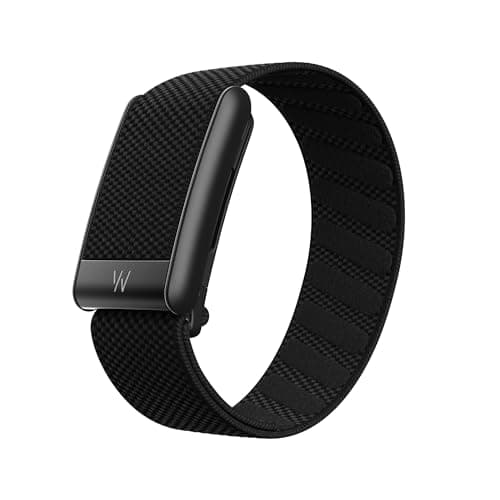
Recovery-led training, if you accept the modelWHOOP Peak (12-month membership)
Not a product you buy, a subscription you enter. Priced honestly on Amazon as what it is: twelve months.
$239.0017% off
Price as of November 23, 2026. Prices move; Amazon's is the one that counts.
#ad · we may earn a commission from this link to WHOOP Peak (12-month membership)
The short answer
If the membership is why you are leaving, the RingConn Gen 3 is the closest like-for-like swap: a titanium ring with up to 14 manufacturer-stated days and no fee of any kind. If you want the measurement moved somewhere the physics works better, WHOOP Peak can be worn on the upper arm, which beat the wrist at every intensity in a 2025 peer-reviewed placement study. The budget pick is the Fitbit Charge 6. None of the five has a published sleep validation, and Oura does.
Ranked
Quick picks
| # | Device | Best for | Evidence | Score | Price |
|---|---|---|---|---|---|
| 01 | WHOOP Peak (12-month membership) Not a product you buy, a subscription you enter. Priced honestly on Amazon as what it is: twelve months. | Recovery-led training, if you accept the model | Peer-reviewed validation | 7.3/10 | $199.00Amazon |
| 02 | 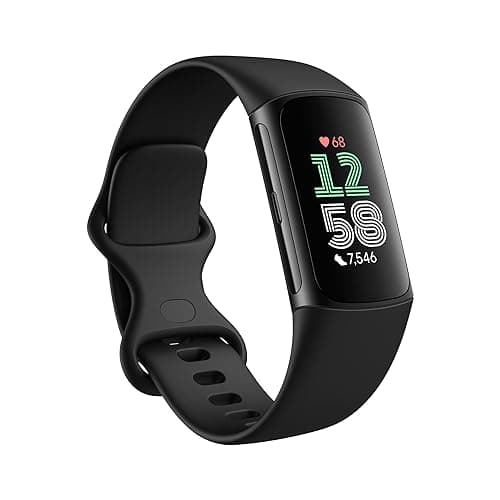 Fitbit Charge 6 Cheap, measured, and the weakest of the three devices in the PSG study. We would rather tell you that than not rank it. | Lowest-cost tracker with published data behind it | Peer-reviewed validation | 7.2/10 | Check price → |
| 03 | 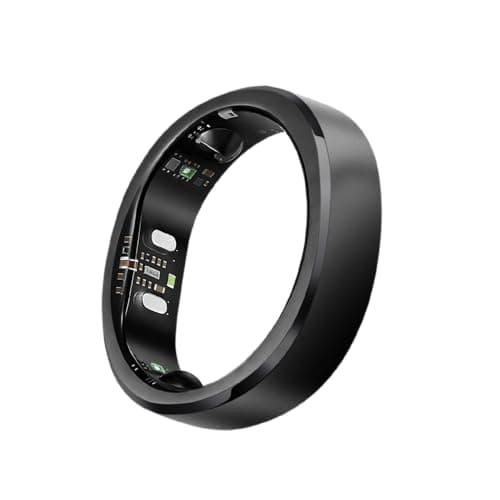 RingConn Gen 3 A fortnight of stated battery with no fee of any kind — and not one published measurement of anything it reports. | Wearing it and forgetting about it | No validation study exists | 6.9/10 | $349.00Amazon |
| 04 | 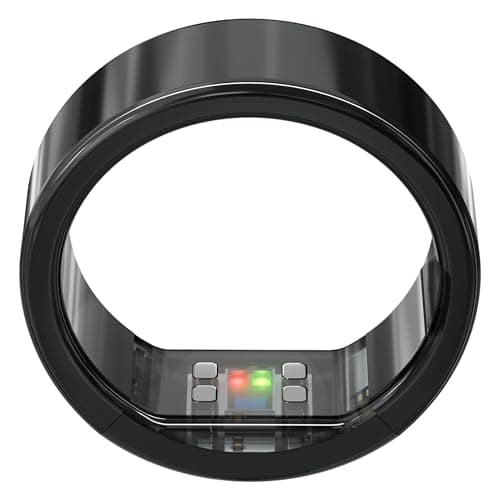 Ultrahuman Ring PRO The longest stated battery and the most hardware of any ring here — from the only ring maker publishing measurement work, none of which was run on this ring. | Buyers who want the longest stated battery with no mandatory fee | No validation study exists | 6.8/10 | $379.00Amazon |
| 05 | 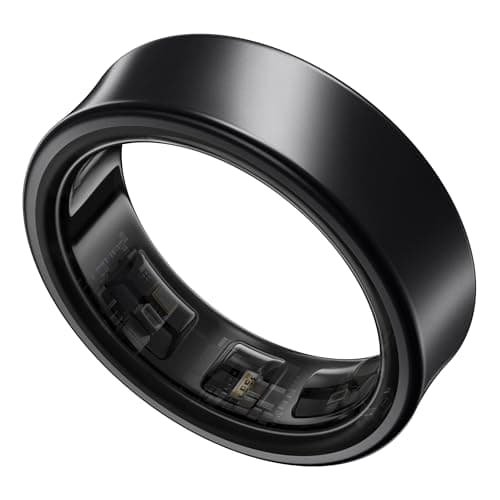 Samsung Galaxy Ring The cheapest no-subscription ring from a major manufacturer — and Samsung's own specification page says it pairs with a Samsung Galaxy phone, which decides the purchase before accuracy ever comes up. | Galaxy phone owners who want sleep and recovery tracking with no recurring fee | No validation study exists | 6.4/10 | $399.99Amazon |
#ad· Live prices from the Amazon Product API, as of November 23, 2026. Where we have no verified live price we show none. Scores come from the published rubric at How we rank — the Evidence column shows what each ranking actually rests on, including where the answer is nothing.
What the Oura Ring is genuinely good at
An alternatives page that skips this step is just a list, so start with what you would be handing back. Oura holds two published results that nothing else on this roster can match, and both of them are about the number people actually buy a ring for.
The first is sleep staging. In Robbins et al. (2024), 35 healthy adults slept a single inpatient night with clinical polysomnography while wearing three consumer devices at once. The Oura ring tested recorded 76.3% four-stage agreement and 79.5% deep-sleep sensitivity — the best of the three — and matched polysomnography on seven of eight nightly summary measures, missing only sleep latency by about five minutes. For context on how rare that is, the 2024 living umbrella review found that roughly 34 of 310 identified consumer wearables have ever been validated at all, across 249 primary studies and 430,465 participants. Two caveats belong in the same breath: the study was one night on 35 people, and the device measured was the Gen 3, not the Ring 4 or the Ring 5.
The second is nocturnal heart-rate variability. Dial et al. (2025) put an Oura Gen 3, an Oura Gen 4, a Polar Grit X Pro, a Garmin fēnix 6 and a Whoop 4.0 on the same 13 people across 536 nights, against a single-lead ECG reference sampled at 1000 Hz. HRV error came out at 5.96% for the Oura Gen 4 and 7.15% for the Gen 3, against 8.17% for the Whoop, 10.52% for the Garmin and 16.32% for the Polar. Oura finished first and second in a five-device field measured simultaneously. Our full read of the ring is at the Oura Ring 4 reviewed, and the wider HRV field is at HRV accuracy by device.
Oura also publishes a complete specification table, which two of the five picks below do not. Oura states 7.90 mm wide, 2.88 mm thick, 3.3-5.2 g by size, five to eight days of battery, water resistance to 100 m, and a sensor list naming red and infrared LEDs for blood oxygen, alternating green and infrared LEDs for continuous heart rate and HRV, a digital temperature sensor and an accelerometer. It is listed as working on both iOS and Android.
So why do people leave? Four reasons, and they are not the same reason
Oura scores 8.0 under our rubric, which is the highest score of any sleep device on this site. It has exactly one weak row, and it is not accuracy: cost per capability, at 5.5 out of 10. That row is the membership. Oura publishes $5.99 a month or $69.99 a year, with the first month free, and states that without it "your Oura Ring and Oura App will still function, but the insights, personal health data, and benefits you receive will be much more limited." Over three years on the monthly rate that works out to a true cost of $459rather than the sticker price — and the three-year figure is the honest one, because a ring whose insights switch off is not really owned.
Name which of these four is your reason before you read any further. The sections below are organized by them, not by brand.
- The recurring fee. Three picks here have no mandatory subscription at all. One of them is a subscription and nothing else, and it is on the page for a different reason.
- The form factor.Oura's own guidance is to take the ring off for heavy lifting, which is awkward if the gym is most of your training. Two picks move the sensor to the upper arm or the wrist.
- The phone and the platform.One pick on this page will not pair with an iPhone at all, by its maker's own published requirement. That decides the purchase before accuracy is ever discussed.
- Price. The cheapest pick here is a fraction of the ring, and it is also the only one with a published sleep measurement behind its platform.
Say this out loud first: nothing here has validated sleep staging
This is the headline finding of the page and we are not going to bury it below five product sections. Not one of the five picks below has an independent sleep-staging validation that we could find.The RingConn and the Samsung ring have no published measurement of anything, from anyone. Ultrahuman has published more than either, and all of it was written by Ultrahuman and none of it tested sleep stages. The Whoop appears in the HRV study above — where it placed third of five — and in a peer-reviewed placement study for heart rate, neither of which is sleep staging. Fitbit is the only pick whose staging platform has ever been in a polysomnography comparison, and it came last of the three devices in it.
So the honest framing of this entire page is: you are not shopping for a more accurate sleep tracker than an Oura, because no such thing has been published. You are shopping for a device that costs less to own, fits your training, or works with your phone — and accepting an unaudited sleep graph in exchange. That trade can be completely rational. It is just not the trade the marketing describes, and the ranked field at the most accurate sleep trackers shows exactly how thin the published record is.
For the physics rather than the fee: WHOOP Peak
WHOOP Peak is the highest-scoring pick here at 7.3 and the strangest recommendation on a page about escaping a subscription, because it isa subscription — the Amazon listing is twelve months of membership with the hardware included rather than a product you buy. We rank it first anyway, and the reason is placement.
The 2025 placement study in Sensors ran three identical Whoop 4.0 units simultaneously at wrist, forearm and upper arm on 28 people, against a Polar H10 chest strap as the reference instrument, across rest, a cycling warm-up, burpees and a modified Bruce treadmill protocol. Position beat device: upper-arm placement produced the lowest error at warm-up and the best agreement in the burpee protocol, while the wrist unit showed limits of agreement of roughly plus or minus 10 to 19 bpm at warm-up. A Whoop can legitimately be worn on the upper arm, and that is a published advantage no ring and no watch on this roster can copy.
Now the cons, and they are large. It stops working when you stop paying, so the three-year arithmetic is the only number worth looking at: $677at today's listed twelve-month price, which is the weakest cost figure on this site and worse than the Oura membership you were trying to escape. It has no screen. The placement study tested a Whoop 4.0, not the current generation. And in the nocturnal HRV comparison above it finished third of five, behind both Ouras. Skip it if the fee was the whole point — in which case read the next three picks instead, or our full field at alternatives to WHOOP.
The budget pick: Fitbit Charge 6, and the only sleep measurement on this page
The Fitbit Charge 6is the cheapest pick here — a band rather than a ring, and a price tier below every ring on this page — and it is the only device here whose sleep-staging platform has ever been measured against polysomnography. Fitbit was in the Robbins study. RingConn, Ultrahuman and Samsung were not, and neither was Garmin. One honest note on the price: Amazon is not publishing a price for this listing at the moment, so the bracket above is qualitative and the buy link goes to the live listing rather than to a number we have verified.
The unflattering half, in the same paragraph, because it is the same study. The Fitbit device tested came third of three: 70.9% four-stage agreement, 61.7% deep-sleep sensitivity, light sleep overestimated by about 18 minutes and deep sleep underestimated by about 15. And the device measured was the Sense 2, not the Charge 6 — Fitbit shares its staging algorithm across the line, but that is still evidence about a sibling rather than about the band you would buy. The other cons are structural: it is a band rather than a ring, so it sits on the weakest published optical site; up to 7 stated days of battery; and some features sit behind a Fitbit Premium subscription, which means "escaping a subscription" is only partly true here.
The closest like-for-like swap: RingConn Gen 3
If you want a ring, on your finger, with no fee, the RingConn Gen 3 is the answer and it is not close. RingConn states titanium and epoxy resin, 2.3 mm thick at 2.5-3.5 g, sizes 6 to 15, battery "up to 14 days", a universal wireless charging case, 10 days of offline data storage, vibration alerts, vascular health insights, sleep apnea pattern insights, and "No Subscription Required". Fourteen stated days against Oura's five to eight, at 2.3 mm against 2.88 mm, with no recurring fee attached to any of it. Over three years that fee difference is larger than the price of the hardware, which is the single biggest cost variable in this whole category.
The cons are exactly what you are paying less for. No independent validation of any RingConn ring exists that we could find, and RingConn has published none of its own — so the apnea patterns and vascular trends in that feature list have never been checked by anyone, and RingConn's own page carries a disclaimer that the product is not a medical device. RingConn also publishes no water-resistance rating and no sensor list we could read, which is why neither appears anywhere on this site; Oura publishes both. The head-to-head detail is at Oura vs RingConn.
For the longest stated battery: Ultrahuman Ring PRO
The Ultrahuman Ring PRO is the pick for a reader who wants a ring they can forget about. Ultrahuman's own PRO-versus-AIR table states up to 15 days of battery and up to 45 with the charging case it ships with, unibody titanium with a PVD coating, 2.65 mm thick at 3.3-4.8 g, a published 100 m water-resistance rating, a dual-core processor with on-chip machine learning, a redesigned PPG sensor plus temperature and a 6-axis IMU, BLE 5.3, up to 250 days of on-ring storage and a ProRelease cut-away mechanism. That is the most complete published hardware specification of any ring we rank, and the longest stated endurance.
Ultrahuman is also the only maker here to have published measurement work of any kind — a 2026 medRxiv preprint testing a VO2max estimate against cardiopulmonary exercise testing in 101 subjects, which reported a mean absolute error of 4.68 mL per kg per minute and Pearson r = 0.79. Read the small print, because we do: it is a preprint rather than a peer-reviewed paper, all eight authors work for Ultrahuman, it measures VO2max rather than sleep, and it tested the outgoing Ring AIR — whose PPG sensor Ultrahuman says it redesigned for this ring. So nothing has been published about the ring actually on sale. Two further cons: at 2.65 mm and up to 4.8 g it is the bulkiest ring here, and "no subscription" is not quite the whole story — Ultrahuman bills some app modules monthly, from $2.90, though core sleep, recovery and heart-rate tracking sits behind none of them. The ring field ranked against each other is at best smart rings.
For Galaxy phone owners only: Samsung Galaxy Ring
The Samsung Galaxy Ringranks last here and is on the page because it is the cheapest no-subscription ring from a major manufacturer, with a published specification table as complete as Oura's. Samsung states 7.0 mm wide and 2.6 mm thick, per-size weights from 2.3 g to 3.3 g, per-size battery capacities, a rated life of up to six days for sizes 5 to 11 and up to seven for size 13, a titanium frame, 10 ATM plus ISO 22810 water resistance to 100 m and an IP68 classification, and a charging case in the box taking stated endurance to up to 14 days. No subscription fee appears anywhere on Samsung's US page.
The reason it is last is one line in Samsung's own specification table, and it is a hard gate rather than a preference: the ring pairs with a Samsung Galaxy phone running Android 11.0 or later, and needs Samsung Health v6.27 or later plus a Samsung account. There is no iPhone support anywhere on Samsung's pages, and Samsung states that features including Energy Score, Wellness Tips and snore detection need a compatible Galaxy handset. Oura, by contrast, lists iOS and Android. Three more cons: three sensors is the shortest published sensor list of any ring here; six to seven days is the shortest stated endurance of any ring we rank; and no validation of this ring exists from Samsung or anyone else. The nearest published Samsung measurement, Kim, Joo & Choi (2023), ran a Galaxy Watch 3 against in-laboratory polysomnography in 32 adults and reported 0.651 overall four-stage accuracy, 0.524 specificity for wake and an REM duration ICC of 0.153 — a 2020 wrist watch, not this ring, and we do not transfer it. The direct comparison is at Oura vs Samsung Galaxy Ring.
What is deliberately not on this page
The Oura Ring 5 is not here, because a newer Oura is a sibling rather than an alternative — and on this site it ranks below the Ring 4, because no validation of that generation exists and the published result belongs to an earlier ring. That argument is laid out at Oura Ring 4 vs Ring 5.
The RingConn Gen 2 is not here either, for the same reason in reverse: it is the previous generation of a pick already on the page, and the Gen 3 states more battery for a similar position on price. If you want the older ring specifically, the write-up is at RingConn Gen 2 reviewed.
No watch is on this page as a primary pick, even though several Garmins track sleep and one of them states 14 smartwatch days. A wrist is a worse optical site than a finger for the same physical reason a forearm beats a wrist, and Garmin was absent from the polysomnography comparison entirely. If a watch is what you actually want, the ranked field is at best sleep tracking watches and the brand cut is at best Garmin watches for sleep. If the brand rather than the form factor is what you are leaving behind, the non-Garmin field is at alternatives to Garmin, where this ring is the top pick for exactly the reason given above.
And no chest strap is a pick here, although one is the right answer for a reader whose real complaint is daytime heart rate rather than sleep. The placement study above used a Polar H10 as its reference instrument, and a strap costs a fraction of any ring on this page: see best heart rate monitors for running.
In full
Every pick, and why
WHOOP Peak (12-month membership)
Not a product you buy, a subscription you enter. Priced honestly on Amazon as what it is: twelve months.
- Form
- Screenless band, worn on wrist or upper arm
- Commercial model
- Membership — the hardware is included, not purchased
- Term
- 12 months
What's good
- Can be worn on the upper arm, and Sensors (2025) found upper-arm placement beat the wrist at every intensity tested
- The Amazon listing is the membership, so the price you see is at least an honest twelve-month figure
What isn't
- Stops working when you stop paying — the three-year cost is the number that matters, and it is not the sticker
- The 2025 placement study measured a Whoop 4.0, not the current generation
Skip this if
Skip this if you want to own your tracker. A membership that bricks on cancellation is a genuinely different proposition from a watch, and no amount of data quality changes that.
What the evidence says
Peer-reviewed validationSensors (2025) tested three Whoop 4.0 units simultaneously at wrist, forearm and upper arm against a Polar H10. Upper-arm placement produced the lowest error at warm-up and the best agreement in the burpee protocol; the wrist unit showed limits of ±10-19 bpm at warm-up. That was the 4.0, not the current model.
Show how this 7.3 was calculated
| Factor | Weight | Score |
|---|---|---|
| EvidenceGenuinely measured in a peer-reviewed study, with a favorable result for upper-arm placement — but on a previous generation. | 30% | 7.5 |
| HardwareScreenless optical band whose real advantage is that it can be worn where the physics works. | 20% | 8.0 |
| Metric coverageDeep recovery, strain and sleep analytics. | 20% | 8.5 |
| EnduranceMulti-day, with a wearable battery pack for charging without removal. | 15% | 7.5 |
| Cost per capabilityThe weakest cost figure on the site once three years of membership are added up. | 15% | 4.0 |
$239.0017% off
Price as of November 23, 2026. Prices move; Amazon's is the one that counts.
#ad · we may earn a commission from this link to WHOOP Peak (12-month membership)
Fitbit Charge 6
Cheap, measured, and the weakest of the three devices in the PSG study. We would rather tell you that than not rank it.
- Form
- Wrist band
- Battery (stated)
- Up to 7 days
- Extras
- Heart rate on connected gym equipment
What's good
- One of only three devices with a published head-to-head PSG result at all
- Substantially cheaper than every ring here
What isn't
- Robbins et al. (2024): lowest four-stage agreement of the three tested, at 70.9%, and deep-sleep sensitivity of 61.7%
- Overestimated light sleep by 18 minutes and underestimated deep sleep by 15
Skip this if
Skip this if the sleep stages are the point. It was measured, and it came third of three.
What the evidence says
Peer-reviewed validationRobbins et al., Sensors 24(20):6532 (2024) tested the Fitbit Sense 2 — not the Charge 6 — against polysomnography: 70.9% four-stage agreement (κ = 0.55) and 61.7% deep-sleep sensitivity, the weakest of the three devices. Fitbit's staging algorithm is shared across the line, but this remains evidence about a different device.
Show how this 7.2 was calculated
| Factor | Weight | Score |
|---|---|---|
| EvidenceReal peer-reviewed evidence exists for the platform — it is simply unflattering, and it tested a sibling device. | 30% | 6.0 |
| HardwareWrist-worn optical sensing, the weakest of the three placements in the placement study. | 20% | 7.0 |
| Metric coverageBroad everyday metrics; some features sit behind Fitbit Premium. | 20% | 7.5 |
| EnduranceUp to 7 stated days. | 15% | 7.5 |
| Cost per capabilityBy far the cheapest device in this roundup. | 15% | 9.0 |
No buyable offer at the last price check (November 23, 2026). We show nothing rather than a stale number.
#ad · we may earn a commission from this link to Fitbit Charge 6
RingConn Gen 3
A fortnight of stated battery with no fee of any kind — and not one published measurement of anything it reports.
- Form
- Ring, titanium and epoxy resin
- Size and weight
- 2.3 mm thick, 2.5-3.5 g, manufacturer-stated
- Battery
- Up to 14 days, manufacturer-stated, plus a wireless charging case
- Sizing
- Sizes 6-15 — the ASIN is per size
- Subscription
- None
- Extras
- Sleep apnea pattern insights, vascular health insights, 10 days offline storage
What's good
- Manufacturer-stated battery of up to 14 days, plus a charging case, with no fee attached to any of it
- No subscription and no paid app modules, so the sticker price is the whole three-year price
- Apnea pattern and vascular insights are included rather than sold separately
What isn't
- No independent validation of any kind that we could find — the same gap the Gen 2 has
- RingConn publishes no water-resistance rating and no sensor list we could read, so this site quotes neither
- RingConn's own page states the product is not a medical device, which is worth reading next to the apnea and vascular features
Skip this if
Skip this if you want a number somebody has checked. It is the cheapest ring to own over three years and the most comfortable to live with, and every figure it shows you is unaudited.
What the evidence says
No validation study existsNo independent validation study exists for this device that we could find, and none exists for the Gen 2 either. RingConn has not published a validation of its own. In a category whose headline output is a four-stage sleep graph you cannot check yourself, that absence is the most important thing about the product.
Show how this 6.9 was calculated
| Factor | Weight | Score |
|---|---|---|
| EvidenceNothing published by anyone, including RingConn itself. Same position as the Gen 2. | 30% | 2.5 |
| HardwareRingConn's current generation, per the manufacturer's own specification: 2.3 mm and 2.5-3.5 g in titanium and epoxy resin. | 20% | 8.0 |
| Metric coverageSleep, apnea patterns, vascular trends, cycle and activity, with no feature paywall anywhere. | 20% | 8.5 |
| EnduranceUp to 14 manufacturer-stated days plus a charging case, second only to the Ultrahuman Ring PRO's stated 15 among rings on this site. | 15% | 9.5 |
| Cost per capabilityNo subscription and no paid modules. Over three years that is the strongest cost position in the category. | 15% | 9.5 |
Price as of November 23, 2026. Prices move; Amazon's is the one that counts.
#ad · we may earn a commission from this link to RingConn Gen 3
Ultrahuman Ring PRO
The longest stated battery and the most hardware of any ring here — from the only ring maker publishing measurement work, none of which was run on this ring.
- Form
- Ring, unibody titanium with a PVD coating
- Size and weight
- 2.65 mm thick, 3.3-4.8 g by size, manufacturer-stated
- Battery
- Up to 15 days, up to 45 with its charging case, manufacturer-stated
- Water resistance
- 100 m / 328 ft, manufacturer-stated
- On-device storage
- Up to 250 days, manufacturer-stated
- Sizing
- Sizes 5-14 in four finishes — the ASIN is per size
- Subscription
- None required; some optional app modules are billed monthly
What's good
- Up to 15 manufacturer-stated days, and up to 45 with the charging case it ships with — the longest stated endurance of any ring on this site
- Up to 250 days of on-device storage against the four days of the ring it replaces, so time away from your phone costs you nothing
- A published 100 m water-resistance rating and a complete published specification table, which neither rival publishes in a form we could read
- Core tracking carries no mandatory fee, and Ultrahuman is the only one of these three makers to have published measurement work of any kind
What isn't
- Nothing has been published about this ring by anyone — Ultrahuman's two 2026 papers tested the outgoing Ring AIR, whose PPG sensor Ultrahuman says it redesigned for this one
- Nobody, including Ultrahuman, has published a sleep-staging validation of any of its rings — the metric most buyers are actually paying for
- At 2.65 mm and 3.3-4.8 g it is the thickest and heaviest ring here, where the AIR it replaces was the thinnest and lightest
- "No subscription" is still not quite the whole story: some app modules are billed monthly, from $2.90
Skip this if
Skip this if you are buying on the strength of Ultrahuman's research. The research is real and worth reading, but the company selling you the ring wrote all of it, it is about VO2max rather than sleep, and it was run on the ring this one replaces.
What the evidence says
No validation study existsNo validation study of the Ring PRO exists that we could find, by Ultrahuman or anyone else. Ultrahuman has published more about its rings than either rival's maker has about theirs — a 2026 medRxiv preprint testing a VO2max estimate against cardiopulmonary exercise testing in 101 people, and a peer-reviewed 2026 Frontiers in Digital Health analysis of 442 of its own users — but both were authored entirely by Ultrahuman Healthcare Pvt Ltd and both tested the Ring AIR. Ultrahuman's own PRO-versus-AIR table describes the PRO's heart-rate sensor as a redesigned PPG, which is precisely the thing a validation exists to test, so those papers do not transfer to this device.
Show how this 6.8 was calculated
| Factor | Weight | Score |
|---|---|---|
| EvidenceNothing published about this ring at all. Half a point above a maker that has published nothing whatsoever, because Ultrahuman's method on the previous ring is at least written down and readable — and well below the tier where somebody outside the company checked the hardware you would actually buy. | 30% | 3.0 |
| HardwareUnibody PVD-coated titanium with a stated 100 m rating, a dual-core processor with on-chip machine learning, a redesigned PPG plus temperature and a 6-axis IMU, BLE 5.3 and a ProRelease cut-away mechanism, per the manufacturer's specification — bought at the cost of being the bulkiest ring here. | 20% | 8.5 |
| Metric coverageSleep with stages, recovery, stress, movement and workouts, heart rate, HRV and temperature, with up to 250 days held on the ring — but several extras still sit behind paid modules. | 20% | 8.0 |
| EnduranceUp to 15 manufacturer-stated days, and up to 45 with the case it ships with. Ultrahuman states the figure varies by mode, roughly 12 days in Turbo and 15+ in Chill. | 15% | 9.5 |
| Cost per capabilityNo mandatory fee, so the three-year figure is close to the sticker — but the sticker is $479 against $349 for the RingConn, and some modules are billed monthly on top. | 15% | 8.0 |
$479.0021% off
Price as of November 23, 2026. Prices move; Amazon's is the one that counts.
#ad · we may earn a commission from this link to Ultrahuman Ring PRO
Samsung Galaxy Ring
The cheapest no-subscription ring from a major manufacturer — and Samsung's own specification page says it pairs with a Samsung Galaxy phone, which decides the purchase before accuracy ever comes up.
- Form
- Ring, titanium frame, three finishes
- Size and weight
- 7.0 mm wide, 2.6 mm thick, 2.3-3.3 g by size, manufacturer-stated
- Battery
- Up to 6 days (sizes 5-11) and up to 7 days (size 13), up to 14 with the charging case, manufacturer-stated
- Water resistance
- 10 ATM and ISO 22810 to 100 m, plus IP68, manufacturer-stated
- Sensors
- Accelerometer, optical bio-signal, skin temperature — three, per Samsung's own list
- Sizing
- Sizing kit covers sizes 5-13 — the ASIN is per size and per finish
- Phone requirement
- Pairs with a Samsung Galaxy phone on Android 11.0 or later; Samsung Health v6.27+ and a Samsung account
- Subscription
- None stated anywhere on Samsung's page
What's good
- No subscription of any kind appears on Samsung's page, and the starting price is the lowest of any major-brand ring we rank
- A complete published specification table — per-size weights, per-size battery capacities, a 10 ATM and ISO 22810 rating and an IP68 classification — which two of its rivals do not publish in a form we could read
- 2.6 mm thick and 2.3-3.3 g, which is in the same bracket as the thinnest rings on this site
- A charging case is in the box rather than sold separately, taking stated endurance to up to 14 days
What isn't
- Samsung's own specification page states it pairs with a Samsung Galaxy phone running Android 11.0 or later — there is no iPhone support anywhere on Samsung's pages, and several features need a Galaxy handset specifically
- No independent validation of this ring exists that we could find, and Samsung has published none of its own
- Three sensors is the shortest published sensor list of any ring here, and Samsung's stated six-to-seven-day life is the shortest stated endurance of any ring we rank
- Samsung itself describes the 10 ATM rating as water resistant rather than waterproof for swimming or diving, which is a narrower claim than the number suggests
Skip this if
Skip this if you carry an iPhone. Samsung's own pairing requirement is a Samsung Galaxy phone on Android 11.0 or later, and no amount of ring quality survives a device that will not pair with your phone.
What the evidence says
No validation study existsNo validation study of the Galaxy Ring exists that we could find, by Samsung or by anyone else. The nearest published Samsung measurement is Kim, Joo & Choi (2023) in the Journal of Sleep Medicine, which ran a Galaxy Watch 3 against in-laboratory polysomnography in 32 adults: 0.954 sensitivity for detecting sleep but 0.524 specificity for wake, 0.651 overall four-stage accuracy, and an REM duration ICC of 0.153. That is a wrist watch from 2020, not this ring, and we do not transfer it — a different sensor on a different part of the body is precisely what a validation exists to test.
Show how this 6.4 was calculated
| Factor | Weight | Score |
|---|---|---|
| EvidenceNothing published about this ring by anyone. Half a point above a maker with no measurement record at all, because one peer-reviewed Samsung sleep validation does exist — and it tested a 2020 wrist watch that staged sleep poorly, so it argues for caution rather than confidence. | 30% | 3.0 |
| HardwareTitanium frame at 7.0 mm wide and 2.6 mm thick, 2.3-3.3 g by size, with a published 10 ATM / ISO 22810 / IP68 rating. The sensor list Samsung publishes is three items long, which is shorter than its rivals'. | 20% | 8.0 |
| Metric coverageSleep, heart rate, skin temperature and activity, with no feature paywall — but the readout lives in Samsung Health, and Samsung states that several of its own features need a compatible Galaxy phone. | 20% | 7.0 |
| EnduranceUp to six days for sizes 5-11 and up to seven for size 13, manufacturer-stated, with up to 14 including the charging case. The shortest stated life of any ring on this site. | 15% | 7.5 |
| Cost per capabilityNo subscription and no paid modules, on the lowest starting price of any major-brand ring here. Not a perfect score only because the stated pairing requirement is a Samsung Galaxy phone, so for anyone who does not own one the true cost of entry is a good deal higher than the ring. | 15% | 9.0 |
Price as of November 23, 2026. Prices move; Amazon's is the one that counts.
#ad · we may earn a commission from this link to Samsung Galaxy Ring
How to leave Oura without losing the thing you wanted
- Do the three-year arithmetic before anything else. On the published monthly rate, the membership adds more to the cost of an Oura over three years than the price difference between most of the picks on this page. If that is your reason for leaving, it is a good reason and the arithmetic is on your side.
- Accept that you are trading a measured number for an unmeasured one. Oura is the only device on this page with a strong published sleep-staging result. Four of the five alternatives have no sleep validation of any kind, and the fifth has one that went badly. Price that in honestly.
- Check the pairing requirement, not the app-store badge.Samsung's own specification table requires a Galaxy phone on Android 11.0 or later. Oura lists iOS and Android. This is the one specification on this page that can make a purchase simply not work.
- Read "no subscription" twice. RingConn states it flatly. Ultrahuman bills some modules monthly. Fitbit puts some features behind Premium. Only one of those three is genuinely fee-free.
- Match the site to the sport.If most of your training involves a loaded bar, a rigid ring is the wrong hardware regardless of its sensor — and the published placement evidence favors the upper arm anyway.
- Ask whether a specification table exists. Oura, Samsung and Ultrahuman publish complete ones. RingConn publishes no water rating and no sensor list we could read. An unpublished specification is not a neutral absence; it is a thing you cannot check.
- Check the live price on the day. Every gap and bracket on this page is computed from the price layer at the date shown rather than typed in, and rings discount unevenly because the listing is per size and per finish.
How this ranking was built
Every score on this page comes from one published rubric, applied identically to every device on the site, with the weights written down and the inputs shown. We have not worn any of these devices and we never say we have. Read the method and check us.
Questions
Frequently asked
What is the best alternative to the Oura Ring?
It depends on your reason for leaving. For the closest like-for-like swap with no fee, the RingConn Gen 3: titanium, 2.3 mm thick, up to 14 manufacturer-stated days, and "No Subscription Required" in RingConn's own words. For the best published measurement argument, WHOOP Peak, which can be worn on the upper arm — the placement that beat the wrist at every intensity in a 2025 peer-reviewed study — though it is itself a membership.
Is there an Oura Ring alternative with no subscription?
Yes. RingConn states "No Subscription Required" on its own Gen 3 page, and no subscription fee appears anywhere on Samsung's Galaxy Ring pages. Ultrahuman's core tracking carries no mandatory fee either, but some app modules are billed monthly from $2.90, so we do not call it flatly subscription-free. Fitbit puts some features behind Premium.
Are any of these more accurate than an Oura Ring?
Not on published evidence, no. Oura holds the best sleep-staging result in the only three-device polysomnography comparison we could find (76.3% four-stage agreement, 79.5% deep-sleep sensitivity) and the lowest nocturnal HRV error of five devices worn simultaneously against ECG (5.96% for the Gen 4). None of the five alternatives has a published sleep validation, and the one whose platform was tested finished third of three.
Which Oura alternative is cheapest?
The Fitbit Charge 6 at today's live prices, by a wide margin, and it is also the only pick here with a published sleep measurement behind its platform. It is a band rather than a ring, so the sensor sits on the weakest published optical site, and some of its features need a Fitbit Premium subscription.
Does the Samsung Galaxy Ring work with an iPhone?
Samsung's own specification page states that the ring pairs with a Samsung Galaxy phone running Android 11.0 or later and requires the Samsung Health app plus a Samsung account. No iPhone or iOS support appears anywhere on Samsung's pages, and Samsung states that several of its own features need a compatible Galaxy handset. Oura lists both iOS and Android.
Show your working
Sources
Every one of these was read in full before it was cited. Where we could not access a paper, we do not quote its numbers.
- [1]Peer-reviewed validation2024Robbins et al., “Accuracy of Three Commercial Wearable Devices for Sleep Tracking in Healthy Adults”, Sensors 24(20):6532
Brigham and Women’s Hospital. n = 35 healthy adults, single-night inpatient polysomnography, testing Oura Ring Gen3, Fitbit Sense 2 and Apple Watch Series 8. Authors’ stated limits: one night, lab conditions, healthy adults without insomnia, comparison only during scheduled sleep, and device failures on 6 Apple Watches and 2 Fitbits.
- [2]Peer-reviewed validation2025Dial, Hollander, Vatne, Emerson, Edwards & Hagen, “Validation of nocturnal resting heart rate and heart rate variability in consumer wearables”, Physiological Reports 13(16):e70527
DOI 10.14814/phy2.70527. n = 13 healthy adults (7 male, 6 female, 33.2 ± 8.6 years) across 536 nights, each wearing an Oura Gen 3, Oura Gen 4, Polar Grit X Pro, Garmin fēnix 6 and Whoop 4.0 simultaneously against a Polar H10 single-lead ECG reference sampled at 1000 Hz. Authors’ stated limits: healthy adults only, no atrial-fibrillation population, proprietary and periodically-updated algorithms, and unequal night counts per device. The Garmin was dropped from the resting-heart-rate comparison because the 30-minute window it uses is not timestamped.
- [3]Peer-reviewed validation2025“Impact of Anatomical Placement on the Accuracy of Wearable Heart Rate Monitors During Rest and Various Exercise Intensities”, Sensors (Basel)
n = 28 (14 male, 14 female). Polar H10 chest strap as the reference. Compared Polar Verity Sense (forearm), Garmin Forerunner 55 (wrist) and three simultaneous Whoop 4.0 units at wrist, forearm and upper arm, across rest, cycling warm-up, burpees and a modified Bruce treadmill protocol.
- [4]Peer-reviewed validation2024Doherty, Baldwin, Keogh, Caulfield & Argent, “Keeping Pace with Wearables: A Living Umbrella Review of Systematic Reviews Evaluating the Accuracy of Consumer Wearable Technologies in Health Measurement”, Sports Medicine
DOI 10.1007/s40279-024-02077-2. An umbrella review: 24 systematic reviews covering 249 unique primary validation studies and 430,465 participants (43% female), across 11 biometric outcomes, with roughly 34 of 310 identified consumer wearables ever validated. Reported accuracy by metric: heart rate approximately ±3% (mean bias −3.39 bpm); step count mean absolute percentage error from −9% to 12%; energy expenditure mean bias −3 kcal per minute with error ranging from −21.27% to 14.76%. Authors’ stated limits: a temporal lag between device release and published research, the intrinsic bias of a tertiary synthesis, and heterogeneity of protocols, devices, criterion measures and statistics severe enough that the authors did not pool a meta-analysis.
- [5]Manufacturer specification2026Oura — Ring 4 product page, published specifications
Manufacturer-stated, read 2026-10-25: 7.90 mm wide and 2.88 mm thick, 3.3-5.2 g depending on ring size, six finishes (Silver, Black, Brushed Silver, Stealth, Gold, Rose Gold), a size-specific charger, “5-8 days of battery life” depending on ring size and lifestyle with a typical charge of 20-80 minutes, “Water resistant up to 100m/328 ft”, and a sensor set listed as red and infrared LEDs for blood oxygen, alternating green and infrared LEDs for 24/7 heart rate, heart rate variability and respiration rate, a digital temperature sensor and an accelerometer. Compatibility is stated on the page as “iOS & Android Compatible” and “Available on iOS and Android”, with no handset brand named and no OS versions given. Oura Membership is listed at $5.99/month or $69.99/year with the first month free. No ring price is published on the page itself.
- [6]Manufacturer specification2026Oura — published membership pricing
Manufacturer-stated, read 2026-08-13: $5.99 USD/month or $69.99 USD/year before tax, with the first month free for new members. Oura states that without a membership “your Oura Ring and Oura App will still function, but the insights, personal health data, and benefits you receive will be much more limited.” Our three-year arithmetic uses the monthly rate — the less flattering of the two — and credits the free first month.
- [7]Manufacturer specification2026RingConn — Gen 3 published specifications
Manufacturer-stated, read 2026-09-06: from $349, sizes 6–15, titanium and epoxy resin, 2.3 mm thick at 2.5–3.5 g, battery “up to 14 days”, a universal wireless charging case, 10 days of offline data storage, vibration alerts, vascular health insights, sleep apnea pattern insights, and “No Subscription Required”. RingConn does not publish a water-resistance rating or a sensor list on that page in a form we could read, so neither appears anywhere on this site. The page also carries RingConn’s own disclaimer that the product “is not a medical device”.
- [8]Manufacturer specification2026Ultrahuman — Ring PRO buy page and published PRO-versus-AIR specification table
Manufacturer-stated, read 2026-09-06. Listed as a pre-order, “Shipping September 15th onwards”, with the Ring AIR still sold alongside it. Ultrahuman states up to 15 days of battery for the PRO (up to 45 with its case) against 4-6 days for the AIR, a dual-core processor with on-chip machine learning against single-core, up to 250 days of on-device storage against four, and a ProRelease emergency-removal mechanism the AIR does not have. We record it because buying the outgoing model in the week before a successor ships is a decision a reader should make deliberately. Re-read 2026-09-21: still listed as a pre-order, now "Shipping October 10th onwards" at $479, so the 15 September date slipped by more than three weeks; the Ring AIR is still sold alongside it. Re-read 2026-09-28, when the AIR had gone: this page and ultrahuman.com/ring/buy/us/ both configure a PRO only, at $479, still "Shipping October 10th onwards". Its published PRO-versus-AIR table is the source for every Ring PRO figure on this site — 2.65 mm thick (varies by size), 3.3–4.8 g, 100 m / 328 ft, sizes 5–14 in four finishes, up to 15 days of battery (roughly 12 in Turbo mode, 15+ in Chill) and up to 45 with the PRO Charging Case, a dual-core processor with on-chip machine learning, a redesigned PPG plus temperature and a 6-axis IMU, BLE 5.3, up to 250 days of on-ring storage, and ProRelease cut-away safety. Re-read 2026-10-19: the pre-order framing has gone — the buy page configures a PRO only, in four finishes and sizes 5–14, at $479, with no pre-order label and no shipping-date line anywhere on it; the only availability wording left is an FAQ entry saying “The ship-by date for your selection is shown on this page”. Ultrahuman does not state on the page when shipping actually began, so we do not either.
- [9]Manufacturer claim only2026Dhawale et al., “Accuracy of a Smart-Ring VO2max Estimate and Five Published Prediction Equations Against Cardiopulmonary Exercise Testing”, medRxiv preprint
Posted 17 July 2026 and NOT peer reviewed — it is a preprint. All eight authors are employees of Ultrahuman Healthcare Pvt Ltd, the maker of the device tested, which is why it sits at the manufacturer tier here rather than beside the independent studies. What it did: 101 subjects measured against cardiopulmonary exercise testing (85 development, 16 held out), plus a population analysis of 181,133 deidentified ring users. With a self-reported fitness level supplied, the Ring AIR’s VO2max estimate agreed with CPET peak VO2 at a mean absolute error of 4.68 mL·kg⁻¹·min⁻¹ (95% CI 3.93–5.49), Pearson r = 0.79, Lin’s concordance 0.79 and a regression slope of 0.71. It measures VO2max. It does not test sleep staging. And it tested the Ring AIR: Ultrahuman replaced that ring with the Ring PRO in September 2026 and describes the PRO’s heart-rate sensor as a redesigned PPG, so this result does not carry over to the ring now on sale.
- [10]Manufacturer specification2026Ultrahuman — PowerPlugs add-on catalog and published prices
Manufacturer-stated, read 2026-09-06. This is why we do not call the Ring PRO flatly subscription-free: some app modules are billed monthly. Ultrahuman publishes Cardio Adaptability at $2.90/month, Cycle & Ovulation Pro at $3.99/month and Tesla Sync at $6.90/month, and states that “charges apply only to medical-grade experiences or partner-developed solutions”. Vitamin D, Smart Alarm, Caffeine Window, Social Jetlag, Screentime, Pregnancy Insights and the basic cycle module are listed as free, and core sleep, recovery and heart-rate tracking sits behind none of them. Re-read 2026-09-28 against the Ring PRO: all three monthly prices are unchanged.
- [11]Manufacturer specification2026Samsung — Galaxy Ring published specification table
Manufacturer-stated, read 2026-10-25: 7.0 mm wide and 2.6 mm thick, weights by size from 2.3 g (size 5) to 3.3 g (size 15), nominal battery capacity 17 mAh for sizes 5-7, 18.5 mAh for sizes 8-11 and 22.5 mAh for sizes 12-15, rated life up to six days for sizes 5-11 and up to seven days for size 13, a titanium device frame, a charging case and USB cable in the box with the case size varying by ring size, 10 ATM plus ISO 22810 water resistance to 100 m and an IP68 classification for submersion to 1.5 m of fresh water for up to 30 minutes, and three sensors (accelerometer, optical bio-signal, skin temperature). THE PAIRING REQUIREMENT IS PUBLISHED HERE: the ring pairs with a Samsung Galaxy phone running Android 11.0 or later with at least 1.5 GB of RAM, and requires the Samsung Health app v6.27 or later plus a Samsung account. Some features need specific software versions (double-pinch camera control needs One UI 6.1.1 or later; alarm dismissal needs Clock 12.3.30.35 or later).
- [12]Manufacturer specification2026Samsung — Galaxy Ring US product page
Manufacturer-stated, read 2026-10-25: “starting at $299.99” before trade-in, three scratch-resistant titanium finishes (Titanium Black, Titanium Silver, Titanium Gold), a sizing kit containing nine sample rings in sizes 5 to 13, a seven-day charge with up to 14 days when combined with a full charging-case charge and a footnote stating smaller sizes reach up to six days, a 10ATM and IP68 rating that Samsung itself describes as water resistant rather than waterproof for swimming or diving, and three sensors: an accelerometer, an optical bio-signal sensor for heart rate and a skin temperature sensor used during sleep. Health data syncs to the Samsung Health app and Samsung Cloud through a Samsung account. No subscription fee appears anywhere on the page. Samsung states that features including Energy Score, Wellness Tips and snore detection require a compatible Samsung Galaxy smartphone, and the page makes no mention of iPhone or iOS support.
- [13]Peer-reviewed validation2023Kim, Joo & Choi, “Validation of the Samsung Smartwatch for Sleep-Wake Determination and Sleep Stage Estimation”, Journal of Sleep Medicine 20(1):28-34
DOI 10.13078/jsm.230004. n = 32 healthy adults aged 20-60 (mean 37.8 ± 8.1 years, 28 of 32 male) at Samsung Medical Center, Seoul, wearing a Galaxy Watch 3 against in-laboratory overnight polysomnography (Embla N7000) scored in 30-second epochs under AASM rules. Results: sleep-versus-wake sensitivity 0.954 with specificity 0.524; four-stage sensitivity light 0.695, deep 0.612, REM 0.598; overall four-stage accuracy 0.651; mean per-subject kappa wake 0.47, light 0.34, deep 0.34, REM 0.39; total sleep time overestimated by 9.5 minutes with limits of agreement −81.2 to 100.3 minutes and ICC 0.640; per-stage ICC light 0.518, deep 0.639, REM 0.153. Authors’ stated limits: sleep latency and wake after sleep onset were not collected from the watch and wake-related errors are expected given weak wake discrimination; the sample mixed healthy adults with 16 participants found to have obstructive sleep apnea; single-clinic design with possible inter-rater scoring variability; and no other wearable was tested alongside, so no device can be called superior from it. THIS TESTS A WRIST WATCH FROM 2020, NOT THE GALAXY RING.
Read next
Related
- Oura Ring 4 reviewed
The ring this page is about, scored on the same rubric as its alternatives.
- Best smart rings
The ring field ranked against each other, Oura included.
- Most accurate sleep trackers
How thin the published record really is - three devices, one night.
- Alternatives to WHOOP
The same exercise for the other membership-model device in this category.