Straps, armbands and sensors
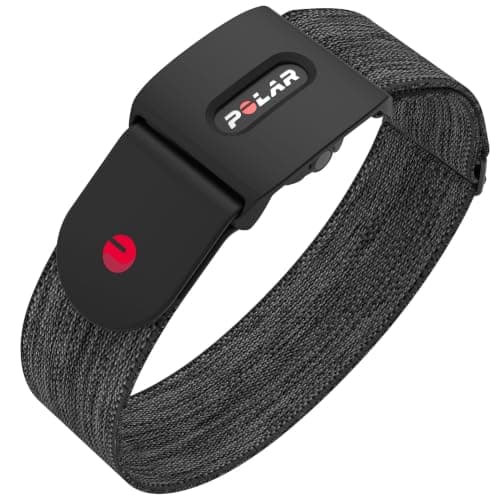
Polar Verity Sense
The one optical heart-rate device on this site with a genuinely strong peer-reviewed result. The same study also shows exactly where it stops working.
We earn a commission when you buy through our Amazon links, at no extra cost to you. It never decides a ranking — the rubric that does is published in full, so you can check us rather than take our word for it. How this works.
Top pick
Strap-quality data without the strapPolar Verity Sense
The optical armband that measured a bias under 0.1 bpm against a chest strap on a graded treadmill test. The comfortable answer.
Price as of October 22, 2026. Prices move; Amazon's is the one that counts.
#ad · we may earn a commission from this link to Polar Verity Sense
The short answer
In the 2025 Sensors placement study the Verity Sense recorded the lowest resting error of any device tested — roughly 1.6% MAPE — and a bias under 0.1 bpm with a concordance of 0.997 on the graded treadmill protocol. It is worn on the forearm, which is the reason. In the burpee protocol it fell below 0.50 concordance along with every other optical device.
Ranked
Quick picks
| # | Device | Best for | Evidence | Score | Price |
|---|---|---|---|---|---|
| 01 | Polar Verity Sense The optical armband that measured a bias under 0.1 bpm against a chest strap on a graded treadmill test. The comfortable answer. | Strap-quality data without the strap | Peer-reviewed validation | 8.4/10 | $104.95Amazon |
#ad· Live prices from the Amazon Product API, as of October 22, 2026. Where we have no verified live price we show none. Scores come from the published rubric at How we rank — the Evidence column shows what each ranking actually rests on, including where the answer is nothing.
Why an optical sensor beat expectations
The interesting thing about the Verity Sense is that it uses the same fundamental technology as the wrist sensor you are probably unhappy with — light through skin, looking for the pulse — and it produces dramatically better numbers. The variable is not the technology. It is where the sensor sits.
The 2025 study isolated this deliberately by running three identical Whoop 4.0 units simultaneously at the wrist, the forearm and the upper arm on the same 28 participants, against a Polar H10 reference. Same hardware, same firmware, same person, same session — only the position changed. The proximal placements won at every intensity tested.
The forearm is less mobile than the wrist, better perfused, and lets a band hold a sensor flat against skin without a joint moving underneath it. That is the entire mechanism, and it is why the Verity Sense is a legitimately different proposition from a watch rather than a marginally better one.
The measured results, exactly as published
- At rest: approximately 1.6 ± 0.8% MAPE — the lowest of any device in the study.
- Graded treadmill (modified Bruce protocol): bias under 0.1 bpm, concordance correlation 0.997.
- Burpees: below 0.50 concordance — along with every other optical device tested.
We publish the third bullet with the same weight as the first two. A page that quotes 0.997 and omits the burpee result is selling, and the burpee result is the one that tells you whether this device suits your training.
What it does beyond heart rate
Polar publishes dual Bluetooth connections plus ANT+, on-board recording so it can capture a session with no phone or watch present, and a swim mode with a goggle-strap mount. That recording capability is genuinely useful: it makes the Verity Sense the only device in our heart-rate roster that can produce a heart-rate file from a session where you carried nothing else.
It is rechargeable rather than coin-cell, which is the practical trade against the H10. Convenience against 400 stated hours you never think about.
Verity Sense or a chest strap?
Our ranking puts the H10 first and the Verity Sense second, and the gap is smaller than that ordering suggests. The H10 wins on evidence because researchers use it as the criterion — the strongest evidentiary position a sensor can occupy — and on the strength of electrical measurement as a physical principle.
But the honest guidance is behavioural. If a chest strap means you will not wear a sensor, the armband with the 0.997 concordance is the better instrument for you, because it will exist in your data and the strap will not. The only training where we would insist on the strap is explosive, stop-start work, where the published result is unambiguous that nothing optical copes.
What we could not verify
- Performance outside the tested protocols. The study covered rest, a cycling warm-up, burpees and a graded treadmill test. Cold-weather running, swimming and long steady rides were not tested.
- Long-term consistency. A single-session study says nothing about how the device behaves after a year of sweat and washing.
- The swim mode. Polar publishes it; nobody has measured underwater performance that we could find.
- Stated battery.Polar's figures under Polar's assumptions. We have not run one down.
Who should not buy it
Anyone whose training is mostly explosive and stop-start — CrossFit, circuits, hard intervals with full recoveries. In the burpee protocol every optical device tested fell below 0.50 concordance, this one included, and buying the best optical sensor does not escape a limitation that is optical rather than brand-specific. Buy the H10 for that.
The question that usually follows is whether an armband can simply replace a chest strap. The study behind this device answers it directly, because it measured the wrist, the forearm, the upper arm and the chest at once — position by position, with the result for each, at chest strap versus armband.
In full
Every pick, and why
Polar Verity Sense
The optical armband that measured a bias under 0.1 bpm against a chest strap on a graded treadmill test. The comfortable answer.
- Sensor
- Optical, forearm or upper-arm band
- Connectivity
- Bluetooth (dual) + ANT+
- Modes
- Live streaming, on-board recording, swim mode
What's good
- Sensors (2025) recorded the smallest bias of any device tested on the graded treadmill protocol — under 0.1 bpm, CCC = 0.997
- Lowest resting error in the same study, at roughly 1.6% MAPE
- Far more comfortable than a chest strap, and it works under a wetsuit
What isn't
- Still an extra device to charge and remember
- Like every optical sensor, it struggled in the same study's burpee protocol — nothing optical handles that well
Skip this if
Skip this if your training is mostly explosive, stop-start work. In the burpee protocol every optical device tested fell below 0.50 concordance, this one included. Buy the H10 for that.
What the evidence says
Peer-reviewed validationDirectly measured in Sensors (2025), n = 28, against a Polar H10 reference: lowest resting MAPE at ~1.6 ± 0.8%, and the smallest bias on the modified Bruce treadmill protocol at under 0.1 bpm (CCC = 0.997).
Show how this 8.4 was calculated
| Factor | Weight | Score |
|---|---|---|
| EvidenceDirectly measured in a peer-reviewed study, with the best result of any optical device tested. | 30% | 9.5 |
| HardwareOptical, but worn on the forearm — the placement the same study found outperforms the wrist. | 20% | 8.5 |
| Metric coverageHeart rate plus on-board recording and a swim mode. | 20% | 7.0 |
| EnduranceRechargeable, with stated endurance comfortably covering long sessions. | 15% | 8.0 |
| Cost per capabilityPriced against a good chest strap, not against a watch. | 15% | 8.5 |
Price as of October 22, 2026. Prices move; Amazon's is the one that counts.
#ad · we may earn a commission from this link to Polar Verity Sense
Questions
Frequently asked
Is the Polar Verity Sense as accurate as a chest strap?
On the protocols where it has been measured, close enough to be hard to distinguish: bias under 0.1 bpm and concordance 0.997 against an H10 on a graded treadmill test, and the lowest resting error in the study. Where it is not equivalent is explosive stop-start work, where it fell below 0.50 concordance — as did every other optical device tested.
Where should I wear the Verity Sense?
On the forearm or upper arm, which is the placement the evidence supports. The 2025 study ran identical sensors at wrist, forearm and upper arm simultaneously and the proximal positions beat the wrist at every intensity. Wearing it low on the wrist would discard the exact advantage you paid for.
Can the Verity Sense record without a watch?
Yes — Polar publishes an on-board recording mode, so it can capture a session with no phone or watch present and sync afterwards. That makes it the one device in our heart-rate roster that can produce a file from a session where you carried nothing else.
Verity Sense or Polar H10?
The H10 for evidence and for explosive training; the Verity Sense for comfort and for everything else. Be honest about which one you will actually wear — an unworn ECG strap measures nothing, and the armband's published numbers are strong enough that comfort is a legitimate deciding factor rather than a compromise.
Show your working
Sources
Every one of these was read in full before it was cited. Where we could not access a paper, we do not quote its numbers.
- [1]Peer-reviewed validation2025“Impact of Anatomical Placement on the Accuracy of Wearable Heart Rate Monitors During Rest and Various Exercise Intensities”, Sensors (Basel)
n = 28 (14 male, 14 female). Polar H10 chest strap as the reference. Compared Polar Verity Sense (forearm), Garmin Forerunner 55 (wrist) and three simultaneous Whoop 4.0 units at wrist, forearm and upper arm, across rest, cycling warm-up, burpees and a modified Bruce treadmill protocol.
- [2]Manufacturer specification2026Polar — Verity Sense published specifications
Manufacturer-stated: optical heart rate worn on the forearm or upper arm, dual Bluetooth plus ANT+, on-board recording, swim mode, WR50.
- [3]Manufacturer specification2026Polar — H10 heart rate sensor published specifications
Manufacturer-stated: electrical (ECG) measurement, Bluetooth LE + ANT+, internal memory for one session up to 30 hours, up to 400 h on a CR2025 coin cell, WR30.
Read next
Related
- Chest strap vs armband
Position by position, with the measured result for each.
- Most accurate heart rate monitors
Where the Verity Sense places against the strap tier.
- Wrist vs chest strap
The placement study in full, intensity by intensity.
- Fix your heart-rate data
The upgrade path this device sits at the end of.