Straps, armbands and sensors
The best heart rate monitor watches
If you want heart rate from a watch rather than a strap, these four are the best of what exists. The published record also says the wrist is the worst place to measure it, and we are not going to hide that behind a ranking.
We earn a commission when you buy through our Amazon links, at no extra cost to you. It never decides a ranking — the rubric that does is published in full, so you can check us rather than take our word for it. How this works.
Top pick
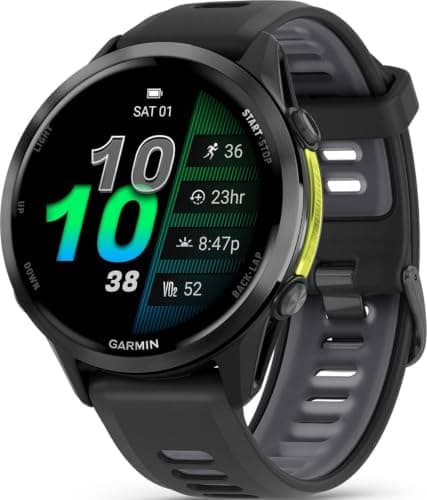
Long-course athletes who want mapsGarmin Forerunner 970
The most complete running watch Garmin sells, and — counter-intuitively — the cheapest of the pair per hour of GPS you get.
Price as of October 22, 2026. Prices move; Amazon's is the one that counts.
#ad · we may earn a commission from this link to Garmin Forerunner 970
The short answer
The Garmin Forerunner 970 is the best heart rate monitor watch, and the reason is not its sensor - it is the depth of the platform the numbers land in and the chest straps it pairs with. No wrist optical sensor on sale has a favorable independent validation we could find, so if accuracy rather than convenience is the goal, buy a strap or armband instead.
Ranked
Quick picks
| # | Device | Best for | Evidence | Score | Price |
|---|---|---|---|---|---|
| 01 | Garmin Forerunner 970 The most complete running watch Garmin sells, and — counter-intuitively — the cheapest of the pair per hour of GPS you get. | Long-course athletes who want maps | Manufacturer specification | 7.7/10 | $749.99Amazon |
| 02 | 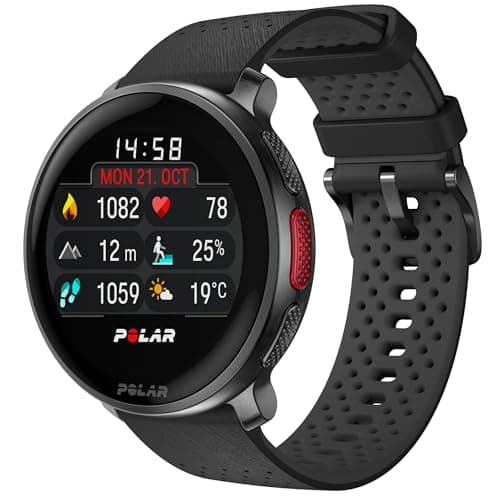 Polar Vantage V3 Polar's flagship, and the most sensor-dense watch here — including an on-wrist ECG. | Lab-style metrics on the wrist | Peer-reviewed validation | 7.5/10 | $679.90Amazon |
| 03 | 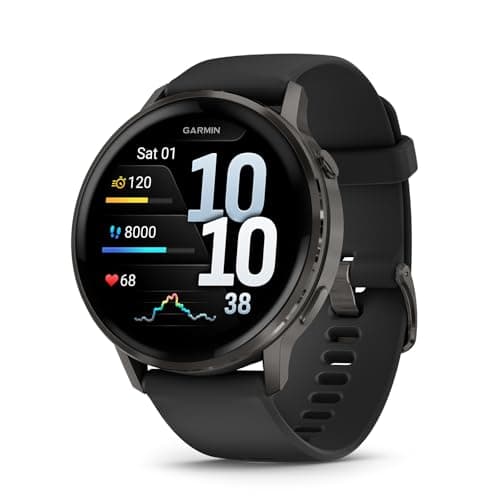 Garmin Venu 4 A Forerunner's training stack in a steel lifestyle case, with a longer published battery than the running watch it is priced against. | One watch for training data and everyday wear | Manufacturer specification | 7.1/10 | $543.00Amazon |
| 04 | 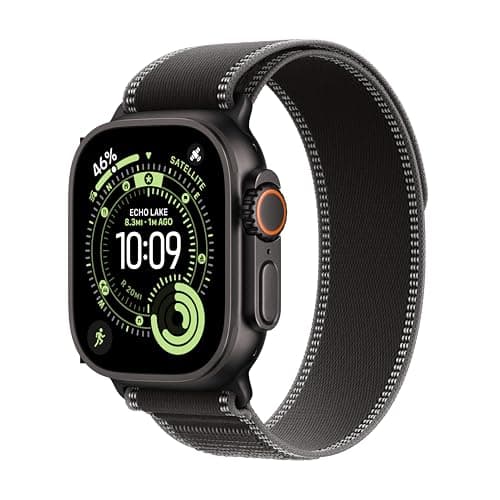 Apple Watch Ultra 3 Excellent positioning hardware and the best screen here, attached to the weakest deep-sleep measurement in the published record. | iPhone owners who train and want one device | Peer-reviewed validation | 6.8/10 | $588.83Amazon |
#ad· Live prices from the Amazon Product API, as of October 22, 2026. Where we have no verified live price we show none. Scores come from the published rubric at How we rank — the Evidence column shows what each ranking actually rests on, including where the answer is nothing.
Start with the finding that reorders this whole category
A watch measures heart rate optically: it shines light into your wrist and infers pulse from how much comes back. That inference has been measured, repeatedly, and the wrist is where it does worst.
In a 2025 peer-reviewed placement study of 28 participants, the same researchers wore a chest strap, a forearm optical band and three identical optical units at wrist, forearm and upper arm. The wrist-worn watch recorded a bias of roughly 33 bpm during explosive work - the largest error in the paper - while the forearm band held a bias under 0.1 bpm on a graded treadmill protocol with 0.997 concordance. Across the whole field, the 2024 umbrella review of 249 primary validation studies puts wearable heart rate near ±3% - but that pooled figure includes straps and armbands, which is precisely what flatters the wrist.
That same umbrella review reports that roughly 34 of 310 identified consumer wearables have ever been validated at all. None of the four watches on this page is among them. So this is a ranking of platform, hardware generation, strap support and cost - the things that are knowable - and not a ranking of sensor accuracy, which for current models is not knowable from anything published. The whole device-by-device record is at heart rate accuracy by device.
What a good heart-rate watch actually gets right
Four things, in descending order of how much they matter.
It pairs an external sensor properly. This is the single most useful heart-rate feature on any watch, and it is the one the marketing never leads with. A watch that takes an ANT+ or Bluetooth strap turns into an ECG-grade heart-rate recorder for the sessions where it counts, and keeps the convenience of the wrist for the ones where it does not.
It lets you set your own maximum heart rate. Zones are the whole reason most people look at heart rate, and zone boundaries are computed from a maximum. Garmin states in its own manual that the watch derives default zones from your user profile and that "for the most accurate calorie data during your activity, set your maximum heart rate" - lactate threshold can be auto-detected, maximum heart rate cannot. A watch that only offers the 220-minus-age convention is applying a rule of thumb to your physiology.
Its data leaves the watch. If the heart-rate record cannot be exported in a standard format, you are renting your training history.
It stays on your wrist at night. Nocturnal resting heart rate and HRV are the metrics that need continuity, and a watch on the charger at bedtime records nothing. Stated battery is a heart-rate feature.
The four picks
Garmin Forerunner 970 - best overall. Garmin's specification gives it multi-band GNSS with SatIQ, running dynamics, an ECG app, 15 smartwatch days and 26 hours in GPS mode. For heart rate specifically it wins on everything except the sensor: the deepest analytics of the four, the widest strap compatibility, HRV status, and a documented export path. It costs $28.85per stated GPS hour. The honest line, from Garmin's own record: no independent validation of this model's optical sensor exists that we could find, and the one Garmin device that appeared in the placement study was the worst performer in it.
Polar Vantage V3 - most sensor hardware. The widest raw sensor set here: dual-frequency GNSS, skin temperature, offline maps and an on-wrist ECG. Polar also inherits the one favorable brand-level positioning result in our library, from the 2020 eight-watch study where only Polar's receivers stayed under 5% distance error - dated evidence about different models, and we score it as such. The useful heart-rate detail is that Polar publishes its five-zone model openly, including the admission that the "most simple way" to find maximum heart rate is 220 minus your age - a convention, not a measurement.
Garmin Venu 4 - best for all-day and overnight. The reason it is here rather than in a lifestyle roundup is that Garmin's own manual names the straps it pairs with - HRM 200, HRM 600, HRM-Fit and the HRM-Pro series - and states 12 smartwatch days at 45 mm, which is what makes continuous overnight heart rate practical. Read Garmin's own footnotes next to the health marketing: the health status feature is "currently in beta" and the ECG app is restricted by region and to ages 22 and over.
Apple Watch Ultra 3 - best if you are already on an iPhone. Dual-frequency GNSS and the best display here, per Apple's specification. It ranks last of the four for two published reasons rather than brand prejudice: in the Brigham and Women's polysomnography study the Apple Watch's deep-sleep sensitivity was 50.5%, the weakest of three devices tested, and its battery is materially shorter than every dedicated sports watch here - which is a heart-rate problem, because a watch on a charger at 11pm is not recording your resting heart rate.
The recommendation that costs us money
If your reason for shopping is that you do not trust the heart-rate number your current watch shows you, a new watch will not fix it. The wrist is the problem, not the brand, and every watch here uses the same class of sensor in the same place. The measured fix is a strap or an armband, it costs about a hundred dollars, and all four watches on this page pair with one.
The ranked sensor field is at most accurate heart rate monitors; the form-factor comparison is at chest strap vs armband; and the full argument for why the wrist loses is at wrist vs chest strap accuracy. If you want the watch ranking on everything rather than heart rate alone, that is best running watches.
In full
Every pick, and why
Garmin Forerunner 970
The most complete running watch Garmin sells, and — counter-intuitively — the cheapest of the pair per hour of GPS you get.
- Case
- 47mm, titanium bezel, AMOLED
- Satellite
- Multi-band GNSS with SatIQ
- Battery (stated)
- 15 days smartwatch / 26 h GPS
- Maps
- Built-in, full color
- Extras
- ECG app, speaker and microphone
What's good
- Multi-band GNSS with SatIQ — the current top tier of consumer positioning hardware
- 26 stated GPS hours is enough for an ironman-distance day with a wide margin
- Built-in maps, which the 570 does not have at any price
What isn't
- The wrist optical sensor is the same class of hardware as the 570's — the premium buys features, not a better heart-rate signal
- 47mm only; there is no smaller case in this model
Skip this if
Skip this if you never race longer than a marathon and never navigate. Maps and titanium are the entire difference, and neither changes a single number the watch records.
What the evidence says
Manufacturer specificationNo independent validation study of the Forerunner 970's optical heart rate has been published that we could find. The specification figures are Garmin's own.
Show how this 7.7 was calculated
| Factor | Weight | Score |
|---|---|---|
| EvidenceSpecs are published and detailed, but no peer-reviewed or independent measured validation of this specific model exists yet. | 30% | 5.5 |
| HardwareMulti-band GNSS with SatIQ and Garmin's current-generation optical sensor — the top hardware tier available. | 20% | 9.5 |
| Metric coverageRunning dynamics, ECG, training load, maps, and a documented export path off the watch. | 20% | 9.5 |
| EnduranceGarmin states 26 hours in GPS mode, 15 days smartwatch. | 15% | 7.5 |
| Cost per capabilityHighest sticker in the range, but the strongest dollars-per-GPS-hour of the two Forerunners — see the arithmetic on the comparison page. | 15% | 7.5 |
Price as of October 22, 2026. Prices move; Amazon's is the one that counts.
#ad · we may earn a commission from this link to Garmin Forerunner 970
Polar Vantage V3
Polar's flagship, and the most sensor-dense watch here — including an on-wrist ECG.
- Display
- AMOLED
- Satellite
- Dual-frequency GNSS
- Extras
- On-wrist ECG, skin temperature, offline maps
What's good
- The widest raw sensor set of any watch in this roundup
- Inherits the brand-level positioning result from the JMIR study
What isn't
- Priced against the Forerunner 970 without matching its ecosystem
- Sensor breadth is not the same thing as validated accuracy, and Polar publishes no per-model validation either
Skip this if
Skip this if you will not actually use the extra sensors. More measurements you ignore is not more value.
What the evidence says
Peer-reviewed validationSame dated, brand-level positioning evidence as the Vantage M3: Gilgen-Ammann et al. (2020) found only Polar's receivers under 5% error, testing the Vantage M, Vantage V and V800 — not the V3.
Show how this 7.5 was calculated
| Factor | Weight | Score |
|---|---|---|
| EvidenceFavorable but dated and brand-level peer-reviewed positioning evidence; no validation of this specific model. | 30% | 6.5 |
| HardwareDual-frequency GNSS plus the densest sensor package here, including wrist ECG. | 20% | 9.0 |
| Metric coverageVery wide metric coverage with a strong recovery platform. | 20% | 9.0 |
| EnduranceGood stated endurance for a sensor-heavy AMOLED watch. | 15% | 7.5 |
| Cost per capabilityFlagship pricing without a flagship ecosystem. | 15% | 5.5 |
Price as of October 22, 2026. Prices move; Amazon's is the one that counts.
#ad · we may earn a commission from this link to Polar Vantage V3
Garmin Venu 4
A Forerunner's training stack in a steel lifestyle case, with a longer published battery than the running watch it is priced against.
- Case
- 41mm or 45mm, AMOLED, stainless steel
- Satellite
- Multi-band GNSS (manufacturer-stated)
- Battery (stated)
- 12 days smartwatch / 17 h multi-band (45mm)
- Extras
- ECG app, LED flashlight, speaker and microphone
- Sensors
- Pairs ANT+ / Bluetooth straps, including the HRM 600
What's good
- Garmin's own manual gives it the Forerunner analysis stack — training status, acute load, training readiness, PacePro, performance measurements, running dynamics
- Publishes an all-satellite-plus-multi-band battery row, which the Venu line did not before: 17 stated hours at 45 mm
- Pairs the chest straps that actually improve its heart-rate data, HRM 600 and HRM 200 included
What isn't
- No independent validation of anything it measures, and the health features Garmin leads with are the newest and least checked
- Garmin labels the health status feature beta itself, and restricts the ECG app by region and to ages 22 and over
- No maps, and the 41 mm case states materially shorter battery than the 45 mm in every mode
Skip this if
Skip this if you are buying it for the health screening. Nothing published validates Garmin's sleep staging, its HRV figure came last of five brands in the only study that measured several at once, and the headline health-status feature is in beta by Garmin's own footnote. Buy it for the watch, not for the diagnosis.
What the evidence says
Manufacturer specificationNo independent validation of this model exists that we could find — not of its optical heart rate, not of its sleep staging, not of its positioning. Garmin was absent from the Robbins et al. (2024) polysomnography comparison entirely, and in the one study that wore three brands at once (Dial et al., 2025) the Garmin device finished last of five on nocturnal HRV agreement.
Show how this 7.1 was calculated
| Factor | Weight | Score |
|---|---|---|
| EvidenceDetailed published specification and a documented feature list, and no independent measurement of a single number this watch produces. | 30% | 4.5 |
| HardwareMulti-band GNSS, Garmin's Elevate wrist sensor, ECG electrodes, speaker and microphone, 5 ATM, and ANT+/Bluetooth pairing for external sensors — the same hardware checklist as a current Forerunner, in a stainless case. | 20% | 9.0 |
| Metric coverageTraining status, acute load, training readiness, PacePro, VO2 max, running dynamics, a swim test, HRV status, Body Battery, Pulse Ox, skin temperature and an ECG app. No maps, which is the one gap against the tier above. | 20% | 9.0 |
| EnduranceGarmin states 12 smartwatch days and 17 hours in all-satellite-plus-multi-band at 45 mm. Longer than the Forerunner it shares a price with, and half a fēnix 8. | 15% | 7.0 |
| Cost per capabilityLists at the same $549.99 as the Forerunner 570 and carries the better dollars-per-stated-multi-band-hour figure — but the premium over a 265 buys a metal case, a speaker and a flashlight, not better measurement. | 15% | 7.5 |
Price as of October 22, 2026. Prices move; Amazon's is the one that counts.
#ad · we may earn a commission from this link to Garmin Venu 4
Apple Watch Ultra 3
Excellent positioning hardware and the best screen here, attached to the weakest deep-sleep measurement in the published record.
- Case
- 49mm titanium
- Satellite
- Dual-frequency GNSS
- Connectivity
- GPS + Cellular
What's good
- Dual-frequency positioning and a genuinely excellent display
- Best-in-class as a general smartwatch, by a distance
What isn't
- In the Brigham and Women's PSG study, the Apple Watch's deep-sleep sensitivity was 50.5% — the weakest of the three devices tested
- Battery is short next to every dedicated sports watch here
Skip this if
Skip this if you bought it to fix your sleep data. The peer-reviewed result says that is the one thing it is worst at, and no firmware update changes a published measurement.
What the evidence says
Peer-reviewed validationRobbins et al. (2024) tested the Apple Watch Series 8 against polysomnography: 75.0% four-stage agreement, but deep-sleep sensitivity of only 50.5%, overestimating light sleep by 45 minutes and underestimating deep sleep by 43 minutes. That was the Series 8, not the Ultra 3, and Apple has revised its algorithm since.
Show how this 6.8 was calculated
| Factor | Weight | Score |
|---|---|---|
| EvidenceGenuine peer-reviewed sleep data exists, which most rivals lack — but the result was unfavorable, and it tested an earlier model. | 30% | 6.0 |
| HardwareDual-frequency GNSS and the best display in this group. | 20% | 9.0 |
| Metric coverageVery wide metric coverage; export off-platform is more awkward than Garmin's. | 20% | 8.5 |
| EnduranceMaterially shorter than every dedicated sports watch here. | 15% | 4.0 |
| Cost per capabilityFlagship pricing; the cellular model costs more again. | 15% | 6.0 |
Price as of October 22, 2026. Prices move; Amazon's is the one that counts.
#ad · we may earn a commission from this link to Apple Watch Ultra 3
Choosing one, in four checks
- Does it pair an external strap? All four here do. It is the most valuable heart-rate feature a watch has and the cheapest accuracy upgrade available.
- Can you type in your own maximum heart rate? If the only option is 220-minus-age, every zone the watch shows you is built on a convention.
- Will it still be on your wrist at 3am? Overnight resting heart rate and HRV need continuity more than they need precision.
- Does the data export? A heart-rate history you cannot move is a history you can lose.
And one thing not to check: a sensor generation number. No manufacturer's claim about a new optical sensor on any of these watches has an independent measurement behind it, so the figure tells you the hardware changed and nothing about whether it improved.
How this ranking was built
Every score on this page comes from one published rubric, applied identically to every device on the site, with the weights written down and the inputs shown. We have not worn any of these devices and we never say we have. Read the method and check us.
Questions
Frequently asked
Which watch has the most accurate heart rate monitor?
Nobody can answer that from the published record, because no current wrist optical sensor has a favorable independent validation we could find. What is published is that the wrist is the worst-performing position measured, by a wide margin, during high-intensity work. If accuracy is the goal, the answer is not a watch.
Are watch heart rate monitors accurate enough for zone training?
For steady, low-intensity work they are reasonable; for intervals and explosive work the measured errors are large. In the 2025 placement study every optical device fell below 0.50 concordance in the burpee protocol. Our zone-specific guidance is at best heart rate monitors for zone 2 training.
Do I need a chest strap if I have a good watch?
For interval sessions, threshold work and anything explosive, yes - and a strap is the cheapest meaningful upgrade to any watch here. For easy runs and all-day monitoring the wrist is usually fine. Full treatment at do you need a chest strap.
Does a more expensive watch measure heart rate better?
There is no published evidence that it does. Price buys positioning hardware, maps, materials, analytics and battery. The optical sensor on a $250 watch and a $750 watch are the same class of device in the same place on your body.
Show your working
Sources
Every one of these was read in full before it was cited. Where we could not access a paper, we do not quote its numbers.
- [1]Peer-reviewed validation2025“Impact of Anatomical Placement on the Accuracy of Wearable Heart Rate Monitors During Rest and Various Exercise Intensities”, Sensors (Basel)
n = 28 (14 male, 14 female). Polar H10 chest strap as the reference. Compared Polar Verity Sense (forearm), Garmin Forerunner 55 (wrist) and three simultaneous Whoop 4.0 units at wrist, forearm and upper arm, across rest, cycling warm-up, burpees and a modified Bruce treadmill protocol.
- [2]Peer-reviewed validation2024Doherty, Baldwin, Keogh, Caulfield & Argent, “Keeping Pace with Wearables: A Living Umbrella Review of Systematic Reviews Evaluating the Accuracy of Consumer Wearable Technologies in Health Measurement”, Sports Medicine
DOI 10.1007/s40279-024-02077-2. An umbrella review: 24 systematic reviews covering 249 unique primary validation studies and 430,465 participants (43% female), across 11 biometric outcomes, with roughly 34 of 310 identified consumer wearables ever validated. Reported accuracy by metric: heart rate approximately ±3% (mean bias −3.39 bpm); step count mean absolute percentage error from −9% to 12%; energy expenditure mean bias −3 kcal per minute with error ranging from −21.27% to 14.76%. Authors’ stated limits: a temporal lag between device release and published research, the intrinsic bias of a tertiary synthesis, and heterogeneity of protocols, devices, criterion measures and statistics severe enough that the authors did not pool a meta-analysis.
- [3]Manufacturer specification2026Garmin — Forerunner 970 published specifications
Manufacturer-stated battery: up to 15 days smartwatch mode, up to 26 hours GPS mode.
- [4]Manufacturer specification2026Garmin — Forerunner 265 Series owner's manual, “Setting Your Heart Rate Zones”
Manufacturer-stated, read 2026-09-18. Garmin states that “the watch uses your user profile information from the initial setup to determine your default heart rate zones”, that “for the most accurate calorie data during your activity, set your maximum heart rate”, and that zones can be based on BPM, “%Max. HR” or “%HRR” (heart rate reserve, defined in the manual as maximum heart rate minus resting heart rate). Lactate threshold heart rate is entered separately and can be auto-detected; maximum heart rate is not.
- [5]Manufacturer claim only2026Polar — “Heart Rate Zones”, published training guide
Polar's own published guide, read 2026-09-18. States the five-zone model as percentages of maximum heart rate — zone 1 at 50-60%, zone 2 at 60-70%, zone 3 at 70-80%, zone 4 at 80-90%, zone 5 at 90-100% — and that the “most simple way” to establish maximum heart rate is “the rule 220-your age”. Tiered as a manufacturer claim rather than a specification: it is training guidance, and the zone boundaries themselves are a convention, not a measurement.
- [6]Peer-reviewed validation2020Gilgen-Ammann, Schweizer & Wyss, “Accuracy of Distance Recordings in Eight Positioning-Enabled Sport Watches: Instrument Validation Study”, JMIR mHealth and uHealth
DOI 10.2196/17118. Eight watches (Apple Watch Series 4, Coros Apex 46mm, Garmin Fenix 5X Plus, Garmin Forerunner 935, Polar Vantage M, Polar Vantage V, Polar V800, Suunto 9 Baro) measured against a trundle wheel accurate to 1 cm, across urban, forest and 400 m track conditions. IMPORTANT: this predates the dual-frequency receivers now standard, so it describes brand engineering history, not any watch currently sold.
- [7]Manufacturer specification2026Garmin — Venu 4 Series owner’s manual, battery information
Manufacturer-stated, read 2026-10-11, 41 mm then 45 mm: smartwatch mode up to 10 days / up to 12 days; battery saver watch mode up to 18 / 25 days; GPS only mode up to 15 / 20 hours; all satellite systems mode up to 13 / 19 hours; all satellite systems with music up to 6 / 9 hours; all satellite systems plus multi-band up to 12 / 17 hours; all satellite systems plus multi-band with music up to 6 / 9 hours. Garmin's own caveat on the page: “the actual battery life depends on the features enabled on your watch, such as wrist-based heart rate, phone notifications, GPS, internal sensors, and connected sensors.”
- [8]Manufacturer specification2026Garmin — Venu 4 Series owner’s manual, “Wireless Sensors”
Manufacturer-stated, read 2026-10-11. Garmin states that “your watch can be paired and used with wireless sensors using ANT+ or Bluetooth technology”, and lists the supported sensor types: Club Sensors (Approach CT10), eBike, Extended Display, Heart Rate (HRM 200, HRM 600, HRM-Fit and the HRM-Pro series are named), Foot Pod, Headphones, inReach, Lights, Power (Rally or Vector pedals), Radar, RD Pod, Shifting, Shimano Di2, Smart Trainer, Speed/Cadence and tempe. The US edition of this page was not reachable from here, so the Asia-Pacific edition of the same manual is cited.
- [9]Manufacturer specification2026Apple — Apple Watch Ultra 3 published technical specifications
Manufacturer-stated, read 2026-08-18: Grade 5 titanium case, 49 mm high by 44 mm wide by 12 mm deep, always-on Retina display at up to 3000 nits, up to 42 hours of normal use and up to 72 hours in Low Power Mode, L1 and L5 precision dual-frequency GPS across GPS, GLONASS, Galileo, QZSS and BeiDou, satellite connectivity for Emergency SOS, Messages and Find My, 100 m water resistance and EN13319 certification for recreational scuba to 40 m. Apple publishes this level of detail for the Ultra 3 and no longer publishes it for the Ultra 2 — which is why the older watch is described more thinly here.
- [10]Peer-reviewed validation2024Robbins et al., “Accuracy of Three Commercial Wearable Devices for Sleep Tracking in Healthy Adults”, Sensors 24(20):6532
Brigham and Women’s Hospital. n = 35 healthy adults, single-night inpatient polysomnography, testing Oura Ring Gen3, Fitbit Sense 2 and Apple Watch Series 8. Authors’ stated limits: one night, lab conditions, healthy adults without insomnia, comparison only during scheduled sleep, and device failures on 6 Apple Watches and 2 Fitbits.
Read next
Related
- Most accurate heart rate monitors
The sensors with measured results, when accuracy beats convenience.
- Wrist vs chest strap accuracy
The published numbers behind the caveat on this page.
- Best heart rate monitors for zone 2 training
The one intensity where the wrist mostly holds up, and why the zone itself is the bigger error.
- Best running watches
The same watches ranked on everything, not only heart rate.