Why this section exists
Every publisher in this category ranks devices for accuracy. Almost none of them shows you what the ranking is built from. Scores appear out of ten with no published weights; "most accurate" appears in headlines with no measurement behind it. The rankings are, by construction, impossible to check.
This section is our attempt at the opposite: a consolidated table of what has actually been measured, by whom, with what sample size, against what reference — and, just as importantly, where nothing has been measured at all.
The evidence hierarchy we use
Every accuracy claim on this site carries a tier, rendered visibly next to the claim. In descending order of how much weight it gets:
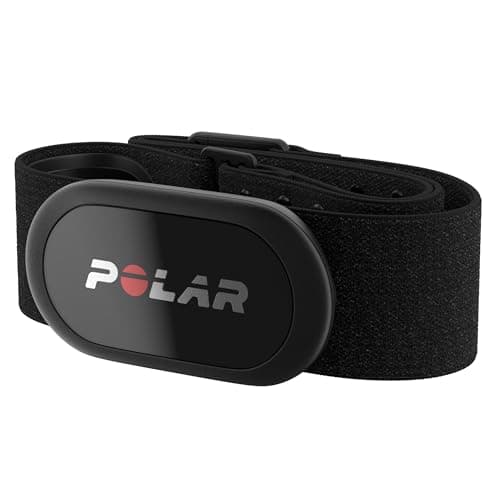
- Peer-reviewed validation against a gold standard — polysomnography for sleep, ECG or a validated chest strap for heart rate, a measured course for distance.
- Independent measured test — someone unaffiliated took real measurements and published the method. Not peer reviewed, but checkable.
- Manufacturer specification — published in a spec sheet or manual. Fine for battery and hardware; it tells you nothing about accuracy.
- Manufacturer claim — a marketing assertion with no published method.
- No validation study exists. Said out loud, on the page, next to the device.
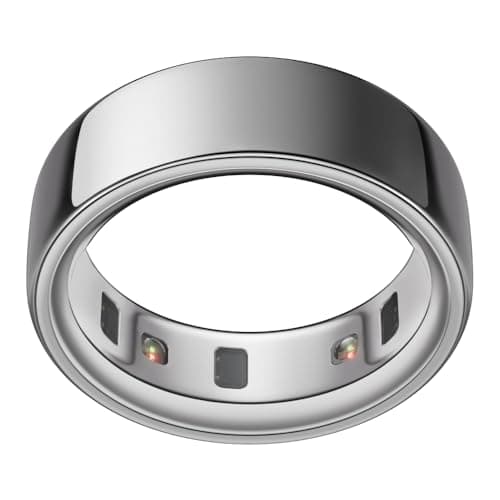
The consequence is deliberate and sometimes uncomfortable: a device with no independent validation cannot take a top accuracy rank on hardware alone. The Oura Ring 5 is newer than the Ring 4 and probably better, and it ranks lower here, because the peer-reviewed result belongs to an earlier generation and a new sensor with a new algorithm is exactly what a validation exists to test.
What we found, in summary
Three findings do most of the work across this whole site.
Placement beats brand for heart rate. The 2025 Sensors study ran three identical Whoop units on wrist, forearm and upper arm simultaneously. Proximal placements won at every intensity. During burpees, every optical device fell below 0.50 concordance and a wrist device showed a ~33 bpm bias. Full detail on wrist versus chest strap accuracy.
Sleep staging is far weaker than the interfaces suggest. Sleep/wake is solid at 91-93% across the three devices measured. Four-stage classification runs 70.9% to 76.3%, and deep-sleep sensitivity ranges from 50.5% to 79.5% — a spread big enough that the same night on two devices tells two different stories. See sleep tracking accuracy by device.
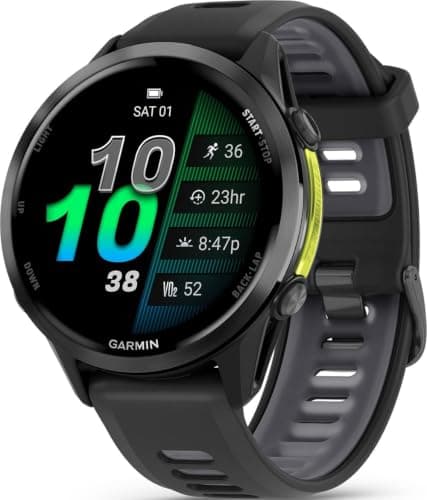
Distance error is real but modest, and the good study is old. The eight-watch trundle-wheel validation found 3.2-6.1% errors, with only Polar under 5%. It is from 2020 and predates the dual-frequency receivers now standard, so it describes an engineering track record rather than any current watch.
What is missing, stated plainly
The gaps in this record are as informative as the contents, so we publish them too. There is no published PSG validation of Garmin sleep staging that we could find. There is no independent validation of any current COROS, Suunto or RingConn device that we could find. The Whoop and Oura results that do exist are both on superseded generations.
We also could not access every relevant paper. A 2025 systematic review of the Oura Ring in OTO Open and the Svensson et al. multi-night validation in Sleep Medicine are both behind publisher blocks that returned errors to us. They exist, they are relevant, and we do not quote numbers from papers we have not read — so they appear in our source lists as unread rather than as support for a claim.
That is the whole method, and it is checkable end to end: the rubric and its weights are published, and every table below links the source or says there is not one.