Straps, armbands and sensors
Best heart rate monitors for women
No sensor on this page measures a woman differently from a man. What differs is whether it fits, and fit is the one specification most manufacturers will not print.
We earn a commission when you buy through our Amazon links, at no extra cost to you. It never decides a ranking — the rubric that does is published in full, so you can check us rather than take our word for it. How this works.
The short answer
Buy the Polar H10 in XS-S if a chest strap works for you: Polar is the only brand here that publishes a size chart, and it lists an XS-S strap fitting a 62-82 cm chest. If a chest band is the reason you stopped wearing one, the Polar Verity Sense moves the sensor to your forearm, where the 2025 placement study found optical sensors read better anyway.
Ranked
Quick picks
| # | Device | Best for | Evidence | Score | Price |
|---|---|---|---|---|---|
| 01 | 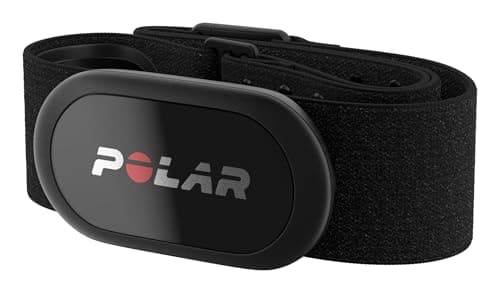 Polar H10 The device other people's validation studies use as the reference. That is the strongest recommendation a sensor can have. | Anyone who trains by heart rate | Peer-reviewed validation | 8.9/10 | $104.88Amazon |
| 02 | 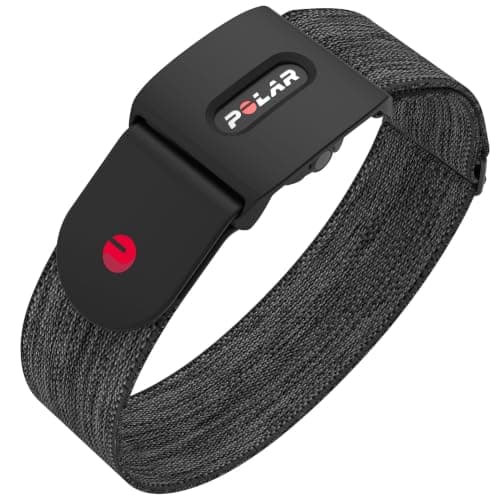 Polar Verity Sense The optical armband that measured a bias under 0.1 bpm against a chest strap on a graded treadmill test. The comfortable answer. | Strap-quality data without the strap | Peer-reviewed validation | 8.4/10 | $104.95Amazon |
| 03 | 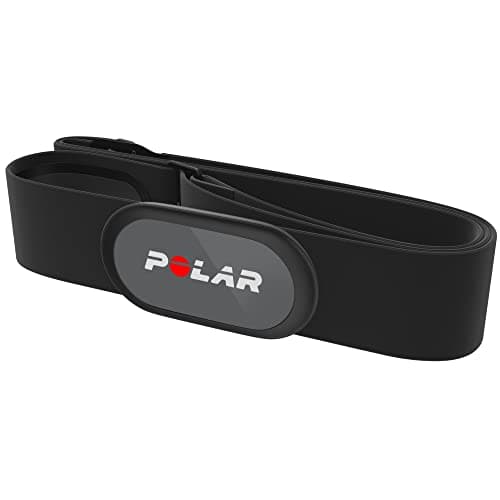 Polar H9 The H10 with the recording memory removed. If you always ride with a head unit, that is a feature you were never going to use. | Riders who always have a head unit running | Manufacturer specification | 7.3/10 | $69.90Amazon |
| 04 | 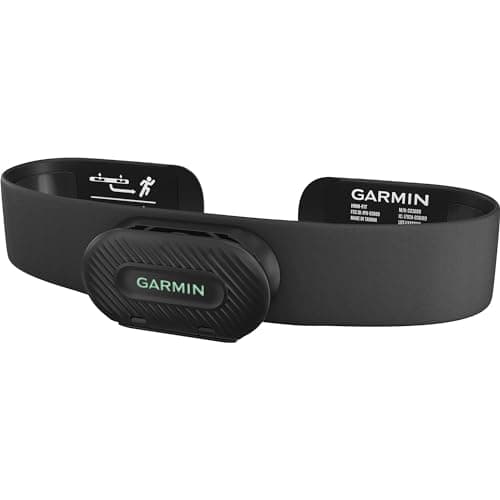 Garmin HRM-Fit Garmin's electrical sensor with the chest strap taken away — it clips to a sports bra band instead, and keeps the running dynamics. | Running dynamics without a strap | Manufacturer specification | 7.2/10 | $110.99Amazon |
#ad· Live prices from the Amazon Product API, as of Sep 17, 2026. Where we have no verified live price we show none. Scores come from the published rubric at How we rank — the Evidence column shows what each ranking actually rests on, including where the answer is nothing.
The honest starting point
There is no published evidence we could find that any of these sensors measures a woman differently from a man, and we are not going to imply otherwise to make a category. The peer-reviewed placement study this site leans on most heavily used a deliberately balanced sample — 28 participants, 14 male and 14 female — and the figures we quote from it are whole-sample figures.
What genuinely differs is fit, and fit is not a soft consideration. A chest strap that rides up, sits on a bra band, or is simply too big produces bad data or no data, and the single most common reason people abandon a strap is that wearing it is unpleasant. So this page ranks on the same rubric as every other page on the site, and then tells you the published fitting specification for each device — which, as it turns out, only two of the four manufacturers print at all.
The sizing table nobody else publishes
Every figure below was read off the manufacturer's own page on 18 September 2026. Where a maker does not publish a number, the cell says so rather than guessing.
| Sensor | Worn | Published fitting specification |
|---|---|---|
| Polar H10 | Chest | Pro Strap in two sizes. XS-S is a 60-68 cm strap fitting a 62-82 cm chest; M-XXL is 68-87 cm fitting 71-118 cm. |
| Polar Verity Sense | Forearm or upper arm | Armband, no chest band at all. Polar sells the band separately in M-XXL, so a spare or a different size is a purchasable part. |
| Polar H9 | Chest | Same Polar strap system as the H10, including the XS-S option. |
| Garmin HRM-Fit | Clipped to a sports bra band | Garmin specifies a medium- or high-support bra with a flat band roughly 19 to 50 mm wide and no front zipper. |
Read that last row carefully, because it is the whole argument for and against the HRM-Fit. It is the only sensor here designed around the problem rather than in spite of it — and it is the only one that will not fit a large number of the people reading this page, because it depends on a garment you may not own.
Why the H10 still wins
The Polar H10 tops this ranking for the same reason it tops the accuracy ranking: published studies use it as their criterion measure, which is the strongest evidentiary position a sensor can hold. The XS-S strap is what makes that recommendation practical rather than theoretical, and Polar is the only brand in this field that publishes the chart at all. Garmin publishes a bra-band specification for the HRM-Fit and no comparable chest size chart we could read; Wahoo publishes neither.
If you already own a Polar pod and the belt is the problem, the belt is the cheap half and it is sold on its own. Polar says on its own support pages that the strap wears out like any garment you wear and wash regularly — a stretched belt is a fit problem disguised as a sensor problem.
The armband case, and why it ranks second rather than fourth
The Polar Verity Sense is not a compromise for people who dislike chest straps. It is the device that recorded the smallest bias of anything tested on the 2025 study's graded treadmill protocol — under 0.1 bpm, with a concordance of 0.997 — and the lowest resting error at roughly 1.6% MAPE. That study moved identical optical sensors off the wrist and onto the forearm and upper arm and found the moved sensors better at every intensity tested.
So the armband is not the consolation option. It is a peer-reviewed result you can wear on your arm, and for anyone whose real choice is between an armband and nothing, it is comfortably the right answer. Its one weakness is the same weakness every optical sensor has: in the study's burpee protocol, every optical device tested fell below 0.50 concordance. If your training is mostly explosive and stop-start, buy a strap. We set that argument out in full in the chest strap versus armband comparison.
The Garmin HRM-Fit, and two unmeasured variables instead of one
The HRM-Fit is a genuinely thoughtful piece of design: an electrical sensor that clips to the band of a sports bra, keeps the six running dynamics metrics Garmin's chest straps produce, and states up to a year of battery at an hour a day on a replaceable CR2032. If it fits your kit, it removes the objection people actually have to chest straps.
It ranks fourth because of what has not been measured. There is no validation study of the HRM-Fit itself that we could find, and there is a second gap behind the first: the placement study measured the wrist, the forearm and the upper arm, and nobody has published a measurement of a sensor clipped under a bra band. That is two unknowns stacked, not one. It is also rated 3 ATM where Garmin rates its own chest straps at 5 ATM.
None of that makes it a bad purchase. It makes it a purchase you should make with your eyes open, which is the difference between this page and most of the field.
What we deliberately left off
We did not include a watch. Wrist optical sensors are the weakest performers in the literature we cite — the same study recorded a bias of roughly 33 bpm for a wrist watch in the burpee protocol, the largest error it found — so a page about getting an accurate heart rate should not open with one. If you want a watch as well, the fit question there is case size rather than strap size, and the running watch ranking for women handles it separately.
We also did not rank on color, band material or marketing. Those are real preferences and they are not measurements, so they do not enter a rubric that is supposed to be checkable.
In full
Every pick, and why
Polar H10
The device other people's validation studies use as the reference. That is the strongest recommendation a sensor can have.
- Sensor
- Electrical (ECG), chest strap
- Connectivity
- Bluetooth LE + ANT+
- Memory
- One session, up to 30 hours
- Battery (stated)
- Up to 400 h, CR2025 coin cell
- Water rating
- WR30
What's good
- Used as the criterion measure in published research — including the 2025 Sensors placement study on this site
- Simultaneous Bluetooth and ANT+, so it pairs to a watch and a bike computer at once
- 400 stated hours on a coin cell you replace rather than recharge
What isn't
- It is a chest strap, and a chest strap is less comfortable than a watch
- The strap wears out well before the sensor does
Skip this if
Skip this if you know yourself well enough to know you will not wear it. An unworn ECG strap measures nothing, and a wrist sensor you actually wear beats it every time.
What the evidence says
Peer-reviewed validationUsed as the reference standard in Sensors (2025), the anatomical-placement study of 28 participants. Being chosen as the criterion is an implicit validation by the researchers, though it means the study cannot measure the H10's own error.
Show how this 8.9 was calculated
| Factor | Weight | Score |
|---|---|---|
| EvidenceResearchers use it as the criterion measure. Nothing else in this category has a stronger evidentiary position. | 30% | 10.0 |
| HardwareElectrical ECG measurement rather than optical — a different and better physical principle for this job. | 20% | 9.5 |
| Metric coverageHeart rate and R-R intervals only; it does not pretend to do anything else. | 20% | 6.5 |
| Endurance400 stated hours on a replaceable coin cell. | 15% | 9.5 |
| Cost per capabilityInexpensive next to any watch, and it outlasts several of them. | 15% | 8.5 |
Price as of Sep 17, 2026. Prices move; Amazon's is the one that counts.
#ad · we may earn a commission from this link to Polar H10
Polar Verity Sense
The optical armband that measured a bias under 0.1 bpm against a chest strap on a graded treadmill test. The comfortable answer.
- Sensor
- Optical, forearm or upper-arm band
- Connectivity
- Bluetooth (dual) + ANT+
- Modes
- Live streaming, on-board recording, swim mode
What's good
- Sensors (2025) recorded the smallest bias of any device tested on the graded treadmill protocol — under 0.1 bpm, CCC = 0.997
- Lowest resting error in the same study, at roughly 1.6% MAPE
- Far more comfortable than a chest strap, and it works under a wetsuit
What isn't
- Still an extra device to charge and remember
- Like every optical sensor, it struggled in the same study's burpee protocol — nothing optical handles that well
Skip this if
Skip this if your training is mostly explosive, stop-start work. In the burpee protocol every optical device tested fell below 0.50 concordance, this one included. Buy the H10 for that.
What the evidence says
Peer-reviewed validationDirectly measured in Sensors (2025), n = 28, against a Polar H10 reference: lowest resting MAPE at ~1.6 ± 0.8%, and the smallest bias on the modified Bruce treadmill protocol at under 0.1 bpm (CCC = 0.997).
Show how this 8.4 was calculated
| Factor | Weight | Score |
|---|---|---|
| EvidenceDirectly measured in a peer-reviewed study, with the best result of any optical device tested. | 30% | 9.5 |
| HardwareOptical, but worn on the forearm — the placement the same study found outperforms the wrist. | 20% | 8.5 |
| Metric coverageHeart rate plus on-board recording and a swim mode. | 20% | 7.0 |
| EnduranceRechargeable, with stated endurance comfortably covering long sessions. | 15% | 8.0 |
| Cost per capabilityPriced against a good chest strap, not against a watch. | 15% | 8.5 |
Price as of Sep 17, 2026. Prices move; Amazon's is the one that counts.
#ad · we may earn a commission from this link to Polar Verity Sense
Polar H9
The H10 with the recording memory removed. If you always ride with a head unit, that is a feature you were never going to use.
- Sensor
- Electrical (ECG), chest strap
- Connectivity
- Bluetooth LE + ANT+ 2.1 + 5 kHz analog
- Memory
- None — it cannot record on its own
- Battery (stated)
- Up to 400 h, replaceable 160 mAh coin cell
- Water rating
- WR30
What's good
- Electrical measurement — the same physical principle as the strap researchers use as their reference
- 5 kHz analog on top of Bluetooth and ANT+, which is what old gym cardio equipment actually listens for
- 400 stated hours on a coin cell you replace rather than recharge
What isn't
- No internal memory, so it cannot record a session without a paired device — this is the specification difference from the H10
- No independent validation of the H9 itself that we could find; the studies use the H10
Skip this if
Skip this if you ever want heart rate from a session you rode without your watch or head unit. The H10 stores 30 hours on its own; this stores nothing, and no firmware adds memory that is not there.
What the evidence says
Manufacturer specificationNo validation study of the H9 specifically that we could find. It shares the electrode and sensing principle of the H10 that researchers use as their criterion measure, which is a good reason to expect it to be accurate and not a measurement of it. We score the principle, not the assumption.
Show how this 7.3 was calculated
| Factor | Weight | Score |
|---|---|---|
| EvidenceCorrect sensing principle from the brand researchers pick as their reference — but no measurement of this device, and we do not let a sibling's record transfer. | 30% | 5.5 |
| HardwareElectrical ECG measurement with three radios, including the 5 kHz analog that gym equipment uses. | 20% | 8.5 |
| Metric coverageHeart rate only, and unlike the H10 it cannot record without a paired device. | 20% | 5.5 |
| Endurance400 stated hours on a replaceable coin cell. | 15% | 9.5 |
| Cost per capabilityMeaningfully cheaper than the H10 for the same measurement principle. | 15% | 9.5 |
Price as of Sep 17, 2026. Prices move; Amazon's is the one that counts.
#ad · we may earn a commission from this link to Polar H9
Garmin HRM-Fit
Garmin's electrical sensor with the chest strap taken away — it clips to a sports bra band instead, and keeps the running dynamics.
- Sensor
- Electrical (ECG), clips to a sports bra band
- Connectivity
- ANT+ and Bluetooth
- Battery (stated)
- Up to 1 yr at 1 h/day, user-replaceable CR2032
- Water rating
- 3 ATM
- Extras
- Six running dynamics metrics, pace and distance without GPS, stored heart rate for timed activities
What's good
- Electrical measurement without a chest strap — it clips to the band of a medium- or high-support sports bra
- The same six running dynamics metrics Garmin's chest straps produce, plus pace and distance when GPS is not available
- Garmin states up to a year at an hour a day, on a coin cell you replace rather than recharge
What isn't
- Rated 3 ATM, where Garmin's own chest straps are rated 5 ATM
- No published validation of this device — and none of the clip placement it depends on either
- Only fits a sports bra that meets Garmin's own band specification, so it is not a universal purchase
Skip this if
Skip this if you do not train in a medium- or high-support sports bra, or if yours has a front zipper. Garmin's own fitting guide rules both out, and a sensor that will not sit flat against skin will not read.
What the evidence says
Manufacturer specificationGarmin publishes a full specification sheet and a detailed manual; no validation study of the HRM-Fit exists that we could find. There is a second gap behind the first — the anatomical-placement study we cite across this site measured the wrist, forearm and upper arm, and nobody has published a measurement of a sensor clipped under a sports bra band. Two unmeasured variables, not one.
Show how this 7.2 was calculated
| Factor | Weight | Score |
|---|---|---|
| EvidenceCorrect electrical sensing principle and a full published spec sheet, but no measurement of this device and none of the clip placement it uses. | 30% | 5.5 |
| HardwareElectrical ECG measurement with an accelerometer for running dynamics — held back by a 3 ATM rating where Garmin's own chest straps are 5 ATM. | 20% | 8.0 |
| Metric coverageHeart rate, six running dynamics metrics, pace and distance without GPS, stored heart rate for timed activities, and stand-alone step, calorie, intensity-minute and all-day heart rate tracking. | 20% | 8.0 |
| EnduranceUp to a stated year at an hour a day on a user-replaceable CR2032 — the coin-cell pattern, not the rechargeable one. | 15% | 9.5 |
| Cost per capabilityBelow Garmin's flagship strap and well above the Polar H10, for a sensor that only fits part of the people reading this. | 15% | 6.5 |
$149.9926% off
Price as of Sep 17, 2026. Prices move; Amazon's is the one that counts.
#ad · we may earn a commission from this link to Garmin HRM-Fit
What to check before you buy
- Measure your chest under the bust, not across it.Polar's chart is in centimeters and quotes both a strap length and a chest range; XS-S covers 62-82 cm.
- If you are buying the HRM-Fit, check the bra first. Medium or high support, a flat band roughly 19 to 50 mm wide, no front zipper. Garmin rules the rest out in its own fitting guide.
- Wet the electrodes before the first mile.Almost every complaint about spiky readings in the first ten minutes is a dry strap, and Polar's own instruction is to moisten the electrode area under tap water before training.
- Be honest about whether you will wear it. An unworn ECG strap measures nothing. This is the one place where comfort beats the evidence hierarchy outright.
The scores on this page come from the same rubric used everywhere else on the site, with the weights published at how we rank. Fit is not scored — it cannot be, because most manufacturers do not publish it — so it is reported beside the ranking instead of quietly folded into it.
Fit and upkeep
The parts that decide whether a strap stays on
None of these is scored and none of them is an accessory upsell. Each one fixes a specific, documented failure that makes a correctly chosen sensor read badly, and each is justified by a manufacturer instruction.
These are not ranked and they are not scored on the rubric — none of them has a validation study and none ever will. They are here because a manufacturer's own instructions say they change what your sensor records, and each one links the page that says it. How the actual ranking works.
Replacement chest-strap belt
A strap that has stretched, or whose electrodes have washed out.
Polar says it plainly on its own troubleshooting page: the chest strap "doesn't last forever; it wears out like any other garment you regularly wear and wash". The transmitter pod outlives the belt, and the belt is the cheap half. Polar support: unusual heart rate readings.
A third-party belt listed as fitting the Polar H7, H9 and H10 pods. Check the listing against your own sensor first — stud spacing differs between brands.
$12.99Check price on AmazonPrice as of Sep 17, 2026. Prices move; Amazon's is the one that counts.
#ad · we may earn a commission from this link to Replacement chest-strap belt
Conductive electrode gel
The spiky, nonsense heart rate over the first ten minutes of a run.
Polar's instruction is to "moisten the electrode area of the strap thoroughly under tap water before training". Gel is the same fix that does not evaporate in the first mile — which is precisely when the dropouts happen, because the strap has not warmed up and you have not started sweating yet. Polar support: unusual heart rate readings.
The linked tube is axion's 8.5 oz electrode gel, sold for TENS and EMS pads rather than for chest straps — the listing describes it as hypoallergenic, odorless and suitable for all types of self-adhesive electrodes. Nothing in this category is sold specifically for heart-rate straps, so check the ingredients if your skin reacts to anything.
$9.99Check price on AmazonPrice as of Sep 17, 2026. Prices move; Amazon's is the one that counts.
#ad · we may earn a commission from this link to Conductive electrode gel
Polar armband for Verity Sense
A spare or better-fitting band for the sensor placement that actually wins.
This is the accessory form of the strongest finding on this site: in the 2025 Sensors placement study, identical optical sensors moved off the wrist onto the forearm or upper arm beat the wrist at every intensity tested. The armband is the part that holds a sensor where that result applies, and Polar sells it on its own in M-XXL.
Polar's own armband, sold separately. It does not include the Verity Sense sensor itself.
$24.99Check price on AmazonPrice as of Sep 17, 2026. Prices move; Amazon's is the one that counts.
#ad · we may earn a commission from this link to Polar armband for Verity Sense
How this ranking was built
Every score on this page comes from one published rubric, applied identically to every device on the site, with the weights written down and the inputs shown. We have not worn any of these devices and we never say we have. Read the method and check us.
Questions
Frequently asked
Do heart rate monitors work differently for women?
Not in any way we can show. We found no published evidence that these sensors read differently by sex, and the placement study we cite most often used a balanced sample of 14 men and 14 women. The differences that are real and documented are fit differences: strap sizing, and whether a sensor can be worn with a sports bra.
What chest strap size should I buy?
Polar is the only brand here that publishes a chart. XS-S is a 60-68 cm strap that Polar states fits a 62-82 cm chest; M-XXL is a 68-87 cm strap for 71-118 cm. Measure under the bust. If you fall between sizes, the smaller strap is usually the one that stays put.
Is the Garmin HRM-Fit accurate?
Nobody has published a measurement of it, and nobody has published a measurement of the bra-band placement it relies on either. It is an electrical sensor, which is the right physical principle, and Garmin publishes a full specification sheet. That is a reasonable expectation rather than a result, and it is why it ranks below three devices whose principle or placement has actually been measured.
Can I use an armband instead of a chest strap?
Yes, and for many people it is the better buy. The Polar Verity Sense recorded a bias under 0.1 bpm on the graded treadmill protocol in the 2025 placement study. The exception is explosive, stop-start training, where every optical device in that study struggled.
Show your working
Sources
Every one of these was read in full before it was cited. Where we could not access a paper, we do not quote its numbers.
- [1]Manufacturer specification2026Polar — H10 heart rate sensor published specifications
Manufacturer-stated: electrical (ECG) measurement, Bluetooth LE + ANT+, internal memory for one session up to 30 hours, up to 400 h on a CR2025 coin cell, WR30.
- [2]Manufacturer specification2026Polar — H10 strap size chart
Manufacturer-stated, read 2026-09-18 from the size chart on Polar's own H10 page. The Pro Strap ships in two sizes: XS-S, a 60-68 cm strap fitting a 62-82 cm chest, and M-XXL, a 68-87 cm strap fitting a 71-118 cm chest. The older Soft Strap is listed in M-XXL only, at 65-96 cm fitting a 70-128 cm chest. This is the specification that decides whether a chest strap fits at all, and it is published by exactly one of the brands we cover.
- [3]Peer-reviewed validation2025“Impact of Anatomical Placement on the Accuracy of Wearable Heart Rate Monitors During Rest and Various Exercise Intensities”, Sensors (Basel)
n = 28 (14 male, 14 female). Polar H10 chest strap as the reference. Compared Polar Verity Sense (forearm), Garmin Forerunner 55 (wrist) and three simultaneous Whoop 4.0 units at wrist, forearm and upper arm, across rest, cycling warm-up, burpees and a modified Bruce treadmill protocol.
- [4]Manufacturer specification2026Polar — Verity Sense published specifications
Manufacturer-stated: optical heart rate worn on the forearm or upper arm, dual Bluetooth plus ANT+, on-board recording, swim mode, WR50.
- [5]Manufacturer specification2026Garmin — HRM-Fit owner’s manual, specifications
Manufacturer-stated, read 2026-08-26: user-replaceable CR2032 3 V cell, battery life “Up to 1 yr. at 1 hr./day”, 3 ATM water resistance (“the device withstands pressure equivalent to a depth of 30 m”), operating range 0 to 40 °C, 2.4 GHz radio at 8 dBm maximum. The 3 ATM figure matters: Garmin rates its own chest straps at 5 ATM, so this is the one specification on which the clip-on sits below them.
- [6]Manufacturer specification2026Garmin — HRM-Fit owner’s manual, running dynamics and fitting
Manufacturer-stated, read 2026-08-26. Garmin’s own note is why this page is organized around ANT+: “To use the running dynamics features, the HRM-Fit heart rate monitor must be paired to your compatible Garmin device using ANT+ technology.” The same manual documents six running metrics (cadence, vertical oscillation, ground contact time, ground contact time balance, stride length, vertical ratio), running pace and distance when GPS is unavailable, heart-rate storage for timed activities out of watch range, and a sports-bra fitting specification: medium or high support, a flat band roughly 19 to 50 mm wide, no front zipper.
Read next
Related
- Best running watches for women
The same question one layer up, where case size replaces strap size.
- Garmin HRM 600 review
The chest-strap alternative if you want running dynamics and the bra clip will not fit.
- Best heart rate monitors for CrossFit
Where the burpee finding decides the purchase outright.
- Polar Verity Sense review
The armband with the measured result, in full.
- Best heart rate monitors for Garmin
If the sensor has to feed a Garmin watch, start here.
- Wrist versus chest strap
The study underneath every recommendation on this page.