GPS and multisport
Alternatives to Garmin
Garmin publishes more checkable specification than any other brand we cover, and has been measured less than you would guess from that. Those two facts are what an alternative has to work with, and they point in opposite directions.
We earn a commission when you buy through our Amazon links, at no extra cost to you. It never decides a ranking — the rubric that does is published in full, so you can check us rather than take our word for it. How this works.
Top pick
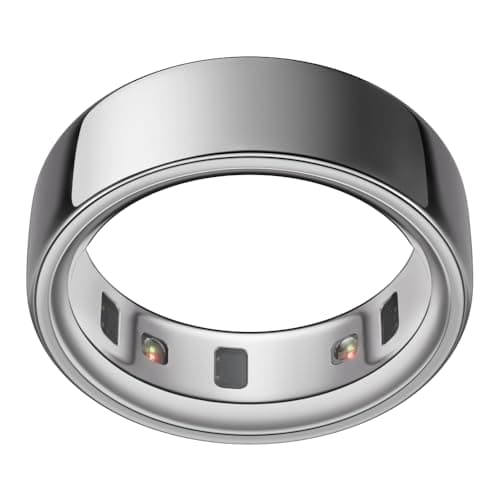
Sleep staging you can actually citeOura Ring 4
The only consumer sleep device with a strong independent PSG result behind it — 76.3% four-stage agreement, and the best deep-sleep sensitivity of the three tested.
$349.0029% off
Price as of November 23, 2026. Prices move; Amazon's is the one that counts.
#ad · we may earn a commission from this link to Oura Ring 4
The short answer
If you want the published measurement Garmin does not have, the Oura Ring 4 holds the best sleep-staging result in the category and the lowest nocturnal HRV error of five devices worn at once. For positioning, the Polar Vantage V3 comes from the only brand with a favorable peer-reviewed GNSS result. For endurance per dollar, the COROS PACE 4states 41 GPS hours and is the budget pick here. Nothing on this page replaces Garmin's training layer.
Ranked
Quick picks
| # | Device | Best for | Evidence | Score | Price |
|---|---|---|---|---|---|
| 01 | Oura Ring 4 The only consumer sleep device with a strong independent PSG result behind it — 76.3% four-stage agreement, and the best deep-sleep sensitivity of the three tested. | Sleep staging you can actually cite | Peer-reviewed validation | 8.0/10 | $249.00Amazon |
| 02 | 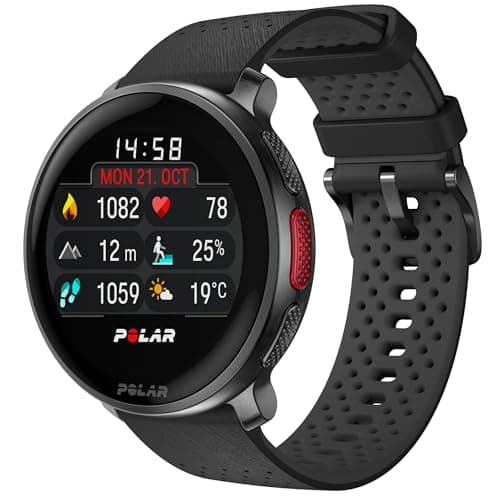 Polar Vantage V3 Polar's flagship, and the most sensor-dense watch here — including an on-wrist ECG. | Lab-style metrics on the wrist | Peer-reviewed validation | 7.5/10 | $586.83Amazon |
| 03 | 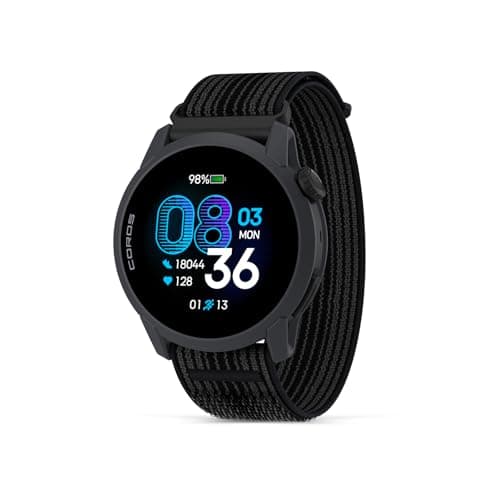 COROS PACE 4 41 stated GPS hours in a 32-gram watch, for a third of the Forerunner 970's money. The endurance-per-dollar winner by a distance. | Long days on a budget | Independent measured test | 7.5/10 | $249.00Amazon |
| 04 | 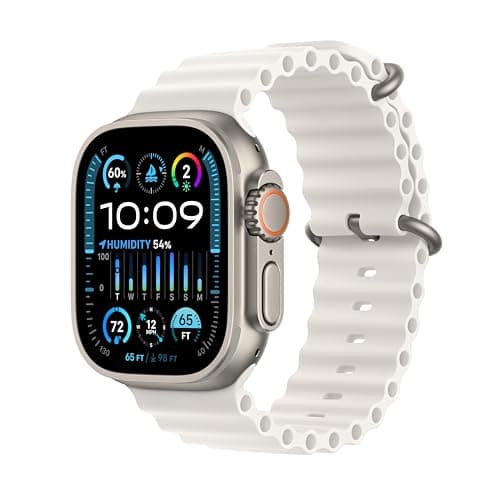 Apple Watch Ultra 2 The previous Ultra, still widely stocked and much cheaper. The same sleep-staging weakness in the published record, for roughly half the money. | iPhone owners who want an Ultra without the current price | Peer-reviewed validation | 6.8/10 | $384.99Amazon |
| 05 | 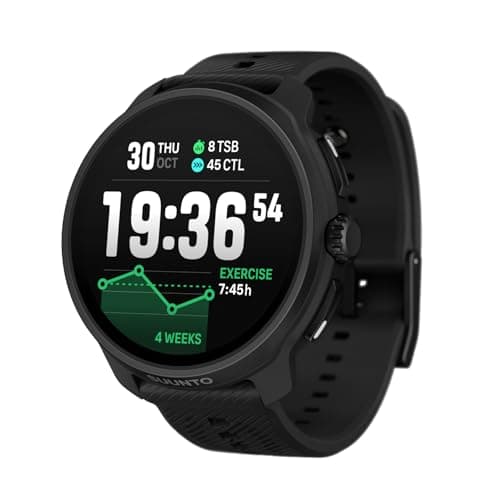 Suunto Race 2 A 1.5" AMOLED and 115+ sport modes, priced under most of the flagships it lines up against. | Big-screen multi-sport value | No validation study exists | 6.7/10 | $399.00Amazon |
#ad· Live prices from the Amazon Product API, as of November 23, 2026. Where we have no verified live price we show none. Scores come from the published rubric at How we rank — the Evidence column shows what each ranking actually rests on, including where the answer is nothing.
What Garmin is genuinely good at
This is the only page on this site with no Garmin on it, which means it needs to be the page that is fairest to Garmin. Start with what you would be handing back, because an alternatives page that skips that step is just a list.
The first thing is the analysis layer. Garmin publishes documentation for Training Status and the stack around it — acute load, training readiness, recovery time, race predictions, PacePro, VO2 max and running dynamics — and ships some version of it across a range that runs from a watch costing under $200 to one costing nearly $1,000. No other brand on this roster covers that spread, and for most buyers the breadth is the real product: whatever you can afford, there is a Garmin at that price with the same software vocabulary.
The second thing is the documentation itself, and this site is unusually dependent on it. Garmin publishes battery tables that name the satellite mode on every row. Take the fēnix 8 table: 16 smartwatch days and 35 hours of all-satellite-plus-multi-band at 47 mm, labeled, with the screen-timeout setting stated. Or the Forerunner 970's published figures of up to 15 smartwatch days and up to 26 hours in GPS mode. Every cost-per-GPS-hour figure on this site depends on a maker publishing a number attached to a named mode, and Garmin does it more consistently than anyone. Two picks below publish no figure at all for their most accurate satellite mode.
The third thing is sensor pairing. Garmin's manuals document ANT+ and Bluetooth sensor support by model name, and Garmin's own strap line-up is the only one on this roster that attributes specific running metrics — stride length, vertical oscillation, ground contact time balance — to a named strap. Since the single upgrade with peer-reviewed evidence behind it in this whole category is moving the heart-rate sensor off the wrist, a brand that documents exactly which straps work is doing something that matters. The strap field is at best chest strap heart rate monitors.
And the one place Garmin's record is thinner than its paperwork
Here is the finding that makes this page worth writing, and it is not a complaint about build quality or software. It is that the brand with the best documentation on this site has one of the thinner measured records on it.
Garmin was absent entirely from Robbins et al. (2024), the single-night inpatient polysomnography comparison that is the best published sleep evidence in consumer wearables — Oura, Fitbit and Apple were in it; Garmin was not. In Dial et al. (2025), where five devices were worn simultaneously by the same 13 people across 536 nights against a single-lead ECG sampled at 1000 Hz, the Garmin fēnix 6 came fourth of five on HRV error at 10.52% — behind both Ouras and the Whoop — and, the Garmin had to be dropped from the resting-heart-rate comparison altogether because the 30-minute window it uses is not timestamped. A measurement you cannot align to a reference cannot be validated at all.
For contrast, in the eight-watch positioning study — distances measured against a trundle wheel accurate to 1 cm across urban, forest and 400 m track conditions — only Polar's receivers came in under 5% error, and two Garmins were in that field. That study is from 2020 and predates the dual-frequency receivers now standard, so it describes brand engineering history rather than any watch currently sold. We say so every time we use it. But it is the only favorable peer-reviewed positioning result any brand on this roster holds, and it does not belong to Garmin.
None of this means a Garmin measures badly. It means the measurement has largely not been published, which under our evidence hierarchy costs a device 30% of its weight regardless of how good its specification sheet is. That is the gap the five picks below exploit, and it is the only gap most of them have.
Name what you actually wanted from a Garmin, then read one section
- A measurement somebody checked. One pick here has a strong peer-reviewed result for the number it is built around. Exactly one.
- Positioning accuracy. One brand on this page holds the only favorable published GNSS result, from a study too old to describe its current watch.
- Endurance per dollar. Two picks state more hours than most Garmins in their most accurate mode, and one of them costs a fraction of a flagship.
- Your phone. If you carry an iPhone and the ecosystem is the real reason you are looking, one pick is the obvious answer and it has more peer-reviewed appearances than anything else here.
- The training layer. Read the closing section, because the honest answer is that no pick on this page replaces it.
For a measurement somebody checked: the Oura Ring 4
The Oura Ring 4 scores 8.0, the highest of any device on this page, and it is not a watch at all. It is here because it is the single clearest answer to the gap above: where Garmin has no published sleep validation, Oura has the best one in the category.
In the Robbins study, 35 healthy adults slept a single inpatient night with clinical polysomnography wearing three devices at once, and the Oura ring tested recorded 76.3% four-stage agreement and 79.5% deep-sleep sensitivity— the best of the three — matching polysomnography on seven of eight nightly summary measures. In the nocturnal HRV study it took first and second place in a five-device field, at 5.96% error for the Gen 4 and 7.15% for the Gen 3, against the Garmin's 10.52%. Oura publishes a full specification table as well: 7.90 mm wide, 2.88 mm thick, 3.3-5.2 g by size, five to eight days of battery, water resistance to 100 m, and a named sensor list.
The cons are substantial and you should read them as disqualifying for a lot of readers. It does not record a run— no satellite receiver, no pace, no distance, no training status, no race predictor, nothing a running watch does. The membership is mandatory for the full app, so the real cost is $459 over three years rather than the sticker, which is why its cost row is its weakest. Rings are sized, so the ASIN varies by size and you want the sizing kit first. And the peer-reviewed result belongs to the Gen 3, not the Ring 4. Buy it alongside a cheap watch rather than instead of one; the full write-up is at the Oura Ring 4 reviewed and the field it sits in is at alternatives to the Oura Ring.
For positioning: the Polar Vantage V3
The Polar Vantage V3is Polar's flagship and the densest raw sensor package of any watch we cover — dual-frequency GNSS, an on-wrist ECG, skin temperature and offline maps. It is here for one reason: it is the only pick on this page whose brandholds a favorable peer-reviewed positioning result, from the eight-watch trundle-wheel study where only Polar's receivers came in under 5% error.
Read that claim exactly as narrowly as it is written, because we will not stretch it. The study tested the Vantage M, the Vantage V and the V800 — not this watch — and it predates dual-frequency receivers entirely. It is brand engineering history, not a measurement of the V3. That is precisely why the V3 scores 6.5 rather than 9 on evidence despite scoring 9 on hardware, and it is the cleanest worked example on this site of why sensor breadth and validated accuracy are different things.
Two further cons, and the second is an absence we are recording rather than papering over. First, it is priced against Garmin's flagship without matching the ecosystem around it — the gap to the Forerunner 970 is $63. Second, no readable Polar specification page for this model exists for us to quote a battery figure from, so you will not find a stated-hours number for the V3 anywhere on this site and there is no cost-per-GPS-hour figure for it either; the nearest Polar table we can read is the Grit X2 Pro's, which states 43 hours in training mode with GPS and 10 smartwatch days for a different watch. Check the number on Polar's own page before you buy. Also worth knowing: in the nocturnal HRV study a Polar watch finished last of five at 16.32% error. The brand-level argument is at Polar vs Garmin.
The budget pick: the COROS PACE 4
The COROS PACE 4 is the cheapest pick here and the strongest endurance-per-dollar figure on the whole site. COROS states 41 GPS hours in All-Systems mode, 19 days of daily training and sleep tracking, 32 grams with the nylon band, an 11.8 mm case, both All-Systems and Dual-Frequency satellite modes and a 1.2-inch AMOLED. At $6.07 per stated GPS hour, nothing else we rank comes close, and the gap to the Forerunner 970 is $401. It is under $300 today.
Four cons, and the first is the same documentation problem Garmin does not have. COROS publishes no battery figure for this watch's Dual-Frequency mode, so the mode you would actually run for positioning accuracy is uncosted — the 41 hours belong to All-Systems. There are no maps. The only independent wrist-heart-rate test on record here for the line is the5krunner's ten-mile comparison of the previous-generation PACE 3, which found wrist heart rate diverged during and after rapid intensity change, with the author cautioning that the dataset was limited; COROS states the PACE 4 has a redesigned sensor and nobody has tested it. And the third-party ecosystem is much smaller than Garmin Connect's. Full write-up at the COROS PACE 4 reviewed; the brand comparison is at COROS vs Garmin.
If you carry an iPhone: the Apple Watch Ultra 2
For a reader whose real question is "Garmin or Apple", the Apple Watch Ultra 2 is the pick with published figures we can actually quote and a live price today. Apple's launch announcement states a 49 mm titanium case, a display reaching 3000 nits, 36 hours of battery in regular use and up to 72 hours in Low Power Mode, and a rating for recreational scuba diving to 40 meters.
Apple is also, on the record, the most-measured brand on this site. Apple Watches appear in two peer-reviewed VO2 max validations we rely on — one in PLOS ONE and one in JMIR — and in the inpatient sleep comparison, where the Apple device beat the Fitbit on four-stage agreement. That is a thicker measured record than Garmin's, and it is the whole argument for this pick.
The cons are specific. Apple has retired the Ultra 2 from its current line-up and its technical-specifications page no longer renders for our fetcher, which is why no GNSS band specification for this watch appears anywhere on this site and why the figures above come from a 2023 launch announcement rather than a live spec sheet. Thirty-six hours of regular use is a fraction of what Garmin states for any of its flagships. It needs an iPhone, full stop. And it does not ship an equivalent of training status, acute load or training readiness. The current-generation field is at alternatives to the Apple Watch Ultra and the brand question is at Garmin vs Apple Watch.
For the widest published endurance range: the Suunto Race 2
The Suunto Race 2 ranks last here and earns its place on one published number. Suunto states a 1.5-inch AMOLED, 115+ sport modes, up to 55 hours of training with continuous tracking at best GPS accuracy, up to 200 hours in tour mode at lower GPS accuracy, up to 18 days of daily use with heart rate on and up to 30 days with it off. Fifty-five hours at the bestaccuracy setting is more than Garmin states for the fēnix 8 in its all-satellite-plus-multi-band mode, and the bracket is the widest labeled endurance range any maker on this roster publishes.
The qualifiers are Suunto's own wording and we keep them attached to the numbers, because the three brands do not label these modes identically and the comparison above is therefore not strictly like-for-like. Three further cons: Suunto renders part of its specification table dynamically, so we quote only the figures that appear as published text and there are rows we simply cannot read; no independent validation of this watch exists that we could find, of anything it measures; and the app and third-party ecosystem is the smallest of any brand on this page. Full write-up at the Suunto Race 2 reviewed; the brand comparison is at Suunto vs Garmin.
What is deliberately not on this page
No Garmin is a pick here, and that is the constraint, not an oversight.Every other alternatives page on this site allows a sibling or a previous generation of the same brand — the Venu 3 appears as an alternative to the Venu 4, and a Forerunner appears as an alternative to a fēnix. A brand-level page cannot do that. If what you actually want is a different Garmin rather than a different brand, the right pages are best Garmin watches, alternatives to the fēnix 8 and alternatives to the Venu 4.
No pick here replaces the training layer, and we are not going to pretend otherwise.Polar and COROS both ship recovery and load platforms, and both are real. Neither is a drop-in substitute for training status, acute load, training readiness, PacePro and race predictions arriving as one coherent set with a decade of third-party integrations behind them. If that software is the reason you own a Garmin, buy a Garmin. The thing this page can tell you honestly is that the software is what you are paying for — not a better measurement, because nobody has published one.
The upgrade that actually changes the data is not on this page either. Whatever watch you land on, the 2025 placement study used a Polar H10 as its reference and found that sensor position beat device at every intensity, with the wrist the weakest site at limits of agreement of roughly plus or minus 10 to 19 bpm at warm-up. The 2024 umbrella review puts the category at about plus or minus 3% for heart rate across 249 studies and 430,465 participants. A chest strap costing a fraction of any watch above moves your heart-rate data further than switching brands does, and it works on all five picks. See best heart rate monitors for running.
In full
Every pick, and why
Oura Ring 4
The only consumer sleep device with a strong independent PSG result behind it — 76.3% four-stage agreement, and the best deep-sleep sensitivity of the three tested.
- Form
- Ring, worn on the index finger
- Sizing
- Size-specific — the ASIN is per size
- Subscription
- Membership required for full app features
What's good
- Robbins et al. (2024): highest four-stage agreement (76.3%, κ = 0.65) and best deep-sleep sensitivity (79.5%) of the three devices tested against polysomnography
- Matched PSG on seven of eight nightly summary measures, missing only sleep latency by five minutes
- A finger is a better optical site than a wrist for the same reason a forearm is
What isn't
- The membership is mandatory for the full app, so the sticker price is not the price — see our three-year arithmetic
- Rings are sized, so you need the sizing kit first and the ASIN varies by size
Skip this if
Skip this if you lift heavily. A rigid ring on a loaded barbell is uncomfortable at best, and Oura's own guidance is to take it off — a tracker you remove for training is not tracking your training.
What the evidence says
Peer-reviewed validationRobbins et al., Sensors 24(20):6532 (2024), n = 35, single-night inpatient polysomnography, testing the Oura Ring Gen3. Note the study tested Gen3, not the Ring 4. Note also that the manufacturer's press release rounded the four-stage figure to 79%; the paper says 76.3%. We use the paper.
Show how this 8.0 was calculated
| Factor | Weight | Score |
|---|---|---|
| EvidenceThe strongest peer-reviewed sleep result of any consumer device we found — with the honest caveats that it was one night, 35 people, and the previous generation. | 30% | 9.0 |
| HardwareFinger-mounted optical sensing, a better site than the wrist. | 20% | 8.5 |
| Metric coverageSleep, HRV, temperature and readiness; weak on exercise recording. | 20% | 8.0 |
| EnduranceMulti-day battery in normal use. | 15% | 8.0 |
| Cost per capabilityThe mandatory membership makes the true three-year cost materially higher than the sticker. | 15% | 5.5 |
$349.0029% off
Price as of November 23, 2026. Prices move; Amazon's is the one that counts.
#ad · we may earn a commission from this link to Oura Ring 4
Polar Vantage V3
Polar's flagship, and the most sensor-dense watch here — including an on-wrist ECG.
- Display
- AMOLED
- Satellite
- Dual-frequency GNSS
- Extras
- On-wrist ECG, skin temperature, offline maps
What's good
- The widest raw sensor set of any watch in this roundup
- Inherits the brand-level positioning result from the JMIR study
What isn't
- Priced against the Forerunner 970 without matching its ecosystem
- Sensor breadth is not the same thing as validated accuracy, and Polar publishes no per-model validation either
Skip this if
Skip this if you will not actually use the extra sensors. More measurements you ignore is not more value.
What the evidence says
Peer-reviewed validationSame dated, brand-level positioning evidence as the Vantage M3: Gilgen-Ammann et al. (2020) found only Polar's receivers under 5% error, testing the Vantage M, Vantage V and V800 — not the V3.
Show how this 7.5 was calculated
| Factor | Weight | Score |
|---|---|---|
| EvidenceFavorable but dated and brand-level peer-reviewed positioning evidence; no validation of this specific model. | 30% | 6.5 |
| HardwareDual-frequency GNSS plus the densest sensor package here, including wrist ECG. | 20% | 9.0 |
| Metric coverageVery wide metric coverage with a strong recovery platform. | 20% | 9.0 |
| EnduranceGood stated endurance for a sensor-heavy AMOLED watch. | 15% | 7.5 |
| Cost per capabilityFlagship pricing without a flagship ecosystem. | 15% | 5.5 |
$679.3314% off
Price as of November 23, 2026. Prices move; Amazon's is the one that counts.
#ad · we may earn a commission from this link to Polar Vantage V3
COROS PACE 4
41 stated GPS hours in a 32-gram watch, for a third of the Forerunner 970's money. The endurance-per-dollar winner by a distance.
- Display
- 1.2" AMOLED touchscreen
- Weight
- 32 g with nylon band, 40 g with silicone
- Satellite
- All-Systems and Dual-Frequency modes
- Battery (stated)
- 19 days daily use / 41 h GPS (All-Systems)
- Thickness
- 11.8 mm
What's good
- 41 manufacturer-stated GPS hours — more than the Forerunner 970 and the 570 combined
- 32 g is light enough that you stop noticing it, which matters more over 100 miles than any feature
- Dual-frequency positioning at an entry-level price
What isn't
- COROS wrist heart rate is the one area where an independent test has published a specific problem — see the evidence note
- Smaller third-party app ecosystem than Garmin's
Skip this if
Skip this if you train by heart rate off the wrist and will not wear a strap. The one independent test we found flagged COROS wrist HR during exactly the intervals you would be buying it for.
What the evidence says
Independent measured testThe5krunner's measured comparison found the previous-generation PACE 3's wrist heart rate diverged during and after rapid intensity changes. That test was of the PACE 3, not the PACE 4, and the author cautions the dataset was limited. COROS states the PACE 4 has a redesigned sensor; no independent test of the new sensor has been published that we could find.
Show how this 7.5 was calculated
| Factor | Weight | Score |
|---|---|---|
| EvidenceThe only independent measured evidence in the range is a limited-dataset test of the PREVIOUS model, and it was unfavorable. The redesigned sensor is unvalidated. | 30% | 4.5 |
| HardwareDual-frequency GNSS and a redesigned optical sensor, per the COROS spec page. | 20% | 8.0 |
| Metric coverageStrong training metrics; a narrower ecosystem than Garmin for third-party integrations. | 20% | 7.5 |
| Endurance41 stated GPS hours in All-Systems mode is the best in this roundup by a wide margin. | 15% | 10.0 |
| Cost per capabilityComfortably the strongest dollars-per-GPS-hour figure on the site. | 15% | 10.0 |
Price as of November 23, 2026. Prices move; Amazon's is the one that counts.
#ad · we may earn a commission from this link to COROS PACE 4
Apple Watch Ultra 2
The previous Ultra, still widely stocked and much cheaper. The same sleep-staging weakness in the published record, for roughly half the money.
- Case
- 49mm titanium
- Display
- Apple states up to 3000 nits
- Battery (stated)
- 36 h regular use / 72 h Low Power Mode
- Water
- Recreational scuba to 40 meters
What's good
- 36 stated hours of regular use, which is long for a smartwatch and short for a sports watch
- Materially cheaper than the Ultra 3 while running the same watchOS training features
- Titanium, a 40-meter dive rating and a display Apple states reaches 3000 nits
What isn't
- The published sleep evidence for Apple's platform is the weakest deep-sleep result of the three devices in the Brigham and Women's study
- Apple no longer publishes a tech-specs page for it that we could read, so we will not assert its GNSS band specification
Skip this if
Skip this if you are buying a watch to fix your sleep data or to record 12-hour days. Neither is what an Apple Watch is best at, and the published record says so on the first count.
What the evidence says
Peer-reviewed validationRobbins et al. (2024) tested the Apple Watch Series 8 against polysomnography: 75.0% four-stage agreement with deep-sleep sensitivity of 50.5%, the weakest of the three devices tested. That was the Series 8, not the Ultra 2, and Apple has revised its staging since — but it is the only peer-reviewed sleep measurement of Apple's platform we have, and it is the same platform.
Show how this 6.8 was calculated
| Factor | Weight | Score |
|---|---|---|
| EvidencePeer-reviewed sleep data exists for the platform and it was unfavorable; the tested device was a sibling, not this watch. | 30% | 6.0 |
| HardwareTitanium, a 3000-nit display and a 40-meter dive rating; a generation behind the Ultra 3, with no readable band-level GNSS specification. | 20% | 8.0 |
| Metric coverageVery wide metric coverage inside Apple's ecosystem; export off-platform is more awkward than Garmin's. | 20% | 8.5 |
| Endurance36 stated hours of regular use is short against every dedicated sports watch here. | 15% | 4.0 |
| Cost per capabilityRoughly half the Ultra 3's sticker for the same watchOS feature set — the clearest value case in Apple's line. | 15% | 7.5 |
Price as of November 23, 2026. Prices move; Amazon's is the one that counts.
#ad · we may earn a commission from this link to Apple Watch Ultra 2
Suunto Race 2
A 1.5" AMOLED and 115+ sport modes, priced under most of the flagships it lines up against.
- Display
- 1.5" AMOLED
- Sport modes
- 115+
- Satellite
- Dual-frequency GNSS
What's good
- The largest AMOLED in this roundup
- Undercuts the flagship tier substantially
What isn't
- No independent validation we could find
- Ecosystem and third-party support remain the weak point
Skip this if
Skip this if you need a proven training-load model. Suunto's analytics are the least documented of the brands here.
What the evidence says
No validation study existsNo independent validation study exists for this device that we could find as of July 2026.
Show how this 6.7 was calculated
| Factor | Weight | Score |
|---|---|---|
| EvidenceNo validation of any kind that we could find; capped accordingly. | 30% | 3.0 |
| HardwareDual-frequency GNSS with the biggest display here. | 20% | 8.5 |
| Metric coverage115+ modes, lighter analytics. | 20% | 8.0 |
| EnduranceStrong stated figures for the screen size. | 15% | 8.0 |
| Cost per capabilityWell under the flagship tier it competes with on specification. | 15% | 8.5 |
$499.0020% off
Price as of November 23, 2026. Prices move; Amazon's is the one that counts.
#ad · we may earn a commission from this link to Suunto Race 2
How to leave Garmin without losing the thing you wanted
- Separate the software from the sensor.Garmin's advantage is a documented, coherent training platform across every price point. Its measured accuracy record is thinner than its paperwork. Decide which of the two you were actually buying.
- Check whether the maker publishes a figure for its most accurate satellite mode.Garmin does, by name, on nearly every watch. COROS publishes nothing for the PACE 4's Dual-Frequency mode. We could find no readable Polar page for the Vantage V3's battery at all. An unpublished number is a thing you cannot check.
- Read endurance claims with the mode attached.Suunto's 55 hours is "at best GPS accuracy" and its 200 hours is "at lower GPS accuracy", in Suunto's own words. Garmin's 35 hours for the fēnix 8 is all-satellite-plus-multi-band at 47 mm. Those are not the same test.
- Confirm the watch pairs an external heart-rate sensor. This is the one upgrade with peer-reviewed evidence behind it, and Garmin documents it by strap model. Check the equivalent page for whichever brand you move to before you commit.
- Ask where your training history goes.An export path off the device is a capability. Garmin Connect's third-party ecosystem is the largest on this roster; every alternative here is smaller, and one of them is much smaller.
- If sleep or recovery is the real reason, change form factor rather than brand. Garmin was absent from the only three-device polysomnography comparison we could find. A finger beat every wrist in it. That is a different purchase from a watch.
- Check the live price on the day. Every gap, bracket and cost-per-hour figure on this page is computed from the price layer at the date shown rather than typed in, and Garmin discounts hard enough to close some of these gaps on its own.
How this ranking was built
Every score on this page comes from one published rubric, applied identically to every device on the site, with the weights written down and the inputs shown. We have not worn any of these devices and we never say we have. Read the method and check us.
Questions
Frequently asked
What is the best alternative to Garmin?
It depends which Garmin strength you were buying. For a published measurement Garmin does not have, the Oura Ring 4: the best sleep-staging result in the only three-device polysomnography comparison we could find, and first and second place on nocturnal HRV in a five-device field. For positioning, the Polar Vantage V3, from the only brand with a favorable peer-reviewed GNSS result — though that study tested three older Polars and predates dual-frequency receivers. For endurance per dollar, the COROS PACE 4 at 41 stated All-Systems GPS hours.
Is anything more accurate than a Garmin?
On published evidence, for specific measurements, yes. Oura holds the best sleep-staging result and the lowest nocturnal HRV error of five devices worn simultaneously (5.96% against Garmin's 10.52%), and Polar holds the only favorable peer-reviewed positioning result. The honest caveat is the other direction too: Garmin has largely not been measured rather than measured badly, and in one study its resting heart rate could not be compared at all because the 30-minute window it uses is not timestamped.
Which Garmin alternative is cheapest?
The COROS PACE 4 at today's live prices, and it is also the strongest cost-per-stated- GPS-hour figure on this site at 41 All-Systems hours. What you give up: no maps, no published battery figure for its Dual-Frequency mode, a much smaller third-party ecosystem, and an unflattering independent wrist heart-rate test on the previous generation of the line.
Does any brand replace Garmin's training status and training readiness?
Not as a drop-in. Polar and COROS both ship load and recovery platforms and both are real products, but neither delivers the same named set — training status, acute load, training readiness, PacePro, race predictions — as one coherent system with Garmin's third-party integrations behind it. If that software is why you own a Garmin, the honest advice is to buy a Garmin.
Should I switch brands to get better heart rate data?
No. Buy a chest strap instead. The 2025 placement study used a Polar H10 as its reference and found sensor position beat device at every intensity tested, with the wrist the weakest site. A strap costs a fraction of any watch on this page and works with all five of them.
Show your working
Sources
Every one of these was read in full before it was cited. Where we could not access a paper, we do not quote its numbers.
- [1]Peer-reviewed validation2024Robbins et al., “Accuracy of Three Commercial Wearable Devices for Sleep Tracking in Healthy Adults”, Sensors 24(20):6532
Brigham and Women’s Hospital. n = 35 healthy adults, single-night inpatient polysomnography, testing Oura Ring Gen3, Fitbit Sense 2 and Apple Watch Series 8. Authors’ stated limits: one night, lab conditions, healthy adults without insomnia, comparison only during scheduled sleep, and device failures on 6 Apple Watches and 2 Fitbits.
- [2]Peer-reviewed validation2025Dial, Hollander, Vatne, Emerson, Edwards & Hagen, “Validation of nocturnal resting heart rate and heart rate variability in consumer wearables”, Physiological Reports 13(16):e70527
DOI 10.14814/phy2.70527. n = 13 healthy adults (7 male, 6 female, 33.2 ± 8.6 years) across 536 nights, each wearing an Oura Gen 3, Oura Gen 4, Polar Grit X Pro, Garmin fēnix 6 and Whoop 4.0 simultaneously against a Polar H10 single-lead ECG reference sampled at 1000 Hz. Authors’ stated limits: healthy adults only, no atrial-fibrillation population, proprietary and periodically-updated algorithms, and unequal night counts per device. The Garmin was dropped from the resting-heart-rate comparison because the 30-minute window it uses is not timestamped.
- [3]Peer-reviewed validation2020Gilgen-Ammann, Schweizer & Wyss, “Accuracy of Distance Recordings in Eight Positioning-Enabled Sport Watches: Instrument Validation Study”, JMIR mHealth and uHealth
DOI 10.2196/17118. Eight watches (Apple Watch Series 4, Coros Apex 46mm, Garmin Fenix 5X Plus, Garmin Forerunner 935, Polar Vantage M, Polar Vantage V, Polar V800, Suunto 9 Baro) measured against a trundle wheel accurate to 1 cm, across urban, forest and 400 m track conditions. IMPORTANT: this predates the dual-frequency receivers now standard, so it describes brand engineering history, not any watch currently sold.
- [4]Peer-reviewed validation2025“Impact of Anatomical Placement on the Accuracy of Wearable Heart Rate Monitors During Rest and Various Exercise Intensities”, Sensors (Basel)
n = 28 (14 male, 14 female). Polar H10 chest strap as the reference. Compared Polar Verity Sense (forearm), Garmin Forerunner 55 (wrist) and three simultaneous Whoop 4.0 units at wrist, forearm and upper arm, across rest, cycling warm-up, burpees and a modified Bruce treadmill protocol.
- [5]Peer-reviewed validation2024Doherty, Baldwin, Keogh, Caulfield & Argent, “Keeping Pace with Wearables: A Living Umbrella Review of Systematic Reviews Evaluating the Accuracy of Consumer Wearable Technologies in Health Measurement”, Sports Medicine
DOI 10.1007/s40279-024-02077-2. An umbrella review: 24 systematic reviews covering 249 unique primary validation studies and 430,465 participants (43% female), across 11 biometric outcomes, with roughly 34 of 310 identified consumer wearables ever validated. Reported accuracy by metric: heart rate approximately ±3% (mean bias −3.39 bpm); step count mean absolute percentage error from −9% to 12%; energy expenditure mean bias −3 kcal per minute with error ranging from −21.27% to 14.76%. Authors’ stated limits: a temporal lag between device release and published research, the intrinsic bias of a tertiary synthesis, and heterogeneity of protocols, devices, criterion measures and statistics severe enough that the authors did not pool a meta-analysis.
- [6]Peer-reviewed validation2025Lambe, O’Grady, Baldwin & Doherty, “Investigating the accuracy of Apple Watch VO2 max measurements: A validation study”, PLOS ONE 20(5):e0323741
DOI 10.1371/journal.pone.0323741. 28 analyzed participants across Apple Watch Series 5-9, SE 2 and Ultra 2 on watchOS 10+, against indirect calorimetry (COSMED Quark CPET, modified Åstrand treadmill protocol). Authors’ stated limits: the sample skewed strongly toward high cardiorespiratory fitness, watch estimates were generated uncontrolled, and only one estimate per participant was collected.
- [7]Peer-reviewed validation2024Caserman, Yum, Göbel, Reif & Matura, “Assessing the Accuracy of Smartwatch-Based Estimation of Maximum Oxygen Uptake Using the Apple Watch Series 7: Validation Study”, JMIR Biomedical Engineering 9:e59459
DOI 10.2196/59459. n = 19 (12 male, 7 female, mean age 28.4), Apple Watch Series 7 against a VO2 Master portable gas analyzer on a graded cycle ergometer test. Authors’ stated limits: the sample was 19 rather than the 30 planned, testing was submaximal, no blood lactate was taken, and the watch figure came from a single outdoor session where Apple’s own validation used an average of 441 days of data.
- [8]Manufacturer specification2026Garmin — Forerunner 265 Series owner’s manual, “Training Status Levels”
Manufacturer-stated, read 2026-10-11. Garmin states that “your training status is based on changes to your VO2 max., acute load, and HRV status over an extended time period”, and defines each level: No Status (“the watch needs you to record multiple activities over two weeks, with VO2 max. results from running or cycling”), Detraining, Recovery, Maintaining (“your current training load is enough to maintain your fitness level”), Productive, Peaking (“you are in ideal race condition”), Overreaching (“your training load is very high and counterproductive”), Unproductive (“your training load is at a good level, but your fitness is decreasing”) and Strained (“there is imbalance between your recovery and training load”). The definitions are Garmin's; the inputs they rest on are what this site can check.
- [9]Manufacturer specification2026Garmin — fēnix 8 Series owner’s manual, battery information
Manufacturer-stated, read 2026-08-18. One table covers the fēnix 8 and the fēnix 8 Pro, which is why the two can be compared here without mixing sources. fēnix 8 AMOLED 47 mm: 16 days smartwatch with Gesture (7 with Always On Display), 47 h GPS-only (37 AOD), 35 h all satellite systems plus multi-band (28 AOD). fēnix 8 Pro 47 mm: 15 days (8 AOD), 44 h GPS-only (33 AOD), 30 h all systems plus multi-band (23 AOD). fēnix 8 Pro 51 mm: 27 days (15 AOD), 78 h GPS-only (56 AOD), 53 h all systems plus multi-band (41 AOD), and 21 h all systems plus multi-band with LTE LiveTrack (19 AOD).
- [10]Manufacturer specification2026Garmin — Forerunner 970 published specifications
Manufacturer-stated battery: up to 15 days smartwatch mode, up to 26 hours GPS mode.
- [11]Manufacturer claim only2025Garmin — “Which Garmin heart rate monitor is right for you?”
Garmin’s own buying guide, dated 9 September 2025 and read 2026-08-26. It presents three straps — HRM 200, HRM-Fit and HRM 600 — and attributes step speed loss, stride length, vertical oscillation and ground contact time balance to the HRM 600. The HRM-Pro Plus does not appear in it. Tiered as a manufacturer claim rather than a specification: it is marketing copy, and we use it only for what Garmin says its own current line-up is.
- [12]Manufacturer specification2026Oura — Ring 4 product page, published specifications
Manufacturer-stated, read 2026-10-25: 7.90 mm wide and 2.88 mm thick, 3.3-5.2 g depending on ring size, six finishes (Silver, Black, Brushed Silver, Stealth, Gold, Rose Gold), a size-specific charger, “5-8 days of battery life” depending on ring size and lifestyle with a typical charge of 20-80 minutes, “Water resistant up to 100m/328 ft”, and a sensor set listed as red and infrared LEDs for blood oxygen, alternating green and infrared LEDs for 24/7 heart rate, heart rate variability and respiration rate, a digital temperature sensor and an accelerometer. Compatibility is stated on the page as “iOS & Android Compatible” and “Available on iOS and Android”, with no handset brand named and no OS versions given. Oura Membership is listed at $5.99/month or $69.99/year with the first month free. No ring price is published on the page itself.
- [13]Manufacturer specification2026Oura — published membership pricing
Manufacturer-stated, read 2026-08-13: $5.99 USD/month or $69.99 USD/year before tax, with the first month free for new members. Oura states that without a membership “your Oura Ring and Oura App will still function, but the insights, personal health data, and benefits you receive will be much more limited.” Our three-year arithmetic uses the monthly rate — the less flattering of the two — and credits the free first month.
- [14]Manufacturer specification2026Polar — Grit X2 Pro published specifications
Manufacturer-stated: 1.39" AMOLED at 454 × 454 behind sapphire glass, stainless steel case, dual-frequency GPS plus GLONASS, Galileo, BeiDou and QZSS, 43 hours in training mode with GPS, 10 days in smartwatch mode, WR100, on-wrist ECG, skin temperature and SpO2 sensors, offline maps preinstalled for North America and Europe.
- [15]Manufacturer specification2026COROS — PACE 4 published specifications
Manufacturer-stated: 1.2" AMOLED, 32 g with nylon band, 11.8 mm thick, All-Systems and Dual-Frequency satellite modes, 41 GPS hours, 19 days of daily training and sleep.
- [16]Independent measured test2023the5krunner, measured heart-rate comparison of the COROS PACE 3
An independent measured test, not a peer-reviewed study, and the author explicitly cautions the dataset was limited. Compared against Garmin HRM-Pro Plus and Polar Verity Sense across easy runs, intervals and cycling. Found divergence during and after rapid intensity change. Tests the PACE 3, not the PACE 4.
- [17]Manufacturer specification2023Apple — “Apple unveils Apple Watch Ultra 2”, published specifications
Manufacturer-stated, read 2026-08-18: 49 mm titanium case, a display Apple states reaches 3000 nits, 36-hour battery life in regular use and up to 72 hours in Low Power Mode, and a rating for recreational scuba diving to 40 meters. Apple has retired the Ultra 2 from its current line-up and its tech-specs page no longer renders for our fetcher, so this launch announcement is the published figure set we could actually read — which is why no GNSS band specification for this watch appears anywhere on this site.
- [18]Manufacturer specification2026Suunto — Race 2 published product specifications
Manufacturer-stated, read 2026-08-18: 1.5-inch AMOLED, 115+ sport modes, up to 55 hours of training with continuous tracking at best GPS accuracy, up to 200 hours in tour mode at lower GPS accuracy, up to 18 days of daily use with heart rate on and up to 30 days with it off. Suunto renders part of its specification table dynamically, so we quote only the figures that appear as published text on the page.
Read next
Related
- Best Garmin watches
If what you want is a different Garmin rather than a different brand.
- COROS vs Garmin
The brand-level head-to-head for the budget pick on this page.
- Polar vs Garmin
Including the positioning study that is the only favorable GNSS result any brand holds.
- Most accurate fitness trackers
The whole roster ranked on published evidence, across every form factor.