The evidence scoreboard
Running power accuracy, device by device
Cycling power is measured. Running power is modeled - and the model is different on every brand, which is why two devices on the same run disagree and neither can be shown to be wrong.
We earn a commission when you buy through our Amazon links, at no extra cost to you. It never decides a ranking — the rubric that does is published in full, so you can check us rather than take our word for it. How this works.
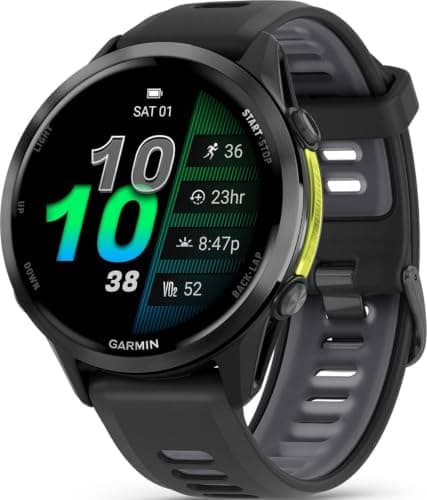
Top pick
Long-course athletes who want mapsGarmin Forerunner 970
The most complete running watch Garmin sells, and — counter-intuitively — the cheapest of the pair per hour of GPS you get.
Price as of October 22, 2026. Prices move; Amazon's is the one that counts.
#ad · we may earn a commission from this link to Garmin Forerunner 970
The short answer
No running power figure on any watch has been independently validated. The only device with a peer-reviewed validation against force platforms is a foot pod, in a study of six runners whose correction function was derived from that same dataset. Treat running power as a brand-specific internal index - useful for pacing yourself against yourself, not comparable between devices.
Ranked
Quick picks
| # | Device | Best for | Evidence | Score | Price |
|---|---|---|---|---|---|
| 01 | Garmin Forerunner 970 The most complete running watch Garmin sells, and — counter-intuitively — the cheapest of the pair per hour of GPS you get. | Long-course athletes who want maps | Manufacturer specification | 7.7/10 | $749.99Amazon |
| 02 | 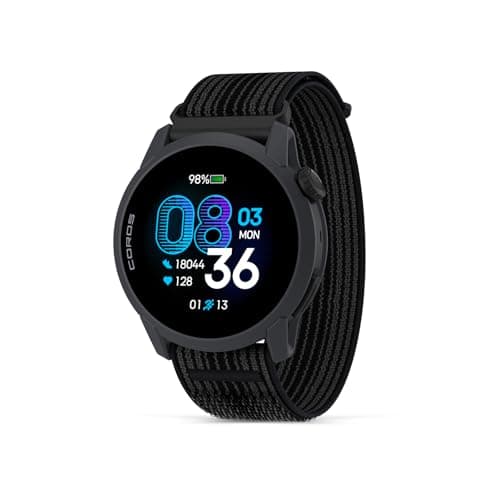 COROS PACE 4 41 stated GPS hours in a 32-gram watch, for a third of the Forerunner 970's money. The endurance-per-dollar winner by a distance. | Long days on a budget | Independent measured test | 7.5/10 | $249.00Amazon |
| 03 | 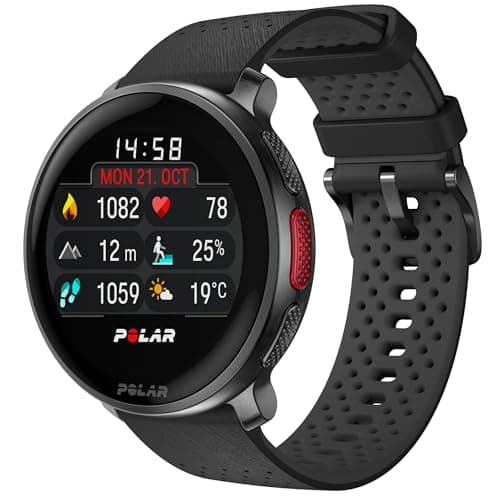 Polar Vantage V3 Polar's flagship, and the most sensor-dense watch here — including an on-wrist ECG. | Lab-style metrics on the wrist | Peer-reviewed validation | 7.5/10 | $679.90Amazon |
#ad· Live prices from the Amazon Product API, as of October 22, 2026. Where we have no verified live price we show none. Scores come from the published rubric at How we rank — the Evidence column shows what each ranking actually rests on, including where the answer is nothing.
Why running power is a different kind of number from cycling power
A bicycle power meter contains strain gauges. It measures the force you apply to a crank or pedal and the angular velocity of that crank, multiplies them, and reports watts. The measurement is physical and the unit is unambiguous.
Running power is not that. No consumer running device measures the force you apply to the ground. What they do is infer it - from accelerometry at the wrist or the foot, from pace, from estimated vertical oscillation and ground contact time, from barometric gradient - and then feed those inputs into a proprietary model that outputs a number labeled "watts". Different manufacturers use different inputs and different models, which is the reason two devices on the same run report different wattages and neither can be declared wrong: they are not measuring the same thing, and neither is measuring the thing the unit implies.
This matters for how you should use the number, not just whether to believe it. A quantity that is internally consistent but not comparable between devices is still useful - as a pacing index relative to your own history. It is not useful as an absolute physiological figure, and it cannot be compared with a training partner's. What the metric is supposed to represent is covered in running power explained; this page is about what has actually been measured.
The one validation that exists, and its limits
Imbach et al. (2020) is the only peer-reviewed validation of a consumer running power meter in our library. Six recreational runners ran an incremental test from 8 to 20 km/h on a 200 m indoor track, measured against 500 Hz force platforms, a Cosmed K4b2 metabolic analyzer and 400 Hz motion capture - a genuinely rigorous reference setup.
The authors' own stated limits are as important as the result, and we quote them rather than summarize them away: six participants, a correction function estimated from that same small dataset, no maximal or supramaximal speeds, no slopes or changes of direction, and proprietary algorithms the authors could not inspect. A correction derived from the data it is then applied to is the methodological point to be most careful about - it is not independent validation in the sense a reader would assume from the word.
The second relevant paper is often cited as if it were a second validation, and it is not. Berzosa et al. (2024) put a Stryd foot pod against a Garmin fenix 7S Solar with an HRM-PRO on a 2.5 km trail course with 195 m of climbing, run twice a week apart by five participants. There was no gold standard in that study. It measures how repeatable each device is and how far the two disagree with each other - it cannot say which one is closer to the truth. Anyone citing it as evidence that one brand is more accurate than the other has misread it.
Beyond those two there is the 2025 systematic review of 13 studies and 273 participants covering wearable VO2 max and threshold estimation, which includes foot-worn inertial units among its devices and reports the same structural problem: undisclosed algorithms prevent cross-device comparison, and none of the studies tested the latest models. That review was screened and extracted by a single reviewer, which the authors state.
What the watches on this page actually publish
All three devices below report running power natively, from the wrist, with no foot pod required. None of those figures has been validated by anyone.
Garmin Forerunner 970. Garmin's specification gives it running dynamics, multi-band GNSS with SatIQ, 26 stated GPS hours and 15 smartwatch days. Running power on this watch is derived on the wrist, and adding Garmin's own HRM 600 chest strap adds the stride metrics the model uses - which is an input change, not a validation. It costs $28.85 per stated GPS hour.
COROS PACE 4. COROS states 41 hours of All-Systems GPS and 19 days of daily use in a 32-gram case. COROS reports running power from the wrist too, on its own model, and the brand's wider caveat applies: the only independent test of a COROS optical sensor flagged divergence during intensity changes, and heart rate is an input to several of the derived figures.
Polar Vantage V3. The most sensor-dense watch of the three - dual-frequency GNSS, skin temperature, on-wrist ECG and offline maps - which means its power model has the most inputs available to it. More inputs is not the same as more accuracy, and Polar publishes no per-model validation of its power figure either.
How to use a number nobody has checked
Three rules that follow from the record rather than from opinion.
Compare it only with itself.Your watch's running power is internally consistent enough to pace a tempo effort or hold an even output up a hill. Across brands, or against a friend's watch, it means nothing.
Do not set training zones from it alone. The 2025 threshold study of 100 runners found that even a watch-derived lactate threshold - a much better-studied output - returned a usable result only 65.2% of the time on the best device tested, and that protocol used a chest strap rather than the wrist. A power-derived zone inherits that uncertainty and adds a model nobody has inspected.
Expect it to change under your feet. These models are updated by firmware. A number that moves because the algorithm moved, with your physiology unchanged, is the clearest demonstration that it is a model output rather than a measurement - and it is why the 2024 umbrella review lists undisclosed, periodically-updated proprietary algorithms as a structural obstacle to validating consumer wearables at all. That review found roughly 34 of 310 identified consumer wearables have ever been validated for anything.
If what you actually want is a measurement rather than a model, the one upgrade that delivers it is a heart-rate sensor off the wrist - see better heart rate accuracy. The related model outputs are at VO2 max accuracy by device and training load explained.
The record
What has actually been measured
| Device | Metric | What was actually measured | Evidence |
|---|---|---|---|
| Stryd foot pod | Running power, submaximal speeds | Validated against 500 Hz force platforms, a metabolic analyzer and 400 Hz motion capture, n = 6, 8-20 km/h on a 200 m indoor track. The authors' correction function was estimated from that same small dataset, and no slopes, direction changes or maximal speeds were tested. [1] | Peer-reviewed validation |
| Stryd vs Garmin RP (fenix 7S + HRM-PRO) | Running power, repeatability on trail | n = 5, a 2.5 km trail course with 195 m of climbing run twice a week apart. NO gold standard: the study measures each device's repeatability and how far the two disagree, and cannot say which is closer to the truth. [2] | Peer-reviewed validation |
| Garmin Forerunner 970 (wrist-derived) | Running power | No validation study of this model's running power exists that we could find. | No validation study exists |
| COROS PACE 4 (wrist-derived) | Running power | No validation study of this model's running power exists that we could find. | No validation study exists |
| Polar Vantage V3 (wrist-derived) | Running power | No validation study of this model's running power exists that we could find. | No validation study exists |
| Foot-worn inertial units, including Stryd | Derived VO2 max and threshold estimates | 13 studies, 273 participants. Undisclosed algorithms prevent cross-device comparison and none of the included studies tested the latest models. Screened and extracted by a single reviewer, as the authors state. [3] | Peer-reviewed validation |
| Consumer wearables, all brands | Validation coverage | Roughly 34 of 310 identified consumer wearables have ever been validated for any metric, across 24 systematic reviews and 249 primary studies. Periodically-updated proprietary algorithms are named as a structural obstacle. [4] | Peer-reviewed validation |
In full
Every pick, and why
Garmin Forerunner 970
The most complete running watch Garmin sells, and — counter-intuitively — the cheapest of the pair per hour of GPS you get.
- Case
- 47mm, titanium bezel, AMOLED
- Satellite
- Multi-band GNSS with SatIQ
- Battery (stated)
- 15 days smartwatch / 26 h GPS
- Maps
- Built-in, full color
- Extras
- ECG app, speaker and microphone
What's good
- Multi-band GNSS with SatIQ — the current top tier of consumer positioning hardware
- 26 stated GPS hours is enough for an ironman-distance day with a wide margin
- Built-in maps, which the 570 does not have at any price
What isn't
- The wrist optical sensor is the same class of hardware as the 570's — the premium buys features, not a better heart-rate signal
- 47mm only; there is no smaller case in this model
Skip this if
Skip this if you never race longer than a marathon and never navigate. Maps and titanium are the entire difference, and neither changes a single number the watch records.
What the evidence says
Manufacturer specificationNo independent validation study of the Forerunner 970's optical heart rate has been published that we could find. The specification figures are Garmin's own.
Show how this 7.7 was calculated
| Factor | Weight | Score |
|---|---|---|
| EvidenceSpecs are published and detailed, but no peer-reviewed or independent measured validation of this specific model exists yet. | 30% | 5.5 |
| HardwareMulti-band GNSS with SatIQ and Garmin's current-generation optical sensor — the top hardware tier available. | 20% | 9.5 |
| Metric coverageRunning dynamics, ECG, training load, maps, and a documented export path off the watch. | 20% | 9.5 |
| EnduranceGarmin states 26 hours in GPS mode, 15 days smartwatch. | 15% | 7.5 |
| Cost per capabilityHighest sticker in the range, but the strongest dollars-per-GPS-hour of the two Forerunners — see the arithmetic on the comparison page. | 15% | 7.5 |
Price as of October 22, 2026. Prices move; Amazon's is the one that counts.
#ad · we may earn a commission from this link to Garmin Forerunner 970
COROS PACE 4
41 stated GPS hours in a 32-gram watch, for a third of the Forerunner 970's money. The endurance-per-dollar winner by a distance.
- Display
- 1.2" AMOLED touchscreen
- Weight
- 32 g with nylon band, 40 g with silicone
- Satellite
- All-Systems and Dual-Frequency modes
- Battery (stated)
- 19 days daily use / 41 h GPS (All-Systems)
- Thickness
- 11.8 mm
What's good
- 41 manufacturer-stated GPS hours — more than the Forerunner 970 and the 570 combined
- 32 g is light enough that you stop noticing it, which matters more over 100 miles than any feature
- Dual-frequency positioning at an entry-level price
What isn't
- COROS wrist heart rate is the one area where an independent test has published a specific problem — see the evidence note
- Smaller third-party app ecosystem than Garmin's
Skip this if
Skip this if you train by heart rate off the wrist and will not wear a strap. The one independent test we found flagged COROS wrist HR during exactly the intervals you would be buying it for.
What the evidence says
Independent measured testThe5krunner's measured comparison found the previous-generation PACE 3's wrist heart rate diverged during and after rapid intensity changes. That test was of the PACE 3, not the PACE 4, and the author cautions the dataset was limited. COROS states the PACE 4 has a redesigned sensor; no independent test of the new sensor has been published that we could find.
Show how this 7.5 was calculated
| Factor | Weight | Score |
|---|---|---|
| EvidenceThe only independent measured evidence in the range is a limited-dataset test of the PREVIOUS model, and it was unfavorable. The redesigned sensor is unvalidated. | 30% | 4.5 |
| HardwareDual-frequency GNSS and a redesigned optical sensor, per the COROS spec page. | 20% | 8.0 |
| Metric coverageStrong training metrics; a narrower ecosystem than Garmin for third-party integrations. | 20% | 7.5 |
| Endurance41 stated GPS hours in All-Systems mode is the best in this roundup by a wide margin. | 15% | 10.0 |
| Cost per capabilityComfortably the strongest dollars-per-GPS-hour figure on the site. | 15% | 10.0 |
Price as of October 22, 2026. Prices move; Amazon's is the one that counts.
#ad · we may earn a commission from this link to COROS PACE 4
Polar Vantage V3
Polar's flagship, and the most sensor-dense watch here — including an on-wrist ECG.
- Display
- AMOLED
- Satellite
- Dual-frequency GNSS
- Extras
- On-wrist ECG, skin temperature, offline maps
What's good
- The widest raw sensor set of any watch in this roundup
- Inherits the brand-level positioning result from the JMIR study
What isn't
- Priced against the Forerunner 970 without matching its ecosystem
- Sensor breadth is not the same thing as validated accuracy, and Polar publishes no per-model validation either
Skip this if
Skip this if you will not actually use the extra sensors. More measurements you ignore is not more value.
What the evidence says
Peer-reviewed validationSame dated, brand-level positioning evidence as the Vantage M3: Gilgen-Ammann et al. (2020) found only Polar's receivers under 5% error, testing the Vantage M, Vantage V and V800 — not the V3.
Show how this 7.5 was calculated
| Factor | Weight | Score |
|---|---|---|
| EvidenceFavorable but dated and brand-level peer-reviewed positioning evidence; no validation of this specific model. | 30% | 6.5 |
| HardwareDual-frequency GNSS plus the densest sensor package here, including wrist ECG. | 20% | 9.0 |
| Metric coverageVery wide metric coverage with a strong recovery platform. | 20% | 9.0 |
| EnduranceGood stated endurance for a sensor-heavy AMOLED watch. | 15% | 7.5 |
| Cost per capabilityFlagship pricing without a flagship ecosystem. | 15% | 5.5 |
Price as of October 22, 2026. Prices move; Amazon's is the one that counts.
#ad · we may earn a commission from this link to Polar Vantage V3
What to buy if running power is the reason
- If you want the one validated device: it is a foot pod, not a watch, and the validation is six runners with a self-derived correction. We do not stock a pick for it, because we will not put a buy button on the back of a study that thin.
- If you want a usable pacing index: any of the three watches here reports one natively. Pick the watch on everything else - battery, positioning, platform - because the power figure is unvalidated on all of them equally.
- If you want a real measurement to train on: buy a chest strap and train by heart rate and pace. Both are measured; running power is modeled.
Questions
Frequently asked
Is running power accurate?
No consumer running power figure on a watch has been independently validated. The only peer-reviewed validation of any running power meter we found tested a foot pod on six runners, using a correction function derived from that same dataset. Treat the number as a brand-specific index, not a physical measurement.
Why do my watch and my foot pod disagree on watts?
Because they are running different proprietary models on different inputs. The one study that compared a foot pod with a watch on the same runs had no gold standard, so it could establish that the two disagree but not which one is closer to correct.
Is running power better than pace for training?
It is more stable on hills and in wind, which is its genuine advantage. But pace is measured and power is modeled, so the trade is responsiveness against verifiability. If you use power, use it as a within-device index.
Does a chest strap improve running power?
It can change the inputs - Garmin's straps add stride metrics its model uses - but changing an input is not the same as validating the output. No study has measured whether strap-fed running power is more accurate than wrist-fed running power.
Show your working
Sources
Every one of these was read in full before it was cited. Where we could not access a paper, we do not quote its numbers.
- [1]Peer-reviewed validation2020Imbach, Candau, Chailan & Perrey, “Validity of the Stryd Power Meter in Measuring Running Parameters at Submaximal Speeds”, Sports 8(7):103
DOI 10.3390/sports8070103. n = 6 recreational runners, incremental test on a 200 m indoor track from 8 to 20 km/h, against 500 Hz force platforms, a Cosmed K4b2 metabolic analyzer and 400 Hz motion capture. Authors’ stated limits: six participants, a correction function estimated from that same small dataset, no maximal or supramaximal speeds, no slopes or changes of direction, and proprietary algorithms the authors could not inspect.
- [2]Peer-reviewed validation2024Berzosa, Comeras-Chueca, Bascuas, Gutiérrez & Bataller-Cervero, “Assessing Trail Running Biomechanics: A Comparative Analysis of the Reliability of Stryd and GARMIN RP Wearable Devices”, Sensors 24(11):3570
DOI 10.3390/s24113570. n = 5, a 2.5 km trail course with 195 m of climbing, run twice a week apart, comparing a Stryd foot pod against a Garmin fēnix 7S Solar with an HRM-PRO. IMPORTANT: there was no gold standard in this study — it measures how repeatable each device is and how far the two disagree with each other, and it cannot say which one is closer to the truth. That limitation is the reason we cite it the way we do.
- [3]Peer-reviewed validation2025Železnik Mežan, “Accuracy of wearables for determining the maximal oxygen uptake and lactate threshold: a qualitative systematic review”, Frontiers in Sports and Active Living 7:1707991
DOI 10.3389/fspor.2025.1707991. 13 studies, 273 participants (181 men, 92 women), covering Garmin Forerunner 230 and 245, fēnix 3, 6 and 7, Polar V800, Apple Watch Series 7, foot-worn IMUs including Stryd, and chest-worn GNSS. Authors’ stated limits: screened and extracted by a single reviewer, small per-study samples, none of the studies tested the latest smartwatch models, undisclosed algorithms prevent cross-device comparison, and the pooled population skewed to 18-30 year olds.
- [4]Peer-reviewed validation2024Doherty, Baldwin, Keogh, Caulfield & Argent, “Keeping Pace with Wearables: A Living Umbrella Review of Systematic Reviews Evaluating the Accuracy of Consumer Wearable Technologies in Health Measurement”, Sports Medicine
DOI 10.1007/s40279-024-02077-2. An umbrella review: 24 systematic reviews covering 249 unique primary validation studies and 430,465 participants (43% female), across 11 biometric outcomes, with roughly 34 of 310 identified consumer wearables ever validated. Reported accuracy by metric: heart rate approximately ±3% (mean bias −3.39 bpm); step count mean absolute percentage error from −9% to 12%; energy expenditure mean bias −3 kcal per minute with error ranging from −21.27% to 14.76%. Authors’ stated limits: a temporal lag between device release and published research, the intrinsic bias of a tertiary synthesis, and heterogeneity of protocols, devices, criterion measures and statistics severe enough that the authors did not pool a meta-analysis.
- [5]Manufacturer specification2026Garmin — Forerunner 970 published specifications
Manufacturer-stated battery: up to 15 days smartwatch mode, up to 26 hours GPS mode.
- [6]Manufacturer specification2026COROS — PACE 4 published specifications
Manufacturer-stated: 1.2" AMOLED, 32 g with nylon band, 11.8 mm thick, All-Systems and Dual-Frequency satellite modes, 41 GPS hours, 19 days of daily training and sleep.
- [7]Peer-reviewed validation2025Lu, Cui, Zhu, Wu, Xing, Pan & Shen, “Validity of smartwatch-derived estimates of lactate threshold heart rate and pace compared to graded exercise testing”, Frontiers in Physiology 16:1621996
DOI 10.3389/fphys.2025.1621996. 100 healthy recreational runners (61 male, 39 female, 28.0 ± 9.6 years) against a treadmill graded exercise test with fingertip blood lactate (Biosen C-line), threshold determined by the modified Dmax method. Device counts were unequal: Huawei GT Runner n = 100, Garmin Forerunner 265/265s n = 23, COROS PACE 3 n = 17. Authors’ stated limits: unbalanced samples, indoor reference against outdoor watch tests, day-to-day threshold variability, and different heart-rate acquisition between devices — the Garmin protocol required an ECG chest strap while the other two used wrist PPG — plus undisclosed manufacturer algorithms.
Read next
Related
- Running power explained
What the metric is supposed to represent, before you ask whether it is right.
- VO2 max accuracy by device
The same structural problem on a better-studied model output.
- Training load explained
The other derived figure that inherits every input's error.
- Garmin Forerunner 970 review
The most complete platform of the three watches on this page.