Head to head
Polar H10 vs H9
Two straps from the same maker using the same sensing principle. The difference is a memory chip and a radio, and which one matters depends entirely on where you train.
We earn a commission when you buy through our Amazon links, at no extra cost to you. It never decides a ranking — the rubric that does is published in full, so you can check us rather than take our word for it. How this works.
Top pick
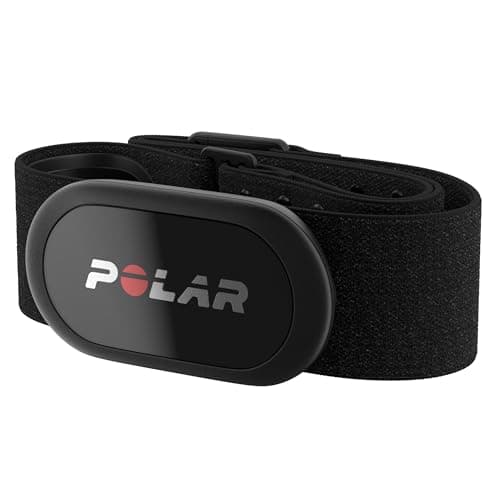
Anyone who trains by heart ratePolar H10
The device other people's validation studies use as the reference. That is the strongest recommendation a sensor can have.
Price as of October 22, 2026. Prices move; Amazon's is the one that counts.
#ad · we may earn a commission from this link to Polar H10
The short answer
Buy the H10 if you ever want to record without a paired device — swimming, or leaving your watch behind. Buy the H9 if you always train with a watch or head unit, or if you need the 5 kHz analog signal old gym equipment uses. Same electrodes, same electrical measurement.
Ranked
Quick picks
| # | Device | Best for | Evidence | Score | Price |
|---|---|---|---|---|---|
| 01 | Polar H10 The device other people's validation studies use as the reference. That is the strongest recommendation a sensor can have. | Anyone who trains by heart rate | Peer-reviewed validation | 8.9/10 | $104.45Amazon |
| 02 | 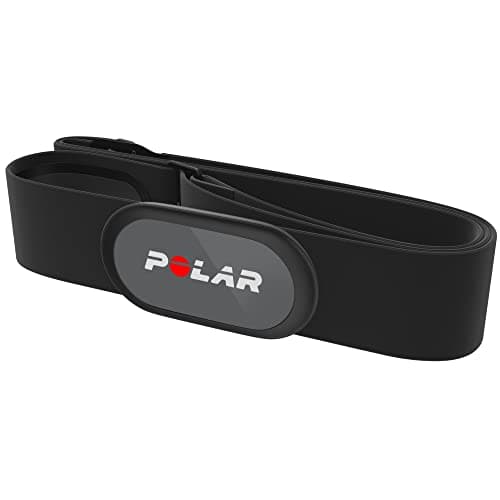 Polar H9 The H10 with the recording memory removed. If you always ride with a head unit, that is a feature you were never going to use. | Riders who always have a head unit running | Manufacturer specification | 7.3/10 | $69.90Amazon |
#ad· Live prices from the Amazon Product API, as of October 22, 2026. Where we have no verified live price we show none. Scores come from the published rubric at How we rank — the Evidence column shows what each ranking actually rests on, including where the answer is nothing.
The full specification table
Every value from Polar's own published pages, linked in the sources below.
| Specification | Polar H9 | Polar H10 |
|---|---|---|
| Sensor | Electrical (ECG), chest strap | Electrical (ECG), chest strap |
| Bluetooth LE | Yes | Yes |
| ANT+ | Yes (2.1) | Yes |
| 5 kHz analog | Yes | No |
| Internal memory | None | One session, up to 30 h |
| Battery (stated) | Up to 400 h, replaceable 160 mAh coin cell | Up to 400 h, CR2025 coin cell |
| Water rating | WR30 | WR30 |
| Used as a research reference | No | Yes |
The price gap between them is currently $35. Everything below is about whether the two bold rows are worth it to you.
The memory, which is the real difference
The H10 stores one session of up to 30 hours internally. The H9 stores nothing and cannot record without a paired device receiving in real time.
For most training that is irrelevant — your watch is on your wrist, it is receiving, and the memory never gets used. Two cases flip it completely.
Swimming. Bluetooth and ANT+ both run at 2.4 GHz, and water absorbs that frequency almost immediately. A strap on your chest cannot reach a watch on your wrist underwater. The H10 records the session and syncs afterwards; the H9 measures perfectly and nothing receives it. We work this through in full here, and it is the single clearest case for the H10.
Training without a device. A gym session where your phone is in a locker, a class, a run where you left the watch at home. The H10 gives you a heart-rate file from a session where you carried nothing else.
If neither of those describes you, the memory is a feature you will never use, and the H9 is the same measurement for less money.
The 5 kHz analog radio, which runs the other way
The H9 has one thing the H10 does not: a 5 kHz analog broadcast alongside Bluetooth and ANT+.
That is the old, pre-digital heart-rate protocol, and a great deal of gym cardio equipment still listens for it — treadmills, ellipticals, rowers and stationary bikes with a heart-rate readout on the console, particularly anything more than a few years old.
If your training happens on equipment that expects analog, the cheaper strap is the more compatible one. This inverts the usual assumption that the more expensive sibling does everything the cheaper one does, and it is worth checking before you buy — our compatibility guide covers what listens for what.
The evidence, and why it does not transfer
The H10 occupies the strongest evidentiary position of any device on this site: researchers use it as the criterion measure. It was the reference in the 2025 Sensors placement study and the ECG reference in the 536-night nocturnal HRV validation. Being chosen as the thing everything else is measured against is an implicit endorsement by the people whose job is to be skeptical.
Two honest caveats. Because it is the reference, those studies cannot measure the H10's own error — there was nothing more accurate in the room to compare it to. And this position belongs to the H10 specifically.
We do not let it transfer to the H9. The H9 shares the electrode design and the electrical sensing principle, which is a good reason to expect it to be accurate. It is not a measurement of it. Under our evidence hierarchy the H9 sits at manufacturer specification and scores accordingly.
That may look pedantic for two straps from the same maker. It is the same rule that puts the Oura Ring 5 below the Ring 4, and a rule you suspend when it feels obviously safe is not a rule. The whole value of the hierarchy is that it applies when it is inconvenient.
Practically: both are electrical chest straps, which is the right physical principle and a different class of measurement from any optical sensor. Either is a large upgrade over wrist heart rate. Only one of them has been used as a scientific reference.
What is identical
Electrical sensing principle, Bluetooth and ANT+, up to 400 stated hours on a replaceable coin cell, WR30 water resistance, and Polar's strap hardware. Neither is rechargeable, which is a genuine advantage over rechargeable straps — 400 hours you never think about beats a device that can be flat when you need it.
The verdict
Buy the H10 if you swim, if you ever train without a receiving device, or if you want the strap with the strongest evidentiary record in the category. It is the default recommendation on this site for a reason.
Buy the H9 if you always ride or run with a head unit or watch and want the same electrical measurement for less — or if your gym equipment needs 5 kHz analog, in which case it is the better strap outright.
Do not agonize. Both are electrical straps. The gap between either of them and a wrist sensor is far larger than the gap between them.
If the real question is Polar or Garmin rather than H10 or H9, that is at Polar vs Garmin chest strap, and the ownership detail for either Polar strap - cells, sizing and dropouts - is at the H10 battery and strap guide.
In full
Every pick, and why
Polar H10
The device other people's validation studies use as the reference. That is the strongest recommendation a sensor can have.
- Sensor
- Electrical (ECG), chest strap
- Connectivity
- Bluetooth LE + ANT+
- Memory
- One session, up to 30 hours
- Battery (stated)
- Up to 400 h, CR2025 coin cell
- Water rating
- WR30
What's good
- Used as the criterion measure in published research — including the 2025 Sensors placement study on this site
- Simultaneous Bluetooth and ANT+, so it pairs to a watch and a bike computer at once
- 400 stated hours on a coin cell you replace rather than recharge
What isn't
- It is a chest strap, and a chest strap is less comfortable than a watch
- The strap wears out well before the sensor does
Skip this if
Skip this if you know yourself well enough to know you will not wear it. An unworn ECG strap measures nothing, and a wrist sensor you actually wear beats it every time.
What the evidence says
Peer-reviewed validationUsed as the reference standard in Sensors (2025), the anatomical-placement study of 28 participants. Being chosen as the criterion is an implicit validation by the researchers, though it means the study cannot measure the H10's own error.
Show how this 8.9 was calculated
| Factor | Weight | Score |
|---|---|---|
| EvidenceResearchers use it as the criterion measure. Nothing else in this category has a stronger evidentiary position. | 30% | 10.0 |
| HardwareElectrical ECG measurement rather than optical — a different and better physical principle for this job. | 20% | 9.5 |
| Metric coverageHeart rate and R-R intervals only; it does not pretend to do anything else. | 20% | 6.5 |
| Endurance400 stated hours on a replaceable coin cell. | 15% | 9.5 |
| Cost per capabilityInexpensive next to any watch, and it outlasts several of them. | 15% | 8.5 |
Price as of October 22, 2026. Prices move; Amazon's is the one that counts.
#ad · we may earn a commission from this link to Polar H10
Polar H9
The H10 with the recording memory removed. If you always ride with a head unit, that is a feature you were never going to use.
- Sensor
- Electrical (ECG), chest strap
- Connectivity
- Bluetooth LE + ANT+ 2.1 + 5 kHz analog
- Memory
- None — it cannot record on its own
- Battery (stated)
- Up to 400 h, replaceable 160 mAh coin cell
- Water rating
- WR30
What's good
- Electrical measurement — the same physical principle as the strap researchers use as their reference
- 5 kHz analog on top of Bluetooth and ANT+, which is what old gym cardio equipment actually listens for
- 400 stated hours on a coin cell you replace rather than recharge
What isn't
- No internal memory, so it cannot record a session without a paired device — this is the specification difference from the H10
- No independent validation of the H9 itself that we could find; the studies use the H10
Skip this if
Skip this if you ever want heart rate from a session you rode without your watch or head unit. The H10 stores 30 hours on its own; this stores nothing, and no firmware adds memory that is not there.
What the evidence says
Manufacturer specificationNo validation study of the H9 specifically that we could find. It shares the electrode and sensing principle of the H10 that researchers use as their criterion measure, which is a good reason to expect it to be accurate and not a measurement of it. We score the principle, not the assumption.
Show how this 7.3 was calculated
| Factor | Weight | Score |
|---|---|---|
| EvidenceCorrect sensing principle from the brand researchers pick as their reference — but no measurement of this device, and we do not let a sibling's record transfer. | 30% | 5.5 |
| HardwareElectrical ECG measurement with three radios, including the 5 kHz analog that gym equipment uses. | 20% | 8.5 |
| Metric coverageHeart rate only, and unlike the H10 it cannot record without a paired device. | 20% | 5.5 |
| Endurance400 stated hours on a replaceable coin cell. | 15% | 9.5 |
| Cost per capabilityMeaningfully cheaper than the H10 for the same measurement principle. | 15% | 9.5 |
Price as of October 22, 2026. Prices move; Amazon's is the one that counts.
#ad · we may earn a commission from this link to Polar H9
How this ranking was built
Every score on this page comes from one published rubric, applied identically to every device on the site, with the weights written down and the inputs shown. We have not worn any of these devices and we never say we have. Read the method and check us.
Questions
Frequently asked
What is the difference between the Polar H10 and H9?
Two things. The H10 has internal memory for one session of up to 30 hours and the H9 has none. The H9 broadcasts a 5 kHz analog signal that old gym equipment listens for and the H10 does not. Sensing principle, battery and water rating are the same.
Is the Polar H9 as accurate as the H10?
Probably, and nobody has measured it. It shares the electrode design and the electrical sensing principle of the strap researchers use as their reference, which is a strong reason to expect accuracy — but expectation is not measurement, and we do not let a sibling's record transfer.
Can the Polar H9 record without a watch?
No. It has no internal memory, so it needs a device receiving in real time. That is the specification difference from the H10, and it is why the H9 is the wrong strap for swimming or for any session where you carry nothing else.
Which Polar strap works with gym equipment?
The H9, because of its 5 kHz analog broadcast — the protocol most older treadmills, rowers and stationary bikes with a console heart-rate readout expect. The H10 has Bluetooth and ANT+ only, so it will not appear on that kind of equipment.
Is the H10 worth the extra money?
If you swim or ever train without a receiving device, yes without hesitation — the memory is the difference between having data and having none. If you always train with a watch or head unit and your gym equipment is modern, the H9 is the same measurement for less.
Show your working
Sources
Every one of these was read in full before it was cited. Where we could not access a paper, we do not quote its numbers.
- [1]Manufacturer specification2026Polar — H10 heart rate sensor published specifications
Manufacturer-stated: electrical (ECG) measurement, Bluetooth LE + ANT+, internal memory for one session up to 30 hours, up to 400 h on a CR2025 coin cell, WR30.
- [2]Manufacturer specification2026Polar — H9 heart rate sensor published specifications
Manufacturer-stated: electrical (ECG) measurement, Bluetooth LE + ANT+ 2.1 + 5 kHz analog, up to 400 hours on a replaceable 160 mAh coin cell, WR30. No internal memory — the H9 cannot record a session on its own, which is the specification difference from the H10.
- [3]Peer-reviewed validation2025“Impact of Anatomical Placement on the Accuracy of Wearable Heart Rate Monitors During Rest and Various Exercise Intensities”, Sensors (Basel)
n = 28 (14 male, 14 female). Polar H10 chest strap as the reference. Compared Polar Verity Sense (forearm), Garmin Forerunner 55 (wrist) and three simultaneous Whoop 4.0 units at wrist, forearm and upper arm, across rest, cycling warm-up, burpees and a modified Bruce treadmill protocol.
- [4]Peer-reviewed validation2025Dial, Hollander, Vatne, Emerson, Edwards & Hagen, “Validation of nocturnal resting heart rate and heart rate variability in consumer wearables”, Physiological Reports 13(16):e70527
DOI 10.14814/phy2.70527. n = 13 healthy adults (7 male, 6 female, 33.2 ± 8.6 years) across 536 nights, each wearing an Oura Gen 3, Oura Gen 4, Polar Grit X Pro, Garmin fēnix 6 and Whoop 4.0 simultaneously against a Polar H10 single-lead ECG reference sampled at 1000 Hz. Authors’ stated limits: healthy adults only, no atrial-fibrillation population, proprietary and periodically-updated algorithms, and unequal night counts per device. The Garmin was dropped from the resting-heart-rate comparison because the 30-minute window it uses is not timestamped.
- [5]Manufacturer specification2026Polar — Verity Sense published specifications
Manufacturer-stated: optical heart rate worn on the forearm or upper arm, dual Bluetooth plus ANT+, on-board recording, swim mode, WR50.
Read next
Related
- Polar vs Garmin chest strap
One step up: the brand question, decided on who the research trusts.
- Polar H10 review
The full write-up of the reference-standard strap.
- Best swimming heart rate monitors
The use case where the memory is decisive.
- Chest strap compatibility
Which protocol reaches which platform and which gym equipment.
- Best chest straps
The full ranking, including the Garmin and budget alternatives.
- Polar vs Garmin
If you are choosing a strap ecosystem rather than a model.