GPS and multisport
The best Garmin watches, ranked by what their data is worth
Garmin sells four overlapping lines and publishes a different battery row for almost every watch in them. Here is the lineup on one rubric, with the modes matched up and the evidence record stated plainly.
We earn a commission when you buy through our Amazon links, at no extra cost to you. It never decides a ranking — the rubric that does is published in full, so you can check us rather than take our word for it. How this works.
Top pick
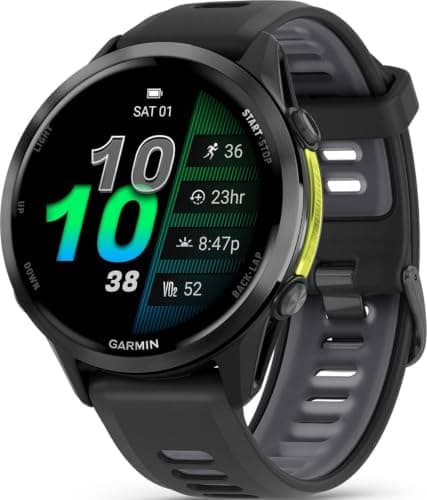
Long-course athletes who want mapsGarmin Forerunner 970
The most complete running watch Garmin sells, and — counter-intuitively — the cheapest of the pair per hour of GPS you get.
Price as of October 22, 2026. Prices move; Amazon's is the one that counts.
#ad · we may earn a commission from this link to Garmin Forerunner 970
The short answer
On our published rubric the Forerunner 970 and the Instinct 3 Solar tie at the top, for opposite reasons: the 970 has the most complete hardware Garmin sells, the Instinct has the longest honestly-labeled battery table at a fraction of the price. No current Garmin has an independent validation of its heart rate, so none of them wins on evidence.
Ranked
Quick picks
| # | Device | Best for | Evidence | Score | Price |
|---|---|---|---|---|---|
| 01 | Garmin Forerunner 970 The most complete running watch Garmin sells, and — counter-intuitively — the cheapest of the pair per hour of GPS you get. | Long-course athletes who want maps | Manufacturer specification | 7.7/10 | $749.99Amazon |
| 02 | 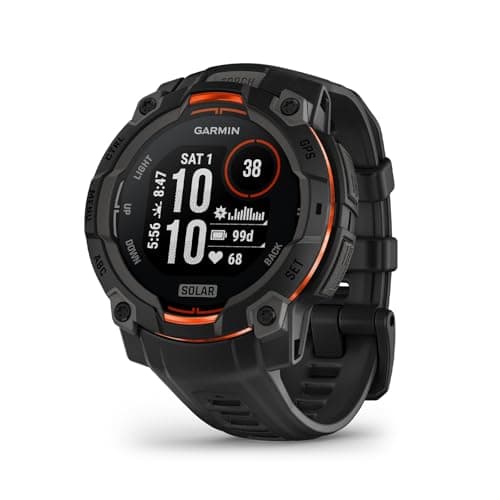 Garmin Instinct 3 Solar (45mm) The watch that wins this site's rubric by publishing an honest battery table and then filling every row of it. No maps, and it still ranks first on trail. | Multi-day trail and backcountry days | Manufacturer specification | 7.7/10 | $339.99Amazon |
| 03 | 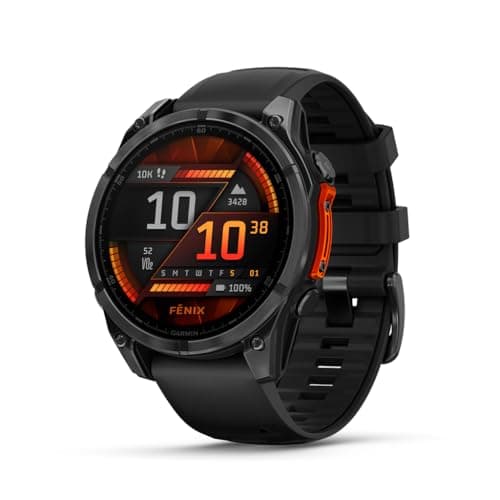 Garmin fēnix 8 (47mm) Everything Garmin makes, in a case built to survive being hit. You pay for the durability, not for better data. | Expedition and rough-terrain use | Manufacturer specification | 7.5/10 | $774.00Amazon |
| 04 | 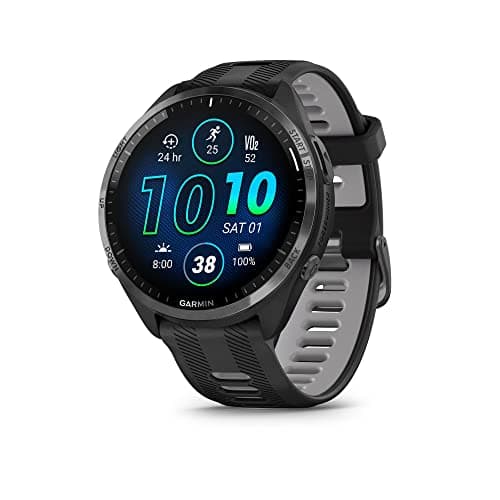 Garmin Forerunner 965 The previous flagship Forerunner, still on sale: maps, 32 GB of music storage and 31 stated GPS hours, usually for less than the 970. | Maps and music without the current-flagship price | Manufacturer specification | 7.5/10 | $524.00Amazon |
| 05 | 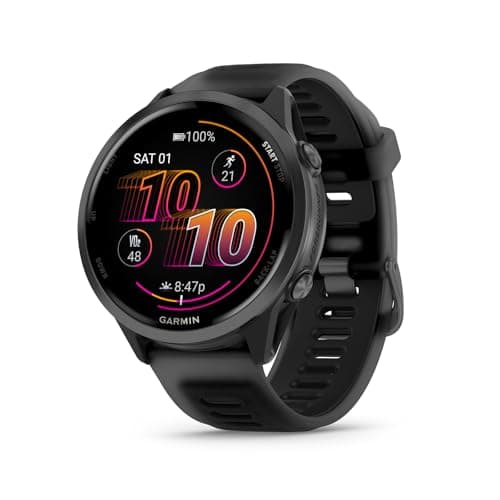 Garmin Forerunner 570 Same sensor family as the 970, $200 less, and no maps. For most runners that is the correct trade. | Most runners, most of the time | Manufacturer specification | 7.3/10 | $546.00Amazon |
| 06 | 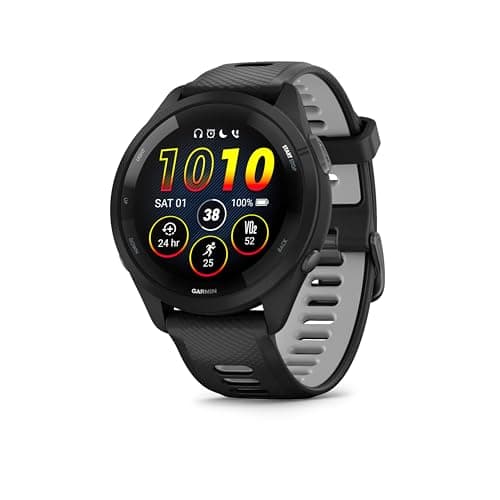 Garmin Forerunner 265 One of the very few watches on this site whose training estimates have actually been measured against a laboratory — and the measurement was not kind. | Runners who want a measured device, flaws included | Peer-reviewed validation | 7.2/10 | $434.90Amazon |
| 07 | 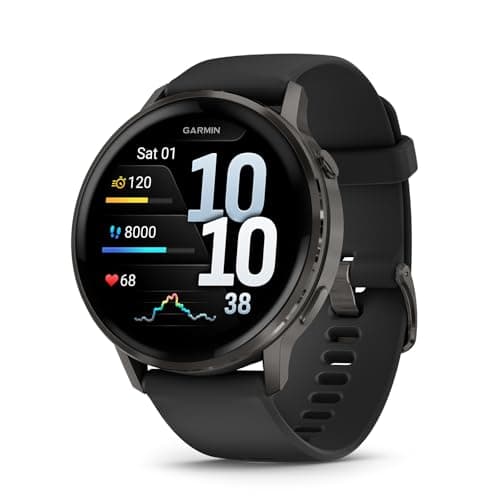 Garmin Venu 4 A Forerunner's training stack in a steel lifestyle case, with a longer published battery than the running watch it is priced against. | One watch for training data and everyday wear | Manufacturer specification | 7.1/10 | $543.00Amazon |
| 08 | 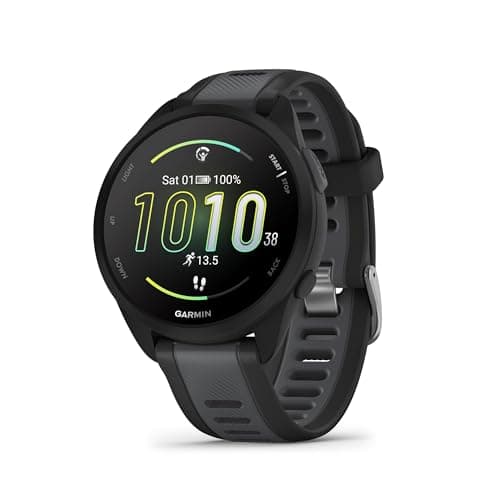 Garmin Forerunner 165 The cheapest way into a genuinely good AMOLED Garmin, provided you accept single-band positioning. | First real running watch | Manufacturer specification | 6.4/10 | $196.29Amazon |
#ad· Live prices from the Amazon Product API, as of October 22, 2026. Where we have no verified live price we show none. Scores come from the published rubric at How we rank — the Evidence column shows what each ranking actually rests on, including where the answer is nothing.
The criteria, before the picks
Every watch below is scored on the same five-part published rubric we apply to every device on this site: evidence at 30%, hardware at 20%, metric coverage at 20%, manufacturer-stated endurance at 15% and cost per capability at 15%. The score is computed from those sub-scores, not typed in afterward, which is why two watches four hundred dollars apart can tie.
Choosing inside one brand also raises three questions that a cross-brand roundup does not, and they are worth stating before any watch appears:
- Which battery row did Garmin publish for this watch? Garmin does not use one table format across the lineup. Some watches get a GPS-mode figure, some get an all-systems-plus-multi-band figure, some get both and some get five. Comparing the headline numbers across models is therefore not like-for-like, and that is the single biggest trap in buying a Garmin.
- Does the hardware do multi-band, and does the published figure reflect it? Multi-band reception is the part of a modern GPS watch that addresses drift between buildings and under tree cover. A watch without it cannot gain it in firmware.
- What has anyone outside Garmin actually measured? Very little, and never on the current models. We say so under each pick rather than letting the specification stand in for evidence.
Garmin's published endurance, with the mode named
This is the table Garmin does not print. Each figure is manufacturer-stated and taken from that watch's own product page or owner's manual, and the middle column names the mode the number actually refers to — which is the column that makes the right-hand column meaningful.
| Watch | Mode the figure refers to | Stated GPS hours | Stated smartwatch days |
|---|---|---|---|
| fēnix 8 (47 mm) | All systems + multi-band | 35 h | 16 d |
| Forerunner 970 | GPS mode | 26 h | 15 d |
| Instinct 3 Solar (45 mm) | All satellite + multi-band, no solar assist | 24 h | 28 d |
| Forerunner 965 | All + multi-band | 19 h | 23 d |
| Venu 4 (45 mm) | All satellite + multi-band | 17 h | 12 d |
| Forerunner 165 | All systems (no multi-band mode exists) | 17 h | 11 d |
| Forerunner 570 (47 mm) | GPS-only (14 h in all systems + multi-band) | 18 h | 11 d |
| Forerunner 265 (46 mm) | All + multi-band | 14 h | 13 d |
Three things fall out of that table, and all three change what you should buy.
The Forerunner 970's 26 hours is a GPS-mode figure. Garmin publishes a multi-band row for the 965 and the 265 and a GPS-mode row for the 970, so the 970's headline number is not comparable with its own cheaper siblings'. It is the top of the Forerunner line and the hardware is the best Garmin sells — we simply cannot tell you how long it runs in the mode you would run it in, because Garmin has not said.
The Forerunner 165 looks competitive and is not. Seventeen stated hours reads the same as the Venu 4's, but the 165's best row is plain all-systems, because Garmin publishes no multi-band row for it at all. The cheaper watch lasts as long as the dearer one only because its best mode is the weaker mode. The full version of that argument is Forerunner 165 vs 265.
The cheapest watch here has the second-longest honest figure. The Instinct 3 Solar states 24 hours in all-satellite multi-band and 28 smartwatch days, from a table with five separate GPS rows in it. Garmin is doing its best work on transparency in its cheapest serious line, which is not where anyone expects to find it.
What anyone outside Garmin has measured
Almost nothing, and nothing on a current model. The complete published record for Garmin hardware, as far as we can find it:
- The 2025 placement study measured a Forerunner 55 at the wrist against a Polar H10 chest reference and found the wrist the worst-performing position of the four tested, with the largest error during explosive work.
- The 100-runner threshold study tested a Forerunner 265 against blood lactate: threshold pace overestimated by 25.8%, threshold heart rate off by 11.44 bpm, and a usable estimate returned in 65.2% of attempts. Its protocol required an ECG chest strap, not the wrist sensor.
- The 536-night HRV study put a Garmin fēnix 6 last of five devices on nocturnal HRV agreement, described that agreement as poor, and dropped the Garmin from the resting-heart-rate comparison because its 30-minute window is not timestamped.
- The 2024 umbrella review of 249 validation studies reports roughly 34 of 310 identified consumer wearables have ever been validated at all. Garmin's current lineup is in the majority.
The consequence for this page is worth being explicit about: because the evidence record is flat across the Garmin range, the 30% of our rubric that normally separates devices cannot separate these. Every watch below scores between 5 and 6 on evidence. What orders them is hardware, coverage, published endurance and price — and that is the honest reason the rugged plastic Instinct ties the top of the Forerunner line here, at a fraction of its price. Our device-by-device heart-rate evidence table is where the whole record lives, Garmin included.
In full
Every pick, and why
Garmin Forerunner 970
The most complete running watch Garmin sells, and — counter-intuitively — the cheapest of the pair per hour of GPS you get.
- Case
- 47mm, titanium bezel, AMOLED
- Satellite
- Multi-band GNSS with SatIQ
- Battery (stated)
- 15 days smartwatch / 26 h GPS
- Maps
- Built-in, full color
- Extras
- ECG app, speaker and microphone
What's good
- Multi-band GNSS with SatIQ — the current top tier of consumer positioning hardware
- 26 stated GPS hours is enough for an ironman-distance day with a wide margin
- Built-in maps, which the 570 does not have at any price
What isn't
- The wrist optical sensor is the same class of hardware as the 570's — the premium buys features, not a better heart-rate signal
- 47mm only; there is no smaller case in this model
Skip this if
Skip this if you never race longer than a marathon and never navigate. Maps and titanium are the entire difference, and neither changes a single number the watch records.
What the evidence says
Manufacturer specificationNo independent validation study of the Forerunner 970's optical heart rate has been published that we could find. The specification figures are Garmin's own.
Show how this 7.7 was calculated
| Factor | Weight | Score |
|---|---|---|
| EvidenceSpecs are published and detailed, but no peer-reviewed or independent measured validation of this specific model exists yet. | 30% | 5.5 |
| HardwareMulti-band GNSS with SatIQ and Garmin's current-generation optical sensor — the top hardware tier available. | 20% | 9.5 |
| Metric coverageRunning dynamics, ECG, training load, maps, and a documented export path off the watch. | 20% | 9.5 |
| EnduranceGarmin states 26 hours in GPS mode, 15 days smartwatch. | 15% | 7.5 |
| Cost per capabilityHighest sticker in the range, but the strongest dollars-per-GPS-hour of the two Forerunners — see the arithmetic on the comparison page. | 15% | 7.5 |
Price as of October 22, 2026. Prices move; Amazon's is the one that counts.
#ad · we may earn a commission from this link to Garmin Forerunner 970
Garmin Instinct 3 Solar (45mm)
The watch that wins this site's rubric by publishing an honest battery table and then filling every row of it. No maps, and it still ranks first on trail.
- Battery, smartwatch (stated)
- 28 days, unlimited with solar
- Battery, GPS-only (stated)
- 40 h, up to 130 h with solar
- Battery, multi-band (stated)
- 24 h, up to 40 h with solar
- Battery, expedition (stated)
- 36 days, unlimited with solar
- Water rating
- 10 ATM
What's good
- Garmin publishes five separate GPS endurance figures for it, mode by mode — the most honest battery table of any watch on this site
- 24 stated hours in all-satellite multi-band mode, which is the mode you would actually run for accuracy
- Solar charging turns the smartwatch and expedition figures into 'unlimited' under Garmin's stated light conditions
What isn't
- No built-in maps at all, which on unfamiliar trail is the feature people miss first
- No independent validation of its heart rate or positioning that we could find
Skip this if
Skip this if you navigate unfamiliar routes rather than repeat known ones. Breadcrumb navigation on a trail you have never run is a genuinely worse experience than a map, and no amount of battery compensates for it.
What the evidence says
Manufacturer specificationNo independent validation of this device that we could find. What Garmin does publish is unusually complete: a five-row battery table naming each satellite mode separately, with the solar-assisted figures stated separately from the unassisted ones. We rank the unassisted multi-band row, because that is the number you can rely on in a forest.
Show how this 7.7 was calculated
| Factor | Weight | Score |
|---|---|---|
| EvidenceNo measured validation, but the published specification is more granular and more honest about its own assumptions than any other spec sheet here. | 30% | 5.5 |
| HardwareAll-satellite plus multi-band positioning, a solar charging lens and a 10 ATM case. | 20% | 8.5 |
| Metric coverageFull Garmin training and outdoor feature set, minus maps — which on trail is a real omission. | 20% | 7.5 |
| Endurance40 stated GPS-only hours, 24 in multi-band, 28 smartwatch days and 36 expedition days, before solar is counted at all. | 15% | 10.0 |
| Cost per capabilityFlagship endurance at roughly a third of flagship money. | 15% | 9.0 |
$399.9915% off
Price as of October 22, 2026. Prices move; Amazon's is the one that counts.
#ad · we may earn a commission from this link to Garmin Instinct 3 Solar (45mm)
Garmin fēnix 8 (47mm)
Everything Garmin makes, in a case built to survive being hit. You pay for the durability, not for better data.
- Case
- 47mm, AMOLED
- Satellite
- Multi-band GNSS
- Extras
- Built-in maps, dive-rated, speaker and microphone
What's good
- The most durable case Garmin puts a multi-band receiver into
- Maps, dive modes and the full metric set in one device
What isn't
- Records essentially the same physiological data as a Forerunner costing a third as much
- Heavy compared with a dedicated running watch
Skip this if
Skip this if you run on roads and pavements. You would be buying a case specification you will never test, and the numbers it records are the ones a Forerunner already gives you.
What the evidence says
Manufacturer specificationPublished specifications only; no independent validation of this model that we could find.
Show how this 7.5 was calculated
| Factor | Weight | Score |
|---|---|---|
| EvidenceDetailed published specs, no independent measured validation. | 30% | 5.5 |
| HardwareMulti-band GNSS in Garmin's most ruggedized current case. | 20% | 9.5 |
| Metric coverageThe widest metric and mode coverage of any device on this site. | 20% | 10.0 |
| EnduranceAmong the longest stated GPS endurance in Garmin's AMOLED line. | 15% | 8.5 |
| Cost per capabilityBy some distance the weakest cost-per-capability figure here — the premium buys the case, not the data. | 15% | 4.5 |
$999.9923% off
Price as of October 22, 2026. Prices move; Amazon's is the one that counts.
#ad · we may earn a commission from this link to Garmin fēnix 8 (47mm)
Garmin Forerunner 965
The previous flagship Forerunner, still on sale: maps, 32 GB of music storage and 31 stated GPS hours, usually for less than the 970.
- Case
- 47mm, titanium bezel, AMOLED
- Satellite
- All + Multi-Band GPS
- Battery (stated)
- 23 days smartwatch / 31 h GPS-only / 19 h all + multi-band
- Maps
- Built-in, full color
- Storage
- Up to 32 GB media, 5 ATM
What's good
- Built-in maps and 32 GB of music storage — the two specifications that usually force the jump to a flagship
- 31 stated GPS-only hours and 23 smartwatch days, both longer than the current mid-range Forerunner 570
- A generation old, which in this category mostly means cheaper rather than worse
What isn't
- No ECG app, no speaker or microphone, and none of the 970's newer running-economy metrics
- Its stated multi-band figure is 19 hours — the mode you would actually run for accuracy costs it a third of the headline number
Skip this if
Skip this if you want the newest sensor generation or the ECG app. This is the previous flagship, and the honest reason to buy it is price, not capability.
What the evidence says
Manufacturer specificationPublished specifications only; no independent validation of this model that we could find. Its sibling the Forerunner 265 WAS measured in the 2025 lactate-threshold study — same platform, same estimation models, different watch — and that result was poor. We do not transfer the finding onto this watch, and we do not pretend it is unrelated either.
Show how this 7.5 was calculated
| Factor | Weight | Score |
|---|---|---|
| EvidenceDetailed published specs, no measured validation of this model. A sibling watch on the same platform was measured and did badly on threshold estimates. | 30% | 5.5 |
| HardwareAll + Multi-Band GPS behind a 47mm AMOLED with a titanium bezel. | 20% | 9.0 |
| Metric coverageMaps, 32 GB of music storage, the full Garmin training platform and a documented export path. | 20% | 9.5 |
| EnduranceGarmin states 31 hours GPS-only, 19 hours all + multi-band, 23 days smartwatch. | 15% | 8.0 |
| Cost per capabilityFlagship-tier sticker for a previous-generation watch; the value depends entirely on the discount on the day. | 15% | 6.5 |
$599.9913% off
Price as of October 22, 2026. Prices move; Amazon's is the one that counts.
#ad · we may earn a commission from this link to Garmin Forerunner 965
Garmin Forerunner 570
Same sensor family as the 970, $200 less, and no maps. For most runners that is the correct trade.
- Case
- 42mm or 47mm, AMOLED
- Satellite
- Multi-band GNSS
- Battery (stated)
- 11 days smartwatch / 18 h GPS (47mm)
- Maps
- None
- Extras
- Speaker and microphone, on-watch music
What's good
- Records the same core metrics as the 970 — the data you get back is not a cut-down version
- Two case sizes, which the 970 does not offer
- Multi-band GNSS at a mid-range price
What isn't
- 18 stated GPS hours is thin for ultra distances
- No maps, so navigation is breadcrumb-only
Skip this if
Skip this if you race beyond about 12 hours or navigate unfamiliar trails. The battery and the missing maps are both real limits, and neither is fixable in software.
What the evidence says
Manufacturer specificationAs with the 970, no independent validation of this model's optical heart rate has been published that we could find.
Show how this 7.3 was calculated
| Factor | Weight | Score |
|---|---|---|
| EvidenceDetailed published specs, no independent measured validation of this model. | 30% | 5.5 |
| HardwareMulti-band GNSS and the same current-generation optical sensor family as the 970. | 20% | 9.0 |
| Metric coverageEverything the 970 records except maps and the ECG app. | 20% | 8.5 |
| EnduranceGarmin states 18 hours GPS, 11 days smartwatch, on the 47mm case. | 15% | 6.0 |
| Cost per capabilityMaterially cheaper than the 970 for the same recorded data. | 15% | 8.0 |
Price as of October 22, 2026. Prices move; Amazon's is the one that counts.
#ad · we may earn a commission from this link to Garmin Forerunner 570
Garmin Forerunner 265
One of the very few watches on this site whose training estimates have actually been measured against a laboratory — and the measurement was not kind.
- Case
- 46mm AMOLED (the 265S is 42mm)
- Satellite
- All + Multi-Band GPS
- Battery (stated)
- 13 days smartwatch / 20 h GPS-only / 14 h all + multi-band
- Storage
- Up to 8 GB media, 5 ATM
What's good
- Multi-band positioning and an AMOLED screen in a mid-range Forerunner, in two case sizes
- It has actually been tested: in a 2025 study of 100 recreational runners, 23 of them wore a Forerunner 265 against fingertip blood lactate — more than can be said for most watches sold today
- 8 GB of on-watch music storage, so the phone can stay at home
What isn't
- In that study its threshold PACE estimate overshot the laboratory value by 25.78% on average, and it overestimated rather than erring low
- Its threshold test also failed to return a usable result 34.8% of the time
Skip this if
Skip this if you plan to set training zones from the watch's own threshold test. The one published measurement of that feature says it overestimates by roughly a quarter, and no firmware note undoes a published result.
What the evidence says
Peer-reviewed validationLu et al., Frontiers in Physiology 16:1621996 (2025), tested 100 recreational runners against fingertip blood lactate; 23 of them wore a Forerunner 265 or 265s. Its threshold pace estimate carried a mean error of 25.78% and overestimated; its threshold heart rate was much closer, inside the 5.95-7.15% band shared by the three watches tested; and its test produced a usable result 65.2% of the time. The authors note the Garmin protocol required an ECG chest strap while the other two devices used wrist sensing. That is a peer-reviewed measurement of this exact model — unusual in this category, and unflattering.
Show how this 7.2 was calculated
| Factor | Weight | Score |
|---|---|---|
| EvidenceA peer-reviewed measurement of this specific watch exists, which almost nothing else in the range can claim. It went badly, so this cannot score higher than mid. | 30% | 6.0 |
| HardwareAll + Multi-Band GPS and an AMOLED display in a mid-range case. | 20% | 8.5 |
| Metric coverageFull Garmin training platform and music storage; no maps. | 20% | 8.5 |
| EnduranceGarmin states 20 hours GPS-only, 14 hours all + multi-band, 13 days smartwatch. | 15% | 6.5 |
| Cost per capabilityMid-range sticker; a multi-band receiver at this price is the value here. | 15% | 7.0 |
Price as of October 22, 2026. Prices move; Amazon's is the one that counts.
#ad · we may earn a commission from this link to Garmin Forerunner 265
Garmin Venu 4
A Forerunner's training stack in a steel lifestyle case, with a longer published battery than the running watch it is priced against.
- Case
- 41mm or 45mm, AMOLED, stainless steel
- Satellite
- Multi-band GNSS (manufacturer-stated)
- Battery (stated)
- 12 days smartwatch / 17 h multi-band (45mm)
- Extras
- ECG app, LED flashlight, speaker and microphone
- Sensors
- Pairs ANT+ / Bluetooth straps, including the HRM 600
What's good
- Garmin's own manual gives it the Forerunner analysis stack — training status, acute load, training readiness, PacePro, performance measurements, running dynamics
- Publishes an all-satellite-plus-multi-band battery row, which the Venu line did not before: 17 stated hours at 45 mm
- Pairs the chest straps that actually improve its heart-rate data, HRM 600 and HRM 200 included
What isn't
- No independent validation of anything it measures, and the health features Garmin leads with are the newest and least checked
- Garmin labels the health status feature beta itself, and restricts the ECG app by region and to ages 22 and over
- No maps, and the 41 mm case states materially shorter battery than the 45 mm in every mode
Skip this if
Skip this if you are buying it for the health screening. Nothing published validates Garmin's sleep staging, its HRV figure came last of five brands in the only study that measured several at once, and the headline health-status feature is in beta by Garmin's own footnote. Buy it for the watch, not for the diagnosis.
What the evidence says
Manufacturer specificationNo independent validation of this model exists that we could find — not of its optical heart rate, not of its sleep staging, not of its positioning. Garmin was absent from the Robbins et al. (2024) polysomnography comparison entirely, and in the one study that wore three brands at once (Dial et al., 2025) the Garmin device finished last of five on nocturnal HRV agreement.
Show how this 7.1 was calculated
| Factor | Weight | Score |
|---|---|---|
| EvidenceDetailed published specification and a documented feature list, and no independent measurement of a single number this watch produces. | 30% | 4.5 |
| HardwareMulti-band GNSS, Garmin's Elevate wrist sensor, ECG electrodes, speaker and microphone, 5 ATM, and ANT+/Bluetooth pairing for external sensors — the same hardware checklist as a current Forerunner, in a stainless case. | 20% | 9.0 |
| Metric coverageTraining status, acute load, training readiness, PacePro, VO2 max, running dynamics, a swim test, HRV status, Body Battery, Pulse Ox, skin temperature and an ECG app. No maps, which is the one gap against the tier above. | 20% | 9.0 |
| EnduranceGarmin states 12 smartwatch days and 17 hours in all-satellite-plus-multi-band at 45 mm. Longer than the Forerunner it shares a price with, and half a fēnix 8. | 15% | 7.0 |
| Cost per capabilityLists at the same $549.99 as the Forerunner 570 and carries the better dollars-per-stated-multi-band-hour figure — but the premium over a 265 buys a metal case, a speaker and a flashlight, not better measurement. | 15% | 7.5 |
Price as of October 22, 2026. Prices move; Amazon's is the one that counts.
#ad · we may earn a commission from this link to Garmin Venu 4
Garmin Forerunner 165
The cheapest way into a genuinely good AMOLED Garmin, provided you accept single-band positioning.
- Display
- AMOLED
- Satellite
- Single-band GNSS
- Extras
- Training metrics, sleep tracking, music on the Music edition
What's good
- AMOLED and Garmin's training platform at the bottom of the range
- Light, simple, and hard to get wrong as a first watch
What isn't
- Single-band positioning, which is the specification that actually degrades in cities and under tree cover
- No multi-band means it is the wrong upgrade if GPS drift is your complaint
Skip this if
Skip this if you are here because your GPS track wanders between buildings. Single-band is the hardware that causes that, and this watch has it.
What the evidence says
Manufacturer specificationPublished specifications only; no independent validation of this model that we could find.
Show how this 6.4 was calculated
| Factor | Weight | Score |
|---|---|---|
| EvidencePublished specs, no independent measured validation. | 30% | 5.0 |
| HardwareSingle-band GNSS — a genuine step down from the multi-band models above it. | 20% | 6.0 |
| Metric coverageFull Garmin training platform; fewer advanced running-dynamics metrics. | 20% | 7.0 |
| EnduranceSolid for the class, per Garmin's stated figures. | 15% | 7.0 |
| Cost per capabilityLowest entry price to the Garmin ecosystem with an AMOLED screen. | 15% | 8.5 |
$249.9921% off
Price as of October 22, 2026. Prices move; Amazon's is the one that counts.
#ad · we may earn a commission from this link to Garmin Forerunner 165
Garmin's four lines, decoded
The lineup is confusing because the lines overlap in price rather than in purpose. In one sentence each:
- Forerunner — the running line, numbered by tier: 165 entry, 265 mid-range, 570 upper-mid, 965 and 970 at the top with maps. The bigger number means more features, not a better sensor.
- fēnix — the expedition line: metal, mapping, the longest multi-band endurance Garmin publishes, and the highest prices. Note that Garmin announced the fēnix 9 on 25 August 2026, which makes the fēnix 8 an outgoing model and the place discounts land.
- Instinct — the rugged line: plastic case, memory-in-pixel display, solar charging, no maps, and the best battery-per-dollar in the brand.
- Venu — the lifestyle line, which as of the Venu 4 also carries the Forerunner analysis stack. Our Venu 4 review goes through what its manual actually documents, and Forerunner 570 vs Venu 4 sets it against the running watch at the same list price.
How to choose, in the order that matters
- Decide whether you need maps. This is the one feature no firmware update adds and no accessory replaces. It separates the 965 and 970 and the fēnix from everything else here, and it is the only honest reason to spend the extra few hundred. We work through whether you do.
- Then look at the battery row, not the battery number. Find the multi-band figure for the watch you are considering. If Garmin does not publish one, the watch either has no multi-band mode or Garmin is quoting you a weaker mode; both are worth knowing before you pay.
- Then decide the case. Garmin states different battery figures for the different sizes of the same watch, and not always in the direction you expect — the 265S beats the 46 mm 265 in every mode, while the 41 mm Venu 4 is behind the 45 mm in every mode.
- Then spend what is left on a strap, not on the next watch up. Every watch here pairs ANT+ and Bluetooth sensors, and on the published evidence a chest strap is the largest single improvement available to any of them. Our ranked field is the best chest straps for Garmin watches.
Dollars per hour you can actually measure in
The arithmetic we publish on every watch here is the live price divided by the manufacturer-stated GPS hours, in the mode the figure refers to. It is the least flattering way to look at a watch and the most useful, because it prices the thing you bought the watch to do rather than the feature list. At today's prices, across the Garmin range:
- fēnix 8: $22.11 per stated all-systems-multi-band hour.
- Instinct 3 Solar: $14.17 per stated multi-band hour, with no solar assistance assumed.
- Forerunner 970: $28.85 per stated GPS-mode hour — a different mode, and therefore not a like-for-like figure.
- Forerunner 265: $31.06 per stated multi-band hour.
- Venu 4: $31.94 per stated multi-band hour.
- Forerunner 165: $11.55 per stated all-systems hour — the cheapest figure in the brand, on the weaker mode, because it has no other.
Read those in order and the Instinct is usually the outlier: a watch with no maps, a low-resolution display and a plastic case, costing a fraction per recorded hour of what the metal watches do. That is the whole reason it ties for first here. The figures move with the live price, which is why we render them rather than typing them: a Garmin on discount can change its own ranking position on this metric inside a week, and November is when that happens most — our record of what actually discounted is in the Black Friday price-history hub.
Which Garmin, by what you actually do
- Your first marathon. The Forerunner 265, or the 570 if you want the speaker and the 42 mm option. Both record everything a marathon build needs; neither needs maps, and the money saved against a 970 buys the strap that fixes your heart-rate data. The sixteen-week version of this argument is best running watches for marathon training.
- Trail, mountains and multi-day. The Instinct 3 Solar on the arithmetic, the fēnix 8 if you need maps on the wrist and will pay four figures for them. The ranked field, across brands, is best GPS watches for trail running.
- Triathlon or swim-bike-run testing. The 970 or the fēnix 8 for the full multisport feature set, and note that the Venu 4's manual does include a critical swim speed test. The cross-brand ranking is best multisport watches.
- One watch for training, sleep and the office. The Venu 4, on stated battery and documented features, or the Venu 3 if you want the same argument for less and can accept the older generation.
- The least money that is still honest. The Forerunner 165 — with the caveat that it has no multi-band mode, which is the one thing a cheap GPS watch cannot fix later. Below it the line continues to the Forerunner 55, which is in the budget roundup.
What we left out, and why
Three Garmin watches on our roster are not in this ranking, and the reasons are worth stating rather than hiding:
- The fēnix 8 Pro is a fēnix 8 with satellite and LTE radios and a mandatory subscription for them. Ranking it beside the fēnix 8 would be two entries for one watch, and at matched 47 mm it is behind the cheaper model on every published battery row.
- The Venu 3 is superseded by the Venu 4, which is better on every published figure. It stays reviewed because outgoing models are where discounts land.
- The Forerunner 55 is the floor of the line and the only Garmin that has been independently measured — badly, in the placement study above. It is ranked in the budget roundup where its price makes the case its sensor cannot.
And one more honest limit on this page: we have not worn any of these watches. Every number here is either Garmin's own published figure, a measurement from a study we read in full and linked, or arithmetic we show from a live price. That is the whole method, and it is written out at how we rank.
Accessories
The two things that decide whether your Garmin records at all
Neither is scored and neither changes which watch to buy. Both address the most common way training data is lost on a watch this good: the watch was on the charger, or it was moving on your arm during the session that mattered.
These are not ranked and they are not scored on the rubric — none of them has a validation study and none ever will. They are here because a manufacturer's own instructions say they change what your sensor records, and each one links the page that says it. How the actual ranking works.
Spare watch charging cable
The nights and long runs that never got recorded at all.
Endurance carries 15% of the rubric on this site because a measurement you did not take is the worst data quality there is. Every watch here uses a proprietary cable, and the failure mode is always the same one: the cable lives at home, so the watch charges instead of recording your sleep, or dies at mile 18.
Cables are brand-specific and sometimes model-specific, so this opens a search rather than one listing. Match it to your own watch before you buy.
Find the one that fits →Opens an Amazon search, because the right item depends on your watch. We are not quoting a price for something we have not picked.
#ad · we may earn a commission
Quick-release watch band
Wrist heart rate that drifts because the watch is moving on your arm.
If you are staying on the wrist, fit is the one variable that costs nothing to get right. Garmin's own instruction is to "wear the device above your wrist bone" and that it "should be snug but comfortable", adding that "for more accurate heart rate readings, the device should not move while running or exercising". A stretched or slippery band makes that impossible. Garmin manual: wearing the device.
Lug width varies by watch — commonly 20mm, 22mm or 26mm. Check yours; the wrong width will not fit at all.
Find the one that fits →Opens an Amazon search, because the right item depends on your watch. We are not quoting a price for something we have not picked.
#ad · we may earn a commission
How this ranking was built
Every score on this page comes from one published rubric, applied identically to every device on the site, with the weights written down and the inputs shown. We have not worn any of these devices and we never say we have. Read the method and check us.
Questions
Frequently asked
Which Garmin watch is the most accurate?
Nobody can answer that from published evidence, and we are not going to pretend otherwise. No current Garmin model has an independent validation of its optical heart rate or its positioning. The three Garmin devices that appear in the literature at all are a Forerunner 55, a Forerunner 265 and a fēnix 6, and none of them is the watch you would buy today. What is measured is that the wrist is the worst sensor position tested, on any brand — so the accurate answer is whichever Garmin you pair a chest strap with.
Which Garmin has the best battery life?
Of the watches here, the fēnix 8 states the most GPS hours in the high-accuracy mode (35 h all-systems multi-band) and the Instinct 3 Solar states the most days (28, or unlimited with solar under Garmin's stated light conditions) along with 24 multi-band hours for far less money. Beware comparing a GPS-only figure on one watch with a multi-band figure on another: the same watch can differ by nearly 2x between those modes.
Is the Forerunner 970 worth it over the 570?
Only for maps and the titanium bezel, on the published specification — the sensor class is the same and the metrics recorded are nearly identical. The complication is that Garmin quotes the 970 in GPS mode and the 570 in GPS-only, so the endurance comparison buyers usually make is not like-for-like. Our 570 vs 970 comparison works through both tables.
Should I wait for the fēnix 9?
Garmin announced the fēnix 9 and fēnix 9 Pro on 25 August 2026. We do not rank them: no validation exists and we have not resolved them onto the roster, so we have nothing checkable to say. What the announcement does mean is that the fēnix 8 is an outgoing model, and outgoing Garmins are where the real discounts land — check the live price before you decide.
Is a Venu a real training watch now?
On Garmin's own documentation the Venu 4 carries training status, acute load, training readiness, PacePro, performance measurements, running dynamics and VO2 max. ratings, plus a multi-band satellite mode the line never published before. It has no maps and shorter endurance than a fēnix. For road training it is specified like a Forerunner, which is why it is ranked on this page rather than filed with the sleep trackers.
Do I need a Garmin chest strap, or will any strap work?
Any ANT+ or Bluetooth chest strap will pair and record heart rate. Garmin's own straps add the running dynamics and, on some models, the guided tests that require a chest sensor. The compatibility detail per sensor and per watch is in our chest strap compatibility guide.
Show your working
Sources
Every one of these was read in full before it was cited. Where we could not access a paper, we do not quote its numbers.
- [1]Manufacturer specification2026Garmin — Forerunner 970 published specifications
Manufacturer-stated battery: up to 15 days smartwatch mode, up to 26 hours GPS mode.
- [2]Manufacturer specification2026Garmin — Forerunner 570 product page, battery life by GNSS mode (42 mm and 47 mm)
Manufacturer-stated, read 2026-09-20. 47 mm: smartwatch mode up to 11 days; GPS-Only GNSS mode up to 18 hours; SatIQ (AutoSelect) GNSS mode up to 16 hours; All-Systems GNSS mode + Multi-Band up to 14 hours; with music 9 h GPS-only, 8 h SatIQ, 8 h All-Systems + Multi-Band. 42 mm: smartwatch up to 10 days; GPS-Only up to 18 hours; SatIQ up to 14 hours; All-Systems + Multi-Band up to 13 hours; with music 9 / 8 / 8 h. Also stated: 47 x 47 x 12.9 mm and 50 g (47 mm), 42.4 x 42.4 x 12.9 mm and 42 g (42 mm), 1.4" 454 x 454 AMOLED (47 mm) or 1.2" 390 x 390 (42 mm), Corning Gorilla Glass 3, aluminum bezel, 5 ATM, 8 GB memory, built-in speaker/microphone, Elevate wrist heart rate monitor, connectivity Bluetooth / ANT+ / Wi-Fi, Connect IQ, $549.99. Garmin publishes no plain All-Systems (single-frequency, multi-constellation) figure for this watch, only GPS-Only, SatIQ and All-Systems + Multi-Band.
- [3]Manufacturer specification2026Garmin — Forerunner 265 Series owner’s manual, battery life information and specifications
Manufacturer-stated, read 2026-08-18. Forerunner 265 (46 mm): up to 13 days smartwatch mode, 20 h GPS-only, 16 h Auto Select GPS, 14 h All + Multi-Band GPS, and 7 h GPS-only with music playback. Forerunner 265S (42 mm): 15 days, 24 h, 18 h, 15 h and 7.5 h for the same modes. The manual’s specification page states 5 ATM and up to 8 GB of media storage.
- [4]Manufacturer specification2026Garmin — Forerunner 965 owner’s manual, battery life information and specifications
Manufacturer-stated, read 2026-08-18: up to 23 days smartwatch mode, 31 h GPS-only, 22 h Auto Select GPS, 19 h All + Multi-Band GPS, 34 h UltraTrac, and 10.5 / 9.5 / 8.5 h for those three GPS modes with music playback. The manual’s specification page states 5 ATM and up to 32 GB of media storage.
- [5]Manufacturer specification2026Garmin — Forerunner 165 Series owner’s manual, battery life information and specifications
Manufacturer-stated, read 2026-10-11 from Garmin's own owner's manual. Battery: up to 11 days in smartwatch mode with activity tracking, phone notifications and wrist heart rate; up to 19 h in activity mode with GPS Only; up to 17 h with All Systems GPS; up to 25 h with UltraTrac; up to 7 h GPS Only with music playback and 6.5 h All Systems with music. The specification page states a rechargeable built-in lithium-ion battery, a 5 ATM swim water rating, up to 4 GB of media storage, an operating range of −20 to 60 °C and a charging range of 0 to 45 °C. NOTE the structure of the table: the highest-accuracy row Garmin publishes for this watch is All Systems — there is no all-systems multi-band row, because the hardware has no multi-band mode.
- [6]Manufacturer specification2026Garmin — Instinct 3 Solar owner’s manual, battery life information
Manufacturer-stated for the 45 mm Solar: 28 days smartwatch (unlimited with solar), 40 hours GPS-only (130 hours with solar), 28 hours all-satellite (50 with solar), 24 hours all-satellite plus multi-band (40 with solar), 36 days expedition GPS (unlimited with solar), 65 days battery-saver. Water rating 10 ATM per the same manual’s specification page. Solar figures assume all-day wear in 50,000 lux conditions, which is Garmin’s assumption and not a measurement of ours.
- [7]Manufacturer specification2026Garmin — fēnix 8 Series owner’s manual, battery information
Manufacturer-stated, read 2026-08-18. One table covers the fēnix 8 and the fēnix 8 Pro, which is why the two can be compared here without mixing sources. fēnix 8 AMOLED 47 mm: 16 days smartwatch with Gesture (7 with Always On Display), 47 h GPS-only (37 AOD), 35 h all satellite systems plus multi-band (28 AOD). fēnix 8 Pro 47 mm: 15 days (8 AOD), 44 h GPS-only (33 AOD), 30 h all systems plus multi-band (23 AOD). fēnix 8 Pro 51 mm: 27 days (15 AOD), 78 h GPS-only (56 AOD), 53 h all systems plus multi-band (41 AOD), and 21 h all systems plus multi-band with LTE LiveTrack (19 AOD).
- [8]Manufacturer claim only2026Garmin — “Garmin announces the fēnix 9 and fēnix 9 Pro GPS smartwatch”, Garmin newsroom
Garmin press release, 25 August 2026. fēnix 9 “available now, starts at $999.99”; fēnix 9 Pro starts at $1,099.99. Used here only to establish that the fēnix 8 is now the previous generation. No fēnix 9 is ranked on this site — no validation exists and no ASIN has been resolved.
- [9]Manufacturer specification2026Garmin — Venu 4 Series owner’s manual, battery information
Manufacturer-stated, read 2026-10-11, 41 mm then 45 mm: smartwatch mode up to 10 days / up to 12 days; battery saver watch mode up to 18 / 25 days; GPS only mode up to 15 / 20 hours; all satellite systems mode up to 13 / 19 hours; all satellite systems with music up to 6 / 9 hours; all satellite systems plus multi-band up to 12 / 17 hours; all satellite systems plus multi-band with music up to 6 / 9 hours. Garmin's own caveat on the page: “the actual battery life depends on the features enabled on your watch, such as wrist-based heart rate, phone notifications, GPS, internal sensors, and connected sensors.”
- [10]Peer-reviewed validation2025“Impact of Anatomical Placement on the Accuracy of Wearable Heart Rate Monitors During Rest and Various Exercise Intensities”, Sensors (Basel)
n = 28 (14 male, 14 female). Polar H10 chest strap as the reference. Compared Polar Verity Sense (forearm), Garmin Forerunner 55 (wrist) and three simultaneous Whoop 4.0 units at wrist, forearm and upper arm, across rest, cycling warm-up, burpees and a modified Bruce treadmill protocol.
- [11]Peer-reviewed validation2025Lu, Cui, Zhu, Wu, Xing, Pan & Shen, “Validity of smartwatch-derived estimates of lactate threshold heart rate and pace compared to graded exercise testing”, Frontiers in Physiology 16:1621996
DOI 10.3389/fphys.2025.1621996. 100 healthy recreational runners (61 male, 39 female, 28.0 ± 9.6 years) against a treadmill graded exercise test with fingertip blood lactate (Biosen C-line), threshold determined by the modified Dmax method. Device counts were unequal: Huawei GT Runner n = 100, Garmin Forerunner 265/265s n = 23, COROS PACE 3 n = 17. Authors’ stated limits: unbalanced samples, indoor reference against outdoor watch tests, day-to-day threshold variability, and different heart-rate acquisition between devices — the Garmin protocol required an ECG chest strap while the other two used wrist PPG — plus undisclosed manufacturer algorithms.
- [12]Peer-reviewed validation2025Dial, Hollander, Vatne, Emerson, Edwards & Hagen, “Validation of nocturnal resting heart rate and heart rate variability in consumer wearables”, Physiological Reports 13(16):e70527
DOI 10.14814/phy2.70527. n = 13 healthy adults (7 male, 6 female, 33.2 ± 8.6 years) across 536 nights, each wearing an Oura Gen 3, Oura Gen 4, Polar Grit X Pro, Garmin fēnix 6 and Whoop 4.0 simultaneously against a Polar H10 single-lead ECG reference sampled at 1000 Hz. Authors’ stated limits: healthy adults only, no atrial-fibrillation population, proprietary and periodically-updated algorithms, and unequal night counts per device. The Garmin was dropped from the resting-heart-rate comparison because the 30-minute window it uses is not timestamped.
- [13]Peer-reviewed validation2024Doherty, Baldwin, Keogh, Caulfield & Argent, “Keeping Pace with Wearables: A Living Umbrella Review of Systematic Reviews Evaluating the Accuracy of Consumer Wearable Technologies in Health Measurement”, Sports Medicine
DOI 10.1007/s40279-024-02077-2. An umbrella review: 24 systematic reviews covering 249 unique primary validation studies and 430,465 participants (43% female), across 11 biometric outcomes, with roughly 34 of 310 identified consumer wearables ever validated. Reported accuracy by metric: heart rate approximately ±3% (mean bias −3.39 bpm); step count mean absolute percentage error from −9% to 12%; energy expenditure mean bias −3 kcal per minute with error ranging from −21.27% to 14.76%. Authors’ stated limits: a temporal lag between device release and published research, the intrinsic bias of a tertiary synthesis, and heterogeneity of protocols, devices, criterion measures and statistics severe enough that the authors did not pool a meta-analysis.
Read next
Related
- Best running watches overall
The same rubric with every brand in the field, not just Garmin.
- COROS vs Garmin
Whether to stay inside the lineup at all, on the published record.
- Garmin Venu 4 review
The newest watch here, and the one whose manual surprised us.
- Best chest straps for Garmin
The upgrade that improves any watch on this page.