GPS and multisport
The best multisport watches, ranked on evidence and arithmetic
Triathlon and expedition watches, where the premium usually buys a case specification rather than a better number.
We earn a commission when you buy through our Amazon links, at no extra cost to you. It never decides a ranking — the rubric that does is published in full, so you can check us rather than take our word for it. How this works.
Top pick
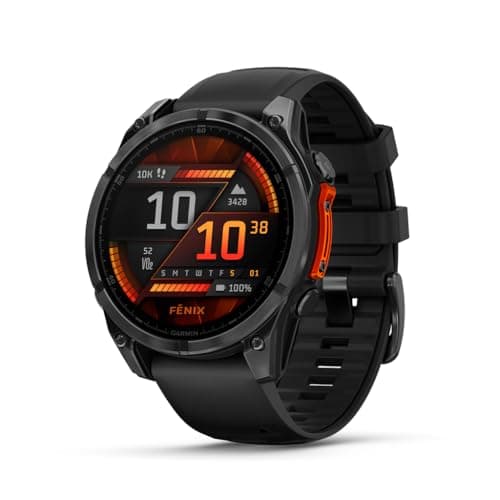
Expedition and rough-terrain useGarmin fēnix 8 (47mm)
Everything Garmin makes, in a case built to survive being hit. You pay for the durability, not for better data.
$999.9923% off
Price as of October 22, 2026. Prices move; Amazon's is the one that counts.
#ad · we may earn a commission from this link to Garmin fēnix 8 (47mm)
The short answer
The Garmin fēnix 8 ranks first on coverage and hardware, but it carries the weakest cost-per-capability score on this site: it records essentially the same physiological data as a Forerunner costing a third as much. If you are not testing the case, the COROS APEX 4 gives you 41 stated days of battery for well under half the money.
Ranked
Quick picks
| # | Device | Best for | Evidence | Score | Price |
|---|---|---|---|---|---|
| 01 | Garmin fēnix 8 (47mm) Everything Garmin makes, in a case built to survive being hit. You pay for the durability, not for better data. | Expedition and rough-terrain use | Manufacturer specification | 7.5/10 | $774.00Amazon |
| 02 | 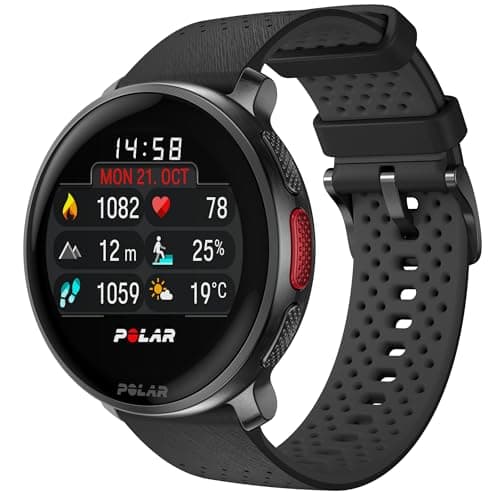 Polar Vantage V3 Polar's flagship, and the most sensor-dense watch here — including an on-wrist ECG. | Lab-style metrics on the wrist | Peer-reviewed validation | 7.5/10 | $679.90Amazon |
| 03 | No image COROS APEX 4 (46mm) 41 days of daily battery and a MIP screen you can read in direct sun. The anti-AMOLED choice. | Multi-day efforts | Manufacturer specification | 7.3/10 | Check price → |
| 04 | 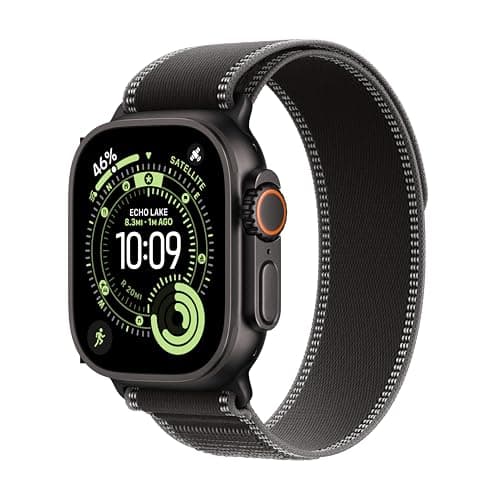 Apple Watch Ultra 3 Excellent positioning hardware and the best screen here, attached to the weakest deep-sleep measurement in the published record. | iPhone owners who train and want one device | Peer-reviewed validation | 6.8/10 | $588.83Amazon |
| 05 | 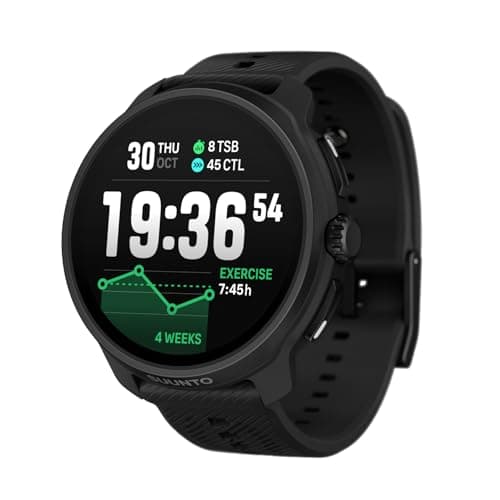 Suunto Race 2 A 1.5" AMOLED and 115+ sport modes, priced under most of the flagships it lines up against. | Big-screen multi-sport value | No validation study exists | 6.7/10 | $499.00Amazon |
#ad· Live prices from the Amazon Product API, as of October 22, 2026. Where we have no verified live price we show none. Scores come from the published rubric at How we rank — the Evidence column shows what each ranking actually rests on, including where the answer is nothing.
The multisport premium is a case, not a sensor
The single most useful thing to understand about this tier is that the money does not buy better data. A fēnix 8 and a Forerunner 570 use the same generation of optical sensor and the same class of multi-band receiver. What the fēnix adds is a case built to survive being hit, dive ratings, and a longer battery.
Those are real things, and if you actually go into the mountains for four days they are worth every dollar. If you do triathlons on roads and in pools, you are buying a durability specification you will never test. That is why the fēnix 8 scores 10 on metric coverage and 4.5 on cost per capability, and why the weighted total still puts it first — the rubric rewards it for what it genuinely is, and penalizes it for what it costs.
MIP versus AMOLED, which is a genuine trade
The COROS APEX 4 is the one watch here with a memory-in-pixel screen rather than AMOLED, and this is worth understanding because the marketing treats MIP as obsolete. It is not. MIP is reflective: it uses ambient light, so it gets morereadable as the sun gets brighter, exactly when an AMOLED is washing out. It also draws so little power that COROS can state 41 days of daily use against an AMOLED flagship's two weeks.
The cost is that it looks dull indoors. Side by side on a desk, the AMOLED wins every time. That is a real aesthetic trade, not a spec-sheet artifact, and which way it goes depends on where you spend your time.
The Apple Watch Ultra 3 problem
The Ultra 3 has genuinely excellent positioning hardware and the best display in this group. It is also the only watch here with a peer-reviewed accuracy result — and the result is not good.
In the Brigham and Women's polysomnography study, the Apple Watch (Series 8, in that test) achieved 75.0% four-stage sleep agreement, which is respectable, but deep-sleep sensitivity of only 50.5% — the weakest of the three devices measured. It overestimated light sleep by 45 minutes a night and underestimated deep sleep by 43.
We want to be fair about this: that tested a Series 8, not an Ultra 3, and Apple has revised its algorithm since. But it is the only published measurement that exists for any device in this roundup, and the honest version of "we rank on evidence" is that it counts even when it is inconvenient. Apple scores 6 on evidence — higher than the brands with no data at all, because having been measured is worth something, and lower than it would score if the measurement had been kind.
What none of these watches will fix
Wrist heart rate during hard intervals. Every watch in this roundup uses wrist optical sensing, and the published evidence on that is unambiguous: it degrades under rapid intensity change, in every brand tested. Buying a more expensive watch does not address it. A chest strap does, for around a hundred dollars, with the watch you already have.
Before the ranking: our top pick is now a previous-generation watch
Garmin announced the fēnix 9 and fēnix 9 Pro on 25 August 2026, and Apple announced the Apple Watch Ultra 4 on 9 September. The fēnix 8 ranked first here and the Ultra 3 fourth are therefore both outgoing models. Both are still sold, and both keep their places: the rubric scores published evidence and published specifications, and neither successor has any validation — nor a listing in our roster — so neither can be scored at all yet. That is a limit of ranking on evidence, and we would rather say so than quietly promote a watch nobody has measured. What the successors change is the price of the outgoing models, which you can see live in the table below.
None of the watches above is cheap, and the budget version of this question has a genuinely different field: best triathlon watches under $300 has no pick in common with this page, and the watches on it state longer battery than most of the flagships here.
In full
Every pick, and why
Garmin fēnix 8 (47mm)
Everything Garmin makes, in a case built to survive being hit. You pay for the durability, not for better data.
- Case
- 47mm, AMOLED
- Satellite
- Multi-band GNSS
- Extras
- Built-in maps, dive-rated, speaker and microphone
What's good
- The most durable case Garmin puts a multi-band receiver into
- Maps, dive modes and the full metric set in one device
What isn't
- Records essentially the same physiological data as a Forerunner costing a third as much
- Heavy compared with a dedicated running watch
Skip this if
Skip this if you run on roads and pavements. You would be buying a case specification you will never test, and the numbers it records are the ones a Forerunner already gives you.
What the evidence says
Manufacturer specificationPublished specifications only; no independent validation of this model that we could find.
Show how this 7.5 was calculated
| Factor | Weight | Score |
|---|---|---|
| EvidenceDetailed published specs, no independent measured validation. | 30% | 5.5 |
| HardwareMulti-band GNSS in Garmin's most ruggedized current case. | 20% | 9.5 |
| Metric coverageThe widest metric and mode coverage of any device on this site. | 20% | 10.0 |
| EnduranceAmong the longest stated GPS endurance in Garmin's AMOLED line. | 15% | 8.5 |
| Cost per capabilityBy some distance the weakest cost-per-capability figure here — the premium buys the case, not the data. | 15% | 4.5 |
$999.9923% off
Price as of October 22, 2026. Prices move; Amazon's is the one that counts.
#ad · we may earn a commission from this link to Garmin fēnix 8 (47mm)
Polar Vantage V3
Polar's flagship, and the most sensor-dense watch here — including an on-wrist ECG.
- Display
- AMOLED
- Satellite
- Dual-frequency GNSS
- Extras
- On-wrist ECG, skin temperature, offline maps
What's good
- The widest raw sensor set of any watch in this roundup
- Inherits the brand-level positioning result from the JMIR study
What isn't
- Priced against the Forerunner 970 without matching its ecosystem
- Sensor breadth is not the same thing as validated accuracy, and Polar publishes no per-model validation either
Skip this if
Skip this if you will not actually use the extra sensors. More measurements you ignore is not more value.
What the evidence says
Peer-reviewed validationSame dated, brand-level positioning evidence as the Vantage M3: Gilgen-Ammann et al. (2020) found only Polar's receivers under 5% error, testing the Vantage M, Vantage V and V800 — not the V3.
Show how this 7.5 was calculated
| Factor | Weight | Score |
|---|---|---|
| EvidenceFavorable but dated and brand-level peer-reviewed positioning evidence; no validation of this specific model. | 30% | 6.5 |
| HardwareDual-frequency GNSS plus the densest sensor package here, including wrist ECG. | 20% | 9.0 |
| Metric coverageVery wide metric coverage with a strong recovery platform. | 20% | 9.0 |
| EnduranceGood stated endurance for a sensor-heavy AMOLED watch. | 15% | 7.5 |
| Cost per capabilityFlagship pricing without a flagship ecosystem. | 15% | 5.5 |
Price as of October 22, 2026. Prices move; Amazon's is the one that counts.
#ad · we may earn a commission from this link to Polar Vantage V3
COROS APEX 4 (46mm)
41 days of daily battery and a MIP screen you can read in direct sun. The anti-AMOLED choice.
- Display
- 1.3" MIP (memory-in-pixel)
- Battery (stated)
- 41 days daily use
- Case
- 46mm
What's good
- MIP displays get MORE readable in bright sun, where AMOLED gets worse
- 41 stated days of daily use removes charging from the routine entirely
What isn't
- MIP looks dull indoors next to an AMOLED — this is a genuine aesthetic trade, not just a spec
- Same unvalidated-COROS-optical-sensor caveat as the PACE 4
Skip this if
Skip this if you mostly train indoors or at night. You would be taking the dull screen and giving up nothing for it.
What the evidence says
Manufacturer specificationPublished specifications only. The one independent COROS heart-rate test we found was of the PACE 3 and does not describe this device.
Show how this 7.3 was calculated
| Factor | Weight | Score |
|---|---|---|
| EvidenceNo validation of this model; the only independent COROS test on record is of a different watch and was unfavorable. | 30% | 4.5 |
| HardwareDual-frequency GNSS behind a MIP display. | 20% | 8.0 |
| Metric coverageFull COROS training platform. | 20% | 8.0 |
| Endurance41 stated days of daily use is the longest on this site. | 15% | 10.0 |
| Cost per capabilityStrong battery-per-dollar; mid-range sticker. | 15% | 8.5 |
We don't have a verified live price for this right now, so we aren't showing one.
#ad · we may earn a commission from this link to COROS APEX 4 (46mm)
Apple Watch Ultra 3
Excellent positioning hardware and the best screen here, attached to the weakest deep-sleep measurement in the published record.
- Case
- 49mm titanium
- Satellite
- Dual-frequency GNSS
- Connectivity
- GPS + Cellular
What's good
- Dual-frequency positioning and a genuinely excellent display
- Best-in-class as a general smartwatch, by a distance
What isn't
- In the Brigham and Women's PSG study, the Apple Watch's deep-sleep sensitivity was 50.5% — the weakest of the three devices tested
- Battery is short next to every dedicated sports watch here
Skip this if
Skip this if you bought it to fix your sleep data. The peer-reviewed result says that is the one thing it is worst at, and no firmware update changes a published measurement.
What the evidence says
Peer-reviewed validationRobbins et al. (2024) tested the Apple Watch Series 8 against polysomnography: 75.0% four-stage agreement, but deep-sleep sensitivity of only 50.5%, overestimating light sleep by 45 minutes and underestimating deep sleep by 43 minutes. That was the Series 8, not the Ultra 3, and Apple has revised its algorithm since.
Show how this 6.8 was calculated
| Factor | Weight | Score |
|---|---|---|
| EvidenceGenuine peer-reviewed sleep data exists, which most rivals lack — but the result was unfavorable, and it tested an earlier model. | 30% | 6.0 |
| HardwareDual-frequency GNSS and the best display in this group. | 20% | 9.0 |
| Metric coverageVery wide metric coverage; export off-platform is more awkward than Garmin's. | 20% | 8.5 |
| EnduranceMaterially shorter than every dedicated sports watch here. | 15% | 4.0 |
| Cost per capabilityFlagship pricing; the cellular model costs more again. | 15% | 6.0 |
Price as of October 22, 2026. Prices move; Amazon's is the one that counts.
#ad · we may earn a commission from this link to Apple Watch Ultra 3
Suunto Race 2
A 1.5" AMOLED and 115+ sport modes, priced under most of the flagships it lines up against.
- Display
- 1.5" AMOLED
- Sport modes
- 115+
- Satellite
- Dual-frequency GNSS
What's good
- The largest AMOLED in this roundup
- Undercuts the flagship tier substantially
What isn't
- No independent validation we could find
- Ecosystem and third-party support remain the weak point
Skip this if
Skip this if you need a proven training-load model. Suunto's analytics are the least documented of the brands here.
What the evidence says
No validation study existsNo independent validation study exists for this device that we could find as of July 2026.
Show how this 6.7 was calculated
| Factor | Weight | Score |
|---|---|---|
| EvidenceNo validation of any kind that we could find; capped accordingly. | 30% | 3.0 |
| HardwareDual-frequency GNSS with the biggest display here. | 20% | 8.5 |
| Metric coverage115+ modes, lighter analytics. | 20% | 8.0 |
| EnduranceStrong stated figures for the screen size. | 15% | 8.0 |
| Cost per capabilityWell under the flagship tier it competes with on specification. | 15% | 8.5 |
Price as of October 22, 2026. Prices move; Amazon's is the one that counts.
#ad · we may earn a commission from this link to Suunto Race 2
Choosing between these five
If you go into the mountains for days
The fēnix 8 or the APEX 4, and the deciding question is screen technology. The fēnix gives you maps and the widest feature set; the APEX gives you 41 stated days and a screen that improves in sunlight.
If you want the most sensors
The Polar Vantage V3 carries the densest raw sensor package here, including an on-wrist ECG. Worth saying clearly though: sensor breadth is not validated accuracy. More measurements from unvalidated sensors is more unverified data, and Polar publishes no per-model validation either.
If you live inside the Apple ecosystem
The Ultra 3 is the best general smartwatch here by a distance, and its positioning hardware is genuinely competitive. Buy it for that. Do not buy it for the sleep staging.
If you want the biggest screen for the least money
The Suunto Race 2, with the caveat that attaches to every Suunto on this site: no independent validation of any kind that we could find, which caps how high it can rank on accuracy grounds no matter how good the hardware is.
How this ranking was built
Every score on this page comes from one published rubric, applied identically to every device on the site, with the weights written down and the inputs shown. We have not worn any of these devices and we never say we have. Read the method and check us.
Questions
Frequently asked
Do I need a multisport watch for triathlon?
Not necessarily. A Forerunner 570 or 970 handles triathlon transitions and open-water swimming perfectly well. The multisport tier adds durability, longer battery and mapping — useful for ultra-distance and expedition use, largely irrelevant for standard-distance racing on roads.
Is MIP or AMOLED better for a sports watch?
It depends where you train. MIP is reflective, so it gets more readable in bright sun and uses far less power — which is why the APEX 4 can state 41 days. AMOLED is brighter and better indoors and at night. Neither is obsolete; they solve different problems.
Which of these has the best-validated data?
The Apple Watch, and not in a flattering way — it is the only device here with a published peer-reviewed measurement, and that measurement found the weakest deep-sleep sensitivity of the three devices tested. Every other watch in this roundup has no independent validation we could find. Having been measured at all is unusual in this category.
Is the fēnix 8 worth three times a Forerunner?
Only for the case and the battery. It records the same physiological data from the same sensor generation. If you are not doing multi-day efforts in rough terrain, you are paying for a durability specification that will never be tested.
Show your working
Sources
Every one of these was read in full before it was cited. Where we could not access a paper, we do not quote its numbers.
- [1]Peer-reviewed validation2020Gilgen-Ammann, Schweizer & Wyss, “Accuracy of Distance Recordings in Eight Positioning-Enabled Sport Watches: Instrument Validation Study”, JMIR mHealth and uHealth
DOI 10.2196/17118. Eight watches (Apple Watch Series 4, Coros Apex 46mm, Garmin Fenix 5X Plus, Garmin Forerunner 935, Polar Vantage M, Polar Vantage V, Polar V800, Suunto 9 Baro) measured against a trundle wheel accurate to 1 cm, across urban, forest and 400 m track conditions. IMPORTANT: this predates the dual-frequency receivers now standard, so it describes brand engineering history, not any watch currently sold.
- [2]Peer-reviewed validation2025“Impact of Anatomical Placement on the Accuracy of Wearable Heart Rate Monitors During Rest and Various Exercise Intensities”, Sensors (Basel)
n = 28 (14 male, 14 female). Polar H10 chest strap as the reference. Compared Polar Verity Sense (forearm), Garmin Forerunner 55 (wrist) and three simultaneous Whoop 4.0 units at wrist, forearm and upper arm, across rest, cycling warm-up, burpees and a modified Bruce treadmill protocol.
- [3]Manufacturer specification2026COROS — PACE 4 published specifications
Manufacturer-stated: 1.2" AMOLED, 32 g with nylon band, 11.8 mm thick, All-Systems and Dual-Frequency satellite modes, 41 GPS hours, 19 days of daily training and sleep.
- [4]Independent measured test2023the5krunner, measured heart-rate comparison of the COROS PACE 3
An independent measured test, not a peer-reviewed study, and the author explicitly cautions the dataset was limited. Compared against Garmin HRM-Pro Plus and Polar Verity Sense across easy runs, intervals and cycling. Found divergence during and after rapid intensity change. Tests the PACE 3, not the PACE 4.
- [5]Manufacturer claim only2026Garmin — “Garmin announces the fēnix 9 and fēnix 9 Pro GPS smartwatch”, Garmin newsroom
Garmin press release, 25 August 2026. fēnix 9 “available now, starts at $999.99”; fēnix 9 Pro starts at $1,099.99. Used here only to establish that the fēnix 8 is now the previous generation. No fēnix 9 is ranked on this site — no validation exists and no ASIN has been resolved.
- [6]Manufacturer claim only2026Apple — “Apple unveils Apple Watch Ultra 4”, Apple Newsroom
Apple press release, 9 September 2026. Ultra 4 “starts at $799 (U.S.)”, in stores 18 September 2026. Used here only to establish that the Ultra 3 is now the outgoing model. No Ultra 4 is ranked on this site — no validation exists and no ASIN has been resolved.
Read next
Related
- Best triathlon watches under $300
The same job on a budget - and the budget costs less than you would guess.
- Garmin fēnix 8 review
The winner of this page, in full, including what we could not verify.
- Best trail GPS watches
The same tier judged for trail rather than triathlon.
- Best running watches
If you only run, the cheaper tier is almost always the right answer.
- COROS vs Garmin
Resolved tier by tier, because the brands do not line up model for model.
- Heart rate accuracy by device
What has actually been measured, and where nothing has.
- Suunto Race 2
The biggest screen here, and the thinnest evidence record.
- COROS APEX 4
Forty-one stated days, behind a screen built for sunlight.
- Suunto vs Garmin
The brand decision underneath half this ranking.
- Best no-budget fitness gifts
The flagships here, framed for a gifter — and which were just superseded.