Head to head
Garmin Forerunner 570 vs Venu 4
One is sold to runners, one to everyone else, and Garmin prices them identically. The published tables say the lifestyle watch lasts longer and the running watch is not measuring anything better.
We earn a commission when you buy through our Amazon links, at no extra cost to you. It never decides a ranking — the rubric that does is published in full, so you can check us rather than take our word for it. How this works.
Top pick
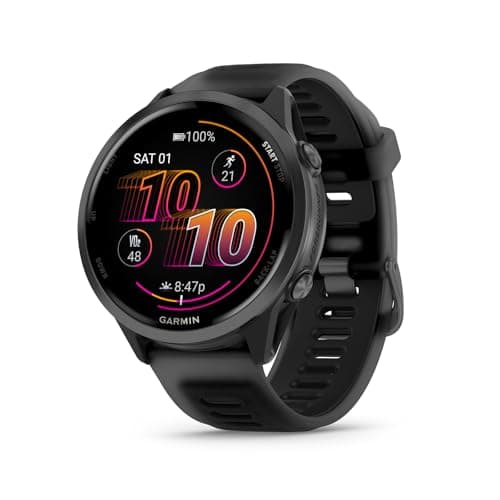
Most runners, most of the timeGarmin Forerunner 570
Same sensor family as the 970, $200 less, and no maps. For most runners that is the correct trade.
Price as of October 22, 2026. Prices move; Amazon's is the one that counts.
#ad · we may earn a commission from this link to Garmin Forerunner 570
The short answer
Buy the Forerunner 570 if you want the running line's race and multisport tooling and the SatIQ mode. Buy the Venu 4 if you want longer stated battery, an ECG app and a watch that does not look like sports equipment. They list at the same $549.99, and neither has any independent validation of what it measures.
Ranked
Quick picks
| # | Device | Best for | Evidence | Score | Price |
|---|---|---|---|---|---|
| 01 | Garmin Forerunner 570 Same sensor family as the 970, $200 less, and no maps. For most runners that is the correct trade. | Most runners, most of the time | Manufacturer specification | 7.3/10 | $546.00Amazon |
| 02 | 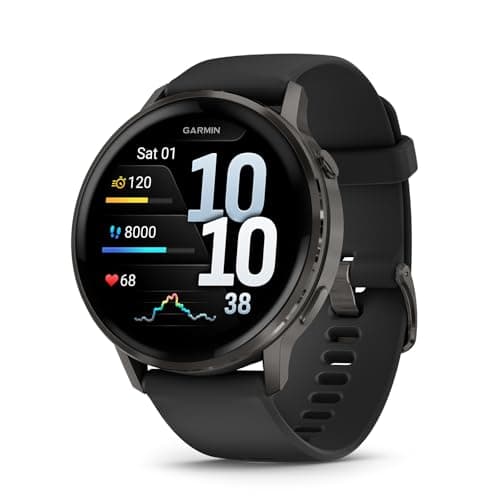 Garmin Venu 4 A Forerunner's training stack in a steel lifestyle case, with a longer published battery than the running watch it is priced against. | One watch for training data and everyday wear | Manufacturer specification | 7.1/10 | $543.00Amazon |
#ad· Live prices from the Amazon Product API, as of October 22, 2026. Where we have no verified live price we show none. Scores come from the published rubric at How we rank — the Evidence column shows what each ranking actually rests on, including where the answer is nothing.
Why this comparison exists at all
Garmin lists the Forerunner 570 and the Venu 4 at the same $549.99, and sells them to different people. The Forerunner is the running watch: race calendar, training tooling, the line serious runners default to. The Venu is the lifestyle watch: metal case, flashlight, ECG app, health trends.
The reason to put them side by side is that the specification difference between them is much smaller than the marketing difference, and it does not fall the way the product lines suggest. Garmin's own Venu 4 manual documents PacePro, performance measurements, training status, acute load, training readiness, recovery time, a critical swim speed test, running dynamics data and VO2 max. ratings. That is the Forerunner analysis stack, in the other case.
Garmin's two battery tables, mode by mode
Everything here is manufacturer-stated, from Garmin's Forerunner 570 product page and the Venu 4 owner's manual. We compare the larger case of each, which is the variant our live prices track.
| Manufacturer-stated | Forerunner 570 (47 mm) | Venu 4 (45 mm) |
|---|---|---|
| Smartwatch mode | Up to 11 days | Up to 12 days |
| GPS-Only | Up to 18 h | Up to 20 h |
| SatIQ / Auto Select | Up to 16 h | Not published |
| All systems (single frequency) | Not published | Up to 19 h |
| All systems + multi-band | Up to 14 h | Up to 17 h |
| All systems + multi-band, with music | Up to 8 h | Up to 9 h |
Finding one: the lifestyle watch lasts longer in every comparable mode
Every row the two tables share goes to the Venu 4: a day more in smartwatch mode, two hours more GPS-only, three hours more in all-systems multi-band, an hour more with music running. That is not a rounding difference, and it is not the direction anyone expects when one of these watches is filed under running and the other under lifestyle.
It matters most in the multi-band row, because that is the mode you would actually run if positioning accuracy is why you bought a current Garmin, and it is the row this site ranks watches on. Fourteen stated hours against 17 is the difference between covering a long mountain day and not.
Finding two: the two tables are not the same shape
Read the middle rows again. Garmin publishes a SatIQ figure for the Forerunner 570 and no plain all-systems figure; it publishes a plain all systems figure for the Venu 4 and no SatIQ figure. Those are different things. SatIQ is Garmin's automatic mode, which switches between GNSS configurations to save power; plain all-systems is every constellation on a single frequency.
So the honest statement is that these two watches have one genuinely like-for-like high-accuracy row between them, the multi-band row, and the Venu 4 wins it. Anyone quoting "18 hours against 20" is comparing GPS-only figures, which is the weakest mode on both watches and the one neither should be bought for. This is the same mode-mismatch trap we documented on Forerunner 570 vs fēnix 8, where the headline comparison everyone repeats sets a GPS-only figure against a multi-band one.
What each one has that the other does not
Taking only what Garmin lists for each watch, rather than what a feature-count table somewhere asserts:
- Only the Venu 4 lists an ECG app, with Garmin's own footnote attached: it requires the latest software and is available in select regions only, for ages 22 and over. The Forerunner 570 specification page does not list one.
- Only the Venu 4 lists an LED flashlight, a feature that sounds trivial until you have run before sunrise.
- Only the Forerunner 570 publishes a SatIQ battery figure, which is the mode most runners leave switched on, and the Forerunner line is where Garmin ships its race and multisport tooling first.
- Both publish a speaker and microphone, 5 ATM and a 1.4-inch AMOLED in their larger case, and both pair external ANT+ and Bluetooth sensors, including the HRM 600 chest strap.
- Neither has maps. If navigation is the requirement, this is the wrong pair of watches and the answer is one tier up.
One comparison we are not making: weight. Garmin quotes the Venu 4 at 38 g for the 45 mm case without a band and the Forerunner 570 at 50 g for the 47 mm case, measured differently. Those two numbers do not belong in the same column, so we have left them out rather than printing a difference that is partly a band.
The arithmetic
Per stated all-systems-multi-band hour, the Forerunner 570 runs $30.33 and the Venu 4 $31.94. The live gap between the two prices is $3, which is worth checking on the day: both watches have been discounted below list since launch, and the one that happens to be discounted harder is a better argument than anything in the specification.
Note that our Forerunner 570 figure is derived from the 18-hour GPS-only number its roster entry carries, not the 14-hour multi-band number, so the real multi-band cost per hour is worse than the figure above. We are leaving that stated rather than quietly repaired: the site's Forerunner 570 entry has carried the GPS-only figure since launch, and changing it would move the derived numbers on every page that renders them. Either way it moves in the Venu 4's favor, which is the direction that matters for this page.
The evidence, which is the same for both: none
Neither watch has been independently validated. No peer-reviewed measurement of a Forerunner 570 or a Venu 4 exists that we could find, and the nearest evidence is unflattering to the brand rather than to either model: the one study that wore five devices on the same people for 536 nights put the Garmin last of five on nocturnal HRV agreement, and the 100-runner threshold study found the Garmin in it overestimated threshold pace by 25.8% and returned a usable estimate in only 65.2% of attempts.
That is worth saying plainly on a page about a $549.99 decision: nothing in this comparison is a claim that either watch measures you accurately. Both carry the same evidence floor, which is why they sit 0.2 apart on our rubric rather than a point apart, and why the strongest accuracy upgrade available to either buyer costs about a tenth of the watch and goes around the chest. The measured case for that is in wrist versus chest-strap accuracy.
Which to buy
Buy the Forerunner 570 if you race, if you want the multisport and race tooling the Forerunner line gets first, or if you want the SatIQ mode on a watch whose firmware is written for runners before anyone else. Our full write-up is the Forerunner 570 review.
Buy the Venu 4 if the watch has to survive a working week, a night of sleep tracking and a long run without a charger, if the ECG app or the flashlight matters to you, or if you want one device that does not look like a running watch. Our write-up is the Venu 4 review.
Buy neither if $549.99 is the ceiling rather than the target. The Forerunner 265 records the same core metrics with the same absent evidence for materially less, and a chest strap bought with the difference improves your data more than either of these watches does.
If the Venu 4 is winning this comparison for you on battery, it is worth seeing what happens when it meets a watch built for endurance: fēnix 8 vs Venu 4 sets the same 17 stated multi-band hours against 35.
In full
Every pick, and why
Garmin Forerunner 570
Same sensor family as the 970, $200 less, and no maps. For most runners that is the correct trade.
- Case
- 42mm or 47mm, AMOLED
- Satellite
- Multi-band GNSS
- Battery (stated)
- 11 days smartwatch / 18 h GPS (47mm)
- Maps
- None
- Extras
- Speaker and microphone, on-watch music
What's good
- Records the same core metrics as the 970 — the data you get back is not a cut-down version
- Two case sizes, which the 970 does not offer
- Multi-band GNSS at a mid-range price
What isn't
- 18 stated GPS hours is thin for ultra distances
- No maps, so navigation is breadcrumb-only
Skip this if
Skip this if you race beyond about 12 hours or navigate unfamiliar trails. The battery and the missing maps are both real limits, and neither is fixable in software.
What the evidence says
Manufacturer specificationAs with the 970, no independent validation of this model's optical heart rate has been published that we could find.
Show how this 7.3 was calculated
| Factor | Weight | Score |
|---|---|---|
| EvidenceDetailed published specs, no independent measured validation of this model. | 30% | 5.5 |
| HardwareMulti-band GNSS and the same current-generation optical sensor family as the 970. | 20% | 9.0 |
| Metric coverageEverything the 970 records except maps and the ECG app. | 20% | 8.5 |
| EnduranceGarmin states 18 hours GPS, 11 days smartwatch, on the 47mm case. | 15% | 6.0 |
| Cost per capabilityMaterially cheaper than the 970 for the same recorded data. | 15% | 8.0 |
Price as of October 22, 2026. Prices move; Amazon's is the one that counts.
#ad · we may earn a commission from this link to Garmin Forerunner 570
Garmin Venu 4
A Forerunner's training stack in a steel lifestyle case, with a longer published battery than the running watch it is priced against.
- Case
- 41mm or 45mm, AMOLED, stainless steel
- Satellite
- Multi-band GNSS (manufacturer-stated)
- Battery (stated)
- 12 days smartwatch / 17 h multi-band (45mm)
- Extras
- ECG app, LED flashlight, speaker and microphone
- Sensors
- Pairs ANT+ / Bluetooth straps, including the HRM 600
What's good
- Garmin's own manual gives it the Forerunner analysis stack — training status, acute load, training readiness, PacePro, performance measurements, running dynamics
- Publishes an all-satellite-plus-multi-band battery row, which the Venu line did not before: 17 stated hours at 45 mm
- Pairs the chest straps that actually improve its heart-rate data, HRM 600 and HRM 200 included
What isn't
- No independent validation of anything it measures, and the health features Garmin leads with are the newest and least checked
- Garmin labels the health status feature beta itself, and restricts the ECG app by region and to ages 22 and over
- No maps, and the 41 mm case states materially shorter battery than the 45 mm in every mode
Skip this if
Skip this if you are buying it for the health screening. Nothing published validates Garmin's sleep staging, its HRV figure came last of five brands in the only study that measured several at once, and the headline health-status feature is in beta by Garmin's own footnote. Buy it for the watch, not for the diagnosis.
What the evidence says
Manufacturer specificationNo independent validation of this model exists that we could find — not of its optical heart rate, not of its sleep staging, not of its positioning. Garmin was absent from the Robbins et al. (2024) polysomnography comparison entirely, and in the one study that wore three brands at once (Dial et al., 2025) the Garmin device finished last of five on nocturnal HRV agreement.
Show how this 7.1 was calculated
| Factor | Weight | Score |
|---|---|---|
| EvidenceDetailed published specification and a documented feature list, and no independent measurement of a single number this watch produces. | 30% | 4.5 |
| HardwareMulti-band GNSS, Garmin's Elevate wrist sensor, ECG electrodes, speaker and microphone, 5 ATM, and ANT+/Bluetooth pairing for external sensors — the same hardware checklist as a current Forerunner, in a stainless case. | 20% | 9.0 |
| Metric coverageTraining status, acute load, training readiness, PacePro, VO2 max, running dynamics, a swim test, HRV status, Body Battery, Pulse Ox, skin temperature and an ECG app. No maps, which is the one gap against the tier above. | 20% | 9.0 |
| EnduranceGarmin states 12 smartwatch days and 17 hours in all-satellite-plus-multi-band at 45 mm. Longer than the Forerunner it shares a price with, and half a fēnix 8. | 15% | 7.0 |
| Cost per capabilityLists at the same $549.99 as the Forerunner 570 and carries the better dollars-per-stated-multi-band-hour figure — but the premium over a 265 buys a metal case, a speaker and a flashlight, not better measurement. | 15% | 7.5 |
Price as of October 22, 2026. Prices move; Amazon's is the one that counts.
#ad · we may earn a commission from this link to Garmin Venu 4
How this ranking was built
Every score on this page comes from one published rubric, applied identically to every device on the site, with the weights written down and the inputs shown. We have not worn any of these devices and we never say we have. Read the method and check us.
Questions
Frequently asked
Is the Venu 4 battery really better than the Forerunner 570?
On Garmin's own figures, yes, in every mode the two tables share: 12 smartwatch days against 11, 20 GPS-only hours against 18, 17 all-systems-multi-band hours against 14, and 9 hours against 8 with music playing. The one row the Forerunner publishes and the Venu does not is SatIQ, Garmin's automatic GNSS mode, stated at 16 hours.
Does the Venu 4 do training status and training readiness like a Forerunner?
Garmin's Venu 4 owner's manual lists training status, acute load, training readiness, recovery time, performance measurements and PacePro in its Training section, and publishes running dynamics data and VO2 max. ratings in the appendix. Whether those model outputs are worth trusting is a separate question we work through on training status explained.
Which is more accurate, the Forerunner 570 or the Venu 4?
Nobody knows, and any site telling you otherwise is guessing. Neither model has been independently validated, both use Garmin's wrist optical sensor, and both publish a multi-band receiver. If accuracy is the deciding factor, the decision that actually changes your data is adding a chest strap to whichever watch you buy.
Can the Venu 4 replace a running watch?
For road and treadmill training, on the published specification, largely yes — it has the analysis stack, the multi-band receiver and the longer battery. The gaps are maps, the SatIQ mode and whatever the Forerunner line receives first in firmware. For ultra distances neither of these watches is the answer; the ultra-distance field starts at twice the stated battery.
Is either one worth $549.99?
That depends entirely on whether you need what the money buys, because it does not buy better measurement. The Forerunner 265 carries the same core metrics and the same empty evidence record for less, and the fēnix 8 doubles the stated multi-band endurance if endurance is the point. Check the live price on all four before deciding — these two in particular trade places on discount.
Show your working
Sources
Every one of these was read in full before it was cited. Where we could not access a paper, we do not quote its numbers.
- [1]Manufacturer specification2026Garmin — Forerunner 570 product page, battery life by GNSS mode (42 mm and 47 mm)
Manufacturer-stated, read 2026-09-20. 47 mm: smartwatch mode up to 11 days; GPS-Only GNSS mode up to 18 hours; SatIQ (AutoSelect) GNSS mode up to 16 hours; All-Systems GNSS mode + Multi-Band up to 14 hours; with music 9 h GPS-only, 8 h SatIQ, 8 h All-Systems + Multi-Band. 42 mm: smartwatch up to 10 days; GPS-Only up to 18 hours; SatIQ up to 14 hours; All-Systems + Multi-Band up to 13 hours; with music 9 / 8 / 8 h. Also stated: 47 x 47 x 12.9 mm and 50 g (47 mm), 42.4 x 42.4 x 12.9 mm and 42 g (42 mm), 1.4" 454 x 454 AMOLED (47 mm) or 1.2" 390 x 390 (42 mm), Corning Gorilla Glass 3, aluminum bezel, 5 ATM, 8 GB memory, built-in speaker/microphone, Elevate wrist heart rate monitor, connectivity Bluetooth / ANT+ / Wi-Fi, Connect IQ, $549.99. Garmin publishes no plain All-Systems (single-frequency, multi-constellation) figure for this watch, only GPS-Only, SatIQ and All-Systems + Multi-Band.
- [2]Manufacturer specification2026Garmin — Venu 4 Series owner’s manual, battery information
Manufacturer-stated, read 2026-10-11, 41 mm then 45 mm: smartwatch mode up to 10 days / up to 12 days; battery saver watch mode up to 18 / 25 days; GPS only mode up to 15 / 20 hours; all satellite systems mode up to 13 / 19 hours; all satellite systems with music up to 6 / 9 hours; all satellite systems plus multi-band up to 12 / 17 hours; all satellite systems plus multi-band with music up to 6 / 9 hours. Garmin's own caveat on the page: “the actual battery life depends on the features enabled on your watch, such as wrist-based heart rate, phone notifications, GPS, internal sensors, and connected sensors.”
- [3]Manufacturer specification2026Garmin — Venu 4 Series owner’s manual, Training section index
Manufacturer-documented, read 2026-10-11. The Training section of the Venu 4 manual lists: Activity Tracking, Workouts, Interval Workouts, Setting a Training Target, PacePro Training, Racing a Previous Activity, Race Calendar and Primary Race, Recording a Critical Swim Speed Test, Using Virtual Partner, About the Training Calendar, Enabling Self Evaluation, Performance Measurements, Training Status, Acute Load, Training Readiness and Recovery Time. The manual's appendix additionally publishes VO2 Max. Standard Ratings, Color Gauges and Running Dynamics Data, FTP Ratings and Wheel Size and Circumference. We make no claim about features the index does not name: an absence from a top-level index is not evidence that a watch cannot do something.
- [4]Manufacturer claim only2026Garmin — “Take steps towards a healthier lifestyle with the Venu 4 from Garmin”
Garmin's own press release, read 2026-10-11. Announced 17 September 2025, on sale 22 September 2025, suggested retail price starting at $549.99, in 41 mm and 45 mm, stated at “up to 12 days of battery life in smartwatch mode”. Named features: Health status (monitoring whether heart rate, HRV, respiration, skin temperature and Pulse Ox drift from their usual ranges during sleep), lifestyle logging of choices such as caffeine and alcohol against sleep, stress and HRV, sleep alignment using circadian-rhythm data, sleep consistency over seven days, Garmin Fitness Coach with workouts across 25+ activities that adjust daily, a mixed-session activity profile, a spoken watch face, color filters for color blindness, an LED flashlight, a built-in speaker and microphone, HRV status, Body Battery, women's health tracking with skin temperature, the Garmin ECG App, training readiness and wrist-based running dynamics. Garmin's OWN footnotes, which matter more than the feature list: Pulse Ox is “not available in all countries”, the health status feature is “currently in beta”, cycle tracking is “not intended for contraception or conception support”, and the ECG app requires the latest software and is available only in select regions for ages 22 and over.
- [5]Manufacturer specification2026Garmin — Forerunner 570 (47 mm) published specifications
Manufacturer-stated battery: up to 11 days smartwatch mode, up to 18 hours GPS mode.
- [6]Peer-reviewed validation2025Dial, Hollander, Vatne, Emerson, Edwards & Hagen, “Validation of nocturnal resting heart rate and heart rate variability in consumer wearables”, Physiological Reports 13(16):e70527
DOI 10.14814/phy2.70527. n = 13 healthy adults (7 male, 6 female, 33.2 ± 8.6 years) across 536 nights, each wearing an Oura Gen 3, Oura Gen 4, Polar Grit X Pro, Garmin fēnix 6 and Whoop 4.0 simultaneously against a Polar H10 single-lead ECG reference sampled at 1000 Hz. Authors’ stated limits: healthy adults only, no atrial-fibrillation population, proprietary and periodically-updated algorithms, and unequal night counts per device. The Garmin was dropped from the resting-heart-rate comparison because the 30-minute window it uses is not timestamped.
- [7]Peer-reviewed validation2025Lu, Cui, Zhu, Wu, Xing, Pan & Shen, “Validity of smartwatch-derived estimates of lactate threshold heart rate and pace compared to graded exercise testing”, Frontiers in Physiology 16:1621996
DOI 10.3389/fphys.2025.1621996. 100 healthy recreational runners (61 male, 39 female, 28.0 ± 9.6 years) against a treadmill graded exercise test with fingertip blood lactate (Biosen C-line), threshold determined by the modified Dmax method. Device counts were unequal: Huawei GT Runner n = 100, Garmin Forerunner 265/265s n = 23, COROS PACE 3 n = 17. Authors’ stated limits: unbalanced samples, indoor reference against outdoor watch tests, day-to-day threshold variability, and different heart-rate acquisition between devices — the Garmin protocol required an ECG chest strap while the other two used wrist PPG — plus undisclosed manufacturer algorithms.
Read next
Related
- fēnix 8 vs Venu 4
The same Venu 4 figures against the endurance flagship.
- Garmin Venu 4 review
The full read on the lifestyle watch with a Forerunner's manual.
- Garmin Forerunner 570 review
The running watch at the same price, in full.
- The best Garmin watches, ranked
Both of these in the context of Garmin's whole lineup.
- Forerunner 570 vs 265
The cheaper rung of the Forerunner line, decided on the same figures.