Head to head
COROS vs Garmin
A blanket verdict here would be useless — the ranges don't line up model for model. So we resolve it at each tier, and the answer differs.
We earn a commission when you buy through our Amazon links, at no extra cost to you. It never decides a ranking — the rubric that does is published in full, so you can check us rather than take our word for it. How this works.
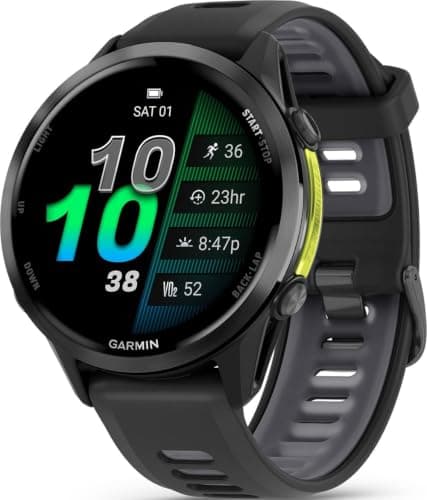
Top pick
Long-course athletes who want mapsGarmin Forerunner 970
The most complete running watch Garmin sells, and — counter-intuitively — the cheapest of the pair per hour of GPS you get.
Price as of October 22, 2026. Prices move; Amazon's is the one that counts.
#ad · we may earn a commission from this link to Garmin Forerunner 970
The short answer
COROS wins on battery and price at every tier, often by enormous margins — the PACE 4 states 41 GPS hours against the Forerunner 970's 26, at a third of the money. Garmin wins on ecosystem breadth and mapping. The one piece of independent evidence that touches either brand is unfavorable to COROS, and it tested a previous model.
Ranked
Quick picks
| # | Device | Best for | Evidence | Score | Price |
|---|---|---|---|---|---|
| 01 | Garmin Forerunner 970 The most complete running watch Garmin sells, and — counter-intuitively — the cheapest of the pair per hour of GPS you get. | Long-course athletes who want maps | Manufacturer specification | 7.7/10 | $749.99Amazon |
| 02 | 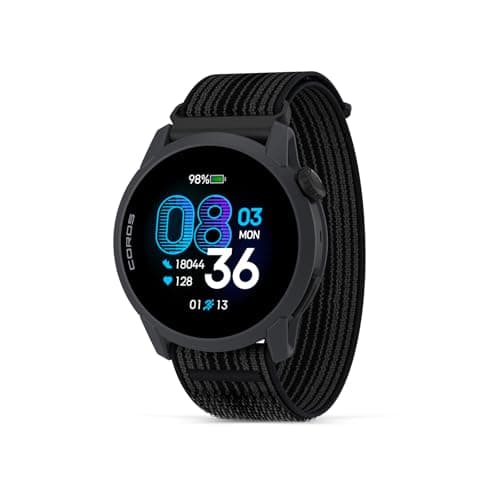 COROS PACE 4 41 stated GPS hours in a 32-gram watch, for a third of the Forerunner 970's money. The endurance-per-dollar winner by a distance. | Long days on a budget | Independent measured test | 7.5/10 | $249.00Amazon |
| 03 | 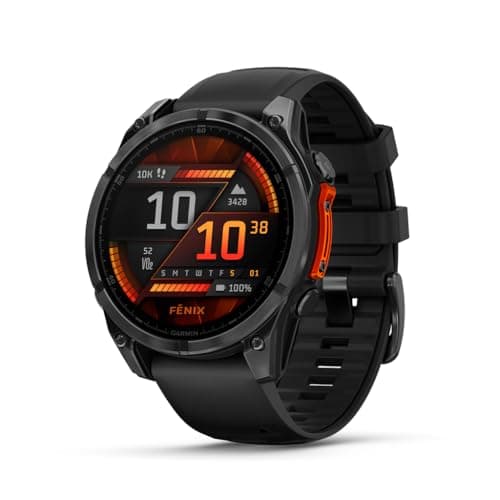 Garmin fēnix 8 (47mm) Everything Garmin makes, in a case built to survive being hit. You pay for the durability, not for better data. | Expedition and rough-terrain use | Manufacturer specification | 7.5/10 | $774.00Amazon |
| 04 | No image COROS APEX 4 (46mm) 41 days of daily battery and a MIP screen you can read in direct sun. The anti-AMOLED choice. | Multi-day efforts | Manufacturer specification | 7.3/10 | Check price → |
#ad· Live prices from the Amazon Product API, as of October 22, 2026. Where we have no verified live price we show none. Scores come from the published rubric at How we rank — the Evidence column shows what each ranking actually rests on, including where the answer is nothing.
Why there is no single answer
The ranges do not line up. COROS's flagship costs about what Garmin's mid-range costs. Garmin has roughly triple the model count. Any blanket "COROS is better" verdict would be comparing different things, which is what makes most brand comparisons useless.
So: three tiers, three verdicts.
Budget and mid-range: COROS, clearly
The PACE 4 states 41 GPS hours in All-Systems mode, in a 32-gram case, with a dual-frequency receiver. It costs a third of a Forerunner 970 and states more GPS endurance than the 970 and the 570 combined.
- COROS PACE 4 — $6.07 per GPS hour
- Garmin Forerunner 970 — $28.85 per GPS hour
- Garmin Forerunner 570 — $30.33 per GPS hour
That is not a marginal advantage, it is a different category of value. If battery and price are what you are optimizing, this tier is not close.
Flagship: it depends what you are optimizing
The COROS APEX 4 states 41 days of daily use behind a MIP display; the Garmin fēnix 8 gives you an AMOLED, maps and the broadest feature set anywhere.
MIP versus AMOLED is a genuine trade rather than a spec-sheet artifact. MIP is reflective — it gets more readable in bright sun, precisely when an AMOLED washes out — and uses so little power that the endurance figures are in a different league. It also looks dull indoors, and if you spend most of your time inside you will notice that every day.
Ecosystem: Garmin, and it is not close
This is where Garmin's scale genuinely earns its premium. Third-party integrations, coaching-platform support, accessory range, sensor compatibility and the depth of Connect are all considerably ahead. If you use structured workouts pushed from a coaching platform, check COROS compatibility before switching — this is where people get caught out.
Evidence: the one place with a real finding, and it is awkward
Neither brand has an independent validation of any current-generation optical sensor that we could find. Both are effectively unmeasured, which is the normal state of this category.
There is one exception, and it goes against COROS. The5krunner's measured comparison found the COROS PACE 3's wrist heart rate diverged during and after rapid intensity change — exactly the case an interval runner relies on.
Three qualifications, all of which matter:
- It tested the PACE 3. COROS states the PACE 4 has a redesigned sensor.
- It is an independent measured test, not peer-reviewed, and the author explicitly cautions the dataset was limited.
- No independent test of the redesigned sensor exists that we could find.
Garmin does not escape by comparison, incidentally: a Forerunner 55 in the 2025 placement study showed a bias of roughly 33 bpm during burpees. Both brands' wrist sensors struggle at high intensity, which is a limitation of wrist optical sensing rather than of either company. The difference is that COROS has a published unfavorable result and Garmin has a published unfavorable result on an old entry-level model. Neither is a clean bill of health.
Tier-by-tier summary
| If you want… | Buy | Why |
|---|---|---|
| Maximum battery per dollar | COROS PACE 4 | 41 stated GPS hours at entry-level pricing. Nothing is close. |
| Maps and navigation | Garmin (970 or fēnix 8) | COROS mapping is more limited across the range. |
| A readable screen in bright sun | COROS APEX 4 | MIP is reflective and improves in sunlight. |
| Third-party ecosystem | Garmin | Substantially broader integration and accessory support. |
| The lightest watch | COROS PACE 4 | 32 g with the nylon band — roughly half a flagship multisport watch. |
| Accurate heart rate | Neither — buy a strap | Both brands' wrist sensors degrade at high intensity, per the published record. |
What we could not verify
Whether COROS's redesigned PACE 4 sensor fixed the problem the PACE 3 test found. It is the single most decision-relevant fact in this comparison and there is no published answer. Also: any current-generation validation for either brand, and any real-world battery figure — all endurance numbers here are manufacturer-stated.
One more thing the tier-by-tier structure hides: the fairest single fight in the mid-range is not the PACE 4 against the 970 but the PACE 4 against the Forerunner 570 — the Garmin that shares its AMOLED screen, its no-maps position and its mid-range intent. We have resolved that one on its own page, Forerunner 570 vs COROS PACE 4, with every battery mode both makers publish laid out with the modes named.
Polar is the brand missing from this page, and it matters for one specific reason: its chest strap is the criterion instrument in the studies that measure everyone else. The three-way is at Polar vs Garmin vs COROS.
Suunto is the brand most often added to this comparison, and the three-way is at COROS vs Garmin vs Suunto. It turns on something neither two-way can use: the one peer-reviewed study containing all three brands found none of them under the 5% distance-error bar that a fourth brand cleared.
In full
Every pick, and why
Garmin Forerunner 970
The most complete running watch Garmin sells, and — counter-intuitively — the cheapest of the pair per hour of GPS you get.
- Case
- 47mm, titanium bezel, AMOLED
- Satellite
- Multi-band GNSS with SatIQ
- Battery (stated)
- 15 days smartwatch / 26 h GPS
- Maps
- Built-in, full color
- Extras
- ECG app, speaker and microphone
What's good
- Multi-band GNSS with SatIQ — the current top tier of consumer positioning hardware
- 26 stated GPS hours is enough for an ironman-distance day with a wide margin
- Built-in maps, which the 570 does not have at any price
What isn't
- The wrist optical sensor is the same class of hardware as the 570's — the premium buys features, not a better heart-rate signal
- 47mm only; there is no smaller case in this model
Skip this if
Skip this if you never race longer than a marathon and never navigate. Maps and titanium are the entire difference, and neither changes a single number the watch records.
What the evidence says
Manufacturer specificationNo independent validation study of the Forerunner 970's optical heart rate has been published that we could find. The specification figures are Garmin's own.
Show how this 7.7 was calculated
| Factor | Weight | Score |
|---|---|---|
| EvidenceSpecs are published and detailed, but no peer-reviewed or independent measured validation of this specific model exists yet. | 30% | 5.5 |
| HardwareMulti-band GNSS with SatIQ and Garmin's current-generation optical sensor — the top hardware tier available. | 20% | 9.5 |
| Metric coverageRunning dynamics, ECG, training load, maps, and a documented export path off the watch. | 20% | 9.5 |
| EnduranceGarmin states 26 hours in GPS mode, 15 days smartwatch. | 15% | 7.5 |
| Cost per capabilityHighest sticker in the range, but the strongest dollars-per-GPS-hour of the two Forerunners — see the arithmetic on the comparison page. | 15% | 7.5 |
Price as of October 22, 2026. Prices move; Amazon's is the one that counts.
#ad · we may earn a commission from this link to Garmin Forerunner 970
COROS PACE 4
41 stated GPS hours in a 32-gram watch, for a third of the Forerunner 970's money. The endurance-per-dollar winner by a distance.
- Display
- 1.2" AMOLED touchscreen
- Weight
- 32 g with nylon band, 40 g with silicone
- Satellite
- All-Systems and Dual-Frequency modes
- Battery (stated)
- 19 days daily use / 41 h GPS (All-Systems)
- Thickness
- 11.8 mm
What's good
- 41 manufacturer-stated GPS hours — more than the Forerunner 970 and the 570 combined
- 32 g is light enough that you stop noticing it, which matters more over 100 miles than any feature
- Dual-frequency positioning at an entry-level price
What isn't
- COROS wrist heart rate is the one area where an independent test has published a specific problem — see the evidence note
- Smaller third-party app ecosystem than Garmin's
Skip this if
Skip this if you train by heart rate off the wrist and will not wear a strap. The one independent test we found flagged COROS wrist HR during exactly the intervals you would be buying it for.
What the evidence says
Independent measured testThe5krunner's measured comparison found the previous-generation PACE 3's wrist heart rate diverged during and after rapid intensity changes. That test was of the PACE 3, not the PACE 4, and the author cautions the dataset was limited. COROS states the PACE 4 has a redesigned sensor; no independent test of the new sensor has been published that we could find.
Show how this 7.5 was calculated
| Factor | Weight | Score |
|---|---|---|
| EvidenceThe only independent measured evidence in the range is a limited-dataset test of the PREVIOUS model, and it was unfavorable. The redesigned sensor is unvalidated. | 30% | 4.5 |
| HardwareDual-frequency GNSS and a redesigned optical sensor, per the COROS spec page. | 20% | 8.0 |
| Metric coverageStrong training metrics; a narrower ecosystem than Garmin for third-party integrations. | 20% | 7.5 |
| Endurance41 stated GPS hours in All-Systems mode is the best in this roundup by a wide margin. | 15% | 10.0 |
| Cost per capabilityComfortably the strongest dollars-per-GPS-hour figure on the site. | 15% | 10.0 |
Price as of October 22, 2026. Prices move; Amazon's is the one that counts.
#ad · we may earn a commission from this link to COROS PACE 4
Garmin fēnix 8 (47mm)
Everything Garmin makes, in a case built to survive being hit. You pay for the durability, not for better data.
- Case
- 47mm, AMOLED
- Satellite
- Multi-band GNSS
- Extras
- Built-in maps, dive-rated, speaker and microphone
What's good
- The most durable case Garmin puts a multi-band receiver into
- Maps, dive modes and the full metric set in one device
What isn't
- Records essentially the same physiological data as a Forerunner costing a third as much
- Heavy compared with a dedicated running watch
Skip this if
Skip this if you run on roads and pavements. You would be buying a case specification you will never test, and the numbers it records are the ones a Forerunner already gives you.
What the evidence says
Manufacturer specificationPublished specifications only; no independent validation of this model that we could find.
Show how this 7.5 was calculated
| Factor | Weight | Score |
|---|---|---|
| EvidenceDetailed published specs, no independent measured validation. | 30% | 5.5 |
| HardwareMulti-band GNSS in Garmin's most ruggedized current case. | 20% | 9.5 |
| Metric coverageThe widest metric and mode coverage of any device on this site. | 20% | 10.0 |
| EnduranceAmong the longest stated GPS endurance in Garmin's AMOLED line. | 15% | 8.5 |
| Cost per capabilityBy some distance the weakest cost-per-capability figure here — the premium buys the case, not the data. | 15% | 4.5 |
$999.9923% off
Price as of October 22, 2026. Prices move; Amazon's is the one that counts.
#ad · we may earn a commission from this link to Garmin fēnix 8 (47mm)
COROS APEX 4 (46mm)
41 days of daily battery and a MIP screen you can read in direct sun. The anti-AMOLED choice.
- Display
- 1.3" MIP (memory-in-pixel)
- Battery (stated)
- 41 days daily use
- Case
- 46mm
What's good
- MIP displays get MORE readable in bright sun, where AMOLED gets worse
- 41 stated days of daily use removes charging from the routine entirely
What isn't
- MIP looks dull indoors next to an AMOLED — this is a genuine aesthetic trade, not just a spec
- Same unvalidated-COROS-optical-sensor caveat as the PACE 4
Skip this if
Skip this if you mostly train indoors or at night. You would be taking the dull screen and giving up nothing for it.
What the evidence says
Manufacturer specificationPublished specifications only. The one independent COROS heart-rate test we found was of the PACE 3 and does not describe this device.
Show how this 7.3 was calculated
| Factor | Weight | Score |
|---|---|---|
| EvidenceNo validation of this model; the only independent COROS test on record is of a different watch and was unfavorable. | 30% | 4.5 |
| HardwareDual-frequency GNSS behind a MIP display. | 20% | 8.0 |
| Metric coverageFull COROS training platform. | 20% | 8.0 |
| Endurance41 stated days of daily use is the longest on this site. | 15% | 10.0 |
| Cost per capabilityStrong battery-per-dollar; mid-range sticker. | 15% | 8.5 |
We don't have a verified live price for this right now, so we aren't showing one.
#ad · we may earn a commission from this link to COROS APEX 4 (46mm)
How this ranking was built
Every score on this page comes from one published rubric, applied identically to every device on the site, with the weights written down and the inputs shown. We have not worn any of these devices and we never say we have. Read the method and check us.
Questions
Frequently asked
Is COROS better than Garmin?
On battery and price per capability, comfortably — often by a factor of two or more. On ecosystem breadth, mapping and third-party integration, Garmin is well ahead. Neither has a validated accuracy advantage, because neither has current-generation validation at all.
Is COROS heart rate accurate?
The one independent test on record, of the previous-generation PACE 3, found it diverged during rapid intensity changes. COROS states the PACE 4 has a redesigned sensor and nobody has tested it. So: currently unknown, with an unfavorable prior.
Does COROS have maps?
Mapping across the COROS range is more limited than Garmin's. If turn-by-turn navigation on unfamiliar routes matters to you, that is one of the clearest reasons to choose Garmin.
Can I switch from Garmin to COROS and keep my data?
History can generally be exported and imported, but third-party integrations are the practical friction point rather than the data itself. If your coach pushes structured workouts from a specific platform, confirm COROS support before switching.
Show your working
Sources
Every one of these was read in full before it was cited. Where we could not access a paper, we do not quote its numbers.
- [1]Manufacturer specification2026COROS — PACE 4 published specifications
Manufacturer-stated: 1.2" AMOLED, 32 g with nylon band, 11.8 mm thick, All-Systems and Dual-Frequency satellite modes, 41 GPS hours, 19 days of daily training and sleep.
- [2]Manufacturer specification2026Garmin — Forerunner 970 published specifications
Manufacturer-stated battery: up to 15 days smartwatch mode, up to 26 hours GPS mode.
- [3]Manufacturer specification2026Garmin — Forerunner 570 (47 mm) published specifications
Manufacturer-stated battery: up to 11 days smartwatch mode, up to 18 hours GPS mode.
- [4]Independent measured test2023the5krunner, measured heart-rate comparison of the COROS PACE 3
An independent measured test, not a peer-reviewed study, and the author explicitly cautions the dataset was limited. Compared against Garmin HRM-Pro Plus and Polar Verity Sense across easy runs, intervals and cycling. Found divergence during and after rapid intensity change. Tests the PACE 3, not the PACE 4.
- [5]Peer-reviewed validation2025“Impact of Anatomical Placement on the Accuracy of Wearable Heart Rate Monitors During Rest and Various Exercise Intensities”, Sensors (Basel)
n = 28 (14 male, 14 female). Polar H10 chest strap as the reference. Compared Polar Verity Sense (forearm), Garmin Forerunner 55 (wrist) and three simultaneous Whoop 4.0 units at wrist, forearm and upper arm, across rest, cycling warm-up, burpees and a modified Bruce treadmill protocol.
Read next
Related
- COROS vs Garmin vs Suunto
Add Suunto, and the one study with all three brands in it changes the verdict.
- Polar vs Garmin vs COROS
The three-brand version, including the sensor researchers use as a reference.
- Forerunner 570 vs 970
A sibling comparison, inside the Garmin range.
- COROS PACE 4 in full
The watch that carries most of the COROS argument.
- Best running watches
Both brands against Polar and Suunto on one rubric.
- Polar vs Garmin
The sibling comparison, including the strap tier Polar wins outright.
- Suunto vs Garmin
The other value-brand-versus-Garmin decision, with the same evidence problem.
- COROS PACE 3 vs PACE 4
Inside COROS, and the one watch anybody has independently measured.
- Forerunner 570 vs COROS PACE 4
The mid-range fight model for model, where the 570 wins every feature row and loses every endurance row.
- The best Garmin watches, ranked
If the answer is Garmin, this is which one, on the same rubric.