GPS and multisport
Alternatives to the Apple Watch Ultra
Apple publishes more specification detail than any maker here and has more peer-reviewed results attached to its watches than any rival. An alternative has to answer that, not ignore it.
We earn a commission when you buy through our Amazon links, at no extra cost to you. It never decides a ranking — the rubric that does is published in full, so you can check us rather than take our word for it. How this works.
Top pick
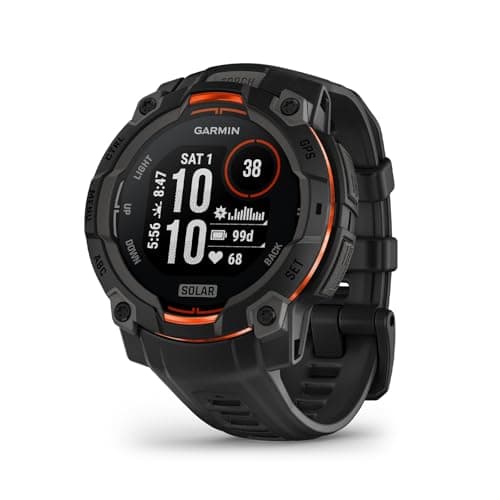
Multi-day trail and backcountry daysGarmin Instinct 3 Solar (45mm)
The watch that wins this site's rubric by publishing an honest battery table and then filling every row of it. No maps, and it still ranks first on trail.
$399.9938% off
Price as of November 21, 2026. Prices move; Amazon's is the one that counts.
#ad · we may earn a commission from this link to Garmin Instinct 3 Solar (45mm)
The short answer
The top pick and the budget pick are the same watch: the Garmin Instinct 3 Solar, which states 24 hours in its multi-band mode, 40 with solar, and a 10 ATM rating for a fraction of an Ultra. If you want the Ultra's breadth rather than its toughness, the Garmin Forerunner 970 is the closest match. For the only brand here with a favorable independent GPS result, the Polar Vantage V3.
Ranked
Quick picks
| # | Device | Best for | Evidence | Score | Price |
|---|---|---|---|---|---|
| 01 | Garmin Instinct 3 Solar (45mm) The watch that wins this site's rubric by publishing an honest battery table and then filling every row of it. No maps, and it still ranks first on trail. | Multi-day trail and backcountry days | Manufacturer specification | 7.7/10 | $249.99Amazon |
| 02 | 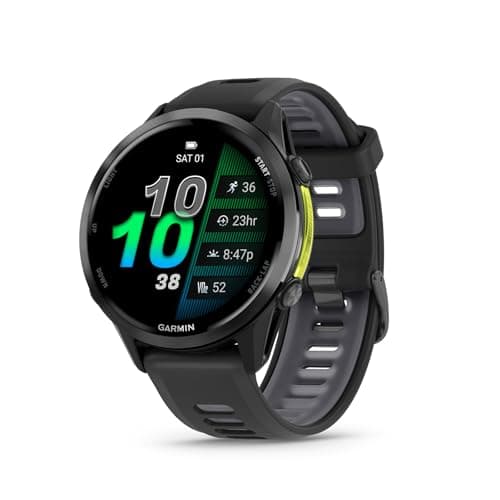 Garmin Forerunner 970 The most complete running watch Garmin sells, and — counter-intuitively — the cheapest of the pair per hour of GPS you get. | Long-course athletes who want maps | Manufacturer specification | 7.7/10 | $649.99Amazon |
| 03 | 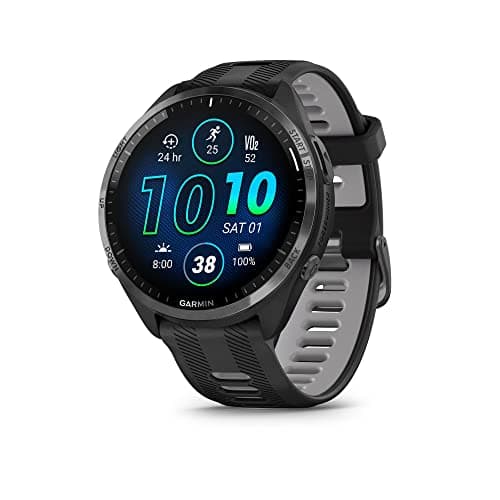 Garmin Forerunner 965 The previous flagship Forerunner, still on sale: maps, 32 GB of music storage and 31 stated GPS hours, usually for less than the 970. | Maps and music without the current-flagship price | Manufacturer specification | 7.5/10 | $444.99Amazon |
| 04 | 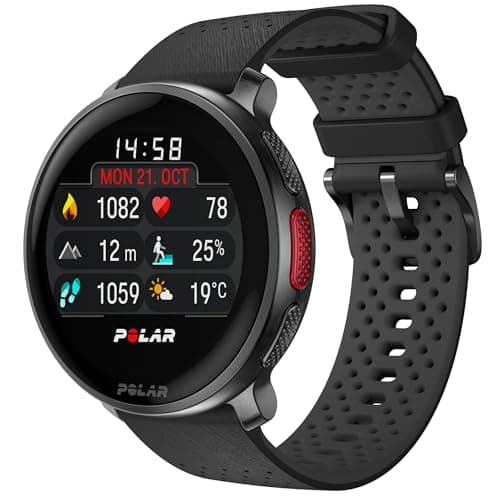 Polar Vantage V3 Polar's flagship, and the most sensor-dense watch here — including an on-wrist ECG. | Lab-style metrics on the wrist | Peer-reviewed validation | 7.5/10 | $586.83Amazon |
| 05 | 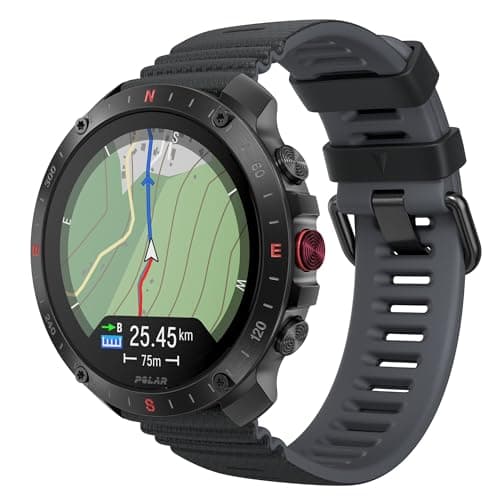 Polar Grit X2 Pro Sapphire, steel, offline maps and 43 stated training hours — and the one Polar watch family that has been measured for nocturnal HRV came last of five. | Trail navigation with a full sensor set | Peer-reviewed validation | 7.4/10 | $878.96Amazon |
#ad· Live prices from the Amazon Product API, as of November 21, 2026. Where we have no verified live price we show none. Scores come from the published rubric at How we rank — the Evidence column shows what each ranking actually rests on, including where the answer is nothing.
What the Apple Watch Ultra is genuinely good at
Apple is the most-measured brand on this site, and that is not a compliment we hand out lightly - it is a consequence of the published record. Two peer-reviewed papers test Apple Watch VO2 max estimates against laboratory measurement (one in PLOS ONE and one in JMIR), and an Apple Watch was one of only three devices worn on inpatient polysomnography nights in Robbins et al. (2024). Against a category where roughly 34 of 310 identified wearables have ever been validated at all, that is a real distinction.
The hardware case is published too. Apple's own announcement for the previous Ultra states a 49 mm titanium case, a display reaching 3000 nits, 36 hours of regular use, up to 72 hours in Low Power Mode and a rating for recreational scuba diving to 40 meters. Three capabilities on that list have no substitute anywhere on this page: satellite messaging, cellular without a phone, and the iPhone ecosystem itself. If any of those three is why you were buying, stop reading - buy the Ultra. Our full read is at the Ultra 3 reviewed on the rubric.
So what is left to answer?
Three things, and each pick below takes one. Endurance: 36 stated hours is short by the standards of this field, and every watch below states more. Price: the Ultra sits at the top of the category and four picks here cost materially less. Positioning evidence: Apple's measured results are about VO2 max and sleep, not about where the watch thinks you are, and this site has never seen a published GNSS band specification for the Ultra 2 at all because Apple retired the tech-specs page.
1. Garmin Instinct 3 Solar - the endurance answer, and the cheapest watch here
Garmin's manual states, for the 45 mm Solar: 28 days in smartwatch mode and unlimited with solar, 40 hours GPS-only (130 with solar), 28 hours all-satellite (50 with solar), 24 hours all-satellite plus multi-band (40 with solar), 36 days of expedition GPS and a 10 ATM water rating. Twenty-four stated hours in the multi-band modeis already most of a day against the Ultra's 36 hours of general use, and the solar figures - Garmin's assumption of all-day wear at 50,000 lux, not a measurement of ours - push it further.
It scores 7.7, the joint-highest watch on this site, and it is under $500 today. What you give up is the screen: this is a monochrome memory-in-pixel display, not an AMOLED, and there are no maps. On an unfamiliar route that absence is the first thing you will miss.
2. Garmin Forerunner 970 - the breadth answer
If what you wanted was one device that does everything, this is the closest match on the roster. Garmin states up to 15 days smartwatch and 26 hours GPS, and the manual adds 5 ATM and up to 32 GB of media storage. Multi-band GNSS with SatIQ, built-in color maps, an ECG app, a speaker and a microphone - that is the Ultra's feature argument answered item by item, at $25.00 per stated GPS hour. What it does not have is cellular, satellite messaging or a 40-meter dive rating.
3. Garmin Forerunner 965 - the same thing for less
Garmin's manual states up to 23 days smartwatch mode, 31 h GPS-only, 22 h Auto Select, 19 h All + Multi-Band, 34 h UltraTrac, 5 ATM and up to 32 GB of media storage. Nineteen stated multi-band hours and full color mapping, for $205 less than the watch above it. It is a previous-generation flagship, which is exactly the mechanism behind the price, and it scores 7.5.
4. Polar Vantage V3 - the evidence answer
Polar is the only brand in this field with a favorable independent positioning result on record: Gilgen-Ammann et al. (2020) measured eight GPS watches and the Polar models were the ones inside the under-5% band. The caveat is permanent and we print it every time: those were older single-frequency watches, none on sale, so this is a brand-level inference rather than a test of the V3. The V3 adds on-wrist ECG, skin temperature and offline maps, and scores 7.5. Researchers have also repeatedly chosen Polar's H10 chest strap as their reference instrument - a revealed preference, not a measurement of Polar's own error.
5. Polar Grit X2 Pro - the rugged answer with a water rating to match
Polar states a 1.39-inch AMOLED at 454 x 454 behind sapphire glass, a stainless steel case, dual-frequency GPS plus GLONASS, Galileo, BeiDou and QZSS, 43 hours in training mode with GPS, 10 days in smartwatch mode, WR100, on-wrist ECG, skin temperature and SpO2 sensors, and offline maps preinstalled for North America and Europe. Forty-three stated training hours is more than the Ultra states in any mode, and WR100 is a serious water rating - though it is not the 40-meter recreational dive rating Apple publishes, and we are not going to blur that distinction.
The honest close
Nothing on this page is an argument that the Apple Watch Ultra is a bad watch. It is one of the few devices in this category with peer-reviewed results attached to it, and it is the only line here that puts cellular and satellite messaging on your wrist. The argument is narrower: if what you actually wanted was multi-day endurance, a published multi-band battery row, a brand with an independent GPS result, or simply a lower price, all four are available and none of them requires an iPhone.
In full
Every pick, and why
Garmin Instinct 3 Solar (45mm)
The watch that wins this site's rubric by publishing an honest battery table and then filling every row of it. No maps, and it still ranks first on trail.
- Battery, smartwatch (stated)
- 28 days, unlimited with solar
- Battery, GPS-only (stated)
- 40 h, up to 130 h with solar
- Battery, multi-band (stated)
- 24 h, up to 40 h with solar
- Battery, expedition (stated)
- 36 days, unlimited with solar
- Water rating
- 10 ATM
What's good
- Garmin publishes five separate GPS endurance figures for it, mode by mode — the most honest battery table of any watch on this site
- 24 stated hours in all-satellite multi-band mode, which is the mode you would actually run for accuracy
- Solar charging turns the smartwatch and expedition figures into 'unlimited' under Garmin's stated light conditions
What isn't
- No built-in maps at all, which on unfamiliar trail is the feature people miss first
- No independent validation of its heart rate or positioning that we could find
Skip this if
Skip this if you navigate unfamiliar routes rather than repeat known ones. Breadcrumb navigation on a trail you have never run is a genuinely worse experience than a map, and no amount of battery compensates for it.
What the evidence says
Manufacturer specificationNo independent validation of this device that we could find. What Garmin does publish is unusually complete: a five-row battery table naming each satellite mode separately, with the solar-assisted figures stated separately from the unassisted ones. We rank the unassisted multi-band row, because that is the number you can rely on in a forest.
Show how this 7.7 was calculated
| Factor | Weight | Score |
|---|---|---|
| EvidenceNo measured validation, but the published specification is more granular and more honest about its own assumptions than any other spec sheet here. | 30% | 5.5 |
| HardwareAll-satellite plus multi-band positioning, a solar charging lens and a 10 ATM case. | 20% | 8.5 |
| Metric coverageFull Garmin training and outdoor feature set, minus maps — which on trail is a real omission. | 20% | 7.5 |
| Endurance40 stated GPS-only hours, 24 in multi-band, 28 smartwatch days and 36 expedition days, before solar is counted at all. | 15% | 10.0 |
| Cost per capabilityFlagship endurance at roughly a third of flagship money. | 15% | 9.0 |
$399.9938% off
Price as of November 21, 2026. Prices move; Amazon's is the one that counts.
#ad · we may earn a commission from this link to Garmin Instinct 3 Solar (45mm)
Garmin Forerunner 970
The most complete running watch Garmin sells, and — counter-intuitively — the cheapest of the pair per hour of GPS you get.
- Case
- 47mm, titanium bezel, AMOLED
- Satellite
- Multi-band GNSS with SatIQ
- Battery (stated)
- 15 days smartwatch / 26 h GPS
- Maps
- Built-in, full color
- Extras
- ECG app, speaker and microphone
What's good
- Multi-band GNSS with SatIQ — the current top tier of consumer positioning hardware
- 26 stated GPS hours is enough for an ironman-distance day with a wide margin
- Built-in maps, which the 570 does not have at any price
What isn't
- The wrist optical sensor is the same class of hardware as the 570's — the premium buys features, not a better heart-rate signal
- 47mm only; there is no smaller case in this model
Skip this if
Skip this if you never race longer than a marathon and never navigate. Maps and titanium are the entire difference, and neither changes a single number the watch records.
What the evidence says
Manufacturer specificationNo independent validation study of the Forerunner 970's optical heart rate has been published that we could find. The specification figures are Garmin's own.
Show how this 7.7 was calculated
| Factor | Weight | Score |
|---|---|---|
| EvidenceSpecs are published and detailed, but no peer-reviewed or independent measured validation of this specific model exists yet. | 30% | 5.5 |
| HardwareMulti-band GNSS with SatIQ and Garmin's current-generation optical sensor — the top hardware tier available. | 20% | 9.5 |
| Metric coverageRunning dynamics, ECG, training load, maps, and a documented export path off the watch. | 20% | 9.5 |
| EnduranceGarmin states 26 hours in GPS mode, 15 days smartwatch. | 15% | 7.5 |
| Cost per capabilityHighest sticker in the range, but the strongest dollars-per-GPS-hour of the two Forerunners — see the arithmetic on the comparison page. | 15% | 7.5 |
$749.9913% off
Price as of November 21, 2026. Prices move; Amazon's is the one that counts.
#ad · we may earn a commission from this link to Garmin Forerunner 970
Garmin Forerunner 965
The previous flagship Forerunner, still on sale: maps, 32 GB of music storage and 31 stated GPS hours, usually for less than the 970.
- Case
- 47mm, titanium bezel, AMOLED
- Satellite
- All + Multi-Band GPS
- Battery (stated)
- 23 days smartwatch / 31 h GPS-only / 19 h all + multi-band
- Maps
- Built-in, full color
- Storage
- Up to 32 GB media, 5 ATM
What's good
- Built-in maps and 32 GB of music storage — the two specifications that usually force the jump to a flagship
- 31 stated GPS-only hours and 23 smartwatch days, both longer than the current mid-range Forerunner 570
- A generation old, which in this category mostly means cheaper rather than worse
What isn't
- No ECG app, no speaker or microphone, and none of the 970's newer running-economy metrics
- Its stated multi-band figure is 19 hours — the mode you would actually run for accuracy costs it a third of the headline number
Skip this if
Skip this if you want the newest sensor generation or the ECG app. This is the previous flagship, and the honest reason to buy it is price, not capability.
What the evidence says
Manufacturer specificationPublished specifications only; no independent validation of this model that we could find. Its sibling the Forerunner 265 WAS measured in the 2025 lactate-threshold study — same platform, same estimation models, different watch — and that result was poor. We do not transfer the finding onto this watch, and we do not pretend it is unrelated either.
Show how this 7.5 was calculated
| Factor | Weight | Score |
|---|---|---|
| EvidenceDetailed published specs, no measured validation of this model. A sibling watch on the same platform was measured and did badly on threshold estimates. | 30% | 5.5 |
| HardwareAll + Multi-Band GPS behind a 47mm AMOLED with a titanium bezel. | 20% | 9.0 |
| Metric coverageMaps, 32 GB of music storage, the full Garmin training platform and a documented export path. | 20% | 9.5 |
| EnduranceGarmin states 31 hours GPS-only, 19 hours all + multi-band, 23 days smartwatch. | 15% | 8.0 |
| Cost per capabilityFlagship-tier sticker for a previous-generation watch; the value depends entirely on the discount on the day. | 15% | 6.5 |
$599.9926% off
Price as of November 21, 2026. Prices move; Amazon's is the one that counts.
#ad · we may earn a commission from this link to Garmin Forerunner 965
Polar Vantage V3
Polar's flagship, and the most sensor-dense watch here — including an on-wrist ECG.
- Display
- AMOLED
- Satellite
- Dual-frequency GNSS
- Extras
- On-wrist ECG, skin temperature, offline maps
What's good
- The widest raw sensor set of any watch in this roundup
- Inherits the brand-level positioning result from the JMIR study
What isn't
- Priced against the Forerunner 970 without matching its ecosystem
- Sensor breadth is not the same thing as validated accuracy, and Polar publishes no per-model validation either
Skip this if
Skip this if you will not actually use the extra sensors. More measurements you ignore is not more value.
What the evidence says
Peer-reviewed validationSame dated, brand-level positioning evidence as the Vantage M3: Gilgen-Ammann et al. (2020) found only Polar's receivers under 5% error, testing the Vantage M, Vantage V and V800 — not the V3.
Show how this 7.5 was calculated
| Factor | Weight | Score |
|---|---|---|
| EvidenceFavorable but dated and brand-level peer-reviewed positioning evidence; no validation of this specific model. | 30% | 6.5 |
| HardwareDual-frequency GNSS plus the densest sensor package here, including wrist ECG. | 20% | 9.0 |
| Metric coverageVery wide metric coverage with a strong recovery platform. | 20% | 9.0 |
| EnduranceGood stated endurance for a sensor-heavy AMOLED watch. | 15% | 7.5 |
| Cost per capabilityFlagship pricing without a flagship ecosystem. | 15% | 5.5 |
$679.3314% off
Price as of November 21, 2026. Prices move; Amazon's is the one that counts.
#ad · we may earn a commission from this link to Polar Vantage V3
Polar Grit X2 Pro
Sapphire, steel, offline maps and 43 stated training hours — and the one Polar watch family that has been measured for nocturnal HRV came last of five.
- Display
- 1.39" AMOLED, 454 × 454, sapphire glass
- Case
- Stainless steel
- Satellite
- Dual-frequency GPS, plus GLONASS, Galileo, BeiDou, QZSS
- Battery (stated)
- 10 days smartwatch / 43 h training with GPS
- Extras
- On-wrist ECG, skin temperature, SpO2, offline maps
What's good
- 43 stated hours in training mode with GPS, which is flagship endurance in an AMOLED watch
- Offline maps preinstalled for North America and Europe, rather than downloaded per region
- Sapphire over stainless steel is the most durable material pairing in this roundup
What isn't
- The nocturnal HRV validation of its predecessor, the Grit X Pro, was the weakest of the five devices tested — MAPE 16.3% against an ECG reference
- Priced against the fēnix tier without Garmin's third-party ecosystem
Skip this if
Skip this if you bought it for the recovery score. The only published nocturnal HRV measurement of a Polar watch is of this watch's predecessor, and it finished last of five devices against an ECG reference. The chest strap from the same company is the reference standard; the watch is not.
What the evidence says
Peer-reviewed validationTwo peer-reviewed results touch this device, and they point opposite ways. Gilgen-Ammann et al. (2020) found only Polar's receivers stayed under 5% distance error across eight watches — dated, brand-level, and about earlier models. Dial et al. (2025) measured the Polar Grit X Pro, this watch's direct predecessor, over 206 nights against an ECG reference and recorded the weakest HRV agreement of five devices (CCC 0.82, MAPE 16.32 ± 24.39%) and the weakest resting heart rate (CCC 0.86). Neither study tested the X2 Pro itself.
Show how this 7.4 was calculated
| Factor | Weight | Score |
|---|---|---|
| EvidencePolar carries the only favorable peer-reviewed positioning result in the category and the weakest measured HRV agreement in the newest study. Both are about predecessors; averaging them honestly lands mid-pack. | 30% | 6.0 |
| HardwareDual-frequency GPS, sapphire over steel, plus ECG, skin temperature and SpO2 sensors. | 20% | 9.0 |
| Metric coverageOffline maps preinstalled, a very wide sensor set and Polar's recovery platform. | 20% | 9.0 |
| Endurance43 stated training hours with GPS and 10 smartwatch days behind an AMOLED screen. | 15% | 8.5 |
| Cost per capabilityFlagship pricing against a smaller ecosystem, and the HRV evidence does not support the premium. | 15% | 5.0 |
$999.9912% off
Price as of November 21, 2026. Prices move; Amazon's is the one that counts.
#ad · we may earn a commission from this link to Polar Grit X2 Pro
How this ranking was built
Every score on this page comes from one published rubric, applied identically to every device on the site, with the weights written down and the inputs shown. We have not worn any of these devices and we never say we have. Read the method and check us.
Show your working
Sources
Every one of these was read in full before it was cited. Where we could not access a paper, we do not quote its numbers.
- [1]Peer-reviewed validation2025Lambe, O’Grady, Baldwin & Doherty, “Investigating the accuracy of Apple Watch VO2 max measurements: A validation study”, PLOS ONE 20(5):e0323741
DOI 10.1371/journal.pone.0323741. 28 analyzed participants across Apple Watch Series 5-9, SE 2 and Ultra 2 on watchOS 10+, against indirect calorimetry (COSMED Quark CPET, modified Åstrand treadmill protocol). Authors’ stated limits: the sample skewed strongly toward high cardiorespiratory fitness, watch estimates were generated uncontrolled, and only one estimate per participant was collected.
- [2]Peer-reviewed validation2024Caserman, Yum, Göbel, Reif & Matura, “Assessing the Accuracy of Smartwatch-Based Estimation of Maximum Oxygen Uptake Using the Apple Watch Series 7: Validation Study”, JMIR Biomedical Engineering 9:e59459
DOI 10.2196/59459. n = 19 (12 male, 7 female, mean age 28.4), Apple Watch Series 7 against a VO2 Master portable gas analyzer on a graded cycle ergometer test. Authors’ stated limits: the sample was 19 rather than the 30 planned, testing was submaximal, no blood lactate was taken, and the watch figure came from a single outdoor session where Apple’s own validation used an average of 441 days of data.
- [3]Peer-reviewed validation2024Robbins et al., “Accuracy of Three Commercial Wearable Devices for Sleep Tracking in Healthy Adults”, Sensors 24(20):6532
Brigham and Women’s Hospital. n = 35 healthy adults, single-night inpatient polysomnography, testing Oura Ring Gen3, Fitbit Sense 2 and Apple Watch Series 8. Authors’ stated limits: one night, lab conditions, healthy adults without insomnia, comparison only during scheduled sleep, and device failures on 6 Apple Watches and 2 Fitbits.
- [4]Manufacturer specification2023Apple — “Apple unveils Apple Watch Ultra 2”, published specifications
Manufacturer-stated, read 2026-08-18: 49 mm titanium case, a display Apple states reaches 3000 nits, 36-hour battery life in regular use and up to 72 hours in Low Power Mode, and a rating for recreational scuba diving to 40 meters. Apple has retired the Ultra 2 from its current line-up and its tech-specs page no longer renders for our fetcher, so this launch announcement is the published figure set we could actually read — which is why no GNSS band specification for this watch appears anywhere on this site.
- [5]Manufacturer specification2026Garmin — Instinct 3 Solar owner’s manual, battery life information
Manufacturer-stated for the 45 mm Solar: 28 days smartwatch (unlimited with solar), 40 hours GPS-only (130 hours with solar), 28 hours all-satellite (50 with solar), 24 hours all-satellite plus multi-band (40 with solar), 36 days expedition GPS (unlimited with solar), 65 days battery-saver. Water rating 10 ATM per the same manual’s specification page. Solar figures assume all-day wear in 50,000 lux conditions, which is Garmin’s assumption and not a measurement of ours.
- [6]Manufacturer specification2026Garmin — Forerunner 970 published specifications
Manufacturer-stated battery: up to 15 days smartwatch mode, up to 26 hours GPS mode.
- [7]Manufacturer specification2026Garmin — Forerunner 970 owner’s manual, specifications
Manufacturer-stated, read 2026-08-18: rechargeable lithium-ion battery, 5 ATM (swim) water rating, and up to 32 GB of media storage — the specification that decides how much music the watch can actually hold.
- [8]Manufacturer specification2026Garmin — Forerunner 965 owner’s manual, battery life information and specifications
Manufacturer-stated, read 2026-08-18: up to 23 days smartwatch mode, 31 h GPS-only, 22 h Auto Select GPS, 19 h All + Multi-Band GPS, 34 h UltraTrac, and 10.5 / 9.5 / 8.5 h for those three GPS modes with music playback. The manual’s specification page states 5 ATM and up to 32 GB of media storage.
- [9]Peer-reviewed validation2020Gilgen-Ammann, Schweizer & Wyss, “Accuracy of Distance Recordings in Eight Positioning-Enabled Sport Watches: Instrument Validation Study”, JMIR mHealth and uHealth
DOI 10.2196/17118. Eight watches (Apple Watch Series 4, Coros Apex 46mm, Garmin Fenix 5X Plus, Garmin Forerunner 935, Polar Vantage M, Polar Vantage V, Polar V800, Suunto 9 Baro) measured against a trundle wheel accurate to 1 cm, across urban, forest and 400 m track conditions. IMPORTANT: this predates the dual-frequency receivers now standard, so it describes brand engineering history, not any watch currently sold.
- [10]Manufacturer specification2026Polar — Grit X2 Pro published specifications
Manufacturer-stated: 1.39" AMOLED at 454 × 454 behind sapphire glass, stainless steel case, dual-frequency GPS plus GLONASS, Galileo, BeiDou and QZSS, 43 hours in training mode with GPS, 10 days in smartwatch mode, WR100, on-wrist ECG, skin temperature and SpO2 sensors, offline maps preinstalled for North America and Europe.
- [11]Peer-reviewed validation2024Doherty, Baldwin, Keogh, Caulfield & Argent, “Keeping Pace with Wearables: A Living Umbrella Review of Systematic Reviews Evaluating the Accuracy of Consumer Wearable Technologies in Health Measurement”, Sports Medicine
DOI 10.1007/s40279-024-02077-2. An umbrella review: 24 systematic reviews covering 249 unique primary validation studies and 430,465 participants (43% female), across 11 biometric outcomes, with roughly 34 of 310 identified consumer wearables ever validated. Reported accuracy by metric: heart rate approximately ±3% (mean bias −3.39 bpm); step count mean absolute percentage error from −9% to 12%; energy expenditure mean bias −3 kcal per minute with error ranging from −21.27% to 14.76%. Authors’ stated limits: a temporal lag between device release and published research, the intrinsic bias of a tertiary synthesis, and heterogeneity of protocols, devices, criterion measures and statistics severe enough that the authors did not pool a meta-analysis.
Read next
Related
- Alternatives to the Apple Watch
The brand-level version, including rings and non-watch options.
- Garmin fenix 8 vs Apple Watch Ultra 3
The head-to-head, with both battery tables side by side.
- Best running watches under $1,000
The bracket most of these picks sit in.
- Is the Apple Watch accurate?
Every published Apple result on this site, in one place.