GPS and multisport
Alternatives to the Garmin Venu 4
Garmin's own manual gives the Venu 4 a Forerunner's training stack and the first multi-band battery row the Venu line has ever published. Those are the two things an alternative has to answer, and the answers are cheaper than the watch.
We earn a commission when you buy through our Amazon links, at no extra cost to you. It never decides a ranking — the rubric that does is published in full, so you can check us rather than take our word for it. How this works.
Top pick
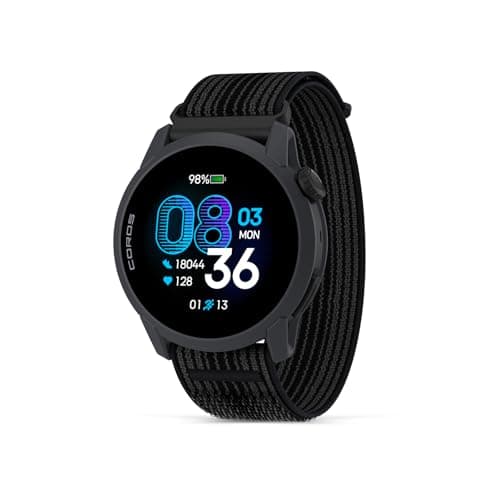
Long days on a budgetCOROS PACE 4
41 stated GPS hours in a 32-gram watch, for a third of the Forerunner 970's money. The endurance-per-dollar winner by a distance.
Price as of November 21, 2026. Prices move; Amazon's is the one that counts.
#ad · we may earn a commission from this link to COROS PACE 4
The short answer
If training data is why you were buying a Venu 4, the COROS PACE 4 states 41 GPS hours and publishes a dual-frequency mode for well under half the money. If the health dashboard was the draw, the Garmin Venu 3 states more endurance than the Venu 4 in every mode the two manuals share. The budget pick is the Fitbit Charge 6, the only device here with a published sleep measurement behind it.
Ranked
Quick picks
| # | Device | Best for | Evidence | Score | Price |
|---|---|---|---|---|---|
| 01 | COROS PACE 4 41 stated GPS hours in a 32-gram watch, for a third of the Forerunner 970's money. The endurance-per-dollar winner by a distance. | Long days on a budget | Independent measured test | 7.5/10 | $249.00Amazon |
| 02 | 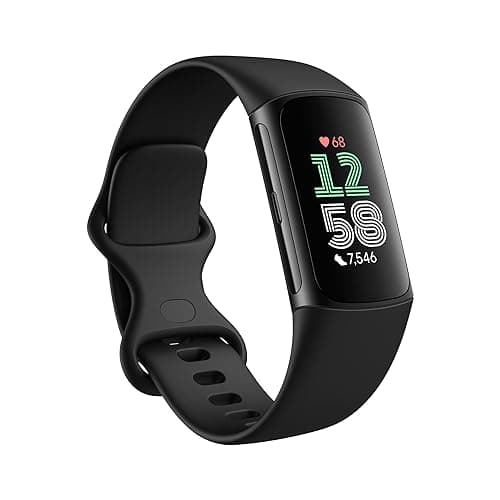 Fitbit Charge 6 Cheap, measured, and the weakest of the three devices in the PSG study. We would rather tell you that than not rank it. | Lowest-cost tracker with published data behind it | Peer-reviewed validation | 7.2/10 | Check price → |
| 03 | 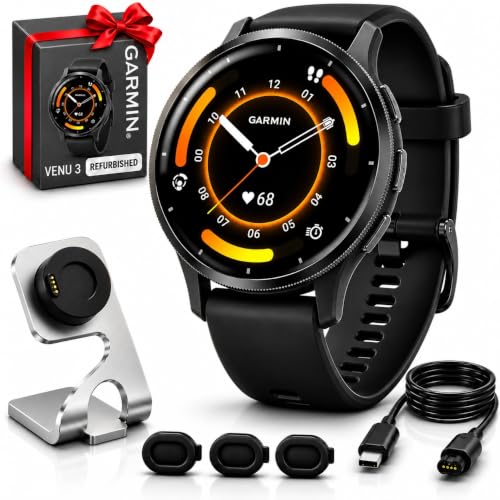 Garmin Venu 3 The sleep-and-recovery watch for people who already trust Garmin's training data. | One device for training and sleep | Manufacturer specification | 7.2/10 | $269.99Amazon |
| 04 | 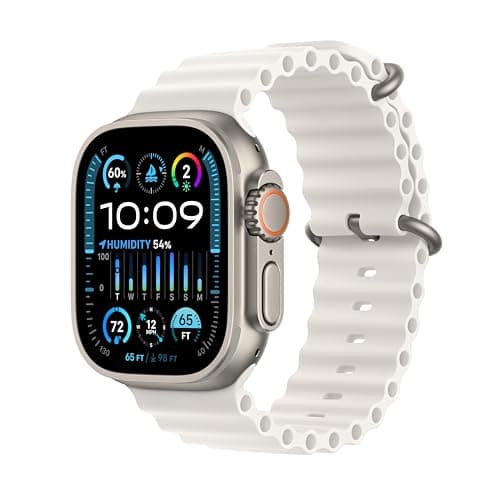 Apple Watch Ultra 2 The previous Ultra, still widely stocked and much cheaper. The same sleep-staging weakness in the published record, for roughly half the money. | iPhone owners who want an Ultra without the current price | Peer-reviewed validation | 6.8/10 | $384.99Amazon |
| 05 | 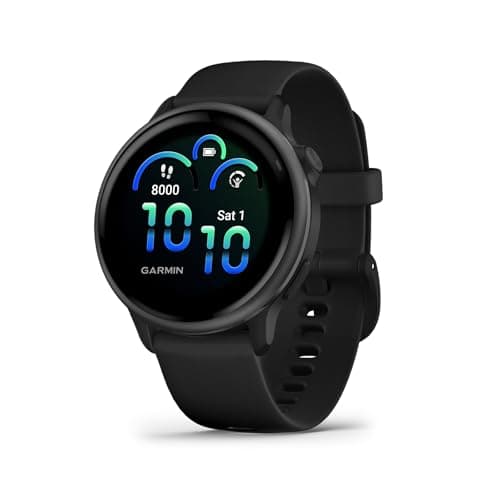 Garmin vívoactive 6 The cheapest Garmin that still pairs a chest strap and still estimates VO2 max — and the published battery table shows you why it outlasts a Forerunner. | A $300 Garmin for someone who already owns the strap | Manufacturer specification | 6.6/10 | $249.00Amazon |
| 06 | 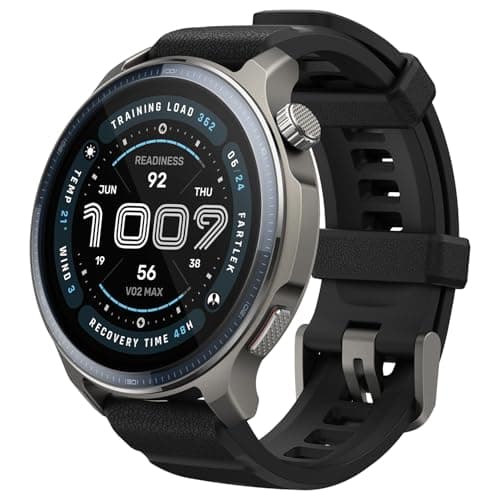 Amazfit Balance 2 The most published capability per dollar on this site, and the least checkable. Dual-band GNSS, offline maps and sapphire glass, from a brand no validation study we could find has ever included. | Spec-sheet value, if unverified data is a trade you accept | Manufacturer claim only | 6.5/10 | $199.99Amazon |
#ad· Live prices from the Amazon Product API, as of November 21, 2026. Where we have no verified live price we show none. Scores come from the published rubric at How we rank — the Evidence column shows what each ranking actually rests on, including where the answer is nothing.
What the Venu 4 is genuinely good at
Start with what you would be giving up, because an alternatives page that skips that step is just a list. The Venu 4 is marketed as a lifestyle watch and specified as something closer to a Forerunner. The Training section of Garmin's own manual lists Performance Measurements, Training Status, Acute Load, Training Readiness, Recovery Time, PacePro Training, interval workouts, a critical swim speed test and a race calendar, with VO2 max, running dynamics and FTP ratings in the appendix. That is the analysis layer Garmin's cheaper watches do not get, and it is the main reason this watch is filed with the running watches on this site rather than with the sleep trackers.
The battery table is the other genuine achievement. Garmin's manual states for the 45 mm model: up to 12 days in smartwatch mode, 25 days in battery saver, 20 hours GPS-only, 19 hours all-satellite, 17 hours all-satellite plus multi-band and 9 hours with music. That multi-band row is the headline - the Venu line never published one before, because the hardware did not have the mode. At $26.41 per stated multi-band hour it is a real figure rather than a marketing one. Add a built-in speaker and microphone, an LED flashlight, the Garmin ECG App, and documented ANT+ and Bluetooth sensor pairing that names the HRM 200, HRM 600 and HRM-Fit by model. Our full read is at the Venu 4 reviewed on the rubric.
And Garmin's own footnotes, which are part of the picture
Three caveats, all of them Garmin's rather than ours. The launch release states that the headline Health status feature is "currently in beta", that Pulse Ox is "not available in all countries", and that the ECG app needs the latest software and is limited to select regions and to ages 22 and over. Meanwhile no independent validation of this watch exists that we could find - not of its optical heart rate, not of its sleep staging, not of its positioning. Garmin was absent from the main inpatient polysomnography comparison entirely, and in the one study that wore several brands at once a Garmin device finished last of five on nocturnal HRV agreement.
That is the gap the picks below exploit. Nothing here is an argument that the Venu 4 is a bad watch - it scores 7.1 under our rubric, which is a good score. It is an argument that the specific thing you wanted from it is available for less, and the honest way to use this page is to name that thing first.
Name what you actually wanted, then read one section
- Training analysis. Training status, readiness, load - the Forerunner layer. Two picks below have an equivalent; three do not, and we say which.
- Positioning accuracy. The multi-band row. Only two picks here publish a dual-frequency or multi-band mode at all.
- The health and sleep dashboard. This is where the published evidence matters most, and where the cheapest pick on the page is also the only one with a measurement attached.
- Price.Every pick on this page costs less than the Venu 4 at today's live prices, some of them by a factor.
For training data per dollar: the COROS PACE 4
The COROS PACE 4is the highest-scoring pick here and the clearest answer if the Venu 4's training stack was the draw. COROS states 41 GPS hours in All-Systems mode, 19 days of daily training and sleep tracking, a 32-gram weight with the nylon band, an 11.8 mm case, both All-Systems and Dual-Frequency satellite modes and a 1.2-inch AMOLED. Forty-one hours is more than double the Venu 4's stated multi-band figure, from a 32-gram watch against Garmin's stated 38 grams, and the gap in money is $200. At $6.07 per stated GPS hour it is the strongest cost-per-endurance figure on this site.
It is also the only pick on this page with an independent wrist-heart-rate test of its own product line on record here, and the test is not flattering: the5krunner's ten-mile comparison of the previous-generation PACE 3 found wrist heart rate diverged during and after rapid intensity change, with the author cautioning that the dataset was limited. COROS states the PACE 4 has a redesigned sensor and no independent test of that sensor has been published that we could find. The other cons are plainer: COROS publishes no battery figure for Dual-Frequency modeon this watch, so the accurate mode is uncosted; there are no maps; there is no speaker, microphone, flashlight or ECG app; and the health and sleep dashboard is narrower than Garmin's with a much smaller third-party ecosystem. Skip it if the everyday smartwatch side was half the appeal.
The budget pick: the Fitbit Charge 6, and the only sleep measurement on this page
If what you wanted from a Venu 4 was the sleep and health dashboard rather than the training stack, the Fitbit Charge 6 is the cheapest honest answer on this roster and the only pick here with a published sleep result behind the platform. In Robbins et al. (2024), 35 healthy adults slept a single inpatient night with polysomnography while wearing three consumer devices - one of only a handful of head-to-head PSG comparisons that exist at all, against a category where roughly 34 of 310 identified wearables have ever been validated. Fitbit was in that study. Garmin was not.
Now the unflattering half, in the same breath, because it is the same study. The Fitbit device tested came third of three: 70.9% four-stage agreement, 61.7% deep-sleep sensitivity, light sleep overestimated by 18 minutes and deep sleep underestimated by 15. And the device measured was the Sense 2, not the Charge 6 - Fitbit shares its staging algorithm across the line, but that is still evidence about a sibling. The other cons are structural: it is a band, not a watch, with no GPS training stack, no VO2 max, up to 7 stated days of battery, and some features behind a Fitbit Premium subscription. It is the right pick only if the dashboard was the point. The wider Fitbit-replacement field is at alternatives to Fitbit.
The closest substitute: the Garmin Venu 3, which states more hours
The Garmin Venu 3 is the previous generation, still sold, and it is the most surprising row on this page. Laid side by side, Garmin's Venu 3 manual states up to 14 days in smartwatch mode, 26 days in battery saver, 26 hours GPS-only and 20 hours in All Systems GPS mode - more than the Venu 4 in every mode the two tables share. It also states a 5 ATM swim rating and up to 11 hours of All Systems GPS with music. The price gap is $179.
The honest con is the one row that is missing. There is no all-satellite-plus-multi-band line anywhere in the Venu 3 table, because the watch has no multi-band mode - the Venu 4 manual is the first in the line to publish one. So the older watch wins on hours and loses on the receiver, which is exactly the trade this site exists to make legible rather than to resolve for you. Garmin's sleep staging also has no independent polysomnography validation that we could find, and a wrist is a worse optical site than a finger. The generation-to-generation detail is at Venu 3 vs Venu 4.
If you are on an iPhone: the Apple Watch Ultra 2
For a reader whose real question is "Garmin or Apple", the Apple Watch Ultra 2 is the pick with published figures we can actually quote and a live price today. Apple's launch announcement states a 49 mm titanium case, a display reaching 3000 nits, 36 hours of battery in regular use and up to 72 hours in Low Power Mode, and a rating for recreational scuba diving to 40 meters. Apple is also the most-measured brand on this site: Apple Watches appear in three peer-reviewed validations we rely on, including the inpatient sleep comparison above, where the Apple device beat the Fitbit on four-stage agreement.
The cons are specific and you should weigh them properly. Apple has retired the Ultra 2 from its current line-upand its technical specifications page no longer renders for our fetcher, which is why no GNSS band specification for this watch appears anywhere on this site and why the figures above come from a 2023 launch announcement rather than a live spec sheet. Thirty-six hours of regular use is roughly a third of the Venu 4's stated 12 smartwatch days. It is also a rugged outdoor watch rather than a slim lifestyle one, and it does not ship Garmin's training status, acute load or training readiness equivalents. The current-generation Apple field is at alternatives to the Apple Watch.
The cheapest Garmin that still pairs a strap: the vívoactive 6
The Garmin vívoactive 6 is the in-house budget answer and the pick for anyone who already owns a chest strap. Garmin's manual documents ANT+ and Bluetooth sensor pairing and names the HRM 200, HRM 600, HRM-Fit and HRM-Pro series - which means the one upgrade with published evidence behind it works on this watch. The battery table states up to 11 smartwatch days, 21 days in battery saver, 21 hours GPS-only and 17 hours on all satellite systems. It carries its own VO2 max topic, PacePro, running dynamics, HRV status and Body Battery.
Two cons, both read straight off Garmin's own documents. There is no all-systems-plus-multi-band row anywhere in its battery table, which is how you can tell the receiver is single-frequency - so if positioning was the Venu 4 feature you wanted, this is the wrong pick and no software update will fix it. And Garmin's feature list for it names no training status, no acute load and no training readiness: the analysis layer is precisely what the tier above buys. No maps, no ECG app, one case size, and no independent validation of anything it measures.
For published specification per dollar: the Amazfit Balance 2
The Amazfit Balance 2 ranks last here and is on the page because it makes an argument the other picks cannot. Amazfit states a 1.5-inch AMOLED at a peak 2,000 nits behind scratch-resistant sapphire glass, 10 ATM water resistance, dual-band support from six satellite systems, free downloadable offline maps with turn-by-turn directions, a 658 mAh cell at up to 21 days of typical use and up to 33 hours in Accuracy GPS Mode, 180+ sport modes, Training Load and Recovery Status, and "no subscription" access to workout and recovery data. Sapphire, dual-band, 10 ATM and offline maps at this price is a specification sheet no Garmin on this page comes close to.
And then the reason it is last, which is the whole point of ranking on evidence. Asked how accurate its GPS is, Amazfit's own FAQ answers with the phrase "industry-leading GPS accuracy" - no methodology, no reference instrument, no measured figure, no named test. Under our evidence hierarchy that is a manufacturer claim with nothing attached, which costs it 30% of the weight. Three further absences, recorded as absences: the product page does not name VO2 max, does not state whether external Bluetooth or ANT+ sensors such as a chest strap can be paired, and does not describe export to any third-party service - the only companion app it names is Zepp. If your training history matters to you, check that last one before you buy. The full argument is at Garmin vs Amazfit.
What is deliberately not on this page
The Forerunner 570 is not here, even though it lists at the same price as the Venu 4 and shares most of its platform, because it is a sibling rather than an alternative: choosing between them is a different question and it has its own page at Forerunner 570 vs Venu 4. The same logic keeps the fēnix 8 off the list - it is an upgrade, not a substitute, and its own replacements are at alternatives to the fēnix 8.
No pick here has maps of the Garmin kind, and neither does the Venu 4. Two picks publish a navigation claim of some sort - the Balance 2 states offline maps with turn-by-turn directions - but if mapping is what you are shopping for, this is the wrong page entirely and the cheapest honest options are in hiking watches under $500.
Nothing here has validated sleep staging, including the Fitbit, whose platform was measured and came third of three. If sleep is the actual reason you are shopping, the form factor with published papers behind it is a ring, and that field is ranked separately at the most accurate sleep trackers.
The upgrade that actually changes the data
Whichever watch you land on, one thing is worth knowing: the number most Venu 4 buyers care about is heart rate, and no watch on this page improves it much. The 2025 placement study used a Polar H10 chest strap as its reference instrument and measured three identical Whoop units at wrist, forearm and upper arm: position beat device, and the wrist was the weakest site, with limits of agreement of plus or minus 10-19 bpm at warm-up. The 2024 living umbrella review put the category at approximately plus or minus 3% for heart rate with a mean bias of -3.39 bpm, across 249 primary validation studies and 430,465 participants.
Two of the picks above - the Venu 3 and the vívoactive 6 - are documented by Garmin as pairing the HRM 200 and HRM 600 over ANT+ or Bluetooth, and so is the Venu 4 itself. That is the upgrade with a peer-reviewed reason behind it, and it costs a fraction of the gap between any two watches on this page. The strap field is at best chest strap heart rate monitors.
In full
Every pick, and why
COROS PACE 4
41 stated GPS hours in a 32-gram watch, for a third of the Forerunner 970's money. The endurance-per-dollar winner by a distance.
- Display
- 1.2" AMOLED touchscreen
- Weight
- 32 g with nylon band, 40 g with silicone
- Satellite
- All-Systems and Dual-Frequency modes
- Battery (stated)
- 19 days daily use / 41 h GPS (All-Systems)
- Thickness
- 11.8 mm
What's good
- 41 manufacturer-stated GPS hours — more than the Forerunner 970 and the 570 combined
- 32 g is light enough that you stop noticing it, which matters more over 100 miles than any feature
- Dual-frequency positioning at an entry-level price
What isn't
- COROS wrist heart rate is the one area where an independent test has published a specific problem — see the evidence note
- Smaller third-party app ecosystem than Garmin's
Skip this if
Skip this if you train by heart rate off the wrist and will not wear a strap. The one independent test we found flagged COROS wrist HR during exactly the intervals you would be buying it for.
What the evidence says
Independent measured testThe5krunner's measured comparison found the previous-generation PACE 3's wrist heart rate diverged during and after rapid intensity changes. That test was of the PACE 3, not the PACE 4, and the author cautions the dataset was limited. COROS states the PACE 4 has a redesigned sensor; no independent test of the new sensor has been published that we could find.
Show how this 7.5 was calculated
| Factor | Weight | Score |
|---|---|---|
| EvidenceThe only independent measured evidence in the range is a limited-dataset test of the PREVIOUS model, and it was unfavorable. The redesigned sensor is unvalidated. | 30% | 4.5 |
| HardwareDual-frequency GNSS and a redesigned optical sensor, per the COROS spec page. | 20% | 8.0 |
| Metric coverageStrong training metrics; a narrower ecosystem than Garmin for third-party integrations. | 20% | 7.5 |
| Endurance41 stated GPS hours in All-Systems mode is the best in this roundup by a wide margin. | 15% | 10.0 |
| Cost per capabilityComfortably the strongest dollars-per-GPS-hour figure on the site. | 15% | 10.0 |
Price as of November 21, 2026. Prices move; Amazon's is the one that counts.
#ad · we may earn a commission from this link to COROS PACE 4
Fitbit Charge 6
Cheap, measured, and the weakest of the three devices in the PSG study. We would rather tell you that than not rank it.
- Form
- Wrist band
- Battery (stated)
- Up to 7 days
- Extras
- Heart rate on connected gym equipment
What's good
- One of only three devices with a published head-to-head PSG result at all
- Substantially cheaper than every ring here
What isn't
- Robbins et al. (2024): lowest four-stage agreement of the three tested, at 70.9%, and deep-sleep sensitivity of 61.7%
- Overestimated light sleep by 18 minutes and underestimated deep sleep by 15
Skip this if
Skip this if the sleep stages are the point. It was measured, and it came third of three.
What the evidence says
Peer-reviewed validationRobbins et al., Sensors 24(20):6532 (2024) tested the Fitbit Sense 2 — not the Charge 6 — against polysomnography: 70.9% four-stage agreement (κ = 0.55) and 61.7% deep-sleep sensitivity, the weakest of the three devices. Fitbit's staging algorithm is shared across the line, but this remains evidence about a different device.
Show how this 7.2 was calculated
| Factor | Weight | Score |
|---|---|---|
| EvidenceReal peer-reviewed evidence exists for the platform — it is simply unflattering, and it tested a sibling device. | 30% | 6.0 |
| HardwareWrist-worn optical sensing, the weakest of the three placements in the placement study. | 20% | 7.0 |
| Metric coverageBroad everyday metrics; some features sit behind Fitbit Premium. | 20% | 7.5 |
| EnduranceUp to 7 stated days. | 15% | 7.5 |
| Cost per capabilityBy far the cheapest device in this roundup. | 15% | 9.0 |
No buyable offer at the last price check (November 21, 2026). We show nothing rather than a stale number.
#ad · we may earn a commission from this link to Fitbit Charge 6
Garmin Venu 3
The sleep-and-recovery watch for people who already trust Garmin's training data.
- Display
- 45mm, AMOLED
- Battery (stated)
- Up to 14 days
- Extras
- Sleep coach, nap detection, wheelchair mode
What's good
- 14 stated days means it survives the nights as well as the days — the practical failure of sleep tracking on a sports watch is that it is on the charger at bedtime
- One device rather than a watch plus a ring
What isn't
- Garmin's sleep staging has no independent PSG validation we could find
- A wrist is a worse optical site than a finger
Skip this if
Skip this if sleep staging is the reason you are buying. The published record has nothing to say about Garmin's, and the device that does have a paper is a ring.
What the evidence says
Manufacturer specificationNo independent PSG validation of Garmin's sleep staging that we could find. Notably, Garmin was absent from the Robbins et al. (2024) comparison entirely, so there is no published head-to-head against Oura, Fitbit or Apple.
Show how this 7.2 was calculated
| Factor | Weight | Score |
|---|---|---|
| EvidencePublished specs only; conspicuously absent from the major PSG comparison study. | 30% | 4.5 |
| HardwareCurrent Garmin optical sensor in a wrist-worn AMOLED watch. | 20% | 8.0 |
| Metric coverageSleep, recovery, training and everyday smartwatch functions in one device. | 20% | 9.0 |
| Endurance14 stated days is enough to keep it on the wrist overnight. | 15% | 8.5 |
| Cost per capabilityNo subscription, and it replaces two devices. | 15% | 7.5 |
Price as of November 21, 2026. Prices move; Amazon's is the one that counts.
#ad · we may earn a commission from this link to Garmin Venu 3
Apple Watch Ultra 2
The previous Ultra, still widely stocked and much cheaper. The same sleep-staging weakness in the published record, for roughly half the money.
- Case
- 49mm titanium
- Display
- Apple states up to 3000 nits
- Battery (stated)
- 36 h regular use / 72 h Low Power Mode
- Water
- Recreational scuba to 40 meters
What's good
- 36 stated hours of regular use, which is long for a smartwatch and short for a sports watch
- Materially cheaper than the Ultra 3 while running the same watchOS training features
- Titanium, a 40-meter dive rating and a display Apple states reaches 3000 nits
What isn't
- The published sleep evidence for Apple's platform is the weakest deep-sleep result of the three devices in the Brigham and Women's study
- Apple no longer publishes a tech-specs page for it that we could read, so we will not assert its GNSS band specification
Skip this if
Skip this if you are buying a watch to fix your sleep data or to record 12-hour days. Neither is what an Apple Watch is best at, and the published record says so on the first count.
What the evidence says
Peer-reviewed validationRobbins et al. (2024) tested the Apple Watch Series 8 against polysomnography: 75.0% four-stage agreement with deep-sleep sensitivity of 50.5%, the weakest of the three devices tested. That was the Series 8, not the Ultra 2, and Apple has revised its staging since — but it is the only peer-reviewed sleep measurement of Apple's platform we have, and it is the same platform.
Show how this 6.8 was calculated
| Factor | Weight | Score |
|---|---|---|
| EvidencePeer-reviewed sleep data exists for the platform and it was unfavorable; the tested device was a sibling, not this watch. | 30% | 6.0 |
| HardwareTitanium, a 3000-nit display and a 40-meter dive rating; a generation behind the Ultra 3, with no readable band-level GNSS specification. | 20% | 8.0 |
| Metric coverageVery wide metric coverage inside Apple's ecosystem; export off-platform is more awkward than Garmin's. | 20% | 8.5 |
| Endurance36 stated hours of regular use is short against every dedicated sports watch here. | 15% | 4.0 |
| Cost per capabilityRoughly half the Ultra 3's sticker for the same watchOS feature set — the clearest value case in Apple's line. | 15% | 7.5 |
Price as of November 21, 2026. Prices move; Amazon's is the one that counts.
#ad · we may earn a commission from this link to Apple Watch Ultra 2
Garmin vívoactive 6
The cheapest Garmin that still pairs a chest strap and still estimates VO2 max — and the published battery table shows you why it outlasts a Forerunner.
- Case
- 42mm, aluminum bezel, AMOLED
- Satellite
- GPS only or all systems — no multi-band row published
- Battery (stated)
- 11 days smartwatch / 17 h all satellite systems
- Maps
- None
- Sensors
- Pairs ANT+ / Bluetooth straps, HRM 600 and HRM 200 named
What's good
- Garmin's manual documents ANT+ and Bluetooth strap pairing, so the one real fix for wrist heart rate works on a $300 watch
- Carries its own VO2 max topic in the manual, plus PacePro, running dynamics, HRV status and Body Battery
- States longer endurance than a Forerunner 570 in every satellite mode it publishes — 21 h GPS-only against 18 h
What isn't
- No multi-band row exists anywhere in Garmin's own battery table, which is how you can tell the receiver is single-frequency
- Garmin's feature list names no training status, no acute load and no training readiness — the analysis layer a Forerunner or a Venu 4 gets
- No maps, one case size only, and no independent validation of anything it measures
Skip this if
Skip this if positioning accuracy is the weakness you are upgrading. The long battery here is partly a consequence of hardware that cannot run a multi-band mode, and no amount of software fixes a single-frequency receiver in a city or a canyon.
What the evidence says
Manufacturer specificationNo independent validation of this model exists that we could find — not of its optical heart rate, not of its sleep staging, not of its positioning. Garmin as a brand has at least been measured: two Garmin watches were among the eight tested against a trundle wheel by Gilgen-Ammann et al. (2020), and a Garmin device finished last of five on nocturnal HRV agreement in Dial et al. (2025). Neither study tested this watch, and the 2020 one predates the receiver generation it would need to describe.
Show how this 6.6 was calculated
| Factor | Weight | Score |
|---|---|---|
| EvidenceA detailed owner's manual with a per-mode battery table and documented feature definitions, and no independent measurement of a single number this watch produces. | 30% | 4.5 |
| HardwareGarmin's Elevate wrist sensor, an AMOLED display behind an aluminum bezel, multi-constellation GNSS — and no multi-band mode, which Garmin's own battery table gives away by having no row for one. Pairs ANT+ and Bluetooth sensors, including the HRM 600, which is worth more to heart-rate data than any wrist sensor revision. | 20% | 7.0 |
| Metric coverageVO2 max, PacePro, running dynamics, HRV status, Body Battery, sleep coach, Pulse Ox, stress, 80+ sports apps and a wheelchair mode. Missing: maps, an ECG app, and the training status / acute load / training readiness layer Garmin names on the tier above. | 20% | 7.5 |
| EnduranceGarmin states 11 smartwatch days, 21 days in battery saver, 21 hours GPS-only and 17 hours on all satellite systems. Longer than a Forerunner 570 in every mode both watches publish. | 15% | 8.0 |
| Cost per capabilityA $299.99 list price for a Garmin that estimates VO2 max and pairs a strap is a genuinely good number. It is not a great one, because an Amazfit Balance 2 publishes dual-band GNSS, offline maps, sapphire glass and 10 ATM at the same list price. | 15% | 7.5 |
$299.9917% off
Price as of November 21, 2026. Prices move; Amazon's is the one that counts.
#ad · we may earn a commission from this link to Garmin vívoactive 6
Amazfit Balance 2
The most published capability per dollar on this site, and the least checkable. Dual-band GNSS, offline maps and sapphire glass, from a brand no validation study we could find has ever included.
- Case
- 47.4mm x 12.3mm, aluminum frame, sapphire lens
- Satellite
- Dual-band, six satellite systems (manufacturer-stated)
- Battery (stated)
- 21 days typical / 33 h Accuracy GPS Mode
- Maps
- Free offline maps, turn-by-turn, offline routing
- Water
- 10 ATM (manufacturer-stated)
What's good
- Publishes dual-band GNSS, free offline maps, sapphire glass and 10 ATM at a list price where Garmin publishes none of the four
- 33 stated hours in its dual-band Accuracy GPS Mode — roughly double what a similarly priced watch here states in its own best-accuracy mode
- No subscription named anywhere on the page for workout and recovery data, which is not true of every rival in this category
What isn't
- Near the bottom of our evidence hierarchy, and worse than empty: Amazfit answers the accuracy question with the phrase "industry-leading GPS accuracy" and publishes no method, no reference instrument and no figure
- Amazfit's own specification page does not name VO2 max, does not state whether a chest strap can be paired, and names no companion app other than Zepp
- Nobody outside the company appears to have measured any Amazfit against a reference in anything we were able to read
Skip this if
Skip this if the reason you are upgrading is that you stopped trusting your current watch's numbers. Buying a better spec sheet from a brand with no measurement record does not fix that problem, it relocates it — and if a chest strap is part of your plan, Amazfit's page does not say this watch will talk to one.
What the evidence says
Manufacturer claim onlyNo peer-reviewed validation, no independent measured test and no published method of any kind for this watch, and we found no validation of any Amazfit device in anything we were able to read — the brand was not among the eight watches in Gilgen-Ammann et al. (2020), not in Robbins et al. (2024) and not in Dial et al. (2025). Amazfit does publish an accuracy claim: its own FAQ answers "how accurate is the GPS" with "industry-leading GPS accuracy". That is a manufacturer claim with no method behind it, which is the second-weakest tier we have.
Show how this 6.5 was calculated
| Factor | Weight | Score |
|---|---|---|
| EvidenceHalf a point BELOW the floor we give a maker with simply no measurement record, because Amazfit does not merely lack a validation — it publishes an accuracy claim with no method, no reference and no number attached, which is the specific failure this site exists to flag. | 30% | 2.5 |
| HardwareDual-band reception across six stated constellations, a sapphire lens, a 658 mAh cell, 10 ATM and a 2,000-nit 1.5-inch AMOLED. On published hardware this is the strongest specification at its price anywhere on this site. | 20% | 8.5 |
| Metric coverageTraining Load, Recovery Status, HybridCharge, Zepp Coach, sleep HRV, blood oxygen, stress, 180+ sports modes and genuinely free offline maps. Marked down for what the page does not say: no VO2 max, no statement that an external heart-rate strap can be paired, and no route out of the Zepp app described anywhere on it. | 20% | 6.5 |
| Endurance21 stated days of typical use and 33 stated hours in the dual-band Accuracy GPS Mode — the best stated endurance per dollar on this site, and stated in the accuracy mode rather than a flattering power-saving one. | 15% | 9.0 |
| Cost per capabilityLists at $299.99, sells below it, and delivers dual-band GNSS plus offline maps for less than half what the cheapest Garmin with both costs. On arithmetic alone this is the best cost-per-published-capability figure here. | 15% | 9.0 |
$219.999% off
Price as of November 21, 2026. Prices move; Amazon's is the one that counts.
#ad · we may earn a commission from this link to Amazfit Balance 2
How to replace a Venu 4 without losing the thing you wanted
- Decide whether you want the training layer or the health layer.Training status, acute load and training readiness are named in Garmin's manual for the Venu 4 and absent from its cheaper watches. If those words mean nothing to you, you can save a lot of money.
- Check the battery table for a multi-band row. The Venu 4 has one at 17 stated hours; the Venu 3 and vívoactive 6 do not have one at all, because the hardware has no such mode. That single row is the cleanest hardware difference in this group.
- Do not pay twice for a health feature that is in beta.Garmin itself labels the Venu 4's Health status feature beta and restricts the ECG app by region and age. Read the footnotes on whichever watch you shortlist.
- Confirm the watch pairs a chest strap before you buy.Garmin documents ANT+ and Bluetooth pairing by model name for the Venu 3, the vívoactive 6 and the Venu 4. Amazfit's Balance 2 page does not state whether external sensors can be paired at all, which is a real difference if heart rate matters to you.
- Ask where your data goes. An export path off the device is a capability. Amazfit names only the Zepp app; Garmin, COROS and Fitbit all document third-party syncing.
- Expect no independent measurement, and discount accordingly. One pick here has a published sleep result for its platform and it is unflattering. The rest have nothing. That is why evidence carries 30% of the weight on this site.
- Check the live price on the day. Every gap on this page is computed from the price layer at the date shown rather than typed in, and the Venu 4 discounts hard enough to close some of them on its own.
How this ranking was built
Every score on this page comes from one published rubric, applied identically to every device on the site, with the weights written down and the inputs shown. We have not worn any of these devices and we never say we have. Read the method and check us.
Questions
Frequently asked
What is the best alternative to the Garmin Venu 4?
It depends which Venu 4 feature you wanted. For training data per dollar, the COROS PACE 4: COROS states 41 GPS hours in All-Systems mode and publishes a Dual-Frequency mode, at well under half the Venu 4's live price. For the closest everyday substitute, the Garmin Venu 3, which states more endurance in every mode the two manuals share but has no multi-band row at all.
Is the Garmin Venu 3 still worth buying instead of the Venu 4?
On published figures, yes, for most buyers. Garmin states up to 14 smartwatch days, 26 hours GPS-only and 20 hours all-satellite for the Venu 3 against 12 days, 20 hours and 19 hours for the 45 mm Venu 4. What you lose is the multi-band satellite mode, which the Venu 3 does not have, plus the newer health features - one of which Garmin labels beta itself.
Which Venu 4 alternative is cheapest?
The Fitbit Charge 6 at today's live prices, and it is the only device on this page whose sleep staging platform has ever been measured against polysomnography. It is a band rather than a watch, has no GPS training stack, and the measurement put it third of three.
Do any of these alternatives have better GPS than the Venu 4?
Two publish a comparable or better receiver specification: COROS states both All-Systems and Dual-Frequency modes for the PACE 4, and Amazfit states dual-band support from six satellite systems for the Balance 2. Neither has been independently measured, and Amazfit's own accuracy answer is the phrase "industry-leading GPS accuracy" with no method attached. The Venu 3 and vívoactive 6 are single-frequency.
Is the Venu 4 accurate?
No independent validation of the Venu 4 exists that we could find - not of its heart rate, not of its sleep staging, not of its positioning. Garmin was absent from the main inpatient polysomnography comparison, and a Garmin device finished last of five on nocturnal HRV agreement in the one study that measured several brands at once. The specification is well documented; the measurement does not exist.
Show your working
Sources
Every one of these was read in full before it was cited. Where we could not access a paper, we do not quote its numbers.
- [1]Manufacturer specification2026Garmin — Venu 4 Series owner’s manual, battery information
Manufacturer-stated, read 2026-10-11, 41 mm then 45 mm: smartwatch mode up to 10 days / up to 12 days; battery saver watch mode up to 18 / 25 days; GPS only mode up to 15 / 20 hours; all satellite systems mode up to 13 / 19 hours; all satellite systems with music up to 6 / 9 hours; all satellite systems plus multi-band up to 12 / 17 hours; all satellite systems plus multi-band with music up to 6 / 9 hours. Garmin's own caveat on the page: “the actual battery life depends on the features enabled on your watch, such as wrist-based heart rate, phone notifications, GPS, internal sensors, and connected sensors.”
- [2]Manufacturer specification2026Garmin — Venu 4 Series owner’s manual, Training section index
Manufacturer-documented, read 2026-10-11. The Training section of the Venu 4 manual lists: Activity Tracking, Workouts, Interval Workouts, Setting a Training Target, PacePro Training, Racing a Previous Activity, Race Calendar and Primary Race, Recording a Critical Swim Speed Test, Using Virtual Partner, About the Training Calendar, Enabling Self Evaluation, Performance Measurements, Training Status, Acute Load, Training Readiness and Recovery Time. The manual's appendix additionally publishes VO2 Max. Standard Ratings, Color Gauges and Running Dynamics Data, FTP Ratings and Wheel Size and Circumference. We make no claim about features the index does not name: an absence from a top-level index is not evidence that a watch cannot do something.
- [3]Manufacturer claim only2026Garmin — “Take steps towards a healthier lifestyle with the Venu 4 from Garmin”
Garmin's own press release, read 2026-10-11. Announced 17 September 2025, on sale 22 September 2025, suggested retail price starting at $549.99, in 41 mm and 45 mm, stated at “up to 12 days of battery life in smartwatch mode”. Named features: Health status (monitoring whether heart rate, HRV, respiration, skin temperature and Pulse Ox drift from their usual ranges during sleep), lifestyle logging of choices such as caffeine and alcohol against sleep, stress and HRV, sleep alignment using circadian-rhythm data, sleep consistency over seven days, Garmin Fitness Coach with workouts across 25+ activities that adjust daily, a mixed-session activity profile, a spoken watch face, color filters for color blindness, an LED flashlight, a built-in speaker and microphone, HRV status, Body Battery, women's health tracking with skin temperature, the Garmin ECG App, training readiness and wrist-based running dynamics. Garmin's OWN footnotes, which matter more than the feature list: Pulse Ox is “not available in all countries”, the health status feature is “currently in beta”, cycle tracking is “not intended for contraception or conception support”, and the ECG app requires the latest software and is available only in select regions for ages 22 and over.
- [4]Manufacturer specification2026Garmin — Venu 4 Series owner’s manual, “Wireless Sensors”
Manufacturer-stated, read 2026-10-11. Garmin states that “your watch can be paired and used with wireless sensors using ANT+ or Bluetooth technology”, and lists the supported sensor types: Club Sensors (Approach CT10), eBike, Extended Display, Heart Rate (HRM 200, HRM 600, HRM-Fit and the HRM-Pro series are named), Foot Pod, Headphones, inReach, Lights, Power (Rally or Vector pedals), Radar, RD Pod, Shifting, Shimano Di2, Smart Trainer, Speed/Cadence and tempe. The US edition of this page was not reachable from here, so the Asia-Pacific edition of the same manual is cited.
- [5]Manufacturer specification2026COROS — PACE 4 published specifications
Manufacturer-stated: 1.2" AMOLED, 32 g with nylon band, 11.8 mm thick, All-Systems and Dual-Frequency satellite modes, 41 GPS hours, 19 days of daily training and sleep.
- [6]Independent measured test2023the5krunner, measured heart-rate comparison of the COROS PACE 3
An independent measured test, not a peer-reviewed study, and the author explicitly cautions the dataset was limited. Compared against Garmin HRM-Pro Plus and Polar Verity Sense across easy runs, intervals and cycling. Found divergence during and after rapid intensity change. Tests the PACE 3, not the PACE 4.
- [7]Peer-reviewed validation2024Robbins et al., “Accuracy of Three Commercial Wearable Devices for Sleep Tracking in Healthy Adults”, Sensors 24(20):6532
Brigham and Women’s Hospital. n = 35 healthy adults, single-night inpatient polysomnography, testing Oura Ring Gen3, Fitbit Sense 2 and Apple Watch Series 8. Authors’ stated limits: one night, lab conditions, healthy adults without insomnia, comparison only during scheduled sleep, and device failures on 6 Apple Watches and 2 Fitbits.
- [8]Manufacturer specification2026Garmin — Venu 3 series owner’s manual, battery life information
Manufacturer-stated, read 2026-10-18, Venu 3S then Venu 3: smartwatch mode with activity tracking and continuous wrist-based heart rate up to 10 days / up to 14 days; smartwatch mode with battery saver up to 20 / 26 days; GPS Only mode up to 21 / 26 hours; All Systems GPS mode up to 15 / 20 hours; All Systems GPS mode with music playback up to 8 / 11 hours; Always On display mode up to 5 days for both. NOTE the shape of this table: there is no all-satellite-plus-multi-band row, because the Venu 3 has no multi-band mode — the Venu 4 manual is the first in the line to publish one. Garmin's own caveat on the page is that actual battery life depends on which features are enabled, including activity tracking, wrist-based heart rate, phone notifications, GPS and connected sensors.
- [9]Manufacturer specification2023Apple — “Apple unveils Apple Watch Ultra 2”, published specifications
Manufacturer-stated, read 2026-08-18: 49 mm titanium case, a display Apple states reaches 3000 nits, 36-hour battery life in regular use and up to 72 hours in Low Power Mode, and a rating for recreational scuba diving to 40 meters. Apple has retired the Ultra 2 from its current line-up and its tech-specs page no longer renders for our fetcher, so this launch announcement is the published figure set we could actually read — which is why no GNSS band specification for this watch appears anywhere on this site.
- [10]Manufacturer specification2026Garmin — vívoactive 6 Owner’s Manual, battery life information
Manufacturer-stated, read 2026-11-01 from Garmin's own owner's manual: smartwatch mode up to 11 days; battery saver watch mode up to 21 days; GPS only mode up to 21 hours; all satellite systems mode up to 17 hours; all satellite systems with music mode up to 8 hours. Garmin's own caveat on the page: “the actual battery life depends on the features enabled on your watch.” NOTE the structure of the table — the highest-accuracy row Garmin publishes for this watch is all satellite systems. There is no all-systems-plus-multi-band row, because the hardware has no multi-band mode.
- [11]Manufacturer specification2026Garmin — vívoactive 6 Owner’s Manual, “Pairing Your Wireless Sensors”
Manufacturer-documented, read 2026-11-01. The watch pairs wireless sensors “using ANT+ or Bluetooth technology” and reconnects automatically “when you start an activity and the sensor is active and within range”. The US manual names the HRM 200, HRM 600, HRM-Fit and HRM-Pro series, and advises pairing an HRM-Fit or HRM-Pro over ANT+ rather than Bluetooth when you want running pace and distance from the strap. This is the single most consequential line in the manual for anyone who cares about heart-rate data: the watch can be told to stop guessing and read a chest electrode instead.
- [12]Manufacturer specification2026Amazfit — Balance 2 product page and specification table (US)
Manufacturer-stated, read 2026-11-01. Case 47.4 mm diameter and 12.3 mm thick excluding the heart-rate sensor, aluminum alloy frame with a fiber-reinforced polymer case, scratch-resistant sapphire glass lens, 1.5-inch AMOLED at a stated 2,000 nits peak brightness, 10 ATM water resistance, a 658 mAh battery stated at “up to 21 days” of typical use and up to 33 hours in Accuracy GPS Mode, “dual-band support from six satellite systems”, free downloadable offline maps with turn-by-turn directions and offline route planning, 180+ sports modes, BioTracker monitoring of heart rate, sleep, blood oxygen and stress plus sleep HRV, Training Load, Recovery Status, HybridCharge and Zepp Coach, and “no subscription workout and recovery data in the Zepp App”. List price $299.99. THREE ABSENCES, recorded as absences rather than as claims about what the watch cannot do: the page does not name VO2 max, does not state whether external Bluetooth or ANT+ sensors such as a chest strap can be paired, and does not describe export to any third-party service — the companion app it names is Zepp and only Zepp. Amazfit's specification table also runs several Balance models in unlabeled adjacent columns, so figures that appear in only one column are not quoted here.
- [13]Manufacturer claim only2026Amazfit — FAQ, “How accurate is the GPS on the Amazfit Balance 2?”
Read 2026-11-01. Amazfit's own answer to the accuracy question is the phrase “industry-leading GPS accuracy”, supported by “dual-band support from six satellite systems” and a promise of a “fast and reliable connection, even in challenging environments”. No methodology, no reference instrument, no measured figure and no named test appear anywhere on the page. This is the textbook case for the bottom two tiers of our evidence hierarchy: a claim about accuracy, published by the manufacturer, with nothing attached that anyone outside the company could check.
- [14]Peer-reviewed validation2025“Impact of Anatomical Placement on the Accuracy of Wearable Heart Rate Monitors During Rest and Various Exercise Intensities”, Sensors (Basel)
n = 28 (14 male, 14 female). Polar H10 chest strap as the reference. Compared Polar Verity Sense (forearm), Garmin Forerunner 55 (wrist) and three simultaneous Whoop 4.0 units at wrist, forearm and upper arm, across rest, cycling warm-up, burpees and a modified Bruce treadmill protocol.
- [15]Peer-reviewed validation2024Doherty, Baldwin, Keogh, Caulfield & Argent, “Keeping Pace with Wearables: A Living Umbrella Review of Systematic Reviews Evaluating the Accuracy of Consumer Wearable Technologies in Health Measurement”, Sports Medicine
DOI 10.1007/s40279-024-02077-2. An umbrella review: 24 systematic reviews covering 249 unique primary validation studies and 430,465 participants (43% female), across 11 biometric outcomes, with roughly 34 of 310 identified consumer wearables ever validated. Reported accuracy by metric: heart rate approximately ±3% (mean bias −3.39 bpm); step count mean absolute percentage error from −9% to 12%; energy expenditure mean bias −3 kcal per minute with error ranging from −21.27% to 14.76%. Authors’ stated limits: a temporal lag between device release and published research, the intrinsic bias of a tertiary synthesis, and heterogeneity of protocols, devices, criterion measures and statistics severe enough that the authors did not pool a meta-analysis.
Read next
Related
- Garmin Venu 4 reviewed
The watch this page is about, scored on the same rubric as its alternatives.
- Garmin Venu 3 vs Venu 4
The two battery tables side by side, which is where the older watch wins.
- Alternatives to the Garmin fenix 8
The same exercise one tier up, for the outdoor flagship.
- Best fitness trackers under $300
Where four of these picks sit on price, ranked across form factors.