Head to head
Polar vs Garmin
Two brands with genuinely different strengths, and the unusual situation that both have peer-reviewed evidence — pointing in opposite directions.
We earn a commission when you buy through our Amazon links, at no extra cost to you. It never decides a ranking — the rubric that does is published in full, so you can check us rather than take our word for it. How this works.
Top pick
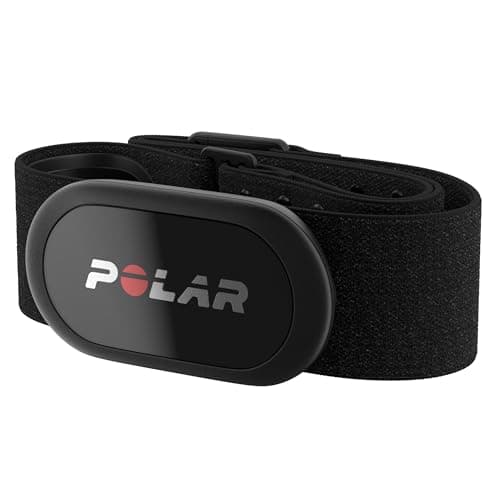
Anyone who trains by heart ratePolar H10
The device other people's validation studies use as the reference. That is the strongest recommendation a sensor can have.
Price as of October 22, 2026. Prices move; Amazon's is the one that counts.
#ad · we may earn a commission from this link to Polar H10
The short answer
For heart-rate sensors, Polar wins outright — its H10 is the device researchers use as their reference standard. For watches, Garmin wins on ecosystem and export depth while Polar carries the only favorable peer-reviewed positioning result. For HRV, the newest study puts a Polar watch last of five and a Garmin fourth, so neither brand comes out well.
Ranked
Quick picks
| # | Device | Best for | Evidence | Score | Price |
|---|---|---|---|---|---|
| 01 | Polar H10 The device other people's validation studies use as the reference. That is the strongest recommendation a sensor can have. | Anyone who trains by heart rate | Peer-reviewed validation | 8.9/10 | $104.45Amazon |
| 02 | 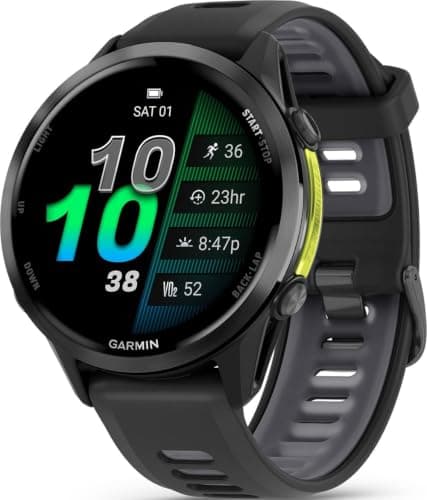 Garmin Forerunner 970 The most complete running watch Garmin sells, and — counter-intuitively — the cheapest of the pair per hour of GPS you get. | Long-course athletes who want maps | Manufacturer specification | 7.7/10 | $749.99Amazon |
| 03 | 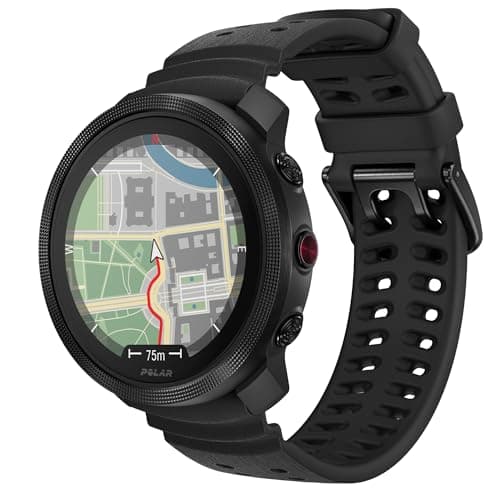 Polar Vantage M3 The pick when positioning accuracy is the thing you actually care about — Polar was the one brand under 5% error in the eight-watch validation study. | Runners who want the best-validated GPS | Peer-reviewed validation | 7.5/10 | $449.18Amazon |
| 04 | 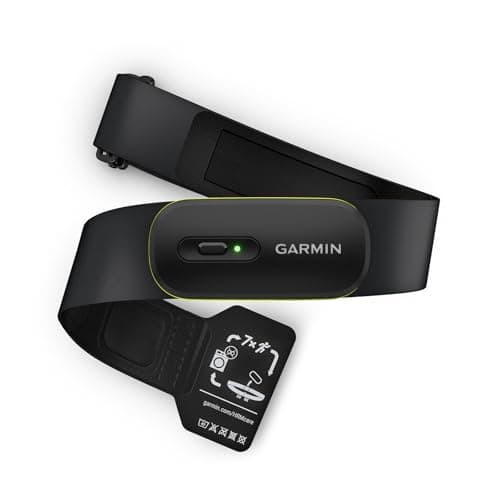 Garmin HRM 600 The strap to buy if you are already inside Garmin's ecosystem and want running dynamics with it. | Garmin owners wanting running dynamics | Manufacturer specification | 7.4/10 | $157.70Amazon |
#ad· Live prices from the Amazon Product API, as of October 22, 2026. Where we have no verified live price we show none. Scores come from the published rubric at How we rank — the Evidence column shows what each ranking actually rests on, including where the answer is nothing.
Why brand comparisons usually fail, and how we are doing it
"Polar versus Garmin" has no single answer because the two ranges do not line up model for model. So we resolve it tier by tier, and each tier has a different winner.
Tier 1: heart-rate sensors — Polar, decisively
This is not close, and it is the clearest verdict on this page.
When researchers need a heart-rate reference to measure other devices against, they use a Polar H10. It was the criterion measure in the 2025 placement study and again, as a 1000 Hz single-lead ECG, in the 2025 nocturnal HRV validation. Garmin's HRM 600 is a good strap with the correct sensing principle and no published validation we could find.
The practical consequence: if you own a Garmin watch and want better heart-rate data, the right purchase is a Polar strap. It pairs over Bluetooth and ANT+ like anything else, and this is the single most useful cross-brand recommendation on the site.
Tier 2: GPS watches — Garmin on ecosystem, Polar on the one study
Gilgen-Ammann et al. (2020) measured eight watches against a trundle wheel and found only Polar's receivers under 5% distance error across urban, forest and track conditions. That is the only favorable peer-reviewed positioning result any brand in this category has.
It is also six years old and tested the Vantage M, Vantage V and V800 — single-band watches that are no longer sold. It is evidence about Polar's GNSS engineering culture, and we weight it as brand-level and dated rather than as a measurement of anything current.
Against that, Garmin has depth Polar cannot match: third-party integrations, a much larger app and device ecosystem, and the most documented export path off the watch. On our rubric the Forerunner 970 scores 7.7 to the Vantage V3's 7.5 — close enough that ecosystem is the honest tiebreaker.
Tier 3: HRV and recovery — neither brand looks good
This is the tier that changed in 2025, and it is unflattering for both.
Across 536 nights against an ECG reference, the Polar Grit X Pro recorded the weakest HRV agreement of five devices (concordance 0.82, MAPE 16.32 ± 24.39%) and the Garmin fēnix 6 the second weakest (0.87, MAPE 10.52 ± 8.63%). Both were beaten comfortably by Oura and WHOOP.
Garmin has an additional problem in that study. Its resting heart rate could not be compared at all, because the 30-minute window Garmin uses to derive it is not timestamped — so the authors dropped it from that analysis. That is a transparency failure rather than an accuracy one, and on a site built around checkability it is worth naming.
The irony is that the device which beat both of them is made by Polar: the H10 is the reference the whole study was measured against. The full HRV table is here.
Tier 4: ecosystem and platform — Garmin
Garmin Connect, the breadth of compatible sensors and head units, the third-party integrations, and the sheer number of devices that speak to each other. Polar's platform is well-regarded and considerably smaller.
This matters more than people expect, because a training history is sticky. Switching brands means either losing years of context or exporting it somewhere neutral, and Garmin has the better documented path out — which, oddly, is an argument for buying into it.
How to actually decide
Buy Polar if you are buying a heart-rate sensor, full stop. Also if you want offline maps and a very wide sensor set at a mid price, and you are not already invested in another platform.
Buy Garmin if you want the deepest ecosystem, the widest hardware range, or if your training history is already there. Also for expedition and trail use, where the Instinct 3 Solar tops our trail ranking and Polar has no equivalent at that price.
Buy both — a Garmin watch and a Polar strap — which is what the evidence on this page actually recommends, and what a surprising number of experienced athletes end up doing without being told to.
COROS is the third brand most people are weighing at the same time, and the published records barely overlap: Polar vs Garmin vs COROS lays out what each brand can actually show.
In full
Every pick, and why
Polar H10
The device other people's validation studies use as the reference. That is the strongest recommendation a sensor can have.
- Sensor
- Electrical (ECG), chest strap
- Connectivity
- Bluetooth LE + ANT+
- Memory
- One session, up to 30 hours
- Battery (stated)
- Up to 400 h, CR2025 coin cell
- Water rating
- WR30
What's good
- Used as the criterion measure in published research — including the 2025 Sensors placement study on this site
- Simultaneous Bluetooth and ANT+, so it pairs to a watch and a bike computer at once
- 400 stated hours on a coin cell you replace rather than recharge
What isn't
- It is a chest strap, and a chest strap is less comfortable than a watch
- The strap wears out well before the sensor does
Skip this if
Skip this if you know yourself well enough to know you will not wear it. An unworn ECG strap measures nothing, and a wrist sensor you actually wear beats it every time.
What the evidence says
Peer-reviewed validationUsed as the reference standard in Sensors (2025), the anatomical-placement study of 28 participants. Being chosen as the criterion is an implicit validation by the researchers, though it means the study cannot measure the H10's own error.
Show how this 8.9 was calculated
| Factor | Weight | Score |
|---|---|---|
| EvidenceResearchers use it as the criterion measure. Nothing else in this category has a stronger evidentiary position. | 30% | 10.0 |
| HardwareElectrical ECG measurement rather than optical — a different and better physical principle for this job. | 20% | 9.5 |
| Metric coverageHeart rate and R-R intervals only; it does not pretend to do anything else. | 20% | 6.5 |
| Endurance400 stated hours on a replaceable coin cell. | 15% | 9.5 |
| Cost per capabilityInexpensive next to any watch, and it outlasts several of them. | 15% | 8.5 |
Price as of October 22, 2026. Prices move; Amazon's is the one that counts.
#ad · we may earn a commission from this link to Polar H10
Garmin Forerunner 970
The most complete running watch Garmin sells, and — counter-intuitively — the cheapest of the pair per hour of GPS you get.
- Case
- 47mm, titanium bezel, AMOLED
- Satellite
- Multi-band GNSS with SatIQ
- Battery (stated)
- 15 days smartwatch / 26 h GPS
- Maps
- Built-in, full color
- Extras
- ECG app, speaker and microphone
What's good
- Multi-band GNSS with SatIQ — the current top tier of consumer positioning hardware
- 26 stated GPS hours is enough for an ironman-distance day with a wide margin
- Built-in maps, which the 570 does not have at any price
What isn't
- The wrist optical sensor is the same class of hardware as the 570's — the premium buys features, not a better heart-rate signal
- 47mm only; there is no smaller case in this model
Skip this if
Skip this if you never race longer than a marathon and never navigate. Maps and titanium are the entire difference, and neither changes a single number the watch records.
What the evidence says
Manufacturer specificationNo independent validation study of the Forerunner 970's optical heart rate has been published that we could find. The specification figures are Garmin's own.
Show how this 7.7 was calculated
| Factor | Weight | Score |
|---|---|---|
| EvidenceSpecs are published and detailed, but no peer-reviewed or independent measured validation of this specific model exists yet. | 30% | 5.5 |
| HardwareMulti-band GNSS with SatIQ and Garmin's current-generation optical sensor — the top hardware tier available. | 20% | 9.5 |
| Metric coverageRunning dynamics, ECG, training load, maps, and a documented export path off the watch. | 20% | 9.5 |
| EnduranceGarmin states 26 hours in GPS mode, 15 days smartwatch. | 15% | 7.5 |
| Cost per capabilityHighest sticker in the range, but the strongest dollars-per-GPS-hour of the two Forerunners — see the arithmetic on the comparison page. | 15% | 7.5 |
Price as of October 22, 2026. Prices move; Amazon's is the one that counts.
#ad · we may earn a commission from this link to Garmin Forerunner 970
Polar Vantage M3
The pick when positioning accuracy is the thing you actually care about — Polar was the one brand under 5% error in the eight-watch validation study.
- Display
- AMOLED
- Satellite
- Dual-frequency GNSS
- Extras
- Turn-by-turn navigation, offline maps
What's good
- Polar is the only brand that came in under 5% distance error across all conditions in the JMIR eight-watch study
- Dual-frequency positioning plus offline maps at a mid-range price
What isn't
- The validation that flatters Polar is from 2020 and tested older models — it is evidence about the brand's GNSS engineering, not a measurement of this watch
- Smaller ecosystem than Garmin
Skip this if
Skip this if you are deep in Garmin's ecosystem already. Nothing here is enough better to justify rebuilding your training history somewhere else.
What the evidence says
Peer-reviewed validationThe peer-reviewed evidence is brand-level and dated: Gilgen-Ammann et al. (2020) measured eight watches against a trundle wheel and found only Polar's receivers stayed under 5% error. That study tested the Vantage M, Vantage V and V800 — not the M3.
Show how this 7.5 was calculated
| Factor | Weight | Score |
|---|---|---|
| EvidenceThe only brand in this roundup with a favorable peer-reviewed positioning result — but the study is from 2020 and tested earlier models, so it is dated brand evidence, not a measurement of this watch. | 30% | 7.0 |
| HardwareDual-frequency GNSS with offline maps. | 20% | 8.5 |
| Metric coverageStrong training-load and recovery platform; good sensor support. | 20% | 8.0 |
| EnduranceCompetitive for an AMOLED multi-sport watch, per Polar's stated figures. | 15% | 7.0 |
| Cost per capabilityMid-range pricing for dual-frequency plus maps. | 15% | 7.0 |
$499.9910% off
Price as of October 22, 2026. Prices move; Amazon's is the one that counts.
#ad · we may earn a commission from this link to Polar Vantage M3
Garmin HRM 600
The strap to buy if you are already inside Garmin's ecosystem and want running dynamics with it.
- Sensor
- Electrical (ECG), chest strap
- Extras
- Running dynamics, HRV data, on-board storage
What's good
- Adds running dynamics that a watch alone cannot compute
- Stores data when out of watch range and syncs later
What isn't
- Costs meaningfully more than the Polar H10 without a published validation advantage
- Its extra metrics only fully surface inside Garmin's own platform
Skip this if
Skip this if you just want accurate heart rate. You would be paying a premium over the H10 for running-dynamics metrics most runners look at twice and never again.
What the evidence says
Manufacturer specificationGarmin publishes specifications but no validation study we could find. It is an electrical chest strap, which is the right physical principle — but 'right principle' is not the same as 'measured accuracy'.
Show how this 7.4 was calculated
| Factor | Weight | Score |
|---|---|---|
| EvidenceCorrect sensor principle, detailed published specs, no independent validation we could find. | 30% | 6.0 |
| HardwareElectrical ECG measurement with on-board storage. | 20% | 9.0 |
| Metric coverageHeart rate, HRV and the full running-dynamics set. | 20% | 8.5 |
| EnduranceGood stated endurance; rechargeable. | 15% | 8.0 |
| Cost per capabilityA clear premium over the H10 without a matching evidence advantage. | 15% | 6.0 |
$169.997% off
Price as of October 22, 2026. Prices move; Amazon's is the one that counts.
#ad · we may earn a commission from this link to Garmin HRM 600
How this ranking was built
Every score on this page comes from one published rubric, applied identically to every device on the site, with the weights written down and the inputs shown. We have not worn any of these devices and we never say we have. Read the method and check us.
Questions
Frequently asked
Is Polar more accurate than Garmin?
For chest straps, yes on the strongest available evidence — the Polar H10 is the reference standard researchers measure other devices against. For watches, the only favorable positioning study is Polar's and it is from 2020 on discontinued hardware. For HRV, the newest study puts a Polar watch last of five and a Garmin fourth.
Can I use a Polar chest strap with a Garmin watch?
Yes. Polar straps broadcast over Bluetooth and ANT+, and Garmin watches receive both. This is the most useful cross-brand pairing in the category, and it is what we recommend over buying a more expensive watch when heart-rate accuracy is the complaint.
Which brand has better HRV?
Neither performs well. Across 536 nights against an ECG reference, a Polar Grit X Pro recorded the weakest HRV agreement of five devices (16.32% MAPE) and a Garmin fēnix 6 the second weakest (10.52%). Both were well behind Oura and WHOOP. Polar's H10 chest strap was the reference itself.
Is it worth switching from Garmin to Polar?
Rarely. The data-quality case does not separate the two watch ranges enough to justify leaving a training history behind, and Garmin's ecosystem is the larger of the two. If Polar's appeal is the sensor reputation, buy the strap and keep the watch.
Show your working
Sources
Every one of these was read in full before it was cited. Where we could not access a paper, we do not quote its numbers.
- [1]Manufacturer specification2026Polar — H10 heart rate sensor published specifications
Manufacturer-stated: electrical (ECG) measurement, Bluetooth LE + ANT+, internal memory for one session up to 30 hours, up to 400 h on a CR2025 coin cell, WR30.
- [2]Peer-reviewed validation2025“Impact of Anatomical Placement on the Accuracy of Wearable Heart Rate Monitors During Rest and Various Exercise Intensities”, Sensors (Basel)
n = 28 (14 male, 14 female). Polar H10 chest strap as the reference. Compared Polar Verity Sense (forearm), Garmin Forerunner 55 (wrist) and three simultaneous Whoop 4.0 units at wrist, forearm and upper arm, across rest, cycling warm-up, burpees and a modified Bruce treadmill protocol.
- [3]Peer-reviewed validation2025Dial, Hollander, Vatne, Emerson, Edwards & Hagen, “Validation of nocturnal resting heart rate and heart rate variability in consumer wearables”, Physiological Reports 13(16):e70527
DOI 10.14814/phy2.70527. n = 13 healthy adults (7 male, 6 female, 33.2 ± 8.6 years) across 536 nights, each wearing an Oura Gen 3, Oura Gen 4, Polar Grit X Pro, Garmin fēnix 6 and Whoop 4.0 simultaneously against a Polar H10 single-lead ECG reference sampled at 1000 Hz. Authors’ stated limits: healthy adults only, no atrial-fibrillation population, proprietary and periodically-updated algorithms, and unequal night counts per device. The Garmin was dropped from the resting-heart-rate comparison because the 30-minute window it uses is not timestamped.
- [4]Peer-reviewed validation2020Gilgen-Ammann, Schweizer & Wyss, “Accuracy of Distance Recordings in Eight Positioning-Enabled Sport Watches: Instrument Validation Study”, JMIR mHealth and uHealth
DOI 10.2196/17118. Eight watches (Apple Watch Series 4, Coros Apex 46mm, Garmin Fenix 5X Plus, Garmin Forerunner 935, Polar Vantage M, Polar Vantage V, Polar V800, Suunto 9 Baro) measured against a trundle wheel accurate to 1 cm, across urban, forest and 400 m track conditions. IMPORTANT: this predates the dual-frequency receivers now standard, so it describes brand engineering history, not any watch currently sold.
- [5]Manufacturer specification2026Garmin — Forerunner 970 published specifications
Manufacturer-stated battery: up to 15 days smartwatch mode, up to 26 hours GPS mode.
Read next
Related
- Polar vs Garmin vs COROS
Add the third brand, and the whole published record for all three.
- COROS vs Garmin
The sibling brand comparison, tier by tier.
- Polar H10
The device that decides tier one.
- HRV accuracy by device
The study that makes tier three uncomfortable for both brands.
- Polar H10 vs H9
Inside the strap tier Polar wins, one specification decides it.
- Polar Vantage M3
The current watch carrying that dated peer-reviewed positioning result.