Head to head
Garmin Forerunner 570 vs COROS PACE 4
Two AMOLED mid-range running watches, one of them at about half the price. The battery headline everyone quotes compares two different modes, and neither watch has been measured.
We earn a commission when you buy through our Amazon links, at no extra cost to you. It never decides a ranking — the rubric that does is published in full, so you can check us rather than take our word for it. How this works.
The short answer
Buy the PACE 4 unless you want the speaker, on-watch music and Garmin's ecosystem, or you specifically need a 1.4" screen. It is 32 grams against the Forerunner 570's 50, states 41 All-Systems GPS hours against Garmin's 18 GPS-only, and today the price gap is $297. Neither watch's sensor has been independently tested, so the extra money buys features and screen, not better data.
Ranked
Quick picks
| # | Device | Best for | Evidence | Score | Price |
|---|---|---|---|---|---|
| 01 | 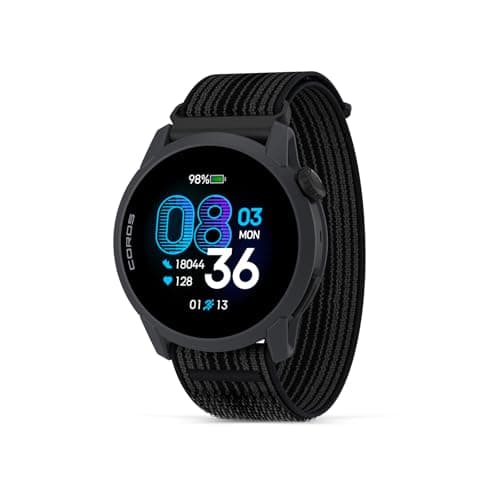 COROS PACE 4 41 stated GPS hours in a 32-gram watch, for a third of the Forerunner 970's money. The endurance-per-dollar winner by a distance. | Long days on a budget | Independent measured test | 7.5/10 | $249.00Amazon |
| 02 | 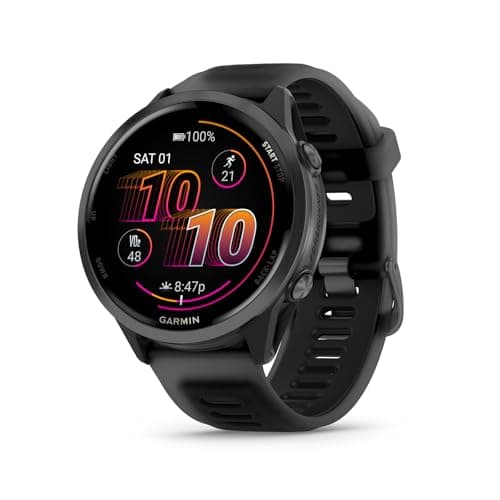 Garmin Forerunner 570 Same sensor family as the 970, $200 less, and no maps. For most runners that is the correct trade. | Most runners, most of the time | Manufacturer specification | 7.3/10 | $546.00Amazon |
#ad· Live prices from the Amazon Product API, as of Sep 21, 2026. Where we have no verified live price we show none. Scores come from the published rubric at How we rank — the Evidence column shows what each ranking actually rests on, including where the answer is nothing.
The specification table
Every value below is the maker's own published figure, re-read from the Garmin Forerunner 570 product page and the COROS PACE 4 product page on the date at the top of this article. Where one maker does not publish a row, the cell says so — we do not fill it with a number from a review, a forum or the other watch.
| Specification | COROS PACE 4 | Garmin Forerunner 570 (47 mm) |
|---|---|---|
| Launched at | 10 November 2025, $249 | Listed by Garmin at $549.99 |
| Display | 1.2" AMOLED touchscreen | 1.4" AMOLED touchscreen, 454 × 454 (42 mm case: 1.2", 390 × 390) |
| Weight (stated) | 32 g with nylon band, 40 g with silicone | 50 g (42 mm case: 42 g) |
| Case | 11.8 mm thin; aluminum-bezel editions offered | 47 × 47 × 12.9 mm, aluminum bezel, Corning Gorilla Glass 3 |
| Water rating | 5 ATM | 5 ATM |
| Battery, daily use (stated) | 19 days | 11 days (42 mm: 10 days) |
| Battery, GPS-only (stated) | Not published as a separate mode | 18 h |
| Battery, all constellations, single frequency (stated) | 41 h, All-Systems mode | Not published; the nearest row is SatIQ (AutoSelect), 16 h |
| Battery, all constellations plus multi-band (stated) | Not published | 14 h (42 mm: 13 h) |
| Battery, GPS with music playing (stated) | Not applicable — no on-watch music storage is listed | 9 h GPS-only, 8 h SatIQ, 8 h multi-band |
| Satellite modes | All-Systems and Dual-Frequency | GPS-Only, SatIQ (AutoSelect), All-Systems + Multi-Band |
| Heart-rate sensor | Redesigned optical sensor with larger LEDs, per COROS | Elevate wrist heart rate monitor, per Garmin |
| Audio | Built-in microphone for voice notes; media controls for a phone | Built-in speaker and microphone; 8 GB memory for on-watch music |
| Maps | None | None |
| Independent validation | None of either watch. The nearest measured neighbors are the previous-generation PACE 3 and the Forerunner 265, and both did poorly on the one test that measured them. | |
What both watches record, from their own pages
The two spec sheets overlap more than the price gap suggests. COROS states the PACE 4 calculates VO2 max, lactate threshold and a running fitness level, supports running power-based plans and structured intervals, syncs routes from Strava, RidewithGPS and Wikiloc for breadcrumb navigation, and pushes workouts in from TrainingPeaks and Final Surge. Garmin states the 570 has lactate threshold, training load, training status and readiness, HRV status, running dynamics with vertical oscillation and ground contact time, PacePro pacing, and Bluetooth, ANT+ and Wi-Fi connectivity with Connect IQ on top.
Every one of those is a manufacturer feature list, and none of it tells you whether the number the watch produces is right. Both watches estimate the same physiology from the same kind of wrist sensor, so the coverage row is close to a tie; the data-quality row is a tie too, for a worse reason, which the evidence section below explains.
The battery headline compares two different modes
The number that gets quoted is 41 hours against 18. It is not a like-for-like row, and this is the single most useful thing on this page. COROS's 41 hours is an All-Systemsfigure — every constellation, single frequency. Garmin's 18 hours is a GPS-Only figure — one constellation, single frequency, the least demanding mode the watch has. Garmin does not publish a plain All-Systems figure for the 570 at all; its nearest row is SatIQ, which lets the watch choose its own mode, at 16 hours.
Then there is the mode you would actually run if positioning accuracy is why you bought a dual-frequency watch. Garmin publishes it: 14 hours in All-Systems + Multi-Band on the 47 mm case, 13 on the 42 mm. COROS does not publish a dual-frequency battery figure for the PACE 4 on the page we read — it publishes one for the PACE Pro(31 hours) and not for this watch. So the honest comparison of accurate-mode endurance is 14 hours against a blank, and we would rather print the blank than borrow the Pro's number.
None of that makes the PACE 4's battery a marketing trick. Its stated daily-use figure is 19 days against 11, which isthe same kind of row on both sides, and the All-Systems figure is more than double Garmin's GPS-only one despite being the harder mode. The COROS is the longer-lived watch by every row both makers publish. The point is that the margin in the mode that matters is unknown, because one side has not said.
What the cost-per-GPS-hour arithmetic says, and what it hides
This site divides the live Amazon price by the maker's stated GPS hours and prints the result. Today that gives the PACE 4 at $6.07 per stated GPS hour and the Forerunner 570 at $30.33. Two things to know before you read those as a verdict. First, the mode named in each figure is different, for the reason above — hover either number and it tells you which. Second, both numbers move with the live price, so if a sale closes the gap, the arithmetic follows it.
Even with those caveats, the gap is not close. The price difference alone is $297 today, which is roughly the cost of a second PACE 4, or of a Polar H10 with a great deal left over — and the strap is the one purchase that would change what either watch measures.
What the extra money actually buys
Read the table honestly and the Forerunner 570's case is real, it is just not about data. Here is the list, in the order we think most buyers would rank it.
- A larger, sharper screen. 1.4 inches at 454 × 454 against 1.2 inches. On a watch you glance at mid-interval, that is a genuine daily difference — and the 42 mm 570 gives most of it back, at 1.2 inches and 390 × 390.
- A speaker. Calls and a voice assistant from the wrist with a phone paired. The PACE 4 has a microphone for voice notes and media controls; it has no speaker listed.
- On-watch music. 8 GB of memory, with Garmin publishing the battery cost of using it: 9, 8 and 8 hours by mode. The PACE 4 page lists media controls for a phone and no storage figure.
- The Garmin ecosystem.Connect IQ, the third-party app and data-field catalog, and the broadest set of integrations in the category. COROS's ecosystem is narrower, which is a real cost if you already live in Garmin's.
- A published multi-band battery figure. Not a feature, but it is something you are buying: Garmin tells you what the accurate mode costs. COROS, for this model, does not.
What the extra money does not buy is maps — neither watch has them, and if that is what you are shopping for the decision moves to the 570 against the Forerunner 965 or the PACE 4 against the PACE Pro. It also does not buy a validated sensor, which brings us to the part of the table that neither maker wants to be the headline.
The evidence position, and why it is a tie at the bottom
Nobody has independently measured the Forerunner 570's optical heart rate, its GPS distance or its threshold estimates in anything we can cite. Nobody has done that for the PACE 4 either. Under our evidence hierarchyboth watches sit on manufacturer specification alone, and that is where the rubric's largest weight lands: the 570 scores 5.5 on evidence, the PACE 4 scores 4.5, and the difference is not a measurement of either watch. It is the previous COROS.
The nearest measured neighbors are instructive rather than reassuring. The5krunner's independent heart-rate comparison of the PACE 3 found its wrist reading diverged during and after rapid intensity changes — exactly the intervals you would buy a training watch for — on a dataset its author called limited. Then, in 2025, a laboratory study of smartwatch threshold estimates against fingertip blood lactate put both brands' mid-range models on the same treadmill. The COROS PACE 3 returned a usable threshold result 47.1% of the time (8 of 17 attempts) and its threshold-pace estimate carried a mean error of 22.63%, overestimating. The Garmin Forerunner 265 returned a result 65.2% of the time (15 of 23) with a threshold-pace error of 25.78%, also overestimating. Neither is the watch on this page; both are the closest thing to it that anyone has tested, and neither did well.
COROS states the PACE 4's sensor is redesigned, with larger LEDs and a more secure fit. That is a manufacturer claim and we label it as one — nobody has tested it. It is worth noticing that COROS's own product page, in the same paragraph, suggests pairing "an external Bluetooth heart rate strap for even higher precision." We agree, on both watches. The wrist-versus-strap evidence is the best-measured thing in this whole category, and it says the strap is the upgrade regardless of which wrist device you put it next to.
Weight and fit, which are the other half of the sensor question
Thirty-two grams against fifty is the biggest physical gap between these two, and it is the specification you feel on every run. Over a long day the lighter watch simply disappears; the heavier one is always a watch. Choose the 42 mm Garmin and the gap narrows to 42 grams against 32, with a smaller screen and one hour less multi-band battery.
There is a second-order reason to care. Optical heart-rate sensing depends on the sensor staying still against skin, and a lighter watch on a snug band moves less. That is a mechanism argument, not a measured one — no study we have read isolates watch mass as a variable — and we flag it as such. What has been measured is placement, and it says the same thing louder: a stable sensor beats a wrist sensor of any weight.
Who should buy which
- Most runners, most of the time. The PACE 4. Lighter, more stated hours in every row both makers publish, dual-frequency positioning, and about half the money — which pays for the strap that fixes its only documented weakness.
- You want calls from the wrist, music without a phone, or you already train inside Garmin Connect. The Forerunner 570. Those are real things, they are published, and the PACE 4 does not have them.
- You are choosing on positioning accuracy. Either, with a caveat: both have dual-frequency receivers, and nobody has validated dual-band accuracy on a consumer watch. Garmin at least tells you what the mode costs in hours; COROS, on this model, does not.
- You want a measured sensor. Neither, on its own. Pair a chest strap with whichever you buy, and the wrist sensor stops mattering.
Why this is not the same decision as COROS vs Garmin
The brand-level comparisonresolves each tier separately, and at the mid-range it sets the PACE 4 against the Forerunner 970, because that is where the cost-per-GPS-hour gap is widest. This page is the narrower question a buyer actually types: the 570 is the Garmin that shares the PACE 4's AMOLED screen, its no-maps position and its mid-range intent, so it is the fairer fight — and the Forerunner still loses on every published endurance row while winning on every published feature row. That split, rather than a blanket verdict, is what the two spec sheets say.
In full
Every pick, and why
COROS PACE 4
41 stated GPS hours in a 32-gram watch, for a third of the Forerunner 970's money. The endurance-per-dollar winner by a distance.
- Display
- 1.2" AMOLED touchscreen
- Weight
- 32 g with nylon band, 40 g with silicone
- Satellite
- All-Systems and Dual-Frequency modes
- Battery (stated)
- 19 days daily use / 41 h GPS (All-Systems)
- Thickness
- 11.8 mm
What's good
- 41 manufacturer-stated GPS hours — more than the Forerunner 970 and the 570 combined
- 32 g is light enough that you stop noticing it, which matters more over 100 miles than any feature
- Dual-frequency positioning at an entry-level price
What isn't
- COROS wrist heart rate is the one area where an independent test has published a specific problem — see the evidence note
- Smaller third-party app ecosystem than Garmin's
Skip this if
Skip this if you train by heart rate off the wrist and will not wear a strap. The one independent test we found flagged COROS wrist HR during exactly the intervals you would be buying it for.
What the evidence says
Independent measured testThe5krunner's measured comparison found the previous-generation PACE 3's wrist heart rate diverged during and after rapid intensity changes. That test was of the PACE 3, not the PACE 4, and the author cautions the dataset was limited. COROS states the PACE 4 has a redesigned sensor; no independent test of the new sensor has been published that we could find.
Show how this 7.5 was calculated
| Factor | Weight | Score |
|---|---|---|
| EvidenceThe only independent measured evidence in the range is a limited-dataset test of the PREVIOUS model, and it was unfavorable. The redesigned sensor is unvalidated. | 30% | 4.5 |
| HardwareDual-frequency GNSS and a redesigned optical sensor, per the COROS spec page. | 20% | 8.0 |
| Metric coverageStrong training metrics; a narrower ecosystem than Garmin for third-party integrations. | 20% | 7.5 |
| Endurance41 stated GPS hours in All-Systems mode is the best in this roundup by a wide margin. | 15% | 10.0 |
| Cost per capabilityComfortably the strongest dollars-per-GPS-hour figure on the site. | 15% | 10.0 |
Price as of Sep 21, 2026. Prices move; Amazon's is the one that counts.
#ad · we may earn a commission from this link to COROS PACE 4
Garmin Forerunner 570
Same sensor family as the 970, $200 less, and no maps. For most runners that is the correct trade.
- Case
- 42mm or 47mm, AMOLED
- Satellite
- Multi-band GNSS
- Battery (stated)
- 11 days smartwatch / 18 h GPS (47mm)
- Maps
- None
- Extras
- Speaker and microphone, on-watch music
What's good
- Records the same core metrics as the 970 — the data you get back is not a cut-down version
- Two case sizes, which the 970 does not offer
- Multi-band GNSS at a mid-range price
What isn't
- 18 stated GPS hours is thin for ultra distances
- No maps, so navigation is breadcrumb-only
Skip this if
Skip this if you race beyond about 12 hours or navigate unfamiliar trails. The battery and the missing maps are both real limits, and neither is fixable in software.
What the evidence says
Manufacturer specificationAs with the 970, no independent validation of this model's optical heart rate has been published that we could find.
Show how this 7.3 was calculated
| Factor | Weight | Score |
|---|---|---|
| EvidenceDetailed published specs, no independent measured validation of this model. | 30% | 5.5 |
| HardwareMulti-band GNSS and the same current-generation optical sensor family as the 970. | 20% | 9.0 |
| Metric coverageEverything the 970 records except maps and the ECG app. | 20% | 8.5 |
| EnduranceGarmin states 18 hours GPS, 11 days smartwatch, on the 47mm case. | 15% | 6.0 |
| Cost per capabilityMaterially cheaper than the 970 for the same recorded data. | 15% | 8.0 |
Price as of Sep 21, 2026. Prices move; Amazon's is the one that counts.
#ad · we may earn a commission from this link to Garmin Forerunner 570
How this ranking was built
Every score on this page comes from one published rubric, applied identically to every device on the site, with the weights written down and the inputs shown. We have not worn any of these devices and we never say we have. Read the method and check us.
Questions
Frequently asked
Is the Garmin Forerunner 570 worth twice the price of the COROS PACE 4?
For the speaker, on-watch music, the 1.4" screen and Garmin's ecosystem, yes — those are real and the PACE 4 does not have them. For data, no: neither watch has been independently validated, both are dual-frequency, and the PACE 4 states more battery in every row both makers publish. The live gap today is $297.
Which has the longer battery life, the Forerunner 570 or the PACE 4?
The PACE 4, in every row both makers publish: 19 stated days of daily use against 11, and 41 stated All-Systems GPS hours against Garmin's 18 GPS-only or 14 All-Systems + Multi-Band. The caveat is that COROS publishes no dual-frequency battery figure for the PACE 4, so the margin in the accurate mode is unknown rather than known to be large.
Does the COROS PACE 4 have a speaker or store music?
The PACE 4 page we read lists a built-in microphone for voice notes and media controls for a paired phone. It lists no speaker and no on-watch music storage. The Forerunner 570 has both — a speaker and microphone, and 8 GB of memory — and Garmin publishes what music playback costs in battery: 9 hours GPS-only, 8 hours in SatIQ or multi-band.
Has either watch's heart rate been tested?
No. The nearest measured neighbors are the previous-generation COROS PACE 3, whose wrist heart rate diverged on intervals in an independent test, and the Garmin Forerunner 265, which returned a usable lactate-threshold result 65.2% of the time in a 2025 laboratory study. Neither result transfers to the newer watch; both say the same thing, which is to add a strap.
Do both watches work with a chest strap?
Yes. Both pair external heart-rate sensors over Bluetooth, and the Forerunner 570 also takes ANT+. If you want running dynamics on the Garmin, the strap needs to be connected over ANT+, which is the reason the Garmin-specific strap ranking differs from the general one.
Show your working
Sources
Every one of these was read in full before it was cited. Where we could not access a paper, we do not quote its numbers.
- [1]Manufacturer specification2026Garmin — Forerunner 570 product page, battery life by GNSS mode (42 mm and 47 mm)
Manufacturer-stated, read 2026-09-20. 47 mm: smartwatch mode up to 11 days; GPS-Only GNSS mode up to 18 hours; SatIQ (AutoSelect) GNSS mode up to 16 hours; All-Systems GNSS mode + Multi-Band up to 14 hours; with music 9 h GPS-only, 8 h SatIQ, 8 h All-Systems + Multi-Band. 42 mm: smartwatch up to 10 days; GPS-Only up to 18 hours; SatIQ up to 14 hours; All-Systems + Multi-Band up to 13 hours; with music 9 / 8 / 8 h. Also stated: 47 x 47 x 12.9 mm and 50 g (47 mm), 42.4 x 42.4 x 12.9 mm and 42 g (42 mm), 1.4" 454 x 454 AMOLED (47 mm) or 1.2" 390 x 390 (42 mm), Corning Gorilla Glass 3, aluminum bezel, 5 ATM, 8 GB memory, built-in speaker/microphone, Elevate wrist heart rate monitor, connectivity Bluetooth / ANT+ / Wi-Fi, Connect IQ, $549.99. Garmin publishes no plain All-Systems (single-frequency, multi-constellation) figure for this watch, only GPS-Only, SatIQ and All-Systems + Multi-Band.
- [2]Manufacturer specification2026Garmin — Forerunner 570 Series owner’s manual, specifications
Manufacturer-stated, read 2026-08-18: rechargeable lithium-ion battery, 5 ATM (swim) water rating, and up to 8 GB of media storage — a quarter of what the 970 carries, on a watch that records the same data.
- [3]Manufacturer specification2026COROS — PACE 4 published specifications
Manufacturer-stated: 1.2" AMOLED, 32 g with nylon band, 11.8 mm thick, All-Systems and Dual-Frequency satellite modes, 41 GPS hours, 19 days of daily training and sleep.
- [4]Manufacturer claim only2025COROS — PACE 4 launch announcement
COROS's own press release: 1.2 inch AMOLED touchscreen, 32 g with the nylon band, 11.8 mm case, "up to 41 GPS hours and 19 days of daily use", a redesigned heart-rate sensor, available 10 November 2025 at $249 USD. Dates the PACE 4 a year after the PACE Pro, which is the fact the comparison turns on.
- [5]Independent measured test2023the5krunner, measured heart-rate comparison of the COROS PACE 3
An independent measured test, not a peer-reviewed study, and the author explicitly cautions the dataset was limited. Compared against Garmin HRM-Pro Plus and Polar Verity Sense across easy runs, intervals and cycling. Found divergence during and after rapid intensity change. Tests the PACE 3, not the PACE 4.
- [6]Peer-reviewed validation2025Lu, Cui, Zhu, Wu, Xing, Pan & Shen, “Validity of smartwatch-derived estimates of lactate threshold heart rate and pace compared to graded exercise testing”, Frontiers in Physiology 16:1621996
DOI 10.3389/fphys.2025.1621996. 100 healthy recreational runners (61 male, 39 female, 28.0 ± 9.6 years) against a treadmill graded exercise test with fingertip blood lactate (Biosen C-line), threshold determined by the modified Dmax method. Device counts were unequal: Huawei GT Runner n = 100, Garmin Forerunner 265/265s n = 23, COROS PACE 3 n = 17. Authors’ stated limits: unbalanced samples, indoor reference against outdoor watch tests, day-to-day threshold variability, and different heart-rate acquisition between devices — the Garmin protocol required an ECG chest strap while the other two used wrist PPG — plus undisclosed manufacturer algorithms.
- [7]Peer-reviewed validation2025“Impact of Anatomical Placement on the Accuracy of Wearable Heart Rate Monitors During Rest and Various Exercise Intensities”, Sensors (Basel)
n = 28 (14 male, 14 female). Polar H10 chest strap as the reference. Compared Polar Verity Sense (forearm), Garmin Forerunner 55 (wrist) and three simultaneous Whoop 4.0 units at wrist, forearm and upper arm, across rest, cycling warm-up, burpees and a modified Bruce treadmill protocol.
Read next
Related
- Garmin Forerunner 570 review
The data case for the cheaper Garmin, on its own.
- COROS PACE 4 review
The cost-per-GPS-hour winner on this site, in full.
- COROS vs Garmin
The brand-level version, resolved tier by tier.
- Forerunner 570 vs 265
Inside Garmin: the same 14 multi-band hours, and the one watch that was measured.
- COROS PACE 4 vs PACE Pro
Inside COROS: the only PACE with a published dual-frequency battery figure.
- Best budget running watches
Where the PACE 4 sits against every other dual-frequency watch under $300.