Head to head
COROS PACE 4 vs PACE Pro
The cheaper watch is the newer watch, and it wins the spec sheet. The expensive one wins the only row that cannot be argued with: it has maps.
We earn a commission when you buy through our Amazon links, at no extra cost to you. It never decides a ranking — the rubric that does is published in full, so you can check us rather than take our word for it. How this works.
Top pick
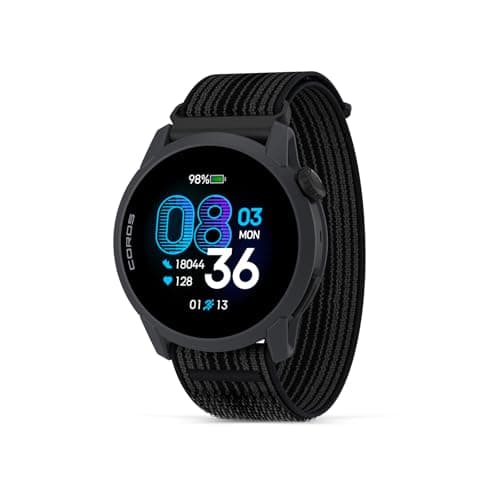
Long days on a budgetCOROS PACE 4
41 stated GPS hours in a 32-gram watch, for a third of the Forerunner 970's money. The endurance-per-dollar winner by a distance.
Price as of October 22, 2026. Prices move; Amazon's is the one that counts.
#ad · we may earn a commission from this link to COROS PACE 4
The short answer
Buy the PACE 4 unless you need maps on the watch. It is a year newer, 5 grams lighter, states more GPS hours and costs less — a $50 gap. The PACE Pro buys global maps with turn-by-turn navigation, a brighter always-on screen, and the only dual-frequency battery figure COROS publishes for either watch. Neither has been independently tested.
Ranked
Quick picks
| # | Device | Best for | Evidence | Score | Price |
|---|---|---|---|---|---|
| 01 | COROS PACE 4 41 stated GPS hours in a 32-gram watch, for a third of the Forerunner 970's money. The endurance-per-dollar winner by a distance. | Long days on a budget | Independent measured test | 7.5/10 | $249.00Amazon |
| 02 | 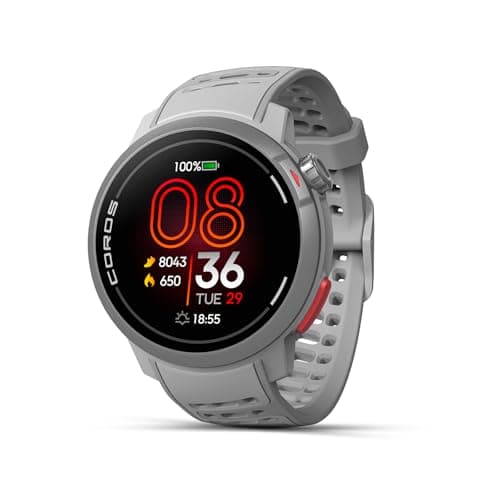 COROS PACE Pro The cheapest route to global maps with turn-by-turn navigation on a wrist, and the only watch in the PACE line whose dual-frequency battery figure COROS is willing to publish. | Navigation on a PACE budget | No validation study exists | 6.9/10 | $299.00Amazon |
#ad· Live prices from the Amazon Product API, as of October 22, 2026. Where we have no verified live price we show none. Scores come from the published rubric at How we rank — the Evidence column shows what each ranking actually rests on, including where the answer is nothing.
The specification table
Every value below is COROS's own published figure, from its PACE 4 and PACE Pro product pages and the two launch releases. Where COROS does not publish something, the row says so rather than borrowing a number from the other watch.
| Specification | COROS PACE 4 | COROS PACE Pro |
|---|---|---|
| Announced | 10 November 2025, at $249 | 31 October 2024, at $349 |
| Display | 1.2" AMOLED touchscreen | 1.3" always-on AMOLED touchscreen, 1500 nits |
| Weight (stated) | 32 g with nylon band, 40 g with silicone | 37 g with nylon band |
| Thickness | 11.8 mm | Not published on the pages we read |
| Battery, daily use (stated) | 19 days | 20 days, or 6 days with the always-on display |
| Battery, GPS (stated) | 41 h, All-Systems mode | 38 h GPS activity tracking |
| Battery, dual-frequency (stated) | Not published | 31 h |
| Satellite modes | All-Systems and Dual-Frequency | All-Systems and Dual-Frequency |
| Navigation | Route sync from Strava, RidewithGPS and Wikiloc, plus breadcrumb navigation | Global maps with turn-by-turn navigation |
| Heart-rate sensor | Redesigned, with larger LEDs | Optical heart rate and SpO2; no redesign claimed |
| Processor | Not published | Ambiq Apollo510 |
| Independent validation | None of either watch. The only measured COROS result on record tested the PACE 3. | |
The battery rows are not the same mode, and that is the whole trick
The headline reads 41 hours against 38 and looks like a clean win for the cheaper watch. It is not a like-for-like row. COROS's 41-hour figure for the PACE 4 is an All-Systems number, and COROS publishes no dual-frequency battery figure for the PACE 4 at all. For the PACE Pro it publishes both: 38 hours of GPS activity tracking and 31 hours in dual-frequency mode.
Dual-frequency is the mode you bought a dual-frequency receiver for. It is the setting that helps in city streets and under tree cover, which is the specific failure most people are trying to fix when they shop for a new running watch. So the only watch here that tells you what accurate positioning costs in battery terms is the older, dearer one.
That is why this site carries 31 hours as the PACE Pro's endurance number rather than the flattering 38 — the same rule we apply to the Garmin Instinct 3, where we carry the multi-band figure rather than the 40-hour GPS-only headline. The consequence is visible in the arithmetic: the PACE 4 comes to $6.07 per stated All-Systems GPS hour, and the PACE Pro to $9.65 per stated dual-frequency hour. Those two numbers are not measuring the same thing, and we would rather say that than print a tidy comparison that is quietly wrong.
Maps are the only row that decides anything
Strip the battery modes out and one genuine capability separates these watches. COROS states that the PACE Pro carries global maps with turn-by-turn navigation. On the PACE 4 page, what COROS describes is route sync from Strava, RidewithGPS and Wikiloc plus breadcrumb navigation — a line to follow, not a map to read. It does not claim global maps anywhere we could find.
The difference matters in exactly one situation and is irrelevant in every other. If you leave a route you loaded, breadcrumb navigation can tell you that you have left it and roughly where the line is; it cannot show you the trail you are standing on or route you back onto it. If you run known roads, or you always start a loaded route and finish it, the PACE 4's navigation is enough and the map is dead weight you paid for.
We wrote a whole page on this question rather than settling it in a paragraph: do you need maps on a running watch works through when the answer is genuinely yes. Read it before spending the difference, because for most road runners the honest answer is no.
The newer watch is the cheaper watch, which is unusual
COROS launched the PACE Pro on 31 October 2024 at $349 and the PACE 4 on 10 November 2025 at $249. The PACE 4 is a full year newer, a hundred dollars cheaper at launch, five grams lighter, thinner at a published 11.8 mm, and it is the one with the redesigned heart-rate sensor. Normally the newer, cheaper model is the cut-down one. Here it is not: it beats the Pro on weight, on stated GPS hours in its own mode, and on price.
What the "Pro" in the name is actually buying, on COROS's own published figures, is a bigger and brighter screen — 1.3 inches at 1500 nits with an always-on option — a named processor in the Ambiq Apollo510, SpO2, and the maps. It is not buying a better sensor or a longer battery.
Watch the live prices before you conclude anything from the launch numbers. Both have moved since release, and the current gap is $50. The prices on this page are the ones the arithmetic above is computed from, and they came from Amazon rather than from memory.
The evidence position is identical, and it is empty
Neither of these watches has been independently measured. Not the heart rate, not the positioning, not the sleep staging. The only measured COROS result anyone has published that we could find is the5krunner's 10-mile comparison of the PACE 3, against a Garmin HRM-Pro Plus and a Polar Verity Sense, which found the watch's wrist heart rate diverged during and after rapid intensity change — and whose author explicitly cautioned that the dataset was limited.
That test is about a third watch. It is not evidence for or against either of these two, and we are not going to launder it into one by implication. What it does establish is that the one time somebody in this category actually measured a COROS optical sensor, the result was unflattering, and nobody has repeated the exercise on anything COROS has released since. COROS says the PACE 4's sensor was redesigned with larger LEDs. That is a manufacturer claim, it is labeled as one throughout this site, and it remains untested.
This is why both watches score 4.5 out of 10 on evidence and cannot rank higher here regardless of their hardware. It is also why the single most useful thing you can do with either of them is not a watch at all: pair a chest strap. Both accept external sensors over Bluetooth, and doing that replaces the one component in this comparison with a documented problem with the one that published studies use as their reference.
Where each watch actually wins
- Weight. PACE 4, 32 g against 37 g on the same nylon band. Over four hours you notice it; over one you do not.
- Screen. PACE Pro. 1.3 inches, 1500 nits, always-on if you want it — at the cost of dropping from 20 stated days to 6.
- Stated GPS hours in its own best mode.PACE 4, 41 All-Systems hours against the Pro's 38.
- Telling you what the accurate mode costs. PACE Pro, and only the PACE Pro. 31 published dual-frequency hours against a blank.
- Navigation. PACE Pro, decisively. Global maps and turn-by-turn against breadcrumbs.
- Heart-rate hardware. PACE 4 on paper, with a sensor COROS describes as redesigned. Neither on evidence, because there is none.
- Price per hour of the mode you would race in.Not computable for the PACE 4, because COROS does not publish that mode's battery figure.
So which one
Buy the PACE 4 if you run roads, tracks, treadmills or routes you already know. It is newer, lighter, cheaper and states more hours, and nothing the PACE Pro adds changes a number either watch records.
Buy the PACE Proif you go somewhere you might get lost, or if you want the always-on screen and have read the battery cost of it. Buying it for the "Pro" badge alone is buying a spec sheet the cheaper watch already beats.
Buy neither yet if wrist heart rate during intervals is the thing you are trying to fix. Fix that with a strap first — see the heart-rate upgrade path — and then buy whichever of these two suits the running you actually do.
The single-device record for the more expensive of the two, including the three different battery figures COROS publishes for it, is at the COROS PACE Pro review.
In full
Every pick, and why
COROS PACE 4
41 stated GPS hours in a 32-gram watch, for a third of the Forerunner 970's money. The endurance-per-dollar winner by a distance.
- Display
- 1.2" AMOLED touchscreen
- Weight
- 32 g with nylon band, 40 g with silicone
- Satellite
- All-Systems and Dual-Frequency modes
- Battery (stated)
- 19 days daily use / 41 h GPS (All-Systems)
- Thickness
- 11.8 mm
What's good
- 41 manufacturer-stated GPS hours — more than the Forerunner 970 and the 570 combined
- 32 g is light enough that you stop noticing it, which matters more over 100 miles than any feature
- Dual-frequency positioning at an entry-level price
What isn't
- COROS wrist heart rate is the one area where an independent test has published a specific problem — see the evidence note
- Smaller third-party app ecosystem than Garmin's
Skip this if
Skip this if you train by heart rate off the wrist and will not wear a strap. The one independent test we found flagged COROS wrist HR during exactly the intervals you would be buying it for.
What the evidence says
Independent measured testThe5krunner's measured comparison found the previous-generation PACE 3's wrist heart rate diverged during and after rapid intensity changes. That test was of the PACE 3, not the PACE 4, and the author cautions the dataset was limited. COROS states the PACE 4 has a redesigned sensor; no independent test of the new sensor has been published that we could find.
Show how this 7.5 was calculated
| Factor | Weight | Score |
|---|---|---|
| EvidenceThe only independent measured evidence in the range is a limited-dataset test of the PREVIOUS model, and it was unfavorable. The redesigned sensor is unvalidated. | 30% | 4.5 |
| HardwareDual-frequency GNSS and a redesigned optical sensor, per the COROS spec page. | 20% | 8.0 |
| Metric coverageStrong training metrics; a narrower ecosystem than Garmin for third-party integrations. | 20% | 7.5 |
| Endurance41 stated GPS hours in All-Systems mode is the best in this roundup by a wide margin. | 15% | 10.0 |
| Cost per capabilityComfortably the strongest dollars-per-GPS-hour figure on the site. | 15% | 10.0 |
Price as of October 22, 2026. Prices move; Amazon's is the one that counts.
#ad · we may earn a commission from this link to COROS PACE 4
COROS PACE Pro
The cheapest route to global maps with turn-by-turn navigation on a wrist, and the only watch in the PACE line whose dual-frequency battery figure COROS is willing to publish.
- Display
- 1.3" always-on AMOLED touchscreen, 1500 nits
- Weight
- 37 g with the nylon band
- Satellite
- All-Systems and Dual-Frequency modes
- Battery (stated)
- 20 days daily use / 38 h GPS / 31 h dual-frequency
- Navigation
- Global maps with turn-by-turn navigation
- Processor
- Ambiq Apollo510
What's good
- The only device in the PACE line for which COROS publishes a dual-frequency battery figure — 31 hours — instead of leaving the accurate mode uncosted
- Global maps with turn-by-turn navigation, which the PACE 4 does not claim at any price
- A 1500-nit always-on AMOLED, which is the brightest screen COROS publishes a figure for in this range
What isn't
- No independent validation of its heart rate or positioning exists that we could find, and its optical sensor predates the redesigned one COROS describes on the PACE 4
- Heavier and shorter-lived than the cheaper PACE 4 on every stated number except daily use
Skip this if
Skip this if you never navigate. Strip the maps out of the decision and the PACE 4 is lighter, cheaper and longer-lived, and you are paying a premium for a screen and a menu you will not open.
What the evidence says
No validation study existsNo independent measurement of this watch exists that we could find as of August 2026. The only measured COROS heart-rate result on record is the5krunner's limited-dataset comparison of the PACE 3, which found divergence during and after rapid intensity change. That test was of a different watch, so it is not evidence about this one either way — which is the point: there is nothing here to weigh.
Show how this 6.9 was calculated
| Factor | Weight | Score |
|---|---|---|
| EvidenceNothing published measures this watch. The only COROS result on record tested the PACE 3, so this device is ranked on specification alone — which is exactly what caps it. | 30% | 4.5 |
| HardwareAll-Systems and Dual-Frequency satellite modes and an Ambiq Apollo510 processor, per COROS. Its optical sensor predates the redesigned one COROS describes on the PACE 4. | 20% | 7.5 |
| Metric coverageFull COROS training platform plus SpO2, and global maps with turn-by-turn navigation the PACE 4 does not claim. Same narrower third-party ecosystem as the rest of the range. | 20% | 8.0 |
| EnduranceCOROS states 31 hours in dual-frequency mode, 38 hours of GPS activity tracking and 20 days of daily use. We carry the dual-frequency number, because that is the mode the positioning hardware was bought for. | 15% | 9.0 |
| Cost per capabilityMid-range sticker for dual-frequency plus maps. Per dual-frequency GPS hour it sits behind both the PACE 4 and the PACE 3 — that gap is what the maps cost. | 15% | 7.5 |
Price as of October 22, 2026. Prices move; Amazon's is the one that counts.
#ad · we may earn a commission from this link to COROS PACE Pro
How this ranking was built
Every score on this page comes from one published rubric, applied identically to every device on the site, with the weights written down and the inputs shown. We have not worn any of these devices and we never say we have. Read the method and check us.
Questions
Frequently asked
Is the COROS PACE Pro better than the PACE 4?
Only for navigation and screen. The PACE 4 launched a year later at $100 less, weighs 32 g against 37, is 11.8 mm thin, states 41 GPS hours against 38, and carries the heart-rate sensor COROS describes as redesigned. The PACE Pro's advantages are global maps with turn-by-turn navigation, a 1.3-inch 1500-nit always-on AMOLED and SpO2. Neither has been independently validated.
Does the COROS PACE 4 have maps?
Not global maps. COROS's PACE 4 page describes route sync from Strava, RidewithGPS and Wikiloc plus breadcrumb navigation, and does not claim global maps or turn-by-turn navigation anywhere we could find. The PACE Pro page claims both. If on-watch mapping is the reason you are shopping, that single row is the entire decision.
Which COROS PACE watch has the longer battery life?
It depends on the mode, and the two watches are not documented in the same one. COROS states 41 GPS hours in All-Systems mode and 19 days of daily use for the PACE 4, against 38 GPS hours, 31 hours in dual-frequency mode and 20 days of daily use for the PACE Pro. There is no published dual-frequency figure for the PACE 4, so the accurate-mode comparison cannot honestly be made.
Is the PACE Pro discontinued now that the PACE 4 exists?
No. COROS still lists the PACE Pro on its own site and it is still stocked, which is why it appears here with a live price. The PACE 4 is not its replacement in the range — it is the next generation of the standard PACE, sitting below the Pro on navigation and above it on most of the rest of the specification.
Has the COROS heart-rate sensor ever been tested independently?
Once, on the PACE 3, by the5krunner, whose measured 10-mile comparison found divergence during and after rapid intensity change on a dataset the author called limited. No independent test of the PACE 4 or PACE Pro sensor has been published that we could find. Our heart-rate accuracy scoreboard records that absence as an absence rather than filling it in.
Show your working
Sources
Every one of these was read in full before it was cited. Where we could not access a paper, we do not quote its numbers.
- [1]Manufacturer specification2026COROS — PACE 4 published specifications
Manufacturer-stated: 1.2" AMOLED, 32 g with nylon band, 11.8 mm thick, All-Systems and Dual-Frequency satellite modes, 41 GPS hours, 19 days of daily training and sleep.
- [2]Manufacturer claim only2025COROS — PACE 4 launch announcement
COROS's own press release: 1.2 inch AMOLED touchscreen, 32 g with the nylon band, 11.8 mm case, "up to 41 GPS hours and 19 days of daily use", a redesigned heart-rate sensor, available 10 November 2025 at $249 USD. Dates the PACE 4 a year after the PACE Pro, which is the fact the comparison turns on.
- [3]Manufacturer specification2026COROS — PACE Pro published specifications
Manufacturer-stated: 1.3" always-on AMOLED touchscreen at 1500 nits, 37 g with the nylon band, All-Systems and Dual-Frequency satellite modes, 38 hours of GPS activity tracking, 31 hours with dual-frequency GPS, 20 days of daily use and sleep tracking, 6 days with the always-on display, global maps with turn-by-turn navigation, an Ambiq Apollo510 processor and an optical heart-rate plus SpO2 sensor. COROS's own launch release dates the watch to 31 October 2024 at $349.
- [4]Manufacturer claim only2024COROS — PACE Pro launch announcement
COROS's own press release: 1.3" always-on AMOLED at 1500 nits, 37 grams with the nylon band, "up to 38 hours of GPS battery life or 20 days in standard mode", All-Systems and Dual-Frequency modes, $349 USD, on sale from 31 October 2024 in three colorways. Marketing copy, so the comparative performance claims in it are labeled as claims, not measurements.
- [5]Independent measured test2023the5krunner, measured heart-rate comparison of the COROS PACE 3
An independent measured test, not a peer-reviewed study, and the author explicitly cautions the dataset was limited. Compared against Garmin HRM-Pro Plus and Polar Verity Sense across easy runs, intervals and cycling. Found divergence during and after rapid intensity change. Tests the PACE 3, not the PACE 4.
- [6]Manufacturer specification2026COROS — PACE 3 published specifications
Manufacturer-stated: 1.2" transflective touchscreen with mineral glass, 42 × 42 × 11.7 mm, 29-30 g with the nylon band, GPS/QZSS/GLONASS/BeiDou with a dual-frequency GPS option, 38 hours of full GPS, 15 days of regular use, 5 ATM.
Read next
Related
- COROS PACE Pro review
The single-device record, and the only dual-frequency battery figure in the line.
- COROS PACE Pro review
The full review of the mapping PACE, and what its dual-frequency figure costs.
- COROS PACE 4 review
The cost-per-GPS-hour winner on this site, with the evidence caveat spelled out.
- COROS APEX 4 vs PACE 4
The other PACE 4 decision: AMOLED against memory-in-pixel.
- Do you need maps on a running watch?
The question this comparison ultimately turns on.
- COROS vs Garmin
The brand-level version, including who has actually been measured.