GPS and multisport
What dual-band GPS actually is, and which watches have it
Four brands use four words for one specification. Here is what the receiver is doing, what the makers publish it costs, and the uncomfortable fact that nobody has measured whether it works.
We earn a commission when you buy through our Amazon links, at no extra cost to you. It never decides a ranking — the rubric that does is published in full, so you can check us rather than take our word for it. How this works.
The short answer
Dual-band GPS means the watch listens to two frequencies from the same satellite instead of one, which lets it reject signals that arrived by bouncing off a building or a cliff. Garmin calls it multi-band, COROS and Polar call it dual-frequency, Apple calls it L1 and L5. It costs roughly a third of your recording time.
Ranked
Quick picks
| # | Device | Best for | Evidence | Score | Price |
|---|---|---|---|---|---|
| 01 | 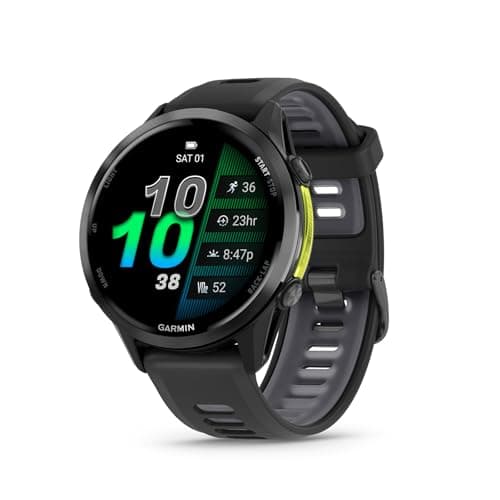 Garmin Forerunner 970 The most complete running watch Garmin sells, and — counter-intuitively — the cheapest of the pair per hour of GPS you get. | Long-course athletes who want maps | Manufacturer specification | 7.7/10 | $742.95Amazon |
| 02 | 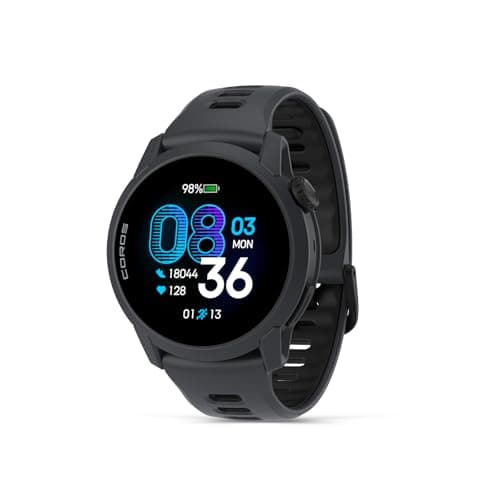 COROS PACE 4 41 stated GPS hours in a 32-gram watch, for a third of the Forerunner 970's money. The endurance-per-dollar winner by a distance. | Long days on a budget | Independent measured test | 7.5/10 | $249.00Amazon |
| 03 | 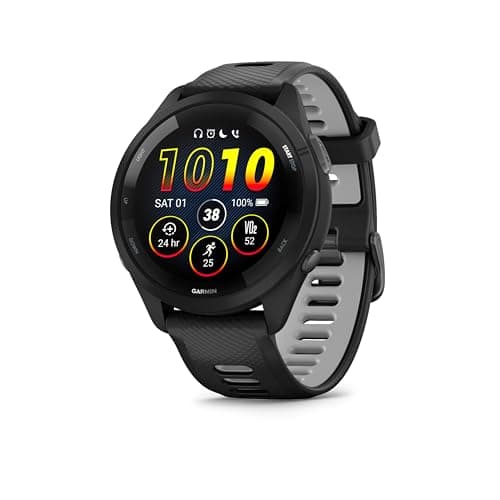 Garmin Forerunner 265 One of the very few watches on this site whose training estimates have actually been measured against a laboratory — and the measurement was not kind. | Runners who want a measured device, flaws included | Peer-reviewed validation | 7.2/10 | $439.85Amazon |
#ad· Live prices from the Amazon Product API, as of Sep 17, 2026. Where we have no verified live price we show none. Scores come from the published rubric at How we rank — the Evidence column shows what each ranking actually rests on, including where the answer is nothing.
One specification, four names
Every satellite broadcasts on more than one radio frequency. A single-band receiver listens to one of them; a dual-band receiver listens to two at once. Apple is the most explicit about what those bands are, publishing "L1 and L5 precision dual-frequency GPS" in the Apple Watch Ultra 3 specifications. Garmin writes multi-band or all-systems plus multi-band, COROS writes dual-frequency, Polar writes dual-frequency GPS, and Suunto writes dual-frequency GNSS. These are the same idea.
The reason two frequencies help is that the error a running watch actually suffers from is rarely a missing signal — it is a signal that took the scenic route. A radio wave that bounced off a glass tower or a canyon wall arrives late, and a receiver that cannot tell the difference places you wherever the late signal says you are. That is why GPS traces wander in cities and under cliffs and look fine on an open track. Two frequencies are delayed by different amounts on that journey, which gives the receiver a way to spot the reflection and throw it away.
The part the marketing leaves out
There is no published measurement of whether dual-band delivers on any watch currently sold, and we are not going to pretend otherwise on a site built around that distinction.
The one rigorous multi-watch GPS validation we have is a 2020 JMIR study that measured eight positioning-enabled sport watches against a trundle wheel accurate to one centimeter, across urban, forest and 400 m track conditions. It is a genuinely good study — and every watch in it is a single-band receiver from before dual-frequency became standard. It tells you about brand engineering history. It cannot tell you what a multi-band receiver does today. We say the same thing at more length in running watch GPS accuracy compared and record every device row in GPS accuracy by device.
So the honest position is this: the physics is sound and well understood, the surveying world has used multi-frequency receivers for decades, and nobody has published a consumer-watch measurement. Buy it as a well-founded expectation, not as a proven result.
What it costs, which is published
The one thing we can quantify precisely is the battery. Several makers publish both a single-band and a multi-band endurance figure for the same watch, which turns the trade into arithmetic instead of opinion.
| Watch | Single-band or GPS-only (stated) | Dual-band / multi-band (stated) | What the accuracy mode costs |
|---|---|---|---|
| Garmin fēnix 8 (47 mm) | 47 h GPS-only | 35 h all systems plus multi-band | About a quarter |
| Garmin Forerunner 965 | 31 h GPS-only | 19 h All + Multi-Band | About two fifths |
| Garmin Forerunner 265 (46 mm) | 20 h GPS-only | 14 h All + Multi-Band | About a third |
| Garmin Instinct 3 Solar (45 mm) | 40 h GPS-only | 24 h all satellite systems plus multi-band | About two fifths |
| COROS PACE Pro | 38 h GPS activity tracking | 31 h dual-frequency | About a fifth |
A third of your recording time is the rough rule, and it is the number to plan an ultra around. It is also why Garmin ships an automatic mode that switches between them, and why COROS publishes only an All-Systems figure for the PACE 4 rather than a dual-frequency one — a gap we flag wherever that watch appears.
Every watch we cover, and what its maker publishes
| Watch | Published satellite specification |
|---|---|
| Garmin Forerunner 970 | Multi-band GNSS with SatIQ |
| Garmin Forerunner 965 / 265 | All + Multi-Band GPS |
| Garmin Forerunner 570 | Multi-band GNSS |
| Garmin fēnix 8 / fēnix 8 Pro | Multi-band GNSS; all systems plus multi-band |
| Garmin Instinct 3 Solar | Publishes a separate all-satellite plus multi-band battery figure |
| COROS PACE 4 / PACE Pro | All-Systems and Dual-Frequency modes |
| COROS PACE 3 | GPS/QZSS, GLONASS, BeiDou, with a dual-frequency GPS option |
| Polar Vantage M3 / V3 | Dual-frequency GNSS |
| Polar Grit X2 Pro | Dual-frequency GPS plus GLONASS, Galileo, BeiDou and QZSS |
| Suunto Race 2 / Race S | Dual-frequency GNSS |
| Apple Watch Ultra 3 | L1 and L5 precision dual-frequency GPS |
| Garmin Forerunner 165 | Single-band GNSS |
| Garmin Forerunner 55 | Built-in GPS; Garmin's table lists no multi-band mode |
| COROS APEX 4 | Not stated on the COROS page we read. We do not assume it from the rest of the line. |
| Apple Watch Ultra 2 | No GNSS band specification published anywhere we could read. Apple has retired the page. |
That last row is a useful illustration of how this site works: the Ultra 2 almost certainly has a dual-frequency receiver, and we still will not print it, because Apple no longer publishes a specification we can cite. We take that up in Ultra 3 versus Ultra 2.
The cheapest way to get it
Dual-band has fallen a long way down the price ladder. The COROS PACE 4 publishes All-Systems and Dual-Frequency modes on the cheapest watch in the COROS line, and it scores 7.5 on our rubric — level with watches at twice the money. The gap between it and the Forerunner 970 is $494 today.
The picks above are the rubric applied to three watches that publish the specification at three price points. They are not a claim that one receiver has been measured against another, because none of them has.
When it actually matters, and when it does not
It matters in cities with tall buildings, in steep-sided valleys, under dense forest canopy, and anywhere else a signal can arrive by reflection. If your traces cut corners downtown or wander on a tree-lined trail, this is the specification that addresses it.
It does not matter on a track, on open road, or on anything where the sky is clear. On those, a single-band watch from five years ago is already accurate enough that you would not notice the difference — and switching to GPS-only will buy you a third more battery for nothing lost.
If your complaint is a wandering track rather than a missing feature, the problem-led version of this page is your GPS track wanders, which works through the fixes that cost nothing before the ones that cost money.
In full
Every pick, and why
Garmin Forerunner 970
The most complete running watch Garmin sells, and — counter-intuitively — the cheapest of the pair per hour of GPS you get.
- Case
- 47mm, titanium bezel, AMOLED
- Satellite
- Multi-band GNSS with SatIQ
- Battery (stated)
- 15 days smartwatch / 26 h GPS
- Maps
- Built-in, full color
- Extras
- ECG app, speaker and microphone
What's good
- Multi-band GNSS with SatIQ — the current top tier of consumer positioning hardware
- 26 stated GPS hours is enough for an ironman-distance day with a wide margin
- Built-in maps, which the 570 does not have at any price
What isn't
- The wrist optical sensor is the same class of hardware as the 570's — the premium buys features, not a better heart-rate signal
- 47mm only; there is no smaller case in this model
Skip this if
Skip this if you never race longer than a marathon and never navigate. Maps and titanium are the entire difference, and neither changes a single number the watch records.
What the evidence says
Manufacturer specificationNo independent validation study of the Forerunner 970's optical heart rate has been published that we could find. The specification figures are Garmin's own.
Show how this 7.7 was calculated
| Factor | Weight | Score |
|---|---|---|
| EvidenceSpecs are published and detailed, but no peer-reviewed or independent measured validation of this specific model exists yet. | 30% | 5.5 |
| HardwareMulti-band GNSS with SatIQ and Garmin's current-generation optical sensor — the top hardware tier available. | 20% | 9.5 |
| Metric coverageRunning dynamics, ECG, training load, maps, and a documented export path off the watch. | 20% | 9.5 |
| EnduranceGarmin states 26 hours in GPS mode, 15 days smartwatch. | 15% | 7.5 |
| Cost per capabilityHighest sticker in the range, but the strongest dollars-per-GPS-hour of the two Forerunners — see the arithmetic on the comparison page. | 15% | 7.5 |
Price as of Sep 17, 2026. Prices move; Amazon's is the one that counts.
#ad · we may earn a commission from this link to Garmin Forerunner 970
COROS PACE 4
41 stated GPS hours in a 32-gram watch, for a third of the Forerunner 970's money. The endurance-per-dollar winner by a distance.
- Display
- 1.2" AMOLED touchscreen
- Weight
- 32 g with nylon band, 40 g with silicone
- Satellite
- All-Systems and Dual-Frequency modes
- Battery (stated)
- 19 days daily use / 41 h GPS (All-Systems)
- Thickness
- 11.8 mm
What's good
- 41 manufacturer-stated GPS hours — more than the Forerunner 970 and the 570 combined
- 32 g is light enough that you stop noticing it, which matters more over 100 miles than any feature
- Dual-frequency positioning at an entry-level price
What isn't
- COROS wrist heart rate is the one area where an independent test has published a specific problem — see the evidence note
- Smaller third-party app ecosystem than Garmin's
Skip this if
Skip this if you train by heart rate off the wrist and will not wear a strap. The one independent test we found flagged COROS wrist HR during exactly the intervals you would be buying it for.
What the evidence says
Independent measured testThe5krunner's measured comparison found the previous-generation PACE 3's wrist heart rate diverged during and after rapid intensity changes. That test was of the PACE 3, not the PACE 4, and the author cautions the dataset was limited. COROS states the PACE 4 has a redesigned sensor; no independent test of the new sensor has been published that we could find.
Show how this 7.5 was calculated
| Factor | Weight | Score |
|---|---|---|
| EvidenceThe only independent measured evidence in the range is a limited-dataset test of the PREVIOUS model, and it was unfavorable. The redesigned sensor is unvalidated. | 30% | 4.5 |
| HardwareDual-frequency GNSS and a redesigned optical sensor, per the COROS spec page. | 20% | 8.0 |
| Metric coverageStrong training metrics; a narrower ecosystem than Garmin for third-party integrations. | 20% | 7.5 |
| Endurance41 stated GPS hours in All-Systems mode is the best in this roundup by a wide margin. | 15% | 10.0 |
| Cost per capabilityComfortably the strongest dollars-per-GPS-hour figure on the site. | 15% | 10.0 |
Price as of Sep 17, 2026. Prices move; Amazon's is the one that counts.
#ad · we may earn a commission from this link to COROS PACE 4
Garmin Forerunner 265
One of the very few watches on this site whose training estimates have actually been measured against a laboratory — and the measurement was not kind.
- Case
- 46mm AMOLED (the 265S is 42mm)
- Satellite
- All + Multi-Band GPS
- Battery (stated)
- 13 days smartwatch / 20 h GPS-only / 14 h all + multi-band
- Storage
- Up to 8 GB media, 5 ATM
What's good
- Multi-band positioning and an AMOLED screen in a mid-range Forerunner, in two case sizes
- It has actually been tested: in a 2025 study of 100 recreational runners, 23 of them wore a Forerunner 265 against fingertip blood lactate — more than can be said for most watches sold today
- 8 GB of on-watch music storage, so the phone can stay at home
What isn't
- In that study its threshold PACE estimate overshot the laboratory value by 25.78% on average, and it overestimated rather than erring low
- Its threshold test also failed to return a usable result 34.8% of the time
Skip this if
Skip this if you plan to set training zones from the watch's own threshold test. The one published measurement of that feature says it overestimates by roughly a quarter, and no firmware note undoes a published result.
What the evidence says
Peer-reviewed validationLu et al., Frontiers in Physiology 16:1621996 (2025), tested 100 recreational runners against fingertip blood lactate; 23 of them wore a Forerunner 265 or 265s. Its threshold pace estimate carried a mean error of 25.78% and overestimated; its threshold heart rate was much closer, inside the 5.95-7.15% band shared by the three watches tested; and its test produced a usable result 65.2% of the time. The authors note the Garmin protocol required an ECG chest strap while the other two devices used wrist sensing. That is a peer-reviewed measurement of this exact model — unusual in this category, and unflattering.
Show how this 7.2 was calculated
| Factor | Weight | Score |
|---|---|---|
| EvidenceA peer-reviewed measurement of this specific watch exists, which almost nothing else in the range can claim. It went badly, so this cannot score higher than mid. | 30% | 6.0 |
| HardwareAll + Multi-Band GPS and an AMOLED display in a mid-range case. | 20% | 8.5 |
| Metric coverageFull Garmin training platform and music storage; no maps. | 20% | 8.5 |
| EnduranceGarmin states 20 hours GPS-only, 14 hours all + multi-band, 13 days smartwatch. | 15% | 6.5 |
| Cost per capabilityMid-range sticker; a multi-band receiver at this price is the value here. | 15% | 7.0 |
Price as of Sep 17, 2026. Prices move; Amazon's is the one that counts.
#ad · we may earn a commission from this link to Garmin Forerunner 265
How to use the setting you already have
- Check which mode your watch is actually in. Several watches default to an automatic mode rather than full multi-band, which means you may already own the specification and not be using it.
- Switch it on for the runs that need it. Urban and forest, yes. Track sessions and open road, not worth the battery.
- Plan long events on the multi-band number. Not the headline GPS-only one. The difference is about a third.
- Do not pay a premium for it alone. It is on mid-range watches from all four brands now, and there is no published measurement showing one implementation beats another.
Questions
Frequently asked
Is dual-band GPS the same as multi-band?
Yes. Garmin says multi-band, COROS and Polar say dual-frequency, Suunto says dual-frequency GNSS, and Apple publishes L1 and L5 dual-frequency GPS. All describe a receiver using two satellite frequencies rather than one.
Does dual-band GPS actually improve accuracy?
The mechanism is sound and multi-frequency receivers are standard in surveying, but we could find no published validation of dual-band accuracy on a consumer running watch. The one rigorous multi-watch GPS study we have predates these receivers entirely. Treat it as a well-founded expectation, not a measured result.
What is the cheapest dual-frequency GPS watch?
Of the watches we cover, the COROS PACE 4, which publishes All-Systems and Dual-Frequency modes at the bottom of the COROS line. Prices move, so use the live figures on this page rather than a number written into a sentence.
Should I leave multi-band on all the time?
Only if battery is not a constraint. It costs roughly a third of your recording time on the watches that publish both figures, and it buys nothing on open ground. Turn it on for cities, canyons and forest.
Show your working
Sources
Every one of these was read in full before it was cited. Where we could not access a paper, we do not quote its numbers.
- [1]Peer-reviewed validation2020Gilgen-Ammann, Schweizer & Wyss, “Accuracy of Distance Recordings in Eight Positioning-Enabled Sport Watches: Instrument Validation Study”, JMIR mHealth and uHealth
DOI 10.2196/17118. Eight watches (Apple Watch Series 4, Coros Apex 46mm, Garmin Fenix 5X Plus, Garmin Forerunner 935, Polar Vantage M, Polar Vantage V, Polar V800, Suunto 9 Baro) measured against a trundle wheel accurate to 1 cm, across urban, forest and 400 m track conditions. IMPORTANT: this predates the dual-frequency receivers now standard, so it describes brand engineering history, not any watch currently sold.
- [2]Manufacturer specification2026Apple — Apple Watch Ultra 3 published technical specifications
Manufacturer-stated, read 2026-08-18: Grade 5 titanium case, 49 mm high by 44 mm wide by 12 mm deep, always-on Retina display at up to 3000 nits, up to 42 hours of normal use and up to 72 hours in Low Power Mode, L1 and L5 precision dual-frequency GPS across GPS, GLONASS, Galileo, QZSS and BeiDou, satellite connectivity for Emergency SOS, Messages and Find My, 100 m water resistance and EN13319 certification for recreational scuba to 40 m. Apple publishes this level of detail for the Ultra 3 and no longer publishes it for the Ultra 2 — which is why the older watch is described more thinly here.
- [3]Manufacturer specification2026Garmin — fēnix 8 Series owner’s manual, battery information
Manufacturer-stated, read 2026-08-18. One table covers the fēnix 8 and the fēnix 8 Pro, which is why the two can be compared here without mixing sources. fēnix 8 AMOLED 47 mm: 16 days smartwatch with Gesture (7 with Always On Display), 47 h GPS-only (37 AOD), 35 h all satellite systems plus multi-band (28 AOD). fēnix 8 Pro 47 mm: 15 days (8 AOD), 44 h GPS-only (33 AOD), 30 h all systems plus multi-band (23 AOD). fēnix 8 Pro 51 mm: 27 days (15 AOD), 78 h GPS-only (56 AOD), 53 h all systems plus multi-band (41 AOD), and 21 h all systems plus multi-band with LTE LiveTrack (19 AOD).
- [4]Manufacturer specification2026Garmin — Forerunner 965 owner’s manual, battery life information and specifications
Manufacturer-stated, read 2026-08-18: up to 23 days smartwatch mode, 31 h GPS-only, 22 h Auto Select GPS, 19 h All + Multi-Band GPS, 34 h UltraTrac, and 10.5 / 9.5 / 8.5 h for those three GPS modes with music playback. The manual’s specification page states 5 ATM and up to 32 GB of media storage.
- [5]Manufacturer specification2026Garmin — Forerunner 265 Series owner’s manual, battery life information and specifications
Manufacturer-stated, read 2026-08-18. Forerunner 265 (46 mm): up to 13 days smartwatch mode, 20 h GPS-only, 16 h Auto Select GPS, 14 h All + Multi-Band GPS, and 7 h GPS-only with music playback. Forerunner 265S (42 mm): 15 days, 24 h, 18 h, 15 h and 7.5 h for the same modes. The manual’s specification page states 5 ATM and up to 8 GB of media storage.
- [6]Manufacturer specification2026Garmin — Instinct 3 Solar owner’s manual, battery life information
Manufacturer-stated for the 45 mm Solar: 28 days smartwatch (unlimited with solar), 40 hours GPS-only (130 hours with solar), 28 hours all-satellite (50 with solar), 24 hours all-satellite plus multi-band (40 with solar), 36 days expedition GPS (unlimited with solar), 65 days battery-saver. Water rating 10 ATM per the same manual’s specification page. Solar figures assume all-day wear in 50,000 lux conditions, which is Garmin’s assumption and not a measurement of ours.
- [7]Manufacturer specification2026COROS — PACE Pro published specifications
Manufacturer-stated: 1.3" always-on AMOLED touchscreen at 1500 nits, 37 g with the nylon band, All-Systems and Dual-Frequency satellite modes, 38 hours of GPS activity tracking, 31 hours with dual-frequency GPS, 20 days of daily use and sleep tracking, 6 days with the always-on display, global maps with turn-by-turn navigation, an Ambiq Apollo510 processor and an optical heart-rate plus SpO2 sensor. COROS's own launch release dates the watch to 31 October 2024 at $349.
Read next
Related
- Running watch GPS accuracy compared
The one rigorous study, and why it cannot answer this question.
- GPS accuracy by device
Every published measurement, and every watch with none.
- Suunto Race S review
Dual-frequency on the cheaper Suunto, and what Suunto does not publish.
- Your GPS track wanders
The free fixes to try before you buy a receiver.
- Best GPS watches for ultra running
Where the one-third battery cost stops being academic.
- Best running watches under $300
Where dual-frequency now sits, and what else you give up there.