Straps, armbands and sensors
Best heart rate monitors for CrossFit and stop-start training
This is the one category where the published evidence gives an unambiguous answer, and the answer is that nothing optical works. Not the good armbands, not the expensive watches.
We earn a commission when you buy through our Amazon links, at no extra cost to you. It never decides a ranking — the rubric that does is published in full, so you can check us rather than take our word for it. How this works.
Top pick
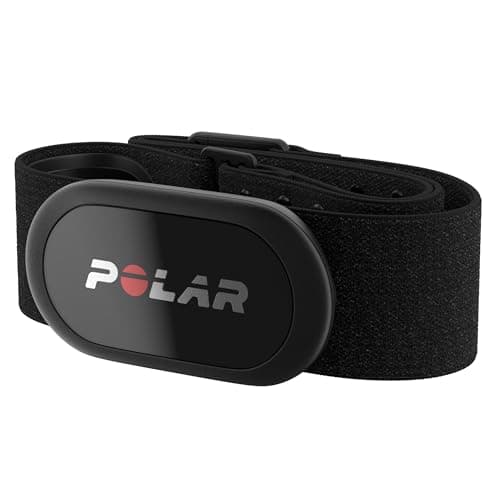
Anyone who trains by heart ratePolar H10
The device other people's validation studies use as the reference. That is the strongest recommendation a sensor can have.
Price as of October 22, 2026. Prices move; Amazon's is the one that counts.
#ad · we may earn a commission from this link to Polar H10
The short answer
Buy an electrical chest strap. In the 2025 Sensors placement study, every optical device tested fell below 0.50 concordance during burpees — including the forearm armband that scored 0.997 on a treadmill — and a wrist-worn Garmin showed a bias of roughly 33 bpm. The Polar H10 is the reference the others were measured against.
Ranked
Quick picks
| # | Device | Best for | Evidence | Score | Price |
|---|---|---|---|---|---|
| 01 | Polar H10 The device other people's validation studies use as the reference. That is the strongest recommendation a sensor can have. | Anyone who trains by heart rate | Peer-reviewed validation | 8.9/10 | $104.45Amazon |
| 02 | 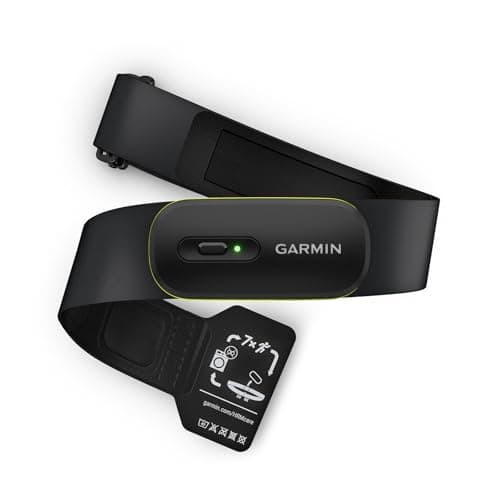 Garmin HRM 600 The strap to buy if you are already inside Garmin's ecosystem and want running dynamics with it. | Garmin owners wanting running dynamics | Manufacturer specification | 7.4/10 | $157.70Amazon |
| 03 | 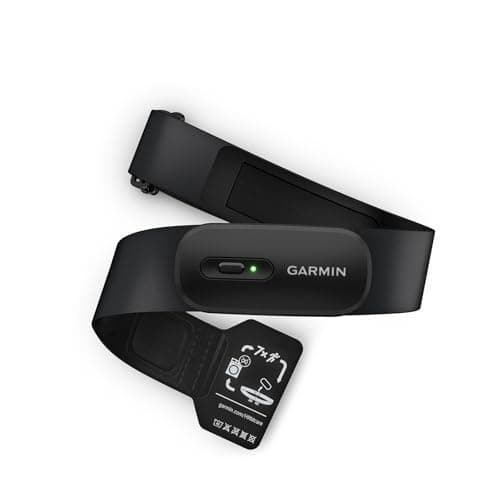 Garmin HRM 200 Garmin's plain electrical strap. Does the one job, costs the least of the three name-brand options. | Cheapest name-brand ECG strap | Manufacturer specification | 7.2/10 | $74.95Amazon |
#ad· Live prices from the Amazon Product API, as of October 22, 2026. Where we have no verified live price we show none. Scores come from the published rubric at How we rank — the Evidence column shows what each ranking actually rests on, including where the answer is nothing.
Why this category has an unusually clear answer
Most recommendations on this site come hedged, because most devices have never been measured. This one does not, because somebody ran exactly the right experiment.
The 2025 study in Sensors (n = 28, 14 male and 14 female) included a burpee protocol alongside rest, a cycling warm-up and a graded treadmill test. Burpees are the closest thing in the literature to a CrossFit stimulus: explosive, whole-body, with the wrist accelerating violently and the heart rate climbing and falling faster than any steady-state protocol produces.
The design was unusually clean. Three identical Whoop 4.0 units were worn simultaneously at wrist, forearm and upper arm, plus a Polar Verity Sense on the forearm and a Garmin Forerunner 55 on the wrist, all against a Polar H10 reference. Identical sensors at three positions removes brand from the equation entirely — any difference is caused by position alone.
What happened during the burpees
- Every optical device fell below 0.50 concordance. Not the wrist ones. All of them — including the forearm and upper-arm placements that won every other protocol in the study.
- The wrist-worn Garmin Forerunner 55 showed a bias of approximately 33 bpm, the largest error recorded anywhere in the paper.
- By contrast, on the graded treadmill the same Verity Sense armband recorded a bias under 0.1 bpm with a concordance of 0.997, and at rest everything agreed within 1 bpm.
That last bullet is the important one. These are not bad devices. They are devices whose measurement principle stops working under a specific stimulus, and that stimulus is your entire training session.
The mechanism, in one paragraph
An optical sensor infers pulse from light scattered back off moving blood. Three things break that during explosive work. The sensor shifts against the tissue with every impact, producing motion artifact the algorithm has to separate from the pulse signal. Whole-body movement is so violent that there is often no clean signal underneath to recover. And the heart rate itself is changing faster than the smoothing these algorithms apply can track, so even a good reading arrives late.
An electrical strap measures the heart's electrical activity directly, timing the R wave rather than estimating a rounded pressure wave that arrived through your circulatory system. It is a different class of measurement, not a better version of the same one, and that is why it survives conditions that break optical sensing.
What we deliberately left off this page
Armbands. We rank the Polar Verity Sense second on this site overall and it is an excellent device. It fell below 0.50 concordance in the burpee protocol along with everything else optical. Recommending it here would mean ignoring the one measurement that speaks directly to this use case, and the whole point of this site is that we do not do that.
Watches. No wrist optical sensor at any price has been shown to handle this. Upgrading from a cheap watch to an expensive one buys features, not a better heart-rate signal during burpees.
The cheapest strap on the site.The COOSPO H808S is an electrical strap and therefore has the right physics, and it is a quarter of the H10's price. It has no published validation of any kind. It appears in our full strap ranking because the principle is correct, but we will not put an unvalidated device on a page whose entire argument is that the evidence should decide.
The practical problems nobody mentions
Strap slippage. Sweat plus burpees plus rowing plus overhead work moves a chest strap. A strap that has slid down your ribs loses electrode contact and produces dropouts that look like erratic heart rate. Wet the electrodes before you start, and tighten it more than feels necessary — the correct tension is snug enough that it does not move when you jump.
Barbell and floor contact. Front rack position, floor presses and burpees all put load directly on the sensor pod. This is uncomfortable rather than damaging, and it is a real reason some people abandon straps. It is also the strongest argument for owning both a strap and an armband and using each where it works.
Gym equipment pairing. Many rowers, bikes and cardio machines listen for the old 5 kHz analog signal rather than Bluetooth or ANT+. Of the straps here, only the Polar H9 broadcasts 5 kHz analog — worth checking against the equipment you actually use before you buy. Our compatibility guide covers this platform by platform.
Class-display systems. Gym heart-rate display boards generally pair over Bluetooth or a proprietary receiver. Every strap here broadcasts Bluetooth, but if your box uses branded hardware, confirm before assuming.
The honest limits of the evidence
We are recommending straps here on the strength of one study with 28 participants, and the H10's position in it is as the referencerather than as a tested device — which means the study cannot measure the H10's own error. Being chosen as the criterion measure is a strong implicit endorsement by researchers, and it is not the same thing as having been validated.
Neither the Garmin HRM 600 nor the HRM 200 has any published validation we could find. They are here because they use the same physical principle as the reference and because platform fit is a legitimate reason to prefer one strap over another — not because anyone has measured them.
Burpees are also not CrossFit. They are the closest published proxy for it. Nobody has measured heart-rate devices during an actual mixed-modal workout with barbells, and we would rather name that gap than pretend the study covered your training exactly.
In full
Every pick, and why
Polar H10
The device other people's validation studies use as the reference. That is the strongest recommendation a sensor can have.
- Sensor
- Electrical (ECG), chest strap
- Connectivity
- Bluetooth LE + ANT+
- Memory
- One session, up to 30 hours
- Battery (stated)
- Up to 400 h, CR2025 coin cell
- Water rating
- WR30
What's good
- Used as the criterion measure in published research — including the 2025 Sensors placement study on this site
- Simultaneous Bluetooth and ANT+, so it pairs to a watch and a bike computer at once
- 400 stated hours on a coin cell you replace rather than recharge
What isn't
- It is a chest strap, and a chest strap is less comfortable than a watch
- The strap wears out well before the sensor does
Skip this if
Skip this if you know yourself well enough to know you will not wear it. An unworn ECG strap measures nothing, and a wrist sensor you actually wear beats it every time.
What the evidence says
Peer-reviewed validationUsed as the reference standard in Sensors (2025), the anatomical-placement study of 28 participants. Being chosen as the criterion is an implicit validation by the researchers, though it means the study cannot measure the H10's own error.
Show how this 8.9 was calculated
| Factor | Weight | Score |
|---|---|---|
| EvidenceResearchers use it as the criterion measure. Nothing else in this category has a stronger evidentiary position. | 30% | 10.0 |
| HardwareElectrical ECG measurement rather than optical — a different and better physical principle for this job. | 20% | 9.5 |
| Metric coverageHeart rate and R-R intervals only; it does not pretend to do anything else. | 20% | 6.5 |
| Endurance400 stated hours on a replaceable coin cell. | 15% | 9.5 |
| Cost per capabilityInexpensive next to any watch, and it outlasts several of them. | 15% | 8.5 |
Price as of October 22, 2026. Prices move; Amazon's is the one that counts.
#ad · we may earn a commission from this link to Polar H10
Garmin HRM 600
The strap to buy if you are already inside Garmin's ecosystem and want running dynamics with it.
- Sensor
- Electrical (ECG), chest strap
- Extras
- Running dynamics, HRV data, on-board storage
What's good
- Adds running dynamics that a watch alone cannot compute
- Stores data when out of watch range and syncs later
What isn't
- Costs meaningfully more than the Polar H10 without a published validation advantage
- Its extra metrics only fully surface inside Garmin's own platform
Skip this if
Skip this if you just want accurate heart rate. You would be paying a premium over the H10 for running-dynamics metrics most runners look at twice and never again.
What the evidence says
Manufacturer specificationGarmin publishes specifications but no validation study we could find. It is an electrical chest strap, which is the right physical principle — but 'right principle' is not the same as 'measured accuracy'.
Show how this 7.4 was calculated
| Factor | Weight | Score |
|---|---|---|
| EvidenceCorrect sensor principle, detailed published specs, no independent validation we could find. | 30% | 6.0 |
| HardwareElectrical ECG measurement with on-board storage. | 20% | 9.0 |
| Metric coverageHeart rate, HRV and the full running-dynamics set. | 20% | 8.5 |
| EnduranceGood stated endurance; rechargeable. | 15% | 8.0 |
| Cost per capabilityA clear premium over the H10 without a matching evidence advantage. | 15% | 6.0 |
$169.997% off
Price as of October 22, 2026. Prices move; Amazon's is the one that counts.
#ad · we may earn a commission from this link to Garmin HRM 600
Garmin HRM 200
Garmin's plain electrical strap. Does the one job, costs the least of the three name-brand options.
- Sensor
- Electrical (ECG), chest strap
- Extras
- Heart rate and HRV data, machine-washable strap
What's good
- Electrical measurement at the lowest name-brand price
- Machine-washable strap
What isn't
- No running dynamics
- No published validation we could find
Skip this if
Skip this if you own a Polar watch or bike computer. The H10 pairs more predictably across platforms and has the stronger evidentiary record.
What the evidence says
Manufacturer specificationPublished specifications only; no independent validation we could find.
Show how this 7.2 was calculated
| Factor | Weight | Score |
|---|---|---|
| EvidenceRight sensor principle, no measured validation we could find. | 30% | 5.5 |
| HardwareElectrical ECG chest strap. | 20% | 8.5 |
| Metric coverageHeart rate and HRV; nothing further. | 20% | 6.0 |
| EnduranceCoin-cell endurance in the usual chest-strap range. | 15% | 8.5 |
| Cost per capabilityThe cheapest electrical strap from a major brand. | 15% | 9.0 |
$79.996% off
Price as of October 22, 2026. Prices move; Amazon's is the one that counts.
#ad · we may earn a commission from this link to Garmin HRM 200
Choosing between the three
Buy the H10 unless you have a specific reason not to
It is the strap researchers use as their criterion measure, it pairs to Bluetooth and ANT+ simultaneously so it works with whatever you own, and Polar states 400 hours on a coin cell you replace rather than recharge. It also stores a session internally for up to 30 hours, which matters more than you would think in a gym where you left your phone in a locker.
Buy the HRM 600 if you are inside Garmin and want running dynamics
It adds metrics a watch alone cannot compute and stores data out of watch range. It costs meaningfully more than the H10 without a published validation advantage, and its extra metrics only fully surface inside Garmin Connect. That is a platform purchase, honestly described.
Buy the HRM 200 if you want the cheapest name-brand electrical strap
Electrical measurement, HRV data, a machine-washable strap — which, for training that involves this much sweat, is a more relevant feature than it sounds. No running dynamics and no published validation.
Do not buy a new watch
If wrist heart rate during metcons is the problem, no watch solves it. The published result is about optical sensing under explosive load, not about which brand made the watch, and the strap costs a fraction of a watch upgrade.
How this ranking was built
Every score on this page comes from one published rubric, applied identically to every device on the site, with the weights written down and the inputs shown. We have not worn any of these devices and we never say we have. Read the method and check us.
Questions
Frequently asked
Why is my heart rate wrong during CrossFit workouts?
Because optical sensing fails under explosive movement. In the 2025 placement study every optical device tested fell below 0.50 concordance during burpees, and a wrist-worn Garmin showed roughly 33 bpm of bias. The sensor shifts against your skin, whole-body motion swamps the pulse signal, and your heart rate changes faster than the algorithm smooths.
Is an armband good enough for CrossFit?
No, and this is the one case where we say that about the Verity Sense. It recorded a bias under 0.1 bpm on a graded treadmill and still fell below 0.50 concordance during burpees, along with every other optical device tested. Proximal placement fixes steady work, not explosive work.
Will a more expensive watch fix my heart rate during metcons?
No. No independent validation shows any current wrist optical sensor materially outperforming another at any price, and the measured failure is a property of optical sensing under violent motion rather than of any brand. A strap costs far less than a watch upgrade and actually addresses the cause.
How do I stop my chest strap slipping during burpees?
Wet the electrodes before you put it on, and tighten it further than feels natural — snug enough that it does not move when you jump. Most erratic-reading complaints about straps are contact problems rather than sensor problems, and a strap that has slid down the ribs has lost its electrodes.
Which strap works with gym cardio machines?
Many machines listen for the old 5 kHz analog signal rather than Bluetooth or ANT+. Of the straps we cover, the Polar H9 is the one that broadcasts 5 kHz analog in addition to Bluetooth and ANT+. Check what your equipment expects before buying — our compatibility guide covers it platform by platform.
Show your working
Sources
Every one of these was read in full before it was cited. Where we could not access a paper, we do not quote its numbers.
- [1]Peer-reviewed validation2025“Impact of Anatomical Placement on the Accuracy of Wearable Heart Rate Monitors During Rest and Various Exercise Intensities”, Sensors (Basel)
n = 28 (14 male, 14 female). Polar H10 chest strap as the reference. Compared Polar Verity Sense (forearm), Garmin Forerunner 55 (wrist) and three simultaneous Whoop 4.0 units at wrist, forearm and upper arm, across rest, cycling warm-up, burpees and a modified Bruce treadmill protocol.
- [2]Manufacturer specification2026Polar — H10 heart rate sensor published specifications
Manufacturer-stated: electrical (ECG) measurement, Bluetooth LE + ANT+, internal memory for one session up to 30 hours, up to 400 h on a CR2025 coin cell, WR30.
- [3]Manufacturer specification2026Polar — Verity Sense published specifications
Manufacturer-stated: optical heart rate worn on the forearm or upper arm, dual Bluetooth plus ANT+, on-board recording, swim mode, WR50.
- [4]Manufacturer specification2026Polar — H9 heart rate sensor published specifications
Manufacturer-stated: electrical (ECG) measurement, Bluetooth LE + ANT+ 2.1 + 5 kHz analog, up to 400 hours on a replaceable 160 mAh coin cell, WR30. No internal memory — the H9 cannot record a session on its own, which is the specification difference from the H10.
Read next
Related
- Wrist vs chest strap
The placement study in full, intensity by intensity.
- Most accurate heart rate monitors
The site-wide accuracy ranking, with live prices.
- Fix your heart-rate data
The diagnosis, if you are not sure the strap is your answer.
- Chest strap compatibility
Confirm it pairs with your gym equipment before you buy.
- Best chest straps overall
The full strap ranking, including the budget options left off this page.