The evidence scoreboard
What a heart rate zone actually is
Two estimates are stacked inside every zone boundary on your watch, and only one of them is cheap to fix. This is which is which.
We earn a commission when you buy through our Amazon links, at no extra cost to you. It never decides a ranking — the rubric that does is published in full, so you can check us rather than take our word for it. How this works.
The short answer
A heart rate zone is a percentage band of your maximum heart rate — Polar publishes zone 2 as 60 to 70% — and your maximum is usually estimated from your age rather than measured. The zone is therefore an estimate read by a sensor that, at the wrist, showed limits of agreement of roughly 10 to 19 bpm during warm-up. That error is about one zone wide.
Ranked
Quick picks
| # | Device | Best for | Evidence | Score | Price |
|---|---|---|---|---|---|
| 01 | 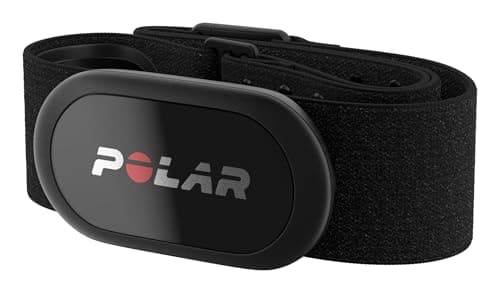 Polar H10 The device other people's validation studies use as the reference. That is the strongest recommendation a sensor can have. | Anyone who trains by heart rate | Peer-reviewed validation | 8.9/10 | $104.88Amazon |
| 02 | 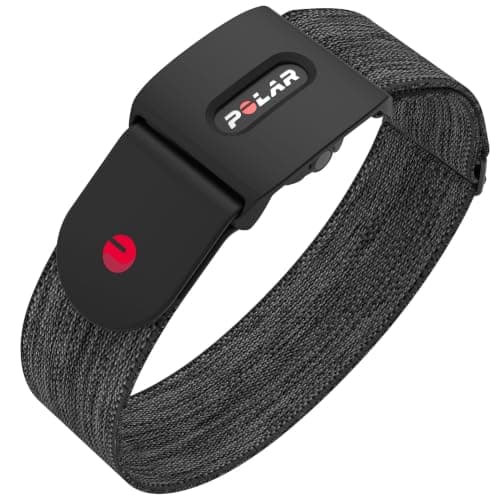 Polar Verity Sense The optical armband that measured a bias under 0.1 bpm against a chest strap on a graded treadmill test. The comfortable answer. | Strap-quality data without the strap | Peer-reviewed validation | 8.4/10 | $104.95Amazon |
| 03 | 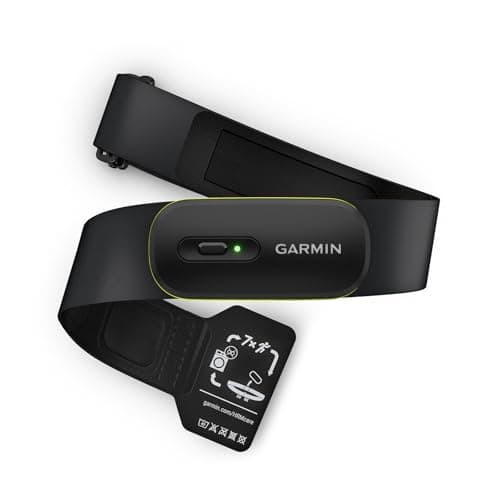 Garmin HRM 600 The strap to buy if you are already inside Garmin's ecosystem and want running dynamics with it. | Garmin owners wanting running dynamics | Manufacturer specification | 7.4/10 | $158.99Amazon |
#ad· Live prices from the Amazon Product API, as of Sep 17, 2026. Where we have no verified live price we show none. Scores come from the published rubric at How we rank — the Evidence column shows what each ranking actually rests on, including where the answer is nothing.
The convention, published by the people who sell it
There is no natural law that divides effort into five parts. The five-zone model is a convention, and Polar publishes it plainly in its own training guide as percentages of maximum heart rate.
| Zone | Intensity | Percentage of maximum heart rate |
|---|---|---|
| Zone 1 | Very light | 50-60% |
| Zone 2 | Light | 60-70% |
| Zone 3 | Moderate | 70-80% |
| Zone 4 | Hard | 80-90% |
| Zone 5 | Maximum | 90-100% |
Notice what that table is: pure arithmetic on a single number. Get that number wrong and every boundary moves together, in the same direction, by the same proportion. Nothing else in the model can compensate.
The number underneath everything, and where it comes from
Polar's own guide says the "most simple way" to establish your maximum heart rate is "the rule 220-your age". That is a population average, not a measurement of you, and it is the default almost everybody ends up training against.
Garmin is more explicit about the mechanics. Its manual states that the watch "uses your user profile information from the initial setup to determine your default heart rate zones", and instructs you that "for the most accurate calorie data during your activity, set your maximum heart rate". It also offers two other anchors: %Max. HR, and %HRR, which the manual defines as maximum heart rate minus resting heart rate. Separately it lets you enter a lactate threshold heart rate, and it can auto-detect that during an activity — but it does not auto-detect your maximum.
Read that sequence carefully. The one input the whole model depends on is the one the watch will not measure for you.
Two errors, stacked
So a zone boundary carries two independent sources of error, and it is worth separating them because they have very different fixes.
- The anchor error. Your true maximum heart rate may be well away from 220 minus your age. If it is 10 bpm out, every boundary is out by roughly 10% of 10 bpm at each threshold — and the whole ladder shifts.
- The reading error. Whatever your zones are, the watch has to tell you which one you are in right now. This is the part that has actually been measured.
The reading error, quantified
The 2025 anatomical-placement study put 28 participants through rest, a cycling warm-up, burpees and a modified Bruce treadmill protocol against a Polar H10 chest strap reference. Two of its findings decide how much a zone readout is worth.
- A Whoop 4.0 worn at the wrist showed limits of agreement of roughly plus or minus 10 to 19 bpm during warm-up.
- A Garmin Forerunner 55 at the wrist recorded a bias of approximately 33 bpm during burpees — the largest error in the study.
Now do the arithmetic against the zone table. Each zone spans 10% of your maximum heart rate. For a maximum of 190 bpm, that is a 19 bpm band. A wrist reading with limits of agreement of 10 to 19 bpm is, at its worst, a full zone wide — during warm-up, which is precisely the part of the session where people check whether they are in zone 2.
Move the sensor and the problem largely disappears. In the same study a Polar Verity Sense on the forearm recorded a bias under 0.1 bpm on the graded treadmill protocol with a concordance of 0.997, and roughly 1.6% mean error at rest. The full position-by-position breakdown is in chest strap versus armband.
Why zone 2 is the most fragile prescription in training
Zone 2 is 60 to 70% of maximum, and it is the zone most modern endurance plans are built around. It is also the one where your body gives you the least feedback: nothing hurts, your breathing is conversational across a wide range, and you cannot tell 68% from 74% by feel. So the number is doing all the work, and an error that would be obvious in zone 5 passes unnoticed here.
That is the honest answer to "which watch is best for zone 2 training". Almost any of them will draw the chart. What decides whether the chart is true is the sensor feeding it and the maximum you entered — neither of which is a watch feature.
Anchoring on threshold instead does not escape the problem
The sophisticated alternative is to set zones from lactate threshold heart rate rather than maximum, which is what Garmin's LTHR field and most coaching software do. It is a better physiological anchor. It is not a more certain one when the watch supplies it.
In the 2025 Frontiers in Physiologystudy of watch-derived threshold estimates against a treadmill graded exercise test with blood lactate sampling, mean absolute error in threshold heart rate was 8.93 bpm for the COROS PACE 3, 10.66 bpm for a Huawei GT Runner and 11.44 bpm for the Garmin Forerunner 265. Correlation with the laboratory value ranged from r = 0.13 to r = 0.67, and no device met the authors' equivalence criteria. We take that apart in what a lactate threshold estimate is worth.
Nine to eleven beats is, again, roughly half a zone. Swapping anchors swaps one estimate for another.
What to actually do about it
Fix the reading first, because it is cheap and it has evidence behind it. A chest strap or a forearm armband costs a fraction of a watch and is the only part of this chain with peer-reviewed support. Nothing else you can buy improves the number as much per dollar.
Then fix the anchor with something you did, not something you are. The highest heart rate you have genuinely seen in a hard race or a maximal hill effort is a better estimate of your maximum than 220 minus your age, and it costs nothing. If your watch-derived threshold and your race results disagree, believe the race.
Then stop treating boundaries as walls. Zone 2 at 68% and zone 3 at 71% are not different physiological states; they are two sides of an arbitrary line drawn on an estimate. The full device-by-device record of what has been measured is in heart rate accuracy by device, and the most accurate sensors we cover are ranked in the most accurate heart rate monitors.
One last framing worth keeping: a fitness tracker and a training watch draw the same zone chart from very different data quality, and the chart looks identical either way. We set out what actually differs in fitness tracker versus smartwatch.
In full
Every pick, and why
Polar H10
The device other people's validation studies use as the reference. That is the strongest recommendation a sensor can have.
- Sensor
- Electrical (ECG), chest strap
- Connectivity
- Bluetooth LE + ANT+
- Memory
- One session, up to 30 hours
- Battery (stated)
- Up to 400 h, CR2025 coin cell
- Water rating
- WR30
What's good
- Used as the criterion measure in published research — including the 2025 Sensors placement study on this site
- Simultaneous Bluetooth and ANT+, so it pairs to a watch and a bike computer at once
- 400 stated hours on a coin cell you replace rather than recharge
What isn't
- It is a chest strap, and a chest strap is less comfortable than a watch
- The strap wears out well before the sensor does
Skip this if
Skip this if you know yourself well enough to know you will not wear it. An unworn ECG strap measures nothing, and a wrist sensor you actually wear beats it every time.
What the evidence says
Peer-reviewed validationUsed as the reference standard in Sensors (2025), the anatomical-placement study of 28 participants. Being chosen as the criterion is an implicit validation by the researchers, though it means the study cannot measure the H10's own error.
Show how this 8.9 was calculated
| Factor | Weight | Score |
|---|---|---|
| EvidenceResearchers use it as the criterion measure. Nothing else in this category has a stronger evidentiary position. | 30% | 10.0 |
| HardwareElectrical ECG measurement rather than optical — a different and better physical principle for this job. | 20% | 9.5 |
| Metric coverageHeart rate and R-R intervals only; it does not pretend to do anything else. | 20% | 6.5 |
| Endurance400 stated hours on a replaceable coin cell. | 15% | 9.5 |
| Cost per capabilityInexpensive next to any watch, and it outlasts several of them. | 15% | 8.5 |
Price as of Sep 17, 2026. Prices move; Amazon's is the one that counts.
#ad · we may earn a commission from this link to Polar H10
Polar Verity Sense
The optical armband that measured a bias under 0.1 bpm against a chest strap on a graded treadmill test. The comfortable answer.
- Sensor
- Optical, forearm or upper-arm band
- Connectivity
- Bluetooth (dual) + ANT+
- Modes
- Live streaming, on-board recording, swim mode
What's good
- Sensors (2025) recorded the smallest bias of any device tested on the graded treadmill protocol — under 0.1 bpm, CCC = 0.997
- Lowest resting error in the same study, at roughly 1.6% MAPE
- Far more comfortable than a chest strap, and it works under a wetsuit
What isn't
- Still an extra device to charge and remember
- Like every optical sensor, it struggled in the same study's burpee protocol — nothing optical handles that well
Skip this if
Skip this if your training is mostly explosive, stop-start work. In the burpee protocol every optical device tested fell below 0.50 concordance, this one included. Buy the H10 for that.
What the evidence says
Peer-reviewed validationDirectly measured in Sensors (2025), n = 28, against a Polar H10 reference: lowest resting MAPE at ~1.6 ± 0.8%, and the smallest bias on the modified Bruce treadmill protocol at under 0.1 bpm (CCC = 0.997).
Show how this 8.4 was calculated
| Factor | Weight | Score |
|---|---|---|
| EvidenceDirectly measured in a peer-reviewed study, with the best result of any optical device tested. | 30% | 9.5 |
| HardwareOptical, but worn on the forearm — the placement the same study found outperforms the wrist. | 20% | 8.5 |
| Metric coverageHeart rate plus on-board recording and a swim mode. | 20% | 7.0 |
| EnduranceRechargeable, with stated endurance comfortably covering long sessions. | 15% | 8.0 |
| Cost per capabilityPriced against a good chest strap, not against a watch. | 15% | 8.5 |
Price as of Sep 17, 2026. Prices move; Amazon's is the one that counts.
#ad · we may earn a commission from this link to Polar Verity Sense
Garmin HRM 600
The strap to buy if you are already inside Garmin's ecosystem and want running dynamics with it.
- Sensor
- Electrical (ECG), chest strap
- Extras
- Running dynamics, HRV data, on-board storage
What's good
- Adds running dynamics that a watch alone cannot compute
- Stores data when out of watch range and syncs later
What isn't
- Costs meaningfully more than the Polar H10 without a published validation advantage
- Its extra metrics only fully surface inside Garmin's own platform
Skip this if
Skip this if you just want accurate heart rate. You would be paying a premium over the H10 for running-dynamics metrics most runners look at twice and never again.
What the evidence says
Manufacturer specificationGarmin publishes specifications but no validation study we could find. It is an electrical chest strap, which is the right physical principle — but 'right principle' is not the same as 'measured accuracy'.
Show how this 7.4 was calculated
| Factor | Weight | Score |
|---|---|---|
| EvidenceCorrect sensor principle, detailed published specs, no independent validation we could find. | 30% | 6.0 |
| HardwareElectrical ECG measurement with on-board storage. | 20% | 9.0 |
| Metric coverageHeart rate, HRV and the full running-dynamics set. | 20% | 8.5 |
| EnduranceGood stated endurance; rechargeable. | 15% | 8.0 |
| Cost per capabilityA clear premium over the H10 without a matching evidence advantage. | 15% | 6.0 |
$169.996% off
Price as of Sep 17, 2026. Prices move; Amazon's is the one that counts.
#ad · we may earn a commission from this link to Garmin HRM 600
If you train by zones, in priority order
- Get an electrical chest strap or a forearm armband. This is the only change on the list with peer-reviewed evidence behind it, and it is the cheapest.
- Replace 220 minus age with your own highest observed effort. A real number from a real race beats a population average.
- Pick one anchor and keep it. %Max. HR and %HRR produce different boundaries from the same body. Switching between them mid-block makes your history meaningless.
- Re-check once a season, not once a week. Maximum heart rate moves slowly. A zone chart that changes every month is measuring noise.
The three sensors above are ranked on the same site-wide rubric as everything else, with the weights published at how we rank. They are here because fixing the reading is the concrete, purchasable half of this problem — the anchor is free to fix and nobody can sell it to you.
Questions
Frequently asked
What are the five heart rate zones?
Polar publishes them as percentages of maximum heart rate: zone 1 at 50-60%, zone 2 at 60-70%, zone 3 at 70-80%, zone 4 at 80-90% and zone 5 at 90-100%. The boundaries are a convention rather than a physiological measurement.
How accurate is 220 minus your age?
It is a population average, and Polar itself presents it as the simplest method rather than the best one. Because every zone boundary is a percentage of that single number, an error in it moves your whole zone ladder in one direction. Your highest genuinely observed heart rate in a hard effort is a better anchor and costs nothing.
Which watch is best for zone 2 training?
The question is usually pointed at the wrong component. Almost every watch we cover will display zones. What decides whether the display is true is the sensor feeding it — and at the wrist, the 2025 placement study recorded limits of agreement of roughly 10 to 19 bpm during warm-up, which is about one zone wide. Buy a strap or an armband before you buy a watch.
Should I set zones from maximum heart rate or threshold?
Threshold is the better physiological anchor, but a watch-derived threshold carries its own measured error — 8.93 to 11.44 bpm mean absolute error across the three devices in the 2025 study, with correlations as low as r = 0.13. Use a threshold you have confirmed against a race or a field test, not one the watch produced unprompted.
Show your working
Sources
Every one of these was read in full before it was cited. Where we could not access a paper, we do not quote its numbers.
- [1]Manufacturer claim only2026Polar — “Heart Rate Zones”, published training guide
Polar's own published guide, read 2026-09-18. States the five-zone model as percentages of maximum heart rate — zone 1 at 50-60%, zone 2 at 60-70%, zone 3 at 70-80%, zone 4 at 80-90%, zone 5 at 90-100% — and that the “most simple way” to establish maximum heart rate is “the rule 220-your age”. Tiered as a manufacturer claim rather than a specification: it is training guidance, and the zone boundaries themselves are a convention, not a measurement.
- [2]Manufacturer specification2026Garmin — Forerunner 265 Series owner's manual, “Setting Your Heart Rate Zones”
Manufacturer-stated, read 2026-09-18. Garmin states that “the watch uses your user profile information from the initial setup to determine your default heart rate zones”, that “for the most accurate calorie data during your activity, set your maximum heart rate”, and that zones can be based on BPM, “%Max. HR” or “%HRR” (heart rate reserve, defined in the manual as maximum heart rate minus resting heart rate). Lactate threshold heart rate is entered separately and can be auto-detected; maximum heart rate is not.
- [3]Peer-reviewed validation2025“Impact of Anatomical Placement on the Accuracy of Wearable Heart Rate Monitors During Rest and Various Exercise Intensities”, Sensors (Basel)
n = 28 (14 male, 14 female). Polar H10 chest strap as the reference. Compared Polar Verity Sense (forearm), Garmin Forerunner 55 (wrist) and three simultaneous Whoop 4.0 units at wrist, forearm and upper arm, across rest, cycling warm-up, burpees and a modified Bruce treadmill protocol.
- [4]Peer-reviewed validation2025Lu, Cui, Zhu, Wu, Xing, Pan & Shen, “Validity of smartwatch-derived estimates of lactate threshold heart rate and pace compared to graded exercise testing”, Frontiers in Physiology 16:1621996
DOI 10.3389/fphys.2025.1621996. 100 healthy recreational runners (61 male, 39 female, 28.0 ± 9.6 years) against a treadmill graded exercise test with fingertip blood lactate (Biosen C-line), threshold determined by the modified Dmax method. Device counts were unequal: Huawei GT Runner n = 100, Garmin Forerunner 265/265s n = 23, COROS PACE 3 n = 17. Authors’ stated limits: unbalanced samples, indoor reference against outdoor watch tests, day-to-day threshold variability, and different heart-rate acquisition between devices — the Garmin protocol required an ECG chest strap while the other two used wrist PPG — plus undisclosed manufacturer algorithms.
- [5]Manufacturer specification2026Polar — H10 heart rate sensor published specifications
Manufacturer-stated: electrical (ECG) measurement, Bluetooth LE + ANT+, internal memory for one session up to 30 hours, up to 400 h on a CR2025 coin cell, WR30.
Read next
Related
- What a threshold estimate is worth
The other anchor, and the study that measured how far off it is.
- Most accurate heart rate monitors
The purchasable half of this problem, ranked on the evidence.
- Heart rate accuracy by device
Every published figure, device by device, including the blanks.
- Fitness tracker vs smartwatch
Two devices that draw the same zone chart from different data.
- Chest strap vs armband
Where to put the sensor, with the measured results for each position.
- What training load actually measures
The metric your zones feed, and what it inherits from them.