Head to head
Garmin Forerunner 570 vs fēnix 8
Nearly every comparison of these two quotes battery figures from different satellite modes. Garmin publishes both at matched settings, so here they are side by side.
We earn a commission when you buy through our Amazon links, at no extra cost to you. It never decides a ranking — the rubric that does is published in full, so you can check us rather than take our word for it. How this works.
The short answer
Buy the Forerunner 570 unless you need maps or multi-day battery. It records the same core physiological data as the fēnix 8, from the same generation of Garmin sensor, and costs meaningfully less. The fēnix 8 buys cartography, a dive rating, a tougher case and roughly two and a half times the stated endurance in the accurate satellite mode.
Ranked
Quick picks
| # | Device | Best for | Evidence | Score | Price |
|---|---|---|---|---|---|
| 01 | 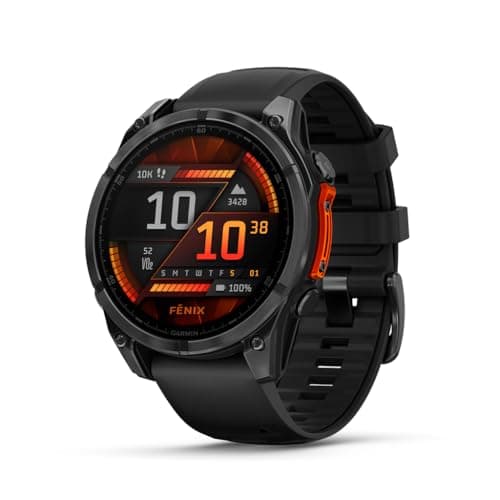 Garmin fēnix 8 (47mm) Everything Garmin makes, in a case built to survive being hit. You pay for the durability, not for better data. | Expedition and rough-terrain use | Manufacturer specification | 7.5/10 | $739.99Amazon |
| 02 | 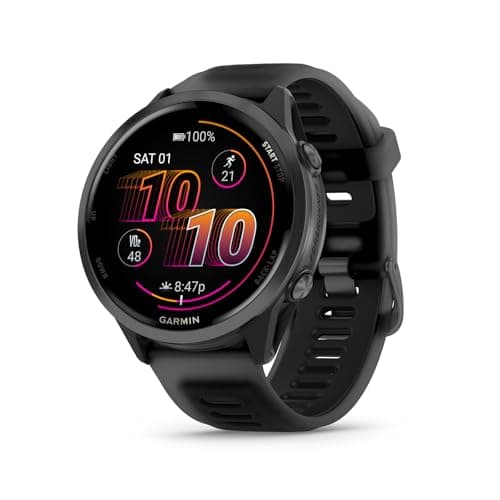 Garmin Forerunner 570 Same sensor family as the 970, $200 less, and no maps. For most runners that is the correct trade. | Most runners, most of the time | Manufacturer specification | 7.3/10 | $546.00Amazon |
#ad· Live prices from the Amazon Product API, as of Oct 4, 2026. Where we have no verified live price we show none. Scores come from the published rubric at How we rank — the Evidence column shows what each ranking actually rests on, including where the answer is nothing.
First, the mode mismatch nearly every table gets wrong
You will see these two compared as “18 hours against 35”. Those are real Garmin numbers and they describe different satellite modes. The 570's 18 hours is its GPS-Only figure; the fēnix 8's 35 hours is all satellite systems plus multi-band. Quoting one against the other is the single most common way spec comparisons in this category mislead without printing a false number.
Garmin publishes every mode for both watches, so there is no excuse for the mismatch. Matched properly, the gap is larger, not smaller.
| Stated battery, matched mode | Forerunner 570 (47 mm) | fēnix 8 (47 mm) |
|---|---|---|
| Smartwatch mode | 11 days | 16 days |
| GPS-Only | 18 h | 47 h |
| All systems + multi-band | 14 h | 35 h |
| SatIQ / AutoSelect | 16 h | Not published as a separate row |
The 570 figures come from Garmin's Forerunner 570 product page and the fēnix 8 figures from the fēnix 8 Series owner's manual battery table, with the Gesture screen timeout. Both are manufacturer-stated and neither has been independently verified by anyone, including us.
A note on our own arithmetic, because it uses different modes
The cost-per-GPS-hour figures this site prints use 18 hours for the 570 and 35 hours for the fēnix 8 — GPS-Only against all-systems multi-band. That is deliberate and it is a compromise: each is the figure that watch's page has carried since launch, and changing one now would silently move every derived number on every page that renders it. We would rather name the inconsistency here than quietly repair it and move a dozen published figures. If you want the strictly matched comparison, it is the table above: 14 hours against 35.
The rest of the specification
| Specification | Forerunner 570 | fēnix 8 |
|---|---|---|
| Case sizes | 42 mm or 47 mm, aluminum bezel | 47 mm (other sizes exist), titanium or steel bezel |
| Display | 1.4" 454 × 454 AMOLED (47 mm), Gorilla Glass 3 | AMOLED |
| Weight | 50 g (47 mm), 42 g (42 mm) | Heavier — a rugged case, not a running case |
| Maps | None — breadcrumb navigation only | Preloaded TopoActive |
| Water rating | 5 ATM | Dive-rated |
| Cost per stated GPS hour | $30.33 | $21.14 |
What you are actually buying with the extra money
The gap between the two is $194at today's prices. Three things cross that gap, and none of them is data.
Maps. Real cartography with your route drawn on it is a different tool from a breadcrumb line, and the difference only matters when you need to leave the route rather than follow it. We wrote a whole page on whether you actually need maps because it is the single most oversold feature in this category, and for most road runners the honest answer is no.
The case. Dive rating, tougher materials, and a build meant to survive impact. If your watch meets rock, this is worth paying for. If it meets pavement, you are buying a specification you will never test.
Endurance.This is the real one. Thirty-five stated hours in the accurate satellite mode against fourteen is not a marginal difference — it is the difference between finishing a hundred-miler on one charge and not. If you race long, the fēnix is not a luxury.
What does not cross the gap
Both watches carry the same generation of Garmin Elevate optical sensor and the same multi-band receiver, both compute the same training metrics from it, and neither has been independently validated that we could find. The 570 records the same heart rate, the same VO2 max estimate, the same training load and the same positioning data. A reader upgrading for better numbers is buying the wrong thing.
If heart-rate data on intervals is the actual complaint, neither watch solves it — they put the same sensor in the same place on the same wrist. The published fix is a chest strap, and it costs a fraction of either watch.
The thing to check before you buy the fēnix
Garmin announced the fēnix 9 and fēnix 9 Pro on 25 August 2026, which makes the fēnix 8 the previous generation. It is still on sale and it is unchanged by the announcement — and outgoing flagships are exactly where real discounts appear. That cuts both ways: the price you see today may be unusually good, and it may also be a line Garmin is winding down. The Forerunner 570, launched in May 2025, is current.
How our rubric scores them, and why they are close
The fēnix 8 scores 7.5 and the Forerunner 570 scores 7.3. That is a narrower gap than the price difference suggests, and the reason is the two columns that decide it. They tie on evidence — nothing published for either, 30% of the score each way. The fēnix wins hardware, coverage and endurance. The 570 wins cost per capability by a wide margin, which is most of what pulls it back level.
A rubric that weighted features alone would put a large gap here. Ours does not, because the premise of this site is that what a device can be shown to measure matters more than what it can be shown to do.
In full
Every pick, and why
Garmin fēnix 8 (47mm)
Everything Garmin makes, in a case built to survive being hit. You pay for the durability, not for better data.
- Case
- 47mm, AMOLED
- Satellite
- Multi-band GNSS
- Extras
- Built-in maps, dive-rated, speaker and microphone
What's good
- The most durable case Garmin puts a multi-band receiver into
- Maps, dive modes and the full metric set in one device
What isn't
- Records essentially the same physiological data as a Forerunner costing a third as much
- Heavy compared with a dedicated running watch
Skip this if
Skip this if you run on roads and pavements. You would be buying a case specification you will never test, and the numbers it records are the ones a Forerunner already gives you.
What the evidence says
Manufacturer specificationPublished specifications only; no independent validation of this model that we could find.
Show how this 7.5 was calculated
| Factor | Weight | Score |
|---|---|---|
| EvidenceDetailed published specs, no independent measured validation. | 30% | 5.5 |
| HardwareMulti-band GNSS in Garmin's most ruggedized current case. | 20% | 9.5 |
| Metric coverageThe widest metric and mode coverage of any device on this site. | 20% | 10.0 |
| EnduranceAmong the longest stated GPS endurance in Garmin's AMOLED line. | 15% | 8.5 |
| Cost per capabilityBy some distance the weakest cost-per-capability figure here — the premium buys the case, not the data. | 15% | 4.5 |
$999.9926% off
Price as of Oct 4, 2026. Prices move; Amazon's is the one that counts.
#ad · we may earn a commission from this link to Garmin fēnix 8 (47mm)
Garmin Forerunner 570
Same sensor family as the 970, $200 less, and no maps. For most runners that is the correct trade.
- Case
- 42mm or 47mm, AMOLED
- Satellite
- Multi-band GNSS
- Battery (stated)
- 11 days smartwatch / 18 h GPS (47mm)
- Maps
- None
- Extras
- Speaker and microphone, on-watch music
What's good
- Records the same core metrics as the 970 — the data you get back is not a cut-down version
- Two case sizes, which the 970 does not offer
- Multi-band GNSS at a mid-range price
What isn't
- 18 stated GPS hours is thin for ultra distances
- No maps, so navigation is breadcrumb-only
Skip this if
Skip this if you race beyond about 12 hours or navigate unfamiliar trails. The battery and the missing maps are both real limits, and neither is fixable in software.
What the evidence says
Manufacturer specificationAs with the 970, no independent validation of this model's optical heart rate has been published that we could find.
Show how this 7.3 was calculated
| Factor | Weight | Score |
|---|---|---|
| EvidenceDetailed published specs, no independent measured validation of this model. | 30% | 5.5 |
| HardwareMulti-band GNSS and the same current-generation optical sensor family as the 970. | 20% | 9.0 |
| Metric coverageEverything the 970 records except maps and the ECG app. | 20% | 8.5 |
| EnduranceGarmin states 18 hours GPS, 11 days smartwatch, on the 47mm case. | 15% | 6.0 |
| Cost per capabilityMaterially cheaper than the 970 for the same recorded data. | 15% | 8.0 |
Price as of Oct 4, 2026. Prices move; Amazon's is the one that counts.
#ad · we may earn a commission from this link to Garmin Forerunner 570
How this ranking was built
Every score on this page comes from one published rubric, applied identically to every device on the site, with the weights written down and the inputs shown. We have not worn any of these devices and we never say we have. Read the method and check us.
Questions
Frequently asked
Is the fēnix 8 more accurate than the Forerunner 570?
There is no published evidence that it is. Both use the same generation of Garmin optical sensor and the same multi-band GNSS receiver, and no independent validation of either model exists that we could find. The fēnix is more rugged and lasts longer; it is not a better measuring instrument on anything anyone has measured.
Why do some sites say the 570 gets 18 hours and others say 14?
Both are Garmin figures for different modes. On the 47 mm, Garmin states 18 hours in GPS-Only, 16 in SatIQ and 14 in all systems plus multi-band. If you bought a multi-band watch in order to run multi-band, 14 is your number. Our site-wide arithmetic uses the 18 that the 570's page has carried since launch, and this page says so rather than changing it quietly.
Do I need maps on a running watch?
For road and repeated routes, no — breadcrumb navigation is enough, and that is what the 570 has. Maps earn their money when you need to improvise a route in unfamiliar terrain. It is the most oversold feature in the category, which is why we gave it its own page.
Which one for a first marathon?
The Forerunner 570, comfortably. Eighteen stated GPS-Only hours covers any marathon with a wide margin, it is 50 g rather than a rugged case, and the money saved is better spent on a chest strap if you care about the data. Our marathon training roundup ranks the full field for that use.
Is the fēnix 8 worth it for ultras?
This is the case where it genuinely is. Thirty-five stated hours in all systems plus multi-band against the 570's fourteen is the difference between one charge and a mid-race power bank, and the maps matter when the course leaves marked trail. Our ultrarunning roundup ranks it against the longer-lasting COROS options.
Show your working
Sources
Every one of these was read in full before it was cited. Where we could not access a paper, we do not quote its numbers.
- [1]Manufacturer specification2026Garmin — Forerunner 570 product page, battery life by GNSS mode (42 mm and 47 mm)
Manufacturer-stated, read 2026-09-20. 47 mm: smartwatch mode up to 11 days; GPS-Only GNSS mode up to 18 hours; SatIQ (AutoSelect) GNSS mode up to 16 hours; All-Systems GNSS mode + Multi-Band up to 14 hours; with music 9 h GPS-only, 8 h SatIQ, 8 h All-Systems + Multi-Band. 42 mm: smartwatch up to 10 days; GPS-Only up to 18 hours; SatIQ up to 14 hours; All-Systems + Multi-Band up to 13 hours; with music 9 / 8 / 8 h. Also stated: 47 x 47 x 12.9 mm and 50 g (47 mm), 42.4 x 42.4 x 12.9 mm and 42 g (42 mm), 1.4" 454 x 454 AMOLED (47 mm) or 1.2" 390 x 390 (42 mm), Corning Gorilla Glass 3, aluminum bezel, 5 ATM, 8 GB memory, built-in speaker/microphone, Elevate wrist heart rate monitor, connectivity Bluetooth / ANT+ / Wi-Fi, Connect IQ, $549.99. Garmin publishes no plain All-Systems (single-frequency, multi-constellation) figure for this watch, only GPS-Only, SatIQ and All-Systems + Multi-Band.
- [2]Manufacturer specification2026Garmin — fēnix 8 Series owner’s manual, battery information
Manufacturer-stated, read 2026-08-18. One table covers the fēnix 8 and the fēnix 8 Pro, which is why the two can be compared here without mixing sources. fēnix 8 AMOLED 47 mm: 16 days smartwatch with Gesture (7 with Always On Display), 47 h GPS-only (37 AOD), 35 h all satellite systems plus multi-band (28 AOD). fēnix 8 Pro 47 mm: 15 days (8 AOD), 44 h GPS-only (33 AOD), 30 h all systems plus multi-band (23 AOD). fēnix 8 Pro 51 mm: 27 days (15 AOD), 78 h GPS-only (56 AOD), 53 h all systems plus multi-band (41 AOD), and 21 h all systems plus multi-band with LTE LiveTrack (19 AOD).
- [3]Manufacturer specification2026Garmin — Forerunner 570 (47 mm) published specifications
Manufacturer-stated battery: up to 11 days smartwatch mode, up to 18 hours GPS mode.
- [4]Manufacturer claim only2026Garmin — “Garmin announces the fēnix 9 and fēnix 9 Pro GPS smartwatch”, Garmin newsroom
Garmin press release, 25 August 2026. fēnix 9 “available now, starts at $999.99”; fēnix 9 Pro starts at $1,099.99. Used here only to establish that the fēnix 8 is now the previous generation. No fēnix 9 is ranked on this site — no validation exists and no ASIN has been resolved.
Read next
Related
- Garmin Forerunner 570 review
The full write-up, including every GNSS mode Garmin publishes.
- Garmin fēnix 8 review
What the rugged case does and does not buy you.
- fēnix 8 vs Forerunner 970
The same question one tier up, where the price gap narrows.
- Garmin fēnix 8 Pro review
What the satellite radio adds, and what it costs in battery.
- Do you need maps?
The feature that accounts for most of this price gap, examined honestly.