The evidence scoreboard
Training status, explained
Unproductive. Strained. Overreaching. These are not measurements of your body — they are labels a model prints when three separate estimates move in particular directions. Here is what each one means, and how much to trust it.
We earn a commission when you buy through our Amazon links, at no extra cost to you. It never decides a ranking — the rubric that does is published in full, so you can check us rather than take our word for it. How this works.
Top pick
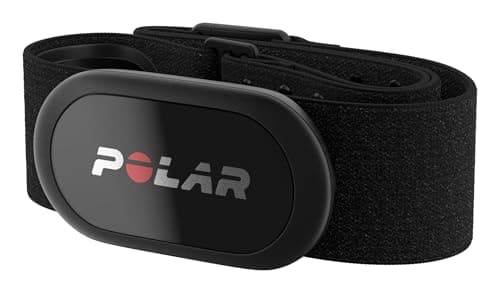
Anyone who trains by heart ratePolar H10
The device other people's validation studies use as the reference. That is the strongest recommendation a sensor can have.
$104.9519% off
Price as of October 10, 2026. Prices move; Amazon's is the one that counts.
#ad · we may earn a commission from this link to Polar H10
The short answer
Training status is a label, not a measurement. Garmin states it is based on "changes to your VO2 max., acute load, and HRV status over an extended time period". Unproductive means the model sees your load holding up while its fitness estimate falls. All three inputs are estimates with published error.
Ranked
Quick picks
| # | Device | Best for | Evidence | Score | Price |
|---|---|---|---|---|---|
| 01 | Polar H10 The device other people's validation studies use as the reference. That is the strongest recommendation a sensor can have. | Anyone who trains by heart rate | Peer-reviewed validation | 8.9/10 | $84.74Amazon |
| 02 | 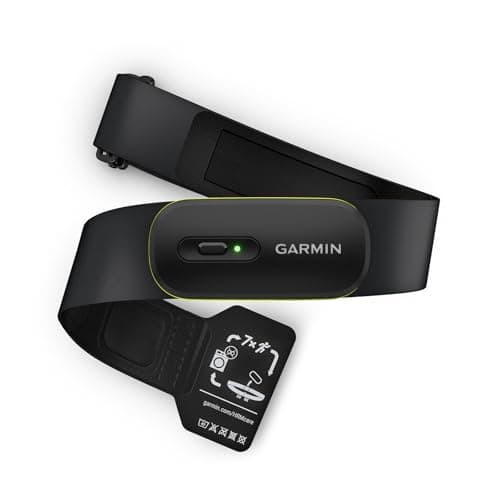 Garmin HRM 600 The strap to buy if you are already inside Garmin's ecosystem and want running dynamics with it. | Garmin owners wanting running dynamics | Manufacturer specification | 7.4/10 | $157.90Amazon |
| 03 | 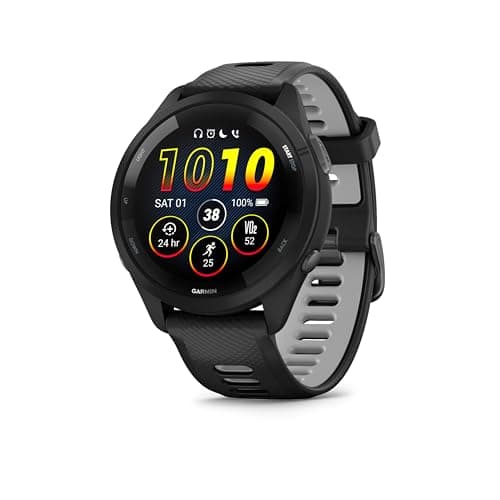 Garmin Forerunner 265 One of the very few watches on this site whose training estimates have actually been measured against a laboratory — and the measurement was not kind. | Runners who want a measured device, flaws included | Peer-reviewed validation | 7.2/10 | $439.00Amazon |
#ad· Live prices from the Amazon Product API, as of October 10, 2026. Where we have no verified live price we show none. Scores come from the published rubric at How we rank — the Evidence column shows what each ranking actually rests on, including where the answer is nothing.
What the labels mean, in Garmin's own words
There is no need to guess at these: Garmin publishes the definitions in the owner's manual. We quote them rather than paraphrasing, because the paraphrases circulating online are where most of the confusion starts.
| Status | Garmin's definition |
|---|---|
| No Status | "The watch needs you to record multiple activities over two weeks, with VO2 max. results from running or cycling, to determine your training status." |
| Detraining | "You have a break in your training routine or you are training much less than usual for a week or more." |
| Recovery | "Your lighter training load is allowing your body to recover, which is essential during extended periods of hard training." |
| Maintaining | "Your current training load is enough to maintain your fitness level." |
| Productive | "Your current training load is moving your fitness level and performance in the right direction." |
| Peaking | "You are in ideal race condition. Your recently reduced training load is allowing your body to recover and fully compensate for earlier training." |
| Overreaching | "Your training load is very high and counterproductive. Your body needs a rest." |
| Unproductive | "Your training load is at a good level, but your fitness is decreasing." |
| Strained | "There is imbalance between your recovery and training load." |
Read Unproductive and Strained together and the difference becomes obvious. Unproductive is a statement about the fitness estimate falling while load stays normal. Strained is a statement about recovery not keeping pace with load. Different inputs, different problems, and the advice that follows from each is different too.
The three estimates the label is built from
Garmin states the inputs explicitly: changes in VO2 max, acute load, and HRV status, over an extended period. That sentence is the most useful thing in the manual, because it tells you exactly which measurements to interrogate. None of the three is a direct measurement of anything.
VO2 max is a model output. Your watch infers it from the relationship between pace and heart rate, and the published record on wearable VO2 max is mixed at best: the two peer-reviewed validations of an Apple Watch both found it undershooting in fitter participants, and a 2025 systematic review covering 13 studies and 273 participants found that undisclosed algorithms make cross-device comparison impossible. No validation of a current Garmin VO2 max estimate exists that we could find. The device-by-device record is at VO2 max accuracy by device.
Acute load is heart rate, integrated. It is accumulated from the intensity of your sessions, which means it inherits every heart-rate error. A wrist sensor that lags a hard start by thirty seconds records a different session than the one you ran. The mechanism is in training load explained.
HRV status is the weakest link. In a 2025 validation across 536 nights against a single-lead ECG, a Garmin fēnix 6 recorded 0.87 concordance and 10.52% error for nocturnal HRV — agreement the authors themselves described as poor — while two Oura generations managed 0.99 and 0.97. The same study dropped Garmin from the resting heart-rate comparison altogether, because the 30-minute window Garmin uses is not timestamped. The full table is at HRV accuracy by device.
So when the watch says Unproductive, the honest reading is: one estimate with unknown accuracy has drifted relative to another estimate with measured-but-poor accuracy. That is not a reason to ignore it. It is a reason to treat it as a prompt to look at your own training log rather than a verdict on your body.
What to do about each label
- Unproductive. Check whether anything changed that would lower the pace-for-heart-rate relationship without lowering your fitness: heat, altitude, illness, a new route with more climbing, or a switch from a chest strap to wrist heart rate. All of those move the VO2 max estimate down while you are training exactly as before.
- Strained. This one leans on HRV status, the input with the poorest measured agreement on Garmin hardware. Look at your sleep and your own sense of fatigue first; if they disagree with the label, believe them.
- No Status. Garmin says it needs multiple activities over two weeks with VO2 max results from running or cycling. Indoor sessions without a reliable pace signal often will not produce those, which is why the status can vanish during a winter block.
- Peaking.Garmin says this state "can only be maintained for a short time". It is the one label that is genuinely useful as a race-timing signal, because it fires off a deliberate reduction in load that you planned anyway.
The one input you can actually improve
You cannot open the model, and Garmin does not publish the equations. What you can change is the quality of the heart-rate data going into it — the signal underneath both acute load and the VO2 max estimate.
That is why the picks on this page are sensors rather than watches. A Polar H10 measures the heart's electrical signal directly and is the reference instrument in both the 2025 placement study and the 536-night HRV validation. Garmin's HRM 600 is the strap Garmin's own current line-up guide credits with running dynamics, and it connects over ANT+, which is what Garmin's manuals require before running dynamics appear at all. The Forerunner 265 is here because it is the one mid-range Garmin with a peer-reviewed measurement behind any of its derived numbers: in a 2025 study of 100 runners its threshold test returned a usable result 65.2% of the time, the best completion rate of the three watches tested — using an ECG chest strap, not the wrist sensor.
Two free improvements are worth more than most purchases here. Set your maximum heart rate rather than leaving the age-formula default, which Garmin's manual names as the setting the most accurate calorie and zone data depends on. And wear the watch consistently overnight, because HRV status is built from a trend that a week of missing nights breaks. What the zones themselves mean is in heart rate zones explained.
In full
Every pick, and why
Polar H10
The device other people's validation studies use as the reference. That is the strongest recommendation a sensor can have.
- Sensor
- Electrical (ECG), chest strap
- Connectivity
- Bluetooth LE + ANT+
- Memory
- One session, up to 30 hours
- Battery (stated)
- Up to 400 h, CR2025 coin cell
- Water rating
- WR30
What's good
- Used as the criterion measure in published research — including the 2025 Sensors placement study on this site
- Simultaneous Bluetooth and ANT+, so it pairs to a watch and a bike computer at once
- 400 stated hours on a coin cell you replace rather than recharge
What isn't
- It is a chest strap, and a chest strap is less comfortable than a watch
- The strap wears out well before the sensor does
Skip this if
Skip this if you know yourself well enough to know you will not wear it. An unworn ECG strap measures nothing, and a wrist sensor you actually wear beats it every time.
What the evidence says
Peer-reviewed validationUsed as the reference standard in Sensors (2025), the anatomical-placement study of 28 participants. Being chosen as the criterion is an implicit validation by the researchers, though it means the study cannot measure the H10's own error.
Show how this 8.9 was calculated
| Factor | Weight | Score |
|---|---|---|
| EvidenceResearchers use it as the criterion measure. Nothing else in this category has a stronger evidentiary position. | 30% | 10.0 |
| HardwareElectrical ECG measurement rather than optical — a different and better physical principle for this job. | 20% | 9.5 |
| Metric coverageHeart rate and R-R intervals only; it does not pretend to do anything else. | 20% | 6.5 |
| Endurance400 stated hours on a replaceable coin cell. | 15% | 9.5 |
| Cost per capabilityInexpensive next to any watch, and it outlasts several of them. | 15% | 8.5 |
$104.9519% off
Price as of October 10, 2026. Prices move; Amazon's is the one that counts.
#ad · we may earn a commission from this link to Polar H10
Garmin HRM 600
The strap to buy if you are already inside Garmin's ecosystem and want running dynamics with it.
- Sensor
- Electrical (ECG), chest strap
- Extras
- Running dynamics, HRV data, on-board storage
What's good
- Adds running dynamics that a watch alone cannot compute
- Stores data when out of watch range and syncs later
What isn't
- Costs meaningfully more than the Polar H10 without a published validation advantage
- Its extra metrics only fully surface inside Garmin's own platform
Skip this if
Skip this if you just want accurate heart rate. You would be paying a premium over the H10 for running-dynamics metrics most runners look at twice and never again.
What the evidence says
Manufacturer specificationGarmin publishes specifications but no validation study we could find. It is an electrical chest strap, which is the right physical principle — but 'right principle' is not the same as 'measured accuracy'.
Show how this 7.4 was calculated
| Factor | Weight | Score |
|---|---|---|
| EvidenceCorrect sensor principle, detailed published specs, no independent validation we could find. | 30% | 6.0 |
| HardwareElectrical ECG measurement with on-board storage. | 20% | 9.0 |
| Metric coverageHeart rate, HRV and the full running-dynamics set. | 20% | 8.5 |
| EnduranceGood stated endurance; rechargeable. | 15% | 8.0 |
| Cost per capabilityA clear premium over the H10 without a matching evidence advantage. | 15% | 6.0 |
$169.997% off
Price as of October 10, 2026. Prices move; Amazon's is the one that counts.
#ad · we may earn a commission from this link to Garmin HRM 600
Garmin Forerunner 265
One of the very few watches on this site whose training estimates have actually been measured against a laboratory — and the measurement was not kind.
- Case
- 46mm AMOLED (the 265S is 42mm)
- Satellite
- All + Multi-Band GPS
- Battery (stated)
- 13 days smartwatch / 20 h GPS-only / 14 h all + multi-band
- Storage
- Up to 8 GB media, 5 ATM
What's good
- Multi-band positioning and an AMOLED screen in a mid-range Forerunner, in two case sizes
- It has actually been tested: in a 2025 study of 100 recreational runners, 23 of them wore a Forerunner 265 against fingertip blood lactate — more than can be said for most watches sold today
- 8 GB of on-watch music storage, so the phone can stay at home
What isn't
- In that study its threshold PACE estimate overshot the laboratory value by 25.78% on average, and it overestimated rather than erring low
- Its threshold test also failed to return a usable result 34.8% of the time
Skip this if
Skip this if you plan to set training zones from the watch's own threshold test. The one published measurement of that feature says it overestimates by roughly a quarter, and no firmware note undoes a published result.
What the evidence says
Peer-reviewed validationLu et al., Frontiers in Physiology 16:1621996 (2025), tested 100 recreational runners against fingertip blood lactate; 23 of them wore a Forerunner 265 or 265s. Its threshold pace estimate carried a mean error of 25.78% and overestimated; its threshold heart rate was much closer, inside the 5.95-7.15% band shared by the three watches tested; and its test produced a usable result 65.2% of the time. The authors note the Garmin protocol required an ECG chest strap while the other two devices used wrist sensing. That is a peer-reviewed measurement of this exact model — unusual in this category, and unflattering.
Show how this 7.2 was calculated
| Factor | Weight | Score |
|---|---|---|
| EvidenceA peer-reviewed measurement of this specific watch exists, which almost nothing else in the range can claim. It went badly, so this cannot score higher than mid. | 30% | 6.0 |
| HardwareAll + Multi-Band GPS and an AMOLED display in a mid-range case. | 20% | 8.5 |
| Metric coverageFull Garmin training platform and music storage; no maps. | 20% | 8.5 |
| EnduranceGarmin states 20 hours GPS-only, 14 hours all + multi-band, 13 days smartwatch. | 15% | 6.5 |
| Cost per capabilityMid-range sticker; a multi-band receiver at this price is the value here. | 15% | 7.0 |
Price as of October 10, 2026. Prices move; Amazon's is the one that counts.
#ad · we may earn a commission from this link to Garmin Forerunner 265
Before you change your training because of a label
- Check what changed in the inputs, not in you. Heat, altitude, a new sensor, a hillier route and a bad night all move these estimates without any change in fitness.
- Treat HRV status as the softest input. It is the one with a published poor-agreement result on Garmin hardware, and the one most sensitive to how you slept with the watch on.
- Fix the heart-rate signal before buying a newer watch. A strap costs a fraction of a flagship and improves every derived number at once.
Questions
Frequently asked
What does unproductive mean on my Garmin?
In Garmin's words: "your training load is at a good level, but your fitness is decreasing". Mechanically, the watch's VO2 max estimate has trended down while your load held up. Heat, altitude, illness or switching from a chest strap to wrist heart rate can all produce that without any real loss of fitness.
What is the difference between unproductive and strained?
Unproductive is about the fitness estimate falling. Strained is, in Garmin's words, "imbalance between your recovery and training load" — a statement driven by HRV status rather than by the VO2 max trend. Different inputs, so different things to check.
Is Garmin training status accurate?
No study has validated training status itself, and Garmin publishes no accuracy figure for it. What has been measured are its inputs: a Garmin fēnix 6 recorded 0.87 concordance and 10.52% error for overnight HRV against an ECG in a 2025 validation, which the authors called poor agreement, and no current Garmin VO2 max estimate has been validated at all.
Why does my training status say no status?
Garmin states the watch needs multiple recorded activities over two weeks, including VO2 max results from running or cycling. Indoor work that does not produce a reliable pace signal often will not generate those results, so the status disappears.
Show your working
Sources
Every one of these was read in full before it was cited. Where we could not access a paper, we do not quote its numbers.
- [1]Manufacturer specification2026Garmin — Forerunner 265 Series owner’s manual, “Training Status Levels”
Manufacturer-stated, read 2026-10-11. Garmin states that “your training status is based on changes to your VO2 max., acute load, and HRV status over an extended time period”, and defines each level: No Status (“the watch needs you to record multiple activities over two weeks, with VO2 max. results from running or cycling”), Detraining, Recovery, Maintaining (“your current training load is enough to maintain your fitness level”), Productive, Peaking (“you are in ideal race condition”), Overreaching (“your training load is very high and counterproductive”), Unproductive (“your training load is at a good level, but your fitness is decreasing”) and Strained (“there is imbalance between your recovery and training load”). The definitions are Garmin's; the inputs they rest on are what this site can check.
- [2]Peer-reviewed validation2025Dial, Hollander, Vatne, Emerson, Edwards & Hagen, “Validation of nocturnal resting heart rate and heart rate variability in consumer wearables”, Physiological Reports 13(16):e70527
DOI 10.14814/phy2.70527. n = 13 healthy adults (7 male, 6 female, 33.2 ± 8.6 years) across 536 nights, each wearing an Oura Gen 3, Oura Gen 4, Polar Grit X Pro, Garmin fēnix 6 and Whoop 4.0 simultaneously against a Polar H10 single-lead ECG reference sampled at 1000 Hz. Authors’ stated limits: healthy adults only, no atrial-fibrillation population, proprietary and periodically-updated algorithms, and unequal night counts per device. The Garmin was dropped from the resting-heart-rate comparison because the 30-minute window it uses is not timestamped.
- [3]Peer-reviewed validation2025Lu, Cui, Zhu, Wu, Xing, Pan & Shen, “Validity of smartwatch-derived estimates of lactate threshold heart rate and pace compared to graded exercise testing”, Frontiers in Physiology 16:1621996
DOI 10.3389/fphys.2025.1621996. 100 healthy recreational runners (61 male, 39 female, 28.0 ± 9.6 years) against a treadmill graded exercise test with fingertip blood lactate (Biosen C-line), threshold determined by the modified Dmax method. Device counts were unequal: Huawei GT Runner n = 100, Garmin Forerunner 265/265s n = 23, COROS PACE 3 n = 17. Authors’ stated limits: unbalanced samples, indoor reference against outdoor watch tests, day-to-day threshold variability, and different heart-rate acquisition between devices — the Garmin protocol required an ECG chest strap while the other two used wrist PPG — plus undisclosed manufacturer algorithms.
- [4]Peer-reviewed validation2025Železnik Mežan, “Accuracy of wearables for determining the maximal oxygen uptake and lactate threshold: a qualitative systematic review”, Frontiers in Sports and Active Living 7:1707991
DOI 10.3389/fspor.2025.1707991. 13 studies, 273 participants (181 men, 92 women), covering Garmin Forerunner 230 and 245, fēnix 3, 6 and 7, Polar V800, Apple Watch Series 7, foot-worn IMUs including Stryd, and chest-worn GNSS. Authors’ stated limits: screened and extracted by a single reviewer, small per-study samples, none of the studies tested the latest smartwatch models, undisclosed algorithms prevent cross-device comparison, and the pooled population skewed to 18-30 year olds.
- [5]Manufacturer specification2026Garmin — Forerunner 265 Series owner's manual, “Setting Your Heart Rate Zones”
Manufacturer-stated, read 2026-09-18. Garmin states that “the watch uses your user profile information from the initial setup to determine your default heart rate zones”, that “for the most accurate calorie data during your activity, set your maximum heart rate”, and that zones can be based on BPM, “%Max. HR” or “%HRR” (heart rate reserve, defined in the manual as maximum heart rate minus resting heart rate). Lactate threshold heart rate is entered separately and can be auto-detected; maximum heart rate is not.
- [6]Manufacturer specification2026Garmin — HRM 600 owner’s manual, specifications
Manufacturer-stated, read 2026-08-18: rechargeable lithium-ion battery rated up to 2 months at 1 hour per day, 5 ATM water rating, operating range 0 to 40 °C, charging range 15 to 42 °C, 2.4 GHz radio at 9.9 dBm maximum. Garmin describes the strap as providing real-time heart rate and HRV data, running dynamics and stand-alone activity recording.
- [7]Peer-reviewed validation2025“Impact of Anatomical Placement on the Accuracy of Wearable Heart Rate Monitors During Rest and Various Exercise Intensities”, Sensors (Basel)
n = 28 (14 male, 14 female). Polar H10 chest strap as the reference. Compared Polar Verity Sense (forearm), Garmin Forerunner 55 (wrist) and three simultaneous Whoop 4.0 units at wrist, forearm and upper arm, across rest, cycling warm-up, burpees and a modified Bruce treadmill protocol.
Read next
Related
- Training load explained
The input behind the label, and the ratio bands everyone misreads.
- HRV accuracy by device
The measured agreement of the softest input, device by device.
- VO2 max explained
What the watch is estimating when it decides your fitness moved.
- Better threshold estimates
The sensor-level fix for the inputs this label depends on.