GPS and multisport
The best GPS watches for ultra running
At 100 miles the only specification that decides anything is how long the watch records in the mode you will actually use. Almost nobody publishes that number in a comparable form.
We earn a commission when you buy through our Amazon links, at no extra cost to you. It never decides a ranking — the rubric that does is published in full, so you can check us rather than take our word for it. How this works.
The short answer
For a sub-24-hour ultra, every watch here finishes in its accurate satellite mode. Past that, the Garmin Instinct 3 Solar is the only one whose maker publishes a figure that keeps extending in daylight — 24 stated hours multi-band without solar, up to 40 with it. The catch is in the word daylight, and the night section is when you need the watch most.
Ranked
Quick picks
| # | Device | Best for | Evidence | Score | Price |
|---|---|---|---|---|---|
| 01 | 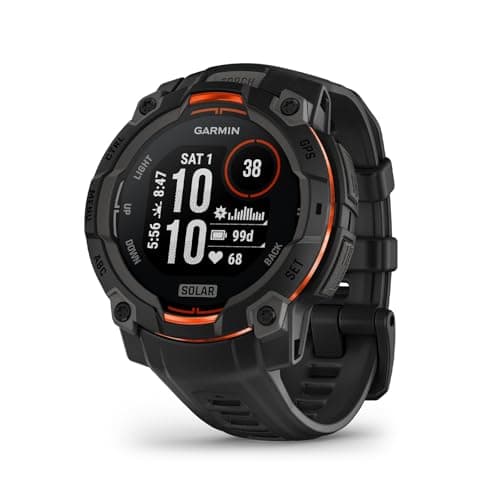 Garmin Instinct 3 Solar (45mm) The watch that wins this site's rubric by publishing an honest battery table and then filling every row of it. No maps, and it still ranks first on trail. | Multi-day trail and backcountry days | Manufacturer specification | 7.7/10 | $299.99Amazon |
| 02 | 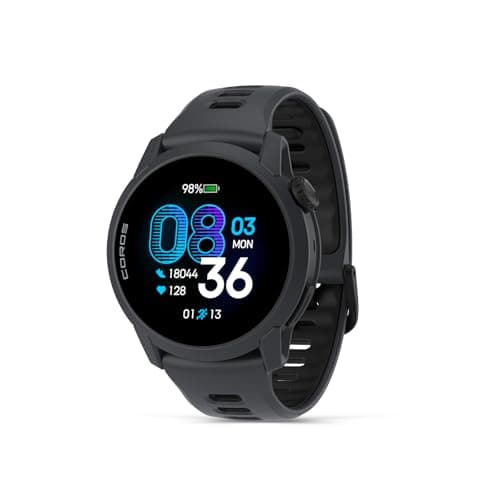 COROS PACE 4 41 stated GPS hours in a 32-gram watch, for a third of the Forerunner 970's money. The endurance-per-dollar winner by a distance. | Long days on a budget | Independent measured test | 7.5/10 | $249.00Amazon |
| 03 | 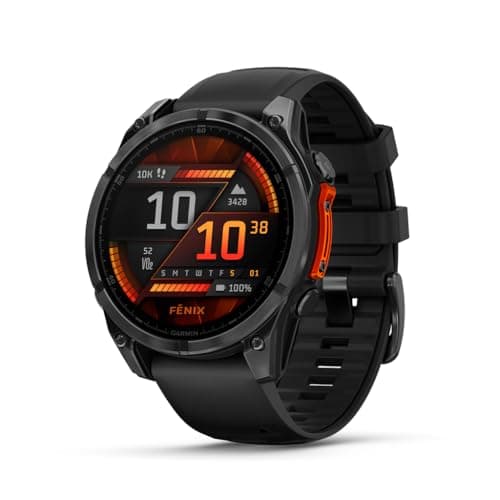 Garmin fēnix 8 (47mm) Everything Garmin makes, in a case built to survive being hit. You pay for the durability, not for better data. | Expedition and rough-terrain use | Manufacturer specification | 7.5/10 | $749.00Amazon |
| 04 | 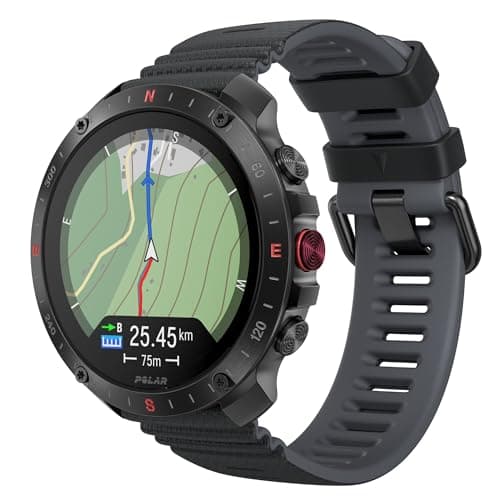 Polar Grit X2 Pro Sapphire, steel, offline maps and 43 stated training hours — and the one Polar watch family that has been measured for nocturnal HRV came last of five. | Trail navigation with a full sensor set | Peer-reviewed validation | 7.4/10 | $699.93Amazon |
| 05 | 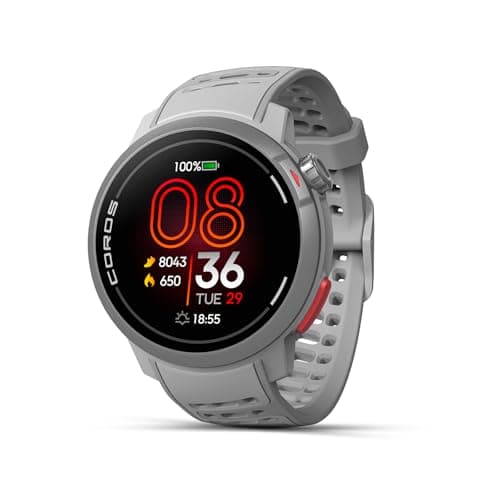 COROS PACE Pro The cheapest route to global maps with turn-by-turn navigation on a wrist, and the only watch in the PACE line whose dual-frequency battery figure COROS is willing to publish. | Navigation on a PACE budget | No validation study exists | 6.9/10 | $299.00Amazon |
#ad· Live prices from the Amazon Product API, as of Sep 17, 2026. Where we have no verified live price we show none. Scores come from the published rubric at How we rank — the Evidence column shows what each ranking actually rests on, including where the answer is nothing.
Why this page is not the trail page
Our trail ranking is about positioning and navigation: whether the watch holds a track under tree cover and whether it can show you a map when you are lost. This page is about one thing only, which is duration. A 100-mile race is 20 to 36 hours of continuous recording for most finishers, and that is longer than the honest specification on several watches marketed for exactly this purpose.
So the useful thing we can do is the thing makers avoid doing: put every published figure next to the satellite mode it actually describes.
Every stated figure, with the mode named
| Watch | Accurate-mode hours (stated) | Mode the figure describes | Longer mode the maker also publishes |
|---|---|---|---|
| Garmin Instinct 3 Solar (45 mm) | 24 h | All satellite systems plus multi-band, without solar assistance | 40 h GPS-only; up to 40 h multi-band and 130 h GPS-only with solar; 36 days in expedition mode |
| COROS PACE 4 | 41 h | All-Systems satellite mode | None for dual-frequency. COROS publishes no dual-frequency endurance figure for this watch. |
| Garmin fēnix 8 (47 mm) | 35 h | All satellite systems plus multi-band, Gesture screen timeout | 47 h GPS-only; 28 h multi-band with the display always on |
| Polar Grit X2 Pro | 43 h | Training mode with GPS. Polar does not name the satellite mode for this figure in the specification we read. | 10 days smartwatch mode |
| COROS PACE Pro | 31 h | Dual-frequency GPS | 38 h GPS activity tracking; 20 days daily use, 6 with the always-on display |
Read the third column before the second. The Polar number is the largest on the page and it is also the least specific: Polar publishes 43 hours of training with GPS without telling us whether that is single-band or dual-frequency, and those two modes differ by roughly a factor of two on watches that do publish both. We carry the figure because it is what Polar states, and we say what it does not tell you.
The COROS pair make the opposite point. The PACE Pro is the only watch in the COROS line with a published dual-frequency endurance figure, at 31 hours — and the cheaper, newer PACE 4 publishes 41 hours in All-Systems mode and nothing at all for dual-frequency. The bigger headline number belongs to the watch with the less informative specification.
Solar is the only thing here that changes the arithmetic
Garmin publishes five different GPS figures for the Instinct 3 Solar, and the difference between the flattering one and the honest one is enormous: 130 hours GPS-only with solar assistance against 24 hours in all-satellite multi-band without it. We carry 24 everywhere on this site, deliberately, because the solar figures assume sustained bright light and the multi-band mode is the one you bought a modern receiver for.
For an ultra that distinction has a specific shape. Solar assistance helps exactly when the course is open and sunlit, and stops helping at dusk — which is when you switch the backlight on, start navigating, and need the watch most. Treat the solar figure as a bonus you may get and the 24-hour figure as the number you plan with.
The always-on display tax
The other published figure worth planning around is the screen. Garmin's own table takes the fēnix 8 from 35 stated multi-band hours with the Gesture timeout to 28 with the display always on. COROS states that the PACE Pro goes from 20 days of daily use to 6 full days with its always-on display enabled.
That is a real choice, not a rounding error. Twenty percent of your recording time is the price of not flicking your wrist, and in the back half of a long race, flicking your wrist is not free either. Our PACE Pro review works through the COROS version of this trade in detail.
Cost per hour of recording
This is the arithmetic that makes an endurance ranking checkable rather than asserted: the live price divided by the maker's own stated hours, in the mode named above. The Instinct 3 Solar comes to $12.50, the PACE 4 to $6.07, the fēnix 8 to $21.40, the Grit X2 Pro to $16.28 and the PACE Pro to $9.65.
Those are not like-for-like, because the modes are not like-for-like, and we would rather show you the working than hand you a single ranked column that quietly compares a dual-frequency figure against an unnamed one. The gap between the cheapest and the most expensive watch on this page is $500 today.
What none of these watches fix
Heart rate over 24 hours. Wrist optical accuracy is the weakest link in the whole chain, and a swollen, cold, wet arm at hour 20 is the worst case for it. Nothing on this page has an independent wrist-heart-rate validation we could find. If the heart rate matters to your pacing, a chest strap costs a fraction of any of these watches.
The estimates. Training load, VO2 max and threshold numbers derived over a multi-day event are extrapolations of algorithms that were never validated on anything like it. We cover what has and has not been measured in VO2 max accuracy by device.
Charging on the move.Every watch here can be charged from a battery pack mid-race, and every one of them has a proprietary cable. The cable, not the watch, is the thing that actually ends people's data at mile 70.
Choosing between the five
If your races are under about 24 hours and you want the cheapest honest answer, the PACE 4 publishes 41 All-Systems hours for the lowest price here. If you want maps and dive-rated ruggedness with the longest well-specified multi-band figure, the fēnix 8. If your events are multi-day and largely in daylight, the Instinct 3 Solar is the only watch whose maker publishes an expedition mode measured in days. The Grit X2 Pro is the highest raw number and the least specific one, and the PACE Pro is the only COROS that tells you what dual-frequency actually costs.
In full
Every pick, and why
Garmin Instinct 3 Solar (45mm)
The watch that wins this site's rubric by publishing an honest battery table and then filling every row of it. No maps, and it still ranks first on trail.
- Battery, smartwatch (stated)
- 28 days, unlimited with solar
- Battery, GPS-only (stated)
- 40 h, up to 130 h with solar
- Battery, multi-band (stated)
- 24 h, up to 40 h with solar
- Battery, expedition (stated)
- 36 days, unlimited with solar
- Water rating
- 10 ATM
What's good
- Garmin publishes five separate GPS endurance figures for it, mode by mode — the most honest battery table of any watch on this site
- 24 stated hours in all-satellite multi-band mode, which is the mode you would actually run for accuracy
- Solar charging turns the smartwatch and expedition figures into 'unlimited' under Garmin's stated light conditions
What isn't
- No built-in maps at all, which on unfamiliar trail is the feature people miss first
- No independent validation of its heart rate or positioning that we could find
Skip this if
Skip this if you navigate unfamiliar routes rather than repeat known ones. Breadcrumb navigation on a trail you have never run is a genuinely worse experience than a map, and no amount of battery compensates for it.
What the evidence says
Manufacturer specificationNo independent validation of this device that we could find. What Garmin does publish is unusually complete: a five-row battery table naming each satellite mode separately, with the solar-assisted figures stated separately from the unassisted ones. We rank the unassisted multi-band row, because that is the number you can rely on in a forest.
Show how this 7.7 was calculated
| Factor | Weight | Score |
|---|---|---|
| EvidenceNo measured validation, but the published specification is more granular and more honest about its own assumptions than any other spec sheet here. | 30% | 5.5 |
| HardwareAll-satellite plus multi-band positioning, a solar charging lens and a 10 ATM case. | 20% | 8.5 |
| Metric coverageFull Garmin training and outdoor feature set, minus maps — which on trail is a real omission. | 20% | 7.5 |
| Endurance40 stated GPS-only hours, 24 in multi-band, 28 smartwatch days and 36 expedition days, before solar is counted at all. | 15% | 10.0 |
| Cost per capabilityFlagship endurance at roughly a third of flagship money. | 15% | 9.0 |
$399.9925% off
Price as of Sep 17, 2026. Prices move; Amazon's is the one that counts.
#ad · we may earn a commission from this link to Garmin Instinct 3 Solar (45mm)
COROS PACE 4
41 stated GPS hours in a 32-gram watch, for a third of the Forerunner 970's money. The endurance-per-dollar winner by a distance.
- Display
- 1.2" AMOLED touchscreen
- Weight
- 32 g with nylon band, 40 g with silicone
- Satellite
- All-Systems and Dual-Frequency modes
- Battery (stated)
- 19 days daily use / 41 h GPS (All-Systems)
- Thickness
- 11.8 mm
What's good
- 41 manufacturer-stated GPS hours — more than the Forerunner 970 and the 570 combined
- 32 g is light enough that you stop noticing it, which matters more over 100 miles than any feature
- Dual-frequency positioning at an entry-level price
What isn't
- COROS wrist heart rate is the one area where an independent test has published a specific problem — see the evidence note
- Smaller third-party app ecosystem than Garmin's
Skip this if
Skip this if you train by heart rate off the wrist and will not wear a strap. The one independent test we found flagged COROS wrist HR during exactly the intervals you would be buying it for.
What the evidence says
Independent measured testThe5krunner's measured comparison found the previous-generation PACE 3's wrist heart rate diverged during and after rapid intensity changes. That test was of the PACE 3, not the PACE 4, and the author cautions the dataset was limited. COROS states the PACE 4 has a redesigned sensor; no independent test of the new sensor has been published that we could find.
Show how this 7.5 was calculated
| Factor | Weight | Score |
|---|---|---|
| EvidenceThe only independent measured evidence in the range is a limited-dataset test of the PREVIOUS model, and it was unfavorable. The redesigned sensor is unvalidated. | 30% | 4.5 |
| HardwareDual-frequency GNSS and a redesigned optical sensor, per the COROS spec page. | 20% | 8.0 |
| Metric coverageStrong training metrics; a narrower ecosystem than Garmin for third-party integrations. | 20% | 7.5 |
| Endurance41 stated GPS hours in All-Systems mode is the best in this roundup by a wide margin. | 15% | 10.0 |
| Cost per capabilityComfortably the strongest dollars-per-GPS-hour figure on the site. | 15% | 10.0 |
Price as of Sep 17, 2026. Prices move; Amazon's is the one that counts.
#ad · we may earn a commission from this link to COROS PACE 4
Garmin fēnix 8 (47mm)
Everything Garmin makes, in a case built to survive being hit. You pay for the durability, not for better data.
- Case
- 47mm, AMOLED
- Satellite
- Multi-band GNSS
- Extras
- Built-in maps, dive-rated, speaker and microphone
What's good
- The most durable case Garmin puts a multi-band receiver into
- Maps, dive modes and the full metric set in one device
What isn't
- Records essentially the same physiological data as a Forerunner costing a third as much
- Heavy compared with a dedicated running watch
Skip this if
Skip this if you run on roads and pavements. You would be buying a case specification you will never test, and the numbers it records are the ones a Forerunner already gives you.
What the evidence says
Manufacturer specificationPublished specifications only; no independent validation of this model that we could find.
Show how this 7.5 was calculated
| Factor | Weight | Score |
|---|---|---|
| EvidenceDetailed published specs, no independent measured validation. | 30% | 5.5 |
| HardwareMulti-band GNSS in Garmin's most ruggedized current case. | 20% | 9.5 |
| Metric coverageThe widest metric and mode coverage of any device on this site. | 20% | 10.0 |
| EnduranceAmong the longest stated GPS endurance in Garmin's AMOLED line. | 15% | 8.5 |
| Cost per capabilityBy some distance the weakest cost-per-capability figure here — the premium buys the case, not the data. | 15% | 4.5 |
$999.9925% off
Price as of Sep 17, 2026. Prices move; Amazon's is the one that counts.
#ad · we may earn a commission from this link to Garmin fēnix 8 (47mm)
Polar Grit X2 Pro
Sapphire, steel, offline maps and 43 stated training hours — and the one Polar watch family that has been measured for nocturnal HRV came last of five.
- Display
- 1.39" AMOLED, 454 × 454, sapphire glass
- Case
- Stainless steel
- Satellite
- Dual-frequency GPS, plus GLONASS, Galileo, BeiDou, QZSS
- Battery (stated)
- 10 days smartwatch / 43 h training with GPS
- Extras
- On-wrist ECG, skin temperature, SpO2, offline maps
What's good
- 43 stated hours in training mode with GPS, which is flagship endurance in an AMOLED watch
- Offline maps preinstalled for North America and Europe, rather than downloaded per region
- Sapphire over stainless steel is the most durable material pairing in this roundup
What isn't
- The nocturnal HRV validation of its predecessor, the Grit X Pro, was the weakest of the five devices tested — MAPE 16.3% against an ECG reference
- Priced against the fēnix tier without Garmin's third-party ecosystem
Skip this if
Skip this if you bought it for the recovery score. The only published nocturnal HRV measurement of a Polar watch is of this watch's predecessor, and it finished last of five devices against an ECG reference. The chest strap from the same company is the reference standard; the watch is not.
What the evidence says
Peer-reviewed validationTwo peer-reviewed results touch this device, and they point opposite ways. Gilgen-Ammann et al. (2020) found only Polar's receivers stayed under 5% distance error across eight watches — dated, brand-level, and about earlier models. Dial et al. (2025) measured the Polar Grit X Pro, this watch's direct predecessor, over 206 nights against an ECG reference and recorded the weakest HRV agreement of five devices (CCC 0.82, MAPE 16.32 ± 24.39%) and the weakest resting heart rate (CCC 0.86). Neither study tested the X2 Pro itself.
Show how this 7.4 was calculated
| Factor | Weight | Score |
|---|---|---|
| EvidencePolar carries the only favorable peer-reviewed positioning result in the category and the weakest measured HRV agreement in the newest study. Both are about predecessors; averaging them honestly lands mid-pack. | 30% | 6.0 |
| HardwareDual-frequency GPS, sapphire over steel, plus ECG, skin temperature and SpO2 sensors. | 20% | 9.0 |
| Metric coverageOffline maps preinstalled, a very wide sensor set and Polar's recovery platform. | 20% | 9.0 |
| Endurance43 stated training hours with GPS and 10 smartwatch days behind an AMOLED screen. | 15% | 8.5 |
| Cost per capabilityFlagship pricing against a smaller ecosystem, and the HRV evidence does not support the premium. | 15% | 5.0 |
$999.9930% off
Price as of Sep 17, 2026. Prices move; Amazon's is the one that counts.
#ad · we may earn a commission from this link to Polar Grit X2 Pro
COROS PACE Pro
The cheapest route to global maps with turn-by-turn navigation on a wrist, and the only watch in the PACE line whose dual-frequency battery figure COROS is willing to publish.
- Display
- 1.3" always-on AMOLED touchscreen, 1500 nits
- Weight
- 37 g with the nylon band
- Satellite
- All-Systems and Dual-Frequency modes
- Battery (stated)
- 20 days daily use / 38 h GPS / 31 h dual-frequency
- Navigation
- Global maps with turn-by-turn navigation
- Processor
- Ambiq Apollo510
What's good
- The only device in the PACE line for which COROS publishes a dual-frequency battery figure — 31 hours — instead of leaving the accurate mode uncosted
- Global maps with turn-by-turn navigation, which the PACE 4 does not claim at any price
- A 1500-nit always-on AMOLED, which is the brightest screen COROS publishes a figure for in this range
What isn't
- No independent validation of its heart rate or positioning exists that we could find, and its optical sensor predates the redesigned one COROS describes on the PACE 4
- Heavier and shorter-lived than the cheaper PACE 4 on every stated number except daily use
Skip this if
Skip this if you never navigate. Strip the maps out of the decision and the PACE 4 is lighter, cheaper and longer-lived, and you are paying a premium for a screen and a menu you will not open.
What the evidence says
No validation study existsNo independent measurement of this watch exists that we could find as of August 2026. The only measured COROS heart-rate result on record is the5krunner's limited-dataset comparison of the PACE 3, which found divergence during and after rapid intensity change. That test was of a different watch, so it is not evidence about this one either way — which is the point: there is nothing here to weigh.
Show how this 6.9 was calculated
| Factor | Weight | Score |
|---|---|---|
| EvidenceNothing published measures this watch. The only COROS result on record tested the PACE 3, so this device is ranked on specification alone — which is exactly what caps it. | 30% | 4.5 |
| HardwareAll-Systems and Dual-Frequency satellite modes and an Ambiq Apollo510 processor, per COROS. Its optical sensor predates the redesigned one COROS describes on the PACE 4. | 20% | 7.5 |
| Metric coverageFull COROS training platform plus SpO2, and global maps with turn-by-turn navigation the PACE 4 does not claim. Same narrower third-party ecosystem as the rest of the range. | 20% | 8.0 |
| EnduranceCOROS states 31 hours in dual-frequency mode, 38 hours of GPS activity tracking and 20 days of daily use. We carry the dual-frequency number, because that is the mode the positioning hardware was bought for. | 15% | 9.0 |
| Cost per capabilityMid-range sticker for dual-frequency plus maps. Per dual-frequency GPS hour it sits behind both the PACE 4 and the PACE 3 — that gap is what the maps cost. | 15% | 7.5 |
Price as of Sep 17, 2026. Prices move; Amazon's is the one that counts.
#ad · we may earn a commission from this link to COROS PACE Pro
How to plan an ultra watch purchase
- Start from your slowest realistic finish time, not the course record. Then add the pre-race standing around and any navigation you will do on the watch.
- Use the mode you will actually record in. If you bought a multi-band receiver and then run in GPS-only to save battery, you paid for a specification you are not using.
- Do not plan with a solar figure. It is a real number under bright light and it is not a number you can count on at 3 a.m.
- Carry the cable. Every watch here charges from a pack while worn, and the cable is proprietary to the brand.
Every score here comes from the same rubric applied to every device on the site — evidence, hardware, metric coverage, endurance and cost per capability, with the weights published at how we rank. We have not run an ultra in any of these watches and we never claim to have.
Race-day reality
The two things that actually end an ultra recording
Not scored, not ranked, and not a sensor upgrade. Over 24 hours the failure is almost never the receiver — it is a cable left at home or a band that let the watch move for twenty hours.
These are not ranked and they are not scored on the rubric — none of them has a validation study and none ever will. They are here because a manufacturer's own instructions say they change what your sensor records, and each one links the page that says it. How the actual ranking works.
Spare watch charging cable
The nights and long runs that never got recorded at all.
Endurance carries 15% of the rubric on this site because a measurement you did not take is the worst data quality there is. Every watch here uses a proprietary cable, and the failure mode is always the same one: the cable lives at home, so the watch charges instead of recording your sleep, or dies at mile 18.
Cables are brand-specific and sometimes model-specific, so this opens a search rather than one listing. Match it to your own watch before you buy.
Find the one that fits →Opens an Amazon search, because the right item depends on your watch. We are not quoting a price for something we have not picked.
#ad · we may earn a commission
Quick-release watch band
Wrist heart rate that drifts because the watch is moving on your arm.
If you are staying on the wrist, fit is the one variable that costs nothing to get right. Garmin's own instruction is to "wear the device above your wrist bone" and that it "should be snug but comfortable", adding that "for more accurate heart rate readings, the device should not move while running or exercising". A stretched or slippery band makes that impossible. Garmin manual: wearing the device.
Lug width varies by watch — commonly 20mm, 22mm or 26mm. Check yours; the wrong width will not fit at all.
Find the one that fits →Opens an Amazon search, because the right item depends on your watch. We are not quoting a price for something we have not picked.
#ad · we may earn a commission
How this ranking was built
Every score on this page comes from one published rubric, applied identically to every device on the site, with the weights written down and the inputs shown. We have not worn any of these devices and we never say we have. Read the method and check us.
Questions
Frequently asked
What GPS watch lasts longest for ultra running?
On raw published numbers, the Polar Grit X2 Pro at 43 stated hours of training with GPS — but Polar does not name the satellite mode for that figure, so it may not be comparable with the multi-band numbers from Garmin and COROS. The longest well-specified accurate-mode figure here is the COROS PACE 4 at 41 hours in All-Systems mode.
Is solar charging worth it for a 100-mile race?
It is worth having and it is not worth planning around. Garmin states up to 130 GPS-only hours with solar assistance against 24 hours in all-satellite multi-band without it — a huge spread that depends on sustained bright light. Plan with the non-solar figure and treat anything extra as a bonus.
Should I run an ultra in multi-band or GPS-only mode?
GPS-only roughly doubles your recording time on the watches that publish both — the fēnix 8 states 47 hours GPS-only against 35 multi-band. If the course is open and well marked, the accuracy difference will not change your race. If it is technical and tree-covered, it might.
Do I need maps on an ultra watch?
Only two watches here have them built in — the fēnix 8 and, in the COROS line, the PACE Pro with global maps. Most ultras are marked, and a map you have never practiced using at night is not a safety system. We take the question apart in do you need maps.
Show your working
Sources
Every one of these was read in full before it was cited. Where we could not access a paper, we do not quote its numbers.
- [1]Manufacturer specification2026Garmin — Instinct 3 Solar owner’s manual, battery life information
Manufacturer-stated for the 45 mm Solar: 28 days smartwatch (unlimited with solar), 40 hours GPS-only (130 hours with solar), 28 hours all-satellite (50 with solar), 24 hours all-satellite plus multi-band (40 with solar), 36 days expedition GPS (unlimited with solar), 65 days battery-saver. Water rating 10 ATM per the same manual’s specification page. Solar figures assume all-day wear in 50,000 lux conditions, which is Garmin’s assumption and not a measurement of ours.
- [2]Manufacturer specification2026COROS — PACE 4 published specifications
Manufacturer-stated: 1.2" AMOLED, 32 g with nylon band, 11.8 mm thick, All-Systems and Dual-Frequency satellite modes, 41 GPS hours, 19 days of daily training and sleep.
- [3]Manufacturer specification2026Garmin — fēnix 8 Series owner’s manual, battery information
Manufacturer-stated, read 2026-08-18. One table covers the fēnix 8 and the fēnix 8 Pro, which is why the two can be compared here without mixing sources. fēnix 8 AMOLED 47 mm: 16 days smartwatch with Gesture (7 with Always On Display), 47 h GPS-only (37 AOD), 35 h all satellite systems plus multi-band (28 AOD). fēnix 8 Pro 47 mm: 15 days (8 AOD), 44 h GPS-only (33 AOD), 30 h all systems plus multi-band (23 AOD). fēnix 8 Pro 51 mm: 27 days (15 AOD), 78 h GPS-only (56 AOD), 53 h all systems plus multi-band (41 AOD), and 21 h all systems plus multi-band with LTE LiveTrack (19 AOD).
- [4]Manufacturer specification2026Polar — Grit X2 Pro published specifications
Manufacturer-stated: 1.39" AMOLED at 454 × 454 behind sapphire glass, stainless steel case, dual-frequency GPS plus GLONASS, Galileo, BeiDou and QZSS, 43 hours in training mode with GPS, 10 days in smartwatch mode, WR100, on-wrist ECG, skin temperature and SpO2 sensors, offline maps preinstalled for North America and Europe.
- [5]Manufacturer specification2026COROS — PACE Pro published specifications
Manufacturer-stated: 1.3" always-on AMOLED touchscreen at 1500 nits, 37 g with the nylon band, All-Systems and Dual-Frequency satellite modes, 38 hours of GPS activity tracking, 31 hours with dual-frequency GPS, 20 days of daily use and sleep tracking, 6 days with the always-on display, global maps with turn-by-turn navigation, an Ambiq Apollo510 processor and an optical heart-rate plus SpO2 sensor. COROS's own launch release dates the watch to 31 October 2024 at $349.
Read next
Related
- fēnix 8 vs Instinct 3 Solar
The two Garmins on this page, with both battery tables and both cost figures.
- Polar Grit X2 Pro review
The biggest raw endurance number here, and what Polar does not publish alongside it.
- COROS APEX 4 vs PACE 4
The long-battery COROS decision, including the figure COROS declines to state.
- Your watch dies before you finish
The problem-led version of this page, if you already own a watch.
- Best trail GPS watches
The same terrain, ranked on navigation and positioning rather than hours.
- Best marathon training watches
Where battery stops being the question and the estimates become it.