Head to head
COROS PACE 3 vs PACE 4
An AMOLED screen, three more stated GPS hours and four more days of daily use, against the only budget watch on this site that anybody has independently measured.
We earn a commission when you buy through our Amazon links, at no extra cost to you. It never decides a ranking — the rubric that does is published in full, so you can check us rather than take our word for it. How this works.
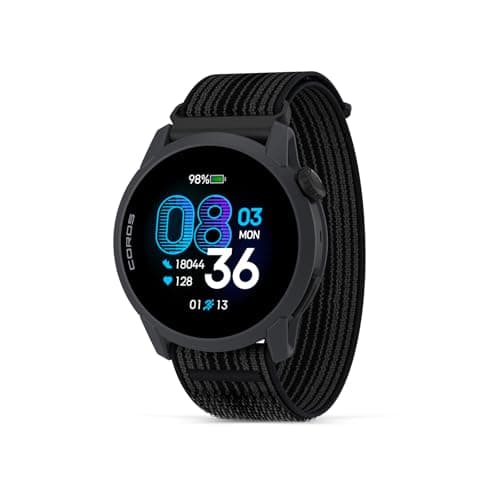
Top pick
Long days on a budgetCOROS PACE 4
41 stated GPS hours in a 32-gram watch, for a third of the Forerunner 970's money. The endurance-per-dollar winner by a distance.
Price as of October 22, 2026. Prices move; Amazon's is the one that counts.
#ad · we may earn a commission from this link to COROS PACE 4
The short answer
Buy the PACE 4 for the AMOLED screen, three more stated GPS hours and 19 days of daily use. Buy the PACE 3 to save money and get a transflective screen that improves in sunlight. The wrinkle: the PACE 3 is the one with an independent heart-rate test behind it, and it did not go well.
Ranked
Quick picks
| # | Device | Best for | Evidence | Score | Price |
|---|---|---|---|---|---|
| 01 | COROS PACE 4 41 stated GPS hours in a 32-gram watch, for a third of the Forerunner 970's money. The endurance-per-dollar winner by a distance. | Long days on a budget | Independent measured test | 7.5/10 | $249.00Amazon |
| 02 | 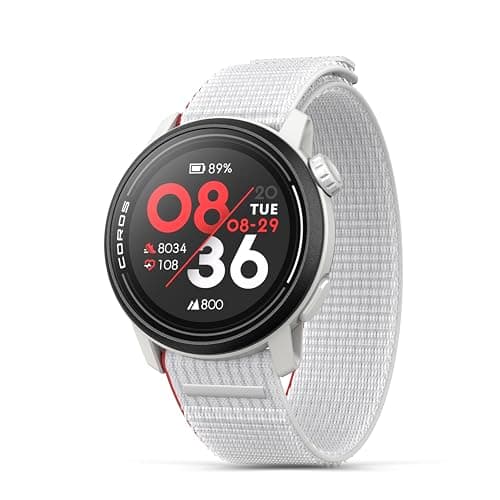 COROS PACE 3 The only budget watch on this site that anybody has actually measured. The measurement was not flattering, and we would still rather have it than nothing. | Long training weeks under $200 | Independent measured test | 7.4/10 | $199.00Amazon |
#ad· Live prices from the Amazon Product API, as of October 22, 2026. Where we have no verified live price we show none. Scores come from the published rubric at How we rank — the Evidence column shows what each ranking actually rests on, including where the answer is nothing.
The full specification table
Every value from COROS's own published pages, linked in the sources below. Battery modes are named on every figure, because "full GPS" and "All-Systems" are different numbers.
| Specification | PACE 3 | PACE 4 |
|---|---|---|
| Display | 1.2" transflective touchscreen, mineral glass | 1.2" AMOLED touchscreen |
| Size | 42 × 42 × 11.7 mm | 11.8 mm thick |
| Weight, nylon band | 29-30 g | 32 g (40 g silicone) |
| Satellite | GPS/QZSS, GLONASS, BeiDou, dual-frequency GPS option | All-Systems and Dual-Frequency modes |
| Battery, GPS (stated) | 38 h full GPS | 41 h All-Systems |
| Battery, daily (stated) | 15 days regular use | 19 days daily training and sleep |
| Water rating | 5 ATM | Per COROS specification |
| Independent testing | Yes — one measured comparison, unfavorable | None published |
The arithmetic
Cost per manufacturer-stated GPS hour, computed at page load from the live listing price and the battery mode named above:
- PACE 4: $6.07 — 41 hours in All-Systems mode.
- PACE 3: $5.24 — 38 hours of full GPS.
The price gap between them is currently $50. These two figures are the strongest dollars-per-GPS-hour numbers on this entire site, and by a wide margin — the flagship Garmins are several times worse on this measure. Whichever of these you buy, you are buying endurance efficiently.
The screen, which is the real decision
The PACE 4's AMOLED and the PACE 3's transflective display are not better and worse versions of the same thing. They fail in opposite conditions.
A transflective screen reflects ambient light, so bright sun makes it more readable. An AMOLED emits its own light and in direct sun is competing with the sun — which it loses, at a cost in brightness and therefore battery.
Indoors and at night the ranking inverts completely. The AMOLED is vivid and the transflective screen looks flat and gray, needing a backlight in the dark.
If your training is outdoors in daylight, the older watch has the better screen for the job. If your watch is also your everyday watch, the AMOLED is worth the difference. This is the same trade the APEX 4 makes with its MIP display, one tier up.
The evidence, and it points the awkward way
Normally the newer watch has less evidence behind it, because validation lags release. Here the situation is sharper than that.
The5krunner's measured 10-mile comparison tested the PACE 3— this exact watch, not a sibling — against a Garmin HRM-Pro Plus and a Polar Verity Sense across easy runs, intervals and cycling. It found the PACE 3's wrist heart rate diverged during and after rapid intensity change. The author explicitly cautions that the dataset was limited.
COROS states that the PACE 4 has a redesigned sensor. That is plausible and it is also unverified: no independent test of the new sensor has been published that we could find.
So the two watches sit in genuinely different evidentiary positions, and neither is comfortable:
- PACE 3: independently measured, on a limited dataset, with an unfavorable result. Evidence tier: independent measured test.
- PACE 4: unmeasured. A redesigned sensor that may well be better, with nothing to show it. Evidence tier: independentonly by inheritance of the previous test's caution, which is why its evidence sub-score sits below the PACE 3's despite better hardware.
Our rubric treats having been measured as worth something even when the measurement was poor, because the alternative is rewarding devices for never having been checked. That is why these two score so closely overall despite the PACE 4 being the better watch on every hardware line.
What neither watch fixes
If wrist heart rate during intervals is why you are shopping, neither of these is the answer, and neither is a more expensive watch. The 2025 placement study ran three identical sensors at wrist, forearm and upper arm and found the proximal placements won at every intensity — it is a position problem, not a brand problem. The fix costs about a hundred dollars and works with whichever watch you already own.
The verdict
Buy the PACE 4 if you want the modern screen, the extra stated endurance and the current platform, and you accept that its sensor is unmeasured.
Buy the PACE 3 if the price gap matters, or if you train outdoors in bright light and would genuinely prefer the transflective screen. You get slightly less battery and the only independent measurement in the class — which is unflattering, but is more than any rival at this price can offer in either direction.
Buy a strap either way if you train by heart rate. That is the purchase that changes the data.
In full
Every pick, and why
COROS PACE 4
41 stated GPS hours in a 32-gram watch, for a third of the Forerunner 970's money. The endurance-per-dollar winner by a distance.
- Display
- 1.2" AMOLED touchscreen
- Weight
- 32 g with nylon band, 40 g with silicone
- Satellite
- All-Systems and Dual-Frequency modes
- Battery (stated)
- 19 days daily use / 41 h GPS (All-Systems)
- Thickness
- 11.8 mm
What's good
- 41 manufacturer-stated GPS hours — more than the Forerunner 970 and the 570 combined
- 32 g is light enough that you stop noticing it, which matters more over 100 miles than any feature
- Dual-frequency positioning at an entry-level price
What isn't
- COROS wrist heart rate is the one area where an independent test has published a specific problem — see the evidence note
- Smaller third-party app ecosystem than Garmin's
Skip this if
Skip this if you train by heart rate off the wrist and will not wear a strap. The one independent test we found flagged COROS wrist HR during exactly the intervals you would be buying it for.
What the evidence says
Independent measured testThe5krunner's measured comparison found the previous-generation PACE 3's wrist heart rate diverged during and after rapid intensity changes. That test was of the PACE 3, not the PACE 4, and the author cautions the dataset was limited. COROS states the PACE 4 has a redesigned sensor; no independent test of the new sensor has been published that we could find.
Show how this 7.5 was calculated
| Factor | Weight | Score |
|---|---|---|
| EvidenceThe only independent measured evidence in the range is a limited-dataset test of the PREVIOUS model, and it was unfavorable. The redesigned sensor is unvalidated. | 30% | 4.5 |
| HardwareDual-frequency GNSS and a redesigned optical sensor, per the COROS spec page. | 20% | 8.0 |
| Metric coverageStrong training metrics; a narrower ecosystem than Garmin for third-party integrations. | 20% | 7.5 |
| Endurance41 stated GPS hours in All-Systems mode is the best in this roundup by a wide margin. | 15% | 10.0 |
| Cost per capabilityComfortably the strongest dollars-per-GPS-hour figure on the site. | 15% | 10.0 |
Price as of October 22, 2026. Prices move; Amazon's is the one that counts.
#ad · we may earn a commission from this link to COROS PACE 4
COROS PACE 3
The only budget watch on this site that anybody has actually measured. The measurement was not flattering, and we would still rather have it than nothing.
- Display
- 1.2" transflective touchscreen, mineral glass
- Size
- 42 × 42 × 11.7 mm, 29-30 g with the nylon band
- Satellite
- GPS/QZSS, GLONASS, BeiDou, with a dual-frequency GPS option
- Battery (stated)
- 15 days regular use / 38 h full GPS
- Water rating
- 5 ATM
What's good
- 38 manufacturer-stated GPS hours at the bottom of the market — more than watches costing three times as much
- Transflective screen gets more readable in bright sun rather than less
- Dual-frequency GPS is available at a price where it usually is not
What isn't
- It is the device in the one independent heart-rate test we found, and it lost that test
- The transflective display looks flat indoors next to an AMOLED
Skip this if
Skip this if wrist heart rate during intervals is the reason you are shopping. This is the watch that was measured diverging during exactly that, and a cheaper watch does not become more accurate because you wanted it to.
What the evidence says
Independent measured testThe5krunner's measured 10-mile comparison tested THIS watch — not a sibling, not a predecessor — against a Garmin HRM-Pro Plus and a Polar Verity Sense, and found its wrist heart rate diverged during and after rapid intensity change. The author cautions the dataset was limited. It is the only current budget watch on this site with any independent measurement at all, which is why it scores above devices with nothing.
Show how this 7.4 was calculated
| Factor | Weight | Score |
|---|---|---|
| EvidenceAn actual independent measured test of this exact watch exists — and it was unfavorable, on a limited dataset. Having been measured is worth something; having been measured badly caps it. | 30% | 5.0 |
| HardwareDual-frequency GPS option and a transflective display, per the COROS spec page. | 20% | 7.5 |
| Metric coverageFull COROS training platform; no maps and a narrower third-party ecosystem than Garmin. | 20% | 7.5 |
| Endurance38 stated hours of full GPS and 15 days of regular use, at this price. | 15% | 9.5 |
| Cost per capabilityOne of the two strongest dollars-per-GPS-hour figures on the site. | 15% | 9.5 |
Price as of October 22, 2026. Prices move; Amazon's is the one that counts.
#ad · we may earn a commission from this link to COROS PACE 3
How this ranking was built
Every score on this page comes from one published rubric, applied identically to every device on the site, with the weights written down and the inputs shown. We have not worn any of these devices and we never say we have. Read the method and check us.
Questions
Frequently asked
Is the COROS PACE 4 worth upgrading to from the PACE 3?
Only for the screen and four extra days of daily use. The recorded data is the same class and the PACE 4's redesigned sensor has not been independently tested. If your PACE 3 works, this is a screen upgrade rather than a data upgrade.
Which COROS watch has better battery life?
The PACE 4, at 41 manufacturer-stated GPS hours in All-Systems mode and 19 days of daily use, against the PACE 3's 38 hours of full GPS and 15 days. Both are among the strongest endurance-per-dollar figures on this site.
Is COROS wrist heart rate accurate?
The one independent measurement we could find tested the PACE 3 and found its wrist heart rate diverged during and after rapid intensity change, on a limited dataset. COROS says the PACE 4 has a redesigned sensor, and nobody has published a test of it. So: measured and unflattering for one, unmeasured for the other.
AMOLED or transflective for a running watch?
Transflective gets more readable in direct sun because it reflects ambient light; AMOLED is competing with the sun and looks better indoors. If most of your training is outdoors in daylight, the older transflective screen is genuinely the better tool.
Show your working
Sources
Every one of these was read in full before it was cited. Where we could not access a paper, we do not quote its numbers.
- [1]Manufacturer specification2026COROS — PACE 4 published specifications
Manufacturer-stated: 1.2" AMOLED, 32 g with nylon band, 11.8 mm thick, All-Systems and Dual-Frequency satellite modes, 41 GPS hours, 19 days of daily training and sleep.
- [2]Manufacturer specification2026COROS — PACE 3 published specifications
Manufacturer-stated: 1.2" transflective touchscreen with mineral glass, 42 × 42 × 11.7 mm, 29-30 g with the nylon band, GPS/QZSS/GLONASS/BeiDou with a dual-frequency GPS option, 38 hours of full GPS, 15 days of regular use, 5 ATM.
- [3]Independent measured test2023the5krunner, measured heart-rate comparison of the COROS PACE 3
An independent measured test, not a peer-reviewed study, and the author explicitly cautions the dataset was limited. Compared against Garmin HRM-Pro Plus and Polar Verity Sense across easy runs, intervals and cycling. Found divergence during and after rapid intensity change. Tests the PACE 3, not the PACE 4.
- [4]Peer-reviewed validation2025“Impact of Anatomical Placement on the Accuracy of Wearable Heart Rate Monitors During Rest and Various Exercise Intensities”, Sensors (Basel)
n = 28 (14 male, 14 female). Polar H10 chest strap as the reference. Compared Polar Verity Sense (forearm), Garmin Forerunner 55 (wrist) and three simultaneous Whoop 4.0 units at wrist, forearm and upper arm, across rest, cycling warm-up, burpees and a modified Bruce treadmill protocol.
Read next
Related
- COROS PACE 4 review
The full write-up of the newer watch.
- COROS vs Garmin
The brand decision above this one.
- COROS APEX 4
The same screen trade-off one tier up, with 41 stated days.
- Best budget running watches
Where both watches place against the rest of the field.
- Fix your heart-rate data
The purchase that changes the numbers, whichever watch you pick.