Head to head
Polar vs Garmin vs COROS
A brand-level verdict needs brand-level evidence. Here is the whole published record for these three, which turns out to be the most useful way to choose between them.
We earn a commission when you buy through our Amazon links, at no extra cost to you. It never decides a ranking — the rubric that does is published in full, so you can check us rather than take our word for it. How this works.
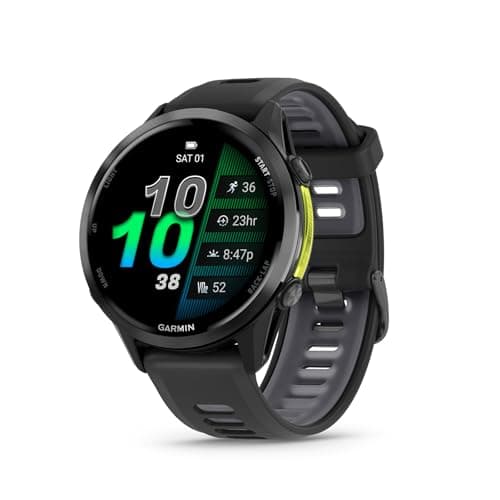
Top pick
Long-course athletes who want mapsGarmin Forerunner 970
The most complete running watch Garmin sells, and — counter-intuitively — the cheapest of the pair per hour of GPS you get.
Price as of October 10, 2026. Prices move; Amazon's is the one that counts.
#ad · we may earn a commission from this link to Garmin Forerunner 970
The short answer
Buy Garmin for the platform and the deepest metric set; buy COROS for endurance per dollar; buy Polar if you want the brand whose hardware the research community actually uses. The one study that measured all three is from 2020, tested single-frequency receivers, and had only Polar under 5% distance error.
Ranked
Quick picks
| # | Device | Best for | Evidence | Score | Price |
|---|---|---|---|---|---|
| 01 | Garmin Forerunner 970 The most complete running watch Garmin sells, and — counter-intuitively — the cheapest of the pair per hour of GPS you get. | Long-course athletes who want maps | Manufacturer specification | 7.7/10 | $749.99Amazon |
| 02 | 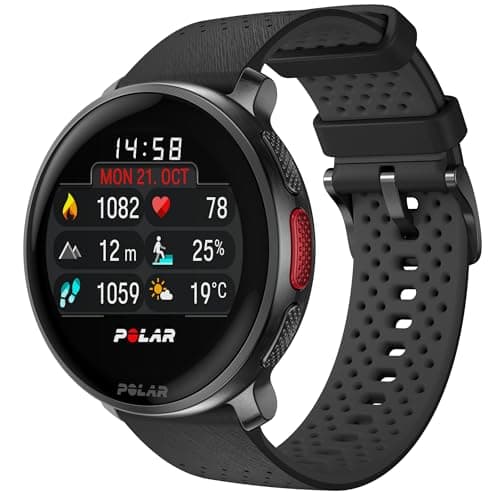 Polar Vantage V3 Polar's flagship, and the most sensor-dense watch here — including an on-wrist ECG. | Lab-style metrics on the wrist | Peer-reviewed validation | 7.5/10 | $594.99Amazon |
| 03 | 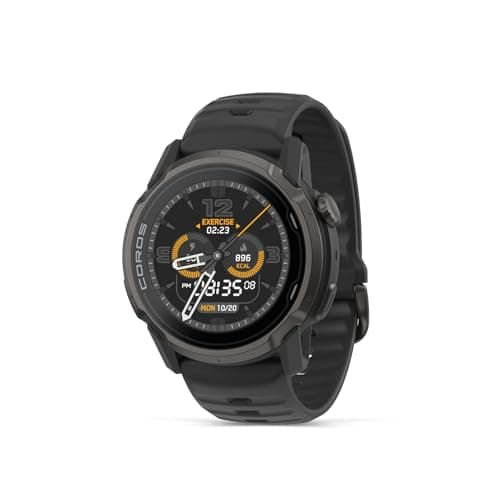 COROS APEX 4 (46mm) 41 days of daily battery and a MIP screen you can read in direct sun. The anti-AMOLED choice. | Multi-day efforts | Manufacturer specification | 7.3/10 | $479.00Amazon |
#ad· Live prices from the Amazon Product API, as of October 10, 2026. Where we have no verified live price we show none. Scores come from the published rubric at How we rank — the Evidence column shows what each ranking actually rests on, including where the answer is nothing.
The question behind the question
Nobody searches for three brands at once unless they are trying to decide which ecosystem to join. That is a bigger commitment than a watch: it decides where your training history lives, which sensors pair without a fight, and whose algorithm interprets your data for the next five years. So this page does not compare three spec sheets. It compares three published records.
The honest headline first. There is no modern study in which a current Polar, a current Garmin and a current COROS were measured against the same reference at the same time. Any page that gives you a confident brand-level accuracy ranking is giving you an opinion dressed as a finding. What follows is what each brand can actually show.
What has been measured, brand by brand
| Brand | What was measured, and the result | What is missing |
|---|---|---|
| Polar | Vantage M, Vantage V and V800 in the 2020 eight-watch distance study — the only receivers in it to stay under 5% error. A Grit X Pro in the 2025 nocturnal HRV study, where it came last of five at 0.82 concordance and 16.32% error. The H10 chest strap is the criterion instrument in both the 2025 placement study and the HRV study. | No validation of any current Polar watch. Polar publishes no per-model accuracy data either. |
| Garmin | fēnix 5X Plus and Forerunner 935 in the 2020 distance study. A fēnix 6 in the 2025 HRV study at 0.87 concordance and 10.52% error, which the authors called poor agreement. A Forerunner 265 in the 2025 lactate-threshold study, where the test returned a usable result 65.2% of the time — the best completion rate of the three watches tested — while overestimating threshold pace by roughly a quarter. A Forerunner 55 in the 2025 placement study, with a bias of about 33 bpm during burpees. | No independent sleep-staging validation for any Garmin, and no validation of a current flagship. |
| COROS | An Apex 46 mm in the 2020 distance study. A PACE 3 in the 2025 lactate-threshold study, where the test produced a usable result only 47.1% of the time with about 22.63% pace error. An independent measured test found PACE 3 wrist heart rate diverging during and after rapid intensity changes. | The thinnest record of the three, and what exists is unflattering. COROS states the PACE 4 has a redesigned sensor; nobody has tested it. |
Two things fall out of that table. First, the only study containing all three brands measured eight single-frequency watches against a trundle wheel in 2020: 3.2-6.1% error overall, 0.9-4.1% on a track, with only Polar under 5%. Every receiver in it predates the dual-frequency hardware all three brands now ship, so it describes engineering track record, not any watch you can buy. Second, Garmin is the brand with the most measurements precisely because it is the brand researchers can most easily get hold of — and being measured more means being caught more. That is not a reason to prefer the brands nobody has checked.
Polar's real advantage is not a watch
Here is the fact that decides more of this comparison than any specification: when scientists need a heart-rate reference to measure somebody else's device against, they strap on a Polar H10. It is the criterion instrument in the 2025 placement study and in the 2025 nocturnal HRV validation. No Garmin or COROS sensor holds that position anywhere in our source library.
That is a genuine brand-level signal about Polar's measurement engineering — and it is also a warning about reading too much into brand names, because the same study that trusts Polar's strap put Polar's own watch last of five on overnight HRV. A brand is not a uniform quality level. The strap is the thing to buy; the record on it is in our Polar H10 review and the current flagship is covered at Polar Grit X2 Pro.
What each brand is actually for
Garmin is the platform. The Forerunner 970 publishes multi-band GNSS with SatIQ, 26 GPS hours, built-in maps, an ECG app, and the widest third-party sensor compatibility in the category; it works out at $28.85 per manufacturer-stated GPS hour. If your training uses structured workouts, running dynamics, or anything that has to leave the watch and land in another app, Garmin is the path of least resistance.
Polaris the sensor company. The Vantage V3 carries the widest raw sensor set of any watch we rank — dual-frequency positioning, on-wrist ECG, skin temperature and offline maps — and it is the brand with the longest history of taking measurement seriously. What it does not have is Garmin's ecosystem or a published validation of this model.
COROSis endurance per dollar. The APEX 4 states 41 days of daily use behind a MIP screen that gets more readable in bright sun, at a price that undercuts both rivals. The trade is documented rather than theoretical: the only independent tests of COROS optical heart rate found problems, and the newer sensor is unvalidated. If you train by heart rate and will not wear a strap, that is the brand's weak point — the pairings are set out in APEX 4 vs PACE 4.
The two-brand versions of this question, with full specification tables, are at Polar vs Garmin, COROS vs Garmin and Suunto vs Garmin. The device-by-device positioning record is in GPS accuracy by device.
The uncomfortable conclusion
If you choose on measured accuracy alone, you cannot choose between these three brands today, because the evidence does not line up device-for-device. What you can do is choose on the things that are published: what the watch records, how long it lasts in which satellite mode, what the data costs per hour, and whether the numbers can leave the app. All four of those are in our tables, and none of them requires anybody to claim a test they did not run.
The one accuracy decision you can make with confidence is about the sensor, not the brand: a chest strap measures the electrical signal your heart already produces, and every wrist optical sensor in every study above infers it from light. That gap is larger than any gap between these three logos.
In full
Every pick, and why
Garmin Forerunner 970
The most complete running watch Garmin sells, and — counter-intuitively — the cheapest of the pair per hour of GPS you get.
- Case
- 47mm, titanium bezel, AMOLED
- Satellite
- Multi-band GNSS with SatIQ
- Battery (stated)
- 15 days smartwatch / 26 h GPS
- Maps
- Built-in, full color
- Extras
- ECG app, speaker and microphone
What's good
- Multi-band GNSS with SatIQ — the current top tier of consumer positioning hardware
- 26 stated GPS hours is enough for an ironman-distance day with a wide margin
- Built-in maps, which the 570 does not have at any price
What isn't
- The wrist optical sensor is the same class of hardware as the 570's — the premium buys features, not a better heart-rate signal
- 47mm only; there is no smaller case in this model
Skip this if
Skip this if you never race longer than a marathon and never navigate. Maps and titanium are the entire difference, and neither changes a single number the watch records.
What the evidence says
Manufacturer specificationNo independent validation study of the Forerunner 970's optical heart rate has been published that we could find. The specification figures are Garmin's own.
Show how this 7.7 was calculated
| Factor | Weight | Score |
|---|---|---|
| EvidenceSpecs are published and detailed, but no peer-reviewed or independent measured validation of this specific model exists yet. | 30% | 5.5 |
| HardwareMulti-band GNSS with SatIQ and Garmin's current-generation optical sensor — the top hardware tier available. | 20% | 9.5 |
| Metric coverageRunning dynamics, ECG, training load, maps, and a documented export path off the watch. | 20% | 9.5 |
| EnduranceGarmin states 26 hours in GPS mode, 15 days smartwatch. | 15% | 7.5 |
| Cost per capabilityHighest sticker in the range, but the strongest dollars-per-GPS-hour of the two Forerunners — see the arithmetic on the comparison page. | 15% | 7.5 |
Price as of October 10, 2026. Prices move; Amazon's is the one that counts.
#ad · we may earn a commission from this link to Garmin Forerunner 970
Polar Vantage V3
Polar's flagship, and the most sensor-dense watch here — including an on-wrist ECG.
- Display
- AMOLED
- Satellite
- Dual-frequency GNSS
- Extras
- On-wrist ECG, skin temperature, offline maps
What's good
- The widest raw sensor set of any watch in this roundup
- Inherits the brand-level positioning result from the JMIR study
What isn't
- Priced against the Forerunner 970 without matching its ecosystem
- Sensor breadth is not the same thing as validated accuracy, and Polar publishes no per-model validation either
Skip this if
Skip this if you will not actually use the extra sensors. More measurements you ignore is not more value.
What the evidence says
Peer-reviewed validationSame dated, brand-level positioning evidence as the Vantage M3: Gilgen-Ammann et al. (2020) found only Polar's receivers under 5% error, testing the Vantage M, Vantage V and V800 — not the V3.
Show how this 7.5 was calculated
| Factor | Weight | Score |
|---|---|---|
| EvidenceFavorable but dated and brand-level peer-reviewed positioning evidence; no validation of this specific model. | 30% | 6.5 |
| HardwareDual-frequency GNSS plus the densest sensor package here, including wrist ECG. | 20% | 9.0 |
| Metric coverageVery wide metric coverage with a strong recovery platform. | 20% | 9.0 |
| EnduranceGood stated endurance for a sensor-heavy AMOLED watch. | 15% | 7.5 |
| Cost per capabilityFlagship pricing without a flagship ecosystem. | 15% | 5.5 |
$699.9915% off
Price as of October 10, 2026. Prices move; Amazon's is the one that counts.
#ad · we may earn a commission from this link to Polar Vantage V3
COROS APEX 4 (46mm)
41 days of daily battery and a MIP screen you can read in direct sun. The anti-AMOLED choice.
- Display
- 1.3" MIP (memory-in-pixel)
- Battery (stated)
- 41 days daily use
- Case
- 46mm
What's good
- MIP displays get MORE readable in bright sun, where AMOLED gets worse
- 41 stated days of daily use removes charging from the routine entirely
What isn't
- MIP looks dull indoors next to an AMOLED — this is a genuine aesthetic trade, not just a spec
- Same unvalidated-COROS-optical-sensor caveat as the PACE 4
Skip this if
Skip this if you mostly train indoors or at night. You would be taking the dull screen and giving up nothing for it.
What the evidence says
Manufacturer specificationPublished specifications only. The one independent COROS heart-rate test we found was of the PACE 3 and does not describe this device.
Show how this 7.3 was calculated
| Factor | Weight | Score |
|---|---|---|
| EvidenceNo validation of this model; the only independent COROS test on record is of a different watch and was unfavorable. | 30% | 4.5 |
| HardwareDual-frequency GNSS behind a MIP display. | 20% | 8.0 |
| Metric coverageFull COROS training platform. | 20% | 8.0 |
| Endurance41 stated days of daily use is the longest on this site. | 15% | 10.0 |
| Cost per capabilityStrong battery-per-dollar; mid-range sticker. | 15% | 8.5 |
Price as of October 10, 2026. Prices move; Amazon's is the one that counts.
#ad · we may earn a commission from this link to COROS APEX 4 (46mm)
Four checks before you pick an ecosystem
- Check where your history lives. Moving years of training data between platforms is possible and tedious. If you already have five years in one app, that is a real cost on the other side of the ledger.
- Check the satellite mode behind the battery figure. GPS-only and all-systems multi-band can differ by a factor of two on the same watch. We quote the mode on every figure for exactly this reason.
- Check what receives your sensors. Old gym equipment wants 5 kHz analog, Apple Watch is Bluetooth-only, and Garmin running dynamics need ANT+. The compatibility guide has the table.
- Assume the wrist sensor is the weak link on all three. Every brand here has an optical wrist sensor that no study has validated in its current generation. Budget for a strap if heart rate drives your training.
How this ranking was built
Every score on this page comes from one published rubric, applied identically to every device on the site, with the weights written down and the inputs shown. We have not worn any of these devices and we never say we have. Read the method and check us.
Questions
Frequently asked
Which brand is most accurate: Polar, Garmin or COROS?
No study has measured current models from all three against one reference, so there is no defensible brand ranking. The one study containing all three is from 2020, tested single-frequency receivers against a trundle wheel, and had only Polar under 5% distance error. Everything since has tested one or two of them at a time.
Is COROS less accurate than Garmin?
On the two measurements where both appear, COROS came out worse: in the 2025 lactate-threshold study a PACE 3 returned a usable test 47.1% of the time against 65.2% for a Forerunner 265, and the only independent heart-rate test of a PACE 3 found divergence during intensity changes. Both samples were small, and neither tested a current COROS sensor.
Why do researchers use Polar straps if Polar watches are not the most accurate?
Because a chest strap and a wrist watch are different instruments. The H10 measures the heart's electrical signal directly, which is why it is used as a criterion measure; Polar's wrist optical sensor infers pulse from light like every other wrist sensor, and in the 2025 HRV study the Polar watch tested came last of five.
Which of the three has the best battery life?
COROS, by a wide margin, on manufacturer-stated figures: the APEX 4 states 41 days of daily use and the PACE 4 states 41 GPS hours, against 26 GPS hours and 15 days for the Forerunner 970. All of those are the makers' own numbers, and we label them that way because nobody here has run one down.
Show your working
Sources
Every one of these was read in full before it was cited. Where we could not access a paper, we do not quote its numbers.
- [1]Peer-reviewed validation2020Gilgen-Ammann, Schweizer & Wyss, “Accuracy of Distance Recordings in Eight Positioning-Enabled Sport Watches: Instrument Validation Study”, JMIR mHealth and uHealth
DOI 10.2196/17118. Eight watches (Apple Watch Series 4, Coros Apex 46mm, Garmin Fenix 5X Plus, Garmin Forerunner 935, Polar Vantage M, Polar Vantage V, Polar V800, Suunto 9 Baro) measured against a trundle wheel accurate to 1 cm, across urban, forest and 400 m track conditions. IMPORTANT: this predates the dual-frequency receivers now standard, so it describes brand engineering history, not any watch currently sold.
- [2]Peer-reviewed validation2025Dial, Hollander, Vatne, Emerson, Edwards & Hagen, “Validation of nocturnal resting heart rate and heart rate variability in consumer wearables”, Physiological Reports 13(16):e70527
DOI 10.14814/phy2.70527. n = 13 healthy adults (7 male, 6 female, 33.2 ± 8.6 years) across 536 nights, each wearing an Oura Gen 3, Oura Gen 4, Polar Grit X Pro, Garmin fēnix 6 and Whoop 4.0 simultaneously against a Polar H10 single-lead ECG reference sampled at 1000 Hz. Authors’ stated limits: healthy adults only, no atrial-fibrillation population, proprietary and periodically-updated algorithms, and unequal night counts per device. The Garmin was dropped from the resting-heart-rate comparison because the 30-minute window it uses is not timestamped.
- [3]Peer-reviewed validation2025Lu, Cui, Zhu, Wu, Xing, Pan & Shen, “Validity of smartwatch-derived estimates of lactate threshold heart rate and pace compared to graded exercise testing”, Frontiers in Physiology 16:1621996
DOI 10.3389/fphys.2025.1621996. 100 healthy recreational runners (61 male, 39 female, 28.0 ± 9.6 years) against a treadmill graded exercise test with fingertip blood lactate (Biosen C-line), threshold determined by the modified Dmax method. Device counts were unequal: Huawei GT Runner n = 100, Garmin Forerunner 265/265s n = 23, COROS PACE 3 n = 17. Authors’ stated limits: unbalanced samples, indoor reference against outdoor watch tests, day-to-day threshold variability, and different heart-rate acquisition between devices — the Garmin protocol required an ECG chest strap while the other two used wrist PPG — plus undisclosed manufacturer algorithms.
- [4]Independent measured test2023the5krunner, measured heart-rate comparison of the COROS PACE 3
An independent measured test, not a peer-reviewed study, and the author explicitly cautions the dataset was limited. Compared against Garmin HRM-Pro Plus and Polar Verity Sense across easy runs, intervals and cycling. Found divergence during and after rapid intensity change. Tests the PACE 3, not the PACE 4.
- [5]Peer-reviewed validation2025“Impact of Anatomical Placement on the Accuracy of Wearable Heart Rate Monitors During Rest and Various Exercise Intensities”, Sensors (Basel)
n = 28 (14 male, 14 female). Polar H10 chest strap as the reference. Compared Polar Verity Sense (forearm), Garmin Forerunner 55 (wrist) and three simultaneous Whoop 4.0 units at wrist, forearm and upper arm, across rest, cycling warm-up, burpees and a modified Bruce treadmill protocol.
- [6]Manufacturer specification2026Polar — H10 heart rate sensor published specifications
Manufacturer-stated: electrical (ECG) measurement, Bluetooth LE + ANT+, internal memory for one session up to 30 hours, up to 400 h on a CR2025 coin cell, WR30.
- [7]Manufacturer specification2026Polar — Grit X2 Pro published specifications
Manufacturer-stated: 1.39" AMOLED at 454 × 454 behind sapphire glass, stainless steel case, dual-frequency GPS plus GLONASS, Galileo, BeiDou and QZSS, 43 hours in training mode with GPS, 10 days in smartwatch mode, WR100, on-wrist ECG, skin temperature and SpO2 sensors, offline maps preinstalled for North America and Europe.
- [8]Manufacturer specification2026Garmin — Forerunner 970 published specifications
Manufacturer-stated battery: up to 15 days smartwatch mode, up to 26 hours GPS mode.
Read next
Related
- Polar vs Garmin
The two-brand version, with the strap question settled first.
- COROS vs Garmin
Endurance against ecosystem, with the cost-per-GPS-hour arithmetic.
- GPS accuracy by device
Every positioning measurement we could find, device by device.
- Best running watches
The ranked field across all brands, on one rubric.