Head to head
Oura Ring 4 vs RingConn Gen 2
This comparison has an unusually clean shape: you are choosing between the only ring with a published sleep validation and the only ring with no recurring fee.
We earn a commission when you buy through our Amazon links, at no extra cost to you. It never decides a ranking — the rubric that does is published in full, so you can check us rather than take our word for it. How this works.
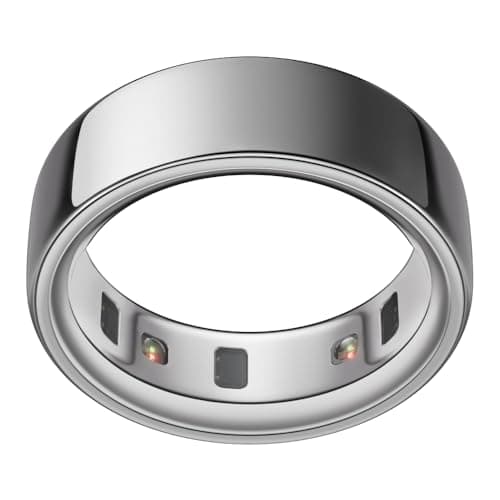
Top pick
Sleep staging you can actually citeOura Ring 4
The only consumer sleep device with a strong independent PSG result behind it — 76.3% four-stage agreement, and the best deep-sleep sensitivity of the three tested.
Price as of October 21, 2026. Prices move; Amazon's is the one that counts.
#ad · we may earn a commission from this link to Oura Ring 4
The short answer
Buy the Oura Ring 4 if you want sleep staging that has been independently checked — 76.3% four-stage agreement against clinical polysomnography, the best result any consumer device has. Buy the RingConn Gen 2 if the subscription is the objection; over three years the fee outweighs the hardware difference.
Ranked
Quick picks
| # | Device | Best for | Evidence | Score | Price |
|---|---|---|---|---|---|
| 01 | Oura Ring 4 The only consumer sleep device with a strong independent PSG result behind it — 76.3% four-stage agreement, and the best deep-sleep sensitivity of the three tested. | Sleep staging you can actually cite | Peer-reviewed validation | 8.0/10 | $349.00Amazon |
| 02 | 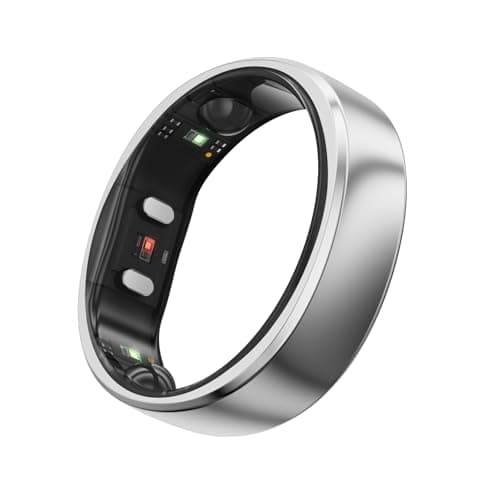 RingConn Gen 2 The no-subscription ring. Over three years that difference is larger than the hardware price. | Escaping the subscription | No validation study exists | 6.6/10 | $299.00Amazon |
#ad· Live prices from the Amazon Product API, as of October 21, 2026. Where we have no verified live price we show none. Scores come from the published rubric at How we rank — the Evidence column shows what each ranking actually rests on, including where the answer is nothing.
The comparison in one line each
Oura is the only consumer sleep device with a strong published validation against a sleep lab, and it charges a mandatory membership on top of the hardware.
RingConn charges nothing recurring, includes apnea monitoring rather than gating it, and has never been independently measured in any way we could find.
Almost everything else about these two devices is similar enough not to decide anything.
The money, worked out
A ring's sticker price is not its price. Oura requires a membership for the full app, so the honest comparison is total cost over a realistic ownership period.
Oura's published membership pricing is $5.99 a month or $69.99 a year, with the first month free for new members. We use the monthly rate below, because it is the less flattering of the two and the one most people end up on, and we credit the free month.
- Oura Ring 4, three years: $559 — the live listing price plus 35 paid months of membership.
- RingConn Gen 2, three years: $299 — the live listing price, and that is the whole figure.
Both are computed at page load from live listing prices. If a price is stale beyond 48 hours, the arithmetic is withheld rather than shown — a derived number computed from a remembered price looks more trustworthy than a guess while being exactly as invented. The membership rate is the one figure here we typed in, and it is linked to Oura's own page in the sources below.
The shape of the result is stable even when the exact numbers move: the recurring fee is the dominant term, and it grows every year you keep the ring. That is the real argument for RingConn, and it is a good one.
The evidence, which runs entirely the other way
What Oura has
Robbins et al. (2024) at Brigham and Women's Hospital: 35 healthy adults, single-night inpatient polysomnography, testing Oura Gen3 against a Fitbit Sense 2 and an Apple Watch Series 8.
- Highest four-stage agreement of the three: 76.3%, κ = 0.65
- Best deep-sleep sensitivity of the three: 79.5%
- Matched PSG on seven of eight nightly summary measures, missing sleep latency by five minutes
And Dial et al. (2025), 536 nights against a single-lead ECG: the Oura Gen 4 recorded 0.99 concordance and 5.96% HRV error, the closest any consumer wearable has been measured to a reference, plus the most accurate resting heart rate of the five devices at 1.67-1.94% error.
The caveats travel with it every time: 35 people, one night, healthy adults without insomnia, and the sleep study tested the Gen3 rather than the Ring 4. Also worth noting — Oura's own press release rounded the four-stage figure to 79%. The paper says 76.3%. We use the paper.
What RingConn has
Nothing. No peer-reviewed study, no independent measured test. It was in neither the polysomnography comparison nor the 536-night HRV validation. It sits at no validation study exists on our hierarchy, the bottom tier.
Why this matters more here than elsewhere
A sleep stage graph is unfalsifiable by the person wearing it. If a watch reports your pace, you can check it against a measured distance. If a ring reports 51 minutes of deep sleep, you have no way, ever, to know whether that is right without going to a sleep lab.
That is precisely the situation in which third-party validation carries the most weight, and it is exactly the situation in which one of these devices has none. When three sleep devices were finally compared side by side, deep-sleep sensitivity ranged from 50.5% to 79.5% — a very wide spread among devices that all looked equally plausible beforehand.
The fair case for RingConn
We would be overstating things if we left it there. Three points cut the other way.
No validation is not bad validation. RingConn may well be accurate. The approaches across this category are broadly similar and there is no specific reason to expect it to be an outlier.
Unvalidated is the normal state of this market. Garmin — far larger, far better resourced — has no independent PSG validation of its sleep staging either. RingConn is typical rather than unusual.
Total sleep time is the useful number anyway. Sleep-versus-wake agreement was 91-93% across all measured devices, and it is the metric most worth acting on. The stage breakdown, where the devices diverge, is also the part we advise most people to stop optimizing. If you use your ring for duration and trend rather than for hypnograms, you are using the part that is robust — and the unvalidated ring is a much better deal for that job.
Practical differences worth knowing
Sizing.Both are sized and both need a sizing kit first. Oura's ASIN varies by size, which is worth checking at checkout.
Lifting.Both are rigid rings, both are uncomfortable under a loaded barbell, and Oura's own guidance is to remove it. A tracker you take off is not tracking.
Apnea features. RingConn includes apnea monitoring rather than gating it. No consumer wearable is a diagnostic instrument and we found no independent validation of that feature on any device.
Longevity. A subscription funds ongoing app development. No subscription means no recurring revenue doing so. That cuts both ways and is worth a thought if you expect to own the ring for years.
The verdict
Buy Oura if the stage data is why you are buying and you want the number that has been checked. You are paying a recurring fee for the only published sleep result in the category, and that is a defensible trade.
Buy RingConn if you want overnight duration and trend without a recurring fee, and you accept that its staging is unmeasured. Given that most people should be reading trends rather than hypnograms anyway, this is a better recommendation than our rubric ordering alone suggests.
Buy neither if what you actually want is an accurate HRV baseline. On the measured evidence the cheapest device on that page wins, and it is a chest strap.
In full
Every pick, and why
Oura Ring 4
The only consumer sleep device with a strong independent PSG result behind it — 76.3% four-stage agreement, and the best deep-sleep sensitivity of the three tested.
- Form
- Ring, worn on the index finger
- Sizing
- Size-specific — the ASIN is per size
- Subscription
- Membership required for full app features
What's good
- Robbins et al. (2024): highest four-stage agreement (76.3%, κ = 0.65) and best deep-sleep sensitivity (79.5%) of the three devices tested against polysomnography
- Matched PSG on seven of eight nightly summary measures, missing only sleep latency by five minutes
- A finger is a better optical site than a wrist for the same reason a forearm is
What isn't
- The membership is mandatory for the full app, so the sticker price is not the price — see our three-year arithmetic
- Rings are sized, so you need the sizing kit first and the ASIN varies by size
Skip this if
Skip this if you lift heavily. A rigid ring on a loaded barbell is uncomfortable at best, and Oura's own guidance is to take it off — a tracker you remove for training is not tracking your training.
What the evidence says
Peer-reviewed validationRobbins et al., Sensors 24(20):6532 (2024), n = 35, single-night inpatient polysomnography, testing the Oura Ring Gen3. Note the study tested Gen3, not the Ring 4. Note also that the manufacturer's press release rounded the four-stage figure to 79%; the paper says 76.3%. We use the paper.
Show how this 8.0 was calculated
| Factor | Weight | Score |
|---|---|---|
| EvidenceThe strongest peer-reviewed sleep result of any consumer device we found — with the honest caveats that it was one night, 35 people, and the previous generation. | 30% | 9.0 |
| HardwareFinger-mounted optical sensing, a better site than the wrist. | 20% | 8.5 |
| Metric coverageSleep, HRV, temperature and readiness; weak on exercise recording. | 20% | 8.0 |
| EnduranceMulti-day battery in normal use. | 15% | 8.0 |
| Cost per capabilityThe mandatory membership makes the true three-year cost materially higher than the sticker. | 15% | 5.5 |
Price as of October 21, 2026. Prices move; Amazon's is the one that counts.
#ad · we may earn a commission from this link to Oura Ring 4
RingConn Gen 2
The no-subscription ring. Over three years that difference is larger than the hardware price.
- Form
- Ring
- Subscription
- None
- Extras
- Sleep apnea monitoring
What's good
- No subscription at all, which over three years is the single biggest cost variable in this category
- Sleep apnea monitoring included rather than gated
What isn't
- No independent validation we could find — and sleep staging is exactly where that matters most
- Smaller company, shorter track record on long-term app support
Skip this if
Skip this if you want a number you can defend. It saves you real money, and it buys you a sleep stage graph nobody has ever checked.
What the evidence says
No validation study existsNo independent validation study exists for this device that we could find. In a category where the headline output is a four-stage sleep graph, that absence is the most important thing about it.
Show how this 6.6 was calculated
| Factor | Weight | Score |
|---|---|---|
| EvidenceNo validation of any kind, in the one category where unvalidated staging is least defensible. | 30% | 2.5 |
| HardwareRing sensor package per the manufacturer's specification. No longer RingConn's current generation: the Gen 3 shipped in May 2026. | 20% | 7.5 |
| Metric coverageSleep, apnea, activity and recovery, with no feature paywall. | 20% | 8.0 |
| EnduranceLong stated battery for a ring. | 15% | 8.5 |
| Cost per capabilityNo subscription — the strongest three-year cost figure of any ring here. | 15% | 9.5 |
Price as of October 21, 2026. Prices move; Amazon's is the one that counts.
#ad · we may earn a commission from this link to RingConn Gen 2
How this ranking was built
Every score on this page comes from one published rubric, applied identically to every device on the site, with the weights written down and the inputs shown. We have not worn any of these devices and we never say we have. Read the method and check us.
Questions
Frequently asked
Is RingConn as accurate as Oura?
Nobody knows. Oura has a published polysomnography result — 76.3% four-stage agreement and 79.5% deep-sleep sensitivity — and RingConn has no independent validation of any kind that we could find. That is a difference in what has been checked rather than a demonstrated difference in accuracy.
Is the Oura subscription worth it?
It depends what you use the ring for. Over three years the membership outweighs the hardware price difference against a subscription-free ring. What it buys is the only consumer sleep device with a published validation behind its staging. If you read duration and trends rather than hypnograms, that is a lot to pay for a graph you were not going to act on.
Which smart ring is cheapest over three years?
RingConn, by a clear margin, because there is no recurring fee — the hardware price is the whole figure. Both three-year numbers are computed on this page from live listing prices and are withheld rather than estimated if a price is stale.
Do I need validated sleep staging?
Less than the marketing implies. Sleep-versus-wake agreement was 91-93% across every measured device, so total sleep time is broadly trustworthy on any of them. It is the four-stage breakdown that diverges, and that is the part most people are better off treating as indicative rather than optimizing.
Can either ring detect sleep apnea?
RingConn advertises apnea monitoring. No consumer wearable is a diagnostic instrument, and we found no independent validation of apnea features on any device. Symptoms are a reason to see a doctor rather than to choose one ring over another.
Show your working
Sources
Every one of these was read in full before it was cited. Where we could not access a paper, we do not quote its numbers.
- [1]Peer-reviewed validation2024Robbins et al., “Accuracy of Three Commercial Wearable Devices for Sleep Tracking in Healthy Adults”, Sensors 24(20):6532
Brigham and Women’s Hospital. n = 35 healthy adults, single-night inpatient polysomnography, testing Oura Ring Gen3, Fitbit Sense 2 and Apple Watch Series 8. Authors’ stated limits: one night, lab conditions, healthy adults without insomnia, comparison only during scheduled sleep, and device failures on 6 Apple Watches and 2 Fitbits.
- [2]Peer-reviewed validation2025Dial, Hollander, Vatne, Emerson, Edwards & Hagen, “Validation of nocturnal resting heart rate and heart rate variability in consumer wearables”, Physiological Reports 13(16):e70527
DOI 10.14814/phy2.70527. n = 13 healthy adults (7 male, 6 female, 33.2 ± 8.6 years) across 536 nights, each wearing an Oura Gen 3, Oura Gen 4, Polar Grit X Pro, Garmin fēnix 6 and Whoop 4.0 simultaneously against a Polar H10 single-lead ECG reference sampled at 1000 Hz. Authors’ stated limits: healthy adults only, no atrial-fibrillation population, proprietary and periodically-updated algorithms, and unequal night counts per device. The Garmin was dropped from the resting-heart-rate comparison because the 30-minute window it uses is not timestamped.
- [3]Manufacturer specification2026Oura — published membership pricing
Manufacturer-stated, read 2026-08-13: $5.99 USD/month or $69.99 USD/year before tax, with the first month free for new members. Oura states that without a membership “your Oura Ring and Oura App will still function, but the insights, personal health data, and benefits you receive will be much more limited.” Our three-year arithmetic uses the monthly rate — the less flattering of the two — and credits the free first month.
- [4]Manufacturer specification2026Polar — H10 heart rate sensor published specifications
Manufacturer-stated: electrical (ECG) measurement, Bluetooth LE + ANT+, internal memory for one session up to 30 hours, up to 400 h on a CR2025 coin cell, WR30.
- [5]Peer-reviewed validation2024Svensson et al., “Validity and reliability of the Oura Ring Generation 3 with sleep staging algorithm 2.0 compared to multi-night ambulatory polysomnography”, Sleep Medicine
NOT READ — the publisher returned HTTP 403 to our fetch on 2026-07-24. Reported to cover 96 participants and 421,045 epochs. We quote no figure from it. Readers should also note it is the validation of Oura's own staging algorithm, and that a published comment on it exists.
- [6]Peer-reviewed validation2025Khan et al., “The Oura Ring Versus Medical-Grade Sleep Studies: A Systematic Review and Meta-Analysis”, OTO Open
NOT READ — the publisher returned HTTP 403 to our fetch on 2026-07-24. A pooled analysis would be stronger evidence than any single study, so this is a real gap in our record rather than a formality.
Read next
Related
- RingConn Gen 3 review
The newer RingConn on its own, cost position and evidence gap in full.
- RingConn Gen 2 review
The full write-up of the subscription-free ring.
- Oura Ring 4 review
The device with the published polysomnography result.
- WHOOP vs Oura
The other subscription comparison in this category.
- Sleep trackers without a subscription
Every option if the recurring fee is the dealbreaker.
- Oura vs RingConn vs Ultrahuman
The three-way, on current generations, with Ultrahuman's own research weighed.
- Sleep accuracy by device
Every published figure, and every device with none.