Rings, bands and recovery
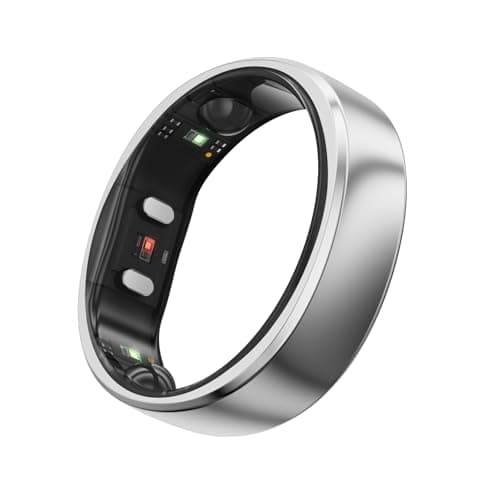
RingConn Gen 2
It removes the subscription, which is the single largest cost in smart rings. It also removes the one thing Oura can point to: a published study.
We earn a commission when you buy through our Amazon links, at no extra cost to you. It never decides a ranking — the rubric that does is published in full, so you can check us rather than take our word for it. How this works.
Top pick
Escaping the subscriptionRingConn Gen 2
The no-subscription ring. Over three years that difference is larger than the hardware price.
Price as of October 22, 2026. Prices move; Amazon's is the one that counts.
#ad · we may earn a commission from this link to RingConn Gen 2
The short answer
The RingConn Gen 2 has no subscription, which over three years makes it materially cheaper than any membership ring. It also has no independent validation of any kind that we could find — and in a category whose headline output is a four-stage sleep graph, that absence is the most important thing about it.
Ranked
Quick picks
| # | Device | Best for | Evidence | Score | Price |
|---|---|---|---|---|---|
| 01 | RingConn Gen 2 The no-subscription ring. Over three years that difference is larger than the hardware price. | Escaping the subscription | No validation study exists | 6.6/10 | $299.00Amazon |
#ad· Live prices from the Amazon Product API, as of October 22, 2026. Where we have no verified live price we show none. Scores come from the published rubric at How we rank — the Evidence column shows what each ranking actually rests on, including where the answer is nothing.
The case for it, which is genuinely strong
In smart rings, the sticker price is not the price. Oura requires a membership for the full app, and over a normal ownership period that fee dominates the hardware cost. WHOOP goes further and is a subscription with hardware attached — stop paying and the device stops working.
RingConn charges nothing recurring. Over three years the full cost of ownership is $299 — the purchase price, and nothing after it. Set that against Oura's published membership pricing of $5.99 a month with the first month free, which adds 35 paid months to the sticker over the same period. It is the strongest cost-per-capability figure of any ring on this site and it is not close.
Sleep apnea monitoring is included rather than gated behind a tier, and the stated battery life is long for a ring. If your objection to this category has been the recurring charge, this device is a direct answer to it.
The case against it, which is the same size
No independent validation study of this device exists that we could find. Not peer-reviewed, not an independent measured test. Nothing.
On our evidence hierarchy it sits at no validation study exists, and evidence is 30% of the rubric — the single largest weight. That is why a device with excellent cost and reasonable hardware sub-scores lands where it does overall.
It is worth being precise about why this matters more here than it would elsewhere. If an unvalidated watch reports your pace, you can check it against a known distance. If an unvalidated ring reports that you got 51 minutes of deep sleep, there is no way for you to check that, ever, without going to a sleep lab. The output is unfalsifiable by the user, which is exactly the situation where third-party validation carries the most weight — and it is the situation in which this device has none.
Why the comparison to Oura is not symmetric
Oura is the only consumer sleep device with a strong published polysomnography result: Robbins et al. (2024) measured 76.3% four-stage agreement and 79.5% deep-sleep sensitivity, the best of the three devices tested, and it matched PSG on seven of eight nightly summary measures.
We attach the usual caveats — 35 people, one night, healthy adults, and it tested the Gen3 rather than the current ring. But "a study with limitations" and "no study" are different categories, and we do not treat them as equivalent.
Oura also has the strongest HRV result in the field — 0.99 concordance and 5.96% error against a single-lead ECG across 536 nights, the closest any consumer wearable has been measured to a reference. RingConn was not in that study either.
So the honest framing of the choice is not "cheaper ring versus more expensive ring". It is: do you want the sleep graph that has been checked, or the one that costs less? We work that decision through in full here.
What the absence of evidence does not mean
We should be fair. No validation is not the same as bad validation, and this device may well be accurate. Sleep-staging models across this category use broadly similar signals and broadly similar approaches, and there is no particular reason to expect RingConn's to be an outlier.
The problem is that this reasoning applies equally to every unvalidated device ever sold, and the one time somebody checked three devices side by side, deep-sleep sensitivity ranged from 50.5% to 79.5%. That is a very wide spread among devices that all sounded equally plausible beforehand. Plausibility is not a substitute for measurement, and that spread is the reason.
Note also that Garmin — a far larger company with far more resources — has no independent PSG validation of its sleep staging either, and was absent from the Robbins comparison entirely. Being unvalidated is the normal state of this market. RingConn is not unusual; it is typical, and typical here is not good.
The practical considerations
Sizing. Rings are sized and the fit has to be right for the optical sensor to work, so you need the sizing kit before you order. Finger size also changes with heat, salt and time of day.
Lifting. A rigid ring under a loaded barbell is uncomfortable at best. Every ring shares this problem, and a tracker you remove for training is not tracking your training.
Company longevity. A no-subscription model means no recurring revenue funding app development. That is the point, and it is also a reason to think about how long the app will be maintained. This cuts both ways: a subscription you resent is at least paying for something.
Its generation. RingConn shipped the Gen 3 in May 2026, so the Gen 2 is the older ring now, usually at the lower price. That changes nothing on the axis this page cares about: neither generation has an independent validation study we could find, and a newer ring does not inherit a paper its predecessor never had.
What we could not verify
- Sleep staging accuracy. No published measurement of any kind.
- The sleep apnea feature. Advertised; no independent validation we could find. No consumer wearable is a diagnostic instrument.
- HRV and resting heart rate accuracy. Not measured. RingConn was not among the five devices in the 536-night ECG comparison.
- Battery life.Manufacturer-stated, under the manufacturer's conditions.
Who should not buy it
Anyone who wants a number they can defend. It saves you real money and it buys you a sleep graph nobody has ever checked. If the accuracy is the reason you are buying, buy the ring with the paper.
Anyone tracking sleep for a health concern. Unvalidated staging is the wrong instrument for that, and so is every other consumer device. See a doctor.
Anyone who lifts heavily. Same as every ring — you will take it off, and then it is measuring nothing.
Update. RingConn now sells a current generation, and we rank it separately: the RingConn Gen 3is thinner, states up to 14 days against this ring's figure, and keeps the no-subscription position intact. Its evidence position is identical to this one — nothing published by anybody — so the choice between them is about hardware and price, never about which is better measured.
In full
Every pick, and why
RingConn Gen 2
The no-subscription ring. Over three years that difference is larger than the hardware price.
- Form
- Ring
- Subscription
- None
- Extras
- Sleep apnea monitoring
What's good
- No subscription at all, which over three years is the single biggest cost variable in this category
- Sleep apnea monitoring included rather than gated
What isn't
- No independent validation we could find — and sleep staging is exactly where that matters most
- Smaller company, shorter track record on long-term app support
Skip this if
Skip this if you want a number you can defend. It saves you real money, and it buys you a sleep stage graph nobody has ever checked.
What the evidence says
No validation study existsNo independent validation study exists for this device that we could find. In a category where the headline output is a four-stage sleep graph, that absence is the most important thing about it.
Show how this 6.6 was calculated
| Factor | Weight | Score |
|---|---|---|
| EvidenceNo validation of any kind, in the one category where unvalidated staging is least defensible. | 30% | 2.5 |
| HardwareRing sensor package per the manufacturer's specification. No longer RingConn's current generation: the Gen 3 shipped in May 2026. | 20% | 7.5 |
| Metric coverageSleep, apnea, activity and recovery, with no feature paywall. | 20% | 8.0 |
| EnduranceLong stated battery for a ring. | 15% | 8.5 |
| Cost per capabilityNo subscription — the strongest three-year cost figure of any ring here. | 15% | 9.5 |
Price as of October 22, 2026. Prices move; Amazon's is the one that counts.
#ad · we may earn a commission from this link to RingConn Gen 2
Questions
Frequently asked
Is the RingConn Gen 2 accurate?
Nobody has published a measurement of it, so we cannot tell you. That matters more for a sleep device than for most things, because a stage breakdown is not something you can check for yourself. The one study that compared three sleep devices found deep-sleep sensitivity ranging from 50.5% to 79.5%, so the spread between plausible-looking devices is wide.
Does the RingConn Gen 2 have a subscription?
No, and that is its central advantage. Over three years the absence of a membership fee is worth more than the hardware price difference against a subscription ring, which makes it the strongest cost figure of any ring we cover.
RingConn or Oura?
Oura if you want the sleep result that has been independently checked — 76.3% four-stage agreement and 79.5% deep-sleep sensitivity against clinical polysomnography. RingConn if you want the lower three-year cost and accept that its staging is unmeasured. Both positions are defensible; they are just different questions.
Can the RingConn Gen 2 detect sleep apnea?
It advertises apnea monitoring, and we found no independent validation of that feature. No consumer wearable is a diagnostic instrument. If you have symptoms, that is a conversation with a doctor rather than a purchase decision.
Show your working
Sources
Every one of these was read in full before it was cited. Where we could not access a paper, we do not quote its numbers.
- [1]Peer-reviewed validation2024Robbins et al., “Accuracy of Three Commercial Wearable Devices for Sleep Tracking in Healthy Adults”, Sensors 24(20):6532
Brigham and Women’s Hospital. n = 35 healthy adults, single-night inpatient polysomnography, testing Oura Ring Gen3, Fitbit Sense 2 and Apple Watch Series 8. Authors’ stated limits: one night, lab conditions, healthy adults without insomnia, comparison only during scheduled sleep, and device failures on 6 Apple Watches and 2 Fitbits.
- [2]Peer-reviewed validation2025Dial, Hollander, Vatne, Emerson, Edwards & Hagen, “Validation of nocturnal resting heart rate and heart rate variability in consumer wearables”, Physiological Reports 13(16):e70527
DOI 10.14814/phy2.70527. n = 13 healthy adults (7 male, 6 female, 33.2 ± 8.6 years) across 536 nights, each wearing an Oura Gen 3, Oura Gen 4, Polar Grit X Pro, Garmin fēnix 6 and Whoop 4.0 simultaneously against a Polar H10 single-lead ECG reference sampled at 1000 Hz. Authors’ stated limits: healthy adults only, no atrial-fibrillation population, proprietary and periodically-updated algorithms, and unequal night counts per device. The Garmin was dropped from the resting-heart-rate comparison because the 30-minute window it uses is not timestamped.
- [3]Manufacturer specification2026Oura — published membership pricing
Manufacturer-stated, read 2026-08-13: $5.99 USD/month or $69.99 USD/year before tax, with the first month free for new members. Oura states that without a membership “your Oura Ring and Oura App will still function, but the insights, personal health data, and benefits you receive will be much more limited.” Our three-year arithmetic uses the monthly rate — the less flattering of the two — and credits the free first month.
- [4]Peer-reviewed validation2024Svensson et al., “Validity and reliability of the Oura Ring Generation 3 with sleep staging algorithm 2.0 compared to multi-night ambulatory polysomnography”, Sleep Medicine
NOT READ — the publisher returned HTTP 403 to our fetch on 2026-07-24. Reported to cover 96 participants and 421,045 epochs. We quote no figure from it. Readers should also note it is the validation of Oura's own staging algorithm, and that a published comment on it exists.
- [5]Peer-reviewed validation2025Khan et al., “The Oura Ring Versus Medical-Grade Sleep Studies: A Systematic Review and Meta-Analysis”, OTO Open
NOT READ — the publisher returned HTTP 403 to our fetch on 2026-07-24. A pooled analysis would be stronger evidence than any single study, so this is a real gap in our record rather than a formality.
Read next
Related
- RingConn Gen 3 review
The current generation: thinner, longer-stated battery, same absent evidence.
- Oura vs RingConn
The evidence against the three-year arithmetic, worked through.
- Sleep trackers without a subscription
The full ranking this ring leads on cost.
- Oura Ring 4
The device with the published polysomnography result.
- Sleep accuracy by device
Every published figure, and every device with none.
- How sleep tracking works
Why an unvalidated stage graph is unfalsifiable by the person wearing it.
- Oura vs RingConn vs Ultrahuman
Where the newer Gen 3 lands against Oura and Ultrahuman.