GPS and multisport
The best running watches under $1,000
Under a thousand dollars you can buy every capability this category sells except satellite messaging. The arithmetic also inverts the price order: the cheapest watch here states the most hours.
We earn a commission when you buy through our Amazon links, at no extra cost to you. It never decides a ranking — the rubric that does is published in full, so you can check us rather than take our word for it. How this works.
Top pick
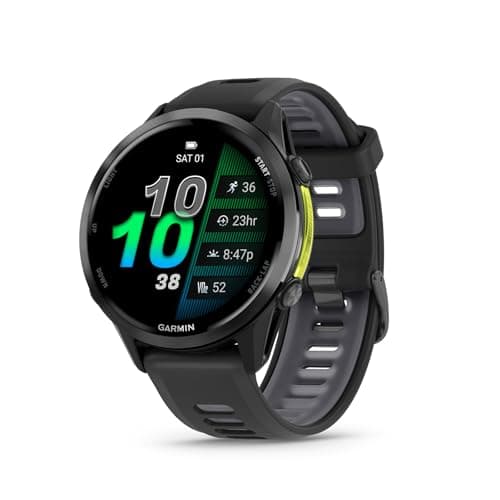
Long-course athletes who want mapsGarmin Forerunner 970
The most complete running watch Garmin sells, and — counter-intuitively — the cheapest of the pair per hour of GPS you get.
$749.9913% off
Price as of November 21, 2026. Prices move; Amazon's is the one that counts.
#ad · we may earn a commission from this link to Garmin Forerunner 970
The short answer
The Garmin Forerunner 970 is the pick under $1,000: multi-band GNSS with SatIQ, built-in maps, 32 GB of media storage and 26 stated GPS hours. The budget pick is the Forerunner 570 at under $1000 today, which records the same data with no maps and a quarter of the storage. The Polar Grit X2 Pro states the longest training battery of the five at 43 hours.
Ranked
Quick picks
| # | Device | Best for | Evidence | Score | Price |
|---|---|---|---|---|---|
| 01 | Garmin Forerunner 970 The most complete running watch Garmin sells, and — counter-intuitively — the cheapest of the pair per hour of GPS you get. | Long-course athletes who want maps | Manufacturer specification | 7.7/10 | $649.99Amazon |
| 02 | 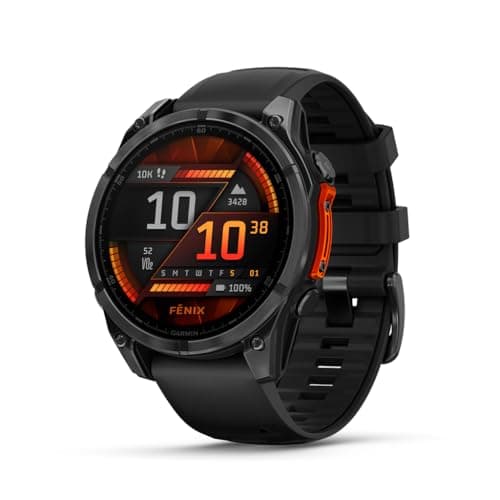 Garmin fēnix 8 (47mm) Everything Garmin makes, in a case built to survive being hit. You pay for the durability, not for better data. | Expedition and rough-terrain use | Manufacturer specification | 7.5/10 | $745.99Amazon |
| 03 | 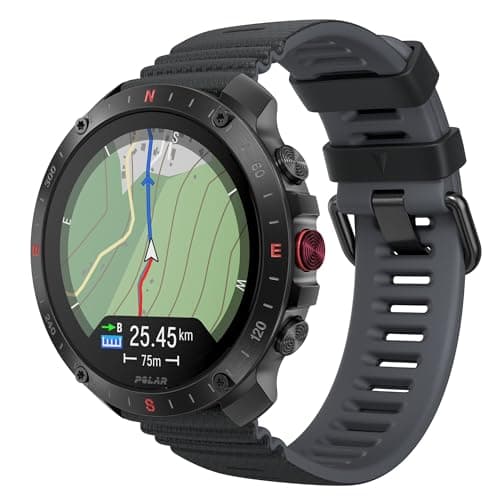 Polar Grit X2 Pro Sapphire, steel, offline maps and 43 stated training hours — and the one Polar watch family that has been measured for nocturnal HRV came last of five. | Trail navigation with a full sensor set | Peer-reviewed validation | 7.4/10 | $878.96Amazon |
| 04 | 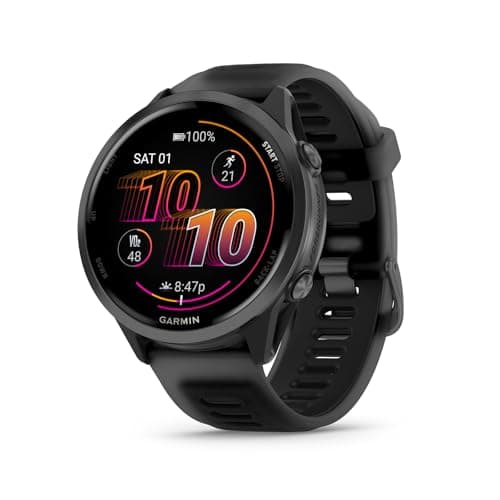 Garmin Forerunner 570 Same sensor family as the 970, $200 less, and no maps. For most runners that is the correct trade. | Most runners, most of the time | Manufacturer specification | 7.3/10 | $449.99Amazon |
| 05 | 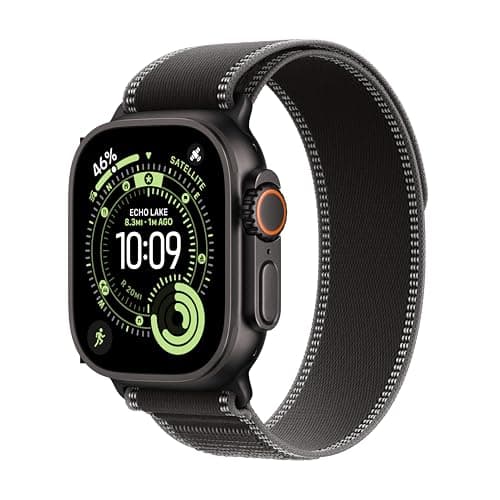 Apple Watch Ultra 3 Excellent positioning hardware and the best screen here, attached to the weakest deep-sleep measurement in the published record. | iPhone owners who train and want one device | Peer-reviewed validation | 6.8/10 | Check price → |
#ad· Live prices from the Amazon Product API, as of November 21, 2026. Where we have no verified live price we show none. Scores come from the published rubric at How we rank — the Evidence column shows what each ranking actually rests on, including where the answer is nothing.
What the $1,000 line actually separates
There is exactly one watch on this site above a thousand dollars, and it is useful to know what it is before deciding how much of this band to spend. The fenix 8 Pro at 51 mm states 53 hours in all-satellite plus multi-band mode and 27 smartwatch days - the longest figures Garmin publishes - plus LTE and satellite messaging in a bigger case. That is what crossing the line buys: more case, more hours, and a way to send a message with no phone. It does not buy a better measurement. The optical sensor is the same class of hardware as the five watches here, and the comparison is at fenix 8 vs fenix 8 Pro.
Everything else this category sells is available under a thousand dollars: multi-band positioning, built-in maps, on-wrist ECG, a titanium or steel case, sapphire glass, 32 GB of music and the full training stack from every brand. This page ranks on which combination is worth which price.
The arithmetic runs backwards against the sticker
Dollars per manufacturer-stated GPS hour is the one number in this band that is not marketing, because it is our own arithmetic over a live price and a published figure, and we show both halves. Run it across the group and the order is not the price order:
The Grit X2 Pro comes to $20.44 on Polar's stated 43 hours in training mode with GPS. The fenix 8 comes to $21.31 on its stated 35 all-satellite-plus-multi-band hours. The Forerunner 970 comes to $25.00 on 26 stated GPS hours, and the Forerunner 570 to $25.00 on 18. One caution we will not bury: those four figures name three different satellite modes between them, so this is a value ranking rather than a like-for-like battery test.
Why the Forerunner 970 is still the pick
The Forerunner 970 is the most complete running watch in the band: multi-band GNSS with SatIQ, full-color built-in maps, an ECG app, a speaker and microphone, 26 stated GPS hours and 15 smartwatch days, per Garmin's specification, with 5 ATM and up to 32 GB of media storage in the manual. For a runner who wants everything on one wrist and does not need an expedition case, nothing else here covers as much ground.
Its honest limit is the sensor, and it is the limit of the whole band. The 2024 umbrella review - 24 systematic reviews over 249 primary validation studies and 430,465 participants - found roughly 34 of 310 identified consumer wearables had ever been validated. The 970 is not one of them. The premium buys features, not a better heart-rate signal. Full review: Garmin Forerunner 970.
The fenix 8 is the one to buy if the terrain is the problem
The fenix 8 states 35 hours all-satellite plus multi-band at 47 mm, 47 hours GPS-only and 16 smartwatch days, in a dive-rated case with built-in maps, a speaker and a microphone. It is the watch for expeditions, ultras and weather, and it is under $1000 today. The price gap to the Forerunner 970 is $96, which is a modest premium for nine extra stated hours and a far tougher case. Full review: Garmin fenix 8.
The Grit X2 Pro brings the only favorable brand-level GPS evidence in the band
The Polar Grit X2 Pro is the longest-lasting watch here on published activity figures and the only one carrying a positive independent positioning result, with the caveat that makes it honest. In the eight-watch trundle-wheel study, distance error across the field ran 3.2% to 6.1% and only Polar's receivers stayed under 5% in every condition - but the receivers tested were the Vantage M, Vantage V and V800, all single-frequency, none of them this watch. It is brand engineering history, not a measurement of the Grit X2 Pro, and we score it as that.
What is not in doubt is the hardware: a 1.39" AMOLED behind sapphire glass in a stainless steel case, dual-frequency GPS plus four other constellations, 43 training hours, 10 smartwatch days, WR100, on-wrist ECG, skin temperature and SpO2, and offline maps preinstalled. The whole Polar range is at best Polar watches.
The budget pick: the Forerunner 570 records the same data
The Forerunner 570 is the cheapest watch on this page and the one most runners should buy from it. Multi-band GNSS, AMOLED, a speaker and microphone, 18 stated GPS hours and 11 smartwatch days. What it does not have is maps at any price, and its manual states 8 GB of media storage - a quarter of what the 970 carries, on a watch that records the same data.
The gap to the 970 is $200. Whether that is worth it comes down to one question - do you navigate - and the full argument is at Forerunner 570 vs 970.
The Apple Watch Ultra 3 is the one to buy for a reason that is not running
Apple states a Grade 5 titanium case at 49 mm, an always-on display up to 3000 nits, up to 42 hours of normal use and 72 in Low Power Mode, L1 and L5 dual-frequency GPS, satellite connectivity for Emergency SOS and Messages, 100 m water resistance and EN13319 certification for recreational scuba to 40 m. It ranks last of the five on our rubric because 42 hours of general use is the shortest endurance here by a wide margin and because the published research on Apple's watches, while the most extensive of any brand, has not been flattering - see is the Apple Watch accurate.
Buy it if you own an iPhone and want one device. The head-to-head with the Garmin flagship is at fenix 8 vs Apple Watch Ultra 3.
Before you spend four figures on the outdoor flagship
The fēnix 8 is the watch most buyers in this bracket end up comparing everything else against, and its weakest rubric score by a distance is cost per capability. If one specific fēnix feature is what you are paying for - mapping, the case, accurate-mode endurance - each is available cheaper somewhere, and the matched list is at alternatives to the Garmin fēnix 8.
In full
Every pick, and why
Garmin Forerunner 970
The most complete running watch Garmin sells, and — counter-intuitively — the cheapest of the pair per hour of GPS you get.
- Case
- 47mm, titanium bezel, AMOLED
- Satellite
- Multi-band GNSS with SatIQ
- Battery (stated)
- 15 days smartwatch / 26 h GPS
- Maps
- Built-in, full color
- Extras
- ECG app, speaker and microphone
What's good
- Multi-band GNSS with SatIQ — the current top tier of consumer positioning hardware
- 26 stated GPS hours is enough for an ironman-distance day with a wide margin
- Built-in maps, which the 570 does not have at any price
What isn't
- The wrist optical sensor is the same class of hardware as the 570's — the premium buys features, not a better heart-rate signal
- 47mm only; there is no smaller case in this model
Skip this if
Skip this if you never race longer than a marathon and never navigate. Maps and titanium are the entire difference, and neither changes a single number the watch records.
What the evidence says
Manufacturer specificationNo independent validation study of the Forerunner 970's optical heart rate has been published that we could find. The specification figures are Garmin's own.
Show how this 7.7 was calculated
| Factor | Weight | Score |
|---|---|---|
| EvidenceSpecs are published and detailed, but no peer-reviewed or independent measured validation of this specific model exists yet. | 30% | 5.5 |
| HardwareMulti-band GNSS with SatIQ and Garmin's current-generation optical sensor — the top hardware tier available. | 20% | 9.5 |
| Metric coverageRunning dynamics, ECG, training load, maps, and a documented export path off the watch. | 20% | 9.5 |
| EnduranceGarmin states 26 hours in GPS mode, 15 days smartwatch. | 15% | 7.5 |
| Cost per capabilityHighest sticker in the range, but the strongest dollars-per-GPS-hour of the two Forerunners — see the arithmetic on the comparison page. | 15% | 7.5 |
$749.9913% off
Price as of November 21, 2026. Prices move; Amazon's is the one that counts.
#ad · we may earn a commission from this link to Garmin Forerunner 970
Garmin fēnix 8 (47mm)
Everything Garmin makes, in a case built to survive being hit. You pay for the durability, not for better data.
- Case
- 47mm, AMOLED
- Satellite
- Multi-band GNSS
- Extras
- Built-in maps, dive-rated, speaker and microphone
What's good
- The most durable case Garmin puts a multi-band receiver into
- Maps, dive modes and the full metric set in one device
What isn't
- Records essentially the same physiological data as a Forerunner costing a third as much
- Heavy compared with a dedicated running watch
Skip this if
Skip this if you run on roads and pavements. You would be buying a case specification you will never test, and the numbers it records are the ones a Forerunner already gives you.
What the evidence says
Manufacturer specificationPublished specifications only; no independent validation of this model that we could find.
Show how this 7.5 was calculated
| Factor | Weight | Score |
|---|---|---|
| EvidenceDetailed published specs, no independent measured validation. | 30% | 5.5 |
| HardwareMulti-band GNSS in Garmin's most ruggedized current case. | 20% | 9.5 |
| Metric coverageThe widest metric and mode coverage of any device on this site. | 20% | 10.0 |
| EnduranceAmong the longest stated GPS endurance in Garmin's AMOLED line. | 15% | 8.5 |
| Cost per capabilityBy some distance the weakest cost-per-capability figure here — the premium buys the case, not the data. | 15% | 4.5 |
$999.9925% off
Price as of November 21, 2026. Prices move; Amazon's is the one that counts.
#ad · we may earn a commission from this link to Garmin fēnix 8 (47mm)
Polar Grit X2 Pro
Sapphire, steel, offline maps and 43 stated training hours — and the one Polar watch family that has been measured for nocturnal HRV came last of five.
- Display
- 1.39" AMOLED, 454 × 454, sapphire glass
- Case
- Stainless steel
- Satellite
- Dual-frequency GPS, plus GLONASS, Galileo, BeiDou, QZSS
- Battery (stated)
- 10 days smartwatch / 43 h training with GPS
- Extras
- On-wrist ECG, skin temperature, SpO2, offline maps
What's good
- 43 stated hours in training mode with GPS, which is flagship endurance in an AMOLED watch
- Offline maps preinstalled for North America and Europe, rather than downloaded per region
- Sapphire over stainless steel is the most durable material pairing in this roundup
What isn't
- The nocturnal HRV validation of its predecessor, the Grit X Pro, was the weakest of the five devices tested — MAPE 16.3% against an ECG reference
- Priced against the fēnix tier without Garmin's third-party ecosystem
Skip this if
Skip this if you bought it for the recovery score. The only published nocturnal HRV measurement of a Polar watch is of this watch's predecessor, and it finished last of five devices against an ECG reference. The chest strap from the same company is the reference standard; the watch is not.
What the evidence says
Peer-reviewed validationTwo peer-reviewed results touch this device, and they point opposite ways. Gilgen-Ammann et al. (2020) found only Polar's receivers stayed under 5% distance error across eight watches — dated, brand-level, and about earlier models. Dial et al. (2025) measured the Polar Grit X Pro, this watch's direct predecessor, over 206 nights against an ECG reference and recorded the weakest HRV agreement of five devices (CCC 0.82, MAPE 16.32 ± 24.39%) and the weakest resting heart rate (CCC 0.86). Neither study tested the X2 Pro itself.
Show how this 7.4 was calculated
| Factor | Weight | Score |
|---|---|---|
| EvidencePolar carries the only favorable peer-reviewed positioning result in the category and the weakest measured HRV agreement in the newest study. Both are about predecessors; averaging them honestly lands mid-pack. | 30% | 6.0 |
| HardwareDual-frequency GPS, sapphire over steel, plus ECG, skin temperature and SpO2 sensors. | 20% | 9.0 |
| Metric coverageOffline maps preinstalled, a very wide sensor set and Polar's recovery platform. | 20% | 9.0 |
| Endurance43 stated training hours with GPS and 10 smartwatch days behind an AMOLED screen. | 15% | 8.5 |
| Cost per capabilityFlagship pricing against a smaller ecosystem, and the HRV evidence does not support the premium. | 15% | 5.0 |
$999.9912% off
Price as of November 21, 2026. Prices move; Amazon's is the one that counts.
#ad · we may earn a commission from this link to Polar Grit X2 Pro
Garmin Forerunner 570
Same sensor family as the 970, $200 less, and no maps. For most runners that is the correct trade.
- Case
- 42mm or 47mm, AMOLED
- Satellite
- Multi-band GNSS
- Battery (stated)
- 11 days smartwatch / 18 h GPS (47mm)
- Maps
- None
- Extras
- Speaker and microphone, on-watch music
What's good
- Records the same core metrics as the 970 — the data you get back is not a cut-down version
- Two case sizes, which the 970 does not offer
- Multi-band GNSS at a mid-range price
What isn't
- 18 stated GPS hours is thin for ultra distances
- No maps, so navigation is breadcrumb-only
Skip this if
Skip this if you race beyond about 12 hours or navigate unfamiliar trails. The battery and the missing maps are both real limits, and neither is fixable in software.
What the evidence says
Manufacturer specificationAs with the 970, no independent validation of this model's optical heart rate has been published that we could find.
Show how this 7.3 was calculated
| Factor | Weight | Score |
|---|---|---|
| EvidenceDetailed published specs, no independent measured validation of this model. | 30% | 5.5 |
| HardwareMulti-band GNSS and the same current-generation optical sensor family as the 970. | 20% | 9.0 |
| Metric coverageEverything the 970 records except maps and the ECG app. | 20% | 8.5 |
| EnduranceGarmin states 18 hours GPS, 11 days smartwatch, on the 47mm case. | 15% | 6.0 |
| Cost per capabilityMaterially cheaper than the 970 for the same recorded data. | 15% | 8.0 |
$549.9918% off
Price as of November 21, 2026. Prices move; Amazon's is the one that counts.
#ad · we may earn a commission from this link to Garmin Forerunner 570
Apple Watch Ultra 3
Excellent positioning hardware and the best screen here, attached to the weakest deep-sleep measurement in the published record.
- Case
- 49mm titanium
- Satellite
- Dual-frequency GNSS
- Connectivity
- GPS + Cellular
What's good
- Dual-frequency positioning and a genuinely excellent display
- Best-in-class as a general smartwatch, by a distance
What isn't
- In the Brigham and Women's PSG study, the Apple Watch's deep-sleep sensitivity was 50.5% — the weakest of the three devices tested
- Battery is short next to every dedicated sports watch here
Skip this if
Skip this if you bought it to fix your sleep data. The peer-reviewed result says that is the one thing it is worst at, and no firmware update changes a published measurement.
What the evidence says
Peer-reviewed validationRobbins et al. (2024) tested the Apple Watch Series 8 against polysomnography: 75.0% four-stage agreement, but deep-sleep sensitivity of only 50.5%, overestimating light sleep by 45 minutes and underestimating deep sleep by 43 minutes. That was the Series 8, not the Ultra 3, and Apple has revised its algorithm since.
Show how this 6.8 was calculated
| Factor | Weight | Score |
|---|---|---|
| EvidenceGenuine peer-reviewed sleep data exists, which most rivals lack — but the result was unfavorable, and it tested an earlier model. | 30% | 6.0 |
| HardwareDual-frequency GNSS and the best display in this group. | 20% | 9.0 |
| Metric coverageVery wide metric coverage; export off-platform is more awkward than Garmin's. | 20% | 8.5 |
| EnduranceMaterially shorter than every dedicated sports watch here. | 15% | 4.0 |
| Cost per capabilityFlagship pricing; the cellular model costs more again. | 15% | 6.0 |
No buyable offer at the last price check (November 21, 2026). We show nothing rather than a stale number.
#ad · we may earn a commission from this link to Apple Watch Ultra 3
What to check before you spend this much
- Read which satellite mode each battery figure names. Three different modes are quoted across this page. A GPS-only hour and a multi-band hour are not comparable units.
- Decide about maps first. It is the single biggest capability split in this band, and it is the whole difference between the two Forerunners.
- Do not pay the premium expecting a better sensor. No wrist optical sensor at any price on this page has a favorable independent validation we could find. The premium buys screen, case, endurance and software.
- Match the water rating to the activity. 5 ATM covers swimming. Only the fenix 8 and the Ultra 3 carry dive-capable ratings, and only the Ultra 3 publishes a scuba certification.
- Budget a strap into the purchase, not after it. At this price the watch is not the constraint on your data quality; the site of the measurement is.
How this ranking was built
Every score on this page comes from one published rubric, applied identically to every device on the site, with the weights written down and the inputs shown. We have not worn any of these devices and we never say we have. Read the method and check us.
Questions
Frequently asked
Is there any running watch worth more than $1,000?
One on this site: the fenix 8 Pro at 51 mm, which states 53 hours in all-satellite plus multi-band mode and adds LTE and satellite messaging. It does not measure anything the cheaper watches cannot. Whether that is worth the step up is answered at fenix 8 vs 8 Pro.
Which watch under $1,000 has the longest battery?
On manufacturer-stated activity figures, the Polar Grit X2 Pro at 43 hours in training mode with GPS. The fenix 8 states 35 hours in all-satellite plus multi-band and 47 hours GPS-only - which is a different mode, and why we name the mode every time.
Does a $750 watch measure better than a $250 one?
Not on anything the published record demonstrates. The umbrella review found most consumer wearables have never been validated, and no watch on this page has a validation of its own optical sensor. What the money buys is maps, materials, endurance and analytics.
What is the cheapest watch here with maps?
Of these five, the Polar Grit X2 Pro and the two Garmin watches with built-in maps carry them; the Forerunner 570 does not at any price. The full navigation field across all price bands is at best running watches with maps.
Show your working
Sources
Every one of these was read in full before it was cited. Where we could not access a paper, we do not quote its numbers.
- [1]Manufacturer specification2026Garmin — Forerunner 970 published specifications
Manufacturer-stated battery: up to 15 days smartwatch mode, up to 26 hours GPS mode.
- [2]Manufacturer specification2026Garmin — Forerunner 970 owner’s manual, specifications
Manufacturer-stated, read 2026-08-18: rechargeable lithium-ion battery, 5 ATM (swim) water rating, and up to 32 GB of media storage — the specification that decides how much music the watch can actually hold.
- [3]Manufacturer specification2026Garmin — fēnix 8 Series owner’s manual, battery information
Manufacturer-stated, read 2026-08-18. One table covers the fēnix 8 and the fēnix 8 Pro, which is why the two can be compared here without mixing sources. fēnix 8 AMOLED 47 mm: 16 days smartwatch with Gesture (7 with Always On Display), 47 h GPS-only (37 AOD), 35 h all satellite systems plus multi-band (28 AOD). fēnix 8 Pro 47 mm: 15 days (8 AOD), 44 h GPS-only (33 AOD), 30 h all systems plus multi-band (23 AOD). fēnix 8 Pro 51 mm: 27 days (15 AOD), 78 h GPS-only (56 AOD), 53 h all systems plus multi-band (41 AOD), and 21 h all systems plus multi-band with LTE LiveTrack (19 AOD).
- [4]Manufacturer specification2026Polar — Grit X2 Pro published specifications
Manufacturer-stated: 1.39" AMOLED at 454 × 454 behind sapphire glass, stainless steel case, dual-frequency GPS plus GLONASS, Galileo, BeiDou and QZSS, 43 hours in training mode with GPS, 10 days in smartwatch mode, WR100, on-wrist ECG, skin temperature and SpO2 sensors, offline maps preinstalled for North America and Europe.
- [5]Peer-reviewed validation2020Gilgen-Ammann, Schweizer & Wyss, “Accuracy of Distance Recordings in Eight Positioning-Enabled Sport Watches: Instrument Validation Study”, JMIR mHealth and uHealth
DOI 10.2196/17118. Eight watches (Apple Watch Series 4, Coros Apex 46mm, Garmin Fenix 5X Plus, Garmin Forerunner 935, Polar Vantage M, Polar Vantage V, Polar V800, Suunto 9 Baro) measured against a trundle wheel accurate to 1 cm, across urban, forest and 400 m track conditions. IMPORTANT: this predates the dual-frequency receivers now standard, so it describes brand engineering history, not any watch currently sold.
- [6]Manufacturer specification2026Garmin — Forerunner 570 (47 mm) published specifications
Manufacturer-stated battery: up to 11 days smartwatch mode, up to 18 hours GPS mode.
- [7]Manufacturer specification2026Garmin — Forerunner 570 Series owner’s manual, specifications
Manufacturer-stated, read 2026-08-18: rechargeable lithium-ion battery, 5 ATM (swim) water rating, and up to 8 GB of media storage — a quarter of what the 970 carries, on a watch that records the same data.
- [8]Manufacturer specification2026Apple — Apple Watch Ultra 3 published technical specifications
Manufacturer-stated, read 2026-08-18: Grade 5 titanium case, 49 mm high by 44 mm wide by 12 mm deep, always-on Retina display at up to 3000 nits, up to 42 hours of normal use and up to 72 hours in Low Power Mode, L1 and L5 precision dual-frequency GPS across GPS, GLONASS, Galileo, QZSS and BeiDou, satellite connectivity for Emergency SOS, Messages and Find My, 100 m water resistance and EN13319 certification for recreational scuba to 40 m. Apple publishes this level of detail for the Ultra 3 and no longer publishes it for the Ultra 2 — which is why the older watch is described more thinly here.
- [9]Peer-reviewed validation2024Doherty, Baldwin, Keogh, Caulfield & Argent, “Keeping Pace with Wearables: A Living Umbrella Review of Systematic Reviews Evaluating the Accuracy of Consumer Wearable Technologies in Health Measurement”, Sports Medicine
DOI 10.1007/s40279-024-02077-2. An umbrella review: 24 systematic reviews covering 249 unique primary validation studies and 430,465 participants (43% female), across 11 biometric outcomes, with roughly 34 of 310 identified consumer wearables ever validated. Reported accuracy by metric: heart rate approximately ±3% (mean bias −3.39 bpm); step count mean absolute percentage error from −9% to 12%; energy expenditure mean bias −3 kcal per minute with error ranging from −21.27% to 14.76%. Authors’ stated limits: a temporal lag between device release and published research, the intrinsic bias of a tertiary synthesis, and heterogeneity of protocols, devices, criterion measures and statistics severe enough that the authors did not pool a meta-analysis.
Read next
Related
- Best running watches
The field with no price cap at all, across every brand.
- Forerunner 570 vs 970
The budget pick against the first pick, on maps and storage.
- Garmin fenix 8 Pro review
The one watch above the line, and what the extra actually buys.
- Best Polar watches
The Grit X2 Pro in its own brand context, study caveats included.
- Alternatives to the Garmin fēnix 8
Each flagship feature priced separately, below the flagship.