GPS and multisport
The best Polar watches
Polar is the only brand on this site that has ever cleared an independent accuracy bar, and the only one researchers pick as their reference instrument. Neither fact describes the watch you would buy today, and that is the whole story.
We earn a commission when you buy through our Amazon links, at no extra cost to you. It never decides a ranking — the rubric that does is published in full, so you can check us rather than take our word for it. How this works.
Top pick
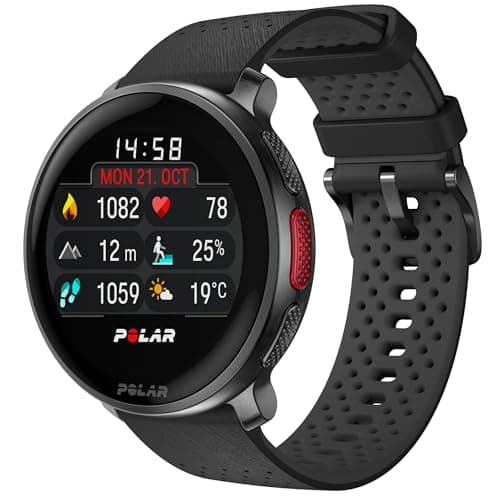
Lab-style metrics on the wristPolar Vantage V3
Polar's flagship, and the most sensor-dense watch here — including an on-wrist ECG.
$679.3314% off
Price as of November 21, 2026. Prices move; Amazon's is the one that counts.
#ad · we may earn a commission from this link to Polar Vantage V3
The short answer
The Polar Vantage V3 is the pick if you want the widest sensor set Polar sells - dual-frequency GNSS, on-wrist ECG, skin temperature and offline maps. The budget pick is the Polar Vantage M3, which carries the same dual-frequency positioning and turn-by-turn navigation for $174 less. Choose the Grit X2 Pro if you want 43 stated training hours behind sapphire glass.
Ranked
Quick picks
| # | Device | Best for | Evidence | Score | Price |
|---|---|---|---|---|---|
| 01 | Polar Vantage V3 Polar's flagship, and the most sensor-dense watch here — including an on-wrist ECG. | Lab-style metrics on the wrist | Peer-reviewed validation | 7.5/10 | $586.83Amazon |
| 02 | 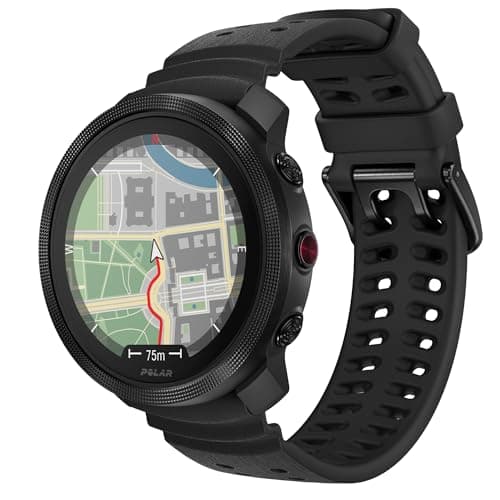 Polar Vantage M3 The pick when positioning accuracy is the thing you actually care about — Polar was the one brand under 5% error in the eight-watch validation study. | Runners who want the best-validated GPS | Peer-reviewed validation | 7.5/10 | $412.36Amazon |
| 03 | 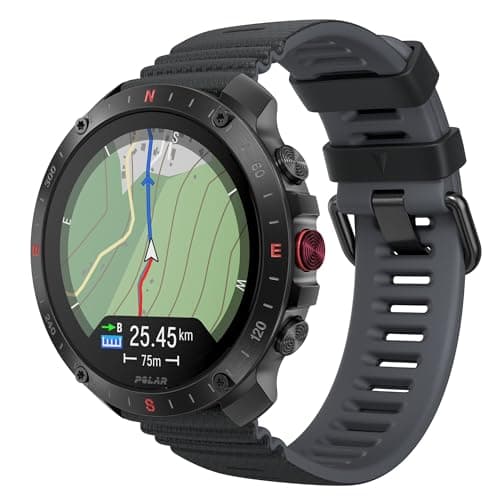 Polar Grit X2 Pro Sapphire, steel, offline maps and 43 stated training hours — and the one Polar watch family that has been measured for nocturnal HRV came last of five. | Trail navigation with a full sensor set | Peer-reviewed validation | 7.4/10 | $878.96Amazon |
#ad· Live prices from the Amazon Product API, as of November 21, 2026. Where we have no verified live price we show none. Scores come from the published rubric at How we rank — the Evidence column shows what each ranking actually rests on, including where the answer is nothing.
The reason a Polar roundup is not like any other brand page here
Every brand on this site claims accuracy. Polar is the only one with an independent result behind the claim, and the only one whose hardware other researchers trust enough to measure with. Both of those deserve spelling out, because the second is the stronger of the two.
In Gilgen-Ammann and colleagues' eight-watch validation, eight positioning-enabled sport watches were measured against a trundle wheel accurate to 1 cm across urban, forest and 400 m track conditions. Overall distance error across the field ran 3.2% to 6.1%, and only Polar's receivers - the Vantage M, the Vantage V and the V800 - stayed under 5% in every condition. That is the single most favorable brand-level positioning finding in the literature this site is built on.
Now the limits, because they are large. The study is from 2020, every receiver in it was single-frequency, and not one of the three watches it praised is on this page or on sale. It is dated evidence about how Polar engineers a GNSS receiver, not a measurement of the watch you would be buying - and our rubric scores it as exactly that, which is why these watches sit in the sevens rather than the nines.
The second fact is about a sensor rather than a watch. When researchers needed a heart-rate reference they could trust, they chose Polar: the 2025 anatomical-placement study used a Polar H10 as its criterion instrument, and the 536-night overnight comparison used one as a 1000 Hz single-lead ECG reference. That is a revealed preference, not a measurement of the H10's own error - and if the H10 carries a systematic bias, every number on this site inherits it. We say so on how we rank. The same overnight study is also the only place a Polar watch appears in modern HRV research: a previous-generation Grit X Pro was one of its five simultaneously worn devices, which makes Polar one of only three brands with any overnight measurement on record at all.
The Vantage V3 is the pick, for sensors rather than for software
The Vantage V3 is the most sensor-dense watch on this site: an AMOLED panel, dual-frequency GNSS, on-wrist ECG, skin temperature and offline maps. If your interest is in collecting as many raw signals as a wrist can produce, nothing else here comes close.
Its weakness is not the hardware. It is priced against the Forerunner 970 without matching Garmin's ecosystem depth, and sensor breadth is not validated accuracy - Polar publishes no per-model validation either. Skip it if you will not actually use the extra measurements. More numbers you ignore is not more value. The full write-up is at Polar Vantage V3.
The budget pick: the Vantage M3 keeps the part that matters
The Vantage M3 inherits the same brand-level positioning evidence as the V3, the same dual-frequency GNSS, and offline maps with turn-by-turn navigation - at a price where none of that is normal. It is the Polar we recommend most often, and it carries a place on the main running watch roundup for the same reason. What you give up against the V3 is the ECG, the skin-temperature sensor and some screen.
At under $500 today it is also the cheapest route on this site into dual-frequency positioning plus navigation from a brand with a positioning record. Our price layer puts the gap to the Vantage V3 at $174.
The Grit X2 Pro is the outdoor watch, with the longest stated training battery
Polar states a 1.39" AMOLED at 454 x 454 behind sapphire glass in a stainless steel case, dual-frequency GPS plus GLONASS, Galileo, BeiDou and QZSS, 43 hours in training mode with GPS, 10 days in smartwatch mode, WR100, on-wrist ECG, skin temperature and SpO2, and offline maps preinstalled for North America and Europe. Forty-three stated training hours is longer than any Garmin AMOLED watch on this site publishes, and $20.44 per stated GPS hour is a strong figure for a premium watch.
It ranks third here on the rubric rather than on the spec sheet: the ten-day smartwatch figure is the shortest of the three, and the sapphire-and-steel construction is weight and money that only pays back if you are genuinely outdoors in rough conditions. The trail field it competes in is at best GPS watches for trail running.
What Polar does not sell
Three honest gaps. There is no cheap Polar watch on this site - the entry point is the Vantage M3, and anyone shopping below it should be looking at the budget field. There is no Polar with Garmin-grade third-party integration depth. And there is no Polar watch with a published validation of its own optical heart rate, which is why Polar's own chest strap remains the most useful thing the company sells - see Polar vs Garmin chest straps.
In full
Every pick, and why
Polar Vantage V3
Polar's flagship, and the most sensor-dense watch here — including an on-wrist ECG.
- Display
- AMOLED
- Satellite
- Dual-frequency GNSS
- Extras
- On-wrist ECG, skin temperature, offline maps
What's good
- The widest raw sensor set of any watch in this roundup
- Inherits the brand-level positioning result from the JMIR study
What isn't
- Priced against the Forerunner 970 without matching its ecosystem
- Sensor breadth is not the same thing as validated accuracy, and Polar publishes no per-model validation either
Skip this if
Skip this if you will not actually use the extra sensors. More measurements you ignore is not more value.
What the evidence says
Peer-reviewed validationSame dated, brand-level positioning evidence as the Vantage M3: Gilgen-Ammann et al. (2020) found only Polar's receivers under 5% error, testing the Vantage M, Vantage V and V800 — not the V3.
Show how this 7.5 was calculated
| Factor | Weight | Score |
|---|---|---|
| EvidenceFavorable but dated and brand-level peer-reviewed positioning evidence; no validation of this specific model. | 30% | 6.5 |
| HardwareDual-frequency GNSS plus the densest sensor package here, including wrist ECG. | 20% | 9.0 |
| Metric coverageVery wide metric coverage with a strong recovery platform. | 20% | 9.0 |
| EnduranceGood stated endurance for a sensor-heavy AMOLED watch. | 15% | 7.5 |
| Cost per capabilityFlagship pricing without a flagship ecosystem. | 15% | 5.5 |
$679.3314% off
Price as of November 21, 2026. Prices move; Amazon's is the one that counts.
#ad · we may earn a commission from this link to Polar Vantage V3
Polar Vantage M3
The pick when positioning accuracy is the thing you actually care about — Polar was the one brand under 5% error in the eight-watch validation study.
- Display
- AMOLED
- Satellite
- Dual-frequency GNSS
- Extras
- Turn-by-turn navigation, offline maps
What's good
- Polar is the only brand that came in under 5% distance error across all conditions in the JMIR eight-watch study
- Dual-frequency positioning plus offline maps at a mid-range price
What isn't
- The validation that flatters Polar is from 2020 and tested older models — it is evidence about the brand's GNSS engineering, not a measurement of this watch
- Smaller ecosystem than Garmin
Skip this if
Skip this if you are deep in Garmin's ecosystem already. Nothing here is enough better to justify rebuilding your training history somewhere else.
What the evidence says
Peer-reviewed validationThe peer-reviewed evidence is brand-level and dated: Gilgen-Ammann et al. (2020) measured eight watches against a trundle wheel and found only Polar's receivers stayed under 5% error. That study tested the Vantage M, Vantage V and V800 — not the M3.
Show how this 7.5 was calculated
| Factor | Weight | Score |
|---|---|---|
| EvidenceThe only brand in this roundup with a favorable peer-reviewed positioning result — but the study is from 2020 and tested earlier models, so it is dated brand evidence, not a measurement of this watch. | 30% | 7.0 |
| HardwareDual-frequency GNSS with offline maps. | 20% | 8.5 |
| Metric coverageStrong training-load and recovery platform; good sensor support. | 20% | 8.0 |
| EnduranceCompetitive for an AMOLED multi-sport watch, per Polar's stated figures. | 15% | 7.0 |
| Cost per capabilityMid-range pricing for dual-frequency plus maps. | 15% | 7.0 |
$499.9918% off
Price as of November 21, 2026. Prices move; Amazon's is the one that counts.
#ad · we may earn a commission from this link to Polar Vantage M3
Polar Grit X2 Pro
Sapphire, steel, offline maps and 43 stated training hours — and the one Polar watch family that has been measured for nocturnal HRV came last of five.
- Display
- 1.39" AMOLED, 454 × 454, sapphire glass
- Case
- Stainless steel
- Satellite
- Dual-frequency GPS, plus GLONASS, Galileo, BeiDou, QZSS
- Battery (stated)
- 10 days smartwatch / 43 h training with GPS
- Extras
- On-wrist ECG, skin temperature, SpO2, offline maps
What's good
- 43 stated hours in training mode with GPS, which is flagship endurance in an AMOLED watch
- Offline maps preinstalled for North America and Europe, rather than downloaded per region
- Sapphire over stainless steel is the most durable material pairing in this roundup
What isn't
- The nocturnal HRV validation of its predecessor, the Grit X Pro, was the weakest of the five devices tested — MAPE 16.3% against an ECG reference
- Priced against the fēnix tier without Garmin's third-party ecosystem
Skip this if
Skip this if you bought it for the recovery score. The only published nocturnal HRV measurement of a Polar watch is of this watch's predecessor, and it finished last of five devices against an ECG reference. The chest strap from the same company is the reference standard; the watch is not.
What the evidence says
Peer-reviewed validationTwo peer-reviewed results touch this device, and they point opposite ways. Gilgen-Ammann et al. (2020) found only Polar's receivers stayed under 5% distance error across eight watches — dated, brand-level, and about earlier models. Dial et al. (2025) measured the Polar Grit X Pro, this watch's direct predecessor, over 206 nights against an ECG reference and recorded the weakest HRV agreement of five devices (CCC 0.82, MAPE 16.32 ± 24.39%) and the weakest resting heart rate (CCC 0.86). Neither study tested the X2 Pro itself.
Show how this 7.4 was calculated
| Factor | Weight | Score |
|---|---|---|
| EvidencePolar carries the only favorable peer-reviewed positioning result in the category and the weakest measured HRV agreement in the newest study. Both are about predecessors; averaging them honestly lands mid-pack. | 30% | 6.0 |
| HardwareDual-frequency GPS, sapphire over steel, plus ECG, skin temperature and SpO2 sensors. | 20% | 9.0 |
| Metric coverageOffline maps preinstalled, a very wide sensor set and Polar's recovery platform. | 20% | 9.0 |
| Endurance43 stated training hours with GPS and 10 smartwatch days behind an AMOLED screen. | 15% | 8.5 |
| Cost per capabilityFlagship pricing against a smaller ecosystem, and the HRV evidence does not support the premium. | 15% | 5.0 |
$999.9912% off
Price as of November 21, 2026. Prices move; Amazon's is the one that counts.
#ad · we may earn a commission from this link to Polar Grit X2 Pro
What to check before you buy a Polar watch
- Do not read the 2020 study as a claim about your watch. It tested single-frequency receivers that are no longer sold. It is evidence about brand engineering, which is worth something, and not a measurement of the V3, M3 or Grit X2 Pro, which is worth being clear about.
- Count the sensors you will actually look at. The V3 costs more than the M3 almost entirely for an ECG and a skin-temperature reading. If neither will change what you do, buy the M3.
- Check platform support before the spec sheet.Polar's integration list is shorter than Garmin's. If a coaching service pushes your workouts, confirm it supports Polar first.
- The H10 is the cheapest Polar upgrade and the best-evidenced one. If you care about heart-rate accuracy, an electrode belt beats any wrist sensor Polar sells.
- WR100 is not a dive rating.The Grit X2 Pro's water figure covers swimming and worse weather, not scuba.
How this ranking was built
Every score on this page comes from one published rubric, applied identically to every device on the site, with the weights written down and the inputs shown. We have not worn any of these devices and we never say we have. Read the method and check us.
Questions
Frequently asked
Is Polar GPS really more accurate than Garmin?
In one 2020 study of eight watches, only Polar's three receivers stayed under 5% distance error in every condition tested. Those receivers were single-frequency and are no longer sold, and nobody has repeated the test on current dual-frequency hardware. It is the best brand-level positioning evidence that exists; it is not a claim about a current watch.
Which Polar watch should most runners buy?
The Vantage M3. It has the same dual-frequency GNSS and the same offline maps with turn-by-turn navigation as the flagship, and the money you save covers a chest strap - which is the upgrade that actually improves the data.
What does the Vantage V3 add over the Vantage M3?
An on-wrist ECG, a skin-temperature sensor and a more premium display and case. It does not add validated accuracy: Polar publishes no per-model validation for either watch.
Does Polar require a subscription?
No. None of the three watches here charges a mandatory monthly fee, which is a genuine cost advantage over the subscription devices - the arithmetic is on sleep trackers without a subscription.
Show your working
Sources
Every one of these was read in full before it was cited. Where we could not access a paper, we do not quote its numbers.
- [1]Peer-reviewed validation2020Gilgen-Ammann, Schweizer & Wyss, “Accuracy of Distance Recordings in Eight Positioning-Enabled Sport Watches: Instrument Validation Study”, JMIR mHealth and uHealth
DOI 10.2196/17118. Eight watches (Apple Watch Series 4, Coros Apex 46mm, Garmin Fenix 5X Plus, Garmin Forerunner 935, Polar Vantage M, Polar Vantage V, Polar V800, Suunto 9 Baro) measured against a trundle wheel accurate to 1 cm, across urban, forest and 400 m track conditions. IMPORTANT: this predates the dual-frequency receivers now standard, so it describes brand engineering history, not any watch currently sold.
- [2]Peer-reviewed validation2025“Impact of Anatomical Placement on the Accuracy of Wearable Heart Rate Monitors During Rest and Various Exercise Intensities”, Sensors (Basel)
n = 28 (14 male, 14 female). Polar H10 chest strap as the reference. Compared Polar Verity Sense (forearm), Garmin Forerunner 55 (wrist) and three simultaneous Whoop 4.0 units at wrist, forearm and upper arm, across rest, cycling warm-up, burpees and a modified Bruce treadmill protocol.
- [3]Peer-reviewed validation2025Dial, Hollander, Vatne, Emerson, Edwards & Hagen, “Validation of nocturnal resting heart rate and heart rate variability in consumer wearables”, Physiological Reports 13(16):e70527
DOI 10.14814/phy2.70527. n = 13 healthy adults (7 male, 6 female, 33.2 ± 8.6 years) across 536 nights, each wearing an Oura Gen 3, Oura Gen 4, Polar Grit X Pro, Garmin fēnix 6 and Whoop 4.0 simultaneously against a Polar H10 single-lead ECG reference sampled at 1000 Hz. Authors’ stated limits: healthy adults only, no atrial-fibrillation population, proprietary and periodically-updated algorithms, and unequal night counts per device. The Garmin was dropped from the resting-heart-rate comparison because the 30-minute window it uses is not timestamped.
- [4]Manufacturer specification2026Polar — H10 heart rate sensor published specifications
Manufacturer-stated: electrical (ECG) measurement, Bluetooth LE + ANT+, internal memory for one session up to 30 hours, up to 400 h on a CR2025 coin cell, WR30.
- [5]Manufacturer specification2026Polar — Grit X2 Pro published specifications
Manufacturer-stated: 1.39" AMOLED at 454 × 454 behind sapphire glass, stainless steel case, dual-frequency GPS plus GLONASS, Galileo, BeiDou and QZSS, 43 hours in training mode with GPS, 10 days in smartwatch mode, WR100, on-wrist ECG, skin temperature and SpO2 sensors, offline maps preinstalled for North America and Europe.
- [6]Manufacturer specification2026Polar — Verity Sense published specifications
Manufacturer-stated: optical heart rate worn on the forearm or upper arm, dual Bluetooth plus ANT+, on-board recording, swim mode, WR50.
Read next
Related
- Polar Vantage V3 review
The full write-up on this page's first pick.
- Polar Vantage M3 review
The budget pick in detail, including the study it inherits.
- Polar vs Garmin
The brand question with both records laid out side by side.
- Best running watches
The cross-brand field, where the Vantage M3 also ranks.