Head to head
Garmin fēnix 8 vs fēnix 8 Pro
Two radios more, one sensor set identical — and at the same case size, Garmin's own table gives the Pro the shorter battery.
We earn a commission when you buy through our Amazon links, at no extra cost to you. It never decides a ranking — the rubric that does is published in full, so you can check us rather than take our word for it. How this works.
Top pick
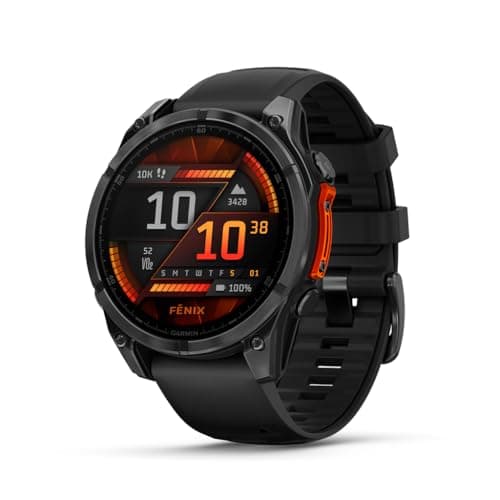
Expedition and rough-terrain useGarmin fēnix 8 (47mm)
Everything Garmin makes, in a case built to survive being hit. You pay for the durability, not for better data.
$999.9923% off
Price as of October 22, 2026. Prices move; Amazon's is the one that counts.
#ad · we may earn a commission from this link to Garmin fēnix 8 (47mm)
The short answer
Buy the fēnix 8 unless you train or race where there is no cell coverage. The Pro adds inReach satellite messaging, SOS and LTE — communications hardware, not measurement hardware — and changes nothing the watch records. At the same 47mm size Garmin states 30 hours in all-systems multi-band for the Pro against 35 for the fēnix 8, so the upgrade is also a small battery downgrade unless you buy the larger 51mm case.
Ranked
Quick picks
| # | Device | Best for | Evidence | Score | Price |
|---|---|---|---|---|---|
| 01 | Garmin fēnix 8 (47mm) Everything Garmin makes, in a case built to survive being hit. You pay for the durability, not for better data. | Expedition and rough-terrain use | Manufacturer specification | 7.5/10 | $774.00Amazon |
| 02 | 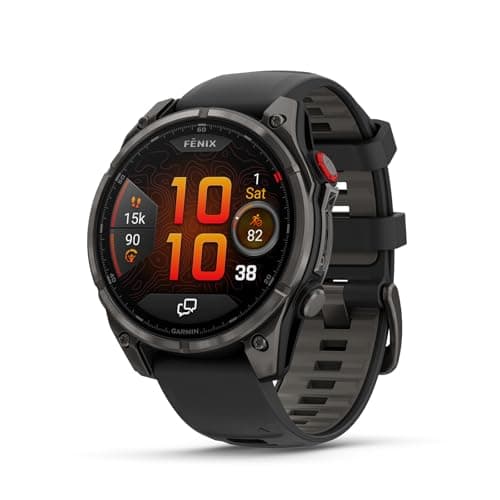 Garmin fēnix 8 Pro (51mm) A fēnix 8 with a satellite radio bolted on. It is the only watch here that can message for help with no phone and no cell coverage — and it records nothing the cheaper fēnix does not. | Going where there is no signal | Manufacturer specification | 7.4/10 | $1,190.00Amazon |
#ad· Live prices from the Amazon Product API, as of October 22, 2026. Where we have no verified live price we show none. Scores come from the published rubric at How we rank — the Evidence column shows what each ranking actually rests on, including where the answer is nothing.
The specification table
Every battery figure below comes from one Garmin table that covers both watches, which is the only reason this comparison can be made cleanly — cross-quoting two marketing pages with two sets of assumptions is how most fēnix comparisons go wrong. The mode is named on every number, and all of them are the Gesture screen-timeout figures rather than the shorter Always On Display ones.
| Specification | fēnix 8 (47mm) | fēnix 8 Pro (47mm) | fēnix 8 Pro (51mm) |
|---|---|---|---|
| Smartwatch mode (stated) | 16 days | 15 days | 27 days |
| GPS-only (stated) | 47 h | 44 h | 78 h |
| All systems + multi-band (stated) | 35 h | 30 h | 53 h |
| Same mode, with LTE LiveTrack | Not applicable | Published for the Pro only | 21 h |
| Satellite messaging | None | inReach, with an active service plan | inReach, with an active service plan |
| Maps | Preloaded TopoActive | Preloaded TopoActive | Preloaded TopoActive |
| Optical heart-rate sensor | The same generation across all three | ||
What the Pro actually adds
One thing, and it is a real thing: the watch can send a message and trigger an SOS through the Iridium satellite network with no phone and no cell signal, using the inReach service Garmin sells separately. On the fēnix 8 that capability requires carrying a separate inReach device. If you run canyons, remote trails or ridgelines alone, that is not a gadget — it is the reason the watch exists.
The Pro also adds LTE, which powers live tracking and voice calls away from a phone. Both features need an active plan, and Garmin prices those plans separately from the watch, so the sticker on the product page is not the cost of ownership.
What it does not add
Not one measurement. The optical sensor generation is the same, the receiver class is the same, the metric list is the same, the maps are the same. Every number you will look at after a run — pace, distance, heart rate, training load, sleep — comes off identical hardware running identical models.
That matters more than it sounds, because the sensor is the part with the weakest evidence on either watch. No independent validation of a fēnix 8 optical heart rate has been published that we could find, and the best-controlled placement study we have read found every wrist-worn optical device losing agreement badly under rapid intensity changes, irrespective of brand. Paying for a satellite radio does not touch that problem; a chest strap does, for a fraction of the difference between these two watches.
The battery finding most comparisons miss
Compare like for like — 47mm against 47mm — and the Pro is the shorter-lived watch in every mode Garmin publishes: 15 smartwatch days against 16, 44 GPS-only hours against 47, and 30 all-systems multi-band hours against 35. Radios cost power even when idle, and Garmin's own table shows it rather than hiding it.
The 51mm Pro reverses that comfortably — 53 stated multi-band hours and 27 smartwatch days — but you are buying endurance with case volume, not with the Pro badge. Switch LTE LiveTrack on and the same 51mm watch drops to 21 stated hours, which is the number to plan an ultra around if you intend to be tracked live all day.
In dollars per stated GPS hour, in the accuracy mode rather than the flattering one, the fēnix 8 costs $22.11 and the 51mm Pro costs $22.45. Both are poor next to a COROS PACE 4, which is the honest context for this whole tier.
Who should buy which
- You go out of coverage alone.Buy the Pro, and buy the 51mm if you also want the endurance. The satellite link is worth more than any spec on this page — our full fēnix 8 Pro review sets out what the subscription covers and what it does not.
- You want the toughest Garmin for trails and travel. Buy the fēnix 8. It records the same data, costs less and lasts longer at matched size.
- You want better numbers. Neither. Buy the cheaper watch and put the difference into a chest strap, which is the only upgrade on this page with published evidence behind it.
Sizing the battery to your actual longest day
Garmin publishes two figures for every mode — one with the Gesture screen timeout, one with Always On Display — and the second is 20 to 25% shorter. Almost nobody accounts for that, and it is the difference between a comfortable finish and a dead watch:
- A sub-24-hour hundred-miler. Any of the three does it in all-systems multi-band with the Gesture timeout. Only the 51mm Pro (41 stated hours) does it with Always On Display left on.
- A 30-hour finish. The 47mm fēnix 8 states 35 hours and the 47mm Pro 30, so the Pro is the one cutting it fine. The 51mm Pro has 23 hours in hand.
- Live tracking all day. Turn on LTE LiveTrack and the 51mm Pro drops to a stated 21 hours. If someone is following you from home for a long race, plan around that number, not the 53.
Set the screen to Gesture before a long day, and change the satellite mode only if you are prepared to give up the positioning accuracy you paid for — GPS-only buys 12 to 25 extra hours depending on the model, and it is the mode most likely to wander between buildings.
In full
Every pick, and why
Garmin fēnix 8 (47mm)
Everything Garmin makes, in a case built to survive being hit. You pay for the durability, not for better data.
- Case
- 47mm, AMOLED
- Satellite
- Multi-band GNSS
- Extras
- Built-in maps, dive-rated, speaker and microphone
What's good
- The most durable case Garmin puts a multi-band receiver into
- Maps, dive modes and the full metric set in one device
What isn't
- Records essentially the same physiological data as a Forerunner costing a third as much
- Heavy compared with a dedicated running watch
Skip this if
Skip this if you run on roads and pavements. You would be buying a case specification you will never test, and the numbers it records are the ones a Forerunner already gives you.
What the evidence says
Manufacturer specificationPublished specifications only; no independent validation of this model that we could find.
Show how this 7.5 was calculated
| Factor | Weight | Score |
|---|---|---|
| EvidenceDetailed published specs, no independent measured validation. | 30% | 5.5 |
| HardwareMulti-band GNSS in Garmin's most ruggedized current case. | 20% | 9.5 |
| Metric coverageThe widest metric and mode coverage of any device on this site. | 20% | 10.0 |
| EnduranceAmong the longest stated GPS endurance in Garmin's AMOLED line. | 15% | 8.5 |
| Cost per capabilityBy some distance the weakest cost-per-capability figure here — the premium buys the case, not the data. | 15% | 4.5 |
$999.9923% off
Price as of October 22, 2026. Prices move; Amazon's is the one that counts.
#ad · we may earn a commission from this link to Garmin fēnix 8 (47mm)
Garmin fēnix 8 Pro (51mm)
A fēnix 8 with a satellite radio bolted on. It is the only watch here that can message for help with no phone and no cell coverage — and it records nothing the cheaper fēnix does not.
- Case
- 51mm, titanium bezel, AMOLED
- Satellite
- All systems plus multi-band GNSS
- Battery (stated)
- 27 days smartwatch / 53 h all-systems multi-band
- Messaging
- inReach satellite and LTE, with an active service plan
- Maps
- Preloaded TopoActive, dive-rated case
What's good
- inReach satellite messaging and SOS from the watch itself, which no other device on this site can do
- 53 stated hours in all-systems multi-band on the 51mm case — the longest full-accuracy GPS figure in Garmin's AMOLED range
- Every fēnix 8 capability underneath: maps, dive modes, the ECG app, the full metric set
What isn't
- The sensors are a fēnix 8's. Nothing it records is more accurate than the watch costing several hundred dollars less
- At the same 47mm size, Garmin's own table gives the Pro SHORTER battery than the non-Pro — 30 stated multi-band hours against 35 — because the extra radios cost endurance
Skip this if
Skip this if you train inside cell coverage. You would be paying a large premium, and a battery penalty at matched case size, for a radio you will never key — and getting identical data.
What the evidence says
Manufacturer specificationPublished specifications only. No independent validation of this model's optical heart rate or positioning has been published that we could find, and the satellite hardware it is named for is a communications feature, not a measurement one.
Show how this 7.4 was calculated
| Factor | Weight | Score |
|---|---|---|
| EvidenceGarmin publishes a detailed battery table covering both fēnix 8 variants, which is more than most makers do. No measured validation of this model exists. | 30% | 5.5 |
| HardwareAll-systems multi-band GNSS, titanium, dive-rated, plus satellite and LTE radios. | 20% | 9.5 |
| Metric coverageThe widest capability set on this site — maps, dive, the ECG app, satellite messaging, the complete metric list. | 20% | 10.0 |
| Endurance53 stated hours in all-systems multi-band and 27 smartwatch days on the 51mm case, per Garmin's own table. | 15% | 9.0 |
| Cost per capabilityThe highest sticker on this site by a wide margin, for data a Forerunner already records. | 15% | 3.0 |
$1,299.998% off
Price as of October 22, 2026. Prices move; Amazon's is the one that counts.
#ad · we may earn a commission from this link to Garmin fēnix 8 Pro (51mm)
How this ranking was built
Every score on this page comes from one published rubric, applied identically to every device on the site, with the weights written down and the inputs shown. We have not worn any of these devices and we never say we have. Read the method and check us.
Questions
Frequently asked
Does the fēnix 8 Pro have better GPS accuracy than the fēnix 8?
No. Both use all-systems multi-band GNSS of the same class, and Garmin publishes no accuracy difference between them. The satellite hardware in the Pro is for messaging, not positioning — it is a communications radio, and it does not touch how the watch records a track.
Why does the fēnix 8 Pro have less battery than the fēnix 8?
At the same 47mm case size it does: Garmin states 30 hours in all-systems multi-band for the Pro against 35 for the fēnix 8, and 15 smartwatch days against 16. The extra LTE and satellite radios draw power. The 51mm Pro is longer-lived than either, but that is the larger battery in the bigger case rather than anything the Pro badge adds.
Does inReach on the watch need a subscription?
Yes. Garmin's own documentation refers to an active inReach service plan, and the LTE features need one too. Price the plan before you compare the watches, because it is a recurring cost that the hardware sticker does not include.
Is either watch validated for heart-rate accuracy?
No. We could find no independent validation of either model's optical heart rate. What has been measured is the general case: in a 2025 placement study every wrist-worn optical device fell below 0.50 concordance during burpees, while chest and upper-arm placements held up. That is the reason our wrist-versus-strap page exists.
Show your working
Sources
Every one of these was read in full before it was cited. Where we could not access a paper, we do not quote its numbers.
- [1]Manufacturer specification2026Garmin — fēnix 8 Series owner’s manual, battery information
Manufacturer-stated, read 2026-08-18. One table covers the fēnix 8 and the fēnix 8 Pro, which is why the two can be compared here without mixing sources. fēnix 8 AMOLED 47 mm: 16 days smartwatch with Gesture (7 with Always On Display), 47 h GPS-only (37 AOD), 35 h all satellite systems plus multi-band (28 AOD). fēnix 8 Pro 47 mm: 15 days (8 AOD), 44 h GPS-only (33 AOD), 30 h all systems plus multi-band (23 AOD). fēnix 8 Pro 51 mm: 27 days (15 AOD), 78 h GPS-only (56 AOD), 53 h all systems plus multi-band (41 AOD), and 21 h all systems plus multi-band with LTE LiveTrack (19 AOD).
- [2]Peer-reviewed validation2025“Impact of Anatomical Placement on the Accuracy of Wearable Heart Rate Monitors During Rest and Various Exercise Intensities”, Sensors (Basel)
n = 28 (14 male, 14 female). Polar H10 chest strap as the reference. Compared Polar Verity Sense (forearm), Garmin Forerunner 55 (wrist) and three simultaneous Whoop 4.0 units at wrist, forearm and upper arm, across rest, cycling warm-up, burpees and a modified Bruce treadmill protocol.
Read next
Related
- Garmin fēnix 8 Pro review
The Pro on its own terms, including the LTE battery row.
- Garmin fēnix 8 review
The cheaper half of this comparison, scored on the site rubric.
- fēnix 8 vs Instinct 3 Solar
The comparison that asks whether you need any of this at all.
- fēnix 8 vs Forerunner 970
Same data, two cases, a large price gap.
- Best trail GPS watches
Where a watch with no maps and no satellite radio still wins.