The evidence scoreboard
Is the Apple Watch accurate?
More of the Apple Watch has been measured by independent researchers than any other brand we rank. The results are not flattering, and they are not random either.
We earn a commission when you buy through our Amazon links, at no extra cost to you. It never decides a ranking — the rubric that does is published in full, so you can check us rather than take our word for it. How this works.
Top pick
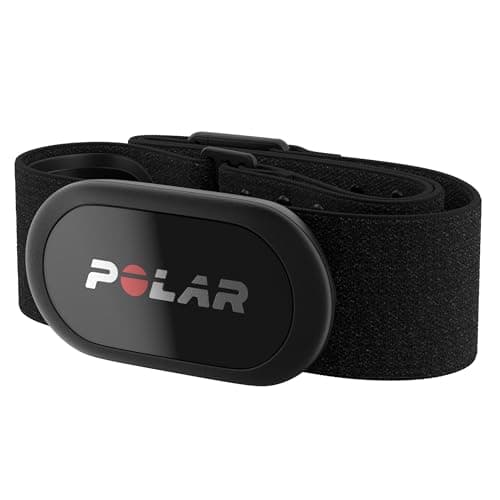
Anyone who trains by heart ratePolar H10
The device other people's validation studies use as the reference. That is the strongest recommendation a sensor can have.
Price as of October 25, 2026. Prices move; Amazon's is the one that counts.
#ad · we may earn a commission from this link to Polar H10
The short answer
It depends entirely on which number you mean. In published studies the Apple Watch is the best of the devices tested at the coarse call — 93.0% agreement on asleep-versus-awake — and the worst at the fine one, identifying only 50.5% of deep sleep. Its VO2 max estimate came up 4.51 to 6.07 mL/kg/min short of laboratory gas analysis in two separate validations.
Ranked
Quick picks
| # | Device | Best for | Evidence | Score | Price |
|---|---|---|---|---|---|
| 01 | Polar H10 The device other people's validation studies use as the reference. That is the strongest recommendation a sensor can have. | Anyone who trains by heart rate | Peer-reviewed validation | 8.9/10 | $104.79Amazon |
| 02 | 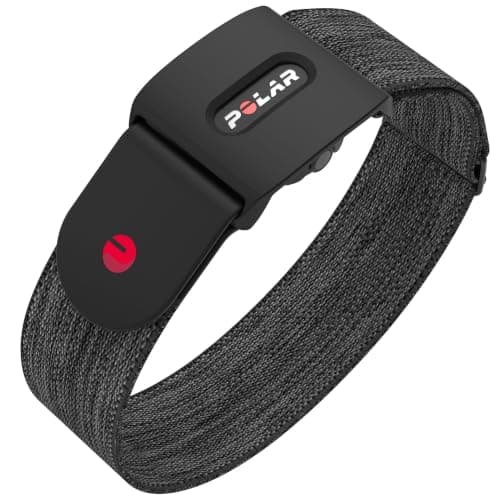 Polar Verity Sense The optical armband that measured a bias under 0.1 bpm against a chest strap on a graded treadmill test. The comfortable answer. | Strap-quality data without the strap | Peer-reviewed validation | 8.4/10 | $104.95Amazon |
| 03 | 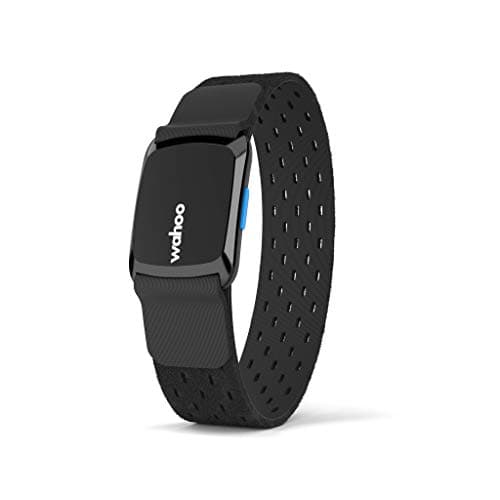 Wahoo TICKR FIT Armband The cheap way to move the sensor off your wrist and onto your forearm, where the physics is better. | Budget armband placement | Manufacturer specification | 6.5/10 | $89.99Amazon |
#ad· Live prices from the Amazon Product API, as of October 25, 2026. Where we have no verified live price we show none. Scores come from the published rubric at How we rank — the Evidence column shows what each ranking actually rests on, including where the answer is nothing.
Why this question has a better answer for Apple than for anyone else
Most of this market is unmeasured. A 2024 umbrella review of 24 systematic reviews, covering 249 primary validation studies and 430,465 participants, found that roughly 34 of 310 identified consumer wearables have ever been validated at all. The usual honest answer to “is this device accurate” is that nobody has checked.
Apple is the exception. Four peer-reviewed results we could read in full involve an Apple Watch: a sleep-lab comparison, two laboratory VO2 max validations and a distance study. No other brand on this site has that much published about it. That is worth saying before the findings, because the findings are mostly unflattering and there is an easy misreading here — the Apple Watch does not look worse than its rivals because it is worse. It looks worse because somebody measured it and did not measure them.
Sleep: the best coarse call of the three devices tested, and the worst fine one
Robbins et al. (2024) at Brigham and Women's Hospital put 35 healthy adults through a single night of inpatient polysomnography wearing an Apple Watch Series 8, a Fitbit Sense 2 and an Oura Ring Gen3 simultaneously. For the Apple Watch:
- Sleep versus wake: 93.0% agreement(κ = 0.60) — the highest of the three devices
- Four-stage classification: 75.0% agreement(κ = 0.60), just behind the Oura Ring's 76.3% and ahead of the Fitbit's 70.9%
- Deep sleep sensitivity: 50.5%— the weakest result of the three. It identified about half the deep sleep that was actually happening
- Nightly summaries: light sleep overestimated by 45 minutes, deep sleep underestimated by 43 minutes, wake underestimated by 7 minutes
Read those four lines together and a shape appears that holds across everything else on this page. Asked a coarse question — is this person asleep — the watch is excellent. Asked a fine one — which stage of sleep is this — it moves roughly three quarters of an hour of deep sleep into the light-sleep column. The nightly total you see when you wake up is broadly trustworthy. The colored bands underneath it are the part that moved.
One methodological detail the authors report and we will not bury: six of the Apple Watches failed during the study. That is a real limitation of the dataset, and it belongs beside the results rather than in a footnote. The full cross-device table is on our sleep tracking accuracy page.
VO2 max: measured twice in a laboratory, and short both times
Apple Watch VO2 max is the only consumer VO2 max estimate with published validation against laboratory gas analysis that we could read. Two studies, two protocols, the same direction of error.
Lambe et al. (2025, PLOS ONE) tested 28 participants across Series 5-9, SE 2 and Ultra 2 on watchOS 10 or later against indirect calorimetry. The watch underestimated by 6.07 mL/kg/minon average, a mean absolute percentage error of 13.31%, with limits of agreement from −6.11 to +18.26. The authors' own conclusion was that the estimates are not sufficiently accurate to inform clinical decision-making.
Caserman et al. (2024, JMIR Biomedical Engineering) tested a Series 7 against a portable gas analyzer in 19 people: laboratory 45.88 against watch 41.37 mL/kg/min, a bias of −4.51, MAPE 15.79%, and an intraclass correlation of 0.47 that the authors describe as poor reliability.
The most useful finding in either paper is what happened when the second study split its sample by fitness. In the fittest subgroup (n = 5) the watch read 42.70 against a measured 54.70 — MAPE 21.47%. In the least fit subgroup (n = 3) it overestimated, 38.93 against 35.13, MAPE 10.71%.
That is a systematic error, not noise. The estimate pulls toward the middle of the distribution: if you are fit it will tell you that you are less fit than you are, and the fitter you get the further it drifts. For the buyer this site is written for — someone already training seriously and shopping for better data — that is precisely the wrong direction for the error to run. Our VO2 max accuracy page carries every row, and our explainer on what the number is covers why an estimate from heart rate and pace can only ever be an inference.
Note the subgroup sizes: five people and three people. Those are small enough that the exact percentages should be held loosely. The direction is what the two studies agree on.
Distance and GPS: one measurement, from 2020, on hardware two generations old
The eight-watch distance validation (Gilgen-Ammann et al., 2020) measured an Apple Watch Series 4 against a trundle wheel accurate to 1 cm across urban, forest and 400 m track conditions. The Apple Watch came in within the study's overall 3.2-6.1% error band; only Polar's watches finished under 5% across every condition.
That result is six years old and describes a single-frequency receiver. Apple's own published Ultra 3 specification states L1 and L5 precision dual-frequency GPS across GPS, GLONASS, Galileo, QZSS and BeiDou — different hardware doing a different job, and nobody has published a measurement of it. So the honest position on current Apple GPS is: the engineering is among the best specified in the category, and the validation record is silent. The same is true of every current dual-band watch, which is the point of our GPS accuracy comparison.
Heart rate: the question most people are actually asking
Here is the gap. None of the studies we have read in full measures an Apple Watch's optical heart rate against an ECG reference during exercise. We are not going to quote a figure we have not read, so this page quotes none.
What we can say comes from two places. The umbrella review puts consumer wrist heart rate at approximately ±3% accuracy overall, with a mean bias of −3.39 bpm across the pooled literature — a category-level figure, not an Apple one, and one that flatters steady-state conditions because that is where most validation happens.
And the 2025 anatomical placement study (n = 28, Polar H10 ECG reference) tested devices at the wrist, forearm and upper arm through rest, cycling, burpees and a treadmill ramp. No Apple device was in it — say that out loud — but its finding is about the measurement site rather than the brand: the wrist was the weakest position tested, and the errors appeared during rapid intensity change rather than at steady effort. An optical sensor on the back of a wrist is reading blood flow through a joint that bends, slides and tightens, and no brand has engineered its way out of that.
So: if your Apple Watch tracks your easy run and disagrees wildly during intervals, that is the expected behavior of the hardware class, not a defective unit. Our wrist versus chest strap page has the physics, and our Garmin equivalent of this page shows the same pattern on the other dominant brand — including a wrist watch that recorded roughly 33 bpm of bias during burpees.
Steps and calories, briefly
Neither has an Apple-specific validation in our source set, and the category figures from the umbrella review are worth knowing anyway: step count mean absolute percentage error from −9% to 12%, and energy expenditure with a mean bias of −3 kcal per minute and errors ranging from −21.27% to 14.76%.
Calories are the least reliable number any wearable shows you, by a wide margin, on every brand. An error of −3 kcal per minute compounds to roughly 180 kcal an hour. Treat the move ring as a consistency tool — same watch, same activity, is today more than yesterday — and never as a measurement you can eat against.
What the fix actually fixes
For activity heart rate there is a fix, it is cheap, and it is the same one Apple's own ecosystem supports: pair an external sensor over Bluetooth and the watch records from that instead of from your wrist. The full ranking of straps that pair with an Apple Watch covers the field; the three below are the picks that matter most.
Be clear about the boundary, though, because it is where most buying advice on this topic quietly oversells. A chest strap fixes exercise heart rate. It does not fix your sleep staging, your VO2 max estimate, your calorie figures or your overnight HRV, because nobody wears a chest strap to bed and the watch computes those from its own sensor. If the number that frustrates you is a sleep stage or a fitness estimate, no accessory on this site will improve it.
In full
Every pick, and why
Polar H10
The device other people's validation studies use as the reference. That is the strongest recommendation a sensor can have.
- Sensor
- Electrical (ECG), chest strap
- Connectivity
- Bluetooth LE + ANT+
- Memory
- One session, up to 30 hours
- Battery (stated)
- Up to 400 h, CR2025 coin cell
- Water rating
- WR30
What's good
- Used as the criterion measure in published research — including the 2025 Sensors placement study on this site
- Simultaneous Bluetooth and ANT+, so it pairs to a watch and a bike computer at once
- 400 stated hours on a coin cell you replace rather than recharge
What isn't
- It is a chest strap, and a chest strap is less comfortable than a watch
- The strap wears out well before the sensor does
Skip this if
Skip this if you know yourself well enough to know you will not wear it. An unworn ECG strap measures nothing, and a wrist sensor you actually wear beats it every time.
What the evidence says
Peer-reviewed validationUsed as the reference standard in Sensors (2025), the anatomical-placement study of 28 participants. Being chosen as the criterion is an implicit validation by the researchers, though it means the study cannot measure the H10's own error.
Show how this 8.9 was calculated
| Factor | Weight | Score |
|---|---|---|
| EvidenceResearchers use it as the criterion measure. Nothing else in this category has a stronger evidentiary position. | 30% | 10.0 |
| HardwareElectrical ECG measurement rather than optical — a different and better physical principle for this job. | 20% | 9.5 |
| Metric coverageHeart rate and R-R intervals only; it does not pretend to do anything else. | 20% | 6.5 |
| Endurance400 stated hours on a replaceable coin cell. | 15% | 9.5 |
| Cost per capabilityInexpensive next to any watch, and it outlasts several of them. | 15% | 8.5 |
Price as of October 25, 2026. Prices move; Amazon's is the one that counts.
#ad · we may earn a commission from this link to Polar H10
Polar Verity Sense
The optical armband that measured a bias under 0.1 bpm against a chest strap on a graded treadmill test. The comfortable answer.
- Sensor
- Optical, forearm or upper-arm band
- Connectivity
- Bluetooth (dual) + ANT+
- Modes
- Live streaming, on-board recording, swim mode
What's good
- Sensors (2025) recorded the smallest bias of any device tested on the graded treadmill protocol — under 0.1 bpm, CCC = 0.997
- Lowest resting error in the same study, at roughly 1.6% MAPE
- Far more comfortable than a chest strap, and it works under a wetsuit
What isn't
- Still an extra device to charge and remember
- Like every optical sensor, it struggled in the same study's burpee protocol — nothing optical handles that well
Skip this if
Skip this if your training is mostly explosive, stop-start work. In the burpee protocol every optical device tested fell below 0.50 concordance, this one included. Buy the H10 for that.
What the evidence says
Peer-reviewed validationDirectly measured in Sensors (2025), n = 28, against a Polar H10 reference: lowest resting MAPE at ~1.6 ± 0.8%, and the smallest bias on the modified Bruce treadmill protocol at under 0.1 bpm (CCC = 0.997).
Show how this 8.4 was calculated
| Factor | Weight | Score |
|---|---|---|
| EvidenceDirectly measured in a peer-reviewed study, with the best result of any optical device tested. | 30% | 9.5 |
| HardwareOptical, but worn on the forearm — the placement the same study found outperforms the wrist. | 20% | 8.5 |
| Metric coverageHeart rate plus on-board recording and a swim mode. | 20% | 7.0 |
| EnduranceRechargeable, with stated endurance comfortably covering long sessions. | 15% | 8.0 |
| Cost per capabilityPriced against a good chest strap, not against a watch. | 15% | 8.5 |
Price as of October 25, 2026. Prices move; Amazon's is the one that counts.
#ad · we may earn a commission from this link to Polar Verity Sense
Wahoo TICKR FIT Armband
The cheap way to move the sensor off your wrist and onto your forearm, where the physics is better.
- Sensor
- Optical, forearm band
- Connectivity
- Bluetooth + ANT+
What's good
- Gets the sensor onto the forearm, the placement the 2025 Sensors study found beats the wrist
- Cheaper than the Verity Sense
What isn't
- No published validation of this specific device
- Fewer modes than the Verity Sense — no on-board recording
Skip this if
Skip this if you want the measured result rather than the principle. The Verity Sense is the armband that was actually in the study.
What the evidence says
Manufacturer specificationNo validation of this device that we could find. The placement principle it exploits is peer-reviewed (Sensors 2025); the device itself is not.
Show how this 6.5 was calculated
| Factor | Weight | Score |
|---|---|---|
| EvidenceThe placement is validated; this device is not. | 30% | 5.0 |
| HardwareOptical sensor in the better anatomical position. | 20% | 7.5 |
| Metric coverageHeart rate only, no on-board recording. | 20% | 5.5 |
| EnduranceRechargeable, adequate for long sessions. | 15% | 7.5 |
| Cost per capabilityNotably cheaper than the validated alternative. | 15% | 8.5 |
Price as of October 25, 2026. Prices move; Amazon's is the one that counts.
#ad · we may earn a commission from this link to Wahoo TICKR FIT Armband
How to read any Apple Watch number
One rule carries almost all of the published evidence above: trust the coarse call, distrust the fine one.
- Total sleep last night— trustworthy. 93.0% agreement on asleep-versus-awake is a good number by any standard.
- Your deep sleep minutes— not trustworthy as a quantity. The watch found half of it in the one study that checked, and moved most of the rest into light sleep.
- Your VO2 max, as a number— expect it to read low if you are fit, by 4.5 to 6 mL/kg/min on the measured averages and more at the top end.
- Your VO2 max, as a trend— more useful. A systematic error that runs in a consistent direction still moves when your fitness moves.
- Steady-state heart rate on an easy run— broadly fine, on the category evidence.
- Heart rate during intervals, lifting or anything with rapid changes — this is where wrist optical sensing fails, and where a strap earns its money.
- Calories— the weakest number on any wearable. Use it for relative comparison only.
And one framing worth keeping: the Apple Watch has more published evidence behind it than anything else we rank, and that is a reason to trust the brand's transparency position rather than a reason to distrust the product. A device with known errors is a better instrument than a device with unknown ones. Our evidence hierarchy is built on exactly that principle, and our Apple Watch Ultra 3 review applies it to the current flagship.
Questions
Frequently asked
Is the Apple Watch heart rate monitor accurate?
No study we have read measures Apple's optical sensor against an ECG reference during exercise, so we quote no Apple-specific figure. The category evidence puts consumer wrist heart rate at roughly ±3% with a mean bias of −3.39 bpm, and a 2025 placement study found the wrist to be the weakest measurement site tested, with errors concentrated during rapid intensity change. Steady efforts are usually fine; intervals are where it breaks down.
How accurate is Apple Watch sleep tracking?
Good at the overall call and poor at the stages. Against clinical polysomnography it agreed on asleep-versus-awake 93.0% of the time, the best of the three devices tested, but identified only 50.5% of deep sleep and overestimated light sleep by 45 minutes a night. Read the total, hold the colored bands loosely.
Is Apple Watch VO2 max accurate?
It reads low, and it reads lower the fitter you are. Two laboratory validations found underestimates of 6.07 and 4.51 mL/kg/min, and in the fitter subgroup of the second study the error reached 21.47%. In the least fit subgroup the watch overestimated instead. As a trend line it is still useful; as an absolute number it is not.
Is the Apple Watch less accurate than Garmin?
Nobody can answer that from published evidence, because the two brands have not been measured against each other on the same protocol. What is true is that Apple has been measured more often. No Garmin optical wrist sensor has been validated against ECG in any study we could find, which means Garmin's record is quieter rather than better.
Will a chest strap make my Apple Watch accurate?
It will fix exercise heart rate, which is the biggest single improvement available, and it will not touch anything else. Sleep staging, VO2 max, calories and overnight HRV are all computed from the watch's own sensor whether or not a strap is paired.
Which Apple Watch is the most accurate?
No published study compares Apple models against each other, so we rank none above another on accuracy grounds. The Ultra 3 has the most capable published specification — L1 and L5 dual-frequency GPS, which the Series 8 in the sleep study did not have — but a better specification is a reason to expect better positioning, not evidence of it.
Show your working
Sources
Every one of these was read in full before it was cited. Where we could not access a paper, we do not quote its numbers.
- [1]Peer-reviewed validation2024Robbins et al., “Accuracy of Three Commercial Wearable Devices for Sleep Tracking in Healthy Adults”, Sensors 24(20):6532
Brigham and Women’s Hospital. n = 35 healthy adults, single-night inpatient polysomnography, testing Oura Ring Gen3, Fitbit Sense 2 and Apple Watch Series 8. Authors’ stated limits: one night, lab conditions, healthy adults without insomnia, comparison only during scheduled sleep, and device failures on 6 Apple Watches and 2 Fitbits.
- [2]Peer-reviewed validation2025Lambe, O’Grady, Baldwin & Doherty, “Investigating the accuracy of Apple Watch VO2 max measurements: A validation study”, PLOS ONE 20(5):e0323741
DOI 10.1371/journal.pone.0323741. 28 analyzed participants across Apple Watch Series 5-9, SE 2 and Ultra 2 on watchOS 10+, against indirect calorimetry (COSMED Quark CPET, modified Åstrand treadmill protocol). Authors’ stated limits: the sample skewed strongly toward high cardiorespiratory fitness, watch estimates were generated uncontrolled, and only one estimate per participant was collected.
- [3]Peer-reviewed validation2024Caserman, Yum, Göbel, Reif & Matura, “Assessing the Accuracy of Smartwatch-Based Estimation of Maximum Oxygen Uptake Using the Apple Watch Series 7: Validation Study”, JMIR Biomedical Engineering 9:e59459
DOI 10.2196/59459. n = 19 (12 male, 7 female, mean age 28.4), Apple Watch Series 7 against a VO2 Master portable gas analyzer on a graded cycle ergometer test. Authors’ stated limits: the sample was 19 rather than the 30 planned, testing was submaximal, no blood lactate was taken, and the watch figure came from a single outdoor session where Apple’s own validation used an average of 441 days of data.
- [4]Peer-reviewed validation2020Gilgen-Ammann, Schweizer & Wyss, “Accuracy of Distance Recordings in Eight Positioning-Enabled Sport Watches: Instrument Validation Study”, JMIR mHealth and uHealth
DOI 10.2196/17118. Eight watches (Apple Watch Series 4, Coros Apex 46mm, Garmin Fenix 5X Plus, Garmin Forerunner 935, Polar Vantage M, Polar Vantage V, Polar V800, Suunto 9 Baro) measured against a trundle wheel accurate to 1 cm, across urban, forest and 400 m track conditions. IMPORTANT: this predates the dual-frequency receivers now standard, so it describes brand engineering history, not any watch currently sold.
- [5]Peer-reviewed validation2024Doherty, Baldwin, Keogh, Caulfield & Argent, “Keeping Pace with Wearables: A Living Umbrella Review of Systematic Reviews Evaluating the Accuracy of Consumer Wearable Technologies in Health Measurement”, Sports Medicine
DOI 10.1007/s40279-024-02077-2. An umbrella review: 24 systematic reviews covering 249 unique primary validation studies and 430,465 participants (43% female), across 11 biometric outcomes, with roughly 34 of 310 identified consumer wearables ever validated. Reported accuracy by metric: heart rate approximately ±3% (mean bias −3.39 bpm); step count mean absolute percentage error from −9% to 12%; energy expenditure mean bias −3 kcal per minute with error ranging from −21.27% to 14.76%. Authors’ stated limits: a temporal lag between device release and published research, the intrinsic bias of a tertiary synthesis, and heterogeneity of protocols, devices, criterion measures and statistics severe enough that the authors did not pool a meta-analysis.
- [6]Peer-reviewed validation2025“Impact of Anatomical Placement on the Accuracy of Wearable Heart Rate Monitors During Rest and Various Exercise Intensities”, Sensors (Basel)
n = 28 (14 male, 14 female). Polar H10 chest strap as the reference. Compared Polar Verity Sense (forearm), Garmin Forerunner 55 (wrist) and three simultaneous Whoop 4.0 units at wrist, forearm and upper arm, across rest, cycling warm-up, burpees and a modified Bruce treadmill protocol.
- [7]Manufacturer specification2026Apple — Apple Watch Ultra 3 published technical specifications
Manufacturer-stated, read 2026-08-18: Grade 5 titanium case, 49 mm high by 44 mm wide by 12 mm deep, always-on Retina display at up to 3000 nits, up to 42 hours of normal use and up to 72 hours in Low Power Mode, L1 and L5 precision dual-frequency GPS across GPS, GLONASS, Galileo, QZSS and BeiDou, satellite connectivity for Emergency SOS, Messages and Find My, 100 m water resistance and EN13319 certification for recreational scuba to 40 m. Apple publishes this level of detail for the Ultra 3 and no longer publishes it for the Ultra 2 — which is why the older watch is described more thinly here.
- [8]Manufacturer claim only2026Apple — “Apple unveils Apple Watch Ultra 4”, Apple Newsroom
Apple press release, 9 September 2026. Ultra 4 “starts at $799 (U.S.)”, in stores 18 September 2026. Used here only to establish that the Ultra 3 is now the outgoing model. No Ultra 4 is ranked on this site — no validation exists and no ASIN has been resolved.
- [9]Manufacturer specification2026Polar — H10 heart rate sensor published specifications
Manufacturer-stated: electrical (ECG) measurement, Bluetooth LE + ANT+, internal memory for one session up to 30 hours, up to 400 h on a CR2025 coin cell, WR30.
- [10]Manufacturer specification2026Polar — Verity Sense published specifications
Manufacturer-stated: optical heart rate worn on the forearm or upper arm, dual Bluetooth plus ANT+, on-board recording, swim mode, WR50.
Read next
Related
- Is Garmin heart rate accurate?
The same question, asked of the other dominant brand, with the whole Garmin record.
- Best heart rate monitors for Apple Watch
Every strap that pairs over Bluetooth, ranked on published evidence.
- Sleep tracking accuracy by device
The full polysomnography table, Apple included.
- VO2 max accuracy by device
Both Apple laboratory validations, row by row, and every brand with none.
- Apple Watch Ultra 3 review
The current flagship, specification and evidence position in full.
- Garmin vs Apple Watch
The buying decision this evidence feeds into.