Head to head
Garmin fēnix 8 vs Apple Watch Ultra 3
The rare comparison where one device has actually been measured — and being measured is what costs it. Two flagships, two very different failure modes.
We earn a commission when you buy through our Amazon links, at no extra cost to you. It never decides a ranking — the rubric that does is published in full, so you can check us rather than take our word for it. How this works.
Top pick
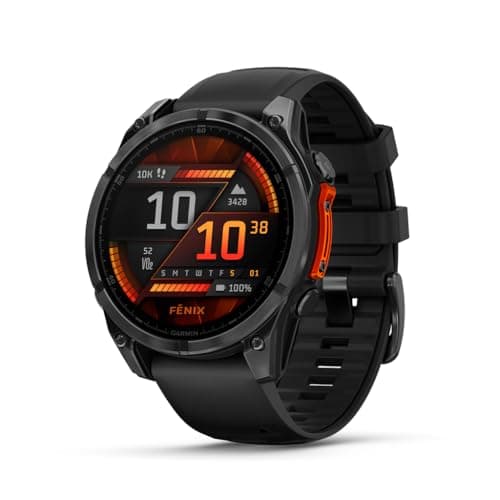
Expedition and rough-terrain useGarmin fēnix 8 (47mm)
Everything Garmin makes, in a case built to survive being hit. You pay for the durability, not for better data.
$999.9924% off
Price as of October 21, 2026. Prices move; Amazon's is the one that counts.
#ad · we may earn a commission from this link to Garmin fēnix 8 (47mm)
The short answer
Buy the fēnix 8 if you train long, need endurance, and want Garmin's platform. Buy the Ultra 3 if you own an iPhone and want one device for everything. On evidence, Apple has peer-reviewed results and they are unflattering — 50.5% deep-sleep sensitivity and systematic VO2 max underestimation. Garmin has none.
Ranked
Quick picks
| # | Device | Best for | Evidence | Score | Price |
|---|---|---|---|---|---|
| 01 | Garmin fēnix 8 (47mm) Everything Garmin makes, in a case built to survive being hit. You pay for the durability, not for better data. | Expedition and rough-terrain use | Manufacturer specification | 7.5/10 | $764.91Amazon |
| 02 | 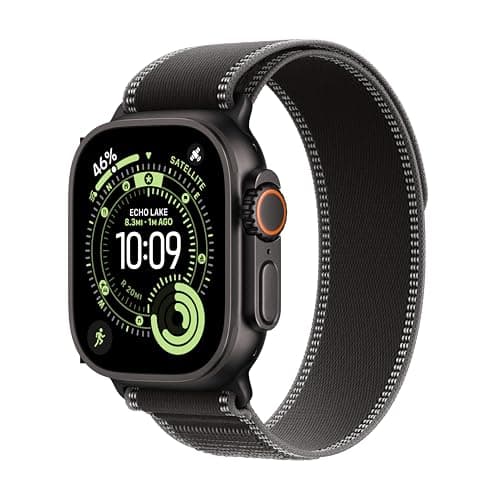 Apple Watch Ultra 3 Excellent positioning hardware and the best screen here, attached to the weakest deep-sleep measurement in the published record. | iPhone owners who train and want one device | Peer-reviewed validation | 6.8/10 | $588.83Amazon |
#ad· Live prices from the Amazon Product API, as of October 21, 2026. Where we have no verified live price we show none. Scores come from the published rubric at How we rank — the Evidence column shows what each ranking actually rests on, including where the answer is nothing.
The full specification table
| Specification | Garmin fēnix 8 (47 mm) | Apple Watch Ultra 3 |
|---|---|---|
| Case | 47 mm, AMOLED | 49 mm titanium |
| Satellite | Multi-band GNSS | Dual-frequency GNSS |
| Built-in maps | Yes | Via app ecosystem |
| Cellular | No | Yes, GPS + Cellular |
| Dive rating | Yes | No |
| Endurance | Among the longest in Garmin's AMOLED line | Materially shorter than every dedicated sports watch here |
| Peer-reviewed evidence | None for this model | Sleep and VO2 max, on earlier models |
Both carry current-tier positioning hardware, and neither has had that hardware independently measured. On satellite reception these watches are equivalent as far as anybody has shown.
Battery, which decides more of this than anything else
This is the largest practical gap between the two and it is not close. The fēnix 8 has among the longest stated GPS endurance in Garmin's AMOLED line; the Ultra 3 is substantially shorter than every dedicated sports watch on this site.
Two consequences follow, and the second one is underrated.
Long efforts. An ultra, a long expedition day or a multi-day hike is straightforward on one and requires planning on the other.
Sleep data. A watch you charge nightly is a watch that is not on your wrist overnight, which is the most common reason sleep data is missing rather than wrong. Charging habits decide whether you have a baseline at all, and a shorter battery makes the bedtime charge the natural routine.
The evidence, which is the interesting part
Apple has been measured, three times, and none of it flatters
This is genuinely unusual — most devices on this site have never been tested at all. Apple appears in three peer-reviewed studies, which is more than any other brand here.
Sleep. Robbins et al. (2024) tested an Apple Watch Series 8 against clinical polysomnography: 75.0% four-stage agreement, but deep-sleep sensitivity of only 50.5% — the weakest of the three devices tested. It overestimated light sleep by 45 minutes a night and underestimated deep sleep by 43.
VO2 max, twice. A 2025 PLOS ONE validation against indirect calorimetry found systematic underestimation of 6.07 mL/kg/min with a MAPE of 13.31%, and a 2024 JMIR study found 4.51 mL/kg/min underestimation, MAPE 15.79%, ICC 0.47. Error grew with fitness, reaching 21.5% in the fittest group.
Every one of those tested an earlier model, and Apple has revised its algorithms since. We state that each time. But a published measurement of a previous generation is still more than Garmin can offer for anything.
Garmin has essentially nothing, and one awkward footnote
No independent validation of the fēnix 8 exists that we could find — not the sensor, not the positioning, not the sleep staging. Garmin was absent from the Robbins polysomnography comparison entirely.
The two Garmin results that do exist are both unfavorable and both about other models: the Forerunner 55's roughly 33 bpm bias during burpees in the 2025 placement study, and the fēnix 6 finishing fourth of five on HRV in the 536-night ECG comparison, where its resting heart rate could not be compared at all because the derivation window is not timestamped.
What that asymmetry actually means
It is tempting to read this as "Apple is worse". It is not what the evidence says.
Apple has bad measured results. Garmin has no measured results. Those are different statements, and the honest position is that Garmin's sleep staging might be worse than Apple's 50.5% deep-sleep sensitivity — nobody has checked. Our rubric does not let a device outrank a measured competitor by never having been tested, and it also does not pretend an absence of evidence is a clean bill of health.
The practical takeaway is narrower and more useful: do not buy either watch for its sleep or VO2 max data. One has documented problems and the other is a blank.
The ecosystem question
The Ultra 3 is by a distance the better general smartwatch, and if you own an iPhone the integration is seamless in a way Garmin cannot match. Cellular is a genuine safety feature for running alone.
Garmin Connect is by a distance the better training platform: deeper third-party integration, easier data export, and a training history that outlives any single device.
Neither of those is an accuracy claim and we are not presenting them as one. They are the real difference between these watches, and they are the thing to decide on.
The verdict
Buy the fēnix 8 if you train long, want endurance and maps, or already live in Garmin Connect. It also survives being hit, which the case specification is there for.
Buy the Ultra 3 if you own an iPhone, want one device for training and everything else, and your sessions fit inside its battery. It is the better watch and the worse training instrument.
Buy neither for physiological data. If sleep, VO2 max or heart-rate accuracy is the reason you are upgrading, the money goes further on a chest strap or a device with a published sleep result.
In full
Every pick, and why
Garmin fēnix 8 (47mm)
Everything Garmin makes, in a case built to survive being hit. You pay for the durability, not for better data.
- Case
- 47mm, AMOLED
- Satellite
- Multi-band GNSS
- Extras
- Built-in maps, dive-rated, speaker and microphone
What's good
- The most durable case Garmin puts a multi-band receiver into
- Maps, dive modes and the full metric set in one device
What isn't
- Records essentially the same physiological data as a Forerunner costing a third as much
- Heavy compared with a dedicated running watch
Skip this if
Skip this if you run on roads and pavements. You would be buying a case specification you will never test, and the numbers it records are the ones a Forerunner already gives you.
What the evidence says
Manufacturer specificationPublished specifications only; no independent validation of this model that we could find.
Show how this 7.5 was calculated
| Factor | Weight | Score |
|---|---|---|
| EvidenceDetailed published specs, no independent measured validation. | 30% | 5.5 |
| HardwareMulti-band GNSS in Garmin's most ruggedized current case. | 20% | 9.5 |
| Metric coverageThe widest metric and mode coverage of any device on this site. | 20% | 10.0 |
| EnduranceAmong the longest stated GPS endurance in Garmin's AMOLED line. | 15% | 8.5 |
| Cost per capabilityBy some distance the weakest cost-per-capability figure here — the premium buys the case, not the data. | 15% | 4.5 |
$999.9924% off
Price as of October 21, 2026. Prices move; Amazon's is the one that counts.
#ad · we may earn a commission from this link to Garmin fēnix 8 (47mm)
Apple Watch Ultra 3
Excellent positioning hardware and the best screen here, attached to the weakest deep-sleep measurement in the published record.
- Case
- 49mm titanium
- Satellite
- Dual-frequency GNSS
- Connectivity
- GPS + Cellular
What's good
- Dual-frequency positioning and a genuinely excellent display
- Best-in-class as a general smartwatch, by a distance
What isn't
- In the Brigham and Women's PSG study, the Apple Watch's deep-sleep sensitivity was 50.5% — the weakest of the three devices tested
- Battery is short next to every dedicated sports watch here
Skip this if
Skip this if you bought it to fix your sleep data. The peer-reviewed result says that is the one thing it is worst at, and no firmware update changes a published measurement.
What the evidence says
Peer-reviewed validationRobbins et al. (2024) tested the Apple Watch Series 8 against polysomnography: 75.0% four-stage agreement, but deep-sleep sensitivity of only 50.5%, overestimating light sleep by 45 minutes and underestimating deep sleep by 43 minutes. That was the Series 8, not the Ultra 3, and Apple has revised its algorithm since.
Show how this 6.8 was calculated
| Factor | Weight | Score |
|---|---|---|
| EvidenceGenuine peer-reviewed sleep data exists, which most rivals lack — but the result was unfavorable, and it tested an earlier model. | 30% | 6.0 |
| HardwareDual-frequency GNSS and the best display in this group. | 20% | 9.0 |
| Metric coverageVery wide metric coverage; export off-platform is more awkward than Garmin's. | 20% | 8.5 |
| EnduranceMaterially shorter than every dedicated sports watch here. | 15% | 4.0 |
| Cost per capabilityFlagship pricing; the cellular model costs more again. | 15% | 6.0 |
Price as of October 21, 2026. Prices move; Amazon's is the one that counts.
#ad · we may earn a commission from this link to Apple Watch Ultra 3
How this ranking was built
Every score on this page comes from one published rubric, applied identically to every device on the site, with the weights written down and the inputs shown. We have not worn any of these devices and we never say we have. Read the method and check us.
Questions
Frequently asked
Is the Apple Watch Ultra 3 accurate for sleep?
The published evidence is unfavorable, though it tested an earlier model. Against clinical polysomnography an Apple Watch Series 8 showed 50.5% deep-sleep sensitivity — the weakest of three devices — overestimating light sleep by 45 minutes and underestimating deep sleep by 43. Apple has revised its algorithm since.
Does the Garmin fēnix 8 have better data than an Apple Watch?
Nobody has shown that. Garmin has no independent validation of the fēnix 8 at all and was absent from the main sleep comparison entirely. Apple has measured results that are poor. "Unmeasured" is not the same as "better", and we will not present it as such.
Which has better battery life?
The fēnix 8, substantially. It sits among the longest stated GPS endurance in Garmin's AMOLED line while the Ultra 3 is materially shorter than every dedicated sports watch we cover. That decides long efforts, and it quietly decides whether your watch is on your wrist overnight.
Is the Apple Watch VO2 max accurate?
Two peer-reviewed validations against laboratory gas analysis found systematic underestimation — 6.07 mL/kg/min with 13.31% MAPE in one, 4.51 mL/kg/min with 15.79% MAPE and an ICC of 0.47 in the other. Error grew with fitness, reaching 21.5% in the fittest participants.
Which should I buy for triathlon?
The fēnix 8, on battery alone — a long-course day plus transitions is a straightforward ask for it and a planning exercise for the Ultra 3. See our multisport ranking for the full field.
Show your working
Sources
Every one of these was read in full before it was cited. Where we could not access a paper, we do not quote its numbers.
- [1]Peer-reviewed validation2024Robbins et al., “Accuracy of Three Commercial Wearable Devices for Sleep Tracking in Healthy Adults”, Sensors 24(20):6532
Brigham and Women’s Hospital. n = 35 healthy adults, single-night inpatient polysomnography, testing Oura Ring Gen3, Fitbit Sense 2 and Apple Watch Series 8. Authors’ stated limits: one night, lab conditions, healthy adults without insomnia, comparison only during scheduled sleep, and device failures on 6 Apple Watches and 2 Fitbits.
- [2]Peer-reviewed validation2025Lambe, O’Grady, Baldwin & Doherty, “Investigating the accuracy of Apple Watch VO2 max measurements: A validation study”, PLOS ONE 20(5):e0323741
DOI 10.1371/journal.pone.0323741. 28 analyzed participants across Apple Watch Series 5-9, SE 2 and Ultra 2 on watchOS 10+, against indirect calorimetry (COSMED Quark CPET, modified Åstrand treadmill protocol). Authors’ stated limits: the sample skewed strongly toward high cardiorespiratory fitness, watch estimates were generated uncontrolled, and only one estimate per participant was collected.
- [3]Peer-reviewed validation2024Caserman, Yum, Göbel, Reif & Matura, “Assessing the Accuracy of Smartwatch-Based Estimation of Maximum Oxygen Uptake Using the Apple Watch Series 7: Validation Study”, JMIR Biomedical Engineering 9:e59459
DOI 10.2196/59459. n = 19 (12 male, 7 female, mean age 28.4), Apple Watch Series 7 against a VO2 Master portable gas analyzer on a graded cycle ergometer test. Authors’ stated limits: the sample was 19 rather than the 30 planned, testing was submaximal, no blood lactate was taken, and the watch figure came from a single outdoor session where Apple’s own validation used an average of 441 days of data.
- [4]Peer-reviewed validation2025“Impact of Anatomical Placement on the Accuracy of Wearable Heart Rate Monitors During Rest and Various Exercise Intensities”, Sensors (Basel)
n = 28 (14 male, 14 female). Polar H10 chest strap as the reference. Compared Polar Verity Sense (forearm), Garmin Forerunner 55 (wrist) and three simultaneous Whoop 4.0 units at wrist, forearm and upper arm, across rest, cycling warm-up, burpees and a modified Bruce treadmill protocol.
- [5]Peer-reviewed validation2025Dial, Hollander, Vatne, Emerson, Edwards & Hagen, “Validation of nocturnal resting heart rate and heart rate variability in consumer wearables”, Physiological Reports 13(16):e70527
DOI 10.14814/phy2.70527. n = 13 healthy adults (7 male, 6 female, 33.2 ± 8.6 years) across 536 nights, each wearing an Oura Gen 3, Oura Gen 4, Polar Grit X Pro, Garmin fēnix 6 and Whoop 4.0 simultaneously against a Polar H10 single-lead ECG reference sampled at 1000 Hz. Authors’ stated limits: healthy adults only, no atrial-fibrillation population, proprietary and periodically-updated algorithms, and unequal night counts per device. The Garmin was dropped from the resting-heart-rate comparison because the 30-minute window it uses is not timestamped.
- [6]Peer-reviewed validation2024Svensson et al., “Validity and reliability of the Oura Ring Generation 3 with sleep staging algorithm 2.0 compared to multi-night ambulatory polysomnography”, Sleep Medicine
NOT READ — the publisher returned HTTP 403 to our fetch on 2026-07-24. Reported to cover 96 participants and 421,045 epochs. We quote no figure from it. Readers should also note it is the validation of Oura's own staging algorithm, and that a published comment on it exists.
- [7]Peer-reviewed validation2025Khan et al., “The Oura Ring Versus Medical-Grade Sleep Studies: A Systematic Review and Meta-Analysis”, OTO Open
NOT READ — the publisher returned HTTP 403 to our fetch on 2026-07-24. A pooled analysis would be stronger evidence than any single study, so this is a real gap in our record rather than a formality.
Read next
Related
- Garmin vs Apple Watch
The brand-level version of this decision.
- Garmin fēnix 8 review
The full write-up, including what the case specification actually buys.
- Apple Watch Ultra 3 review
Every published measurement of Apple's physiological data, in one place.
- What VO2 max on a watch is worth
The two Apple validations in full, and what they mean for everyone else.
- Suunto vs Garmin
The other flagship comparison sharing a Garmin.