Holiday 2026
Best gifts for runners: what to buy the person who already has a watch
Runners are hard to buy for because they own the obvious things. This page sorts the good gifts by what the runner in your life actually complains about.
We earn a commission when you buy through our Amazon links, at no extra cost to you. It never decides a ranking — the rubric that does is published in full, so you can check us rather than take our word for it. How this works.
The short answer
If the runner already owns a watch, buy the Polar H10 chest strap: it fixes the heart-rate number every wrist watch gets wrong and it works with what they have. If they need a watch, the Garmin Forerunner 970 is the top-scoring running watch on this site and the COROS PACE 4 is the best value by a wide margin.
Ranked
Quick picks
| # | Device | Best for | Evidence | Score | Price |
|---|---|---|---|---|---|
| 01 | 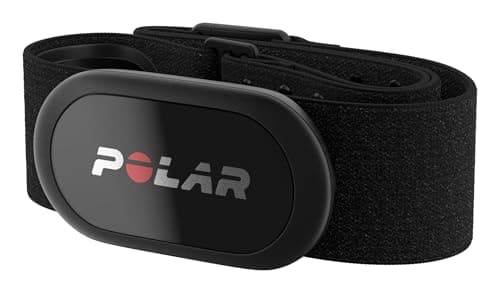 Polar H10 The device other people's validation studies use as the reference. That is the strongest recommendation a sensor can have. | Anyone who trains by heart rate | Peer-reviewed validation | 8.9/10 | $98.99Amazon |
| 02 | 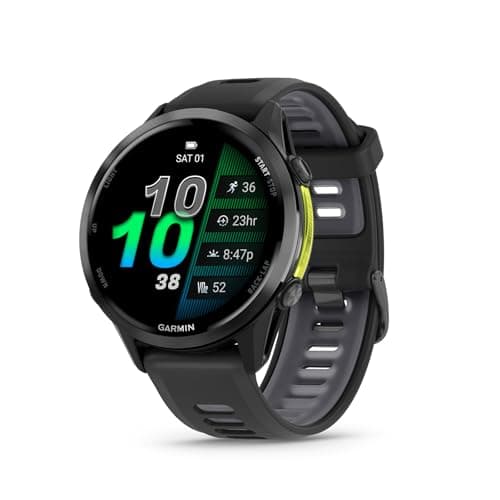 Garmin Forerunner 970 The most complete running watch Garmin sells, and — counter-intuitively — the cheapest of the pair per hour of GPS you get. | Long-course athletes who want maps | Manufacturer specification | 7.7/10 | $745.55Amazon |
| 03 | 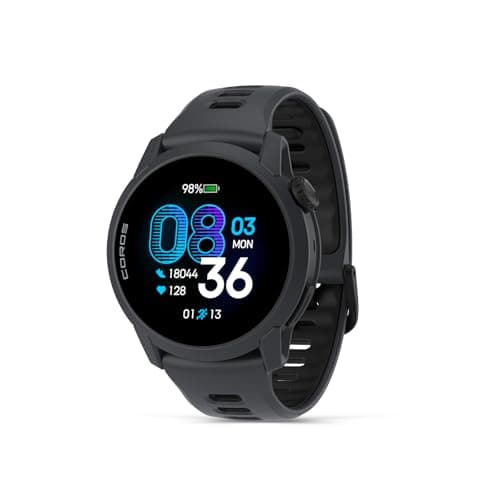 COROS PACE 4 41 stated GPS hours in a 32-gram watch, for a third of the Forerunner 970's money. The endurance-per-dollar winner by a distance. | Long days on a budget | Independent measured test | 7.5/10 | $249.00Amazon |
| 04 | 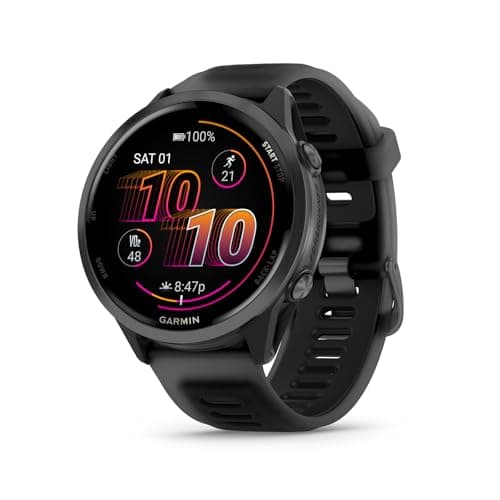 Garmin Forerunner 570 Same sensor family as the 970, $200 less, and no maps. For most runners that is the correct trade. | Most runners, most of the time | Manufacturer specification | 7.3/10 | $546.00Amazon |
| 05 | 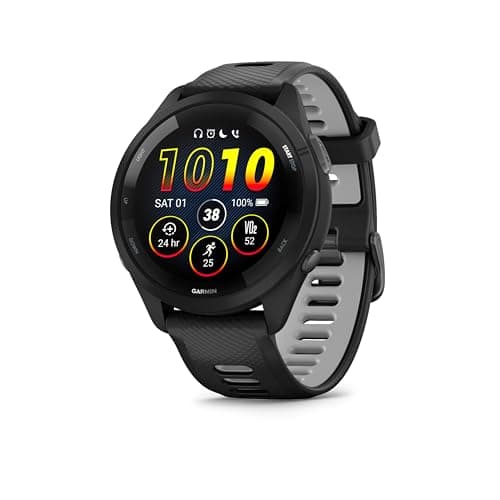 Garmin Forerunner 265 One of the very few watches on this site whose training estimates have actually been measured against a laboratory — and the measurement was not kind. | Runners who want a measured device, flaws included | Peer-reviewed validation | 7.2/10 | $439.85Amazon |
| 06 | 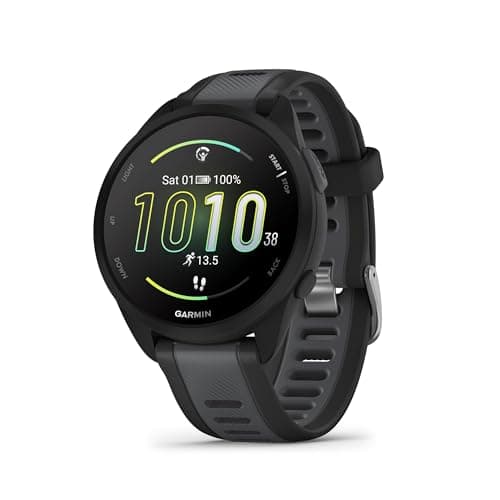 Garmin Forerunner 165 The cheapest way into a genuinely good AMOLED Garmin, provided you accept single-band positioning. | First real running watch | Manufacturer specification | 6.4/10 | $199.00Amazon |
#ad· Live prices from the Amazon Product API, as of Sep 14, 2026. Where we have no verified live price we show none. Scores come from the published rubric at How we rank — the Evidence column shows what each ranking actually rests on, including where the answer is nothing.
How to read this page if you are not the athlete
Every pick below is a device we already rank on this site. The score beside each one comes from one published rubric applied to every product we cover, and the evidence chip tells you whether anyone has actually measured the device against a reference. We have not worn any of them, and we do not claim to. What we do is read the validation research, compile the manufacturers' own specifications, and show the arithmetic.
Prices are live from the Amazon Product API and stamped with the date they were checked. Where we do not have a verified price today, the button says "check price" rather than showing a number we remembered. The budget line on each pick is computed the same way, so it tells you the truth on the day you read it.
Start with the complaint, not the budget
The useful thing about buying for a runner is that runners tell you what is wrong. Listen for one of three complaints and the gift picks itself.
- "My heart rate was all over the place." Buy the chest strap. Any budget, any watch, strongest evidence on the site.
- "The GPS said 5.2 miles and it was 5." That is a hardware problem and the fix is a watch with dual-frequency (also called multi-band) satellite reception. Three of the watches below have it; one does not, and we say which.
- "It died before I finished." Endurance. The PACE 4 states far more GPS hours than either Forerunner flagship, and the arithmetic is on this page.
If you have heard none of these, they are probably happy with their watch, and the strap is still the right answer — it is the gift that improves whatever they own.
The picks, in gifter language
The gift that works with any watch: Polar H10
The chest strap that researchers use as the reference when they test other wearables. It pairs to every current running watch, it runs for a stated 400 hours on a coin cell, and it is the single most-evidenced product on this site. If you buy one thing for a runner, buy this — it is the top pick on our under-$100 page for the same reason. Check the strap size and that they do not already own one.
The flagship, if you want to make an impression: Garmin Forerunner 970
Garmin's current top running watch: multi-band satellite reception, built-in color maps, a titanium bezel, a speaker and microphone, and an ECG app. It is the highest-scoring running watch on the site. At $28.67 per stated GPS hour it is also the least efficient way to buy endurance here — that is what the maps and the screen cost. What to check: it is a large watch (47 mm), and it was discounted for the first time at Black Friday 2025, six months after launch, which is worth knowing if you are reading this in October. Full review: Garmin Forerunner 970.
The value pick that outscores watches twice its price: COROS PACE 4
Dual-frequency reception, 41 stated GPS hours, 32 grams. On our rubric it sits within two tenths of the Forerunner 970 at a fraction of the money, and at $6.07 per stated GPS hour it is the most efficient watch on this page. It has no maps. If the runner has ever mentioned COROS, or runs ultras, this is the gift. Full review: COROS PACE 4.
The Garmin they would choose themselves: Forerunner 570
The 970 without the maps and the titanium bezel — and with the same multi-band reception, speaker and music. The price gap between the two is $200 today. Most runners who do not navigate on their wrist are better served here. It comes in 42 mm and 47 mm, so ask about wrist size. The two are compared on Forerunner 570 vs 970.
The previous generation, which is the point: Forerunner 265
The 265 is the watch the 570 replaced. It still has multi-band reception and an AMOLED screen, it is one of the few watches in this category with a real independent lactate-threshold result behind it, and being a generation old is precisely what makes it a reliable November discount. The 42 mm 265S is the version to buy for a smaller wrist. Full review: Forerunner 265.
The first watch, and only the first watch: Forerunner 165
For someone starting out who wants a Garmin, this is the one. It ranks last here because it is single-band — the older satellite reception — and that is the one specification that cannot be fixed later. Do not buy it for a runner who has ever complained about their GPS. Buy it for the runner who has just signed up for their first half marathon.
What to check before you order
- Which brand they already use. A Garmin runner moved to COROS loses their history and their badges. If they use Garmin, buy Garmin or buy the strap.
- Wrist size. The 970 is 47 mm only. The 570 and 265 come in two sizes. The PACE 4 and 165 are small and light.
- Whether they want maps. Only the 970 has them. Most road runners never use them; most trail runners want them.
In full
Every pick, and why
Polar H10
The device other people's validation studies use as the reference. That is the strongest recommendation a sensor can have.
- Sensor
- Electrical (ECG), chest strap
- Connectivity
- Bluetooth LE + ANT+
- Memory
- One session, up to 30 hours
- Battery (stated)
- Up to 400 h, CR2025 coin cell
- Water rating
- WR30
What's good
- Used as the criterion measure in published research — including the 2025 Sensors placement study on this site
- Simultaneous Bluetooth and ANT+, so it pairs to a watch and a bike computer at once
- 400 stated hours on a coin cell you replace rather than recharge
What isn't
- It is a chest strap, and a chest strap is less comfortable than a watch
- The strap wears out well before the sensor does
Skip this if
Skip this if you know yourself well enough to know you will not wear it. An unworn ECG strap measures nothing, and a wrist sensor you actually wear beats it every time.
What the evidence says
Peer-reviewed validationUsed as the reference standard in Sensors (2025), the anatomical-placement study of 28 participants. Being chosen as the criterion is an implicit validation by the researchers, though it means the study cannot measure the H10's own error.
Show how this 8.9 was calculated
| Factor | Weight | Score |
|---|---|---|
| EvidenceResearchers use it as the criterion measure. Nothing else in this category has a stronger evidentiary position. | 30% | 10.0 |
| HardwareElectrical ECG measurement rather than optical — a different and better physical principle for this job. | 20% | 9.5 |
| Metric coverageHeart rate and R-R intervals only; it does not pretend to do anything else. | 20% | 6.5 |
| Endurance400 stated hours on a replaceable coin cell. | 15% | 9.5 |
| Cost per capabilityInexpensive next to any watch, and it outlasts several of them. | 15% | 8.5 |
$104.956% off
Price as of Sep 14, 2026. Prices move; Amazon's is the one that counts.
#ad · we may earn a commission from this link to Polar H10
Garmin Forerunner 970
The most complete running watch Garmin sells, and — counter-intuitively — the cheapest of the pair per hour of GPS you get.
- Case
- 47mm, titanium bezel, AMOLED
- Satellite
- Multi-band GNSS with SatIQ
- Battery (stated)
- 15 days smartwatch / 26 h GPS
- Maps
- Built-in, full color
- Extras
- ECG app, speaker and microphone
What's good
- Multi-band GNSS with SatIQ — the current top tier of consumer positioning hardware
- 26 stated GPS hours is enough for an ironman-distance day with a wide margin
- Built-in maps, which the 570 does not have at any price
What isn't
- The wrist optical sensor is the same class of hardware as the 570's — the premium buys features, not a better heart-rate signal
- 47mm only; there is no smaller case in this model
Skip this if
Skip this if you never race longer than a marathon and never navigate. Maps and titanium are the entire difference, and neither changes a single number the watch records.
What the evidence says
Manufacturer specificationNo independent validation study of the Forerunner 970's optical heart rate has been published that we could find. The specification figures are Garmin's own.
Show how this 7.7 was calculated
| Factor | Weight | Score |
|---|---|---|
| EvidenceSpecs are published and detailed, but no peer-reviewed or independent measured validation of this specific model exists yet. | 30% | 5.5 |
| HardwareMulti-band GNSS with SatIQ and Garmin's current-generation optical sensor — the top hardware tier available. | 20% | 9.5 |
| Metric coverageRunning dynamics, ECG, training load, maps, and a documented export path off the watch. | 20% | 9.5 |
| EnduranceGarmin states 26 hours in GPS mode, 15 days smartwatch. | 15% | 7.5 |
| Cost per capabilityHighest sticker in the range, but the strongest dollars-per-GPS-hour of the two Forerunners — see the arithmetic on the comparison page. | 15% | 7.5 |
Price as of Sep 14, 2026. Prices move; Amazon's is the one that counts.
#ad · we may earn a commission from this link to Garmin Forerunner 970
COROS PACE 4
41 stated GPS hours in a 32-gram watch, for a third of the Forerunner 970's money. The endurance-per-dollar winner by a distance.
- Display
- 1.2" AMOLED touchscreen
- Weight
- 32 g with nylon band, 40 g with silicone
- Satellite
- All-Systems and Dual-Frequency modes
- Battery (stated)
- 19 days daily use / 41 h GPS (All-Systems)
- Thickness
- 11.8 mm
What's good
- 41 manufacturer-stated GPS hours — more than the Forerunner 970 and the 570 combined
- 32 g is light enough that you stop noticing it, which matters more over 100 miles than any feature
- Dual-frequency positioning at an entry-level price
What isn't
- COROS wrist heart rate is the one area where an independent test has published a specific problem — see the evidence note
- Smaller third-party app ecosystem than Garmin's
Skip this if
Skip this if you train by heart rate off the wrist and will not wear a strap. The one independent test we found flagged COROS wrist HR during exactly the intervals you would be buying it for.
What the evidence says
Independent measured testThe5krunner's measured comparison found the previous-generation PACE 3's wrist heart rate diverged during and after rapid intensity changes. That test was of the PACE 3, not the PACE 4, and the author cautions the dataset was limited. COROS states the PACE 4 has a redesigned sensor; no independent test of the new sensor has been published that we could find.
Show how this 7.5 was calculated
| Factor | Weight | Score |
|---|---|---|
| EvidenceThe only independent measured evidence in the range is a limited-dataset test of the PREVIOUS model, and it was unfavorable. The redesigned sensor is unvalidated. | 30% | 4.5 |
| HardwareDual-frequency GNSS and a redesigned optical sensor, per the COROS spec page. | 20% | 8.0 |
| Metric coverageStrong training metrics; a narrower ecosystem than Garmin for third-party integrations. | 20% | 7.5 |
| Endurance41 stated GPS hours in All-Systems mode is the best in this roundup by a wide margin. | 15% | 10.0 |
| Cost per capabilityComfortably the strongest dollars-per-GPS-hour figure on the site. | 15% | 10.0 |
Price as of Sep 14, 2026. Prices move; Amazon's is the one that counts.
#ad · we may earn a commission from this link to COROS PACE 4
Garmin Forerunner 570
Same sensor family as the 970, $200 less, and no maps. For most runners that is the correct trade.
- Case
- 42mm or 47mm, AMOLED
- Satellite
- Multi-band GNSS
- Battery (stated)
- 11 days smartwatch / 18 h GPS (47mm)
- Maps
- None
- Extras
- Speaker and microphone, on-watch music
What's good
- Records the same core metrics as the 970 — the data you get back is not a cut-down version
- Two case sizes, which the 970 does not offer
- Multi-band GNSS at a mid-range price
What isn't
- 18 stated GPS hours is thin for ultra distances
- No maps, so navigation is breadcrumb-only
Skip this if
Skip this if you race beyond about 12 hours or navigate unfamiliar trails. The battery and the missing maps are both real limits, and neither is fixable in software.
What the evidence says
Manufacturer specificationAs with the 970, no independent validation of this model's optical heart rate has been published that we could find.
Show how this 7.3 was calculated
| Factor | Weight | Score |
|---|---|---|
| EvidenceDetailed published specs, no independent measured validation of this model. | 30% | 5.5 |
| HardwareMulti-band GNSS and the same current-generation optical sensor family as the 970. | 20% | 9.0 |
| Metric coverageEverything the 970 records except maps and the ECG app. | 20% | 8.5 |
| EnduranceGarmin states 18 hours GPS, 11 days smartwatch, on the 47mm case. | 15% | 6.0 |
| Cost per capabilityMaterially cheaper than the 970 for the same recorded data. | 15% | 8.0 |
Price as of Sep 14, 2026. Prices move; Amazon's is the one that counts.
#ad · we may earn a commission from this link to Garmin Forerunner 570
Garmin Forerunner 265
One of the very few watches on this site whose training estimates have actually been measured against a laboratory — and the measurement was not kind.
- Case
- 46mm AMOLED (the 265S is 42mm)
- Satellite
- All + Multi-Band GPS
- Battery (stated)
- 13 days smartwatch / 20 h GPS-only / 14 h all + multi-band
- Storage
- Up to 8 GB media, 5 ATM
What's good
- Multi-band positioning and an AMOLED screen in a mid-range Forerunner, in two case sizes
- It has actually been tested: in a 2025 study of 100 recreational runners, 23 of them wore a Forerunner 265 against fingertip blood lactate — more than can be said for most watches sold today
- 8 GB of on-watch music storage, so the phone can stay at home
What isn't
- In that study its threshold PACE estimate overshot the laboratory value by 25.78% on average, and it overestimated rather than erring low
- Its threshold test also failed to return a usable result 34.8% of the time
Skip this if
Skip this if you plan to set training zones from the watch's own threshold test. The one published measurement of that feature says it overestimates by roughly a quarter, and no firmware note undoes a published result.
What the evidence says
Peer-reviewed validationLu et al., Frontiers in Physiology 16:1621996 (2025), tested 100 recreational runners against fingertip blood lactate; 23 of them wore a Forerunner 265 or 265s. Its threshold pace estimate carried a mean error of 25.78% and overestimated; its threshold heart rate was much closer, inside the 5.95-7.15% band shared by the three watches tested; and its test produced a usable result 65.2% of the time. The authors note the Garmin protocol required an ECG chest strap while the other two devices used wrist sensing. That is a peer-reviewed measurement of this exact model — unusual in this category, and unflattering.
Show how this 7.2 was calculated
| Factor | Weight | Score |
|---|---|---|
| EvidenceA peer-reviewed measurement of this specific watch exists, which almost nothing else in the range can claim. It went badly, so this cannot score higher than mid. | 30% | 6.0 |
| HardwareAll + Multi-Band GPS and an AMOLED display in a mid-range case. | 20% | 8.5 |
| Metric coverageFull Garmin training platform and music storage; no maps. | 20% | 8.5 |
| EnduranceGarmin states 20 hours GPS-only, 14 hours all + multi-band, 13 days smartwatch. | 15% | 6.5 |
| Cost per capabilityMid-range sticker; a multi-band receiver at this price is the value here. | 15% | 7.0 |
Price as of Sep 14, 2026. Prices move; Amazon's is the one that counts.
#ad · we may earn a commission from this link to Garmin Forerunner 265
Garmin Forerunner 165
The cheapest way into a genuinely good AMOLED Garmin, provided you accept single-band positioning.
- Display
- AMOLED
- Satellite
- Single-band GNSS
- Extras
- Training metrics, sleep tracking, music on the Music edition
What's good
- AMOLED and Garmin's training platform at the bottom of the range
- Light, simple, and hard to get wrong as a first watch
What isn't
- Single-band positioning, which is the specification that actually degrades in cities and under tree cover
- No multi-band means it is the wrong upgrade if GPS drift is your complaint
Skip this if
Skip this if you are here because your GPS track wanders between buildings. Single-band is the hardware that causes that, and this watch has it.
What the evidence says
Manufacturer specificationPublished specifications only; no independent validation of this model that we could find.
Show how this 6.4 was calculated
| Factor | Weight | Score |
|---|---|---|
| EvidencePublished specs, no independent measured validation. | 30% | 5.0 |
| HardwareSingle-band GNSS — a genuine step down from the multi-band models above it. | 20% | 6.0 |
| Metric coverageFull Garmin training platform; fewer advanced running-dynamics metrics. | 20% | 7.0 |
| EnduranceSolid for the class, per Garmin's stated figures. | 15% | 7.0 |
| Cost per capabilityLowest entry price to the Garmin ecosystem with an AMOLED screen. | 15% | 8.5 |
$249.9920% off
Price as of Sep 14, 2026. Prices move; Amazon's is the one that counts.
#ad · we may earn a commission from this link to Garmin Forerunner 165
Where this page came from
The watches are the top of the best running watches ranking and its budget companion; the strap is the top of the most accurate heart rate monitors. The scores are identical to those pages. Only the framing is for a gifter.
How this ranking was built
Every score on this page comes from one published rubric, applied identically to every device on the site, with the weights written down and the inputs shown. We have not worn any of these devices and we never say we have. Read the method and check us.
Questions
Frequently asked
What is the best gift for a runner who already has a Garmin?
A Polar H10 chest strap. It pairs to any Garmin over ANT+, fixes the wrist heart-rate problem every Garmin shares, and is the sensor researchers use as their reference. It is also the one thing a Garmin owner rarely buys for themselves until something annoys them.
Garmin or COROS for a runner?
Whichever they already use. If neither, the COROS PACE 4 matches or outscores every Garmin Forerunner except the 970 on our rubric, because of dual-frequency GPS and stated endurance; the Forerunner 970 wins outright if maps and a big screen matter and budget does not.
Is the Forerunner 165 a good gift?
For a first running watch, yes. For anyone who already owns a running watch, no — it is single-band, and it would be a downgrade on GPS accuracy for most people upgrading from a three-year-old Garmin.
Do runners actually want a chest strap?
The ones who train by heart rate do, and most of the ones who do not yet will once they see the difference. The honest caveat: a strap only helps if it is worn, and some people will not wear one. If you know that about your runner, the Wahoo TICKR FIT armband on the under-$100 page is the alternative.
Show your working
Sources
Every one of these was read in full before it was cited. Where we could not access a paper, we do not quote its numbers.
- [1]Peer-reviewed validation2025“Impact of Anatomical Placement on the Accuracy of Wearable Heart Rate Monitors During Rest and Various Exercise Intensities”, Sensors (Basel)
n = 28 (14 male, 14 female). Polar H10 chest strap as the reference. Compared Polar Verity Sense (forearm), Garmin Forerunner 55 (wrist) and three simultaneous Whoop 4.0 units at wrist, forearm and upper arm, across rest, cycling warm-up, burpees and a modified Bruce treadmill protocol.
- [2]Manufacturer specification2026Polar — H10 heart rate sensor published specifications
Manufacturer-stated: electrical (ECG) measurement, Bluetooth LE + ANT+, internal memory for one session up to 30 hours, up to 400 h on a CR2025 coin cell, WR30.
- [3]Manufacturer specification2026Garmin — Forerunner 970 published specifications
Manufacturer-stated battery: up to 15 days smartwatch mode, up to 26 hours GPS mode.
- [4]Manufacturer specification2026COROS — PACE 4 published specifications
Manufacturer-stated: 1.2" AMOLED, 32 g with nylon band, 11.8 mm thick, All-Systems and Dual-Frequency satellite modes, 41 GPS hours, 19 days of daily training and sleep.
- [5]Manufacturer specification2026Garmin — Forerunner 265 Series owner’s manual, battery life information and specifications
Manufacturer-stated, read 2026-08-18. Forerunner 265 (46 mm): up to 13 days smartwatch mode, 20 h GPS-only, 16 h Auto Select GPS, 14 h All + Multi-Band GPS, and 7 h GPS-only with music playback. Forerunner 265S (42 mm): 15 days, 24 h, 18 h, 15 h and 7.5 h for the same modes. The manual’s specification page states 5 ATM and up to 8 GB of media storage.
Read next
Related
- Best fitness gifts under $100
The strap, and what to check before buying one.
- Best no-budget fitness gifts
If money is not the constraint.
- Black Friday & Cyber Monday deals hub
When Garmin's newest watches historically get their first discount.
- Best running watches
The full ranking, for the runner to read.
- Forerunner 570 vs 970
What the price gap between the two Garmins actually buys.