The evidence scoreboard
Step accuracy by device
Step counting is the thing these devices do best, and the one most people assume they do perfectly. The published range is narrower than the calorie band and wider than the marketing.
We earn a commission when you buy through our Amazon links, at no extra cost to you. It never decides a ranking — the rubric that does is published in full, so you can check us rather than take our word for it. How this works.
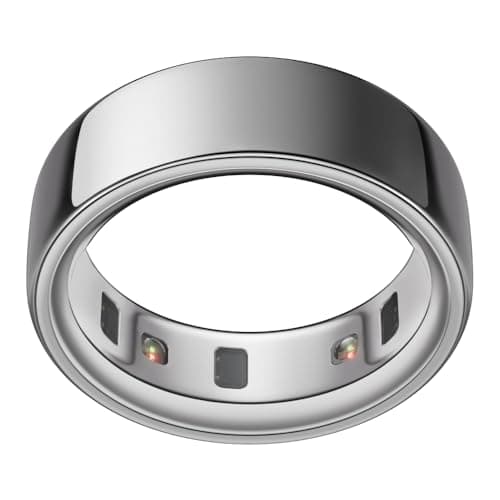
Top pick
Sleep staging you can actually citeOura Ring 4
The only consumer sleep device with a strong independent PSG result behind it — 76.3% four-stage agreement, and the best deep-sleep sensitivity of the three tested.
Price as of October 10, 2026. Prices move; Amazon's is the one that counts.
#ad · we may earn a commission from this link to Oura Ring 4
The short answer
Step count is the most reliable number on a consumer wearable: pooled across 249 validation studies, error runs from -9% to 12%, against -21.27% to 14.76% for calories. On a 10,000-step day that is a band of roughly 900 to 1,200 steps — fine for tracking a trend, useless as an exact total.
Ranked
Quick picks
| # | Device | Best for | Evidence | Score | Price |
|---|---|---|---|---|---|
| 01 | Oura Ring 4 The only consumer sleep device with a strong independent PSG result behind it — 76.3% four-stage agreement, and the best deep-sleep sensitivity of the three tested. | Sleep staging you can actually cite | Peer-reviewed validation | 8.0/10 | $349.00Amazon |
| 02 | 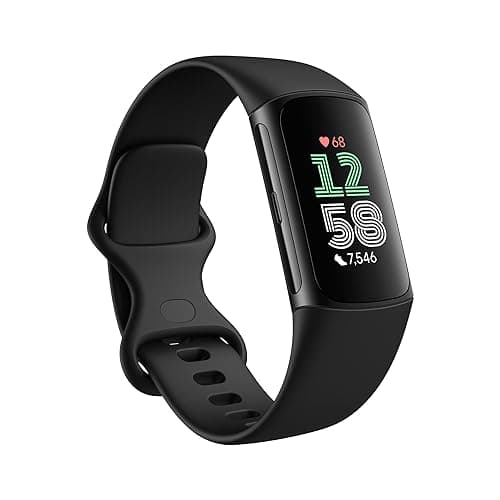 Fitbit Charge 6 Cheap, measured, and the weakest of the three devices in the PSG study. We would rather tell you that than not rank it. | Lowest-cost tracker with published data behind it | Peer-reviewed validation | 7.2/10 | $132.50Amazon |
| 03 | 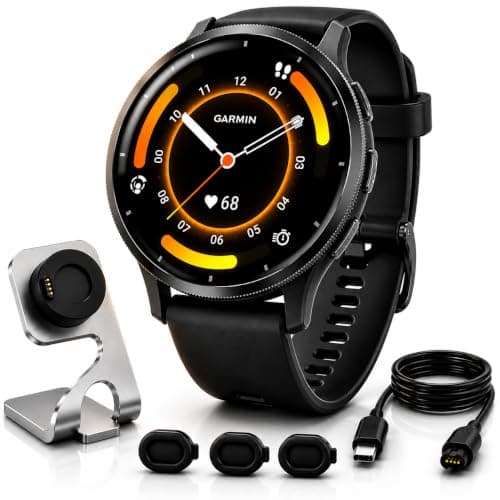 Garmin Venu 3 The sleep-and-recovery watch for people who already trust Garmin's training data. | One device for training and sleep | Manufacturer specification | 7.2/10 | $219.99Amazon |
#ad· Live prices from the Amazon Product API, as of October 10, 2026. Where we have no verified live price we show none. Scores come from the published rubric at How we rank — the Evidence column shows what each ranking actually rests on, including where the answer is nothing.
The number, and where it comes from
The strongest evidence available on this question is a 2024 living umbrella review in Sports Medicine: 24 systematic reviews, 249 unique primary validation studies, 430,465 participants, across 11 biometric outcomes. For step count it reports a mean absolute percentage error between -9% and 12%.
Two things are worth noticing in that sentence. The band is roughly a fifth of the width of the energy-expenditure band from the same review, which is why we tell readers to trust their step count and distrust their calorie total. And the error goes in both directions: a device can miss steps you took as easily as invent steps you did not.
The same review also notes that only about 34 of the 310 consumer wearables it identified have ever been validated at all. That is the sentence to carry away from this whole site. It is not that the devices are bad; it is that most of them have never been checked by anybody outside the company that sells them.
Why an accelerometer is good at this and bad at some of it
A step counter is a motion sensor plus a pattern-matcher. The device samples acceleration and looks for the repeating signature of a gait cycle. Walking and running produce an unmistakable periodic signal, which is precisely why this is the metric wearables handle best — the thing being measured is the thing the sensor is good at detecting.
The failures follow from the same design, and they are predictable rather than random. Motion that looks like walking but is not — a hand swinging on a bumpy drive, a vacuum cleaner, pushing a shopping cart — can be counted. Walking that does not produce the signature at the sensor, because the arm is still or the hand is in a pocket or on a pushchair handle, can be missed. A device on a finger and a device on a wrist see different motion from the same walk, and no study in our source library has measured that difference between form factors.
What this means for choosing a device
It means step accuracy is the weakest possible reason to pick one tracker over another. There is no published per-model step-count validation for any device in our roster, and the between-device differences the reviews do report are smaller than the error band itself. A cheap band and a flagship watch are both inside -9% to 12%, which is a tie in any honest reading.
So buy for the metrics where devices actually separate. In the published record that means sleep staging, where one device holds 76.3% four-stage agreement against clinical polysomnography while another managed 50.5% deep-sleep sensitivity; and overnight HRV, where the spread across five devices ran from 0.99 concordance to 0.82. Those are real differences between real products. Steps are not.
The three devices ranked on this page are there for exactly that reason: each one has been measured against a reference for something other than steps. The Oura Ring 4 holds the strongest sleep result in the category; the Fitbit Charge 6 was the cheapest device in the same polysomnography study and came third of three; the Garmin Venu 3 is the one you own outright with no membership, and its 14 stated days mean it is on your wrist at night rather than on a charger. All three count steps to the same published standard, which is to say the same band.
What nobody has measured
Publishing the gaps is as much the point of this site as publishing the findings, so here are the ones on this topic:
- No ring-against-wrist step comparison. A finger and a wrist experience different motion, and we found no study that measured the step-count consequence.
- No per-model figures for current devices. The pooled range describes a category; it is not a specification for your watch.
- No validation of stride-length-derived distance indoors. Treadmill distance from a wrist is step count multiplied by an estimated stride, and the estimate is the part nobody publishes.
The honest use of a step count is a comparison against your own previous days on the same device. It is a consistency instrument, not a census. If you want the metric where the evidence actually distinguishes devices, start with sleep tracking accuracy by device or heart rate accuracy by device, and the calorie figure that depends on all of it is at calorie accuracy by device.
The record
What has actually been measured
| Device | Metric | What was actually measured | Evidence |
|---|---|---|---|
| Consumer wearables, pooled (24 systematic reviews, 249 primary studies) | Step count | Mean absolute percentage error from -9% to 12%. [1] | Peer-reviewed validation |
| Consumer wearables, pooled (same review) | Energy expenditure, for comparison | Error from -21.27% to 14.76%, mean bias -3 kcal per minute — roughly five times the width of the step band. [1] | Peer-reviewed validation |
| The consumer wearable market as a whole | Whether a device has been validated at all | Approximately 34 of 310 identified consumer wearables have ever been validated in published research. [1] | Peer-reviewed validation |
| Every device ranked on this site | Step count, per model | No per-model step-count validation exists for any device in our roster that we could find, and no study we found compares a ring against a wrist device for steps. | No validation study exists |
In full
Every pick, and why
Oura Ring 4
The only consumer sleep device with a strong independent PSG result behind it — 76.3% four-stage agreement, and the best deep-sleep sensitivity of the three tested.
- Form
- Ring, worn on the index finger
- Sizing
- Size-specific — the ASIN is per size
- Subscription
- Membership required for full app features
What's good
- Robbins et al. (2024): highest four-stage agreement (76.3%, κ = 0.65) and best deep-sleep sensitivity (79.5%) of the three devices tested against polysomnography
- Matched PSG on seven of eight nightly summary measures, missing only sleep latency by five minutes
- A finger is a better optical site than a wrist for the same reason a forearm is
What isn't
- The membership is mandatory for the full app, so the sticker price is not the price — see our three-year arithmetic
- Rings are sized, so you need the sizing kit first and the ASIN varies by size
Skip this if
Skip this if you lift heavily. A rigid ring on a loaded barbell is uncomfortable at best, and Oura's own guidance is to take it off — a tracker you remove for training is not tracking your training.
What the evidence says
Peer-reviewed validationRobbins et al., Sensors 24(20):6532 (2024), n = 35, single-night inpatient polysomnography, testing the Oura Ring Gen3. Note the study tested Gen3, not the Ring 4. Note also that the manufacturer's press release rounded the four-stage figure to 79%; the paper says 76.3%. We use the paper.
Show how this 8.0 was calculated
| Factor | Weight | Score |
|---|---|---|
| EvidenceThe strongest peer-reviewed sleep result of any consumer device we found — with the honest caveats that it was one night, 35 people, and the previous generation. | 30% | 9.0 |
| HardwareFinger-mounted optical sensing, a better site than the wrist. | 20% | 8.5 |
| Metric coverageSleep, HRV, temperature and readiness; weak on exercise recording. | 20% | 8.0 |
| EnduranceMulti-day battery in normal use. | 15% | 8.0 |
| Cost per capabilityThe mandatory membership makes the true three-year cost materially higher than the sticker. | 15% | 5.5 |
Price as of October 10, 2026. Prices move; Amazon's is the one that counts.
#ad · we may earn a commission from this link to Oura Ring 4
Fitbit Charge 6
Cheap, measured, and the weakest of the three devices in the PSG study. We would rather tell you that than not rank it.
- Form
- Wrist band
- Battery (stated)
- Up to 7 days
- Extras
- Heart rate on connected gym equipment
What's good
- One of only three devices with a published head-to-head PSG result at all
- Substantially cheaper than every ring here
What isn't
- Robbins et al. (2024): lowest four-stage agreement of the three tested, at 70.9%, and deep-sleep sensitivity of 61.7%
- Overestimated light sleep by 18 minutes and underestimated deep sleep by 15
Skip this if
Skip this if the sleep stages are the point. It was measured, and it came third of three.
What the evidence says
Peer-reviewed validationRobbins et al., Sensors 24(20):6532 (2024) tested the Fitbit Sense 2 — not the Charge 6 — against polysomnography: 70.9% four-stage agreement (κ = 0.55) and 61.7% deep-sleep sensitivity, the weakest of the three devices. Fitbit's staging algorithm is shared across the line, but this remains evidence about a different device.
Show how this 7.2 was calculated
| Factor | Weight | Score |
|---|---|---|
| EvidenceReal peer-reviewed evidence exists for the platform — it is simply unflattering, and it tested a sibling device. | 30% | 6.0 |
| HardwareWrist-worn optical sensing, the weakest of the three placements in the placement study. | 20% | 7.0 |
| Metric coverageBroad everyday metrics; some features sit behind Fitbit Premium. | 20% | 7.5 |
| EnduranceUp to 7 stated days. | 15% | 7.5 |
| Cost per capabilityBy far the cheapest device in this roundup. | 15% | 9.0 |
$159.9517% off
Price as of October 10, 2026. Prices move; Amazon's is the one that counts.
#ad · we may earn a commission from this link to Fitbit Charge 6
Garmin Venu 3
The sleep-and-recovery watch for people who already trust Garmin's training data.
- Display
- 45mm, AMOLED
- Battery (stated)
- Up to 14 days
- Extras
- Sleep coach, nap detection, wheelchair mode
What's good
- 14 stated days means it survives the nights as well as the days — the practical failure of sleep tracking on a sports watch is that it is on the charger at bedtime
- One device rather than a watch plus a ring
What isn't
- Garmin's sleep staging has no independent PSG validation we could find
- A wrist is a worse optical site than a finger
Skip this if
Skip this if sleep staging is the reason you are buying. The published record has nothing to say about Garmin's, and the device that does have a paper is a ring.
What the evidence says
Manufacturer specificationNo independent PSG validation of Garmin's sleep staging that we could find. Notably, Garmin was absent from the Robbins et al. (2024) comparison entirely, so there is no published head-to-head against Oura, Fitbit or Apple.
Show how this 7.2 was calculated
| Factor | Weight | Score |
|---|---|---|
| EvidencePublished specs only; conspicuously absent from the major PSG comparison study. | 30% | 4.5 |
| HardwareCurrent Garmin optical sensor in a wrist-worn AMOLED watch. | 20% | 8.0 |
| Metric coverageSleep, recovery, training and everyday smartwatch functions in one device. | 20% | 9.0 |
| Endurance14 stated days is enough to keep it on the wrist overnight. | 15% | 8.5 |
| Cost per capabilityNo subscription, and it replaces two devices. | 15% | 7.5 |
$289.9924% off
Price as of October 10, 2026. Prices move; Amazon's is the one that counts.
#ad · we may earn a commission from this link to Garmin Venu 3
How to use a step count honestly
- Compare yourself to yourself. Same device, same wear position, day over day. Systematic error mostly cancels, so the trend is real even when the total is not.
- Do not compare two devices' totals. Two trackers inside the same published error band can differ by over a thousand steps on a busy day and both be performing to specification.
- Do not buy for steps. If a tracker is going to earn its price, it will be on sleep staging, HRV or positioning — the metrics where published results actually separate one device from another.
Questions
Frequently asked
How accurate is my step counter?
Pooled across 249 validation studies, consumer wearable step counts run from 9% under to 12% over the reference. That is the best-performing of the three headline metrics, and it still means a few hundred steps either way on a normal day.
Which tracker counts steps most accurately?
No published evidence answers that at model level. Per-model step validations do not exist for the devices we rank, and the reported differences between device classes are smaller than the error band, so claims of a most-accurate step counter are not based on measurement.
Does a smart ring count steps as well as a watch?
Unknown, honestly. A finger and a wrist see different motion from the same walk, and we found no study measuring the step-count consequence of that difference. Both form factors sit inside the same pooled band in the literature.
Why do my phone and my watch disagree about steps?
Because they are different sensors in different places running different algorithms, and both are inside a band that is roughly 20 percentage points wide. Disagreement between two devices is the expected result, not a malfunction in either.
Show your working
Sources
Every one of these was read in full before it was cited. Where we could not access a paper, we do not quote its numbers.
- [1]Peer-reviewed validation2024Doherty, Baldwin, Keogh, Caulfield & Argent, “Keeping Pace with Wearables: A Living Umbrella Review of Systematic Reviews Evaluating the Accuracy of Consumer Wearable Technologies in Health Measurement”, Sports Medicine
DOI 10.1007/s40279-024-02077-2. An umbrella review: 24 systematic reviews covering 249 unique primary validation studies and 430,465 participants (43% female), across 11 biometric outcomes, with roughly 34 of 310 identified consumer wearables ever validated. Reported accuracy by metric: heart rate approximately ±3% (mean bias −3.39 bpm); step count mean absolute percentage error from −9% to 12%; energy expenditure mean bias −3 kcal per minute with error ranging from −21.27% to 14.76%. Authors’ stated limits: a temporal lag between device release and published research, the intrinsic bias of a tertiary synthesis, and heterogeneity of protocols, devices, criterion measures and statistics severe enough that the authors did not pool a meta-analysis.
- [2]Peer-reviewed validation2024Robbins et al., “Accuracy of Three Commercial Wearable Devices for Sleep Tracking in Healthy Adults”, Sensors 24(20):6532
Brigham and Women’s Hospital. n = 35 healthy adults, single-night inpatient polysomnography, testing Oura Ring Gen3, Fitbit Sense 2 and Apple Watch Series 8. Authors’ stated limits: one night, lab conditions, healthy adults without insomnia, comparison only during scheduled sleep, and device failures on 6 Apple Watches and 2 Fitbits.
- [3]Peer-reviewed validation2025Dial, Hollander, Vatne, Emerson, Edwards & Hagen, “Validation of nocturnal resting heart rate and heart rate variability in consumer wearables”, Physiological Reports 13(16):e70527
DOI 10.14814/phy2.70527. n = 13 healthy adults (7 male, 6 female, 33.2 ± 8.6 years) across 536 nights, each wearing an Oura Gen 3, Oura Gen 4, Polar Grit X Pro, Garmin fēnix 6 and Whoop 4.0 simultaneously against a Polar H10 single-lead ECG reference sampled at 1000 Hz. Authors’ stated limits: healthy adults only, no atrial-fibrillation population, proprietary and periodically-updated algorithms, and unequal night counts per device. The Garmin was dropped from the resting-heart-rate comparison because the 30-minute window it uses is not timestamped.
Read next
Related
- Calorie accuracy by device
The metric built on top of this one, and the widest error band of the three.
- Most accurate fitness trackers
The ranked field, on the metrics where devices genuinely differ.
- Fitness tracker vs smartwatch
Which form factor measures what, with the evidence for each.
- Best sleep trackers
Where the published differences between devices are large enough to buy on.