The evidence scoreboard
Calorie accuracy by device
Calories are the least accurate number your watch produces, and the reason is structural rather than a bug in your model. Here is the published range, and the one input you can actually improve.
We earn a commission when you buy through our Amazon links, at no extra cost to you. It never decides a ranking — the rubric that does is published in full, so you can check us rather than take our word for it. How this works.
Top pick
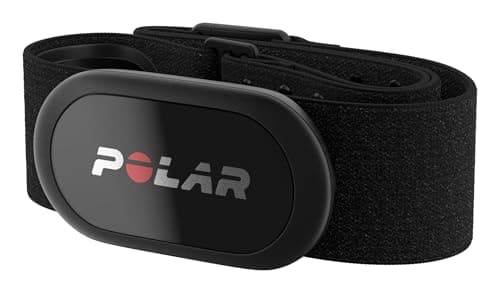
Anyone who trains by heart ratePolar H10
The device other people's validation studies use as the reference. That is the strongest recommendation a sensor can have.
$104.9519% off
Price as of October 10, 2026. Prices move; Amazon's is the one that counts.
#ad · we may earn a commission from this link to Polar H10
The short answer
Treat the calorie figure as a trend, not a measurement. A 2024 umbrella review of 24 systematic reviews — 249 primary validation studies, 430,465 participants — found wearable energy-expenditure error ranging from -21.27% to 14.76%, against roughly ±3% for heart rate. A 600-calorie run could honestly be 470 or 690.
Ranked
Quick picks
| # | Device | Best for | Evidence | Score | Price |
|---|---|---|---|---|---|
| 01 | Polar H10 The device other people's validation studies use as the reference. That is the strongest recommendation a sensor can have. | Anyone who trains by heart rate | Peer-reviewed validation | 8.9/10 | $84.74Amazon |
| 02 | 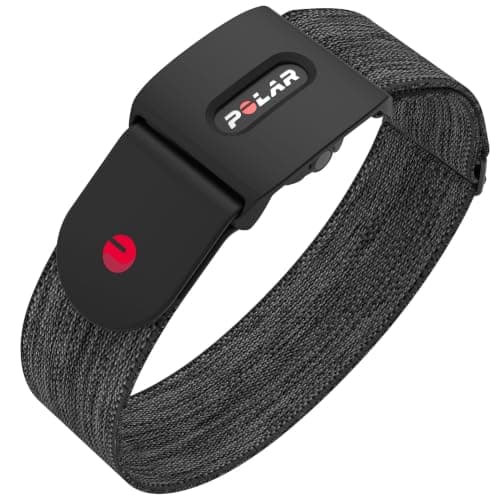 Polar Verity Sense The optical armband that measured a bias under 0.1 bpm against a chest strap on a graded treadmill test. The comfortable answer. | Strap-quality data without the strap | Peer-reviewed validation | 8.4/10 | $104.95Amazon |
| 03 | 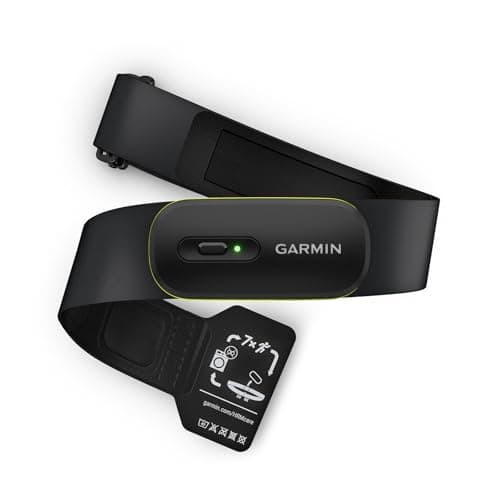 Garmin HRM 600 The strap to buy if you are already inside Garmin's ecosystem and want running dynamics with it. | Garmin owners wanting running dynamics | Manufacturer specification | 7.4/10 | $157.90Amazon |
#ad· Live prices from the Amazon Product API, as of October 10, 2026. Where we have no verified live price we show none. Scores come from the published rubric at How we rank — the Evidence column shows what each ranking actually rests on, including where the answer is nothing.
Why this page exists, and why it took so long to publish
This site deferred a calorie-accuracy page twice, for one reason: every candidate meta-analysis was behind a publisher paywall or a bot block, and an accuracy page with no citable figure is exactly the thing we argue against. That changed when we could read Doherty and colleagues' living umbrella review in Sports Medicine in full. It is the strongest evidence tier available for a question like this — a synthesis of syntheses, 24 systematic reviews covering 249 unique primary validation studies and 430,465 participants.
What the pooled evidence says, metric by metric
The useful thing about an umbrella review is that it lets you compare a wearable's metrics against each other on the same footing, which no single device test can do.
| Metric | Pooled error | How to read it |
|---|---|---|
| Heart rate | Approximately ±3% (mean bias -3.39 bpm) | Good enough to train with, at the intensities most studies tested. |
| Step count | Mean absolute percentage error -9% to 12% | Acceptable for trends; see our step page for where it breaks. |
| Energy expenditure | Mean bias -3 kcal per minute; error -21.27% to 14.76% | The widest error band of the three, and in both directions — your watch may be under-reporting as easily as over-reporting. |
Three kilocalories per minute of mean bias is the figure to sit with. Over an hour that is 180 calories of systematic drift before any random error, which is roughly a meal. The error is also not a single number you could correct for, because it ranges across devices and protocols from a 21% undershoot to a 15% overshoot.
Why calories are structurally the worst number on the watch
Your watch does not measure energy. A laboratory measures energy expenditure by capturing the gas you breathe — indirect calorimetry, the reference every study above compares against. A wearable instead models it, feeding heart rate, movement, and the height, weight, age and sex in your profile into a proprietary equation.
So the calorie figure inherits every error upstream of it and adds its own. If heart rate is 3% off, the model starts 3% off. If your maximum heart rate in the profile is a formula estimate rather than something you measured, the zone boundaries the model uses are wrong too. If your weight is six months stale, so is the arithmetic. None of those are sensor faults; they are inputs you control.
Garmin says as much in its own documentation. The owner's manual instruction is explicit: "for the most accurate calorie data during your activity, set your maximum heart rate". That is a free accuracy improvement sitting in a settings menu, and most people never touch it. We work through what the zones built on it actually mean in heart rate zones explained.
What you can and cannot fix
Cannot fix: the model. No accessory, firmware update or subscription gives you access to the equation, and no manufacturer publishes it. There is also no per-model validation of energy expenditure for any device in our roster that we could find — the pooled figures above are the best anyone can honestly give you, and they describe the category rather than your watch.
Can fix:the heart-rate input. This is the one lever with a measured effect. The same literature that puts pooled heart-rate error near ±3% also shows how much worse a wrist gets when it moves: in the 2025 placement study a wrist-worn watch recorded a bias of roughly 33 bpm during explosive work, while a forearm optical sensor held a bias under 0.1 bpm on a graded treadmill protocol and a chest strap was the reference. Feed the model a better heart rate and the calorie figure is still modeled — but it is modeled from something true.
Also can fix: your profile. Maximum heart rate, weight and age are inputs you type in. Set them properly once and every derived number on the watch improves, including training load and zone time. The mechanism for that one is in training load explained.
How to use the number anyway
A measurement with a ±20% band is not useless; it is useless for one specific job. Comparing today's 600 to yesterday's 500 on the same device, same sensor, same activity is reasonable — systematic error largely cancels when you compare like with like. Taking that 600 and subtracting it from a food diary is not reasonable, because the band on the watch figure is wider than the deficit most people are aiming at.
That is the whole practical conclusion: use calories as a relative signal within one device, never as an absolute input to an energy balance. If the absolute number matters to you, the instrument that produces it is a metabolic cart in a laboratory, and no wearable on this site claims otherwise.
The device-by-device records for the metrics that are measurable per model live at heart rate accuracy by device, HRV accuracy by device and VO2 max accuracy by device.
The record
What has actually been measured
| Device | Metric | What was actually measured | Evidence |
|---|---|---|---|
| Consumer wearables, pooled (24 systematic reviews, 249 primary studies) | Energy expenditure | Mean bias -3 kcal per minute, with error ranging from -21.27% to 14.76%. Roughly 34 of 310 identified consumer wearables have ever been validated at all. [1] | Peer-reviewed validation |
| Consumer wearables, pooled (same review) | Heart rate | Approximately ±3%, with a mean bias of -3.39 bpm. [1] | Peer-reviewed validation |
| Consumer wearables, pooled (same review) | Step count | Mean absolute percentage error from -9% to 12%. [1] | Peer-reviewed validation |
| Garmin Forerunner 55, wrist | Heart rate, the model's main input | Bias of approximately 33 bpm during the burpee protocol — the largest error in the paper, and it propagates straight into any calorie model built on it. [2] | Peer-reviewed validation |
| Polar Verity Sense, forearm | Heart rate, the model's main input | Bias under 0.1 bpm with 0.997 concordance on a graded treadmill protocol — the best optical result in the study. [2] | Peer-reviewed validation |
| Every device ranked on this site | Energy expenditure, per model | No per-model validation of calorie accuracy exists for any device in our roster that we could find. The pooled range above describes the category, not your watch. | No validation study exists |
In full
Every pick, and why
Polar H10
The device other people's validation studies use as the reference. That is the strongest recommendation a sensor can have.
- Sensor
- Electrical (ECG), chest strap
- Connectivity
- Bluetooth LE + ANT+
- Memory
- One session, up to 30 hours
- Battery (stated)
- Up to 400 h, CR2025 coin cell
- Water rating
- WR30
What's good
- Used as the criterion measure in published research — including the 2025 Sensors placement study on this site
- Simultaneous Bluetooth and ANT+, so it pairs to a watch and a bike computer at once
- 400 stated hours on a coin cell you replace rather than recharge
What isn't
- It is a chest strap, and a chest strap is less comfortable than a watch
- The strap wears out well before the sensor does
Skip this if
Skip this if you know yourself well enough to know you will not wear it. An unworn ECG strap measures nothing, and a wrist sensor you actually wear beats it every time.
What the evidence says
Peer-reviewed validationUsed as the reference standard in Sensors (2025), the anatomical-placement study of 28 participants. Being chosen as the criterion is an implicit validation by the researchers, though it means the study cannot measure the H10's own error.
Show how this 8.9 was calculated
| Factor | Weight | Score |
|---|---|---|
| EvidenceResearchers use it as the criterion measure. Nothing else in this category has a stronger evidentiary position. | 30% | 10.0 |
| HardwareElectrical ECG measurement rather than optical — a different and better physical principle for this job. | 20% | 9.5 |
| Metric coverageHeart rate and R-R intervals only; it does not pretend to do anything else. | 20% | 6.5 |
| Endurance400 stated hours on a replaceable coin cell. | 15% | 9.5 |
| Cost per capabilityInexpensive next to any watch, and it outlasts several of them. | 15% | 8.5 |
$104.9519% off
Price as of October 10, 2026. Prices move; Amazon's is the one that counts.
#ad · we may earn a commission from this link to Polar H10
Polar Verity Sense
The optical armband that measured a bias under 0.1 bpm against a chest strap on a graded treadmill test. The comfortable answer.
- Sensor
- Optical, forearm or upper-arm band
- Connectivity
- Bluetooth (dual) + ANT+
- Modes
- Live streaming, on-board recording, swim mode
What's good
- Sensors (2025) recorded the smallest bias of any device tested on the graded treadmill protocol — under 0.1 bpm, CCC = 0.997
- Lowest resting error in the same study, at roughly 1.6% MAPE
- Far more comfortable than a chest strap, and it works under a wetsuit
What isn't
- Still an extra device to charge and remember
- Like every optical sensor, it struggled in the same study's burpee protocol — nothing optical handles that well
Skip this if
Skip this if your training is mostly explosive, stop-start work. In the burpee protocol every optical device tested fell below 0.50 concordance, this one included. Buy the H10 for that.
What the evidence says
Peer-reviewed validationDirectly measured in Sensors (2025), n = 28, against a Polar H10 reference: lowest resting MAPE at ~1.6 ± 0.8%, and the smallest bias on the modified Bruce treadmill protocol at under 0.1 bpm (CCC = 0.997).
Show how this 8.4 was calculated
| Factor | Weight | Score |
|---|---|---|
| EvidenceDirectly measured in a peer-reviewed study, with the best result of any optical device tested. | 30% | 9.5 |
| HardwareOptical, but worn on the forearm — the placement the same study found outperforms the wrist. | 20% | 8.5 |
| Metric coverageHeart rate plus on-board recording and a swim mode. | 20% | 7.0 |
| EnduranceRechargeable, with stated endurance comfortably covering long sessions. | 15% | 8.0 |
| Cost per capabilityPriced against a good chest strap, not against a watch. | 15% | 8.5 |
Price as of October 10, 2026. Prices move; Amazon's is the one that counts.
#ad · we may earn a commission from this link to Polar Verity Sense
Garmin HRM 600
The strap to buy if you are already inside Garmin's ecosystem and want running dynamics with it.
- Sensor
- Electrical (ECG), chest strap
- Extras
- Running dynamics, HRV data, on-board storage
What's good
- Adds running dynamics that a watch alone cannot compute
- Stores data when out of watch range and syncs later
What isn't
- Costs meaningfully more than the Polar H10 without a published validation advantage
- Its extra metrics only fully surface inside Garmin's own platform
Skip this if
Skip this if you just want accurate heart rate. You would be paying a premium over the H10 for running-dynamics metrics most runners look at twice and never again.
What the evidence says
Manufacturer specificationGarmin publishes specifications but no validation study we could find. It is an electrical chest strap, which is the right physical principle — but 'right principle' is not the same as 'measured accuracy'.
Show how this 7.4 was calculated
| Factor | Weight | Score |
|---|---|---|
| EvidenceCorrect sensor principle, detailed published specs, no independent validation we could find. | 30% | 6.0 |
| HardwareElectrical ECG measurement with on-board storage. | 20% | 9.0 |
| Metric coverageHeart rate, HRV and the full running-dynamics set. | 20% | 8.5 |
| EnduranceGood stated endurance; rechargeable. | 15% | 8.0 |
| Cost per capabilityA clear premium over the H10 without a matching evidence advantage. | 15% | 6.0 |
$169.997% off
Price as of October 10, 2026. Prices move; Amazon's is the one that counts.
#ad · we may earn a commission from this link to Garmin HRM 600
Three things worth doing before you blame the watch
- Set your maximum heart rate.Garmin's own manual says this is what the most accurate calorie data depends on. A default from an age formula is a guess the model treats as a fact.
- Update your weight. Energy expenditure scales with body mass. A stale figure biases every session in the same direction.
- Improve the heart-rate signal before anything else. It is the only input with a published error figure you can act on, and a strap or armband is the cheapest accuracy upgrade in this category.
Questions
Frequently asked
How accurate are the calories on my watch?
Pooled across 249 validation studies, wearable energy-expenditure error runs from -21.27% to 14.76%, with a mean bias of about -3 kcal per minute. No per-model figure exists for any device we rank, so the honest answer is a band of roughly ±20% rather than a number.
Which wearable counts calories most accurately?
Nobody can answer that from published evidence, because the validation literature reports pooled device-class figures rather than per-model calorie accuracy. Any page ranking devices on calorie accuracy is ranking them on something it has not measured.
Why does my watch say a different calorie total than the treadmill?
Because they are different models with different inputs. The machine knows speed, incline and your typed-in weight; your watch knows heart rate, movement and your profile. Neither measured the gas you breathed, which is what a calorie actually is.
Is step count more reliable than calories?
Considerably. The same review puts step-count error at -9% to 12% against -21.27% to 14.76% for energy expenditure. Steps are counted; calories are modeled.
Show your working
Sources
Every one of these was read in full before it was cited. Where we could not access a paper, we do not quote its numbers.
- [1]Peer-reviewed validation2024Doherty, Baldwin, Keogh, Caulfield & Argent, “Keeping Pace with Wearables: A Living Umbrella Review of Systematic Reviews Evaluating the Accuracy of Consumer Wearable Technologies in Health Measurement”, Sports Medicine
DOI 10.1007/s40279-024-02077-2. An umbrella review: 24 systematic reviews covering 249 unique primary validation studies and 430,465 participants (43% female), across 11 biometric outcomes, with roughly 34 of 310 identified consumer wearables ever validated. Reported accuracy by metric: heart rate approximately ±3% (mean bias −3.39 bpm); step count mean absolute percentage error from −9% to 12%; energy expenditure mean bias −3 kcal per minute with error ranging from −21.27% to 14.76%. Authors’ stated limits: a temporal lag between device release and published research, the intrinsic bias of a tertiary synthesis, and heterogeneity of protocols, devices, criterion measures and statistics severe enough that the authors did not pool a meta-analysis.
- [2]Peer-reviewed validation2025“Impact of Anatomical Placement on the Accuracy of Wearable Heart Rate Monitors During Rest and Various Exercise Intensities”, Sensors (Basel)
n = 28 (14 male, 14 female). Polar H10 chest strap as the reference. Compared Polar Verity Sense (forearm), Garmin Forerunner 55 (wrist) and three simultaneous Whoop 4.0 units at wrist, forearm and upper arm, across rest, cycling warm-up, burpees and a modified Bruce treadmill protocol.
- [3]Manufacturer specification2026Garmin — Forerunner 265 Series owner's manual, “Setting Your Heart Rate Zones”
Manufacturer-stated, read 2026-09-18. Garmin states that “the watch uses your user profile information from the initial setup to determine your default heart rate zones”, that “for the most accurate calorie data during your activity, set your maximum heart rate”, and that zones can be based on BPM, “%Max. HR” or “%HRR” (heart rate reserve, defined in the manual as maximum heart rate minus resting heart rate). Lactate threshold heart rate is entered separately and can be auto-detected; maximum heart rate is not.
- [4]Manufacturer specification2026Polar — H10 heart rate sensor published specifications
Manufacturer-stated: electrical (ECG) measurement, Bluetooth LE + ANT+, internal memory for one session up to 30 hours, up to 400 h on a CR2025 coin cell, WR30.
- [5]Manufacturer specification2026Polar — Verity Sense published specifications
Manufacturer-stated: optical heart rate worn on the forearm or upper arm, dual Bluetooth plus ANT+, on-board recording, swim mode, WR50.
Read next
Related
- Step accuracy by device
The metric these devices are best at, and where it still goes wrong.
- Heart rate accuracy by device
The input every calorie model is built on, measured device by device.
- Fix your heart rate data
The cheapest measurable accuracy upgrade in the category.
- Most accurate fitness trackers
The ranked field, on evidence rather than marketing.