The evidence scoreboard
What a watch means when it says VO2 max
It is not measuring oxygen. It is estimating a laboratory value from heart rate and pace — and two studies now show how far off that estimate lands.
We earn a commission when you buy through our Amazon links, at no extra cost to you. It never decides a ranking — the rubric that does is published in full, so you can check us rather than take our word for it. How this works.
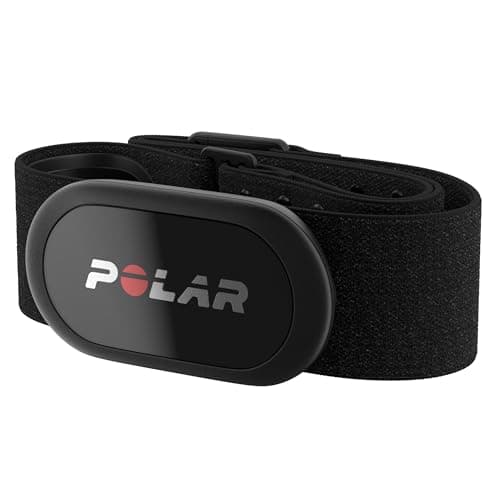
Top pick
Anyone who trains by heart ratePolar H10
The device other people's validation studies use as the reference. That is the strongest recommendation a sensor can have.
Price as of October 22, 2026. Prices move; Amazon's is the one that counts.
#ad · we may earn a commission from this link to Polar H10
The short answer
A watch does not measure VO2 max. It estimates it from the relationship between your pace and your heart rate. Two validation studies against laboratory gas analysis found systematic underestimation — 6.07 mL/kg/min in 2025 and 4.51 in 2024 — with mean errors of 13.3% and 15.8% respectively, and reliability described as poor.
Ranked
Quick picks
| # | Device | Best for | Evidence | Score | Price |
|---|---|---|---|---|---|
| 01 | Polar H10 The device other people's validation studies use as the reference. That is the strongest recommendation a sensor can have. | Anyone who trains by heart rate | Peer-reviewed validation | 8.9/10 | $104.45Amazon |
| 02 | 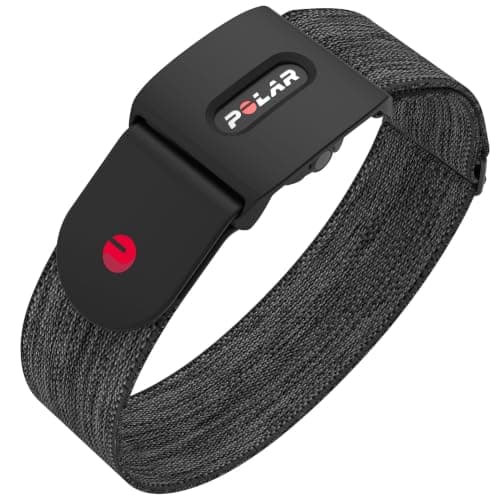 Polar Verity Sense The optical armband that measured a bias under 0.1 bpm against a chest strap on a graded treadmill test. The comfortable answer. | Strap-quality data without the strap | Peer-reviewed validation | 8.4/10 | $104.95Amazon |
| 03 | 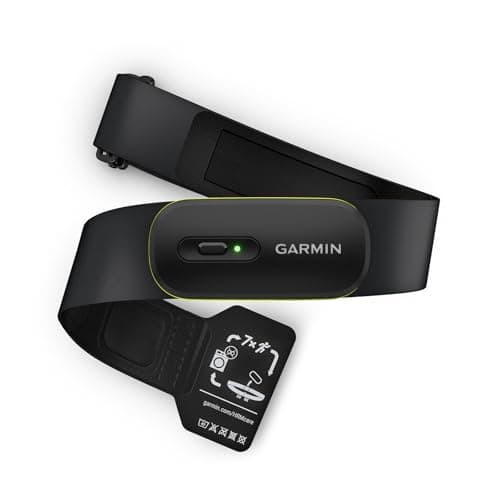 Garmin HRM 600 The strap to buy if you are already inside Garmin's ecosystem and want running dynamics with it. | Garmin owners wanting running dynamics | Manufacturer specification | 7.4/10 | $157.70Amazon |
#ad· Live prices from the Amazon Product API, as of October 22, 2026. Where we have no verified live price we show none. Scores come from the published rubric at How we rank — the Evidence column shows what each ranking actually rests on, including where the answer is nothing.
What VO2 max actually is
VO2 max is the maximum rate at which your body can take in and use oxygen during exercise, in milliliters per kilogram of body weight per minute. Measuring it properly means running or cycling to exhaustion while breathing into a mask that analyzes expired gas — cardiopulmonary exercise testing, done in a laboratory.
Your watch has no mask. What it has is your pace, your heart rate and a model of how those two relate in trained humans. The estimate is the output of that model.
That is not a criticism — it is a genuinely clever inference and it is free. It is just a completely different thing from a measurement, and the difference shows up in the numbers.
What the two studies found
Lambe et al. (2025) tested 28 participants across a range of Apple Watch models against indirect calorimetry on a treadmill. The watches underestimated VO2 max by 6.07 mL/kg/minon average, with a mean absolute percentage error of 13.31% and limits of agreement running from −6.11 to +18.26. The authors concluded the estimates "are not sufficiently accurate to inform clinical decision-making", while noting they may still be useful for general fitness monitoring.
Caserman et al. (2024) tested an Apple Watch Series 7 against a portable gas analyser on 19 participants. Lab measurement averaged 45.88 mL/kg/min against the watch's 41.37 — a bias of −4.51 — with a MAPE of 15.79% and an intraclass correlation of 0.47, which is poor reliability.
Two studies, two research groups, different protocols, same direction. That consistency is what makes this worth acting on.
The finding that matters most to a trained runner
The 2024 study stratified its results by fitness level, and the pattern is the useful part:
| Fitness group | n | Lab VO2 max | Watch estimate | Error (MAPE) |
|---|---|---|---|---|
| Poor | 3 | 35.13 | 38.93 | 10.71% |
| Good | 11 | 44.81 | 41.44 | 14.59% |
| Excellent | 5 | 54.70 | 42.70 | 21.47% |
The estimate overshot in the least fit group and undershot badly in the fittest one — a 12-point gap in the excellent group, which is roughly the difference between a competent club runner and an elite one.
If you are reading this because you train seriously, that is the row that applies to you, and it says the number on your wrist is likely to be substantially low. Both studies used small samples, and both authors flag it.
Why the estimate behaves this way
The model infers aerobic capacity from how fast you can go at a given heart rate. That relationship is real, but it is affected by running economy, heat, hills, hydration, altitude and the specific sessions the watch happened to see.
At the top end, the model runs out of room: highly trained runners differ from each other in ways — economy, lactate handling, efficiency — that a pace-and-heart-rate relationship cannot resolve. That is a plausible explanation for the fitness-stratified result, and it is our reading rather than a finding either paper states.
The 2024 authors add a fairness point worth repeating: their watch figure came from a single outdoor session, where Apple's own internal validation used an average of 441 days of data per user. A watch given more data may do better than these studies suggest.
What the number is actually good for
Trends, on the same device, over months. A systematic bias that stays roughly constant still lets you see a real improvement, because you are comparing the estimate against itself rather than against a laboratory.
Not for comparing across brands. Different manufacturers use different models. Two watches on the same wrist will disagree, and neither disagreement is evidence about you.
Not as a number to quote. If it matters to you what your VO2 max actually is — for a training prescription, or a clinical reason — the published evidence says get it measured. Both studies are explicit that the watch value is not adequate for decisions of that kind.
What about Garmin, COROS and Polar?
We could not find equivalent peer-reviewed validations for their current watches. Both studies above tested Apple, which is the recurring pattern on this site: Apple gets measured, everyone else gets marketed.
It would be wrong to conclude that other brands are better or worse. It is unknown, and under our evidence hierarchy unknown is its own category rather than a quiet pass — which is why the Apple Watch Ultra 3 still scores above the brands with no data at all, even though the data it has is unflattering.
In full
Every pick, and why
Polar H10
The device other people's validation studies use as the reference. That is the strongest recommendation a sensor can have.
- Sensor
- Electrical (ECG), chest strap
- Connectivity
- Bluetooth LE + ANT+
- Memory
- One session, up to 30 hours
- Battery (stated)
- Up to 400 h, CR2025 coin cell
- Water rating
- WR30
What's good
- Used as the criterion measure in published research — including the 2025 Sensors placement study on this site
- Simultaneous Bluetooth and ANT+, so it pairs to a watch and a bike computer at once
- 400 stated hours on a coin cell you replace rather than recharge
What isn't
- It is a chest strap, and a chest strap is less comfortable than a watch
- The strap wears out well before the sensor does
Skip this if
Skip this if you know yourself well enough to know you will not wear it. An unworn ECG strap measures nothing, and a wrist sensor you actually wear beats it every time.
What the evidence says
Peer-reviewed validationUsed as the reference standard in Sensors (2025), the anatomical-placement study of 28 participants. Being chosen as the criterion is an implicit validation by the researchers, though it means the study cannot measure the H10's own error.
Show how this 8.9 was calculated
| Factor | Weight | Score |
|---|---|---|
| EvidenceResearchers use it as the criterion measure. Nothing else in this category has a stronger evidentiary position. | 30% | 10.0 |
| HardwareElectrical ECG measurement rather than optical — a different and better physical principle for this job. | 20% | 9.5 |
| Metric coverageHeart rate and R-R intervals only; it does not pretend to do anything else. | 20% | 6.5 |
| Endurance400 stated hours on a replaceable coin cell. | 15% | 9.5 |
| Cost per capabilityInexpensive next to any watch, and it outlasts several of them. | 15% | 8.5 |
Price as of October 22, 2026. Prices move; Amazon's is the one that counts.
#ad · we may earn a commission from this link to Polar H10
Polar Verity Sense
The optical armband that measured a bias under 0.1 bpm against a chest strap on a graded treadmill test. The comfortable answer.
- Sensor
- Optical, forearm or upper-arm band
- Connectivity
- Bluetooth (dual) + ANT+
- Modes
- Live streaming, on-board recording, swim mode
What's good
- Sensors (2025) recorded the smallest bias of any device tested on the graded treadmill protocol — under 0.1 bpm, CCC = 0.997
- Lowest resting error in the same study, at roughly 1.6% MAPE
- Far more comfortable than a chest strap, and it works under a wetsuit
What isn't
- Still an extra device to charge and remember
- Like every optical sensor, it struggled in the same study's burpee protocol — nothing optical handles that well
Skip this if
Skip this if your training is mostly explosive, stop-start work. In the burpee protocol every optical device tested fell below 0.50 concordance, this one included. Buy the H10 for that.
What the evidence says
Peer-reviewed validationDirectly measured in Sensors (2025), n = 28, against a Polar H10 reference: lowest resting MAPE at ~1.6 ± 0.8%, and the smallest bias on the modified Bruce treadmill protocol at under 0.1 bpm (CCC = 0.997).
Show how this 8.4 was calculated
| Factor | Weight | Score |
|---|---|---|
| EvidenceDirectly measured in a peer-reviewed study, with the best result of any optical device tested. | 30% | 9.5 |
| HardwareOptical, but worn on the forearm — the placement the same study found outperforms the wrist. | 20% | 8.5 |
| Metric coverageHeart rate plus on-board recording and a swim mode. | 20% | 7.0 |
| EnduranceRechargeable, with stated endurance comfortably covering long sessions. | 15% | 8.0 |
| Cost per capabilityPriced against a good chest strap, not against a watch. | 15% | 8.5 |
Price as of October 22, 2026. Prices move; Amazon's is the one that counts.
#ad · we may earn a commission from this link to Polar Verity Sense
Garmin HRM 600
The strap to buy if you are already inside Garmin's ecosystem and want running dynamics with it.
- Sensor
- Electrical (ECG), chest strap
- Extras
- Running dynamics, HRV data, on-board storage
What's good
- Adds running dynamics that a watch alone cannot compute
- Stores data when out of watch range and syncs later
What isn't
- Costs meaningfully more than the Polar H10 without a published validation advantage
- Its extra metrics only fully surface inside Garmin's own platform
Skip this if
Skip this if you just want accurate heart rate. You would be paying a premium over the H10 for running-dynamics metrics most runners look at twice and never again.
What the evidence says
Manufacturer specificationGarmin publishes specifications but no validation study we could find. It is an electrical chest strap, which is the right physical principle — but 'right principle' is not the same as 'measured accuracy'.
Show how this 7.4 was calculated
| Factor | Weight | Score |
|---|---|---|
| EvidenceCorrect sensor principle, detailed published specs, no independent validation we could find. | 30% | 6.0 |
| HardwareElectrical ECG measurement with on-board storage. | 20% | 9.0 |
| Metric coverageHeart rate, HRV and the full running-dynamics set. | 20% | 8.5 |
| EnduranceGood stated endurance; rechargeable. | 15% | 8.0 |
| Cost per capabilityA clear premium over the H10 without a matching evidence advantage. | 15% | 6.0 |
$169.997% off
Price as of October 22, 2026. Prices move; Amazon's is the one that counts.
#ad · we may earn a commission from this link to Garmin HRM 600
Questions
Frequently asked
How accurate is VO2 max on a smartwatch?
The two published validations both found systematic underestimation against laboratory gas analysis — 6.07 mL/kg/min in 2025 (13.3% mean error) and 4.51 in 2024 (15.8% mean error), with an intraclass correlation of 0.47 in the latter, which is poor reliability. The 2025 authors concluded it is not sufficiently accurate for clinical decisions.
Why is my watch's VO2 max lower than I expect?
Both studies found it runs low, and the 2024 study found the underestimation grew with fitness — averaging 21.5% error in its most fit group, where the watch read 42.70 against a laboratory 54.70. If you train seriously, the published evidence says the number is likely to understate you.
Can I compare VO2 max between two brands of watch?
No. Each manufacturer uses its own model, and no study has cross-validated them. Two watches on the same wrist will produce different numbers, and the difference tells you about the models rather than about your fitness.
Is watch VO2 max useful for anything?
Yes — as a trend on one device over months. A consistent bias cancels out when you compare the estimate against its own history, so a genuine improvement in fitness should still show up. What it cannot support is a precise figure, a cross-brand comparison, or a clinical decision.
How do I get an accurate VO2 max?
Cardiopulmonary exercise testing with expired-gas analysis, which is what both studies used as their reference. University exercise physiology labs and sports medicine clinics offer it. That is the only method either paper treats as authoritative.
Show your working
Sources
Every one of these was read in full before it was cited. Where we could not access a paper, we do not quote its numbers.
- [1]Peer-reviewed validation2025Lambe, O’Grady, Baldwin & Doherty, “Investigating the accuracy of Apple Watch VO2 max measurements: A validation study”, PLOS ONE 20(5):e0323741
DOI 10.1371/journal.pone.0323741. 28 analyzed participants across Apple Watch Series 5-9, SE 2 and Ultra 2 on watchOS 10+, against indirect calorimetry (COSMED Quark CPET, modified Åstrand treadmill protocol). Authors’ stated limits: the sample skewed strongly toward high cardiorespiratory fitness, watch estimates were generated uncontrolled, and only one estimate per participant was collected.
- [2]Peer-reviewed validation2024Caserman, Yum, Göbel, Reif & Matura, “Assessing the Accuracy of Smartwatch-Based Estimation of Maximum Oxygen Uptake Using the Apple Watch Series 7: Validation Study”, JMIR Biomedical Engineering 9:e59459
DOI 10.2196/59459. n = 19 (12 male, 7 female, mean age 28.4), Apple Watch Series 7 against a VO2 Master portable gas analyzer on a graded cycle ergometer test. Authors’ stated limits: the sample was 19 rather than the 30 planned, testing was submaximal, no blood lactate was taken, and the watch figure came from a single outdoor session where Apple’s own validation used an average of 441 days of data.
- [3]Peer-reviewed validation2025“Impact of Anatomical Placement on the Accuracy of Wearable Heart Rate Monitors During Rest and Various Exercise Intensities”, Sensors (Basel)
n = 28 (14 male, 14 female). Polar H10 chest strap as the reference. Compared Polar Verity Sense (forearm), Garmin Forerunner 55 (wrist) and three simultaneous Whoop 4.0 units at wrist, forearm and upper arm, across rest, cycling warm-up, burpees and a modified Bruce treadmill protocol.
Read next
Related
- Training status explained
What the watch does with the VO2 max trend once it has it.
- What training load actually measures
The other derived metric nobody has validated.
- Apple Watch Ultra 3
The device both of these studies tested.
- Most accurate fitness trackers
The consolidated evidence scoreboard.
- What a lactate threshold estimate is worth
The other lab value your watch estimates, with its own measured error.