Head to head
WHOOP vs Apple Watch Ultra
A screenless band you rent against a titanium watch you own. Both have been independently measured, which is rare here, and both measurements found something wrong.
We earn a commission when you buy through our Amazon links, at no extra cost to you. It never decides a ranking — the rubric that does is published in full, so you can check us rather than take our word for it. How this works.
Top pick
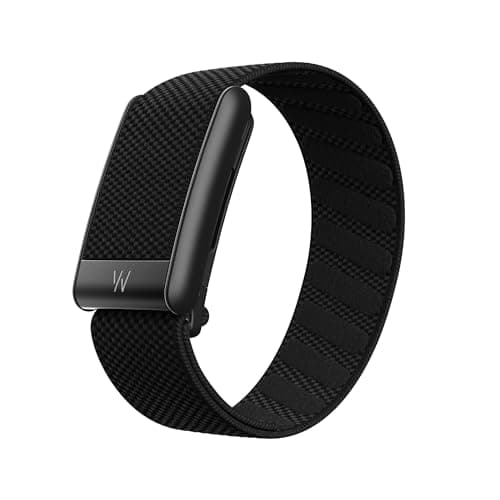
Recovery-led training, if you accept the modelWHOOP Peak (12-month membership)
Not a product you buy, a subscription you enter. Priced honestly on Amazon as what it is: twelve months.
Price as of October 22, 2026. Prices move; Amazon's is the one that counts.
#ad · we may earn a commission from this link to WHOOP Peak (12-month membership)
The short answer
Keep the Apple Watch Ultra 3 if you want one device that navigates, calls and trains. Add WHOOP only if you will wear it on your upper arm, because that is where its measured advantage lives. Both carry peer-reviewed results. Neither has ever been tested against the other.
Ranked
Quick picks
| # | Device | Best for | Evidence | Score | Price |
|---|---|---|---|---|---|
| 01 | WHOOP Peak (12-month membership) Not a product you buy, a subscription you enter. Priced honestly on Amazon as what it is: twelve months. | Recovery-led training, if you accept the model | Peer-reviewed validation | 7.3/10 | $239.00Amazon |
| 02 | 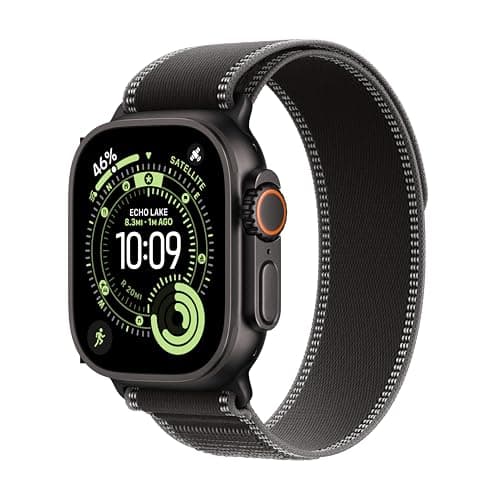 Apple Watch Ultra 3 Excellent positioning hardware and the best screen here, attached to the weakest deep-sleep measurement in the published record. | iPhone owners who train and want one device | Peer-reviewed validation | 6.8/10 | $588.83Amazon |
#ad· Live prices from the Amazon Product API, as of October 22, 2026. Where we have no verified live price we show none. Scores come from the published rubric at How we rank — the Evidence column shows what each ranking actually rests on, including where the answer is nothing.
These are not the same kind of product, and the search knows it
Almost nobody types this query while choosing between two watches. They type it because they already own an Apple Watch Ultra, they keep seeing a screenless band on other people's arms, and they want to know whether it would tell them anything their watch does not.
So this page answers that question rather than pretending these are interchangeable. The Ultra 3 is a titanium smartwatch with dual-frequency positioning, maps, cellular and satellite messaging. WHOOP is a membership: no screen, no GPS, no notifications, and if you stop paying, the hardware stops being useful. One can replace the other for exactly one buyer — the person who wants recovery data and nothing else — and for everyone else the real decision is whether to run both.
What makes the pairing worth a page is that these are two of the very few devices on this site with peer-reviewed measurements attached to them at all. Most of the category has none. The catch, and it is the fact this whole comparison turns on, is that the two have never appeared in the same study.
The specification table
Apple publishes a full technical specification for the Ultra 3 and every Apple row below comes from it. WHOOP does not publish a specification page we were able to read from here, so its rows say what its own retail listing claims and nothing more. We are not going to fill a table with figures we could not open.
| Specification | WHOOP Peak | Apple Watch Ultra 3 |
|---|---|---|
| What you are buying | A 12-month membership; the band comes with it | Hardware, owned outright |
| Form | Screenless band, wrist or upper arm | 49 mm Grade 5 titanium case, 44 mm wide, 12 mm deep |
| Display | None | Always-on Retina, up to 3000 nits |
| Positioning | None | L1 and L5 dual-frequency across GPS, GLONASS, Galileo, QZSS and BeiDou |
| Battery (stated) | "14+ days" on its own retail listing; no published specification we could read | Up to 42 h normal use, up to 72 h in Low Power Mode |
| Water rating | Not published in a form we could read | 100 m, plus EN13319 for recreational scuba to 40 m |
| Off-wrist wear | Yes — upper arm, which is the measured advantage | No |
| Peer-reviewed HRV result | Yes — 8.17% error, Whoop 4.0 | None we could find |
| Peer-reviewed sleep-staging result | None we could find | Yes — 75.0% four-stage, Series 8 |
| Peer-reviewed VO2 max result | None we could find | Yes — two, both unfavorable |
Both have been measured. Neither has been measured against the other.
This is the single most useful thing on the page, and every comparison we read on this query glossed it. Four peer-reviewed studies touch these two devices. Not one of them contains both.
| Study | What it measured | Which device was in it |
|---|---|---|
| Dial et al., Physiological Reports (2025) | Nocturnal HRV and resting heart rate against a single-lead ECG, 536 nights | Whoop 4.0. No Apple device. |
| Sensors (2025), placement study | Exercise heart rate at wrist, forearm and upper arm against a Polar H10 | Three Whoop 4.0 units. No Apple device. |
| Robbins et al., Sensors (2024) | Sleep staging against inpatient polysomnography | Apple Watch Series 8. No WHOOP. |
| PLOS ONE (2025) and JMIR Biomed Eng (2024) | VO2 max against laboratory gas analysis | Apple Watch Series 5-9, SE 2, Ultra 2 and Series 7. No WHOOP. |
So anyone telling you which of these two is "more accurate" is comparing results from different laboratories, different protocols, different reference instruments and different metrics. We are not going to do that arithmetic and then present it as a verdict. What we can do is set out what each side's own studies actually found, and let the asymmetries do the work.
What the WHOOP studies found
Nocturnal HRV. Dial et al. (2025) put five wearables on thirteen adults simultaneously against a single-lead ECG across 536 nights. The Whoop 4.0 recorded HRV concordance of 0.94 with a mean error of 8.17 ± 10.49%, and resting heart rate concordance of 0.91 at 3.00% error, across 289 of those nights. That placed it second of the five, behind both Oura rings and ahead of Garmin and Polar.
Read the standard deviation as well as the mean. ±10.49% is wide, and HRV is a number people follow as a night-to-night trend rather than a single reading, so a good average with poor consistency is worth less than the headline suggests.
Placement. The 2025 Sensors placement study is the more interesting of the two, because it is the only published result that describes something a watch structurally cannot do. Three identical Whoop 4.0 units were worn at the same time on the wrist, the forearm and the upper arm of 28 participants, referenced against a Polar H10 chest strap. The upper-arm unit produced the lowest error at warm-up, the best agreement of any optical device in the burpee protocol, and a treadmill concordance of 0.992. The wrist unit — identical hardware, same person, same session — showed limits of agreement of roughly ±10 to 19 bpm at warm-up.
Both studies tested the Whoop 4.0. The membership sold today is a later generation, and a new sensor with a new algorithm is precisely the thing a validation exists to test. Nothing here measures the band you would actually receive.
What the Apple studies found
Apple is one of the few brands in this category with published sleep data at all, and the result is the reason the Ultra ranks where it does here rather than at the top.
Sleep staging. In the Brigham and Women's Hospital polysomnography comparison, an Apple Watch Series 8 reached 75.0% four-stage agreement against clinical PSG — but its deep-sleep sensitivity was 50.5%, the weakest of the three devices tested. In practice it overestimated light sleep by 45 minutes a night and underestimated deep sleep by 43. Six of the Apple Watches in that study also failed to record at all.
That was a Series 8, not an Ultra 3, and Apple has revised its sleep algorithm since. We hold the result against the brand rather than the specific watch, and we say so — but the honest position is that the one time Apple sleep staging was measured against the clinical standard, the stage most people care about was the one it got least right.
VO2 max. Two separate validations against laboratory gas analysis found systematic underestimation. PLOS ONE (2025) measured a shortfall of 6.07 mL/kg/min at 13.31% mean error across Series 5-9, SE 2 and Ultra 2, and the error grew with fitness, reaching 21.5% in the fittest group. JMIR Biomedical Engineering (2024) found 4.51 mL/kg/min and 15.79% error on a Series 7, with an intraclass correlation of 0.47 — poor reliability by any conventional reading.
The Ultra 2 was inside the 2025 sample, which is the closest any published study gets to the watch on this page. If you are an experienced runner, note the direction of the error: the fitter the participant, the more the watch undersold them.
The placement asymmetry is the only structural difference in the data
Strip out the metrics that only one side has been tested on and one genuine, repeatable difference survives: you can wear a WHOOP where the optics work, and you cannot wear a watch there.
A wrist is a poor place to read blood flow. It is bony, it is distal, and it moves through the largest range of any point on the arm during exercise. The placement study is the measurement of that, and the mechanism is set out in full on our wrist versus chest strap page. An Apple Watch cannot use the finding, because you have to look at it — the display that makes it a good watch is what pins it to the worst site on the arm.
Two honest qualifiers. First, the advantage only exists if you use it: a WHOOP worn on the wrist is a screenless watch with the same physics problem. Second, and more awkward for WHOOP, that study's reference instrument beat everything in it. If exercise heart rate is the thing you want fixed, a chest strap costs a fraction of either device here, pairs with the Ultra over Bluetooth, and is the instrument the studies use to judge everything else. That is the buyer-first answer even though it is the one we earn least on.
The money, computed rather than asserted
The WHOOP listing is a twelve-month membership, so its three-year figure is the live price plus twenty-four further months at the rate that listing implies: $717. The Ultra 3 you own outright, so its three-year figure is simply what it costs today: $589. Today's sticker gap between the two is $350.
Both figures are computed at page load from Amazon prices, not typed in. Look at them before you assume the subscription is automatically the expensive option — against a flagship titanium smartwatch that intuition does not reliably hold, and which way it lands depends on what the two are selling for the day you read this.
Two things the arithmetic deliberately excludes. The Ultra 3 listing we price is the GPS + Cellular model, and cellular service is a separate monthly charge from a carrier that we do not price and you should add yourself if you intend to use it. And the WHOOP figure assumes you keep paying for three years; cancel earlier and you pay less and keep nothing. Those are different kinds of risk, not different sizes of the same one.
The subscription question in general — what a membership does to the real cost of a recovery tracker — is worked through against a cheaper field on our no-subscription sleep tracker ranking.
What the Ultra 3 does that WHOOP does not claim
It is worth stating plainly, because a comparison that only counted sensors would mislead you. On Apple's published specification the Ultra 3 carries L1 and L5 dual-frequency positioning across five constellations, an always-on display to 3000 nits, satellite connectivity for Emergency SOS, Messages and Find My, 100 m water resistance with EN13319 certification for scuba to 40 m, and up to 42 hours of normal use.
WHOOP claims none of that and is not trying to. It has no screen to navigate with, no receiver to record a route, and nothing to call for help with. If you run trails, ride roads or swim open water those are not luxuries — and the full breakdown is on the Ultra 3 review, including the battery figure that keeps it behind dedicated sports watches on our rubric.
What we could not verify
- WHOOP's published specifications. Its site did not return a page we could read, so every WHOOP row above is either a study finding or its own retail listing copy, labeled as such.
- Either current generation. Every study here tested a Whoop 4.0 or an Apple Watch Series 7, 8 or Ultra 2. Neither device you would buy today has been measured.
- WHOOP sleep staging. No WHOOP band appears in any polysomnography comparison we could find, so its hypnogram is unvalidated — see the sleep accuracy scoreboard for how empty that column is across the whole category.
- Apple HRV. No independent nocturnal HRV validation of any Apple Watch that we could find, which is why the HRV row above says none rather than a number.
- Recovery, strain and readiness scores.No manufacturer's proprietary score, on either side, has been independently validated. The 2025 HRV authors noted directly that there is little transparency into what feeds them.
- The Ultra 3's positioning accuracy. No current-generation multi-band watch of any brand has been independently validated that we could find.
So which one
Buy the Apple Watch Ultra 3 if you want one device. It navigates, it calls, it survives water, and it is the only one of the two that can get you help from a ridgeline. Its published weaknesses are deep-sleep staging and VO2 max, and neither of those is why most people buy it.
Buy the WHOOP membership if recovery data is the actual goal, you are comfortable renting rather than owning, and — this is the condition, not a detail — you will wear it on your upper arm. Bought and worn on the wrist, you have paid a subscription for the same measurement site your watch already uses.
Buy neither if the honest complaint is that your heart rate goes wrong during intervals. That is a placement problem with a cheap, measured solution, and the heart-rate upgrade path starts with a strap rather than a device. If nightly HRV is what you are after, the HRV ranking shows what the ECG reference costs, which is less than either device on this page.
In full
Every pick, and why
WHOOP Peak (12-month membership)
Not a product you buy, a subscription you enter. Priced honestly on Amazon as what it is: twelve months.
- Form
- Screenless band, worn on wrist or upper arm
- Commercial model
- Membership — the hardware is included, not purchased
- Term
- 12 months
What's good
- Can be worn on the upper arm, and Sensors (2025) found upper-arm placement beat the wrist at every intensity tested
- The Amazon listing is the membership, so the price you see is at least an honest twelve-month figure
What isn't
- Stops working when you stop paying — the three-year cost is the number that matters, and it is not the sticker
- The 2025 placement study measured a Whoop 4.0, not the current generation
Skip this if
Skip this if you want to own your tracker. A membership that bricks on cancellation is a genuinely different proposition from a watch, and no amount of data quality changes that.
What the evidence says
Peer-reviewed validationSensors (2025) tested three Whoop 4.0 units simultaneously at wrist, forearm and upper arm against a Polar H10. Upper-arm placement produced the lowest error at warm-up and the best agreement in the burpee protocol; the wrist unit showed limits of ±10-19 bpm at warm-up. That was the 4.0, not the current model.
Show how this 7.3 was calculated
| Factor | Weight | Score |
|---|---|---|
| EvidenceGenuinely measured in a peer-reviewed study, with a favorable result for upper-arm placement — but on a previous generation. | 30% | 7.5 |
| HardwareScreenless optical band whose real advantage is that it can be worn where the physics works. | 20% | 8.0 |
| Metric coverageDeep recovery, strain and sleep analytics. | 20% | 8.5 |
| EnduranceMulti-day, with a wearable battery pack for charging without removal. | 15% | 7.5 |
| Cost per capabilityThe weakest cost figure on the site once three years of membership are added up. | 15% | 4.0 |
Price as of October 22, 2026. Prices move; Amazon's is the one that counts.
#ad · we may earn a commission from this link to WHOOP Peak (12-month membership)
Apple Watch Ultra 3
Excellent positioning hardware and the best screen here, attached to the weakest deep-sleep measurement in the published record.
- Case
- 49mm titanium
- Satellite
- Dual-frequency GNSS
- Connectivity
- GPS + Cellular
What's good
- Dual-frequency positioning and a genuinely excellent display
- Best-in-class as a general smartwatch, by a distance
What isn't
- In the Brigham and Women's PSG study, the Apple Watch's deep-sleep sensitivity was 50.5% — the weakest of the three devices tested
- Battery is short next to every dedicated sports watch here
Skip this if
Skip this if you bought it to fix your sleep data. The peer-reviewed result says that is the one thing it is worst at, and no firmware update changes a published measurement.
What the evidence says
Peer-reviewed validationRobbins et al. (2024) tested the Apple Watch Series 8 against polysomnography: 75.0% four-stage agreement, but deep-sleep sensitivity of only 50.5%, overestimating light sleep by 45 minutes and underestimating deep sleep by 43 minutes. That was the Series 8, not the Ultra 3, and Apple has revised its algorithm since.
Show how this 6.8 was calculated
| Factor | Weight | Score |
|---|---|---|
| EvidenceGenuine peer-reviewed sleep data exists, which most rivals lack — but the result was unfavorable, and it tested an earlier model. | 30% | 6.0 |
| HardwareDual-frequency GNSS and the best display in this group. | 20% | 9.0 |
| Metric coverageVery wide metric coverage; export off-platform is more awkward than Garmin's. | 20% | 8.5 |
| EnduranceMaterially shorter than every dedicated sports watch here. | 15% | 4.0 |
| Cost per capabilityFlagship pricing; the cellular model costs more again. | 15% | 6.0 |
Price as of October 22, 2026. Prices move; Amazon's is the one that counts.
#ad · we may earn a commission from this link to Apple Watch Ultra 3
How this ranking was built
Every score on this page comes from one published rubric, applied identically to every device on the site, with the weights written down and the inputs shown. We have not worn any of these devices and we never say we have. Read the method and check us.
Questions
Frequently asked
Is WHOOP more accurate than the Apple Watch?
Nobody can say, because the two have never been measured in the same study. WHOOP has a peer-reviewed HRV result — 8.17% error against an ECG across 289 nights — and a placement result. Apple has a peer-reviewed sleep-staging result (75.0% four-stage, but 50.5% deep sleep) and two VO2 max results. Different metrics, different laboratories, different reference instruments. Anyone declaring a winner is comparing numbers that were never comparable.
Should I wear WHOOP with my Apple Watch Ultra?
Only if you wear the WHOOP on your upper arm. That is the one thing it does that the watch structurally cannot, and it is the only part of its record that has been measured directly. Worn on the other wrist, you are paying a membership for a second reading from the same poor measurement site.
Which costs more over three years, WHOOP or an Apple Watch Ultra 3?
Computed from live prices: $717 for the WHOOP membership against $589 for an Ultra 3 you own outright. Neither figure includes cellular service on the Apple side, which is a separate carrier charge.
Does the Apple Watch Ultra 3 track sleep accurately?
Unmeasured for the Ultra 3 itself. The nearest published result tested a Series 8 against inpatient polysomnography and found 75.0% four-stage agreement with deep-sleep sensitivity of 50.5% — 45 minutes of light sleep overcounted and 43 minutes of deep sleep missed per night. Apple has revised the algorithm since, and nobody has re-measured it.
Does WHOOP work without a subscription?
No. The hardware arrives with the membership rather than being purchased, so the arrangement ends when the payments do. That is the structural difference between this and a watch, and it is why WHOOP carries the lowest cost sub-score on this site.
Show your working
Sources
Every one of these was read in full before it was cited. Where we could not access a paper, we do not quote its numbers.
- [1]Peer-reviewed validation2025Dial, Hollander, Vatne, Emerson, Edwards & Hagen, “Validation of nocturnal resting heart rate and heart rate variability in consumer wearables”, Physiological Reports 13(16):e70527
DOI 10.14814/phy2.70527. n = 13 healthy adults (7 male, 6 female, 33.2 ± 8.6 years) across 536 nights, each wearing an Oura Gen 3, Oura Gen 4, Polar Grit X Pro, Garmin fēnix 6 and Whoop 4.0 simultaneously against a Polar H10 single-lead ECG reference sampled at 1000 Hz. Authors’ stated limits: healthy adults only, no atrial-fibrillation population, proprietary and periodically-updated algorithms, and unequal night counts per device. The Garmin was dropped from the resting-heart-rate comparison because the 30-minute window it uses is not timestamped.
- [2]Peer-reviewed validation2025“Impact of Anatomical Placement on the Accuracy of Wearable Heart Rate Monitors During Rest and Various Exercise Intensities”, Sensors (Basel)
n = 28 (14 male, 14 female). Polar H10 chest strap as the reference. Compared Polar Verity Sense (forearm), Garmin Forerunner 55 (wrist) and three simultaneous Whoop 4.0 units at wrist, forearm and upper arm, across rest, cycling warm-up, burpees and a modified Bruce treadmill protocol.
- [3]Peer-reviewed validation2024Robbins et al., “Accuracy of Three Commercial Wearable Devices for Sleep Tracking in Healthy Adults”, Sensors 24(20):6532
Brigham and Women’s Hospital. n = 35 healthy adults, single-night inpatient polysomnography, testing Oura Ring Gen3, Fitbit Sense 2 and Apple Watch Series 8. Authors’ stated limits: one night, lab conditions, healthy adults without insomnia, comparison only during scheduled sleep, and device failures on 6 Apple Watches and 2 Fitbits.
- [4]Peer-reviewed validation2025Lambe, O’Grady, Baldwin & Doherty, “Investigating the accuracy of Apple Watch VO2 max measurements: A validation study”, PLOS ONE 20(5):e0323741
DOI 10.1371/journal.pone.0323741. 28 analyzed participants across Apple Watch Series 5-9, SE 2 and Ultra 2 on watchOS 10+, against indirect calorimetry (COSMED Quark CPET, modified Åstrand treadmill protocol). Authors’ stated limits: the sample skewed strongly toward high cardiorespiratory fitness, watch estimates were generated uncontrolled, and only one estimate per participant was collected.
- [5]Peer-reviewed validation2024Caserman, Yum, Göbel, Reif & Matura, “Assessing the Accuracy of Smartwatch-Based Estimation of Maximum Oxygen Uptake Using the Apple Watch Series 7: Validation Study”, JMIR Biomedical Engineering 9:e59459
DOI 10.2196/59459. n = 19 (12 male, 7 female, mean age 28.4), Apple Watch Series 7 against a VO2 Master portable gas analyzer on a graded cycle ergometer test. Authors’ stated limits: the sample was 19 rather than the 30 planned, testing was submaximal, no blood lactate was taken, and the watch figure came from a single outdoor session where Apple’s own validation used an average of 441 days of data.
- [6]Manufacturer specification2026Apple — Apple Watch Ultra 3 published technical specifications
Manufacturer-stated, read 2026-08-18: Grade 5 titanium case, 49 mm high by 44 mm wide by 12 mm deep, always-on Retina display at up to 3000 nits, up to 42 hours of normal use and up to 72 hours in Low Power Mode, L1 and L5 precision dual-frequency GPS across GPS, GLONASS, Galileo, QZSS and BeiDou, satellite connectivity for Emergency SOS, Messages and Find My, 100 m water resistance and EN13319 certification for recreational scuba to 40 m. Apple publishes this level of detail for the Ultra 3 and no longer publishes it for the Ultra 2 — which is why the older watch is described more thinly here.
Read next
Related
- WHOOP Peak in full
The membership arithmetic and both studies, on its own page.
- Apple Watch Ultra 3 review
The full published specification, and where the battery leaves it.
- WHOOP vs Garmin
The one comparison where both brands do appear in the same study.
- WHOOP vs Oura
Two subscriptions, and the sleep evidence that separates them.
- Best chest strap monitors
The reference instrument both of these were judged against.