Rings, bands and recovery
WHOOP Peak
A screenless band you rent rather than own. Two peer-reviewed studies now touch it, and both are more interesting than the marketing.
We earn a commission when you buy through our Amazon links, at no extra cost to you. It never decides a ranking — the rubric that does is published in full, so you can check us rather than take our word for it. How this works.
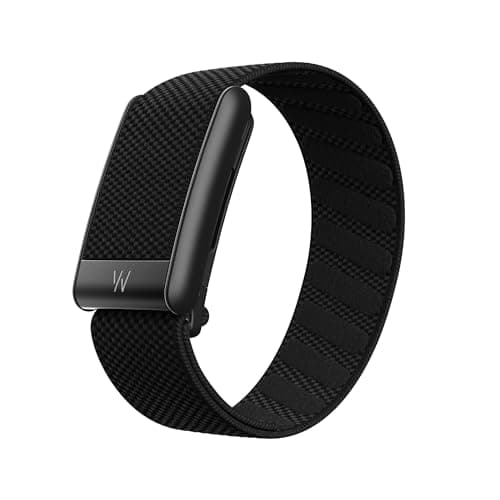
Top pick
Recovery-led training, if you accept the modelWHOOP Peak (12-month membership)
Not a product you buy, a subscription you enter. Priced honestly on Amazon as what it is: twelve months.
Price as of October 22, 2026. Prices move; Amazon's is the one that counts.
#ad · we may earn a commission from this link to WHOOP Peak (12-month membership)
The short answer
WHOOP is a membership, not a device you own — the Amazon listing is twelve months, and the true three-year cost is $717. What you get for it is measured: 8.17% HRV error against an ECG reference across 289 nights, and the best optical heart-rate agreement of any placement tested when worn on the upper arm.
Ranked
Quick picks
| # | Device | Best for | Evidence | Score | Price |
|---|---|---|---|---|---|
| 01 | WHOOP Peak (12-month membership) Not a product you buy, a subscription you enter. Priced honestly on Amazon as what it is: twelve months. | Recovery-led training, if you accept the model | Peer-reviewed validation | 7.3/10 | $239.00Amazon |
#ad· Live prices from the Amazon Product API, as of October 22, 2026. Where we have no verified live price we show none. Scores come from the published rubric at How we rank — the Evidence column shows what each ranking actually rests on, including where the answer is nothing.
The commercial model is the review
Most reviews of this device bury the pricing structure. It is the single most important fact about it, so we will lead with it: you do not buy a WHOOP. You subscribe, the hardware comes with the subscription, and if you stop paying the band stops being useful.
To WHOOP's credit the Amazon listing is honest about this — it is sold as a 12-month membership rather than as hardware with a hidden recurring charge. That is more transparent than the category norm, and it is why the price you see here at least covers a defined period.
The three-year figure above is the one to make your decision on. It is computed from the live listing price plus twenty-four further months, and it is materially larger than any watch or ring on this site.
What has actually been measured
Two peer-reviewed studies now include a WHOOP band, which puts it in a small minority of devices we cover.
Placement, and a genuinely important finding. The 2025 Sensors study ran three Whoop 4.0 units simultaneously at wrist, forearm and upper arm on the same 28 participants against a Polar H10 reference. The upper-arm unit produced the lowest error at warm-up, the best agreement of any optical device during the burpee protocol, and a treadmill concordance of 0.992. The wrist unit, same hardware, showed limits of agreement of roughly ±10-19 bpm at warm-up.
That is WHOOP's real structural advantage and it is rarely stated correctly: the band is screenless, so it can be worn on the upper arm, which is where the physics works. Buying one and wearing it on your wrist discards the advantage entirely.
Nocturnal HRV. Dial et al. (2025) measured a Whoop 4.0 across 289 nights against a single-lead ECG: HRV concordance 0.94 with MAPE 8.17 ± 10.49%, and resting heart rate concordance 0.91 with MAPE 3.00%. That places it second of the five devices tested, behind both Oura rings and ahead of Garmin and Polar.
Note the standard deviation on the HRV figure — ±10.49% — which is wider than Oura's ±5.12%. On average it is good; night to night it is less consistent, and for a metric read as a trend that matters.
What the studies do not cover
- The current hardware. Both studies tested a Whoop 4.0. This listing is a later generation, and a new sensor with a new algorithm is precisely what a validation exists to test.
- Sleep staging.No WHOOP device appears in the Brigham and Women's polysomnography comparison, so there is no published head-to-head against Oura, Fitbit or Apple on sleep stages.
- Strain and recovery scores. The 2025 HRV authors noted directly that there is little transparency into what feeds these proprietary scores and that they are updated over time. The HRV input has been measured; the model on top has not.
- Everything about the app. We have not used it and will not describe it as though we had.
Who it is genuinely right for
Someone who trains hard, wants recovery-led guidance, will wear a band on the upper arm, and treats the monthly fee the way they treat a gym membership. On those terms the measured accuracy is good and the placement advantage is real.
For a straight sleep-accuracy comparison it is not the answer — the WHOOP versus Oura page works through both the evidence and the money, and Oura leads on both measured metrics where they have been compared directly.
Who should not buy it
Anyone who wants to own their tracker. A membership that stops working on cancellation is not a cheaper watch — it is a different category of purchase, and no amount of data quality changes that.
Also anyone whose honest answer is that they want a number rather than a coaching layer. A chest strap measures HRV against the standard these devices are judged by, costs a fraction of three years of membership, and is on the HRV ranking at number one for exactly that reason.
If you are still deciding rather than comparing, the version of this page written around that decision — what has been measured on a WHOOP, what has not, and three years of membership priced from the live listing — is at is WHOOP worth it.
The highest-value pairing people actually compare it with is Apple's flagship, and no published study contains both devices: Whoop vs Apple Watch Ultra.
In full
Every pick, and why
WHOOP Peak (12-month membership)
Not a product you buy, a subscription you enter. Priced honestly on Amazon as what it is: twelve months.
- Form
- Screenless band, worn on wrist or upper arm
- Commercial model
- Membership — the hardware is included, not purchased
- Term
- 12 months
What's good
- Can be worn on the upper arm, and Sensors (2025) found upper-arm placement beat the wrist at every intensity tested
- The Amazon listing is the membership, so the price you see is at least an honest twelve-month figure
What isn't
- Stops working when you stop paying — the three-year cost is the number that matters, and it is not the sticker
- The 2025 placement study measured a Whoop 4.0, not the current generation
Skip this if
Skip this if you want to own your tracker. A membership that bricks on cancellation is a genuinely different proposition from a watch, and no amount of data quality changes that.
What the evidence says
Peer-reviewed validationSensors (2025) tested three Whoop 4.0 units simultaneously at wrist, forearm and upper arm against a Polar H10. Upper-arm placement produced the lowest error at warm-up and the best agreement in the burpee protocol; the wrist unit showed limits of ±10-19 bpm at warm-up. That was the 4.0, not the current model.
Show how this 7.3 was calculated
| Factor | Weight | Score |
|---|---|---|
| EvidenceGenuinely measured in a peer-reviewed study, with a favorable result for upper-arm placement — but on a previous generation. | 30% | 7.5 |
| HardwareScreenless optical band whose real advantage is that it can be worn where the physics works. | 20% | 8.0 |
| Metric coverageDeep recovery, strain and sleep analytics. | 20% | 8.5 |
| EnduranceMulti-day, with a wearable battery pack for charging without removal. | 15% | 7.5 |
| Cost per capabilityThe weakest cost figure on the site once three years of membership are added up. | 15% | 4.0 |
Price as of October 22, 2026. Prices move; Amazon's is the one that counts.
#ad · we may earn a commission from this link to WHOOP Peak (12-month membership)
Questions
Frequently asked
How much does WHOOP actually cost over three years?
Computed from the live listing price plus twenty-four further months of membership, the three-year figure is $717. That is the number to compare against a ring or watch you buy outright, and it is larger than any hardware price on this site.
How accurate is WHOOP's HRV?
A Whoop 4.0 measured 8.17 ± 10.49% MAPE with a concordance of 0.94 against a single-lead ECG across 289 nights — second of five devices tested, behind both Oura rings and ahead of Garmin and Polar. The wide standard deviation means night-to-night consistency was weaker than the average suggests.
Should I wear WHOOP on my wrist or my arm?
The arm, on the published evidence. When the 2025 placement study ran three identical Whoop units at wrist, forearm and upper arm simultaneously, the upper-arm unit produced the best results at every intensity while the wrist unit showed limits of agreement of about ±10-19 bpm at warm-up. Wearing it on the wrist discards the main structural advantage of a screenless band.
Does WHOOP stop working if I cancel?
The hardware comes with the membership rather than being purchased, so the arrangement ends when the membership does. That is the central difference between this and every watch or ring we cover, and it is the reason its cost sub-score is the lowest on the site.
Show your working
Sources
Every one of these was read in full before it was cited. Where we could not access a paper, we do not quote its numbers.
- [1]Peer-reviewed validation2025“Impact of Anatomical Placement on the Accuracy of Wearable Heart Rate Monitors During Rest and Various Exercise Intensities”, Sensors (Basel)
n = 28 (14 male, 14 female). Polar H10 chest strap as the reference. Compared Polar Verity Sense (forearm), Garmin Forerunner 55 (wrist) and three simultaneous Whoop 4.0 units at wrist, forearm and upper arm, across rest, cycling warm-up, burpees and a modified Bruce treadmill protocol.
- [2]Peer-reviewed validation2025Dial, Hollander, Vatne, Emerson, Edwards & Hagen, “Validation of nocturnal resting heart rate and heart rate variability in consumer wearables”, Physiological Reports 13(16):e70527
DOI 10.14814/phy2.70527. n = 13 healthy adults (7 male, 6 female, 33.2 ± 8.6 years) across 536 nights, each wearing an Oura Gen 3, Oura Gen 4, Polar Grit X Pro, Garmin fēnix 6 and Whoop 4.0 simultaneously against a Polar H10 single-lead ECG reference sampled at 1000 Hz. Authors’ stated limits: healthy adults only, no atrial-fibrillation population, proprietary and periodically-updated algorithms, and unequal night counts per device. The Garmin was dropped from the resting-heart-rate comparison because the 30-minute window it uses is not timestamped.
- [3]Peer-reviewed validation2024Robbins et al., “Accuracy of Three Commercial Wearable Devices for Sleep Tracking in Healthy Adults”, Sensors 24(20):6532
Brigham and Women’s Hospital. n = 35 healthy adults, single-night inpatient polysomnography, testing Oura Ring Gen3, Fitbit Sense 2 and Apple Watch Series 8. Authors’ stated limits: one night, lab conditions, healthy adults without insomnia, comparison only during scheduled sleep, and device failures on 6 Apple Watches and 2 Fitbits.
- [4]Manufacturer specification2026Polar — H10 heart rate sensor published specifications
Manufacturer-stated: electrical (ECG) measurement, Bluetooth LE + ANT+, internal memory for one session up to 30 hours, up to 400 h on a CR2025 coin cell, WR30.
Read next
Related
- WHOOP vs Fitbit
The cheapest way out of the subscription, and what it costs you.
- Is WHOOP worth it?
The evidence and the three-year arithmetic, set out together.
- WHOOP vs Oura
The direct comparison, evidence and three-year cost.
- WHOOP vs Garmin
Rent a coach or own a watch — with the measured HRV for both.
- WHOOP vs Apple Watch Ultra
Four studies, two devices, and not one study containing both.
- Best HRV monitors
Where WHOOP places against the ECG reference.
- How sleep tracking works
What a wearable is actually inferring when it draws you a hypnogram.