Straps, armbands and sensors
Polar H10 battery, strap and connection guide
The sensor outlives the strap by years, and almost every H10 problem people blame on the electronics is actually a dry strap, a flat coin cell or a chest measurement nobody checked.
We earn a commission when you buy through our Amazon links, at no extra cost to you. It never decides a ranking — the rubric that does is published in full, so you can check us rather than take our word for it. How this works.
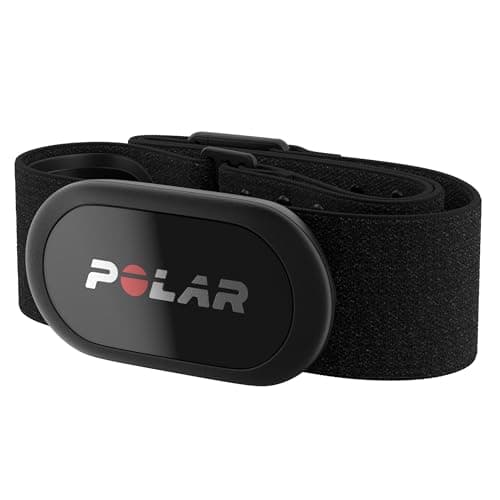
Top pick
Anyone who trains by heart ratePolar H10
The device other people's validation studies use as the reference. That is the strongest recommendation a sensor can have.
Price as of October 22, 2026. Prices move; Amazon's is the one that counts.
#ad · we may earn a commission from this link to Polar H10
The short answer
The Polar H10 runs on a single CR2025coin cell, which Polar states lasts up to 400 hours. The strap is the part that fails first: Polar's own chart gives the Pro Strap in XS-S (62-82 cm chest) and M-XXL (71-118 cm chest). If the reading drops out, check the strap, the moisture and the cell - in that order - before you blame the sensor.
Ranked
Quick picks
| # | Device | Best for | Evidence | Score | Price |
|---|---|---|---|---|---|
| 01 | Polar H10 The device other people's validation studies use as the reference. That is the strongest recommendation a sensor can have. | Anyone who trains by heart rate | Peer-reviewed validation | 8.9/10 | $104.45Amazon |
| 02 | 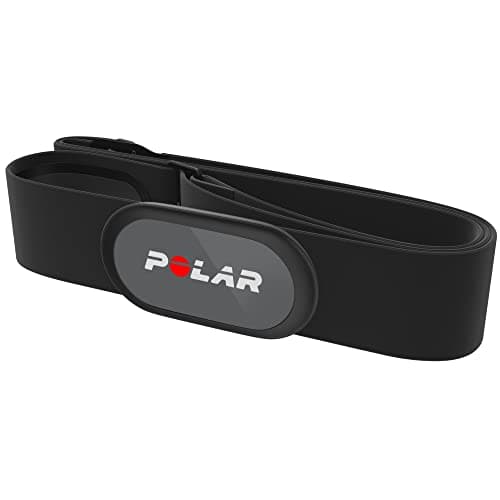 Polar H9 The H10 with the recording memory removed. If you always ride with a head unit, that is a feature you were never going to use. | Riders who always have a head unit running | Manufacturer specification | 7.3/10 | $69.90Amazon |
#ad· Live prices from the Amazon Product API, as of October 22, 2026. Where we have no verified live price we show none. Scores come from the published rubric at How we rank — the Evidence column shows what each ranking actually rests on, including where the answer is nothing.
The battery: CR2025, and why that is a feature
Polar states up to 400 hours of use from a CR2025 cell, alongside Bluetooth LE and ANT+ transmission, internal memory for one session up to 30 hours, and a WR30 water rating. Four hundred hours at an hour a day is more than a year.
A replaceable coin cell is genuinely better than a rechargeable battery on a device like this, and the reason is failure mode. A rechargeable sensor dies at the end of its charge cycle count and takes the whole product with it; a coin-cell sensor dies when the cell dies, and a new cell costs a few dollars. It is the main reason an H10 bought today can still be the reference instrument in your kit bag in 2032.
Two practical notes. The battery door is sealed by a gasket, and the gasket is what keeps the WR30 rating true - when you change the cell, seat it clean and dry and do not over-tighten. And buy the cell in a multi-pack: the sensor and the strap take the same abuse, and you will want a spare in the drawer rather than a dead strap on a race morning.
The strap: the part that actually wears out
The H10 module is electronics in a sealed plastic shell. The strap is an elastic textile with conductive electrode areas, worn against skin, soaked in sweat, and washed. It is the consumable, and it fails long before the sensor does. When people say their H10 "went bad after two years", the strap went bad after two years.
Fit is the thing to get right first, and Polar is the only brand in this category that publishes the numbers. Its own size chart gives the Pro Strap in two sizes: XS-S, a 60-68 cm strap fitting a 62-82 cm chest, and M-XXL, a 68-87 cm strap fitting a 71-118 cm chest. The older Soft Strap is listed in M-XXL only, at 65-96 cm fitting a 70-128 cm chest. Measure before you order a replacement - including before you order one as a gift, where guessing is the default.
A strap that is too loose moves against skin and breaks contact; a strap that is too tight is a strap you stop wearing. Either way the result is the same: no reading. The failure is mechanical, not electronic, and no firmware update fixes it.
When the reading drops out, check these in order
1. Is the strap wet? Electrical measurement needs a conductive path from skin to electrode. A bone-dry strap on a cold morning is the single most common cause of the spiky, implausible first five minutes people see and then blame on the sensor. Wet the electrode areas before you put it on - or use electrode gel, which is what it exists for.
2. Is the strap old or over-washed? Detergent residue and fabric softener both insulate the electrodes. Rinse the strap after use, wash it without softener, and when the dropouts become routine, replace it rather than the sensor.
3. Is the cell flat? A dying CR2025 does not fail cleanly - it drops the connection intermittently and under load, which reads exactly like a pairing problem. If the sensor connects at rest and disappears when your heart rate climbs, change the cell before you troubleshoot anything else.
4. Is something else already holding the connection? The H10 transmits Bluetooth and ANT+ simultaneously, which is a genuine advantage, but a phone app left running in the background can hold the Bluetooth channel while your watch waits for it. Close the app, or pair the watch over ANT+.
5. Only then suspect the module. In our experience of the category, this is the least likely cause and the first one people reach for.
What the H10 is, and when the H9 is the better buy
The H10 is the strap published studies use as their ground truth. It was the reference in the 2025 anatomical placement study of 28 participants and the single-lead ECG reference in Dial et al. (2025), 536 nights across five devices. That is not a measurement of its own error - a study cannot measure the error of its reference - but it is the strongest signal a sensor can carry.
The H9 shares the electrode design and the 400-hour coin cell, and differs in exactly two published ways: it has no internal memory, so it cannot record a session without a paired device, and it adds 5 kHz analog transmission on top of Bluetooth and ANT+. If you always train with a watch or head unit running and your gym machines read analog, the H9 is the better value. If you ever want heart rate from a session you did without a watch, only the H10 stores it. The full comparison is at Polar H10 vs H9.
If you have decided a chest strap is not for you, the measured alternative is an armband - chest strap vs armband has the numbers for both. And if you are choosing between brands rather than models, that is Polar vs Garmin chest strap.
In full
Every pick, and why
Polar H10
The device other people's validation studies use as the reference. That is the strongest recommendation a sensor can have.
- Sensor
- Electrical (ECG), chest strap
- Connectivity
- Bluetooth LE + ANT+
- Memory
- One session, up to 30 hours
- Battery (stated)
- Up to 400 h, CR2025 coin cell
- Water rating
- WR30
What's good
- Used as the criterion measure in published research — including the 2025 Sensors placement study on this site
- Simultaneous Bluetooth and ANT+, so it pairs to a watch and a bike computer at once
- 400 stated hours on a coin cell you replace rather than recharge
What isn't
- It is a chest strap, and a chest strap is less comfortable than a watch
- The strap wears out well before the sensor does
Skip this if
Skip this if you know yourself well enough to know you will not wear it. An unworn ECG strap measures nothing, and a wrist sensor you actually wear beats it every time.
What the evidence says
Peer-reviewed validationUsed as the reference standard in Sensors (2025), the anatomical-placement study of 28 participants. Being chosen as the criterion is an implicit validation by the researchers, though it means the study cannot measure the H10's own error.
Show how this 8.9 was calculated
| Factor | Weight | Score |
|---|---|---|
| EvidenceResearchers use it as the criterion measure. Nothing else in this category has a stronger evidentiary position. | 30% | 10.0 |
| HardwareElectrical ECG measurement rather than optical — a different and better physical principle for this job. | 20% | 9.5 |
| Metric coverageHeart rate and R-R intervals only; it does not pretend to do anything else. | 20% | 6.5 |
| Endurance400 stated hours on a replaceable coin cell. | 15% | 9.5 |
| Cost per capabilityInexpensive next to any watch, and it outlasts several of them. | 15% | 8.5 |
Price as of October 22, 2026. Prices move; Amazon's is the one that counts.
#ad · we may earn a commission from this link to Polar H10
Polar H9
The H10 with the recording memory removed. If you always ride with a head unit, that is a feature you were never going to use.
- Sensor
- Electrical (ECG), chest strap
- Connectivity
- Bluetooth LE + ANT+ 2.1 + 5 kHz analog
- Memory
- None — it cannot record on its own
- Battery (stated)
- Up to 400 h, replaceable 160 mAh coin cell
- Water rating
- WR30
What's good
- Electrical measurement — the same physical principle as the strap researchers use as their reference
- 5 kHz analog on top of Bluetooth and ANT+, which is what old gym cardio equipment actually listens for
- 400 stated hours on a coin cell you replace rather than recharge
What isn't
- No internal memory, so it cannot record a session without a paired device — this is the specification difference from the H10
- No independent validation of the H9 itself that we could find; the studies use the H10
Skip this if
Skip this if you ever want heart rate from a session you rode without your watch or head unit. The H10 stores 30 hours on its own; this stores nothing, and no firmware adds memory that is not there.
What the evidence says
Manufacturer specificationNo validation study of the H9 specifically that we could find. It shares the electrode and sensing principle of the H10 that researchers use as their criterion measure, which is a good reason to expect it to be accurate and not a measurement of it. We score the principle, not the assumption.
Show how this 7.3 was calculated
| Factor | Weight | Score |
|---|---|---|
| EvidenceCorrect sensing principle from the brand researchers pick as their reference — but no measurement of this device, and we do not let a sibling's record transfer. | 30% | 5.5 |
| HardwareElectrical ECG measurement with three radios, including the 5 kHz analog that gym equipment uses. | 20% | 8.5 |
| Metric coverageHeart rate only, and unlike the H10 it cannot record without a paired device. | 20% | 5.5 |
| Endurance400 stated hours on a replaceable coin cell. | 15% | 9.5 |
| Cost per capabilityMeaningfully cheaper than the H10 for the same measurement principle. | 15% | 9.5 |
Price as of October 22, 2026. Prices move; Amazon's is the one that counts.
#ad · we may earn a commission from this link to Polar H9
Keep it reading
The three consumables an H10 actually needs
None of these is scored against our rubric - they are not measurement devices. They are the parts that stop a working sensor from producing bad data, and each one fixes a specific documented failure.
These are not ranked and they are not scored on the rubric — none of them has a validation study and none ever will. They are here because a manufacturer's own instructions say they change what your sensor records, and each one links the page that says it. How the actual ranking works.
Panasonic CR2025 coin cells
Dropouts and lost range from a sensor battery nobody has changed.
A weak cell does not fail cleanly. Polar states that "if the battery is running low, the transmission range decreases which may cause errors in heart rate readings" — so it degrades into bad data rather than into no data, which is the harder failure to notice. The H10 manual specifies a CR2025 and names Panasonic and Maxell as the brands it has found reliable. Polar H10 manual: batteries.
CR2025 is the cell for the Polar H10 and H9. Garmin's straps and other brands differ — check your own manual before ordering.
$6.28Check price on AmazonPrice as of October 22, 2026. Prices move; Amazon's is the one that counts.
#ad · we may earn a commission from this link to Panasonic CR2025 coin cells
Replacement chest-strap belt
A strap that has stretched, or whose electrodes have washed out.
Polar says it plainly on its own troubleshooting page: the chest strap "doesn't last forever; it wears out like any other garment you regularly wear and wash". The transmitter pod outlives the belt, and the belt is the cheap half. Polar support: unusual heart rate readings.
A third-party belt listed as fitting the Polar H7, H9 and H10 pods. Check the listing against your own sensor first — stud spacing differs between brands.
$12.99Check price on AmazonPrice as of October 22, 2026. Prices move; Amazon's is the one that counts.
#ad · we may earn a commission from this link to Replacement chest-strap belt
Conductive electrode gel
The spiky, nonsense heart rate over the first ten minutes of a run.
Polar's instruction is to "moisten the electrode area of the strap thoroughly under tap water before training". Gel is the same fix that does not evaporate in the first mile — which is precisely when the dropouts happen, because the strap has not warmed up and you have not started sweating yet. Polar support: unusual heart rate readings.
The linked tube is axion's 8.5 oz electrode gel, sold for TENS and EMS pads rather than for chest straps — the listing describes it as hypoallergenic, odorless and suitable for all types of self-adhesive electrodes. Nothing in this category is sold specifically for heart-rate straps, so check the ingredients if your skin reacts to anything.
$9.99Check price on AmazonPrice as of October 22, 2026. Prices move; Amazon's is the one that counts.
#ad · we may earn a commission from this link to Conductive electrode gel
Questions
Frequently asked
What battery does the Polar H10 use?
A single CR2025 coin cell. Polar states up to 400 hours of use from one, and the cell is user-replaceable behind a gasketed door - reseat it clean and dry to keep the WR30 water rating intact.
How do I know which H10 strap size to buy?
Measure your chest and use Polar's published chart: the Pro Strap comes in XS-S for a 62-82 cm chest and M-XXL for 71-118 cm. The older Soft Strap is M-XXL only, fitting 70-128 cm. Polar is the only brand in this category that publishes these figures.
Why does my Polar H10 keep disconnecting?
Usually a dry or worn strap, or a flat coin cell that drops out under load. Wet the electrodes, wash the strap without fabric softener, replace the cell, and check that a phone app is not holding the Bluetooth channel your watch is waiting for. Suspect the sensor last.
How long does an H10 last?
The sensor module outlives the strap by years - the strap is the consumable. On Polar's stated 400 hours per CR2025, an hour a day is more than a year per cell, and replacing cells and straps is cheaper than replacing the sensor.
Show your working
Sources
Every one of these was read in full before it was cited. Where we could not access a paper, we do not quote its numbers.
- [1]Manufacturer specification2026Polar — H10 heart rate sensor published specifications
Manufacturer-stated: electrical (ECG) measurement, Bluetooth LE + ANT+, internal memory for one session up to 30 hours, up to 400 h on a CR2025 coin cell, WR30.
- [2]Manufacturer specification2026Polar — H10 strap size chart
Manufacturer-stated, read 2026-09-18 from the size chart on Polar's own H10 page. The Pro Strap ships in two sizes: XS-S, a 60-68 cm strap fitting a 62-82 cm chest, and M-XXL, a 68-87 cm strap fitting a 71-118 cm chest. The older Soft Strap is listed in M-XXL only, at 65-96 cm fitting a 70-128 cm chest. This is the specification that decides whether a chest strap fits at all, and it is published by exactly one of the brands we cover.
- [3]Manufacturer specification2026Polar — H9 heart rate sensor published specifications
Manufacturer-stated: electrical (ECG) measurement, Bluetooth LE + ANT+ 2.1 + 5 kHz analog, up to 400 hours on a replaceable 160 mAh coin cell, WR30. No internal memory — the H9 cannot record a session on its own, which is the specification difference from the H10.
- [4]Peer-reviewed validation2025“Impact of Anatomical Placement on the Accuracy of Wearable Heart Rate Monitors During Rest and Various Exercise Intensities”, Sensors (Basel)
n = 28 (14 male, 14 female). Polar H10 chest strap as the reference. Compared Polar Verity Sense (forearm), Garmin Forerunner 55 (wrist) and three simultaneous Whoop 4.0 units at wrist, forearm and upper arm, across rest, cycling warm-up, burpees and a modified Bruce treadmill protocol.
- [5]Peer-reviewed validation2025Dial, Hollander, Vatne, Emerson, Edwards & Hagen, “Validation of nocturnal resting heart rate and heart rate variability in consumer wearables”, Physiological Reports 13(16):e70527
DOI 10.14814/phy2.70527. n = 13 healthy adults (7 male, 6 female, 33.2 ± 8.6 years) across 536 nights, each wearing an Oura Gen 3, Oura Gen 4, Polar Grit X Pro, Garmin fēnix 6 and Whoop 4.0 simultaneously against a Polar H10 single-lead ECG reference sampled at 1000 Hz. Authors’ stated limits: healthy adults only, no atrial-fibrillation population, proprietary and periodically-updated algorithms, and unequal night counts per device. The Garmin was dropped from the resting-heart-rate comparison because the 30-minute window it uses is not timestamped.
Read next
Related
- Polar H10 review
The full write-up, including why studies use it as their reference.
- Polar H10 vs H9
Memory and analog transmission - the only two published differences.
- Polar vs Garmin chest strap
The brand decision, and what Garmin's straps buy instead of a research record.
- How chest strap monitors work
Why a wet electrode reads and a dry one does not.