Head to head
Polar vs Garmin chest strap
This brand question has an unusual answer: one of the two is the instrument researchers measure everything else against. That is not a test result - it is something slightly stronger, and slightly stranger.
We earn a commission when you buy through our Amazon links, at no extra cost to you. It never decides a ranking — the rubric that does is published in full, so you can check us rather than take our word for it. How this works.
Top pick
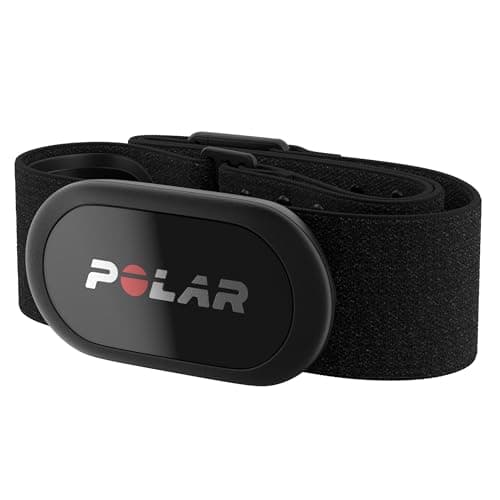
Anyone who trains by heart ratePolar H10
The device other people's validation studies use as the reference. That is the strongest recommendation a sensor can have.
Price as of October 22, 2026. Prices move; Amazon's is the one that counts.
#ad · we may earn a commission from this link to Polar H10
The short answer
Buy the Polar H10unless you specifically want running dynamics inside Garmin's platform, in which case buy the HRM 600. The H10 is the strap published studies use as their criterion measure; no Garmin strap has ever been used that way, and Garmin publishes no validation of its own.
Ranked
Quick picks
| # | Device | Best for | Evidence | Score | Price |
|---|---|---|---|---|---|
| 01 | Polar H10 The device other people's validation studies use as the reference. That is the strongest recommendation a sensor can have. | Anyone who trains by heart rate | Peer-reviewed validation | 8.9/10 | $104.45Amazon |
| 02 | 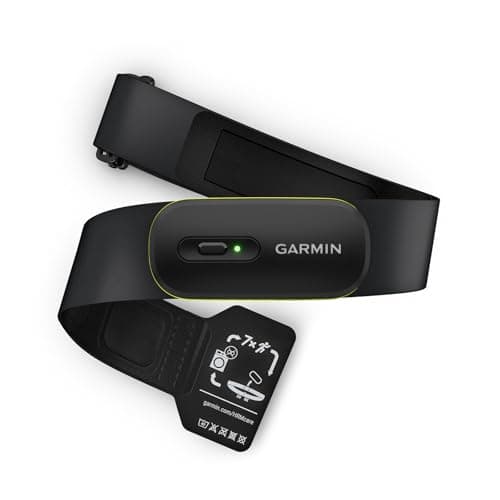 Garmin HRM 600 The strap to buy if you are already inside Garmin's ecosystem and want running dynamics with it. | Garmin owners wanting running dynamics | Manufacturer specification | 7.4/10 | $157.70Amazon |
| 03 | 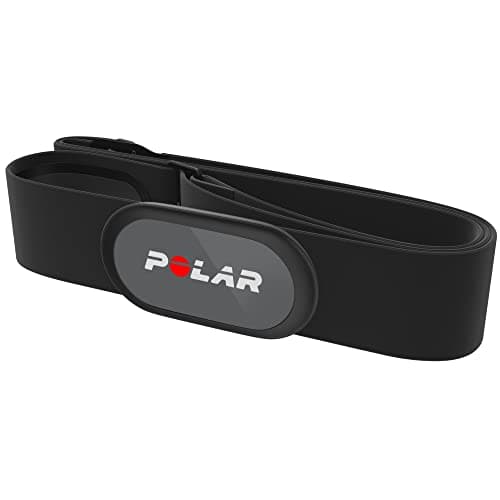 Polar H9 The H10 with the recording memory removed. If you always ride with a head unit, that is a feature you were never going to use. | Riders who always have a head unit running | Manufacturer specification | 7.3/10 | $69.90Amazon |
| 04 | 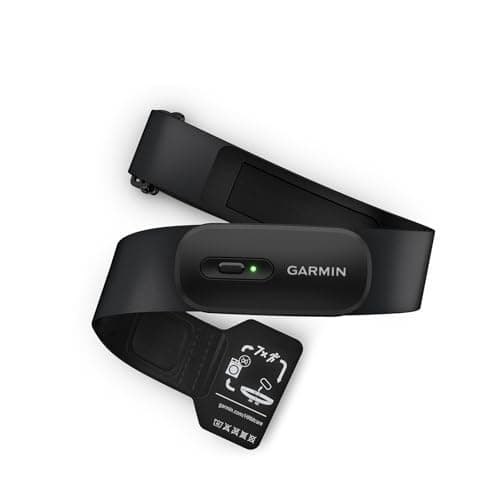 Garmin HRM 200 Garmin's plain electrical strap. Does the one job, costs the least of the three name-brand options. | Cheapest name-brand ECG strap | Manufacturer specification | 7.2/10 | $74.95Amazon |
#ad· Live prices from the Amazon Product API, as of October 22, 2026. Where we have no verified live price we show none. Scores come from the published rubric at How we rank — the Evidence column shows what each ranking actually rests on, including where the answer is nothing.
Why this comparison is not a coin toss
Both brands sell electrical chest straps. Both measure the heart's electrical signal directly rather than inferring it from light bounced off skin, which is the reason a strap beats a wrist sensor in the first place. On physical principle there is nothing to choose between them.
The separator is in the research literature, and it is a peculiar kind of evidence. When scientists need a ground truth for heart rate in a wearables study, they have to pick an instrument and trust it. In the 2025 anatomical placement study of 28 participants, the reference was a Polar H10. In Dial et al. (2025), 536 nights across five devices, the reference was a Polar H10 single-lead ECG sampled at 1000 Hz. We have not found a published study that used a Garmin strap as its criterion measure.
Be precise about what that does and does not mean. It is nota measurement of the H10's error - by construction, a study cannot measure the error of its own reference. It is a revealed preference by the people whose results depend on choosing correctly, which is a different and in some ways better signal than a manufacturer's claim. It also means that if the H10 carries a systematic bias, every number on this site inherits it and we would have no way of knowing. We say that out loud on how we rank.
What Garmin's straps actually buy you
Garmin does not lose this comparison on measurement - it does not compete on measurement. It competes on what the strap does after it has measured, and for a Garmin watch owner some of that is genuinely valuable.
The HRM 600 adds running dynamics - cadence, ground contact time, vertical oscillation and the rest - which a watch alone cannot compute, and it stores data when you go out of watch range and syncs it later. Garmin's own lineup page positions the HRM 200 as the plain strap: heart rate and HRV data, a machine-washable band, the lowest name-brand price. Neither carries a validation study we could find, and the HRM 600 costs $53more than the H10 at today's prices without a published accuracy advantage to show for it.
The honest framing: you are paying Garmin for metrics and integration, and Polar for the measurement record. If your watch is a Garmin and you want running dynamics, that is a real reason and the HRM 600 is the right strap. If you want accurate heart rate, you are paying a premium for metrics most runners look at twice and never again.
What Polar's straps buy you besides the research record
Three things, all from Polar's own published specification. Simultaneous Bluetooth LE and ANT+, so one strap pairs to a watch and a bike computer at the same time. Internal memory for one session up to 30 hours, so the H10 can record a ride you did without a watch - the H9 cannot, and that is the entire specification difference between them. And up to 400 stated hours on a CR2025 coin cell you replace rather than recharge, which is the most underrated feature on a training sensor.
Polar is also the only one of the two brands that publishes a strap size chart. Its own figures give the Pro Strap in XS-S (a 60-68 cm strap fitting a 62-82 cm chest) and M-XXL (68-87 cm strap, 71-118 cm chest). That is the specification which decides whether a chest strap fits at all, and a strap that does not fit does not read. Our ownership guide for that is the H10 battery and strap guide.
The H9 is worth a line of its own because it has one specification neither Garmin strap publishes: 5 kHz analog transmission alongside Bluetooth and ANT+. That is the protocol old gym cardio equipment listens for. If your heart rate needs to appear on a treadmill console rather than only in an app, the H9 is the strap that does it - see best heart rate monitors for treadmill.
Compatibility is not the tiebreaker people expect
The most common reason people buy brand-matched is a fear that cross-brand pairing will not work. It does. Both brands transmit on ANT+ and Bluetooth, both standards are open, and a Polar H10 pairs to a Garmin watch exactly as a Garmin strap pairs to a Polar watch.
What does notcross over is the proprietary layer. Garmin's running dynamics surface fully only inside Garmin Connect; Polar's training-load model lives in Polar Flow. So the real compatibility question is not "will it pair" but "which platform do you want the extra metrics to land in". The full chart is in our chest strap compatibility guide, and the Garmin-specific field is at best heart rate monitors for Garmin.
The case for neither
A chest strap you do not wear measures nothing, and that is the failure mode we see most. If you know you will not strap something to your ribs, the measured alternative is an optical armband: in the 2025 placement study a Polar Verity Sense on the forearm recorded a bias under 0.1 bpm against the H10 on a graded treadmill protocol, with 0.997 concordance. That is strap-class data without the strap, and the comparison is at chest strap vs armband.
In full
Every pick, and why
Polar H10
The device other people's validation studies use as the reference. That is the strongest recommendation a sensor can have.
- Sensor
- Electrical (ECG), chest strap
- Connectivity
- Bluetooth LE + ANT+
- Memory
- One session, up to 30 hours
- Battery (stated)
- Up to 400 h, CR2025 coin cell
- Water rating
- WR30
What's good
- Used as the criterion measure in published research — including the 2025 Sensors placement study on this site
- Simultaneous Bluetooth and ANT+, so it pairs to a watch and a bike computer at once
- 400 stated hours on a coin cell you replace rather than recharge
What isn't
- It is a chest strap, and a chest strap is less comfortable than a watch
- The strap wears out well before the sensor does
Skip this if
Skip this if you know yourself well enough to know you will not wear it. An unworn ECG strap measures nothing, and a wrist sensor you actually wear beats it every time.
What the evidence says
Peer-reviewed validationUsed as the reference standard in Sensors (2025), the anatomical-placement study of 28 participants. Being chosen as the criterion is an implicit validation by the researchers, though it means the study cannot measure the H10's own error.
Show how this 8.9 was calculated
| Factor | Weight | Score |
|---|---|---|
| EvidenceResearchers use it as the criterion measure. Nothing else in this category has a stronger evidentiary position. | 30% | 10.0 |
| HardwareElectrical ECG measurement rather than optical — a different and better physical principle for this job. | 20% | 9.5 |
| Metric coverageHeart rate and R-R intervals only; it does not pretend to do anything else. | 20% | 6.5 |
| Endurance400 stated hours on a replaceable coin cell. | 15% | 9.5 |
| Cost per capabilityInexpensive next to any watch, and it outlasts several of them. | 15% | 8.5 |
Price as of October 22, 2026. Prices move; Amazon's is the one that counts.
#ad · we may earn a commission from this link to Polar H10
Garmin HRM 600
The strap to buy if you are already inside Garmin's ecosystem and want running dynamics with it.
- Sensor
- Electrical (ECG), chest strap
- Extras
- Running dynamics, HRV data, on-board storage
What's good
- Adds running dynamics that a watch alone cannot compute
- Stores data when out of watch range and syncs later
What isn't
- Costs meaningfully more than the Polar H10 without a published validation advantage
- Its extra metrics only fully surface inside Garmin's own platform
Skip this if
Skip this if you just want accurate heart rate. You would be paying a premium over the H10 for running-dynamics metrics most runners look at twice and never again.
What the evidence says
Manufacturer specificationGarmin publishes specifications but no validation study we could find. It is an electrical chest strap, which is the right physical principle — but 'right principle' is not the same as 'measured accuracy'.
Show how this 7.4 was calculated
| Factor | Weight | Score |
|---|---|---|
| EvidenceCorrect sensor principle, detailed published specs, no independent validation we could find. | 30% | 6.0 |
| HardwareElectrical ECG measurement with on-board storage. | 20% | 9.0 |
| Metric coverageHeart rate, HRV and the full running-dynamics set. | 20% | 8.5 |
| EnduranceGood stated endurance; rechargeable. | 15% | 8.0 |
| Cost per capabilityA clear premium over the H10 without a matching evidence advantage. | 15% | 6.0 |
$169.997% off
Price as of October 22, 2026. Prices move; Amazon's is the one that counts.
#ad · we may earn a commission from this link to Garmin HRM 600
Polar H9
The H10 with the recording memory removed. If you always ride with a head unit, that is a feature you were never going to use.
- Sensor
- Electrical (ECG), chest strap
- Connectivity
- Bluetooth LE + ANT+ 2.1 + 5 kHz analog
- Memory
- None — it cannot record on its own
- Battery (stated)
- Up to 400 h, replaceable 160 mAh coin cell
- Water rating
- WR30
What's good
- Electrical measurement — the same physical principle as the strap researchers use as their reference
- 5 kHz analog on top of Bluetooth and ANT+, which is what old gym cardio equipment actually listens for
- 400 stated hours on a coin cell you replace rather than recharge
What isn't
- No internal memory, so it cannot record a session without a paired device — this is the specification difference from the H10
- No independent validation of the H9 itself that we could find; the studies use the H10
Skip this if
Skip this if you ever want heart rate from a session you rode without your watch or head unit. The H10 stores 30 hours on its own; this stores nothing, and no firmware adds memory that is not there.
What the evidence says
Manufacturer specificationNo validation study of the H9 specifically that we could find. It shares the electrode and sensing principle of the H10 that researchers use as their criterion measure, which is a good reason to expect it to be accurate and not a measurement of it. We score the principle, not the assumption.
Show how this 7.3 was calculated
| Factor | Weight | Score |
|---|---|---|
| EvidenceCorrect sensing principle from the brand researchers pick as their reference — but no measurement of this device, and we do not let a sibling's record transfer. | 30% | 5.5 |
| HardwareElectrical ECG measurement with three radios, including the 5 kHz analog that gym equipment uses. | 20% | 8.5 |
| Metric coverageHeart rate only, and unlike the H10 it cannot record without a paired device. | 20% | 5.5 |
| Endurance400 stated hours on a replaceable coin cell. | 15% | 9.5 |
| Cost per capabilityMeaningfully cheaper than the H10 for the same measurement principle. | 15% | 9.5 |
Price as of October 22, 2026. Prices move; Amazon's is the one that counts.
#ad · we may earn a commission from this link to Polar H9
Garmin HRM 200
Garmin's plain electrical strap. Does the one job, costs the least of the three name-brand options.
- Sensor
- Electrical (ECG), chest strap
- Extras
- Heart rate and HRV data, machine-washable strap
What's good
- Electrical measurement at the lowest name-brand price
- Machine-washable strap
What isn't
- No running dynamics
- No published validation we could find
Skip this if
Skip this if you own a Polar watch or bike computer. The H10 pairs more predictably across platforms and has the stronger evidentiary record.
What the evidence says
Manufacturer specificationPublished specifications only; no independent validation we could find.
Show how this 7.2 was calculated
| Factor | Weight | Score |
|---|---|---|
| EvidenceRight sensor principle, no measured validation we could find. | 30% | 5.5 |
| HardwareElectrical ECG chest strap. | 20% | 8.5 |
| Metric coverageHeart rate and HRV; nothing further. | 20% | 6.0 |
| EnduranceCoin-cell endurance in the usual chest-strap range. | 15% | 8.5 |
| Cost per capabilityThe cheapest electrical strap from a major brand. | 15% | 9.0 |
$79.996% off
Price as of October 22, 2026. Prices move; Amazon's is the one that counts.
#ad · we may earn a commission from this link to Garmin HRM 200
The decision, in one list
- Default: Polar H10.It is the instrument the research uses, it pairs to two devices at once, it records on its own, and it is cheaper than Garmin's equivalent.
- Garmin HRM 600 if you own a Garmin watch and specifically want running dynamics and out-of-range storage. You are buying metrics, not accuracy.
- Polar H9if you train on gym equipment that reads 5 kHz analog, or if you always have a watch running and will never use the H10's memory.
- Garmin HRM 200 if you want the cheapest name-brand electrical strap and the machine-washable band matters to you.
- Check the chest measurement before you order either brand. Polar publishes the chart; Garmin does not, in any form we could read.
How this ranking was built
Every score on this page comes from one published rubric, applied identically to every device on the site, with the weights written down and the inputs shown. We have not worn any of these devices and we never say we have. Read the method and check us.
Questions
Frequently asked
Is the Polar H10 more accurate than a Garmin chest strap?
No study has measured the two against each other, so we will not claim a figure. What is true is that published studies choose the H10 as their reference instrument and have not chosen a Garmin strap that way, and that Garmin publishes no validation of its straps. Both use electrical measurement, which is the right physical principle.
Will a Polar H10 work with a Garmin watch?
Yes. The H10 transmits Bluetooth LE and ANT+ simultaneously, and Garmin watches pair ANT+ and Bluetooth heart-rate sensors. The reverse also works. What does not cross over is the proprietary analytics layer on either side.
What does the HRM 600 do that the H10 does not?
Running dynamics - the stride metrics a watch cannot compute on its own - and on-board storage that syncs when you come back into range. Both surface fully only inside Garmin's platform. Neither is a measurement improvement.
H10 or H9?
The difference is memory and transmission. The H10 records a session up to 30 hours on its own; the H9 has no memory and cannot. The H9 adds 5 kHz analog for gym equipment. Full comparison at Polar H10 vs H9.
Show your working
Sources
Every one of these was read in full before it was cited. Where we could not access a paper, we do not quote its numbers.
- [1]Peer-reviewed validation2025“Impact of Anatomical Placement on the Accuracy of Wearable Heart Rate Monitors During Rest and Various Exercise Intensities”, Sensors (Basel)
n = 28 (14 male, 14 female). Polar H10 chest strap as the reference. Compared Polar Verity Sense (forearm), Garmin Forerunner 55 (wrist) and three simultaneous Whoop 4.0 units at wrist, forearm and upper arm, across rest, cycling warm-up, burpees and a modified Bruce treadmill protocol.
- [2]Peer-reviewed validation2025Dial, Hollander, Vatne, Emerson, Edwards & Hagen, “Validation of nocturnal resting heart rate and heart rate variability in consumer wearables”, Physiological Reports 13(16):e70527
DOI 10.14814/phy2.70527. n = 13 healthy adults (7 male, 6 female, 33.2 ± 8.6 years) across 536 nights, each wearing an Oura Gen 3, Oura Gen 4, Polar Grit X Pro, Garmin fēnix 6 and Whoop 4.0 simultaneously against a Polar H10 single-lead ECG reference sampled at 1000 Hz. Authors’ stated limits: healthy adults only, no atrial-fibrillation population, proprietary and periodically-updated algorithms, and unequal night counts per device. The Garmin was dropped from the resting-heart-rate comparison because the 30-minute window it uses is not timestamped.
- [3]Manufacturer specification2026Polar — H10 heart rate sensor published specifications
Manufacturer-stated: electrical (ECG) measurement, Bluetooth LE + ANT+, internal memory for one session up to 30 hours, up to 400 h on a CR2025 coin cell, WR30.
- [4]Manufacturer specification2026Polar — H10 strap size chart
Manufacturer-stated, read 2026-09-18 from the size chart on Polar's own H10 page. The Pro Strap ships in two sizes: XS-S, a 60-68 cm strap fitting a 62-82 cm chest, and M-XXL, a 68-87 cm strap fitting a 71-118 cm chest. The older Soft Strap is listed in M-XXL only, at 65-96 cm fitting a 70-128 cm chest. This is the specification that decides whether a chest strap fits at all, and it is published by exactly one of the brands we cover.
- [5]Manufacturer specification2026Polar — H9 heart rate sensor published specifications
Manufacturer-stated: electrical (ECG) measurement, Bluetooth LE + ANT+ 2.1 + 5 kHz analog, up to 400 hours on a replaceable 160 mAh coin cell, WR30. No internal memory — the H9 cannot record a session on its own, which is the specification difference from the H10.
- [6]Manufacturer specification2026Garmin — HRM 600 owner’s manual, specifications
Manufacturer-stated, read 2026-08-18: rechargeable lithium-ion battery rated up to 2 months at 1 hour per day, 5 ATM water rating, operating range 0 to 40 °C, charging range 15 to 42 °C, 2.4 GHz radio at 9.9 dBm maximum. Garmin describes the strap as providing real-time heart rate and HRV data, running dynamics and stand-alone activity recording.
- [7]Manufacturer claim only2025Garmin — “Which Garmin heart rate monitor is right for you?”
Garmin’s own buying guide, dated 9 September 2025 and read 2026-08-26. It presents three straps — HRM 200, HRM-Fit and HRM 600 — and attributes step speed loss, stride length, vertical oscillation and ground contact time balance to the HRM 600. The HRM-Pro Plus does not appear in it. Tiered as a manufacturer claim rather than a specification: it is marketing copy, and we use it only for what Garmin says its own current line-up is.
- [8]Manufacturer specification2026Polar — Verity Sense published specifications
Manufacturer-stated: optical heart rate worn on the forearm or upper arm, dual Bluetooth plus ANT+, on-board recording, swim mode, WR50.
Read next
Related
- Most accurate heart rate monitors
The full ranked field, including the armband that matched a strap to 0.1 bpm.
- Polar H10 vs H9
The within-brand decision: memory and analog transmission.
- Chest strap compatibility guide
Which strap pairs with which watch, platform by platform.
- Polar H10 battery and strap guide
Coin cells, strap sizing, and the connection failures that are really strap failures.