GPS and multisport
Do you need a running watch?
Your phone records a route, pushes it to Strava and costs nothing extra. Three things change when the device moves to your wrist - and only one of them is accuracy.
We earn a commission when you buy through our Amazon links, at no extra cost to you. It never decides a ranking — the rubric that does is published in full, so you can check us rather than take our word for it. How this works.
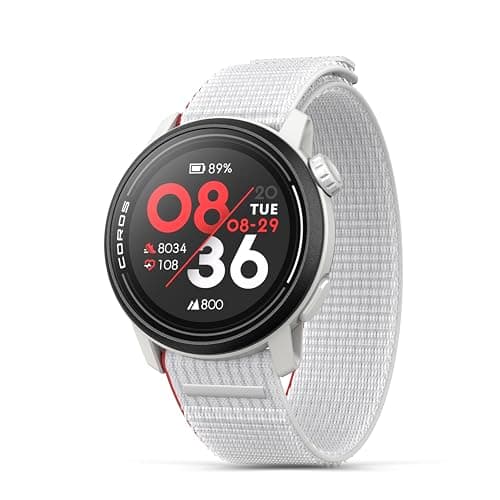
Top pick
Long training weeks under $200COROS PACE 3
The only budget watch on this site that anybody has actually measured. The measurement was not flattering, and we would still rather have it than nothing.
Price as of October 10, 2026. Prices move; Amazon's is the one that counts.
#ad · we may earn a commission from this link to COROS PACE 3
The short answer
If you run with your phone and only look at the data afterwards, you do not need a watch. You need one when you want pace or heart rate during the run, when the run is longer than your phone battery, or when carrying a phone is the thing stopping you going out. Accuracy alone is a weak reason.
Ranked
Quick picks
| # | Device | Best for | Evidence | Score | Price |
|---|---|---|---|---|---|
| 01 | COROS PACE 3 The only budget watch on this site that anybody has actually measured. The measurement was not flattering, and we would still rather have it than nothing. | Long training weeks under $200 | Independent measured test | 7.4/10 | $199.00Amazon |
| 02 | 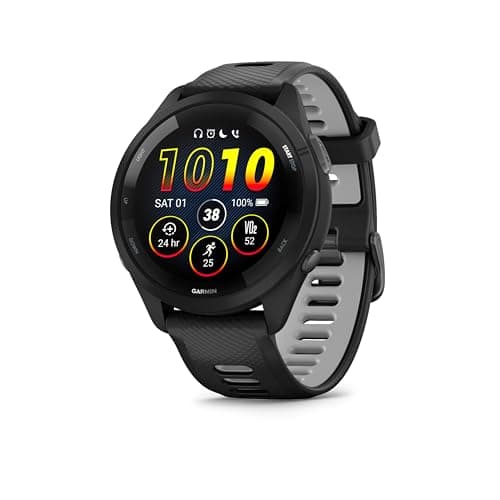 Garmin Forerunner 265 One of the very few watches on this site whose training estimates have actually been measured against a laboratory — and the measurement was not kind. | Runners who want a measured device, flaws included | Peer-reviewed validation | 7.2/10 | $439.00Amazon |
| 03 | 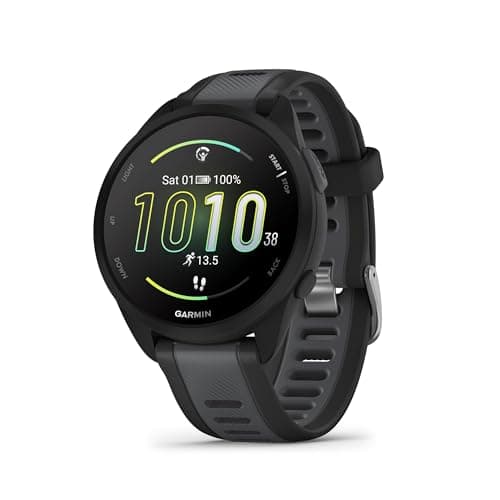 Garmin Forerunner 165 The cheapest way into a genuinely good AMOLED Garmin, provided you accept single-band positioning. | First real running watch | Manufacturer specification | 6.4/10 | $199.99Amazon |
#ad· Live prices from the Amazon Product API, as of October 10, 2026. Where we have no verified live price we show none. Scores come from the published rubric at How we rank — the Evidence column shows what each ranking actually rests on, including where the answer is nothing.
Start with what a phone already does
A modern phone has a GNSS receiver, an accelerometer and an app ecosystem. It will record a route, calculate pace and distance, and sync to Strava without you buying anything. For a large number of runners that is genuinely the whole job, and the honest answer to this question is no.
We should say plainly what we cannot tell you: there is no study in our source library that measured phone GPS distance accuracy against a watch under the same conditions. Anyone telling you a watch is X% more accurate than a phone is making it up. What exists is a 2020 validation of eight sport watches against a trundle wheel accurate to one centimeter, which found 3.2% to 6.1% distance error overall and 0.9% to 4.1% on a track, with only Polar's receivers under 5%. Every watch in that study was single-frequency, so it does not describe current hardware either. The device-by-device record is at GPS accuracy by device.
The three things that actually change on your wrist
1. The data is available during the run. This is the real difference, and it is not about accuracy at all. A watch shows current pace, lap pace and heart rate at a glance, which is what makes structured training possible: intervals at a target pace, a tempo run held in a heart-rate band, a long run kept deliberately slow. You cannot run a workout off a phone in your pocket.
2. It lasts longer than a phone. Manufacturer-stated figures on the three watches here run from 17 to 38 hours of GPS recording. A phone running a GPS app with the screen waking is working hard, and a long trail day is where that gap stops being theoretical.
3. It measures heart rate — badly.A watch adds a wrist optical sensor, and this is the part most buyers assume is an upgrade. It is the worst-performing sensor position in every published comparison we have found. In a 2025 peer-reviewed placement study, a wrist-worn watch recorded a bias of approximately 33 bpm during explosive work, the largest error in the paper, while a forearm sensor held a bias under 0.1 bpm on a graded treadmill protocol. Pooled across 249 validation studies, wearable heart rate sits near ±3% — but that figure flatters the wrist, because it includes straps and armbands.
The cheapest honest setup
Here is the recommendation most sites will not make, because it sells less: if you already carry a phone and your reason for buying is better data rather than convenience, a chest strap paired to your phone beats a cheap watch on measurement quality for less money. The strap measures the heart's electrical signal directly — it is the instrument research uses as its reference — and your phone is already doing the positioning. The ranked field is in most accurate heart rate monitors, and the budget end is in best budget heart rate monitors.
What that setup will not do is show you pace on your wrist mid-interval, survive a 30-hour ultra, or come swimming with you. If any of those matter, buy the watch.
If you are buying a watch, buy the right rung
You do not need the flagship, and the three watches on this page are deliberately the three rungs rather than the three best. All of them record pace, distance, heart rate and the training metrics that follow from those.
The COROS PACE 3 is the endurance-per-dollar entry: COROS states 38 hours of full GPS and 15 days of regular use in a 29-30 g watch with a dual-frequency GPS option. The caveat is published and real — the only independent test of PACE 3 wrist heart rate found it diverging during and after rapid intensity changes, which is exactly when interval training needs it.
The Garmin Forerunner 265 is the step up that buys the thing a cheap watch cannot fix: an all-systems multi-band receiver, published at up to 14 hours. It is also the only watch here with a peer-reviewed measurement behind any of its derived numbers — in a 2025 study of 100 runners its threshold test returned a usable result 65.2% of the time, the best completion rate of the three watches tested, using a chest strap rather than the wrist sensor.
The Garmin Forerunner 165is the cheapest AMOLED route into Garmin's platform: 11 stated smartwatch days, 19 hours GPS-Only, 17 hours All Systems. Garmin publishes no multi-band row for it, because it has no multi-band mode — the full comparison is at Forerunner 165 vs 265.
Four reasons not to buy one
- You run to get away from screens. A device that buzzes at every kilometer is a worse run for some people, and no amount of data fixes that.
- You only look at the summary.If you never check pace mid-run, the watch's main advantage is one you are not using.
- Your complaint is heart rate. A new watch will not fix it — the wrist is the problem, not the brand. The measured fix is in better heart rate accuracy.
- You want it for sleep and recovery. Different purchase entirely; the published evidence there favors a different form factor, which we work through in smart ring vs watch for sleep tracking.
If the answer is yes and the budget is the constraint, the ranked list is best running watches on a budget; if it is yes and you are choosing for the long term, start at best running watches.
In full
Every pick, and why
COROS PACE 3
The only budget watch on this site that anybody has actually measured. The measurement was not flattering, and we would still rather have it than nothing.
- Display
- 1.2" transflective touchscreen, mineral glass
- Size
- 42 × 42 × 11.7 mm, 29-30 g with the nylon band
- Satellite
- GPS/QZSS, GLONASS, BeiDou, with a dual-frequency GPS option
- Battery (stated)
- 15 days regular use / 38 h full GPS
- Water rating
- 5 ATM
What's good
- 38 manufacturer-stated GPS hours at the bottom of the market — more than watches costing three times as much
- Transflective screen gets more readable in bright sun rather than less
- Dual-frequency GPS is available at a price where it usually is not
What isn't
- It is the device in the one independent heart-rate test we found, and it lost that test
- The transflective display looks flat indoors next to an AMOLED
Skip this if
Skip this if wrist heart rate during intervals is the reason you are shopping. This is the watch that was measured diverging during exactly that, and a cheaper watch does not become more accurate because you wanted it to.
What the evidence says
Independent measured testThe5krunner's measured 10-mile comparison tested THIS watch — not a sibling, not a predecessor — against a Garmin HRM-Pro Plus and a Polar Verity Sense, and found its wrist heart rate diverged during and after rapid intensity change. The author cautions the dataset was limited. It is the only current budget watch on this site with any independent measurement at all, which is why it scores above devices with nothing.
Show how this 7.4 was calculated
| Factor | Weight | Score |
|---|---|---|
| EvidenceAn actual independent measured test of this exact watch exists — and it was unfavorable, on a limited dataset. Having been measured is worth something; having been measured badly caps it. | 30% | 5.0 |
| HardwareDual-frequency GPS option and a transflective display, per the COROS spec page. | 20% | 7.5 |
| Metric coverageFull COROS training platform; no maps and a narrower third-party ecosystem than Garmin. | 20% | 7.5 |
| Endurance38 stated hours of full GPS and 15 days of regular use, at this price. | 15% | 9.5 |
| Cost per capabilityOne of the two strongest dollars-per-GPS-hour figures on the site. | 15% | 9.5 |
Price as of October 10, 2026. Prices move; Amazon's is the one that counts.
#ad · we may earn a commission from this link to COROS PACE 3
Garmin Forerunner 265
One of the very few watches on this site whose training estimates have actually been measured against a laboratory — and the measurement was not kind.
- Case
- 46mm AMOLED (the 265S is 42mm)
- Satellite
- All + Multi-Band GPS
- Battery (stated)
- 13 days smartwatch / 20 h GPS-only / 14 h all + multi-band
- Storage
- Up to 8 GB media, 5 ATM
What's good
- Multi-band positioning and an AMOLED screen in a mid-range Forerunner, in two case sizes
- It has actually been tested: in a 2025 study of 100 recreational runners, 23 of them wore a Forerunner 265 against fingertip blood lactate — more than can be said for most watches sold today
- 8 GB of on-watch music storage, so the phone can stay at home
What isn't
- In that study its threshold PACE estimate overshot the laboratory value by 25.78% on average, and it overestimated rather than erring low
- Its threshold test also failed to return a usable result 34.8% of the time
Skip this if
Skip this if you plan to set training zones from the watch's own threshold test. The one published measurement of that feature says it overestimates by roughly a quarter, and no firmware note undoes a published result.
What the evidence says
Peer-reviewed validationLu et al., Frontiers in Physiology 16:1621996 (2025), tested 100 recreational runners against fingertip blood lactate; 23 of them wore a Forerunner 265 or 265s. Its threshold pace estimate carried a mean error of 25.78% and overestimated; its threshold heart rate was much closer, inside the 5.95-7.15% band shared by the three watches tested; and its test produced a usable result 65.2% of the time. The authors note the Garmin protocol required an ECG chest strap while the other two devices used wrist sensing. That is a peer-reviewed measurement of this exact model — unusual in this category, and unflattering.
Show how this 7.2 was calculated
| Factor | Weight | Score |
|---|---|---|
| EvidenceA peer-reviewed measurement of this specific watch exists, which almost nothing else in the range can claim. It went badly, so this cannot score higher than mid. | 30% | 6.0 |
| HardwareAll + Multi-Band GPS and an AMOLED display in a mid-range case. | 20% | 8.5 |
| Metric coverageFull Garmin training platform and music storage; no maps. | 20% | 8.5 |
| EnduranceGarmin states 20 hours GPS-only, 14 hours all + multi-band, 13 days smartwatch. | 15% | 6.5 |
| Cost per capabilityMid-range sticker; a multi-band receiver at this price is the value here. | 15% | 7.0 |
Price as of October 10, 2026. Prices move; Amazon's is the one that counts.
#ad · we may earn a commission from this link to Garmin Forerunner 265
Garmin Forerunner 165
The cheapest way into a genuinely good AMOLED Garmin, provided you accept single-band positioning.
- Display
- AMOLED
- Satellite
- Single-band GNSS
- Extras
- Training metrics, sleep tracking, music on the Music edition
What's good
- AMOLED and Garmin's training platform at the bottom of the range
- Light, simple, and hard to get wrong as a first watch
What isn't
- Single-band positioning, which is the specification that actually degrades in cities and under tree cover
- No multi-band means it is the wrong upgrade if GPS drift is your complaint
Skip this if
Skip this if you are here because your GPS track wanders between buildings. Single-band is the hardware that causes that, and this watch has it.
What the evidence says
Manufacturer specificationPublished specifications only; no independent validation of this model that we could find.
Show how this 6.4 was calculated
| Factor | Weight | Score |
|---|---|---|
| EvidencePublished specs, no independent measured validation. | 30% | 5.0 |
| HardwareSingle-band GNSS — a genuine step down from the multi-band models above it. | 20% | 6.0 |
| Metric coverageFull Garmin training platform; fewer advanced running-dynamics metrics. | 20% | 7.0 |
| EnduranceSolid for the class, per Garmin's stated figures. | 15% | 7.0 |
| Cost per capabilityLowest entry price to the Garmin ecosystem with an AMOLED screen. | 15% | 8.5 |
$249.9920% off
Price as of October 10, 2026. Prices move; Amazon's is the one that counts.
#ad · we may earn a commission from this link to Garmin Forerunner 165
The decision in three questions
- Do you run workouts with targets?Intervals, tempo efforts or zone-controlled easy runs need the numbers in front of you. That is the watch's one irreplaceable job.
- How long is your longest day? Under two hours and a phone copes. Beyond that, stated GPS hours stop being a specification and start being the difference between a recorded run and a dead battery.
- Is heart rate the reason? Then buy the sensor, not the watch. Every wrist optical sensor on this site is unvalidated in its current generation, and the position itself is the weakest one measured.
Questions
Frequently asked
Is a running watch more accurate than a phone?
No study in our source library measured a phone against a watch under the same conditions, so we cannot give you a figure — and nor can anyone else. What is published is that eight sport watches showed 3.2-6.1% distance error against a trundle wheel in 2020, on hardware a generation behind what is sold now.
Do I need a running watch for Strava?
No. Strava records from a phone, and a watch is a convenience rather than a requirement. What a watch adds is live pace and heart rate during the run, plus a battery that outlasts a phone on long days.
What is the cheapest setup with good data?
A chest strap paired to the phone you already own. The strap measures the heart's electrical signal directly and is the reference instrument in published studies, and the phone handles positioning. It costs less than an entry-level watch and measures heart rate better than any of them.
Will a running watch make me faster?
Only by letting you execute workouts you could not otherwise pace. The watch measures; it does not train you, and every number it derives — training status, VO2 max, recovery — is a model output rather than a measurement.
Show your working
Sources
Every one of these was read in full before it was cited. Where we could not access a paper, we do not quote its numbers.
- [1]Peer-reviewed validation2020Gilgen-Ammann, Schweizer & Wyss, “Accuracy of Distance Recordings in Eight Positioning-Enabled Sport Watches: Instrument Validation Study”, JMIR mHealth and uHealth
DOI 10.2196/17118. Eight watches (Apple Watch Series 4, Coros Apex 46mm, Garmin Fenix 5X Plus, Garmin Forerunner 935, Polar Vantage M, Polar Vantage V, Polar V800, Suunto 9 Baro) measured against a trundle wheel accurate to 1 cm, across urban, forest and 400 m track conditions. IMPORTANT: this predates the dual-frequency receivers now standard, so it describes brand engineering history, not any watch currently sold.
- [2]Peer-reviewed validation2025“Impact of Anatomical Placement on the Accuracy of Wearable Heart Rate Monitors During Rest and Various Exercise Intensities”, Sensors (Basel)
n = 28 (14 male, 14 female). Polar H10 chest strap as the reference. Compared Polar Verity Sense (forearm), Garmin Forerunner 55 (wrist) and three simultaneous Whoop 4.0 units at wrist, forearm and upper arm, across rest, cycling warm-up, burpees and a modified Bruce treadmill protocol.
- [3]Peer-reviewed validation2024Doherty, Baldwin, Keogh, Caulfield & Argent, “Keeping Pace with Wearables: A Living Umbrella Review of Systematic Reviews Evaluating the Accuracy of Consumer Wearable Technologies in Health Measurement”, Sports Medicine
DOI 10.1007/s40279-024-02077-2. An umbrella review: 24 systematic reviews covering 249 unique primary validation studies and 430,465 participants (43% female), across 11 biometric outcomes, with roughly 34 of 310 identified consumer wearables ever validated. Reported accuracy by metric: heart rate approximately ±3% (mean bias −3.39 bpm); step count mean absolute percentage error from −9% to 12%; energy expenditure mean bias −3 kcal per minute with error ranging from −21.27% to 14.76%. Authors’ stated limits: a temporal lag between device release and published research, the intrinsic bias of a tertiary synthesis, and heterogeneity of protocols, devices, criterion measures and statistics severe enough that the authors did not pool a meta-analysis.
- [4]Manufacturer specification2026COROS — PACE 3 published specifications
Manufacturer-stated: 1.2" transflective touchscreen with mineral glass, 42 × 42 × 11.7 mm, 29-30 g with the nylon band, GPS/QZSS/GLONASS/BeiDou with a dual-frequency GPS option, 38 hours of full GPS, 15 days of regular use, 5 ATM.
- [5]Manufacturer specification2026Garmin — Forerunner 265 Series owner’s manual, battery life information and specifications
Manufacturer-stated, read 2026-08-18. Forerunner 265 (46 mm): up to 13 days smartwatch mode, 20 h GPS-only, 16 h Auto Select GPS, 14 h All + Multi-Band GPS, and 7 h GPS-only with music playback. Forerunner 265S (42 mm): 15 days, 24 h, 18 h, 15 h and 7.5 h for the same modes. The manual’s specification page states 5 ATM and up to 8 GB of media storage.
- [6]Manufacturer specification2026Garmin — Forerunner 165 Series owner’s manual, battery life information and specifications
Manufacturer-stated, read 2026-10-11 from Garmin's own owner's manual. Battery: up to 11 days in smartwatch mode with activity tracking, phone notifications and wrist heart rate; up to 19 h in activity mode with GPS Only; up to 17 h with All Systems GPS; up to 25 h with UltraTrac; up to 7 h GPS Only with music playback and 6.5 h All Systems with music. The specification page states a rechargeable built-in lithium-ion battery, a 5 ATM swim water rating, up to 4 GB of media storage, an operating range of −20 to 60 °C and a charging range of 0 to 45 °C. NOTE the structure of the table: the highest-accuracy row Garmin publishes for this watch is All Systems — there is no all-systems multi-band row, because the hardware has no multi-band mode.
- [7]Peer-reviewed validation2025Lu, Cui, Zhu, Wu, Xing, Pan & Shen, “Validity of smartwatch-derived estimates of lactate threshold heart rate and pace compared to graded exercise testing”, Frontiers in Physiology 16:1621996
DOI 10.3389/fphys.2025.1621996. 100 healthy recreational runners (61 male, 39 female, 28.0 ± 9.6 years) against a treadmill graded exercise test with fingertip blood lactate (Biosen C-line), threshold determined by the modified Dmax method. Device counts were unequal: Huawei GT Runner n = 100, Garmin Forerunner 265/265s n = 23, COROS PACE 3 n = 17. Authors’ stated limits: unbalanced samples, indoor reference against outdoor watch tests, day-to-day threshold variability, and different heart-rate acquisition between devices — the Garmin protocol required an ECG chest strap while the other two used wrist PPG — plus undisclosed manufacturer algorithms.
Read next
Related
- Best running watches on a budget
If the answer is yes, this is the ranked entry-level field.
- Fitness tracker vs smartwatch
The other form-factor question, with the evidence for each.
- Do you need a chest strap?
The same honest treatment for the sensor half of the decision.
- Forerunner 165 vs 265
Which rung to buy, decided on the receiver rather than the screen.