Rings, bands and recovery
Smart ring vs watch for sleep tracking
This is the rare comparison with a direct answer, because a Brigham and Women's Hospital study put a ring and a watch on the same people on the same night against a real sleep lab.
We earn a commission when you buy through our Amazon links, at no extra cost to you. It never decides a ranking — the rubric that does is published in full, so you can check us rather than take our word for it. How this works.
The short answer
It depends which number you use. Against clinical polysomnography, an Apple Watch Series 8 scored 93.0% agreement on sleep versus wake, slightly ahead of an Oura Gen3 at 92.0%. On four-stage classification the ring won, 76.3% to 75.0% — and on deep sleep specifically the watch managed 50.5% sensitivity against the ring's 79.5%.
Ranked
Quick picks
| # | Device | Best for | Evidence | Score | Price |
|---|---|---|---|---|---|
| 01 | 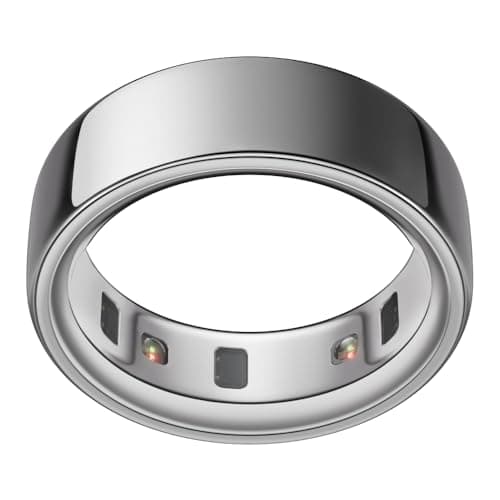 Oura Ring 4 The only consumer sleep device with a strong independent PSG result behind it — 76.3% four-stage agreement, and the best deep-sleep sensitivity of the three tested. | Sleep staging you can actually cite | Peer-reviewed validation | 8.0/10 | $349.00Amazon |
| 02 | 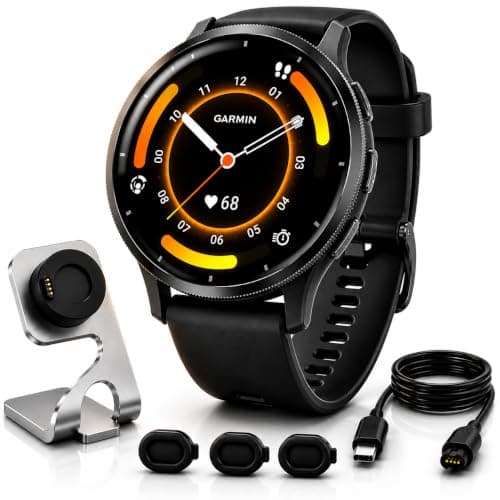 Garmin Venu 3 The sleep-and-recovery watch for people who already trust Garmin's training data. | One device for training and sleep | Manufacturer specification | 7.2/10 | $289.99Amazon |
| 03 | 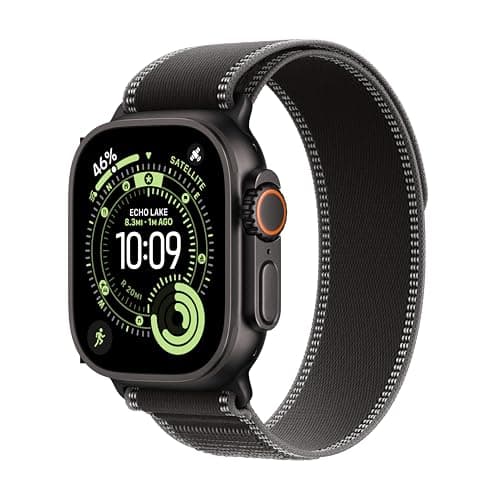 Apple Watch Ultra 3 Excellent positioning hardware and the best screen here, attached to the weakest deep-sleep measurement in the published record. | iPhone owners who train and want one device | Peer-reviewed validation | 6.8/10 | $799.00Amazon |
#ad· Live prices from the Amazon Product API, as of Sep 17, 2026. Where we have no verified live price we show none. Scores come from the published rubric at How we rank — the Evidence column shows what each ranking actually rests on, including where the answer is nothing.
Why this question has a real answer
Almost every ring-versus-watch article compares marketing claims. This one does not need to, because a 2024 study from Brigham and Women's Hospital put 35 healthy adults through a night of inpatient polysomnography — the clinical reference standard, electrodes and all — while they wore an Oura Ring Gen3, an Apple Watch Series 8 and a Fitbit Sense 2 simultaneously.
Same people, same night, same reference. That is what makes the comparison worth reading, and it is why this page quotes one study heavily rather than many loosely.
The two questions, and the two different winners
Sleep tracking is really two jobs, and consumer devices are much better at one than the other.
| Measurement | Oura Ring Gen3 | Apple Watch Series 8 |
|---|---|---|
| Sleep versus wake | 92.0% agreement, Cohen's κ = 0.60 | 93.0% agreement, κ = 0.60 — the highest of the three devices |
| Four-stage classification | 76.3% agreement, κ = 0.65 — the highest of the three | 75.0% agreement, κ = 0.60 |
| Deep sleep sensitivity | 79.5% | 50.5% — the weakest result of the three devices |
| Nightly summary error | No significant difference from the lab on seven of eight measures; overestimated sleep latency by 5 minutes | Overestimated light sleep by 45 minutes, underestimated deep sleep by 43 minutes, underestimated wake by 7 minutes |
If all you want is how long you slept, the watch was marginally the better device. If you want the stage breakdown — the graph everyone actually opens the app to look at — the ring was better on every row, and the gap on deep sleep is not marginal. A device that identifies half your deep sleep is producing a chart, not a measurement.
Why the wrist struggles with stages specifically
Both devices are inferring sleep stage from movement, heart rate and heart rate variability; neither is reading brain activity, which is what the sleep lab does. The finger is a better place to read the underlying pulse signal than the wrist — more blood vessels close to the surface, less tendon, and a device that cannot slide up your arm — and the staging algorithm is only as good as the signal it is fed.
A second study points the same way on a different measurement. A 2025 validation of nocturnal heart rate and heart rate variability against a single-lead ECG, across 536 nights, produced this order: Oura Gen 4 best of five devices at 0.99 concordance and 5.96% error, Oura Gen 3 at 0.97 and 7.15%, a Whoop 4.0 at 0.94 and 8.17%, a Garmin fēnix 6 at 0.87 and 10.52% — which the authors described as poor agreement — and a Polar Grit X Pro at 0.82 and 16.32%, the weakest of the five. Both rings beat every wrist device tested.
Our full tables for both studies are at sleep tracking accuracy by device and HRV accuracy by device.
The limits, stated by the authors
The polysomnography study is one night, in a laboratory, on healthy adults without insomnia, with the comparison made only during scheduled sleep. It is not a study of how a device behaves across a month of real life, and it cannot tell you about anybody with a sleep disorder. The authors also report device failures — six Apple Watches and two Fitbits — which is itself a finding about wearing a screen device to bed.
There is a bigger caveat for anyone shopping today. The ring in that study is the Gen3, and the current models are the Ring 4 and Ring 5. No polysomnography validation of either exists that we could find, and Oura's staging algorithm has changed. The result belongs to the generation that was tested, and we never let a result transfer to its successor.
Two further papers on Oura and polysomnography exist and we could not read them: the publishers returned errors to our fetcher. They are listed in the sources below as unread, and no figure from either appears anywhere on this site. One of them is a pooled analysis, which would be stronger evidence than the single study above — so that is a real gap in our record rather than a formality.
The watches nobody has measured at all
It is worth being clear about the shape of the evidence, because it is lopsided. The Apple Watch has a published polysomnography result and it is a mediocre one. Garmin and Polar sleep staging have no published polysomnography validation that we could find, for any device, on any generation.
That is not a compliment to Apple by accident: a device with a published mediocre result is in a better evidentiary position than a device with no result, because you can at least tell how wrong it is. The Garmin Venu 3 appears in the picks above on exactly those terms — a strong product on our rubric whose sleep staging nobody has ever checked, which the page and our review both say out loud.
The practical differences the study does not cover
- Compliance. The best sleep tracker is the one on your body at 3 a.m. A ring is easier to sleep in than a 49 mm titanium watch, and a watch you charge overnight measures nothing.
- Charging pattern. Rings are charged during the day in short bursts, watches usually while you shower. Whichever you buy, the failure mode is the same: the device is on the charger when you need it.
- Sizing. A ring has to fit a specific finger and the sizing kit exists for a reason. A watch does not have this failure mode at all.
- Daytime use. A watch is also a GPS device, a timer and a notification screen. A ring is not. If you want one device, that is a real argument for the wrist even though the sleep data is worse.
- Subscription.Oura's published membership is a recurring cost on top of the ring; Garmin charges nothing. We work the arithmetic through in the no-subscription ranking.
So which should you buy
Buy a ring if the stage breakdown is the reason you are buying at all, if you already own a training watch and want something for the nights, or if you have ever taken a watch off in bed. It is the form factor with the better measured result on the question people actually care about.
Buy a watch if you want one device, if total sleep time is the only figure you use, or if the alternative is carrying and charging two things and quietly abandoning one. The published sleep-versus-wake result for a watch is genuinely good.
Buy neither for a diagnosis. None of these devices reads brain activity, and none of them is a medical instrument. If a result worries you, the sleep lab in the study is the thing to go to.
In full
Every pick, and why
Oura Ring 4
The only consumer sleep device with a strong independent PSG result behind it — 76.3% four-stage agreement, and the best deep-sleep sensitivity of the three tested.
- Form
- Ring, worn on the index finger
- Sizing
- Size-specific — the ASIN is per size
- Subscription
- Membership required for full app features
What's good
- Robbins et al. (2024): highest four-stage agreement (76.3%, κ = 0.65) and best deep-sleep sensitivity (79.5%) of the three devices tested against polysomnography
- Matched PSG on seven of eight nightly summary measures, missing only sleep latency by five minutes
- A finger is a better optical site than a wrist for the same reason a forearm is
What isn't
- The membership is mandatory for the full app, so the sticker price is not the price — see our three-year arithmetic
- Rings are sized, so you need the sizing kit first and the ASIN varies by size
Skip this if
Skip this if you lift heavily. A rigid ring on a loaded barbell is uncomfortable at best, and Oura's own guidance is to take it off — a tracker you remove for training is not tracking your training.
What the evidence says
Peer-reviewed validationRobbins et al., Sensors 24(20):6532 (2024), n = 35, single-night inpatient polysomnography, testing the Oura Ring Gen3. Note the study tested Gen3, not the Ring 4. Note also that the manufacturer's press release rounded the four-stage figure to 79%; the paper says 76.3%. We use the paper.
Show how this 8.0 was calculated
| Factor | Weight | Score |
|---|---|---|
| EvidenceThe strongest peer-reviewed sleep result of any consumer device we found — with the honest caveats that it was one night, 35 people, and the previous generation. | 30% | 9.0 |
| HardwareFinger-mounted optical sensing, a better site than the wrist. | 20% | 8.5 |
| Metric coverageSleep, HRV, temperature and readiness; weak on exercise recording. | 20% | 8.0 |
| EnduranceMulti-day battery in normal use. | 15% | 8.0 |
| Cost per capabilityThe mandatory membership makes the true three-year cost materially higher than the sticker. | 15% | 5.5 |
Price as of Sep 17, 2026. Prices move; Amazon's is the one that counts.
#ad · we may earn a commission from this link to Oura Ring 4
Garmin Venu 3
The sleep-and-recovery watch for people who already trust Garmin's training data.
- Display
- 45mm, AMOLED
- Battery (stated)
- Up to 14 days
- Extras
- Sleep coach, nap detection, wheelchair mode
What's good
- 14 stated days means it survives the nights as well as the days — the practical failure of sleep tracking on a sports watch is that it is on the charger at bedtime
- One device rather than a watch plus a ring
What isn't
- Garmin's sleep staging has no independent PSG validation we could find
- A wrist is a worse optical site than a finger
Skip this if
Skip this if sleep staging is the reason you are buying. The published record has nothing to say about Garmin's, and the device that does have a paper is a ring.
What the evidence says
Manufacturer specificationNo independent PSG validation of Garmin's sleep staging that we could find. Notably, Garmin was absent from the Robbins et al. (2024) comparison entirely, so there is no published head-to-head against Oura, Fitbit or Apple.
Show how this 7.2 was calculated
| Factor | Weight | Score |
|---|---|---|
| EvidencePublished specs only; conspicuously absent from the major PSG comparison study. | 30% | 4.5 |
| HardwareCurrent Garmin optical sensor in a wrist-worn AMOLED watch. | 20% | 8.0 |
| Metric coverageSleep, recovery, training and everyday smartwatch functions in one device. | 20% | 9.0 |
| Endurance14 stated days is enough to keep it on the wrist overnight. | 15% | 8.5 |
| Cost per capabilityNo subscription, and it replaces two devices. | 15% | 7.5 |
Price as of Sep 17, 2026. Prices move; Amazon's is the one that counts.
#ad · we may earn a commission from this link to Garmin Venu 3
Apple Watch Ultra 3
Excellent positioning hardware and the best screen here, attached to the weakest deep-sleep measurement in the published record.
- Case
- 49mm titanium
- Satellite
- Dual-frequency GNSS
- Connectivity
- GPS + Cellular
What's good
- Dual-frequency positioning and a genuinely excellent display
- Best-in-class as a general smartwatch, by a distance
What isn't
- In the Brigham and Women's PSG study, the Apple Watch's deep-sleep sensitivity was 50.5% — the weakest of the three devices tested
- Battery is short next to every dedicated sports watch here
Skip this if
Skip this if you bought it to fix your sleep data. The peer-reviewed result says that is the one thing it is worst at, and no firmware update changes a published measurement.
What the evidence says
Peer-reviewed validationRobbins et al. (2024) tested the Apple Watch Series 8 against polysomnography: 75.0% four-stage agreement, but deep-sleep sensitivity of only 50.5%, overestimating light sleep by 45 minutes and underestimating deep sleep by 43 minutes. That was the Series 8, not the Ultra 3, and Apple has revised its algorithm since.
Show how this 6.8 was calculated
| Factor | Weight | Score |
|---|---|---|
| EvidenceGenuine peer-reviewed sleep data exists, which most rivals lack — but the result was unfavorable, and it tested an earlier model. | 30% | 6.0 |
| HardwareDual-frequency GNSS and the best display in this group. | 20% | 9.0 |
| Metric coverageVery wide metric coverage; export off-platform is more awkward than Garmin's. | 20% | 8.5 |
| EnduranceMaterially shorter than every dedicated sports watch here. | 15% | 4.0 |
| Cost per capabilityFlagship pricing; the cellular model costs more again. | 15% | 6.0 |
Price as of Sep 17, 2026. Prices move; Amazon's is the one that counts.
#ad · we may earn a commission from this link to Apple Watch Ultra 3
Four checks before you choose a form factor
- Decide which number you actually use. Total sleep time and stage breakdown have different winners, and the gap is much bigger on stages.
- Check the generation the evidence belongs to. The published ring result is the Gen3, not the current models. Nobody has measured the successors.
- Price three years, not the sticker. A membership changes the ranking more than any specification does.
- Be honest about what you will wear to bed. This decides the outcome more often than accuracy does.
The three devices above are ranked on the same rubric as everything else on this site, with the weights published at how we rank. We have not worn any of them.
Questions
Frequently asked
Is a smart ring more accurate than a watch for sleep?
For sleep staging, yes, on the one study that measured both against clinical polysomnography: 76.3% four-stage agreement for an Oura Gen3 against 75.0% for an Apple Watch Series 8, and 79.5% deep-sleep sensitivity against 50.5%. For simply separating sleep from wake, the watch was marginally ahead at 93.0% to 92.0%.
Is the Apple Watch bad at sleep tracking?
It was the best of the three devices tested at telling sleep from wake, and the weakest at identifying deep sleep, at 50.5% sensitivity. In the same study it overestimated light sleep by 45 minutes and underestimated deep sleep by 43. Use the total, treat the stage chart with caution.
How accurate is Garmin sleep tracking?
Nobody knows, and that is the honest answer. We could find no published polysomnography validation of Garmin sleep staging on any device. Garmin devices do have a measured overnight heart-rate-variability result, and it was poor: 0.87 concordance with a 10.52% error on a fēnix 6, described by the authors as poor agreement.
Does the ring result apply to the Oura Ring 4?
No. The published polysomnography result belongs to the Gen3, and no validation of the Ring 4 or Ring 5 exists that we could find. The Ring 4 does have the best measured nocturnal HRV result of any device we cover, which is a different question with a different study behind it.
Show your working
Sources
Every one of these was read in full before it was cited. Where we could not access a paper, we do not quote its numbers.
- [1]Peer-reviewed validation2024Robbins et al., “Accuracy of Three Commercial Wearable Devices for Sleep Tracking in Healthy Adults”, Sensors 24(20):6532
Brigham and Women’s Hospital. n = 35 healthy adults, single-night inpatient polysomnography, testing Oura Ring Gen3, Fitbit Sense 2 and Apple Watch Series 8. Authors’ stated limits: one night, lab conditions, healthy adults without insomnia, comparison only during scheduled sleep, and device failures on 6 Apple Watches and 2 Fitbits.
- [2]Peer-reviewed validation2025Dial, Hollander, Vatne, Emerson, Edwards & Hagen, “Validation of nocturnal resting heart rate and heart rate variability in consumer wearables”, Physiological Reports 13(16):e70527
DOI 10.14814/phy2.70527. n = 13 healthy adults (7 male, 6 female, 33.2 ± 8.6 years) across 536 nights, each wearing an Oura Gen 3, Oura Gen 4, Polar Grit X Pro, Garmin fēnix 6 and Whoop 4.0 simultaneously against a Polar H10 single-lead ECG reference sampled at 1000 Hz. Authors’ stated limits: healthy adults only, no atrial-fibrillation population, proprietary and periodically-updated algorithms, and unequal night counts per device. The Garmin was dropped from the resting-heart-rate comparison because the 30-minute window it uses is not timestamped.
- [3]Manufacturer specification2026Apple — Apple Watch Ultra 3 published technical specifications
Manufacturer-stated, read 2026-08-18: Grade 5 titanium case, 49 mm high by 44 mm wide by 12 mm deep, always-on Retina display at up to 3000 nits, up to 42 hours of normal use and up to 72 hours in Low Power Mode, L1 and L5 precision dual-frequency GPS across GPS, GLONASS, Galileo, QZSS and BeiDou, satellite connectivity for Emergency SOS, Messages and Find My, 100 m water resistance and EN13319 certification for recreational scuba to 40 m. Apple publishes this level of detail for the Ultra 3 and no longer publishes it for the Ultra 2 — which is why the older watch is described more thinly here.
- [4]Manufacturer specification2026Oura — published membership pricing
Manufacturer-stated, read 2026-08-13: $5.99 USD/month or $69.99 USD/year before tax, with the first month free for new members. Oura states that without a membership “your Oura Ring and Oura App will still function, but the insights, personal health data, and benefits you receive will be much more limited.” Our three-year arithmetic uses the monthly rate — the less flattering of the two — and credits the free first month.
- [5]Peer-reviewed validation2024Svensson et al., “Validity and reliability of the Oura Ring Generation 3 with sleep staging algorithm 2.0 compared to multi-night ambulatory polysomnography”, Sleep Medicine
NOT READ — the publisher returned HTTP 403 to our fetch on 2026-07-24. Reported to cover 96 participants and 421,045 epochs. We quote no figure from it. Readers should also note it is the validation of Oura's own staging algorithm, and that a published comment on it exists.
- [6]Peer-reviewed validation2025Khan et al., “The Oura Ring Versus Medical-Grade Sleep Studies: A Systematic Review and Meta-Analysis”, OTO Open
NOT READ — the publisher returned HTTP 403 to our fetch on 2026-07-24. A pooled analysis would be stronger evidence than any single study, so this is a real gap in our record rather than a formality.
Read next
Related
- Best smart rings
If the form factor decision is already made, this is the ranking.
- Best sleep tracking watches
The other side of the same decision, ranked.
- Oura Ring 5 review
The newest ring, and why it ranks below the Ring 4 on our evidence rule.
- Oura vs Garmin
A ring with a study against a watch with none, priced over three years.
- Sleep tracking accuracy by device
Every polysomnography figure we have, in one table.
- How sleep tracking actually works
What these devices are measuring instead of brain activity.