GPS and multisport
Alternatives to the Apple Watch
The Apple Watch Ultra 3 is the best-documented watch in this category and the one with the most published research attached. Here is what each alternative actually beats it at, stated as a specification rather than a preference.
We earn a commission when you buy through our Amazon links, at no extra cost to you. It never decides a ranking — the rubric that does is published in full, so you can check us rather than take our word for it. How this works.
Top pick
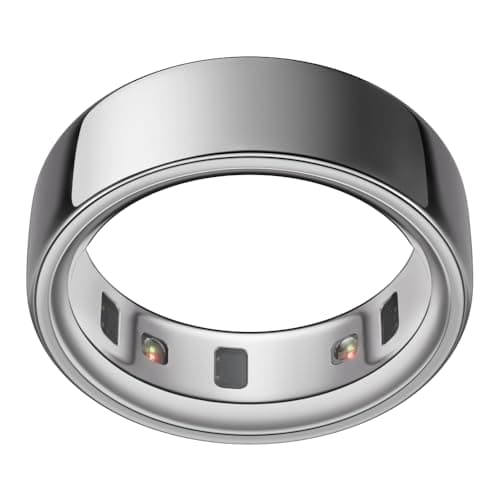
Sleep staging you can actually citeOura Ring 4
The only consumer sleep device with a strong independent PSG result behind it — 76.3% four-stage agreement, and the best deep-sleep sensitivity of the three tested.
$349.0029% off
Price as of November 21, 2026. Prices move; Amazon's is the one that counts.
#ad · we may earn a commission from this link to Oura Ring 4
The short answer
If sleep is why you are looking, the Oura Ring 4 is the alternative with a measurement behind it - it beat an Apple Watch on four-stage agreement and deep-sleep sensitivity on the same people on the same inpatient nights. If battery is why you are looking, the Garmin Forerunner 970 states 15 smartwatch days where Apple states up to 42 hours. The budget pick is the Garmin Venu 3 at under $500 today, which is the closest everyday substitute for well under half the money.
Ranked
Quick picks
| # | Device | Best for | Evidence | Score | Price |
|---|---|---|---|---|---|
| 01 | Oura Ring 4 The only consumer sleep device with a strong independent PSG result behind it — 76.3% four-stage agreement, and the best deep-sleep sensitivity of the three tested. | Sleep staging you can actually cite | Peer-reviewed validation | 8.0/10 | $249.00Amazon |
| 02 | 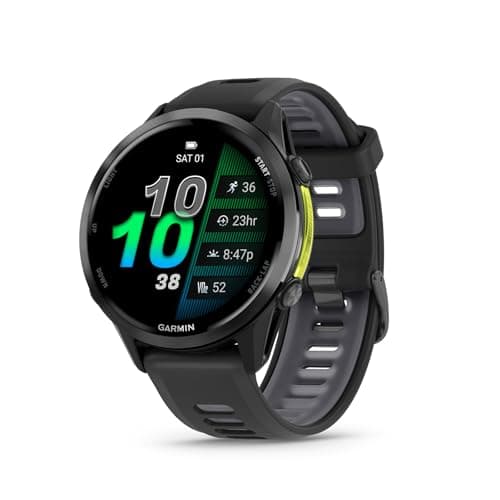 Garmin Forerunner 970 The most complete running watch Garmin sells, and — counter-intuitively — the cheapest of the pair per hour of GPS you get. | Long-course athletes who want maps | Manufacturer specification | 7.7/10 | $649.99Amazon |
| 03 | 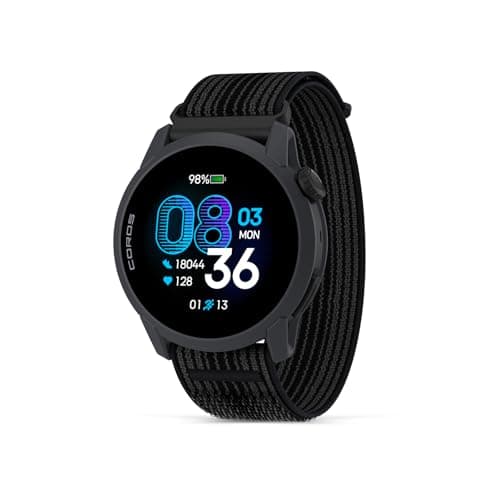 COROS PACE 4 41 stated GPS hours in a 32-gram watch, for a third of the Forerunner 970's money. The endurance-per-dollar winner by a distance. | Long days on a budget | Independent measured test | 7.5/10 | $249.00Amazon |
| 04 | 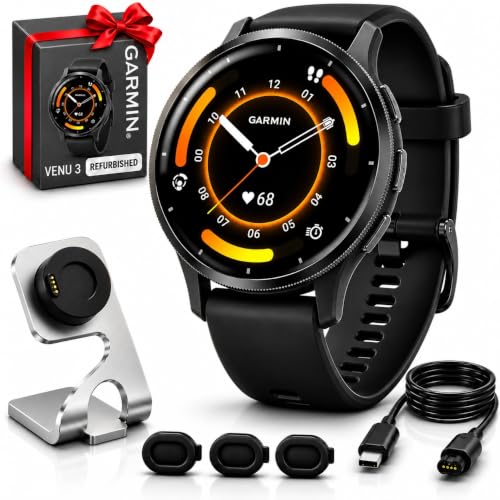 Garmin Venu 3 The sleep-and-recovery watch for people who already trust Garmin's training data. | One device for training and sleep | Manufacturer specification | 7.2/10 | $269.99Amazon |
#ad· Live prices from the Amazon Product API, as of November 21, 2026. Where we have no verified live price we show none. Scores come from the published rubric at How we rank — the Evidence column shows what each ranking actually rests on, including where the answer is nothing.
What the Apple Watch is genuinely good at
Start here, because an alternatives page that does not say what it is replacing is useless. Apple publishes more specification detail than any other maker on this site. For the Ultra 3, Apple states a Grade 5 titanium case 49 mm high, an always-on Retina display at up to 3000 nits, up to 42 hours of normal use and up to 72 in Low Power Mode, L1 and L5 precision dual-frequency GPS across five constellations, satellite connectivity for Emergency SOS, Messages and Find My, 100 m water resistance and EN13319 certification for recreational scuba to 40 m.
It is also the most-researched brand here. Apple Watches appear in three peer-reviewed validations this site relies on: a 2025 PLOS ONE VO2 max study against indirect calorimetry, a 2024 JMIR study of the Series 7 against a portable gas analyzer, and Robbins and colleagues' 2024 inpatient sleep comparison. Having been measured at all puts Apple in a small minority: the 2024 living umbrella review found roughly 34 of 310 identified consumer wearables had ever been validated. Our own detailed read of that record is at is the Apple Watch accurate.
So the four picks below are not here because the Apple Watch is bad. Each is here because it beats the Apple Watch on one specific published figure, or because it costs substantially less for the same job.
For sleep: the Oura Ring 4, and the one study that contains both
This is the strongest claim on the page because it is the only head-to-head. Robbins and colleagues put an Oura Ring Gen3, a Fitbit Sense 2 and an Apple Watch Series 8 on the same 35 healthy adults on the same single-night inpatient polysomnography, at Brigham and Women's Hospital. Four-stage agreement came out at 76.3% for the Oura and 75.0% for the Apple Watch; deep-sleep sensitivity came out at 79.5% for the Oura and 50.5% for the Apple Watch. The authors' own limits are substantial - one night, lab conditions, healthy adults without insomnia - and the devices tested were previous generations of both products.
That is still the best evidence anybody has on this specific question, and it points one way. The Oura Ring 4 is also the form factor that solves the problem Apple cannot: an Apple Watch has to come off to charge, and the night it is charging is a night it measures nothing. Oura states 5-8 days of battery depending on ring size, 2.88 mm thick and 3.3-5.2 g.
The honest cost caveat: Oura charges a membership. Oura publishes $5.99 a month or $69.99 a year with the first month free, and over three years on our arithmetic that comes to $459 all in. An Apple Watch has no mandatory fee. The full ring-versus-watch argument is at smart ring vs watch for sleep tracking, and the direct comparison is at Oura vs Apple Watch.
For battery and training depth: the Forerunner 970
This one is a straight specification comparison in units both makers publish for everyday wear. Apple states up to 42 hours of normal use for the Ultra 3. Garmin states 15 days of smartwatch mode and 26 GPS hours for the Forerunner 970, with 5 ATM and up to 32 GB of media storage in its manual. Fifteen days against under two is not a close call, and it is the difference between a watch you wear to bed every night and one you do not.
The 970 also adds built-in full-color maps, multi-band GNSS with SatIQ and the deepest training stack in the category, and it is under $1000 today. What you give up is the iPhone integration, which for an iPhone owner is not a small thing - that trade is laid out at Garmin vs Apple Watch.
For price: the COROS PACE 4 at a fraction of the money
The COROS PACE 4 is the cheapest route to a watch that does the athletic part properly. COROS states 41 All-Systems GPS hours and 19 days of daily use in a 32-gram, 11.8 mm case with dual-frequency positioning - and the price gap to the Ultra 3 is (price gap not computable right now). In dollars per stated GPS hour it is $6.07, the strongest figure on this site.
What it is not is a smartwatch. There is no cellular, no app store, no payments and no satellite messaging, and COROS's third-party integration depth is thinner than either Apple's or Garmin's. On evidence it is in the same position as the rest: the only independent test of a COROS optical sensor was of the previous PACE 3 and found divergence at rapid intensity changes. Full review: COROS PACE 4.
The budget pick: the Venu 3 is the closest everyday substitute
If what you want is the Apple Watch shape of product - an everyday watch that tracks training and sleep and does not look like sports equipment - the Garmin Venu 3 is the direct substitute at well under half the price. Garmin states up to 14 smartwatch days, 26 GPS-only hours and 20 hours in All Systems GPS mode, and a 5 ATM swim rating. It adds sleep coach and nap detection, and it is under $500 today.
Two things it does not have, stated as absences rather than guesses: Garmin's battery table for the Venu 3 carries no all-satellite-plus-multi-band row, because the watch has no multi-band mode, and there is no cellular or satellite connectivity. The newer model in the line is compared at Venu 3 vs Venu 4, and the broader everyday field is at best fitness smartwatches.
What no alternative on this page replaces
Three Apple capabilities have no substitute here, and pretending otherwise would be dishonest. Satellite messaging and Emergency SOS off-grid: only the Ultra 3 publishes it in this group. Cellular connectivity without a phone: same. And the iPhone ecosystem itself - notifications, payments, the app library and Apple Health as a hub - which is the actual reason most people buy an Apple Watch and is not a specification anybody else can match.
One thing none of the five devices on this page has, including the Apple Watch: a published validation of its own current optical heart-rate sensor. If heart-rate accuracy is the motivation for switching, the switch that works is not a different watch - it is a chest electrode on the watch you already own. Every device here pairs one, and the field is at best heart rate monitors for Apple Watch.
In full
Every pick, and why
Oura Ring 4
The only consumer sleep device with a strong independent PSG result behind it — 76.3% four-stage agreement, and the best deep-sleep sensitivity of the three tested.
- Form
- Ring, worn on the index finger
- Sizing
- Size-specific — the ASIN is per size
- Subscription
- Membership required for full app features
What's good
- Robbins et al. (2024): highest four-stage agreement (76.3%, κ = 0.65) and best deep-sleep sensitivity (79.5%) of the three devices tested against polysomnography
- Matched PSG on seven of eight nightly summary measures, missing only sleep latency by five minutes
- A finger is a better optical site than a wrist for the same reason a forearm is
What isn't
- The membership is mandatory for the full app, so the sticker price is not the price — see our three-year arithmetic
- Rings are sized, so you need the sizing kit first and the ASIN varies by size
Skip this if
Skip this if you lift heavily. A rigid ring on a loaded barbell is uncomfortable at best, and Oura's own guidance is to take it off — a tracker you remove for training is not tracking your training.
What the evidence says
Peer-reviewed validationRobbins et al., Sensors 24(20):6532 (2024), n = 35, single-night inpatient polysomnography, testing the Oura Ring Gen3. Note the study tested Gen3, not the Ring 4. Note also that the manufacturer's press release rounded the four-stage figure to 79%; the paper says 76.3%. We use the paper.
Show how this 8.0 was calculated
| Factor | Weight | Score |
|---|---|---|
| EvidenceThe strongest peer-reviewed sleep result of any consumer device we found — with the honest caveats that it was one night, 35 people, and the previous generation. | 30% | 9.0 |
| HardwareFinger-mounted optical sensing, a better site than the wrist. | 20% | 8.5 |
| Metric coverageSleep, HRV, temperature and readiness; weak on exercise recording. | 20% | 8.0 |
| EnduranceMulti-day battery in normal use. | 15% | 8.0 |
| Cost per capabilityThe mandatory membership makes the true three-year cost materially higher than the sticker. | 15% | 5.5 |
$349.0029% off
Price as of November 21, 2026. Prices move; Amazon's is the one that counts.
#ad · we may earn a commission from this link to Oura Ring 4
Garmin Forerunner 970
The most complete running watch Garmin sells, and — counter-intuitively — the cheapest of the pair per hour of GPS you get.
- Case
- 47mm, titanium bezel, AMOLED
- Satellite
- Multi-band GNSS with SatIQ
- Battery (stated)
- 15 days smartwatch / 26 h GPS
- Maps
- Built-in, full color
- Extras
- ECG app, speaker and microphone
What's good
- Multi-band GNSS with SatIQ — the current top tier of consumer positioning hardware
- 26 stated GPS hours is enough for an ironman-distance day with a wide margin
- Built-in maps, which the 570 does not have at any price
What isn't
- The wrist optical sensor is the same class of hardware as the 570's — the premium buys features, not a better heart-rate signal
- 47mm only; there is no smaller case in this model
Skip this if
Skip this if you never race longer than a marathon and never navigate. Maps and titanium are the entire difference, and neither changes a single number the watch records.
What the evidence says
Manufacturer specificationNo independent validation study of the Forerunner 970's optical heart rate has been published that we could find. The specification figures are Garmin's own.
Show how this 7.7 was calculated
| Factor | Weight | Score |
|---|---|---|
| EvidenceSpecs are published and detailed, but no peer-reviewed or independent measured validation of this specific model exists yet. | 30% | 5.5 |
| HardwareMulti-band GNSS with SatIQ and Garmin's current-generation optical sensor — the top hardware tier available. | 20% | 9.5 |
| Metric coverageRunning dynamics, ECG, training load, maps, and a documented export path off the watch. | 20% | 9.5 |
| EnduranceGarmin states 26 hours in GPS mode, 15 days smartwatch. | 15% | 7.5 |
| Cost per capabilityHighest sticker in the range, but the strongest dollars-per-GPS-hour of the two Forerunners — see the arithmetic on the comparison page. | 15% | 7.5 |
$749.9913% off
Price as of November 21, 2026. Prices move; Amazon's is the one that counts.
#ad · we may earn a commission from this link to Garmin Forerunner 970
COROS PACE 4
41 stated GPS hours in a 32-gram watch, for a third of the Forerunner 970's money. The endurance-per-dollar winner by a distance.
- Display
- 1.2" AMOLED touchscreen
- Weight
- 32 g with nylon band, 40 g with silicone
- Satellite
- All-Systems and Dual-Frequency modes
- Battery (stated)
- 19 days daily use / 41 h GPS (All-Systems)
- Thickness
- 11.8 mm
What's good
- 41 manufacturer-stated GPS hours — more than the Forerunner 970 and the 570 combined
- 32 g is light enough that you stop noticing it, which matters more over 100 miles than any feature
- Dual-frequency positioning at an entry-level price
What isn't
- COROS wrist heart rate is the one area where an independent test has published a specific problem — see the evidence note
- Smaller third-party app ecosystem than Garmin's
Skip this if
Skip this if you train by heart rate off the wrist and will not wear a strap. The one independent test we found flagged COROS wrist HR during exactly the intervals you would be buying it for.
What the evidence says
Independent measured testThe5krunner's measured comparison found the previous-generation PACE 3's wrist heart rate diverged during and after rapid intensity changes. That test was of the PACE 3, not the PACE 4, and the author cautions the dataset was limited. COROS states the PACE 4 has a redesigned sensor; no independent test of the new sensor has been published that we could find.
Show how this 7.5 was calculated
| Factor | Weight | Score |
|---|---|---|
| EvidenceThe only independent measured evidence in the range is a limited-dataset test of the PREVIOUS model, and it was unfavorable. The redesigned sensor is unvalidated. | 30% | 4.5 |
| HardwareDual-frequency GNSS and a redesigned optical sensor, per the COROS spec page. | 20% | 8.0 |
| Metric coverageStrong training metrics; a narrower ecosystem than Garmin for third-party integrations. | 20% | 7.5 |
| Endurance41 stated GPS hours in All-Systems mode is the best in this roundup by a wide margin. | 15% | 10.0 |
| Cost per capabilityComfortably the strongest dollars-per-GPS-hour figure on the site. | 15% | 10.0 |
Price as of November 21, 2026. Prices move; Amazon's is the one that counts.
#ad · we may earn a commission from this link to COROS PACE 4
Garmin Venu 3
The sleep-and-recovery watch for people who already trust Garmin's training data.
- Display
- 45mm, AMOLED
- Battery (stated)
- Up to 14 days
- Extras
- Sleep coach, nap detection, wheelchair mode
What's good
- 14 stated days means it survives the nights as well as the days — the practical failure of sleep tracking on a sports watch is that it is on the charger at bedtime
- One device rather than a watch plus a ring
What isn't
- Garmin's sleep staging has no independent PSG validation we could find
- A wrist is a worse optical site than a finger
Skip this if
Skip this if sleep staging is the reason you are buying. The published record has nothing to say about Garmin's, and the device that does have a paper is a ring.
What the evidence says
Manufacturer specificationNo independent PSG validation of Garmin's sleep staging that we could find. Notably, Garmin was absent from the Robbins et al. (2024) comparison entirely, so there is no published head-to-head against Oura, Fitbit or Apple.
Show how this 7.2 was calculated
| Factor | Weight | Score |
|---|---|---|
| EvidencePublished specs only; conspicuously absent from the major PSG comparison study. | 30% | 4.5 |
| HardwareCurrent Garmin optical sensor in a wrist-worn AMOLED watch. | 20% | 8.0 |
| Metric coverageSleep, recovery, training and everyday smartwatch functions in one device. | 20% | 9.0 |
| Endurance14 stated days is enough to keep it on the wrist overnight. | 15% | 8.5 |
| Cost per capabilityNo subscription, and it replaces two devices. | 15% | 7.5 |
Price as of November 21, 2026. Prices move; Amazon's is the one that counts.
#ad · we may earn a commission from this link to Garmin Venu 3
How to choose an Apple Watch alternative
- Name the reason you are leaving before you shop. Battery, sleep, price and training depth point at four different devices here, and only one of them will be yours.
- Check what breaks when you leave the ecosystem. Payments, notifications, the app library and Apple Health integration are the things an alternative genuinely costs you.
- Count the subscription into the price. The Oura requires a membership; the three Garmin and COROS options do not. Over three years that is real money and we compute it on the page.
- Do not switch for accuracy alone. No watch here, Apple included, has a validated optical sensor. A strap on your existing watch is the cheaper and better-evidenced fix.
- If you are on Android, the choice is wider than this page. Every alternative here works with both platforms; the Apple Watch does not.
How this ranking was built
Every score on this page comes from one published rubric, applied identically to every device on the site, with the weights written down and the inputs shown. We have not worn any of these devices and we never say we have. Read the method and check us.
Questions
Frequently asked
What is the best Apple Watch alternative for sleep tracking?
The Oura Ring 4, on the only study that measured an Oura and an Apple Watch on the same people on the same nights: 76.3% against 75.0% four-stage agreement, and 79.5% against 50.5% deep-sleep sensitivity. Those were previous-generation devices and a single inpatient night, which is the honest limit of the finding.
Which alternative has the best battery life?
Among the watches, the Forerunner 970 at 15 stated smartwatch days against Apple's up to 42 hours of normal use. The COROS PACE 4 states 19 days of daily use, which is longer still, in a watch with far fewer smartwatch features.
Is there an Apple Watch alternative that works with an iPhone?
All four here do. Garmin, COROS and Oura all support iOS, and Oura's own product page states iOS and Android compatibility. What none of them can do is replace the deeper iPhone integration - payments, notification handling and the watch-as-phone features.
Is a cheaper alternative less accurate than an Apple Watch?
There is no published basis for saying so about heart rate: no watch on this page has a validation of its own current optical sensor. On sleep staging the one head-to-head study favored the ring over the Apple Watch, and on VO2 max the Apple results exist and are mixed. Price is not the variable the evidence turns on.
Show your working
Sources
Every one of these was read in full before it was cited. Where we could not access a paper, we do not quote its numbers.
- [1]Manufacturer specification2026Apple — Apple Watch Ultra 3 published technical specifications
Manufacturer-stated, read 2026-08-18: Grade 5 titanium case, 49 mm high by 44 mm wide by 12 mm deep, always-on Retina display at up to 3000 nits, up to 42 hours of normal use and up to 72 hours in Low Power Mode, L1 and L5 precision dual-frequency GPS across GPS, GLONASS, Galileo, QZSS and BeiDou, satellite connectivity for Emergency SOS, Messages and Find My, 100 m water resistance and EN13319 certification for recreational scuba to 40 m. Apple publishes this level of detail for the Ultra 3 and no longer publishes it for the Ultra 2 — which is why the older watch is described more thinly here.
- [2]Peer-reviewed validation2024Robbins et al., “Accuracy of Three Commercial Wearable Devices for Sleep Tracking in Healthy Adults”, Sensors 24(20):6532
Brigham and Women’s Hospital. n = 35 healthy adults, single-night inpatient polysomnography, testing Oura Ring Gen3, Fitbit Sense 2 and Apple Watch Series 8. Authors’ stated limits: one night, lab conditions, healthy adults without insomnia, comparison only during scheduled sleep, and device failures on 6 Apple Watches and 2 Fitbits.
- [3]Peer-reviewed validation2025Lambe, O’Grady, Baldwin & Doherty, “Investigating the accuracy of Apple Watch VO2 max measurements: A validation study”, PLOS ONE 20(5):e0323741
DOI 10.1371/journal.pone.0323741. 28 analyzed participants across Apple Watch Series 5-9, SE 2 and Ultra 2 on watchOS 10+, against indirect calorimetry (COSMED Quark CPET, modified Åstrand treadmill protocol). Authors’ stated limits: the sample skewed strongly toward high cardiorespiratory fitness, watch estimates were generated uncontrolled, and only one estimate per participant was collected.
- [4]Peer-reviewed validation2024Caserman, Yum, Göbel, Reif & Matura, “Assessing the Accuracy of Smartwatch-Based Estimation of Maximum Oxygen Uptake Using the Apple Watch Series 7: Validation Study”, JMIR Biomedical Engineering 9:e59459
DOI 10.2196/59459. n = 19 (12 male, 7 female, mean age 28.4), Apple Watch Series 7 against a VO2 Master portable gas analyzer on a graded cycle ergometer test. Authors’ stated limits: the sample was 19 rather than the 30 planned, testing was submaximal, no blood lactate was taken, and the watch figure came from a single outdoor session where Apple’s own validation used an average of 441 days of data.
- [5]Manufacturer specification2026Oura — Ring 4 product page, published specifications
Manufacturer-stated, read 2026-10-25: 7.90 mm wide and 2.88 mm thick, 3.3-5.2 g depending on ring size, six finishes (Silver, Black, Brushed Silver, Stealth, Gold, Rose Gold), a size-specific charger, “5-8 days of battery life” depending on ring size and lifestyle with a typical charge of 20-80 minutes, “Water resistant up to 100m/328 ft”, and a sensor set listed as red and infrared LEDs for blood oxygen, alternating green and infrared LEDs for 24/7 heart rate, heart rate variability and respiration rate, a digital temperature sensor and an accelerometer. Compatibility is stated on the page as “iOS & Android Compatible” and “Available on iOS and Android”, with no handset brand named and no OS versions given. Oura Membership is listed at $5.99/month or $69.99/year with the first month free. No ring price is published on the page itself.
- [6]Manufacturer specification2026Oura — published membership pricing
Manufacturer-stated, read 2026-08-13: $5.99 USD/month or $69.99 USD/year before tax, with the first month free for new members. Oura states that without a membership “your Oura Ring and Oura App will still function, but the insights, personal health data, and benefits you receive will be much more limited.” Our three-year arithmetic uses the monthly rate — the less flattering of the two — and credits the free first month.
- [7]Manufacturer specification2026Garmin — Forerunner 970 published specifications
Manufacturer-stated battery: up to 15 days smartwatch mode, up to 26 hours GPS mode.
- [8]Manufacturer specification2026Garmin — Forerunner 970 owner’s manual, specifications
Manufacturer-stated, read 2026-08-18: rechargeable lithium-ion battery, 5 ATM (swim) water rating, and up to 32 GB of media storage — the specification that decides how much music the watch can actually hold.
- [9]Manufacturer specification2026COROS — PACE 4 published specifications
Manufacturer-stated: 1.2" AMOLED, 32 g with nylon band, 11.8 mm thick, All-Systems and Dual-Frequency satellite modes, 41 GPS hours, 19 days of daily training and sleep.
- [10]Independent measured test2023the5krunner, measured heart-rate comparison of the COROS PACE 3
An independent measured test, not a peer-reviewed study, and the author explicitly cautions the dataset was limited. Compared against Garmin HRM-Pro Plus and Polar Verity Sense across easy runs, intervals and cycling. Found divergence during and after rapid intensity change. Tests the PACE 3, not the PACE 4.
- [11]Manufacturer specification2026Garmin — Venu 3 series owner’s manual, battery life information
Manufacturer-stated, read 2026-10-18, Venu 3S then Venu 3: smartwatch mode with activity tracking and continuous wrist-based heart rate up to 10 days / up to 14 days; smartwatch mode with battery saver up to 20 / 26 days; GPS Only mode up to 21 / 26 hours; All Systems GPS mode up to 15 / 20 hours; All Systems GPS mode with music playback up to 8 / 11 hours; Always On display mode up to 5 days for both. NOTE the shape of this table: there is no all-satellite-plus-multi-band row, because the Venu 3 has no multi-band mode — the Venu 4 manual is the first in the line to publish one. Garmin's own caveat on the page is that actual battery life depends on which features are enabled, including activity tracking, wrist-based heart rate, phone notifications, GPS and connected sensors.
- [12]Manufacturer specification2026Garmin — Venu 3 series owner’s manual, specifications
Manufacturer-stated, read 2026-10-18: rechargeable built-in lithium-ion battery; battery life up to 14 days in smartwatch mode for the Venu 3 and up to 10 days for the Venu 3S; water rating “Swim, 5 ATM”; operating temperature range −20 to 50 °C; charging temperature range 0 to 45 °C; wireless frequencies 2.4 GHz at 17 dBm maximum and 13.56 MHz at −40 dBm maximum. The web edition of this page does not publish case dimensions, weights, display resolution or memory, so this site quotes none of those for the Venu 3.
- [13]Peer-reviewed validation2024Doherty, Baldwin, Keogh, Caulfield & Argent, “Keeping Pace with Wearables: A Living Umbrella Review of Systematic Reviews Evaluating the Accuracy of Consumer Wearable Technologies in Health Measurement”, Sports Medicine
DOI 10.1007/s40279-024-02077-2. An umbrella review: 24 systematic reviews covering 249 unique primary validation studies and 430,465 participants (43% female), across 11 biometric outcomes, with roughly 34 of 310 identified consumer wearables ever validated. Reported accuracy by metric: heart rate approximately ±3% (mean bias −3.39 bpm); step count mean absolute percentage error from −9% to 12%; energy expenditure mean bias −3 kcal per minute with error ranging from −21.27% to 14.76%. Authors’ stated limits: a temporal lag between device release and published research, the intrinsic bias of a tertiary synthesis, and heterogeneity of protocols, devices, criterion measures and statistics severe enough that the authors did not pool a meta-analysis.
Read next
Related
- Garmin vs Apple Watch
The head-to-head, with both published records side by side.
- Oura vs Apple Watch
The sleep claim on this page, in full, with the study's limits.
- Is the Apple Watch accurate?
Everything that has been measured about Apple's watches, metric by metric.
- Apple Watch Ultra 3 review
The watch these four are alternatives to, reviewed on its own terms.