Head to head
Garmin Venu 3 vs Venu 4
A generational upgrade where the older watch states more battery in every comparable mode. What the new one adds is one satellite row the old one does not have at all, and that is the whole decision.
We earn a commission when you buy through our Amazon links, at no extra cost to you. It never decides a ranking — the rubric that does is published in full, so you can check us rather than take our word for it. How this works.
Top pick
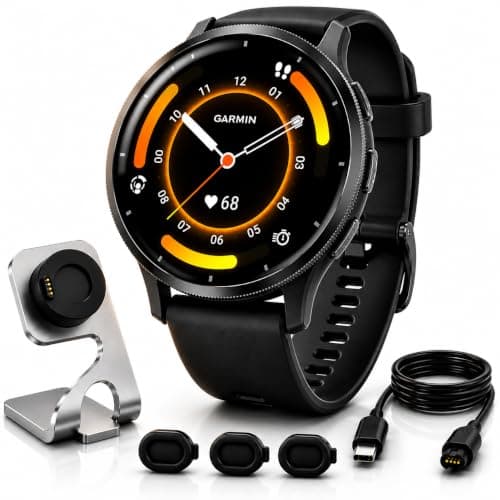
One device for training and sleepGarmin Venu 3
The sleep-and-recovery watch for people who already trust Garmin's training data.
$289.9917% off
Price as of October 22, 2026. Prices move; Amazon's is the one that counts.
#ad · we may earn a commission from this link to Garmin Venu 3
The short answer
Buy the Venu 4 if you want a multi-band satellite mode, the ECG app and the Forerunner training stack Garmin documents for it. Buy the Venu 3 if overnight battery is why you are here: on Garmin's own figures the older watch states more endurance in every mode the two tables share — 14 days against 12, 26 GPS hours against 20.
Ranked
Quick picks
| # | Device | Best for | Evidence | Score | Price |
|---|---|---|---|---|---|
| 01 | Garmin Venu 3 The sleep-and-recovery watch for people who already trust Garmin's training data. | One device for training and sleep | Manufacturer specification | 7.2/10 | $239.99Amazon |
| 02 | 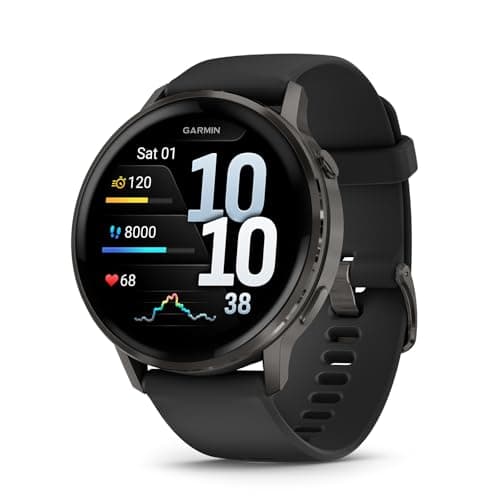 Garmin Venu 4 A Forerunner's training stack in a steel lifestyle case, with a longer published battery than the running watch it is priced against. | One watch for training data and everyday wear | Manufacturer specification | 7.1/10 | $543.00Amazon |
#ad· Live prices from the Amazon Product API, as of October 22, 2026. Where we have no verified live price we show none. Scores come from the published rubric at How we rank — the Evidence column shows what each ranking actually rests on, including where the answer is nothing.
The two tables, which is the whole argument
Generational comparisons usually need a paragraph of context before the numbers mean anything. This one does not. Garmin publishes a battery table per watch broken down by satellite mode, and the Venu 3 series manual and the Venu 4 series manual can be laid side by side without any interpretation at all. We compare the larger case of each — the 45 mm Venu 4 against the Venu 3 — because those are the variants our live prices track.
| Manufacturer-stated | Venu 3 | Venu 4 (45 mm) |
|---|---|---|
| Smartwatch mode | Up to 14 days | Up to 12 days |
| Battery saver watch mode | Up to 26 days | Up to 25 days |
| GPS-only | Up to 26 h | Up to 20 h |
| All satellite systems | Up to 20 h | Up to 19 h |
| All systems, with music | Up to 11 h | Up to 9 h |
| All systems + multi-band | No such mode | Up to 17 h |
| Always-on display | Up to 5 days | Up to 4 days |
Finding one: the older watch wins every row they share
Read the table again and count. Smartwatch mode, battery saver, GPS-only, all-systems, all-systems with music, always-on display: six shared rows, and the Venu 3 states the longer figure in all six. Two of the gaps are small enough to be a different rounding convention — 26 days against 25, 20 hours against 19 — but the headline ones are not. Six GPS-only hours is a quarter of the figure gone, and two smartwatch days is two nights you do not have to put the watch on a charger.
That matters most if you bought a Venu to sleep in it. The real failure mode of watch-based sleep tracking is not algorithmic, it is behavioral: the watch is on the charger at bedtime, so the night is not recorded at all. A watch stating 14 days survives that routine more comfortably than one stating 12, and it is the reason the Venu 3 still holds a place on the subscription-free sleep trackers.
Finding two: what you are buying is a frequency band
The Venu 4's answer to all of that is the one row the Venu 3 table does not have: all-satellite-systems plus multi-band, stated at 17 hours on the 45 mm case and 12 on the 41 mm. The Venu 3 has no multi-band figure because it has no multi-band mode. No firmware update adds a frequency band to a receiver that cannot hear it, which is the same hardware line that decides Forerunner 165 vs 265.
So the honest framing of this upgrade is a trade rather than an improvement. You gain a satellite mode that is designed to hold position between tall buildings and under tree cover — the specific hardware that addresses GPS drift — and you pay for it with roughly a fifth of the stated endurance in the modes you already had. If your tracks look fine today, you are paying for a fix to a problem you do not have. If they wander, this is the only thing on this page that actually addresses it. What dual-band reception is and is not good for is in what is dual-band GPS.
Finding three: the Venu 4 is documented as a different kind of watch
The specification change is modest. The documentation change is not. Garmin's Venu 4 manual lists, in its Training section index, PacePro, race calendar and primary race, a critical swim speed test, performance measurements, training status, acute load, training readiness and recovery time, with VO2 max. standard ratings and running dynamics data in the appendix. That is the Forerunner analysis stack, which is why this site files the Venu 4 with the running watches and the Venu 3 with the sleep trackers.
Garmin's Venu 4 announcement also names an ECG app, a health status feature that watches whether heart rate, HRV, respiration, skin temperature and Pulse Ox drift from their usual overnight ranges, lifestyle logging of choices such as caffeine and alcohol against sleep and HRV, sleep alignment and sleep consistency scoring, an LED flashlight, a spoken watch face and color filters for color blindness. Two caveats belong next to that list, and both are Garmin's own: health status is "currently in beta", and the ECG app requires the latest software and is available in select regions only, for ages 22 and over. We are listing what Garmin publishes for the Venu 4, not asserting that the Venu 3 lacks each item — we have read no comparable feature release for the older watch, and an absence from our reading is not an absence from the product.
What is identical
Both watches are rated "Swim, 5 ATM" in their own specification pages. Both use Garmin's wrist optical sensor. Both carry a speaker and microphone, Body Battery, HRV status, Pulse Ox and sleep tracking, and both pair external ANT+ and Bluetooth heart rate straps — which is the only upgrade path on this page with published evidence behind it. Neither has a subscription of any kind, which is increasingly unusual in this category and is worth more than most of the feature list.
The arithmetic
Per stated hour in each watch's best satellite mode — all-systems on the Venu 3, all-systems plus multi-band on the Venu 4 — the Venu 3 runs $12.00 and the Venu 4 $31.94. The live gap between the two listings is $303.
Those two cost-per-hour figures are not strictly like for like, and we would rather say so than quietly hide it: the Venu 3 number describes a single-frequency mode and the Venu 4 number describes a dual-frequency one, which is the better mode. The comparison that is like for like is the all-systems row, 20 hours against 19, and on that row the older watch is both cheaper and longer-lived.
The evidence, which has not moved between generations
Nothing either of these watches produces has been independently validated. The point is worth making precisely, because sleep and recovery features are the reason most people buy a Venu:
- Garmin was absent entirely from the 2024 inpatient polysomnography comparison that tested an Oura Ring, a Fitbit and an Apple Watch on the same 35 people on the same nights. There is no published head-to-head of Garmin sleep staging against a sleep lab, on either generation.
- In the 536-night ECG validation of five wearables, the Garmin came fourth of five on nocturnal HRV at 0.87 concordance and 10.52% error — agreement the authors called poor — and was dropped from the resting-heart-rate comparison because its 30-minute measurement window is not timestamped. HRV status and Body Battery on both of these watches rest on that signal.
On our published rubric the two land within a rounding error of each other, and the older watch edges it: the multi-band receiver the Venu 4 adds is worth less under our weights than the endurance it costs. That is a judgment from the documented specifications, not a measurement — the whole method is at how we rank, and what Garmin's sleep numbers are and are not built from is in sleep tracking accuracy by device.
Which to buy
Buy the Venu 4 if your GPS tracks drift and you want the multi-band mode that addresses it, if you want the documented training stack, or if the ECG app is available where you live and matters to you. Our full write-up is the Venu 4 review, and fēnix 8 vs Venu 4 sets it against the watch that doubles its endurance.
Buy the Venu 3 if it is the sleep and recovery watch you are after, if you want the longest stated battery in the line, or if the live gap between the two listings is wide. Nothing in the published record says the newer watch measures you better, and the older one asks less of your charger. Our write-up is the Venu 3 review.
Buy neither if sleep staging is the whole reason you are shopping. The only device in this category with a favorable published result against clinical polysomnography is a ring, and that comparison is smart ring versus watch for sleep tracking.
In full
Every pick, and why
Garmin Venu 3
The sleep-and-recovery watch for people who already trust Garmin's training data.
- Display
- 45mm, AMOLED
- Battery (stated)
- Up to 14 days
- Extras
- Sleep coach, nap detection, wheelchair mode
What's good
- 14 stated days means it survives the nights as well as the days — the practical failure of sleep tracking on a sports watch is that it is on the charger at bedtime
- One device rather than a watch plus a ring
What isn't
- Garmin's sleep staging has no independent PSG validation we could find
- A wrist is a worse optical site than a finger
Skip this if
Skip this if sleep staging is the reason you are buying. The published record has nothing to say about Garmin's, and the device that does have a paper is a ring.
What the evidence says
Manufacturer specificationNo independent PSG validation of Garmin's sleep staging that we could find. Notably, Garmin was absent from the Robbins et al. (2024) comparison entirely, so there is no published head-to-head against Oura, Fitbit or Apple.
Show how this 7.2 was calculated
| Factor | Weight | Score |
|---|---|---|
| EvidencePublished specs only; conspicuously absent from the major PSG comparison study. | 30% | 4.5 |
| HardwareCurrent Garmin optical sensor in a wrist-worn AMOLED watch. | 20% | 8.0 |
| Metric coverageSleep, recovery, training and everyday smartwatch functions in one device. | 20% | 9.0 |
| Endurance14 stated days is enough to keep it on the wrist overnight. | 15% | 8.5 |
| Cost per capabilityNo subscription, and it replaces two devices. | 15% | 7.5 |
$289.9917% off
Price as of October 22, 2026. Prices move; Amazon's is the one that counts.
#ad · we may earn a commission from this link to Garmin Venu 3
Garmin Venu 4
A Forerunner's training stack in a steel lifestyle case, with a longer published battery than the running watch it is priced against.
- Case
- 41mm or 45mm, AMOLED, stainless steel
- Satellite
- Multi-band GNSS (manufacturer-stated)
- Battery (stated)
- 12 days smartwatch / 17 h multi-band (45mm)
- Extras
- ECG app, LED flashlight, speaker and microphone
- Sensors
- Pairs ANT+ / Bluetooth straps, including the HRM 600
What's good
- Garmin's own manual gives it the Forerunner analysis stack — training status, acute load, training readiness, PacePro, performance measurements, running dynamics
- Publishes an all-satellite-plus-multi-band battery row, which the Venu line did not before: 17 stated hours at 45 mm
- Pairs the chest straps that actually improve its heart-rate data, HRM 600 and HRM 200 included
What isn't
- No independent validation of anything it measures, and the health features Garmin leads with are the newest and least checked
- Garmin labels the health status feature beta itself, and restricts the ECG app by region and to ages 22 and over
- No maps, and the 41 mm case states materially shorter battery than the 45 mm in every mode
Skip this if
Skip this if you are buying it for the health screening. Nothing published validates Garmin's sleep staging, its HRV figure came last of five brands in the only study that measured several at once, and the headline health-status feature is in beta by Garmin's own footnote. Buy it for the watch, not for the diagnosis.
What the evidence says
Manufacturer specificationNo independent validation of this model exists that we could find — not of its optical heart rate, not of its sleep staging, not of its positioning. Garmin was absent from the Robbins et al. (2024) polysomnography comparison entirely, and in the one study that wore three brands at once (Dial et al., 2025) the Garmin device finished last of five on nocturnal HRV agreement.
Show how this 7.1 was calculated
| Factor | Weight | Score |
|---|---|---|
| EvidenceDetailed published specification and a documented feature list, and no independent measurement of a single number this watch produces. | 30% | 4.5 |
| HardwareMulti-band GNSS, Garmin's Elevate wrist sensor, ECG electrodes, speaker and microphone, 5 ATM, and ANT+/Bluetooth pairing for external sensors — the same hardware checklist as a current Forerunner, in a stainless case. | 20% | 9.0 |
| Metric coverageTraining status, acute load, training readiness, PacePro, VO2 max, running dynamics, a swim test, HRV status, Body Battery, Pulse Ox, skin temperature and an ECG app. No maps, which is the one gap against the tier above. | 20% | 9.0 |
| EnduranceGarmin states 12 smartwatch days and 17 hours in all-satellite-plus-multi-band at 45 mm. Longer than the Forerunner it shares a price with, and half a fēnix 8. | 15% | 7.0 |
| Cost per capabilityLists at the same $549.99 as the Forerunner 570 and carries the better dollars-per-stated-multi-band-hour figure — but the premium over a 265 buys a metal case, a speaker and a flashlight, not better measurement. | 15% | 7.5 |
Price as of October 22, 2026. Prices move; Amazon's is the one that counts.
#ad · we may earn a commission from this link to Garmin Venu 4
How this ranking was built
Every score on this page comes from one published rubric, applied identically to every device on the site, with the weights written down and the inputs shown. We have not worn any of these devices and we never say we have. Read the method and check us.
Questions
Frequently asked
Does the Venu 4 have better battery life than the Venu 3?
No. On Garmin's own figures the Venu 3 states more in every mode the two tables share: 14 smartwatch days against 12, 26 GPS-only hours against 20, 20 all-systems hours against 19, 11 hours with music against 9, and 26 battery-saver days against 25. The Venu 4 publishes one row the Venu 3 does not have at all — all-systems plus multi-band, at 17 hours.
Is the Venu 4 worth upgrading to from a Venu 3?
Only if you want the multi-band satellite mode, the ECG app where it is available, or the documented training stack. There is no published evidence that the Venu 4 measures anything more accurately than the Venu 3 — neither watch has been independently validated — and the newer one states less endurance in every shared mode.
Which Venu is better for sleep tracking?
Neither has a published sleep validation, so this is a question about battery and habit rather than accuracy. The Venu 3 states 14 days to the Venu 4's 12, which makes it marginally more likely to be on your wrist at bedtime rather than on a charger. The accuracy picture for both is in sleep tracking accuracy by device.
Do either of these watches need a subscription?
No. Garmin charges nothing to use either watch or Garmin Connect, which is why both appear on our subscription-free sleep trackers page. That is a genuine difference from the ring and band brands, where a membership is often mandatory for the data to be readable at all.
Is the Venu 3 still worth buying in 2026?
Yes, with one caveat: it is the previous generation, so stock and discounting both move. Check the live prices above on the day. On stated battery it leads the line, on evidence it is tied with its successor at zero, and it costs less — which is the trade this site usually recommends.
Show your working
Sources
Every one of these was read in full before it was cited. Where we could not access a paper, we do not quote its numbers.
- [1]Manufacturer specification2026Garmin — Venu 3 series owner’s manual, battery life information
Manufacturer-stated, read 2026-10-18, Venu 3S then Venu 3: smartwatch mode with activity tracking and continuous wrist-based heart rate up to 10 days / up to 14 days; smartwatch mode with battery saver up to 20 / 26 days; GPS Only mode up to 21 / 26 hours; All Systems GPS mode up to 15 / 20 hours; All Systems GPS mode with music playback up to 8 / 11 hours; Always On display mode up to 5 days for both. NOTE the shape of this table: there is no all-satellite-plus-multi-band row, because the Venu 3 has no multi-band mode — the Venu 4 manual is the first in the line to publish one. Garmin's own caveat on the page is that actual battery life depends on which features are enabled, including activity tracking, wrist-based heart rate, phone notifications, GPS and connected sensors.
- [2]Manufacturer specification2026Garmin — Venu 3 series owner’s manual, specifications
Manufacturer-stated, read 2026-10-18: rechargeable built-in lithium-ion battery; battery life up to 14 days in smartwatch mode for the Venu 3 and up to 10 days for the Venu 3S; water rating “Swim, 5 ATM”; operating temperature range −20 to 50 °C; charging temperature range 0 to 45 °C; wireless frequencies 2.4 GHz at 17 dBm maximum and 13.56 MHz at −40 dBm maximum. The web edition of this page does not publish case dimensions, weights, display resolution or memory, so this site quotes none of those for the Venu 3.
- [3]Manufacturer specification2026Garmin — Venu 4 Series owner’s manual, battery information
Manufacturer-stated, read 2026-10-11, 41 mm then 45 mm: smartwatch mode up to 10 days / up to 12 days; battery saver watch mode up to 18 / 25 days; GPS only mode up to 15 / 20 hours; all satellite systems mode up to 13 / 19 hours; all satellite systems with music up to 6 / 9 hours; all satellite systems plus multi-band up to 12 / 17 hours; all satellite systems plus multi-band with music up to 6 / 9 hours. Garmin's own caveat on the page: “the actual battery life depends on the features enabled on your watch, such as wrist-based heart rate, phone notifications, GPS, internal sensors, and connected sensors.”
- [4]Manufacturer specification2026Garmin — Venu 4 Series owner’s manual, Training section index
Manufacturer-documented, read 2026-10-11. The Training section of the Venu 4 manual lists: Activity Tracking, Workouts, Interval Workouts, Setting a Training Target, PacePro Training, Racing a Previous Activity, Race Calendar and Primary Race, Recording a Critical Swim Speed Test, Using Virtual Partner, About the Training Calendar, Enabling Self Evaluation, Performance Measurements, Training Status, Acute Load, Training Readiness and Recovery Time. The manual's appendix additionally publishes VO2 Max. Standard Ratings, Color Gauges and Running Dynamics Data, FTP Ratings and Wheel Size and Circumference. We make no claim about features the index does not name: an absence from a top-level index is not evidence that a watch cannot do something.
- [5]Manufacturer claim only2026Garmin — “Take steps towards a healthier lifestyle with the Venu 4 from Garmin”
Garmin's own press release, read 2026-10-11. Announced 17 September 2025, on sale 22 September 2025, suggested retail price starting at $549.99, in 41 mm and 45 mm, stated at “up to 12 days of battery life in smartwatch mode”. Named features: Health status (monitoring whether heart rate, HRV, respiration, skin temperature and Pulse Ox drift from their usual ranges during sleep), lifestyle logging of choices such as caffeine and alcohol against sleep, stress and HRV, sleep alignment using circadian-rhythm data, sleep consistency over seven days, Garmin Fitness Coach with workouts across 25+ activities that adjust daily, a mixed-session activity profile, a spoken watch face, color filters for color blindness, an LED flashlight, a built-in speaker and microphone, HRV status, Body Battery, women's health tracking with skin temperature, the Garmin ECG App, training readiness and wrist-based running dynamics. Garmin's OWN footnotes, which matter more than the feature list: Pulse Ox is “not available in all countries”, the health status feature is “currently in beta”, cycle tracking is “not intended for contraception or conception support”, and the ECG app requires the latest software and is available only in select regions for ages 22 and over.
- [6]Peer-reviewed validation2024Robbins et al., “Accuracy of Three Commercial Wearable Devices for Sleep Tracking in Healthy Adults”, Sensors 24(20):6532
Brigham and Women’s Hospital. n = 35 healthy adults, single-night inpatient polysomnography, testing Oura Ring Gen3, Fitbit Sense 2 and Apple Watch Series 8. Authors’ stated limits: one night, lab conditions, healthy adults without insomnia, comparison only during scheduled sleep, and device failures on 6 Apple Watches and 2 Fitbits.
- [7]Peer-reviewed validation2025Dial, Hollander, Vatne, Emerson, Edwards & Hagen, “Validation of nocturnal resting heart rate and heart rate variability in consumer wearables”, Physiological Reports 13(16):e70527
DOI 10.14814/phy2.70527. n = 13 healthy adults (7 male, 6 female, 33.2 ± 8.6 years) across 536 nights, each wearing an Oura Gen 3, Oura Gen 4, Polar Grit X Pro, Garmin fēnix 6 and Whoop 4.0 simultaneously against a Polar H10 single-lead ECG reference sampled at 1000 Hz. Authors’ stated limits: healthy adults only, no atrial-fibrillation population, proprietary and periodically-updated algorithms, and unequal night counts per device. The Garmin was dropped from the resting-heart-rate comparison because the 30-minute window it uses is not timestamped.
Read next
Related
- Garmin Venu 3 review
The longest stated battery in the line, and why that matters at bedtime.
- Garmin Venu 4 review
The lifestyle watch with a Forerunner's manual and a multi-band row.
- fēnix 8 vs Venu 4
What twice the money buys, read from Garmin's own two tables.
- Best sleep trackers without a subscription
Where both of these rank when a membership is disqualifying.