The evidence scoreboard
Alternatives to Fitbit
Fitbit is one of only a handful of platforms in this category that has ever been through a sleep laboratory. These four are what to buy instead, matched to the specific thing you were unhappy with.
We earn a commission when you buy through our Amazon links, at no extra cost to you. It never decides a ranking — the rubric that does is published in full, so you can check us rather than take our word for it. How this works.
Top pick
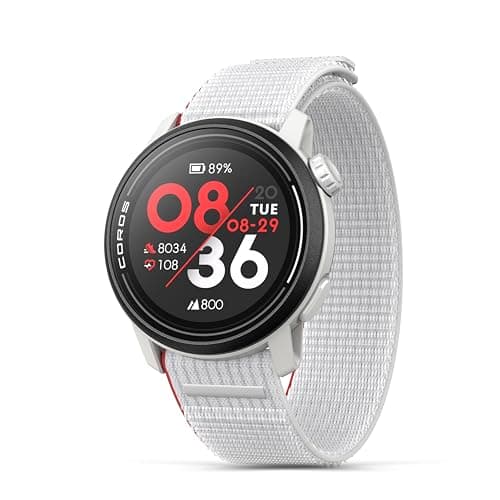
Long training weeks under $200COROS PACE 3
The only budget watch on this site that anybody has actually measured. The measurement was not flattering, and we would still rather have it than nothing.
Price as of November 21, 2026. Prices move; Amazon's is the one that counts.
#ad · we may earn a commission from this link to COROS PACE 3
The short answer
The COROS PACE 3 is the pick if you tracked activity: 38 stated GPS hours and 15 days of use, with an independent heart-rate test on the record. The Garmin Venu 3 is the closest all-day replacement at 14 stated days. The budget pick is the Garmin Index Sleep Monitor at under $200 today, if sleep was the only job.
Ranked
Quick picks
| # | Device | Best for | Evidence | Score | Price |
|---|---|---|---|---|---|
| 01 | COROS PACE 3 The only budget watch on this site that anybody has actually measured. The measurement was not flattering, and we would still rather have it than nothing. | Long training weeks under $200 | Independent measured test | 7.4/10 | $199.00Amazon |
| 02 | 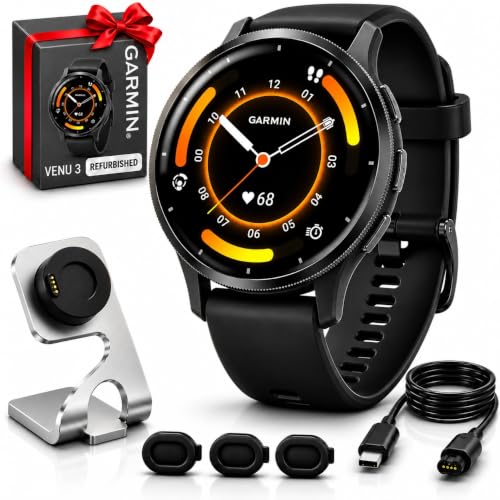 Garmin Venu 3 The sleep-and-recovery watch for people who already trust Garmin's training data. | One device for training and sleep | Manufacturer specification | 7.2/10 | $269.99Amazon |
| 03 | 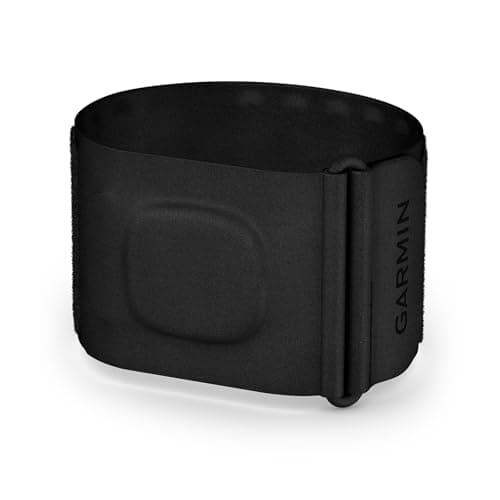 Garmin Index Sleep Monitor An upper-arm band worn only at night — the right sensor position, applied to the right problem. | Sleep data without wearing a watch to bed | Manufacturer specification | 6.7/10 | $169.60Amazon |
| 04 | 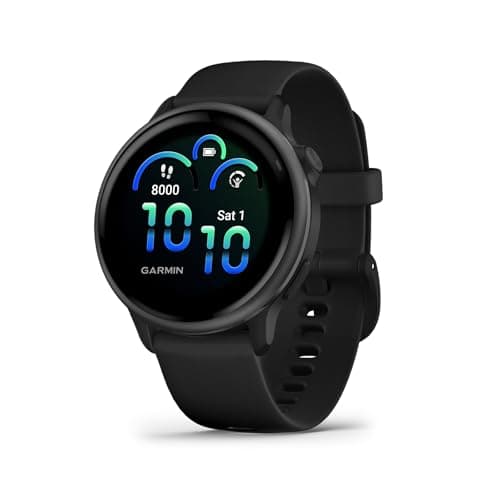 Garmin vívoactive 6 The cheapest Garmin that still pairs a chest strap and still estimates VO2 max — and the published battery table shows you why it outlasts a Forerunner. | A $300 Garmin for someone who already owns the strap | Manufacturer specification | 6.6/10 | $249.00Amazon |
#ad· Live prices from the Amazon Product API, as of November 21, 2026. Where we have no verified live price we show none. Scores come from the published rubric at How we rank — the Evidence column shows what each ranking actually rests on, including where the answer is nothing.
What Fitbit is good at, before anything else
This page exists because people search for it, not because the platform is bad. Start with the thing almost no competitor page will tell you: Fitbit has actually been measured against a laboratory, which puts it in a very small group. Robbins et al. (2024) at Brigham and Women's Hospital took 35 healthy adults through a night of inpatient polysomnography wearing three devices at once - an Oura Ring Gen3, a Fitbit Sense 2 and an Apple Watch Series 8. Being one of three devices in that study is more than almost any wearable sold today can claim. By contrast, the 2024 living umbrella review - 24 systematic reviews, 249 primary validation studies, 430,465 participants - found roughly 34 of 310 identified consumer wearables had ever been validated at all.
The honest version of the result: in that study the Fitbit came third of the three on four-stage agreement at 70.9% (kappa 0.55) with 61.7% deep-sleep sensitivity, overestimating light sleep by about 18 minutes and underestimating deep sleep by about 15. Third of three is still inside a published paper, and we would rather rank a device that has been measured and came last than one nobody has ever checked. That is why the Fitbit Charge 6 is still ranked on this site, and why it is the budget pick on best fitness trackers under $200.
Two more Fitbit strengths worth naming plainly, because they are the things the alternatives have to beat: it is the cheapest device on this entire site by a clear margin, and the Charge 6 is a slim screen band rather than a watch, with up to 7 stated days of battery and the ability to broadcast heart rate to connected gym equipment.
The shape problem, said out loud
Here is the limit of this page. Nothing on this roster is the same shape as a Charge 6. We rank one slim wrist band, and it is the Fitbit. If the narrow screen band on a small wrist is specifically what you want, no page on this site can honestly give you a like-for-like swap - the nearest things are a ring, a watch, or an arm band, and all three are different objects. What follows is matched to the reason people leave, not to the silhouette.
How these four were chosen
Four reasons come up, and each pick answers exactly one of them.
One: the subscription.Some of Fitbit's analysis sits behind Fitbit Premium. None of the four devices here charges anything after purchase - no membership tier, no gated metric, no renewal. That is the single biggest cost variable in this category and it is the first filter applied here.
Two: it does not measure training. A band that counts steps and estimates sleep is a different instrument from one that records a run with its own satellite receiver. Two picks below have a satellite receiver and a training platform; the Fitbit does not.
Three: the wrist is the wrong place for the sensor. This is the most evidence-backed reason to switch anything in this category. The 2025 placement study put 28 people through rest, cycling warm-up, burpees and a modified Bruce treadmill protocol with a Polar H10 chest strap as the reference, and measured three identical Whoop units simultaneously at wrist, forearm and upper arm. Placement beat device: the upper arm was best, the wrist was worst, and the wrist unit showed limits of agreement of plus or minus 10-19 bpm at warm-up. A wrist band of any brand is working at the weakest site available.
Four: the battery. Up to 7 stated days is fine until you want the device on your wrist every night as well as every day, which is exactly when sleep tracking fails in practice - the device is on the charger at bedtime.
The pick: the COROS PACE 3, if you tracked activity
The COROS PACE 3 scores highest of the four on the rubric and is the pick for anyone who used a Fitbit to record walks, runs or rides and wanted better. COROS states 38 hours of full GPS, 15 days of regular use, a 42 x 42 x 11.7 mm case at 29-30 g with the nylon band, 5 ATM, and GPS/QZSS, GLONASS and BeiDou with a dual-frequency GPS option, behind a 1.2-inch transflective touchscreen with mineral glass. At $5.24 per stated GPS hour it is one of the two strongest cost-per-endurance figures on this site, and it is under $250 today.
It also has something unusual for its price: an independent measurement. Lu et al. (2025) included 17 PACE 3 wearers in a 100-runner lactate-threshold study against fingertip blood lactate, and the5krunner's ten-mile comparison measured its wrist heart rate against a chest strap and an armband.
The honest cons. That heart-rate test is the one independent measurement of this watch and it lost: wrist heart rate diverged during and after rapid intensity change, on a dataset the author explicitly cautions was limited. The transflective screen looks flat indoors next to the AMOLED you may be used to. And this is a sports watch, not a lifestyle band - if you never recorded an activity, you are buying a receiver you will not switch on. Skip it if wrist heart rate during intervals is the reason you are shopping, because that is precisely what was measured going wrong.
The Garmin Venu 3, if you wore it all day and all night
The Garmin Venu 3is the closest thing here to a straight replacement for an everyday Fitbit: one AMOLED watch that covers the day, the workout and the night, with no subscription. Garmin's own manual states up to 14 days in smartwatch mode, 26 hours GPS-only and 20 hours on all satellite systems for the 45 mm Venu 3, and a "Swim, 5 ATM" water rating. Fourteen stated days is the number that matters for the battery complaint: it is double the Fitbit's stated figure, which is the difference between a device that is on your wrist at bedtime and one that is on a cable.
The honest cons, and they are pointed. Garmin's sleep staging has no independent polysomnography validation we could find - and Garmin was absent from the Robbins study entirely, so there is no published head-to-head against the Fitbit you are leaving. On that specific axis you would be trading a device with a mediocre published result for a device with no published result, which is a real trade and not an upgrade. It is also still a wrist sensor, so the placement finding above applies to it unchanged. Skip it if sleep staging is the whole reason you are switching; the device with the paper is a ring, and the field is at the most accurate sleep trackers.
The budget pick: the Garmin Index Sleep Monitor, if sleep was the only job
A lot of Fitbit bands are bought for one output: the sleep graph. If that is you, the Garmin Index Sleep Monitor is the cheapest pick here at under $200 today and it is the only device on this page that moves the sensor off the wrist. It is an upper-arm band worn overnight only, measuring sleep, blood oxygen and skin temperature - and the upper arm is the position the 2025 placement study measured as the best of the three sites tested, with the wrist the weakest. It also solves the practical failure of watch-based sleep tracking outright, because a night-only device is charged during the day.
The cons are straightforward. No independent validation of its sleep staging exists that we could find: the placement evidence is about heart rate, and nothing has been published about what this device does with sleep stages. It is night-only, so it replaces part of a Fitbit rather than all of it, and it is another device with another charger. Skip it if you already sleep comfortably in a watch - this buys a better sensor site, not a validated sleep stage.
The Garmin vivoactive 6, if you want the feature list and a chest strap
The Garmin vivoactive 6ranks fourth here and is the pick for one specific person: someone who wants a Fitbit-style everyday smartwatch but intends to fix the heart rate properly. Garmin's manual documents that it pairs wireless sensors over ANT+ or Bluetooth, naming the HRM 200, HRM 600, HRM-Fit and HRM-Pro series explicitly - so the one upgrade with a peer-reviewed reason behind it works on it. It carries its own VO2 max topic in the manual, and Garmin states 11 smartwatch days, 21 hours GPS-only and 17 hours on all satellite systems.
The cons are why it is fourth. There is no multi-band row anywhere in Garmin's battery table for it, which is how you know the receiver is single-frequency - Garmin prints that row for every watch that has one. Garmin's own feature list for it names no training status, no acute load and no training readiness, so the analysis layer a Forerunner gets is absent. And no independent validation of anything it measures exists that we could find. Skip it if positioning accuracy is the weakness you are upgrading; the multi-band field starts at best running watches under $500.
The arithmetic that actually decides this
Four devices, zero subscriptions. That is the clean part of leaving: every pick on this page costs what it costs once, and the metric you were paying monthly for is included or absent, never rented. If you want the full version of that calculation, including what a membership model costs over three years, it is run live on best sleep trackers with no subscription and on best fitness trackers under $300.
If you are leaving over accuracy, read this part first
This is the uncomfortable section, and skipping it would make this page worse than useless. If you are switching because you decided the numbers were wrong, a different wrist device is unlikely to fix that. The umbrella review reported heart rate category-wide at approximately plus or minus 3% with a mean bias of -3.39 bpm, and step count between -9% and 12% mean absolute percentage error - those are figures for the whole category, not for a price tier or a brand. There is no published basis for the claim that switching from one wrist optical sensor to another buys you a better measurement.
What does have evidence behind it is moving the sensor. The placement study is the clearest practical finding in this whole category: a chest electrode as the reference, the upper arm next, and the wrist last. A chest strap costs around a hundred dollars, and Garmin's own manual documents ANT+ and Bluetooth strap pairing for the vivoactive 6, naming the HRM 200 and HRM 600 - so on at least one pick above, the route is documented rather than assumed. The full case is at wrist vs chest strap accuracy, and the strap field is at best budget heart rate monitors.
In full
Every pick, and why
COROS PACE 3
The only budget watch on this site that anybody has actually measured. The measurement was not flattering, and we would still rather have it than nothing.
- Display
- 1.2" transflective touchscreen, mineral glass
- Size
- 42 × 42 × 11.7 mm, 29-30 g with the nylon band
- Satellite
- GPS/QZSS, GLONASS, BeiDou, with a dual-frequency GPS option
- Battery (stated)
- 15 days regular use / 38 h full GPS
- Water rating
- 5 ATM
What's good
- 38 manufacturer-stated GPS hours at the bottom of the market — more than watches costing three times as much
- Transflective screen gets more readable in bright sun rather than less
- Dual-frequency GPS is available at a price where it usually is not
What isn't
- It is the device in the one independent heart-rate test we found, and it lost that test
- The transflective display looks flat indoors next to an AMOLED
Skip this if
Skip this if wrist heart rate during intervals is the reason you are shopping. This is the watch that was measured diverging during exactly that, and a cheaper watch does not become more accurate because you wanted it to.
What the evidence says
Independent measured testThe5krunner's measured 10-mile comparison tested THIS watch — not a sibling, not a predecessor — against a Garmin HRM-Pro Plus and a Polar Verity Sense, and found its wrist heart rate diverged during and after rapid intensity change. The author cautions the dataset was limited. It is the only current budget watch on this site with any independent measurement at all, which is why it scores above devices with nothing.
Show how this 7.4 was calculated
| Factor | Weight | Score |
|---|---|---|
| EvidenceAn actual independent measured test of this exact watch exists — and it was unfavorable, on a limited dataset. Having been measured is worth something; having been measured badly caps it. | 30% | 5.0 |
| HardwareDual-frequency GPS option and a transflective display, per the COROS spec page. | 20% | 7.5 |
| Metric coverageFull COROS training platform; no maps and a narrower third-party ecosystem than Garmin. | 20% | 7.5 |
| Endurance38 stated hours of full GPS and 15 days of regular use, at this price. | 15% | 9.5 |
| Cost per capabilityOne of the two strongest dollars-per-GPS-hour figures on the site. | 15% | 9.5 |
Price as of November 21, 2026. Prices move; Amazon's is the one that counts.
#ad · we may earn a commission from this link to COROS PACE 3
Garmin Venu 3
The sleep-and-recovery watch for people who already trust Garmin's training data.
- Display
- 45mm, AMOLED
- Battery (stated)
- Up to 14 days
- Extras
- Sleep coach, nap detection, wheelchair mode
What's good
- 14 stated days means it survives the nights as well as the days — the practical failure of sleep tracking on a sports watch is that it is on the charger at bedtime
- One device rather than a watch plus a ring
What isn't
- Garmin's sleep staging has no independent PSG validation we could find
- A wrist is a worse optical site than a finger
Skip this if
Skip this if sleep staging is the reason you are buying. The published record has nothing to say about Garmin's, and the device that does have a paper is a ring.
What the evidence says
Manufacturer specificationNo independent PSG validation of Garmin's sleep staging that we could find. Notably, Garmin was absent from the Robbins et al. (2024) comparison entirely, so there is no published head-to-head against Oura, Fitbit or Apple.
Show how this 7.2 was calculated
| Factor | Weight | Score |
|---|---|---|
| EvidencePublished specs only; conspicuously absent from the major PSG comparison study. | 30% | 4.5 |
| HardwareCurrent Garmin optical sensor in a wrist-worn AMOLED watch. | 20% | 8.0 |
| Metric coverageSleep, recovery, training and everyday smartwatch functions in one device. | 20% | 9.0 |
| Endurance14 stated days is enough to keep it on the wrist overnight. | 15% | 8.5 |
| Cost per capabilityNo subscription, and it replaces two devices. | 15% | 7.5 |
Price as of November 21, 2026. Prices move; Amazon's is the one that counts.
#ad · we may earn a commission from this link to Garmin Venu 3
Garmin Index Sleep Monitor
An upper-arm band worn only at night — the right sensor position, applied to the right problem.
- Form
- Upper-arm band, worn overnight
- Extras
- Sleep tracking, blood oxygen, skin temperature
What's good
- Upper-arm placement is the position the 2025 Sensors study measured as superior to the wrist
- Solves the real problem with watch-based sleep tracking: the watch is usually charging at night
What isn't
- No independent validation of its sleep staging that we could find
- Another device, another charger, one job
Skip this if
Skip this if you already sleep comfortably in your watch. This buys a better sensor site, not a validated sleep stage.
What the evidence says
Manufacturer specificationNo validation of this device that we could find. The placement principle is peer-reviewed for heart rate (Sensors 2025); nothing has been published about its sleep staging.
Show how this 6.7 was calculated
| Factor | Weight | Score |
|---|---|---|
| EvidenceRight placement on published evidence, but no measurement of this device's actual sleep output. | 30% | 4.5 |
| HardwareUpper-arm optical sensing — the best-performing site in the placement study. | 20% | 8.0 |
| Metric coverageSleep, SpO2 and temperature; night-time only. | 20% | 7.0 |
| EnduranceMulti-night battery. | 15% | 8.0 |
| Cost per capabilityCheaper than a ring, with no subscription. | 15% | 7.5 |
Price as of November 21, 2026. Prices move; Amazon's is the one that counts.
#ad · we may earn a commission from this link to Garmin Index Sleep Monitor
Garmin vívoactive 6
The cheapest Garmin that still pairs a chest strap and still estimates VO2 max — and the published battery table shows you why it outlasts a Forerunner.
- Case
- 42mm, aluminum bezel, AMOLED
- Satellite
- GPS only or all systems — no multi-band row published
- Battery (stated)
- 11 days smartwatch / 17 h all satellite systems
- Maps
- None
- Sensors
- Pairs ANT+ / Bluetooth straps, HRM 600 and HRM 200 named
What's good
- Garmin's manual documents ANT+ and Bluetooth strap pairing, so the one real fix for wrist heart rate works on a $300 watch
- Carries its own VO2 max topic in the manual, plus PacePro, running dynamics, HRV status and Body Battery
- States longer endurance than a Forerunner 570 in every satellite mode it publishes — 21 h GPS-only against 18 h
What isn't
- No multi-band row exists anywhere in Garmin's own battery table, which is how you can tell the receiver is single-frequency
- Garmin's feature list names no training status, no acute load and no training readiness — the analysis layer a Forerunner or a Venu 4 gets
- No maps, one case size only, and no independent validation of anything it measures
Skip this if
Skip this if positioning accuracy is the weakness you are upgrading. The long battery here is partly a consequence of hardware that cannot run a multi-band mode, and no amount of software fixes a single-frequency receiver in a city or a canyon.
What the evidence says
Manufacturer specificationNo independent validation of this model exists that we could find — not of its optical heart rate, not of its sleep staging, not of its positioning. Garmin as a brand has at least been measured: two Garmin watches were among the eight tested against a trundle wheel by Gilgen-Ammann et al. (2020), and a Garmin device finished last of five on nocturnal HRV agreement in Dial et al. (2025). Neither study tested this watch, and the 2020 one predates the receiver generation it would need to describe.
Show how this 6.6 was calculated
| Factor | Weight | Score |
|---|---|---|
| EvidenceA detailed owner's manual with a per-mode battery table and documented feature definitions, and no independent measurement of a single number this watch produces. | 30% | 4.5 |
| HardwareGarmin's Elevate wrist sensor, an AMOLED display behind an aluminum bezel, multi-constellation GNSS — and no multi-band mode, which Garmin's own battery table gives away by having no row for one. Pairs ANT+ and Bluetooth sensors, including the HRM 600, which is worth more to heart-rate data than any wrist sensor revision. | 20% | 7.0 |
| Metric coverageVO2 max, PacePro, running dynamics, HRV status, Body Battery, sleep coach, Pulse Ox, stress, 80+ sports apps and a wheelchair mode. Missing: maps, an ECG app, and the training status / acute load / training readiness layer Garmin names on the tier above. | 20% | 7.5 |
| EnduranceGarmin states 11 smartwatch days, 21 days in battery saver, 21 hours GPS-only and 17 hours on all satellite systems. Longer than a Forerunner 570 in every mode both watches publish. | 15% | 8.0 |
| Cost per capabilityA $299.99 list price for a Garmin that estimates VO2 max and pairs a strap is a genuinely good number. It is not a great one, because an Amazfit Balance 2 publishes dual-band GNSS, offline maps, sapphire glass and 10 ATM at the same list price. | 15% | 7.5 |
$299.9917% off
Price as of November 21, 2026. Prices move; Amazon's is the one that counts.
#ad · we may earn a commission from this link to Garmin vívoactive 6
Before you switch away from a Fitbit
- Write down which single output you actually used. Steps, sleep stages, resting heart rate or recorded workouts. Each of those four points at a different device above, and nothing on this page replaces all four at once.
- Check whether the thing you disliked was the subscription or the hardware. If it was the fee, every pick here settles that in one purchase. If it was the data, read the last section again before spending anything.
- Decide whether you will wear it overnight. This is where a 7-day stated battery turns into a problem and a 14-day one does not, and it is the practical reason most watch sleep data has gaps.
- Accept that your history does not come with you. Years of Fitbit trend data stays in Fitbit. That is a genuine cost of switching and no device here reduces it.
- If heart rate is the point, buy a strap first. It is cheaper than any watch on this page and it is the only change in this category with a peer-reviewed reason behind it.
How this ranking was built
Every score on this page comes from one published rubric, applied identically to every device on the site, with the weights written down and the inputs shown. We have not worn any of these devices and we never say we have. Read the method and check us.
Questions
Frequently asked
What is the best alternative to a Fitbit?
It depends on which output you used. The COROS PACE 3 if you recorded activity, the Garmin Venu 3 if you wore it all day and all night, the Garmin Index Sleep Monitor if sleep was the only job, and the Garmin vivoactive 6 if you want an everyday watch that will read a chest strap.
Is there a Fitbit alternative with no subscription?
All four picks on this page cost what they cost once, with no membership tier and no gated metric. The no-fee field across sleep devices, with three-year costs computed live, is at best sleep trackers with no subscription.
Is Garmin sleep tracking more accurate than Fitbit?
There is no published evidence either way. Fitbit's platform was measured against polysomnography in Robbins et al. (2024) and came third of three devices; Garmin was not in that study at all, and we found no independent validation of Garmin's sleep staging. A mediocre published result is not worse than no result - it is simply more checkable.
Can I replace a Fitbit Charge with a smart ring?
For sleep and resting metrics, yes, and the ring in that study outperformed the Fitbit on four-stage agreement. Rings do not record workouts with their own satellite receiver, and most add a membership. The field and its subscription arithmetic are at best smart rings.
Is a Fitbit still worth buying?
On this site it is still ranked, and it is the budget pick of best fitness trackers under $200. It is the cheapest device we rank, and one of very few whose sleep platform has been through a laboratory at all. The published result was the weakest of the three tested, and both halves of that sentence are true at once.
Show your working
Sources
Every one of these was read in full before it was cited. Where we could not access a paper, we do not quote its numbers.
- [1]Peer-reviewed validation2024Robbins et al., “Accuracy of Three Commercial Wearable Devices for Sleep Tracking in Healthy Adults”, Sensors 24(20):6532
Brigham and Women’s Hospital. n = 35 healthy adults, single-night inpatient polysomnography, testing Oura Ring Gen3, Fitbit Sense 2 and Apple Watch Series 8. Authors’ stated limits: one night, lab conditions, healthy adults without insomnia, comparison only during scheduled sleep, and device failures on 6 Apple Watches and 2 Fitbits.
- [2]Peer-reviewed validation2025“Impact of Anatomical Placement on the Accuracy of Wearable Heart Rate Monitors During Rest and Various Exercise Intensities”, Sensors (Basel)
n = 28 (14 male, 14 female). Polar H10 chest strap as the reference. Compared Polar Verity Sense (forearm), Garmin Forerunner 55 (wrist) and three simultaneous Whoop 4.0 units at wrist, forearm and upper arm, across rest, cycling warm-up, burpees and a modified Bruce treadmill protocol.
- [3]Peer-reviewed validation2024Doherty, Baldwin, Keogh, Caulfield & Argent, “Keeping Pace with Wearables: A Living Umbrella Review of Systematic Reviews Evaluating the Accuracy of Consumer Wearable Technologies in Health Measurement”, Sports Medicine
DOI 10.1007/s40279-024-02077-2. An umbrella review: 24 systematic reviews covering 249 unique primary validation studies and 430,465 participants (43% female), across 11 biometric outcomes, with roughly 34 of 310 identified consumer wearables ever validated. Reported accuracy by metric: heart rate approximately ±3% (mean bias −3.39 bpm); step count mean absolute percentage error from −9% to 12%; energy expenditure mean bias −3 kcal per minute with error ranging from −21.27% to 14.76%. Authors’ stated limits: a temporal lag between device release and published research, the intrinsic bias of a tertiary synthesis, and heterogeneity of protocols, devices, criterion measures and statistics severe enough that the authors did not pool a meta-analysis.
- [4]Manufacturer specification2026COROS — PACE 3 published specifications
Manufacturer-stated: 1.2" transflective touchscreen with mineral glass, 42 × 42 × 11.7 mm, 29-30 g with the nylon band, GPS/QZSS/GLONASS/BeiDou with a dual-frequency GPS option, 38 hours of full GPS, 15 days of regular use, 5 ATM.
- [5]Independent measured test2023the5krunner, measured heart-rate comparison of the COROS PACE 3
An independent measured test, not a peer-reviewed study, and the author explicitly cautions the dataset was limited. Compared against Garmin HRM-Pro Plus and Polar Verity Sense across easy runs, intervals and cycling. Found divergence during and after rapid intensity change. Tests the PACE 3, not the PACE 4.
- [6]Peer-reviewed validation2025Lu, Cui, Zhu, Wu, Xing, Pan & Shen, “Validity of smartwatch-derived estimates of lactate threshold heart rate and pace compared to graded exercise testing”, Frontiers in Physiology 16:1621996
DOI 10.3389/fphys.2025.1621996. 100 healthy recreational runners (61 male, 39 female, 28.0 ± 9.6 years) against a treadmill graded exercise test with fingertip blood lactate (Biosen C-line), threshold determined by the modified Dmax method. Device counts were unequal: Huawei GT Runner n = 100, Garmin Forerunner 265/265s n = 23, COROS PACE 3 n = 17. Authors’ stated limits: unbalanced samples, indoor reference against outdoor watch tests, day-to-day threshold variability, and different heart-rate acquisition between devices — the Garmin protocol required an ECG chest strap while the other two used wrist PPG — plus undisclosed manufacturer algorithms.
- [7]Manufacturer specification2026Garmin — Venu 3 series owner’s manual, battery life information
Manufacturer-stated, read 2026-10-18, Venu 3S then Venu 3: smartwatch mode with activity tracking and continuous wrist-based heart rate up to 10 days / up to 14 days; smartwatch mode with battery saver up to 20 / 26 days; GPS Only mode up to 21 / 26 hours; All Systems GPS mode up to 15 / 20 hours; All Systems GPS mode with music playback up to 8 / 11 hours; Always On display mode up to 5 days for both. NOTE the shape of this table: there is no all-satellite-plus-multi-band row, because the Venu 3 has no multi-band mode — the Venu 4 manual is the first in the line to publish one. Garmin's own caveat on the page is that actual battery life depends on which features are enabled, including activity tracking, wrist-based heart rate, phone notifications, GPS and connected sensors.
- [8]Manufacturer specification2026Garmin — Venu 3 series owner’s manual, specifications
Manufacturer-stated, read 2026-10-18: rechargeable built-in lithium-ion battery; battery life up to 14 days in smartwatch mode for the Venu 3 and up to 10 days for the Venu 3S; water rating “Swim, 5 ATM”; operating temperature range −20 to 50 °C; charging temperature range 0 to 45 °C; wireless frequencies 2.4 GHz at 17 dBm maximum and 13.56 MHz at −40 dBm maximum. The web edition of this page does not publish case dimensions, weights, display resolution or memory, so this site quotes none of those for the Venu 3.
- [9]Manufacturer specification2026Garmin — vívoactive 6 Owner’s Manual, battery life information
Manufacturer-stated, read 2026-11-01 from Garmin's own owner's manual: smartwatch mode up to 11 days; battery saver watch mode up to 21 days; GPS only mode up to 21 hours; all satellite systems mode up to 17 hours; all satellite systems with music mode up to 8 hours. Garmin's own caveat on the page: “the actual battery life depends on the features enabled on your watch.” NOTE the structure of the table — the highest-accuracy row Garmin publishes for this watch is all satellite systems. There is no all-systems-plus-multi-band row, because the hardware has no multi-band mode.
- [10]Manufacturer specification2026Garmin — vívoactive 6 Owner’s Manual, “Pairing Your Wireless Sensors”
Manufacturer-documented, read 2026-11-01. The watch pairs wireless sensors “using ANT+ or Bluetooth technology” and reconnects automatically “when you start an activity and the sensor is active and within range”. The US manual names the HRM 200, HRM 600, HRM-Fit and HRM-Pro series, and advises pairing an HRM-Fit or HRM-Pro over ANT+ rather than Bluetooth when you want running pace and distance from the strap. This is the single most consequential line in the manual for anyone who cares about heart-rate data: the watch can be told to stop guessing and read a chest electrode instead.
- [11]Manufacturer specification2026Garmin — vívoactive 6 Owner’s Manual, “Getting Your VO2 Max. Estimate for Running”
Manufacturer-documented, read 2026-11-01 — the vivoactive 6 manual carries its own VO2 max estimate topic, so the figure is a documented feature of this watch rather than something inferred from the family. Used on this site only to establish that the feature exists; what a wrist VO2 max estimate is worth is a separate question, answered with measured data on /data-quality/vo2-max-accuracy-by-device.
Read next
Related
- Best fitness trackers under $200
Where the Fitbit is still the budget pick, and why.
- Wrist vs chest strap accuracy
The measurement behind the one upgrade that reliably works.
- Best sleep trackers with no subscription
The no-fee field, with three-year costs computed live.
- WHOOP vs Fitbit
The membership model against the one-off purchase, head to head.