The evidence scoreboard
The best fitness trackers under $200
Under two hundred dollars you cannot buy a ring, a flagship or a multi-band satellite receiver. What you can buy is a device that does one job properly, and the four here do three different jobs.
We earn a commission when you buy through our Amazon links, at no extra cost to you. It never decides a ranking — the rubric that does is published in full, so you can check us rather than take our word for it. How this works.
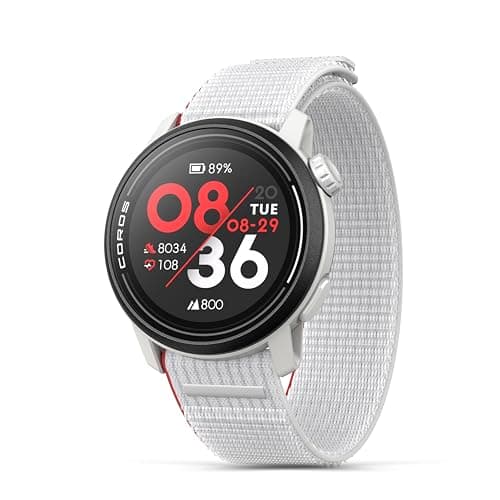
Top pick
Long training weeks under $200COROS PACE 3
The only budget watch on this site that anybody has actually measured. The measurement was not flattering, and we would still rather have it than nothing.
Price as of November 21, 2026. Prices move; Amazon's is the one that counts.
#ad · we may earn a commission from this link to COROS PACE 3
The short answer
The COROS PACE 3 is the pick under $200: 38 manufacturer-stated hours of full GPS and 15 days of regular use, at $5.24 per stated GPS hour. The budget pick is the Fitbit Charge 6 at (no verified live price today, so we are not calling this one either way) - the cheapest device here, and the only one whose platform has ever been through a sleep laboratory. Choose the Garmin Index Sleep Monitor instead if sleep, not training, is the thing you want measured.
Ranked
Quick picks
| # | Device | Best for | Evidence | Score | Price |
|---|---|---|---|---|---|
| 01 | COROS PACE 3 The only budget watch on this site that anybody has actually measured. The measurement was not flattering, and we would still rather have it than nothing. | Long training weeks under $200 | Independent measured test | 7.4/10 | $199.00Amazon |
| 02 | 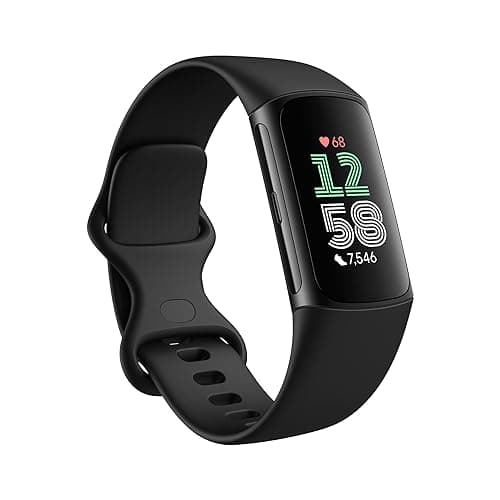 Fitbit Charge 6 Cheap, measured, and the weakest of the three devices in the PSG study. We would rather tell you that than not rank it. | Lowest-cost tracker with published data behind it | Peer-reviewed validation | 7.2/10 | Check price → |
| 03 | 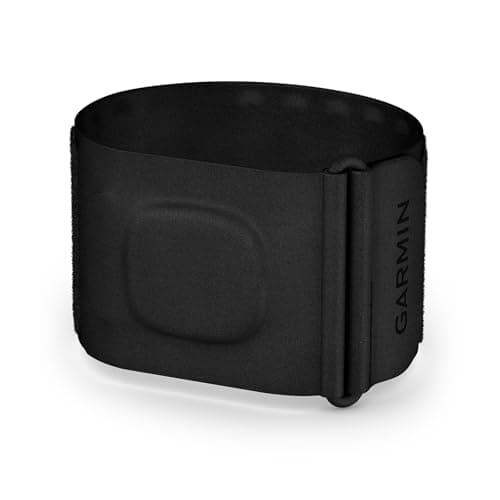 Garmin Index Sleep Monitor An upper-arm band worn only at night — the right sensor position, applied to the right problem. | Sleep data without wearing a watch to bed | Manufacturer specification | 6.7/10 | $169.60Amazon |
| 04 | 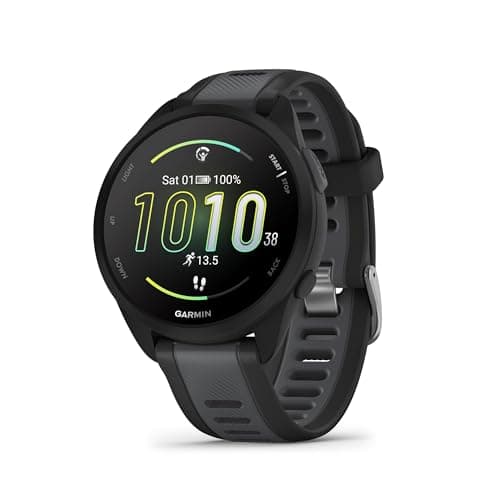 Garmin Forerunner 165 The cheapest way into a genuinely good AMOLED Garmin, provided you accept single-band positioning. | First real running watch | Manufacturer specification | 6.4/10 | $191.00Amazon |
#ad· Live prices from the Amazon Product API, as of November 21, 2026. Where we have no verified live price we show none. Scores come from the published rubric at How we rank — the Evidence column shows what each ranking actually rests on, including where the answer is nothing.
What $200 buys, and what it does not
This bracket is more interesting than the money suggests, because the devices in it are not cut-down versions of the expensive ones - they are different shapes of device that each dropped a different thing to hit the price. One dropped the screen quality, one dropped the satellite receiver, one dropped the daytime entirely.
Three things are genuinely unavailable under $200 on this site, and it is worth saying so before the picks. There is no smart ring - the cheapest ring here is well above the line, and the ring field is at best smart rings. There is no multi-band satellite mode: every device here tops out at an all-systems row, and Garmin publishes a multi-band row for every watch that has one, so the absence is the specification. And there is no offline map on any of them.
What you are not giving up is the measurement, and that is the part worth understanding properly. The 2024 living umbrella review - 24 systematic reviews over 249 primary validation studies and 430,465 participants - found roughly 34 of 310 identified consumer wearables had ever been validated at all, and reported heart rate at approximately plus or minus 3% with a mean bias of -3.39 bpm and step count between -9% and 12% mean absolute percentage error. Those figures are category-wide. There is no published basis for the claim that a $700 wrist sensor measures better than a $120 one, and this page does not make it. That is the argument the whole site rests on, laid out at the most accurate fitness trackers.
The PACE 3 is the pick, because it gives up the least
The COROS PACE 3 is the only device under $200 here that is a complete training instrument. COROS states 38 hours of full GPS, 15 days of regular use, a 42 x 42 x 11.7 mm case weighing 29-30 g with the nylon band, a 5 ATM water rating, GPS/QZSS, GLONASS and BeiDou with a dual-frequency GPS option, behind a 1.2" transflective touchscreen with mineral glass.
Two things about that list are unusual at this price. Thirty-eight stated GPS hours is more than most flagships - the Forerunner 265 states 20 GPS-only hours at more than twice the money - and a transflective display gets more readable in direct sun rather than less, which is the condition you will actually be reading it in. It is under $200 today.
The caveat is the measurement record, and it is the only one on this page with a measurement to have a record about. the5krunner's ten-mile comparison found this watch's wrist heart rate diverged during and after rapid intensity change - so if you train by heart rate, budget for a strap. The budget-strap field is at best budget heart rate monitors.
The budget pick: the Charge 6, with the published result that cost it a place
The Fitbit Charge 6 is the cheapest device on this page and the only true wrist band on it. Fitbit states up to 7 days of battery, and it reads heart rate from connected gym equipment - a feature nothing else here has and the single most useful thing about it indoors.
It is also one of the very few devices at any price with a published head-to-head sleep result attached to its platform, and the result is not flattering. Robbins and colleagues tested a Fitbit Sense 2 - a sibling, not this device - against single-night inpatient polysomnography on 35 healthy adults, and reported 70.9% four-stage agreement and 61.7% deep-sleep sensitivity, the weakest of the three devices in the study, with light sleep overestimated by 18 minutes and deep sleep underestimated by 15. Fitbit's staging algorithm is shared across the line, but this is still evidence about a different device and we will not borrow it in either direction. Buy it for the price and the daytime; skip it if sleep stages are the point.
The Index Sleep Monitor is the one device here that is not a watch at all
The Garmin Index Sleep Monitor is an upper-arm band worn overnight, and it exists to solve a problem the other three cannot: a watch you have to charge is a watch that is off your wrist for part of every day, and the part people choose is usually the night. This device does only nights, and it is on the arm rather than the wrist.
That placement is not a detail. The 2025 anatomical-placement study put three identical sensors on the same people at wrist, forearm and upper arm against a Polar H10 reference across rest and three exercise intensities, and found that position, not brand, was the biggest variable - with the wrist the weakest of the three sites. Nobody has validated this specific device, and we rank it on manufacturer specification accordingly. But it is the only tracker under $200 whose sensor sits somewhere the literature prefers. It is under $200 today, and the sleep field in full is at best sleep trackers.
The Forerunner 165 is the cheapest real Garmin, and its battery table says why
The Forerunner 165 is the entry point to Garmin's training stack. Garmin states up to 11 days in smartwatch mode, 19 hours GPS-only, 17 hours in All Systems GPS, 25 hours UltraTrac, 7 hours GPS-only with music, a 5 ATM swim rating and up to 4 GB of media storage.
Note the shape of that table: the highest-accuracy row Garmin publishes for this watch is All Systems. There is no all-systems-plus-multi-band row, because the hardware has no multi-band mode - and since Garmin prints that row for every watch that has one, the gap is the specification. It is under $200 today and it ranks last here on cost per capability rather than on quality: the PACE 3 states more than twice the GPS hours for similar money. The comparison with the tier above is at Forerunner 165 vs 265, and the brand ladder under $500 is at best Garmin watches under $500.
The best $200 you can spend on data quality is not any of these four
We will say the uncomfortable version, because it is what the published record supports. If you already own any device that pairs a Bluetooth or ANT+ sensor, the highest-value thing you can do with two hundred dollars is not to replace it. Researchers who need a heart-rate measurement they can trust choose a chest electrode as their reference instrument - in the placement study above and in the 536-night overnight comparison, where an H10 sampled at 1000 Hz was the criterion against five consumer devices. That sensor costs around a hundred dollars and it is the only device on this site with a favorable peer-reviewed position.
A cheap tracker plus a strap measures better than an expensive tracker alone, and the arithmetic does not change at any budget. The full case is at wrist vs chest strap accuracy.
Two pages pick this bracket up from here. Best fitness trackers under $300 covers what the next hundred dollars adds, which is a dual-frequency satellite receiver and a ring - neither of which exists below $200 on this roster. And alternatives to Fitbit is for anyone trying to leave the device that is the budget pick on this page.
Walking is the use case this bracket serves best, and it is also the one where paying more buys the least - multi-band positioning fixes an error that barely exists at walking pace. We make that argument with its own field in the best fitness trackers for walking.
In full
Every pick, and why
COROS PACE 3
The only budget watch on this site that anybody has actually measured. The measurement was not flattering, and we would still rather have it than nothing.
- Display
- 1.2" transflective touchscreen, mineral glass
- Size
- 42 × 42 × 11.7 mm, 29-30 g with the nylon band
- Satellite
- GPS/QZSS, GLONASS, BeiDou, with a dual-frequency GPS option
- Battery (stated)
- 15 days regular use / 38 h full GPS
- Water rating
- 5 ATM
What's good
- 38 manufacturer-stated GPS hours at the bottom of the market — more than watches costing three times as much
- Transflective screen gets more readable in bright sun rather than less
- Dual-frequency GPS is available at a price where it usually is not
What isn't
- It is the device in the one independent heart-rate test we found, and it lost that test
- The transflective display looks flat indoors next to an AMOLED
Skip this if
Skip this if wrist heart rate during intervals is the reason you are shopping. This is the watch that was measured diverging during exactly that, and a cheaper watch does not become more accurate because you wanted it to.
What the evidence says
Independent measured testThe5krunner's measured 10-mile comparison tested THIS watch — not a sibling, not a predecessor — against a Garmin HRM-Pro Plus and a Polar Verity Sense, and found its wrist heart rate diverged during and after rapid intensity change. The author cautions the dataset was limited. It is the only current budget watch on this site with any independent measurement at all, which is why it scores above devices with nothing.
Show how this 7.4 was calculated
| Factor | Weight | Score |
|---|---|---|
| EvidenceAn actual independent measured test of this exact watch exists — and it was unfavorable, on a limited dataset. Having been measured is worth something; having been measured badly caps it. | 30% | 5.0 |
| HardwareDual-frequency GPS option and a transflective display, per the COROS spec page. | 20% | 7.5 |
| Metric coverageFull COROS training platform; no maps and a narrower third-party ecosystem than Garmin. | 20% | 7.5 |
| Endurance38 stated hours of full GPS and 15 days of regular use, at this price. | 15% | 9.5 |
| Cost per capabilityOne of the two strongest dollars-per-GPS-hour figures on the site. | 15% | 9.5 |
Price as of November 21, 2026. Prices move; Amazon's is the one that counts.
#ad · we may earn a commission from this link to COROS PACE 3
Fitbit Charge 6
Cheap, measured, and the weakest of the three devices in the PSG study. We would rather tell you that than not rank it.
- Form
- Wrist band
- Battery (stated)
- Up to 7 days
- Extras
- Heart rate on connected gym equipment
What's good
- One of only three devices with a published head-to-head PSG result at all
- Substantially cheaper than every ring here
What isn't
- Robbins et al. (2024): lowest four-stage agreement of the three tested, at 70.9%, and deep-sleep sensitivity of 61.7%
- Overestimated light sleep by 18 minutes and underestimated deep sleep by 15
Skip this if
Skip this if the sleep stages are the point. It was measured, and it came third of three.
What the evidence says
Peer-reviewed validationRobbins et al., Sensors 24(20):6532 (2024) tested the Fitbit Sense 2 — not the Charge 6 — against polysomnography: 70.9% four-stage agreement (κ = 0.55) and 61.7% deep-sleep sensitivity, the weakest of the three devices. Fitbit's staging algorithm is shared across the line, but this remains evidence about a different device.
Show how this 7.2 was calculated
| Factor | Weight | Score |
|---|---|---|
| EvidenceReal peer-reviewed evidence exists for the platform — it is simply unflattering, and it tested a sibling device. | 30% | 6.0 |
| HardwareWrist-worn optical sensing, the weakest of the three placements in the placement study. | 20% | 7.0 |
| Metric coverageBroad everyday metrics; some features sit behind Fitbit Premium. | 20% | 7.5 |
| EnduranceUp to 7 stated days. | 15% | 7.5 |
| Cost per capabilityBy far the cheapest device in this roundup. | 15% | 9.0 |
No buyable offer at the last price check (November 21, 2026). We show nothing rather than a stale number.
#ad · we may earn a commission from this link to Fitbit Charge 6
Garmin Index Sleep Monitor
An upper-arm band worn only at night — the right sensor position, applied to the right problem.
- Form
- Upper-arm band, worn overnight
- Extras
- Sleep tracking, blood oxygen, skin temperature
What's good
- Upper-arm placement is the position the 2025 Sensors study measured as superior to the wrist
- Solves the real problem with watch-based sleep tracking: the watch is usually charging at night
What isn't
- No independent validation of its sleep staging that we could find
- Another device, another charger, one job
Skip this if
Skip this if you already sleep comfortably in your watch. This buys a better sensor site, not a validated sleep stage.
What the evidence says
Manufacturer specificationNo validation of this device that we could find. The placement principle is peer-reviewed for heart rate (Sensors 2025); nothing has been published about its sleep staging.
Show how this 6.7 was calculated
| Factor | Weight | Score |
|---|---|---|
| EvidenceRight placement on published evidence, but no measurement of this device's actual sleep output. | 30% | 4.5 |
| HardwareUpper-arm optical sensing — the best-performing site in the placement study. | 20% | 8.0 |
| Metric coverageSleep, SpO2 and temperature; night-time only. | 20% | 7.0 |
| EnduranceMulti-night battery. | 15% | 8.0 |
| Cost per capabilityCheaper than a ring, with no subscription. | 15% | 7.5 |
Price as of November 21, 2026. Prices move; Amazon's is the one that counts.
#ad · we may earn a commission from this link to Garmin Index Sleep Monitor
Garmin Forerunner 165
The cheapest way into a genuinely good AMOLED Garmin, provided you accept single-band positioning.
- Display
- AMOLED
- Satellite
- Single-band GNSS
- Extras
- Training metrics, sleep tracking, music on the Music edition
What's good
- AMOLED and Garmin's training platform at the bottom of the range
- Light, simple, and hard to get wrong as a first watch
What isn't
- Single-band positioning, which is the specification that actually degrades in cities and under tree cover
- No multi-band means it is the wrong upgrade if GPS drift is your complaint
Skip this if
Skip this if you are here because your GPS track wanders between buildings. Single-band is the hardware that causes that, and this watch has it.
What the evidence says
Manufacturer specificationPublished specifications only; no independent validation of this model that we could find.
Show how this 6.4 was calculated
| Factor | Weight | Score |
|---|---|---|
| EvidencePublished specs, no independent measured validation. | 30% | 5.0 |
| HardwareSingle-band GNSS — a genuine step down from the multi-band models above it. | 20% | 6.0 |
| Metric coverageFull Garmin training platform; fewer advanced running-dynamics metrics. | 20% | 7.0 |
| EnduranceSolid for the class, per Garmin's stated figures. | 15% | 7.0 |
| Cost per capabilityLowest entry price to the Garmin ecosystem with an AMOLED screen. | 15% | 8.5 |
$249.9924% off
Price as of November 21, 2026. Prices move; Amazon's is the one that counts.
#ad · we may earn a commission from this link to Garmin Forerunner 165
What to check before you spend $200 on a tracker
- Decide which job you are buying for first. These four are a training watch, a daytime band and a sleep sensor. They are not ranked against each other on a single axis and no amount of spec-reading will merge them.
- Check the battery table for a multi-band row. Nothing in this band has one. If you race in a city or under tree cover, that is the reason to spend more.
- Confirm the device pairs an external sensor. It is the cheapest real accuracy upgrade at this price, and the manuals name the protocol explicitly where it is supported.
- Ignore step-count marketing. The measured spread across the whole category is small, which makes it the weakest reason to choose between these four.
- Watch for features behind a subscription. None of these four requires a membership to function, but some analysis on the Fitbit sits behind Fitbit Premium.
How this ranking was built
Every score on this page comes from one published rubric, applied identically to every device on the site, with the weights written down and the inputs shown. We have not worn any of these devices and we never say we have. Read the method and check us.
Questions
Frequently asked
Is a $200 fitness tracker accurate enough?
For heart rate and steps, the published record does not separate price tiers: the umbrella review reported category-wide heart rate at roughly plus or minus 3% and found most consumer wearables have never been validated at any price. What more money buys is satellite modes, maps, materials and analytics.
Which tracker under $200 has the best battery life?
The COROS PACE 3, on manufacturer-stated figures: 38 hours of full GPS and 15 days of regular use. Garmin states 11 days for the Forerunner 165 and Fitbit states up to 7 days for the Charge 6.
Can I get a smart ring under $200?
Not on this site - every ring we rank sits above that line, and most add a membership on top. The ring field and its subscription arithmetic are at best smart rings.
Should I buy a cheap tracker and a chest strap instead?
If heart rate is what you care about, yes. The chest electrode is the instrument researchers use as their reference, it costs around a hundred dollars, and every device on this page except the sleep monitor can pair one.
Show your working
Sources
Every one of these was read in full before it was cited. Where we could not access a paper, we do not quote its numbers.
- [1]Manufacturer specification2026COROS — PACE 3 published specifications
Manufacturer-stated: 1.2" transflective touchscreen with mineral glass, 42 × 42 × 11.7 mm, 29-30 g with the nylon band, GPS/QZSS/GLONASS/BeiDou with a dual-frequency GPS option, 38 hours of full GPS, 15 days of regular use, 5 ATM.
- [2]Independent measured test2023the5krunner, measured heart-rate comparison of the COROS PACE 3
An independent measured test, not a peer-reviewed study, and the author explicitly cautions the dataset was limited. Compared against Garmin HRM-Pro Plus and Polar Verity Sense across easy runs, intervals and cycling. Found divergence during and after rapid intensity change. Tests the PACE 3, not the PACE 4.
- [3]Peer-reviewed validation2024Robbins et al., “Accuracy of Three Commercial Wearable Devices for Sleep Tracking in Healthy Adults”, Sensors 24(20):6532
Brigham and Women’s Hospital. n = 35 healthy adults, single-night inpatient polysomnography, testing Oura Ring Gen3, Fitbit Sense 2 and Apple Watch Series 8. Authors’ stated limits: one night, lab conditions, healthy adults without insomnia, comparison only during scheduled sleep, and device failures on 6 Apple Watches and 2 Fitbits.
- [4]Peer-reviewed validation2025“Impact of Anatomical Placement on the Accuracy of Wearable Heart Rate Monitors During Rest and Various Exercise Intensities”, Sensors (Basel)
n = 28 (14 male, 14 female). Polar H10 chest strap as the reference. Compared Polar Verity Sense (forearm), Garmin Forerunner 55 (wrist) and three simultaneous Whoop 4.0 units at wrist, forearm and upper arm, across rest, cycling warm-up, burpees and a modified Bruce treadmill protocol.
- [5]Manufacturer specification2026Polar — H10 heart rate sensor published specifications
Manufacturer-stated: electrical (ECG) measurement, Bluetooth LE + ANT+, internal memory for one session up to 30 hours, up to 400 h on a CR2025 coin cell, WR30.
- [6]Peer-reviewed validation2025Dial, Hollander, Vatne, Emerson, Edwards & Hagen, “Validation of nocturnal resting heart rate and heart rate variability in consumer wearables”, Physiological Reports 13(16):e70527
DOI 10.14814/phy2.70527. n = 13 healthy adults (7 male, 6 female, 33.2 ± 8.6 years) across 536 nights, each wearing an Oura Gen 3, Oura Gen 4, Polar Grit X Pro, Garmin fēnix 6 and Whoop 4.0 simultaneously against a Polar H10 single-lead ECG reference sampled at 1000 Hz. Authors’ stated limits: healthy adults only, no atrial-fibrillation population, proprietary and periodically-updated algorithms, and unequal night counts per device. The Garmin was dropped from the resting-heart-rate comparison because the 30-minute window it uses is not timestamped.
- [7]Manufacturer specification2026Garmin — Forerunner 165 Series owner’s manual, battery life information and specifications
Manufacturer-stated, read 2026-10-11 from Garmin's own owner's manual. Battery: up to 11 days in smartwatch mode with activity tracking, phone notifications and wrist heart rate; up to 19 h in activity mode with GPS Only; up to 17 h with All Systems GPS; up to 25 h with UltraTrac; up to 7 h GPS Only with music playback and 6.5 h All Systems with music. The specification page states a rechargeable built-in lithium-ion battery, a 5 ATM swim water rating, up to 4 GB of media storage, an operating range of −20 to 60 °C and a charging range of 0 to 45 °C. NOTE the structure of the table: the highest-accuracy row Garmin publishes for this watch is All Systems — there is no all-systems multi-band row, because the hardware has no multi-band mode.
- [8]Peer-reviewed validation2024Doherty, Baldwin, Keogh, Caulfield & Argent, “Keeping Pace with Wearables: A Living Umbrella Review of Systematic Reviews Evaluating the Accuracy of Consumer Wearable Technologies in Health Measurement”, Sports Medicine
DOI 10.1007/s40279-024-02077-2. An umbrella review: 24 systematic reviews covering 249 unique primary validation studies and 430,465 participants (43% female), across 11 biometric outcomes, with roughly 34 of 310 identified consumer wearables ever validated. Reported accuracy by metric: heart rate approximately ±3% (mean bias −3.39 bpm); step count mean absolute percentage error from −9% to 12%; energy expenditure mean bias −3 kcal per minute with error ranging from −21.27% to 14.76%. Authors’ stated limits: a temporal lag between device release and published research, the intrinsic bias of a tertiary synthesis, and heterogeneity of protocols, devices, criterion measures and statistics severe enough that the authors did not pool a meta-analysis.
Read next
Related
- Most accurate fitness trackers
The same field judged on evidence rather than on price.
- Wrist vs chest strap accuracy
Why a cheap tracker plus a strap beats an expensive tracker alone.
- Best running watches on a budget
The watch-only version of this bracket, with two more picks.
- Best budget heart rate monitors
Where the last fifty dollars of a $200 budget should go.
- Best fitness trackers under $300
What the next hundred dollars adds to this bracket.