Head to head
Whoop vs Fitbit
Two devices at opposite ends of the price scale, and unusually, published measurements for both platforms.
We earn a commission when you buy through our Amazon links, at no extra cost to you. It never decides a ranking — the rubric that does is published in full, so you can check us rather than take our word for it. How this works.
Top pick
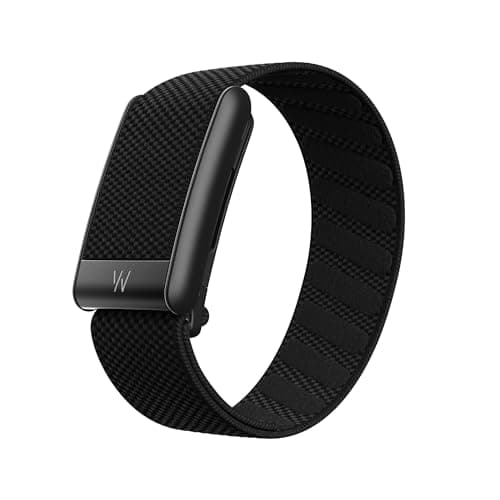
Recovery-led training, if you accept the modelWHOOP Peak (12-month membership)
Not a product you buy, a subscription you enter. Priced honestly on Amazon as what it is: twelve months.
Price as of October 21, 2026. Prices move; Amazon's is the one that counts.
#ad · we may earn a commission from this link to WHOOP Peak (12-month membership)
The short answer
Buy the Fitbit Charge 6 if you want a cheap tracker you own; buy Whoop only if you will actually use recovery-led training and accept a membership that stops working when you stop paying. Both platforms have been measured: Whoop 4.0 recorded 8.17% HRV error against an ECG, and a Fitbit Sense 2 came third of three against polysomnography with 61.7% deep-sleep sensitivity.
Ranked
Quick picks
| # | Device | Best for | Evidence | Score | Price |
|---|---|---|---|---|---|
| 01 | WHOOP Peak (12-month membership) Not a product you buy, a subscription you enter. Priced honestly on Amazon as what it is: twelve months. | Recovery-led training, if you accept the model | Peer-reviewed validation | 7.3/10 | $239.00Amazon |
| 02 | 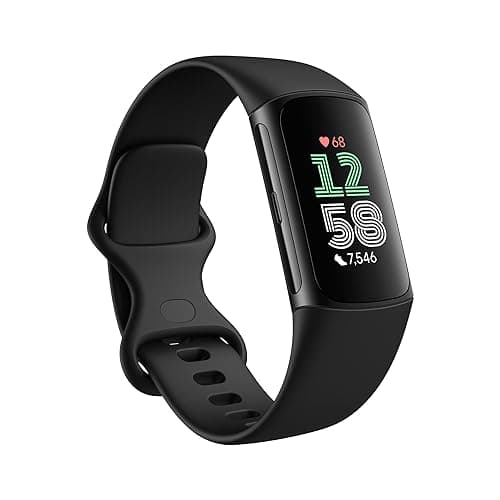 Fitbit Charge 6 Cheap, measured, and the weakest of the three devices in the PSG study. We would rather tell you that than not rank it. | Lowest-cost tracker with published data behind it | Peer-reviewed validation | 7.2/10 | $132.99Amazon |
#ad· Live prices from the Amazon Product API, as of October 21, 2026. Where we have no verified live price we show none. Scores come from the published rubric at How we rank — the Evidence column shows what each ranking actually rests on, including where the answer is nothing.
Two completely different products
One is a screenless band you rent, sold as a twelve-month membership with the hardware included. The other is a fitness band with a screen that you buy once. They overlap only in that both claim to tell you how recovered you are.
| Specification | WHOOP Peak | Fitbit Charge 6 |
|---|---|---|
| Form | Screenless band, wrist or upper arm | Wrist band with screen |
| Commercial model | Membership — hardware included, stops on cancellation | Bought outright; some features behind Fitbit Premium |
| Battery (stated) | Multi-day, chargeable without removal | Up to 7 days |
| Measured HRV error vs ECG | 8.17% (Whoop 4.0, 536-night study) | Not tested in that study |
| Measured sleep staging | Not tested against polysomnography in the study we read | 70.9% four-stage, 61.7% deep sensitivity (Sense 2) |
| Three-year cost | $717 | $133 |
What the studies actually found
Whoop's strongest published result is not about the band at all — it is about where you wear it. In a 2025 placement study, three Whoop 4.0 units were worn simultaneously at wrist, forearm and upper arm against a Polar H10 chest strap. Upper-arm placement produced the lowest error at warm-up and the best agreement through a burpee protocol; the wrist unit showed limits of roughly ±10-19 bpm at warm-up. Whoop is one of very few devices that can legitimately be moved up the arm, and the evidence says you should.
Fitbit's published result is less kind. In the Brigham and Women's polysomnography study, the Fitbit Sense 2 recorded 70.9% four-stage agreement (κ = 0.55) and 61.7% deep-sleep sensitivity — the weakest of the three devices tested. That was a Sense 2 rather than a Charge 6, and Fitbit's staging algorithm is shared across the line, so it is evidence about the platform rather than the exact band.
The cost gap is the story
Over three years, Whoop costs $717. The Charge 6 is bought once and sits in an entirely different price class — Amazon has not returned a verified live price for its listing in our recent checks, so we print none rather than quote a figure we cannot stand behind. That is the shape of this comparison: not a premium, but a different category of spending, and when the membership lapses the Whoop stops working while the Fitbit keeps counting.
What the money buys is analytics: strain, recovery and sleep-coaching models built around continuous wear. Note that no manufacturer's recovery or readiness model, Whoop's included, has been independently validated that we could find. You are paying for a framework, not for a measured number.
The cheaper answer that beats both
If the goal is a recovery signal you can trust, the published evidence points at a chest strap plus any device that will record from it. The Polar H10 is the reference sensor those studies used as ground truth, and it costs less than four months of Whoop. Our HRV monitor roundup ranks the whole field on measured error rather than on app design.
Who should buy which
- You want a cheap, honest activity tracker. The Charge 6, knowing its sleep stages came third of three.
- You train hard and will wear it on the upper arm. Whoop — the placement evidence is real, and it is the one thing Whoop can do that a watch cannot.
- You want the most accurate heart rate for the money. Neither. Buy a strap.
Screen or no screen changes how you use it
The Charge 6 has a display, so it is a watch-shaped thing you glance at. Whoop has none, so it is a sensor you forget about and read later on a phone. That sounds like a preference and it has one concrete consequence: because Whoop has no screen to look at, it can be worn on the upper arm — and the published placement evidence says that is where it should be.
In the 2025 study, the upper-arm Whoop produced the lowest error at warm-up and the best agreement during burpees, while the wrist unit showed limits of roughly ±10-19 bpm at warm-up. No wrist device with a screen can take that advice, which makes it the one genuine hardware argument in Whoop's favor.
Who each is actually built for
- Whoop: someone training hard enough that day-to-day recovery decisions change what they do, and comfortable renting the instrument that informs them.
- Charge 6: someone who wants steps, heart rate, sleep duration and a screen, for a fraction of the money and with no ongoing cost.
- Neither: someone whose actual complaint is that their heart rate looks wrong during intervals. That is a placement problem, and the fix is a strap, not a platform.
In full
Every pick, and why
WHOOP Peak (12-month membership)
Not a product you buy, a subscription you enter. Priced honestly on Amazon as what it is: twelve months.
- Form
- Screenless band, worn on wrist or upper arm
- Commercial model
- Membership — the hardware is included, not purchased
- Term
- 12 months
What's good
- Can be worn on the upper arm, and Sensors (2025) found upper-arm placement beat the wrist at every intensity tested
- The Amazon listing is the membership, so the price you see is at least an honest twelve-month figure
What isn't
- Stops working when you stop paying — the three-year cost is the number that matters, and it is not the sticker
- The 2025 placement study measured a Whoop 4.0, not the current generation
Skip this if
Skip this if you want to own your tracker. A membership that bricks on cancellation is a genuinely different proposition from a watch, and no amount of data quality changes that.
What the evidence says
Peer-reviewed validationSensors (2025) tested three Whoop 4.0 units simultaneously at wrist, forearm and upper arm against a Polar H10. Upper-arm placement produced the lowest error at warm-up and the best agreement in the burpee protocol; the wrist unit showed limits of ±10-19 bpm at warm-up. That was the 4.0, not the current model.
Show how this 7.3 was calculated
| Factor | Weight | Score |
|---|---|---|
| EvidenceGenuinely measured in a peer-reviewed study, with a favorable result for upper-arm placement — but on a previous generation. | 30% | 7.5 |
| HardwareScreenless optical band whose real advantage is that it can be worn where the physics works. | 20% | 8.0 |
| Metric coverageDeep recovery, strain and sleep analytics. | 20% | 8.5 |
| EnduranceMulti-day, with a wearable battery pack for charging without removal. | 15% | 7.5 |
| Cost per capabilityThe weakest cost figure on the site once three years of membership are added up. | 15% | 4.0 |
Price as of October 21, 2026. Prices move; Amazon's is the one that counts.
#ad · we may earn a commission from this link to WHOOP Peak (12-month membership)
Fitbit Charge 6
Cheap, measured, and the weakest of the three devices in the PSG study. We would rather tell you that than not rank it.
- Form
- Wrist band
- Battery (stated)
- Up to 7 days
- Extras
- Heart rate on connected gym equipment
What's good
- One of only three devices with a published head-to-head PSG result at all
- Substantially cheaper than every ring here
What isn't
- Robbins et al. (2024): lowest four-stage agreement of the three tested, at 70.9%, and deep-sleep sensitivity of 61.7%
- Overestimated light sleep by 18 minutes and underestimated deep sleep by 15
Skip this if
Skip this if the sleep stages are the point. It was measured, and it came third of three.
What the evidence says
Peer-reviewed validationRobbins et al., Sensors 24(20):6532 (2024) tested the Fitbit Sense 2 — not the Charge 6 — against polysomnography: 70.9% four-stage agreement (κ = 0.55) and 61.7% deep-sleep sensitivity, the weakest of the three devices. Fitbit's staging algorithm is shared across the line, but this remains evidence about a different device.
Show how this 7.2 was calculated
| Factor | Weight | Score |
|---|---|---|
| EvidenceReal peer-reviewed evidence exists for the platform — it is simply unflattering, and it tested a sibling device. | 30% | 6.0 |
| HardwareWrist-worn optical sensing, the weakest of the three placements in the placement study. | 20% | 7.0 |
| Metric coverageBroad everyday metrics; some features sit behind Fitbit Premium. | 20% | 7.5 |
| EnduranceUp to 7 stated days. | 15% | 7.5 |
| Cost per capabilityBy far the cheapest device in this roundup. | 15% | 9.0 |
$159.9517% off
Price as of October 21, 2026. Prices move; Amazon's is the one that counts.
#ad · we may earn a commission from this link to Fitbit Charge 6
How this ranking was built
Every score on this page comes from one published rubric, applied identically to every device on the site, with the weights written down and the inputs shown. We have not worn any of these devices and we never say we have. Read the method and check us.
Questions
Frequently asked
Is Whoop more accurate than Fitbit?
They have not been measured head to head. What exists: Whoop 4.0 recorded 8.17% HRV error against an ECG across 536 nights, and did best of three placements when worn on the upper arm; a Fitbit Sense 2 recorded 70.9% four-stage sleep agreement against polysomnography, the weakest of three devices. Different studies, different metrics — no direct comparison has been published.
How much does Whoop cost over three years?
On the live listing price and the published membership rate, three years works out to $717. The first twelve months are included in the Amazon listing; the remaining twenty-four are added at the membership rate. A Fitbit Charge 6 carries no membership at all, so its three-year cost is whatever you paid on the day and nothing after that.
Does Whoop work without a subscription?
No. The membership is the product — the hardware comes with it and stops functioning when it lapses. That is a genuinely different proposition from a watch or a band you own, and it is the first thing to weigh, before any accuracy argument.
Should I wear Whoop on my wrist or my upper arm?
Upper arm, on the published evidence. In the 2025 placement study the upper-arm unit produced the lowest error at warm-up and the best agreement during high-intensity work, while the wrist unit showed limits of roughly ±10-19 bpm at warm-up. Being wearable there at all is Whoop's real advantage over a watch.
Show your working
Sources
Every one of these was read in full before it was cited. Where we could not access a paper, we do not quote its numbers.
- [1]Peer-reviewed validation2025“Impact of Anatomical Placement on the Accuracy of Wearable Heart Rate Monitors During Rest and Various Exercise Intensities”, Sensors (Basel)
n = 28 (14 male, 14 female). Polar H10 chest strap as the reference. Compared Polar Verity Sense (forearm), Garmin Forerunner 55 (wrist) and three simultaneous Whoop 4.0 units at wrist, forearm and upper arm, across rest, cycling warm-up, burpees and a modified Bruce treadmill protocol.
- [2]Peer-reviewed validation2025Dial, Hollander, Vatne, Emerson, Edwards & Hagen, “Validation of nocturnal resting heart rate and heart rate variability in consumer wearables”, Physiological Reports 13(16):e70527
DOI 10.14814/phy2.70527. n = 13 healthy adults (7 male, 6 female, 33.2 ± 8.6 years) across 536 nights, each wearing an Oura Gen 3, Oura Gen 4, Polar Grit X Pro, Garmin fēnix 6 and Whoop 4.0 simultaneously against a Polar H10 single-lead ECG reference sampled at 1000 Hz. Authors’ stated limits: healthy adults only, no atrial-fibrillation population, proprietary and periodically-updated algorithms, and unequal night counts per device. The Garmin was dropped from the resting-heart-rate comparison because the 30-minute window it uses is not timestamped.
- [3]Peer-reviewed validation2024Robbins et al., “Accuracy of Three Commercial Wearable Devices for Sleep Tracking in Healthy Adults”, Sensors 24(20):6532
Brigham and Women’s Hospital. n = 35 healthy adults, single-night inpatient polysomnography, testing Oura Ring Gen3, Fitbit Sense 2 and Apple Watch Series 8. Authors’ stated limits: one night, lab conditions, healthy adults without insomnia, comparison only during scheduled sleep, and device failures on 6 Apple Watches and 2 Fitbits.
Read next
Related
- WHOOP Peak review
The membership priced honestly, over three years.
- Whoop vs Oura
The comparison most recovery buyers are actually making.
- Best HRV monitors
Ranked on measured error against an ECG reference.
- HRV accuracy by device
All five devices from the 536-night study, in one table.