Head to head
Oura vs RingConn vs Ultrahuman
Three rings, three completely different relationships with evidence - and the one with the most published research about it is the one whose research proves the least.
We earn a commission when you buy through our Amazon links, at no extra cost to you. It never decides a ranking — the rubric that does is published in full, so you can check us rather than take our word for it. How this works.
Top pick
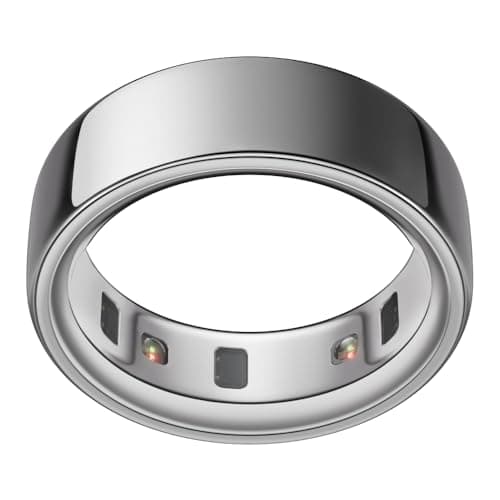
Sleep staging you can actually citeOura Ring 4
The only consumer sleep device with a strong independent PSG result behind it — 76.3% four-stage agreement, and the best deep-sleep sensitivity of the three tested.
Price as of October 22, 2026. Prices move; Amazon's is the one that counts.
#ad · we may earn a commission from this link to Oura Ring 4
The short answer
Buy the Oura Ring 4 if sleep staging is the reason you want a ring - it is the only one of the three with an independent polysomnography result. Buy the RingConn Gen 3 if you want a fortnight of battery for the lowest sticker and no fee, ever. Buy the Ultrahuman Ring PRO if you want the longest stated battery and the most hardware, and you are willing to pay for it.
Ranked
Quick picks
| # | Device | Best for | Evidence | Score | Price |
|---|---|---|---|---|---|
| 01 | Oura Ring 4 The only consumer sleep device with a strong independent PSG result behind it — 76.3% four-stage agreement, and the best deep-sleep sensitivity of the three tested. | Sleep staging you can actually cite | Peer-reviewed validation | 8.0/10 | $349.00Amazon |
| 02 | 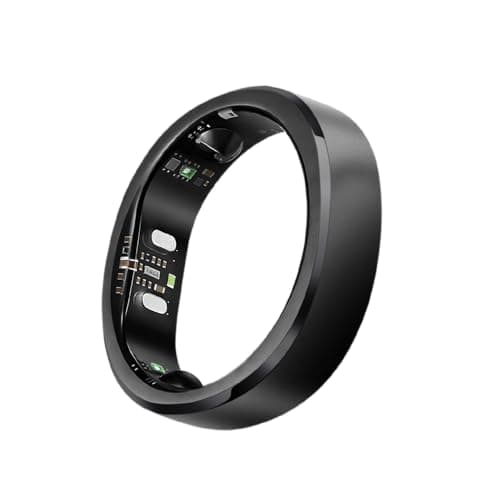 RingConn Gen 3 A fortnight of stated battery with no fee of any kind — and not one published measurement of anything it reports. | Wearing it and forgetting about it | No validation study exists | 6.9/10 | $349.00Amazon |
| 03 | 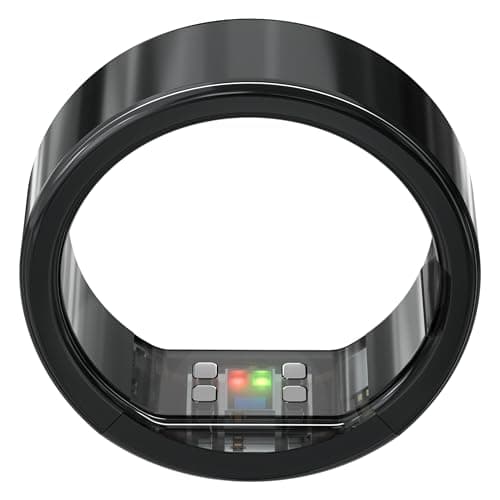 Ultrahuman Ring PRO The longest stated battery and the most hardware of any ring here — from the only ring maker publishing measurement work, none of which was run on this ring. | Buyers who want the longest stated battery with no mandatory fee | No validation study exists | 6.8/10 | $479.00Amazon |
#ad· Live prices from the Amazon Product API, as of October 22, 2026. Where we have no verified live price we show none. Scores come from the published rubric at How we rank — the Evidence column shows what each ranking actually rests on, including where the answer is nothing.
Three rings that cost about the same and are not the same purchase
These three sit in the same price bracket, they are worn the same way, and they claim to measure roughly the same things: sleep and its stages, overnight heart rate, heart-rate variability, temperature, and some flavor of a daily readiness number. Every review you can find will tell you the apps feel different.
That is true and it is not the decision. A smart ring's entire output is unfalsifiable by the person wearing it. If a watch tells you that you ran five kilometers, you can check it against a measured course. If a ring tells you that you got 51 minutes of deep sleep, there is no way - ever, short of a night in a sleep lab - for you to find out whether that is right. Which means the only question that really separates these three is who else has checked them, and with what.
Answer that question and the field splits three ways, cleanly, and not in the order the marketing would suggest.
The specification table
Every row below comes from the maker's own published page: the Oura and RingConn columns read on 6 September 2026, and the Ultrahuman column re-read on 28 September 2026, when Ultrahuman replaced the Ring AIR with the Ring PRO and every figure in that column changed with it. Blank rows stay blank. Two of these three companies do not publish a complete specification, and we would rather show you the hole than fill it.
| Specification | Oura Ring 4 | RingConn Gen 3 | Ultrahuman Ring PRO |
|---|---|---|---|
| Recurring fee | Mandatory membership for the full app | None | None required; some app modules billed monthly |
| Battery (stated) | Multi-day; no single figure we could read | Up to 14 days, plus a charging case | Up to 15 days, up to 45 with its case |
| Thickness / weight | Not published in a form we could read | 2.3 mm / 2.5-3.5 g | 2.65 mm / 3.3-4.8 g |
| Material | Titanium | Titanium and epoxy resin | Titanium with PVD coating, epoxy and polycarbonate |
| Water resistance | Not published in a form we could read | Not published in a form we could read | 100 m / 328 ft |
| Sizes | Sized; sizing kit first | 6-15 | 5-14 |
| On-device storage | Not published in a form we could read | 10 days offline | Up to 250 days |
| Independent validation | Yes - polysomnography and ECG | None we could find | None we could find |
| Manufacturer-published research | Not counted here - the results below are other people's | None we could find | Yes - two 2026 papers, both its own, both on the outgoing Ring AIR |
Who has actually measured what
This is the table the rest of the page is built on. Nothing in it is our opinion; each row either names a study or says outright that none exists.
| Ring | Sleep staging | HRV and resting heart rate | Who ran the study |
|---|---|---|---|
| Oura | 76.3% four-stage agreement, 79.5% deep-sleep sensitivity (Gen3) | 5.96% HRV error, 0.99 concordance (Gen 4) | Hospital and university researchers, in peer-reviewed journals |
| RingConn | Nothing published, by anyone | Nothing published, by anyone | — |
| Ultrahuman | Nothing published, by anyone | Nothing published against a reference | Ultrahuman itself, and on the Ring AIR rather than the PRO |
What Oura actually has
Two results, and they are the strongest in the whole category. Robbins et al. (2024) at Brigham and Women's Hospital put 35 healthy adults through a single night of inpatient polysomnography wearing an Oura Gen3, a Fitbit Sense 2 and an Apple Watch Series 8 at once. Oura took the highest four-stage agreement of the three at 76.3% (κ = 0.65) and the best deep-sleep sensitivity at 79.5%, and matched the lab on seven of eight nightly summary measures.
Then Dial et al. (2025) ran 536 nights against a single-lead ECG with five wearables worn simultaneously. The Oura Gen 4 recorded 5.96% HRV error at 0.99 concordance - the closest any consumer device in that study came to the reference - and the most accurate resting heart rate of the five.
The caveats travel with those numbers everywhere on this site: 35 people, one night, healthy adults, and the sleep study tested the Gen3 rather than the Ring 4 you would actually buy. Oura's own press release rounded 76.3% up to 79%. We use the paper.
What RingConn has
Nothing. No peer-reviewed study, no independent measured test, and - unlike Ultrahuman - not even a paper of its own. It sits at no validation study exists on our hierarchy, the bottom rung, exactly where the Gen 2 sat when we compared it against the Ring 4. The Gen 3 adds vascular trend features on top of apnea pattern detection, and none of that has been checked either. RingConn's own product page carries the disclaimer that the ring is not a medical device, which is worth reading right next to those feature names.
What Ultrahuman has, and why it is the most interesting case here
Ultrahuman is the reason this page exists rather than being a rerun of the two-way. Search the literature for its ring and you do not find nothing - you find more published research than either competitor has attracted. There are papers on sleep consistency and glycemic control, on screen use and sleep quality, on a biological-age model across 20,858 adults. Two are directly about what the ring measures:
- A 2026 medRxiv preprint testing the ring's VO2max estimate against cardiopulmonary exercise testing in 101 people. With a self-reported fitness level supplied, mean absolute error was 4.68 mL/kg/min(95% CI 3.93-5.49), Pearson r 0.79, Lin's concordance 0.79, regression slope 0.71.
- A 2026 paper in Frontiers in Digital Health following 442 ring users for twelve months, correlating a "Cardio Age" estimate with sleep efficiency (r = −0.194) and REM duration (r = −0.203).
That is real work and we are glad it exists. It is also, on both papers, authored entirely by employees of Ultrahuman Healthcare Pvt Ltd- the company selling the ring. The CPET study is a preprint and has not been peer reviewed. The Frontiers paper has been peer reviewed but is not a validation at all: it is an observational analysis of the maker's own users, with no reference instrument anywhere in it.
And neither one touches sleep staging. Ultrahuman has measured its VO2max estimate against a laboratory gold standard and has published nothing comparing its hypnogram to a sleep lab - which is the number most people buy a ring for.
Then, on 28 September 2026, a further problem arrived: none of that work was done on the ring you can now buy. Both papers tested the Ring AIR, and the Ring AIR is gone - its Amazon listing reads "currently unavailable", no listing for it in any size or finish is findable, and Ultrahuman's own ring buy page now configures a Ring PRO instead. Ultrahuman's published comparison describes the PRO's heart-rate sensor as a redesigned PPG, which is exactly the kind of change a validation exists to catch. So the most-published ring maker in the category currently sells a ring with nothing published about it at all - and that is why the Ultrahuman evidence score on this page went down, from 4.0 to 3.0, while the hardware got better.
Our five-rung evidence hierarchyhas no rung labeled "the manufacturer ran a real study with a real method", and that is a limitation of the rubric as much as a verdict on Ultrahuman. And with nothing published about the PRO itself, the ring it sells today sits on the bottom rung anyway - no validation study exists - beside the RingConn. We still score its evidence half a point above the RingConn's, because a maker that has published a readable method on its previous ring is not in the same position as one that has published nothing at all, and we print the numbers here so you can weigh that for yourself. Same-company authorship is not fraud. It is simply not the thing an independent validation is for.
The money over three years
Sticker price does not settle this either, because only one of the three keeps charging you after checkout.
Oura's published membership pricing is $5.99 a month or $69.99 a year, first month free for new members. We use the monthly rate below because it is the less flattering figure and the one most people end up on, and we credit the free month.
- Oura Ring 4, three years: $559 - live listing price plus 35 paid months.
- RingConn Gen 3, three years: $349 - the live listing price, and that is the entire figure.
- Ultrahuman Ring PRO, three years: $479 - the live listing price, before any optional module you choose to add.
Every figure there is computed at page load from a verified live price and withheld entirely if that price is stale beyond 48 hours, because a derived number built on a remembered price looks more trustworthy than a guess while being exactly as invented. The membership rate is the one number we typed in, and it is linked to Oura's own page.
The shape of the answer survives any price movement: the recurring fee is the dominant term and it grows every year you keep the ring. Two of these three rings do not have one.
The Ultrahuman asterisk
"No subscription" is the headline on Ultrahuman's own listing, and for core tracking it is true - sleep, recovery, heart rate and HRV are not paywalled. But Ultrahuman also sells PowerPlugs, modular app features, and some are billed monthly: Cardio Adaptability at $2.90 a month, Cycle & Ovulation Pro at $3.99, a Tesla integration at $6.90. Plenty of others are free. This is nowhere near Oura's mandatory fee, and it is not quite the flat zero the marketing implies. RingConn is the only one of the three where zero means zero.
What each ring is actually best at
Oura wins on evidence, and nothing here is close. It is the only consumer sleep device of any shape with a published four-stage result against clinical polysomnography, and it also holds the best measured HRV figure in the category. If the hypnogram is what you are buying, this is not a hard call - you are paying a recurring fee for the only staging anyone outside the company has ever checked.
RingConn wins on cost and on having nothing to cancel.The battery argument we used to make for it here has gone: the Ring PRO now states up to 15 days against the Gen 3's 14, and both ship with a charging case. What is left is the stronger half of the case anyway - apnea and vascular features included rather than sold separately, a fee of exactly zero with no paid tier of any kind, and the lowest sticker of the three.
Ultrahuman wins on hardware and on published specification. The PRO states up to 15 days of battery and up to 45 with the case in the box, holds up to 250 days of data on the ring itself, and is the only one of the three publishing a water-resistance rating we could read (100 m) - or a complete specification table at all. What it gave up is comfort: at 2.65 mm and 3.3-4.8 g it is now the thickest and heaviest ring here, where the AIR it replaced was the thinnest and lightest. If you want the most instrument on your finger and you are not buying primarily for sleep stages, it is a legitimate pick.
On our rubric the RingConn and the Ultrahuman now finish a tenth of a point apart, which is well inside the noise of any scoring system and not by itself a reason to choose between them. What separates them is concrete: the lower sticker and no paid tier at all on one side, more sensor, more storage and a published spec sheet on the other. Neither has been independently measured, so neither gets to make the accuracy argument.
Two things worth knowing before you order
The Ultrahuman here used to be the Ring AIR, and this page changed with it. When we published on 6 September 2026 the third ring was the AIR, with a Ring PRO behind it on pre-order - shipping first stated as 15 September, then moved to 10 October. By 28 September the AIR's Amazon listing read "currently unavailable", no AIR listing in any size or finish was findable, and Ultrahuman's own ring buy page had become a PRO configurator. So the PRO takes the slot, and every specification and score in the Ultrahuman column was rewritten from the PRO's own listing and spec table with nothing carried across. One consequence is worth saying out loud: the PRO is the better instrument, and it scores lower on evidence than the AIR did, because the research that earned the AIR those evidence points does not describe it. Re-read on 19 October 2026, the pre-order language has gone: Ultrahuman's buy page now configures a PRO in four finishes and sizes 5 to 14 at $479 with no pre-order label and no shipping-date banner, and the ring is orderable on Amazon, which is where the live price above comes from. It is worth remembering that the date moved twice before that happened, the next time a ring in this category is sold before it exists.
Every ring listing is per size. All three brands sell a separate listing for each finger size and color, so stock and price both move by size, and the listing you land on may not be the one that fits you. Order a sizing kit first; all three makers sell one. Where a specific listing is thin on stock, use the search link on the buy row rather than assuming the ring is unavailable.
What we could not verify
Oura does not publish a technical specification page we could read from here, so no thickness, weight or water rating for the Ring 4 appears above. RingConn publishes neither a water-resistance rating nor a sensor list for the Gen 3 on its product page, so both rows are blank rather than guessed. Two Oura-related papers - a multi-night ambulatory polysomnography study and a systematic review - remain behind publisher blocks for us, and they are listed in the sources below as unread precisely so you can see what we are missing. Nobody has published a validation of any RingConn or any Ultrahuman ring, so there is nothing there to have missed.
The verdict
Buy the Oura Ring 4 if sleep staging is the reason you want a ring. It is the only one with an independent number attached to it, and if you are going to act on a hypnogram you should want that. Note that we rank the Ring 4 above the newer Oura Ring 5 for exactly the reason this whole page is about: the study belongs to the older hardware.
Buy the RingConn Gen 3 if you want overnight duration, trends and a fortnight of battery with nothing to cancel. Given that sleep-versus-wake agreement ran 91-93% across every device in the polysomnography study - and that stage-level data is the part we tell most people to stop optimizing - this is a better recommendation than its rubric position alone suggests.
Buy the Ultrahuman Ring PROif you want the longest stated battery, the most hardware and a published spec sheet without a mandatory fee. Read Ultrahuman's research; it is genuinely interesting. Just read it as what it is - the company's own work, about VO2max rather than sleep, and about the ring this one replaced.
Buy none of them if what you actually want is a trustworthy HRV baseline or accurate exercise heart rate. On the measured evidence a chest strap costs a fraction of any of these and is the reference instrument the rings are judged against.
In full
Every pick, and why
Oura Ring 4
The only consumer sleep device with a strong independent PSG result behind it — 76.3% four-stage agreement, and the best deep-sleep sensitivity of the three tested.
- Form
- Ring, worn on the index finger
- Sizing
- Size-specific — the ASIN is per size
- Subscription
- Membership required for full app features
What's good
- Robbins et al. (2024): highest four-stage agreement (76.3%, κ = 0.65) and best deep-sleep sensitivity (79.5%) of the three devices tested against polysomnography
- Matched PSG on seven of eight nightly summary measures, missing only sleep latency by five minutes
- A finger is a better optical site than a wrist for the same reason a forearm is
What isn't
- The membership is mandatory for the full app, so the sticker price is not the price — see our three-year arithmetic
- Rings are sized, so you need the sizing kit first and the ASIN varies by size
Skip this if
Skip this if you lift heavily. A rigid ring on a loaded barbell is uncomfortable at best, and Oura's own guidance is to take it off — a tracker you remove for training is not tracking your training.
What the evidence says
Peer-reviewed validationRobbins et al., Sensors 24(20):6532 (2024), n = 35, single-night inpatient polysomnography, testing the Oura Ring Gen3. Note the study tested Gen3, not the Ring 4. Note also that the manufacturer's press release rounded the four-stage figure to 79%; the paper says 76.3%. We use the paper.
Show how this 8.0 was calculated
| Factor | Weight | Score |
|---|---|---|
| EvidenceThe strongest peer-reviewed sleep result of any consumer device we found — with the honest caveats that it was one night, 35 people, and the previous generation. | 30% | 9.0 |
| HardwareFinger-mounted optical sensing, a better site than the wrist. | 20% | 8.5 |
| Metric coverageSleep, HRV, temperature and readiness; weak on exercise recording. | 20% | 8.0 |
| EnduranceMulti-day battery in normal use. | 15% | 8.0 |
| Cost per capabilityThe mandatory membership makes the true three-year cost materially higher than the sticker. | 15% | 5.5 |
Price as of October 22, 2026. Prices move; Amazon's is the one that counts.
#ad · we may earn a commission from this link to Oura Ring 4
RingConn Gen 3
A fortnight of stated battery with no fee of any kind — and not one published measurement of anything it reports.
- Form
- Ring, titanium and epoxy resin
- Size and weight
- 2.3 mm thick, 2.5-3.5 g, manufacturer-stated
- Battery
- Up to 14 days, manufacturer-stated, plus a wireless charging case
- Sizing
- Sizes 6-15 — the ASIN is per size
- Subscription
- None
- Extras
- Sleep apnea pattern insights, vascular health insights, 10 days offline storage
What's good
- Manufacturer-stated battery of up to 14 days, plus a charging case, with no fee attached to any of it
- No subscription and no paid app modules, so the sticker price is the whole three-year price
- Apnea pattern and vascular insights are included rather than sold separately
What isn't
- No independent validation of any kind that we could find — the same gap the Gen 2 has
- RingConn publishes no water-resistance rating and no sensor list we could read, so this site quotes neither
- RingConn's own page states the product is not a medical device, which is worth reading next to the apnea and vascular features
Skip this if
Skip this if you want a number somebody has checked. It is the cheapest ring to own over three years and the most comfortable to live with, and every figure it shows you is unaudited.
What the evidence says
No validation study existsNo independent validation study exists for this device that we could find, and none exists for the Gen 2 either. RingConn has not published a validation of its own. In a category whose headline output is a four-stage sleep graph you cannot check yourself, that absence is the most important thing about the product.
Show how this 6.9 was calculated
| Factor | Weight | Score |
|---|---|---|
| EvidenceNothing published by anyone, including RingConn itself. Same position as the Gen 2. | 30% | 2.5 |
| HardwareRingConn's current generation, per the manufacturer's own specification: 2.3 mm and 2.5-3.5 g in titanium and epoxy resin. | 20% | 8.0 |
| Metric coverageSleep, apnea patterns, vascular trends, cycle and activity, with no feature paywall anywhere. | 20% | 8.5 |
| EnduranceUp to 14 manufacturer-stated days plus a charging case, second only to the Ultrahuman Ring PRO's stated 15 among rings on this site. | 15% | 9.5 |
| Cost per capabilityNo subscription and no paid modules. Over three years that is the strongest cost position in the category. | 15% | 9.5 |
Price as of October 22, 2026. Prices move; Amazon's is the one that counts.
#ad · we may earn a commission from this link to RingConn Gen 3
Ultrahuman Ring PRO
The longest stated battery and the most hardware of any ring here — from the only ring maker publishing measurement work, none of which was run on this ring.
- Form
- Ring, unibody titanium with a PVD coating
- Size and weight
- 2.65 mm thick, 3.3-4.8 g by size, manufacturer-stated
- Battery
- Up to 15 days, up to 45 with its charging case, manufacturer-stated
- Water resistance
- 100 m / 328 ft, manufacturer-stated
- On-device storage
- Up to 250 days, manufacturer-stated
- Sizing
- Sizes 5-14 in four finishes — the ASIN is per size
- Subscription
- None required; some optional app modules are billed monthly
What's good
- Up to 15 manufacturer-stated days, and up to 45 with the charging case it ships with — the longest stated endurance of any ring on this site
- Up to 250 days of on-device storage against the four days of the ring it replaces, so time away from your phone costs you nothing
- A published 100 m water-resistance rating and a complete published specification table, which neither rival publishes in a form we could read
- Core tracking carries no mandatory fee, and Ultrahuman is the only one of these three makers to have published measurement work of any kind
What isn't
- Nothing has been published about this ring by anyone — Ultrahuman's two 2026 papers tested the outgoing Ring AIR, whose PPG sensor Ultrahuman says it redesigned for this one
- Nobody, including Ultrahuman, has published a sleep-staging validation of any of its rings — the metric most buyers are actually paying for
- At 2.65 mm and 3.3-4.8 g it is the thickest and heaviest ring here, where the AIR it replaces was the thinnest and lightest
- "No subscription" is still not quite the whole story: some app modules are billed monthly, from $2.90
Skip this if
Skip this if you are buying on the strength of Ultrahuman's research. The research is real and worth reading, but the company selling you the ring wrote all of it, it is about VO2max rather than sleep, and it was run on the ring this one replaces.
What the evidence says
No validation study existsNo validation study of the Ring PRO exists that we could find, by Ultrahuman or anyone else. Ultrahuman has published more about its rings than either rival's maker has about theirs — a 2026 medRxiv preprint testing a VO2max estimate against cardiopulmonary exercise testing in 101 people, and a peer-reviewed 2026 Frontiers in Digital Health analysis of 442 of its own users — but both were authored entirely by Ultrahuman Healthcare Pvt Ltd and both tested the Ring AIR. Ultrahuman's own PRO-versus-AIR table describes the PRO's heart-rate sensor as a redesigned PPG, which is precisely the thing a validation exists to test, so those papers do not transfer to this device.
Show how this 6.8 was calculated
| Factor | Weight | Score |
|---|---|---|
| EvidenceNothing published about this ring at all. Half a point above a maker that has published nothing whatsoever, because Ultrahuman's method on the previous ring is at least written down and readable — and well below the tier where somebody outside the company checked the hardware you would actually buy. | 30% | 3.0 |
| HardwareUnibody PVD-coated titanium with a stated 100 m rating, a dual-core processor with on-chip machine learning, a redesigned PPG plus temperature and a 6-axis IMU, BLE 5.3 and a ProRelease cut-away mechanism, per the manufacturer's specification — bought at the cost of being the bulkiest ring here. | 20% | 8.5 |
| Metric coverageSleep with stages, recovery, stress, movement and workouts, heart rate, HRV and temperature, with up to 250 days held on the ring — but several extras still sit behind paid modules. | 20% | 8.0 |
| EnduranceUp to 15 manufacturer-stated days, and up to 45 with the case it ships with. Ultrahuman states the figure varies by mode, roughly 12 days in Turbo and 15+ in Chill. | 15% | 9.5 |
| Cost per capabilityNo mandatory fee, so the three-year figure is close to the sticker — but the sticker is $479 against $349 for the RingConn, and some modules are billed monthly on top. | 15% | 8.0 |
Price as of October 22, 2026. Prices move; Amazon's is the one that counts.
#ad · we may earn a commission from this link to Ultrahuman Ring PRO
How this ranking was built
Every score on this page comes from one published rubric, applied identically to every device on the site, with the weights written down and the inputs shown. We have not worn any of these devices and we never say we have. Read the method and check us.
Questions
Frequently asked
Which smart ring is the most accurate?
On published evidence, Oura - it is the only one of these three that has been measured by anyone other than its own maker. It recorded 76.3% four-stage sleep agreement and 79.5% deep-sleep sensitivity against clinical polysomnography, and 5.96% HRV error against a single-lead ECG. RingConn and Ultrahuman have no independent validation of any kind that we could find, which makes their accuracy unknown rather than demonstrated to be worse.
Is the Ultrahuman Ring PRO really subscription-free?
For core tracking, yes - sleep, recovery, heart rate and HRV are not paywalled, and the Ring PRO listing states there is no app subscription and no monthly fee. But some optional app modules, which Ultrahuman calls PowerPlugs, are billed monthly: $2.90 for Cardio Adaptability, $3.99 for the advanced cycle module, $6.90 for a Tesla integration. Many others are free. RingConn is the only ring of the three with no paid tier at all.
Does Ultrahuman have research behind it?
More than either competitor, and all of it its own. Two 2026 papers cover what the ring measures: a medRxiv preprint testing its VO2max estimate against cardiopulmonary exercise testing in 101 people (4.68 mL/kg/min mean absolute error), and a peer-reviewed Frontiers in Digital Health analysis of 442 of its users. Every author on both is an Ultrahuman employee, the CPET paper has not been peer reviewed, and neither study tests sleep staging. Both also tested the Ring AIR, which Ultrahuman has now replaced: the Ring PRO on sale today has a redesigned heart-rate sensor and nothing published about it at all.
Which smart ring has the best battery life?
On the makers' own stated figures it is close, and it changed in September 2026: Ultrahuman states up to 15 days for the Ring PRO and up to 45 with the charging case in the box, against up to 14 days for the RingConn Gen 3 plus a case of its own. Oura states multi-day battery without a single figure we could read. These are manufacturer claims rather than measurements - nobody here has run one down.
Which ring is cheapest to own over three years?
One of the two subscription-free rings, and by a wide margin over Oura, whose membership is mandatory for the full app. Between the RingConn Gen 3 and the Ultrahuman Ring PRO it comes down to whichever listing is cheaper on the day plus any optional module you add, since neither charges a required fee - the three-year figures on this page are computed from live listing prices and are withheld rather than estimated when a price cannot be verified.
What happened to the Ultrahuman Ring AIR?
Ultrahuman replaced it with the Ring PRO. As of 28 September 2026 the AIR's Amazon listing reads "currently unavailable", we could not find a listing for it in any size or finish, and Ultrahuman's own ring buy page configures a Ring PRO instead. The PRO is the ring compared on this page. If the AIR was on your list because it was the lightest ring here at 2.4 g, note that the PRO is not that ring - it is 2.65 mm and 3.3-4.8 g - and on published figures the lightest ring on this page is now the RingConn Gen 3 at 2.5-3.5 g, since Oura publishes no weight we could read.
Show your working
Sources
Every one of these was read in full before it was cited. Where we could not access a paper, we do not quote its numbers.
- [1]Peer-reviewed validation2024Robbins et al., “Accuracy of Three Commercial Wearable Devices for Sleep Tracking in Healthy Adults”, Sensors 24(20):6532
Brigham and Women’s Hospital. n = 35 healthy adults, single-night inpatient polysomnography, testing Oura Ring Gen3, Fitbit Sense 2 and Apple Watch Series 8. Authors’ stated limits: one night, lab conditions, healthy adults without insomnia, comparison only during scheduled sleep, and device failures on 6 Apple Watches and 2 Fitbits.
- [2]Peer-reviewed validation2025Dial, Hollander, Vatne, Emerson, Edwards & Hagen, “Validation of nocturnal resting heart rate and heart rate variability in consumer wearables”, Physiological Reports 13(16):e70527
DOI 10.14814/phy2.70527. n = 13 healthy adults (7 male, 6 female, 33.2 ± 8.6 years) across 536 nights, each wearing an Oura Gen 3, Oura Gen 4, Polar Grit X Pro, Garmin fēnix 6 and Whoop 4.0 simultaneously against a Polar H10 single-lead ECG reference sampled at 1000 Hz. Authors’ stated limits: healthy adults only, no atrial-fibrillation population, proprietary and periodically-updated algorithms, and unequal night counts per device. The Garmin was dropped from the resting-heart-rate comparison because the 30-minute window it uses is not timestamped.
- [3]Manufacturer specification2026Oura — published membership pricing
Manufacturer-stated, read 2026-08-13: $5.99 USD/month or $69.99 USD/year before tax, with the first month free for new members. Oura states that without a membership “your Oura Ring and Oura App will still function, but the insights, personal health data, and benefits you receive will be much more limited.” Our three-year arithmetic uses the monthly rate — the less flattering of the two — and credits the free first month.
- [4]Manufacturer specification2026RingConn — Gen 3 published specifications
Manufacturer-stated, read 2026-09-06: from $349, sizes 6–15, titanium and epoxy resin, 2.3 mm thick at 2.5–3.5 g, battery “up to 14 days”, a universal wireless charging case, 10 days of offline data storage, vibration alerts, vascular health insights, sleep apnea pattern insights, and “No Subscription Required”. RingConn does not publish a water-resistance rating or a sensor list on that page in a form we could read, so neither appears anywhere on this site. The page also carries RingConn’s own disclaimer that the product “is not a medical device”.
- [5]Manufacturer specification2026Ultrahuman — the “Ultrahuman Ring” buy page, which now configures a Ring PRO
Read 2026-09-06 and re-read 2026-09-28, and it is how we established that the Ring AIR is out of the line-up rather than out of stock. On 6 September this URL was the Ring AIR’s own buy page, and every AIR figure this site published came off it: $349, 4–6 days of battery, 2.4 g, 2.4 mm thick, 100 m / 328 ft water resistance, sizes 5–14, titanium with a PVD coating, temperature + PPG + 6-axis IMU sensors, a single-core processor, four days of on-device storage, and an FAQ stating there “are no recurring subscription fees for accessing your data”. On 28 September the same URL configures a Ring PRO at $479 with no Ring AIR option anywhere on it, and Ultrahuman publishes no separate AIR buy page we could find. The AIR survives on the site only as the right-hand column of the PRO’s comparison table.
- [6]Manufacturer specification2026Ultrahuman — PowerPlugs add-on catalog and published prices
Manufacturer-stated, read 2026-09-06. This is why we do not call the Ring PRO flatly subscription-free: some app modules are billed monthly. Ultrahuman publishes Cardio Adaptability at $2.90/month, Cycle & Ovulation Pro at $3.99/month and Tesla Sync at $6.90/month, and states that “charges apply only to medical-grade experiences or partner-developed solutions”. Vitamin D, Smart Alarm, Caffeine Window, Social Jetlag, Screentime, Pregnancy Insights and the basic cycle module are listed as free, and core sleep, recovery and heart-rate tracking sits behind none of them. Re-read 2026-09-28 against the Ring PRO: all three monthly prices are unchanged.
- [7]Manufacturer specification2026Ultrahuman — Ring PRO buy page and published PRO-versus-AIR specification table
Manufacturer-stated, read 2026-09-06. Listed as a pre-order, “Shipping September 15th onwards”, with the Ring AIR still sold alongside it. Ultrahuman states up to 15 days of battery for the PRO (up to 45 with its case) against 4-6 days for the AIR, a dual-core processor with on-chip machine learning against single-core, up to 250 days of on-device storage against four, and a ProRelease emergency-removal mechanism the AIR does not have. We record it because buying the outgoing model in the week before a successor ships is a decision a reader should make deliberately. Re-read 2026-09-21: still listed as a pre-order, now "Shipping October 10th onwards" at $479, so the 15 September date slipped by more than three weeks; the Ring AIR is still sold alongside it. Re-read 2026-09-28, when the AIR had gone: this page and ultrahuman.com/ring/buy/us/ both configure a PRO only, at $479, still "Shipping October 10th onwards". Its published PRO-versus-AIR table is the source for every Ring PRO figure on this site — 2.65 mm thick (varies by size), 3.3–4.8 g, 100 m / 328 ft, sizes 5–14 in four finishes, up to 15 days of battery (roughly 12 in Turbo mode, 15+ in Chill) and up to 45 with the PRO Charging Case, a dual-core processor with on-chip machine learning, a redesigned PPG plus temperature and a 6-axis IMU, BLE 5.3, up to 250 days of on-ring storage, and ProRelease cut-away safety. Re-read 2026-10-19: the pre-order framing has gone — the buy page configures a PRO only, in four finishes and sizes 5–14, at $479, with no pre-order label and no shipping-date line anywhere on it; the only availability wording left is an FAQ entry saying “The ship-by date for your selection is shown on this page”. Ultrahuman does not state on the page when shipping actually began, so we do not either.
- [8]Manufacturer claim only2026Dhawale et al., “Accuracy of a Smart-Ring VO2max Estimate and Five Published Prediction Equations Against Cardiopulmonary Exercise Testing”, medRxiv preprint
Posted 17 July 2026 and NOT peer reviewed — it is a preprint. All eight authors are employees of Ultrahuman Healthcare Pvt Ltd, the maker of the device tested, which is why it sits at the manufacturer tier here rather than beside the independent studies. What it did: 101 subjects measured against cardiopulmonary exercise testing (85 development, 16 held out), plus a population analysis of 181,133 deidentified ring users. With a self-reported fitness level supplied, the Ring AIR’s VO2max estimate agreed with CPET peak VO2 at a mean absolute error of 4.68 mL·kg⁻¹·min⁻¹ (95% CI 3.93–5.49), Pearson r = 0.79, Lin’s concordance 0.79 and a regression slope of 0.71. It measures VO2max. It does not test sleep staging. And it tested the Ring AIR: Ultrahuman replaced that ring with the Ring PRO in September 2026 and describes the PRO’s heart-rate sensor as a redesigned PPG, so this result does not carry over to the ring now on sale.
- [9]Manufacturer claim only2026“Wearable-derived cardiovascular fitness age and its lifestyle correlates in 442 adults”, Frontiers in Digital Health
Published 7 July 2026 and genuinely peer reviewed, but NOT a validation against any reference instrument — it is an observational analysis of 442 Ultrahuman Ring users across a 12-month window, authored entirely by Ultrahuman Healthcare Pvt Ltd. Reported: a mean Cardio Age gap of −1.84 ± 2.97 years, sleep efficiency correlating with Cardio Age at r = −0.194 and REM duration at r = −0.203 (both p < 0.001), and a 3.24-year reduction among sustained improvers. It describes the maker’s own user base; it does not establish how accurately the ring measures anything — and the ring in question is the Ring AIR, not the Ring PRO that replaced it.
- [10]Peer-reviewed validation2024Svensson et al., “Validity and reliability of the Oura Ring Generation 3 with sleep staging algorithm 2.0 compared to multi-night ambulatory polysomnography”, Sleep Medicine
NOT READ — the publisher returned HTTP 403 to our fetch on 2026-07-24. Reported to cover 96 participants and 421,045 epochs. We quote no figure from it. Readers should also note it is the validation of Oura's own staging algorithm, and that a published comment on it exists.
- [11]Peer-reviewed validation2025Khan et al., “The Oura Ring Versus Medical-Grade Sleep Studies: A Systematic Review and Meta-Analysis”, OTO Open
NOT READ — the publisher returned HTTP 403 to our fetch on 2026-07-24. A pooled analysis would be stronger evidence than any single study, so this is a real gap in our record rather than a formality.
Read next
Related
- Oura vs RingConn
The two-way, built on the Ring 4 and the Gen 2, with the same money worked out.
- Best smart rings
The ranked roundup of the form factor, scored on the same rubric.
- Oura Ring 4 review
The device holding the only independent polysomnography result here.
- Sleep trackers without a subscription
Every option if the recurring fee is the dealbreaker.
- Sleep accuracy by device
Every published figure in the category, and every device with none.